

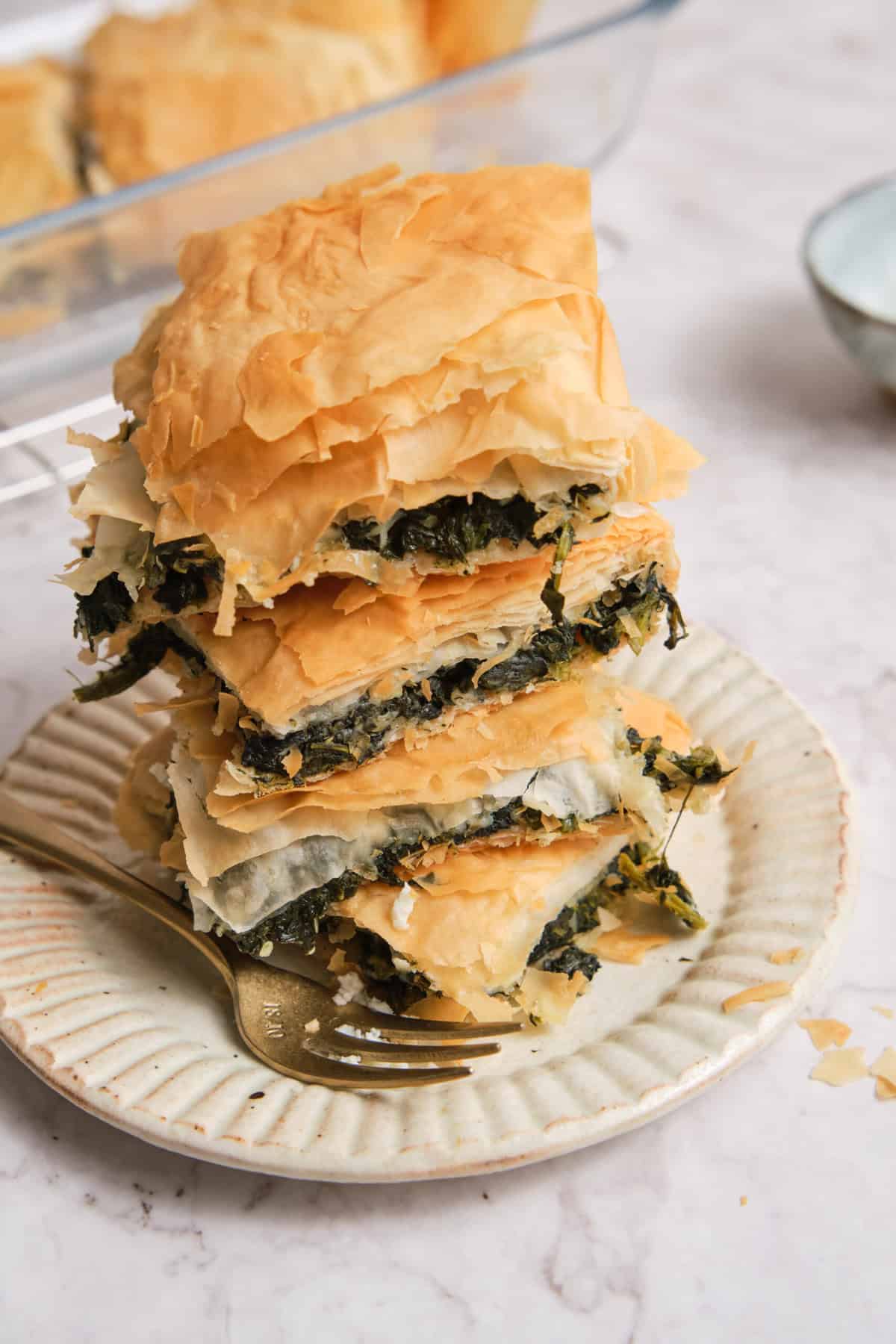
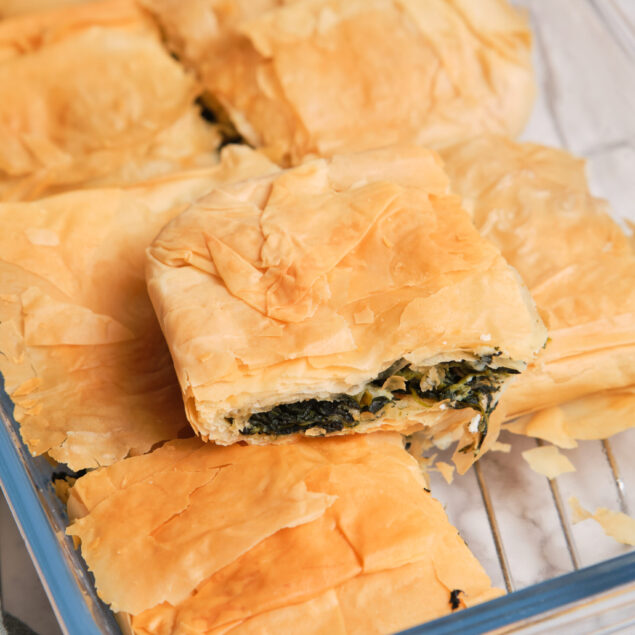
This flaky, savory spinach pie has crossed oceans and generations to reach your plate!
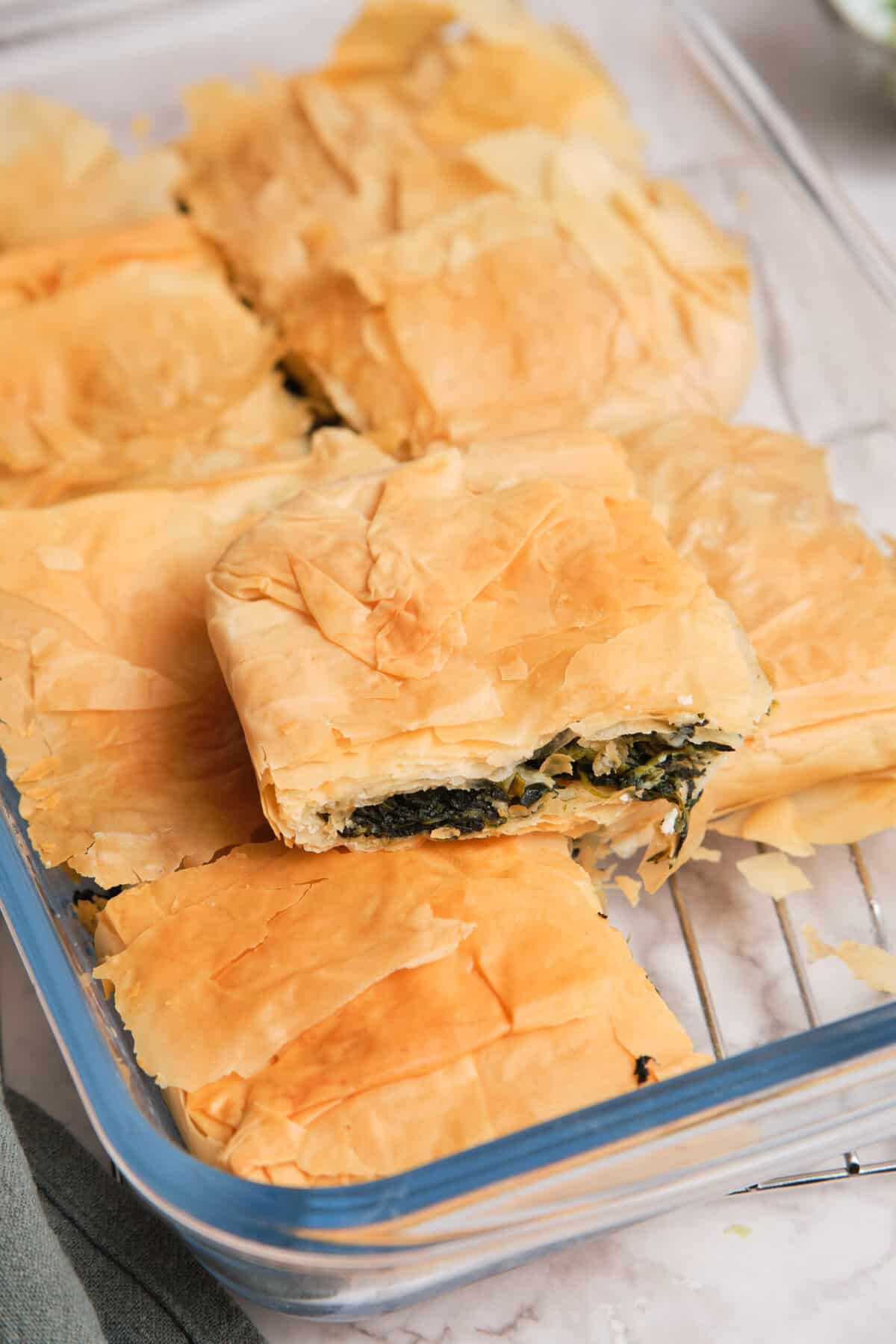
At first glance, spanakopita looks like a sweet pastry… but it’s not. In fact, it’s often enjoyed as an appetizer before a big fat Greek dinner.
Packed with spinach, onions, garlic, and feta cheese, this flaky baked good is satisfyingly savory. It’s rich, yet light enough to enjoy as a snack so you can save room for an upcoming main course. This is the kind of dish my mom would serve early during an evening party, so that guests wouldn’t get hungry while waiting for dinner to be ready. Even though it takes more than an hour to make, the wait is worth it, and the prep is easy.
While the exact origin of spanakopita is unknown, it has been part of Greek cuisine for a long time. Greeks have enjoyed savory pies for centuries, and spanakopita is a conquering classic. Often, it’s served with a small tomato salad, olives, Tzatziki, and Whipped Feta Dip.
Is Spanakopita Healthy?
I wouldn’t consider spanakopita healthy or even particularly nutritious. While it does include iron-rich and fibrous spinach, it’s also full of carbs and fats. This is a “special occasion” kind of treat that I indulge in with friends and family on holidays like New Year’s Eve.
Spanakopi-wha?
The Greek language is fascinating, don’t you think? Often, we can make meaningful connections by comparing more familiar words with unfamiliar ones.
The word spanakopita means “spinach pie” in Greek. You might notice the word “pita” at the end of it, which by itself literally means “pie” or “bread” and is also used for the classic pita flatbread many know and enjoy.
Although the baking process for pita bread is entirely different from spanakopita, it’s cool to see how the words relate to each other. After I broke this word down, I started thinking about my spanakopita a little differently.
How to make ahead and store
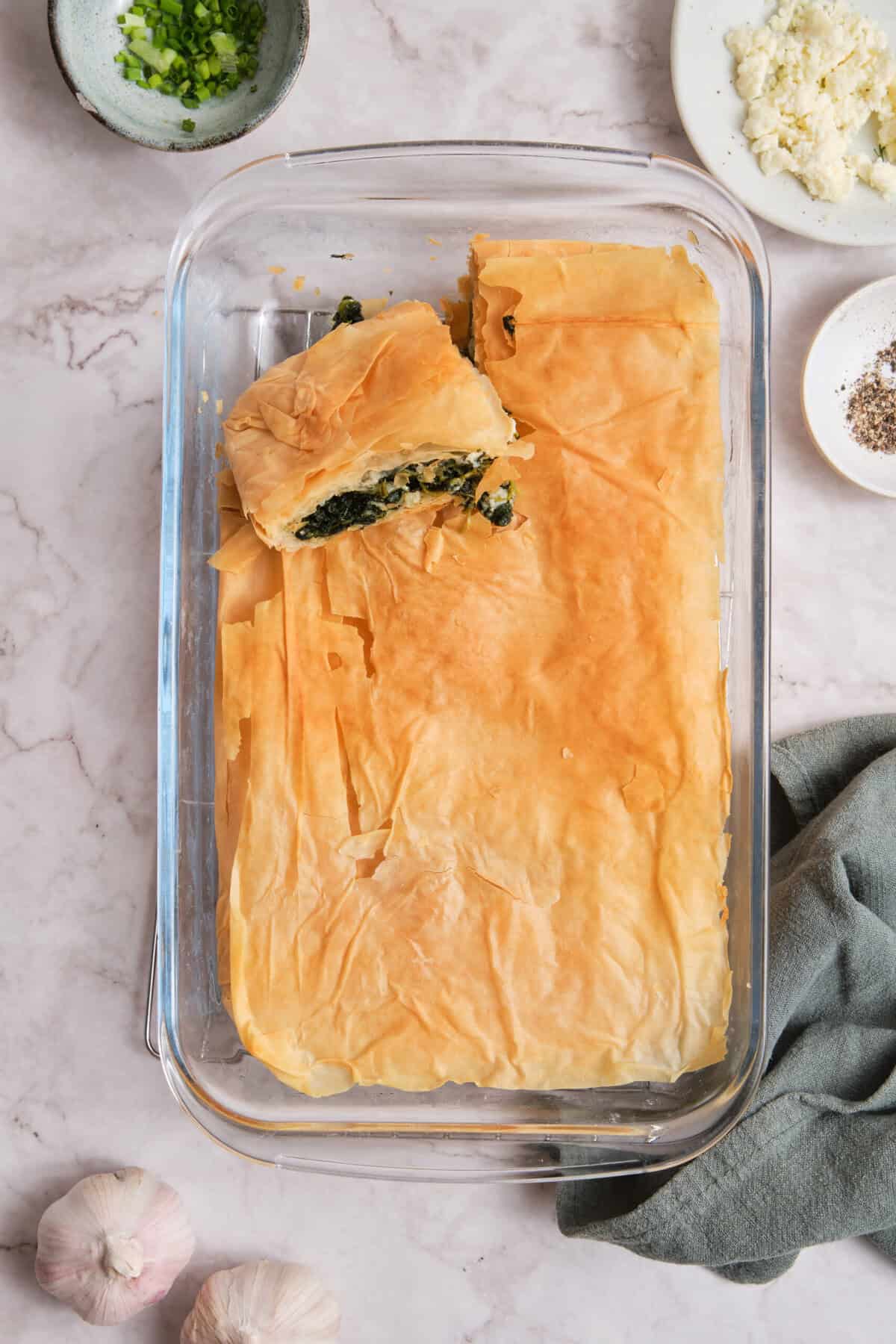
I store leftover spanakopita in an airtight container and refrigerate for 2 to 3 days. For longer storage, I freeze it for up to 2 months. There’s no need to let it thaw in the fridge. You can take it right out of the freezer and reheat it in the oven at 350 degrees F for 10 to 15 minutes.
Serving Suggestions
While nearly any Mediterranean main dish will do as a follow-up to my spanakopita, I recommend serving it before or alongside Lamb Meatballs, Greek Chickpea Salad, Oven-Roasted Lemon Potatoes, Cauliflower Tabbouleh, or Grilled Herb Hummus Chicken Kebabs. Enjoy any or all of these with classic condiments like Red Pepper Hummus, earthy Greek Fava, or creamy Tzatziki Sauce. All of these accompaniments would make a mouthwatering meal fit for Greek gods!
Ingredients
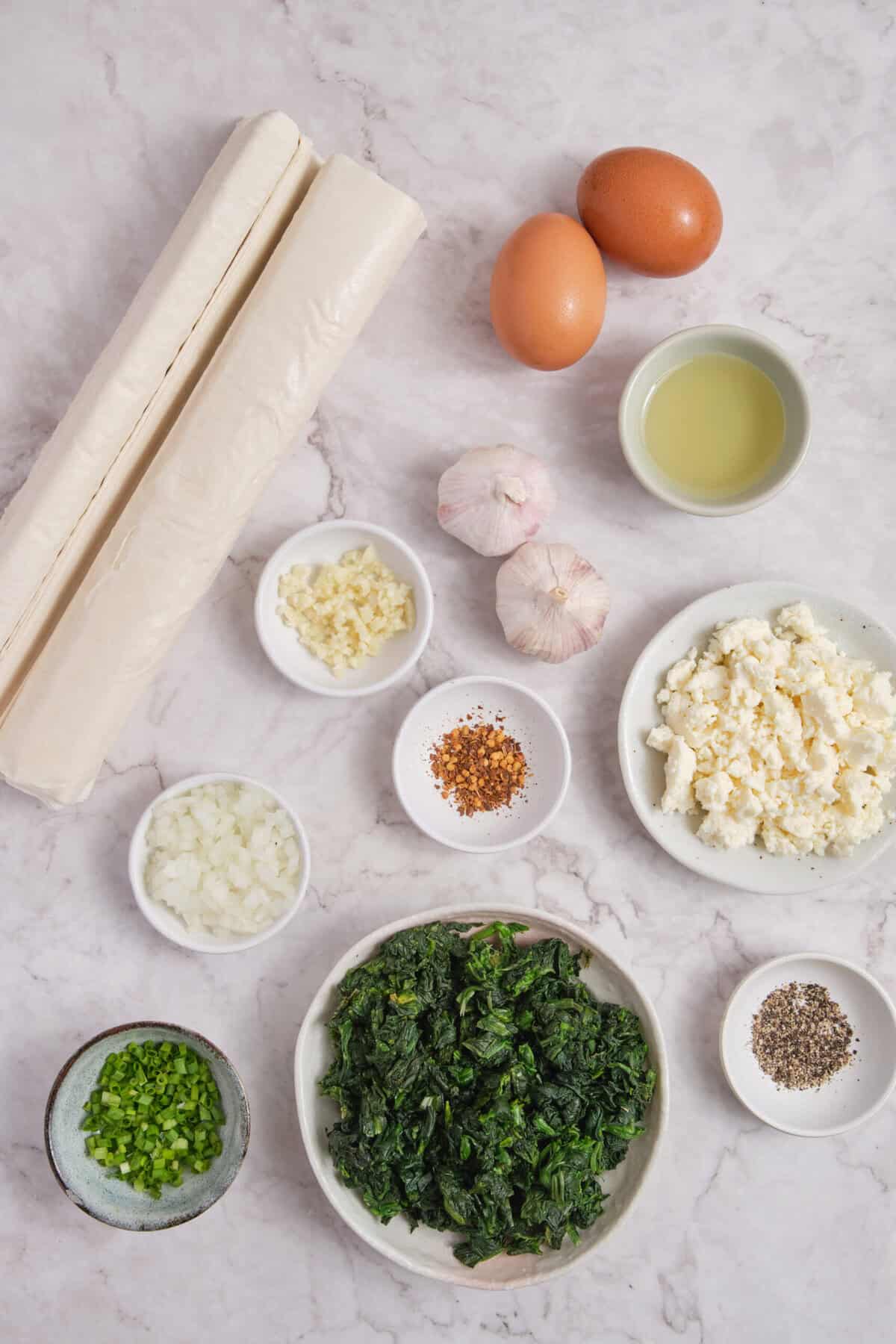
- 1 pound frozen chopped spinach thawed and drained
- 1 pound phyllo dough thawed
- 2 small onions finely chopped
- 3 scallions finely sliced
- 4 cloves garlic minced
- 1 1/2 tablespoons olive oil
- 4 large eggs beaten
- 12 ounces feta cheese crumbled
- 1 1/2 teaspoons dried dill
- 1/4 teaspoon black pepper
- Olive oil for brushing
Instructions
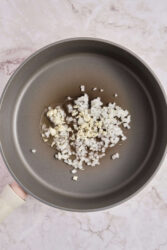
- Preheat oven to 325°F. In a skillet, heat 1 1/2 tablespoons olive oil, then sauté onion and garlic until translucent.
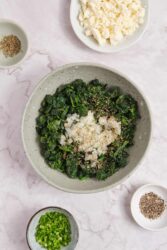
- In a large bowl, combine sautéed onion and garlic with drained spinach, eggs, scallions, feta cheese, dill, and black pepper. Mix well.
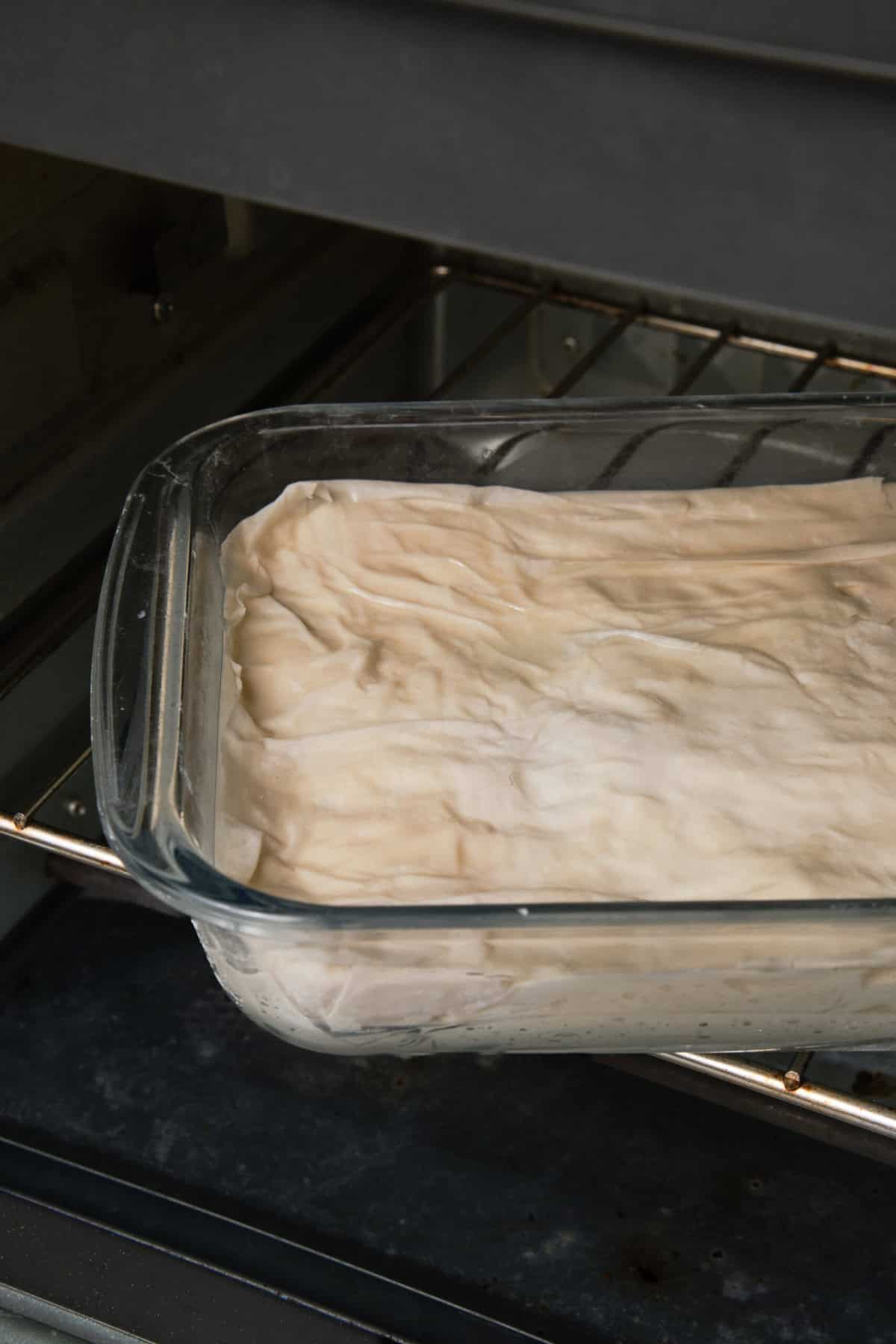
- Brush a 9×13-inch baking dish with olive oil. Layer 2 sheets of phyllo dough, brushing each with olive oil. Repeat until you have 8 layers.
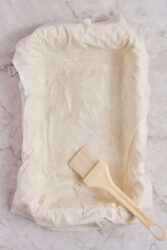
- Spread the spinach and feta mixture evenly over the phyllo layers.
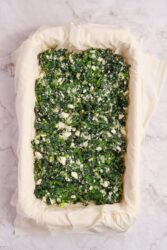
- Cover the filling with more phyllo sheets, brushing each with olive oil, until all remaining phyllo is used. Tuck the edges to seal.
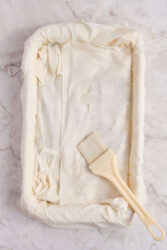
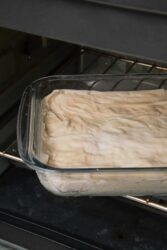
- Bake in the preheated oven for 50 to 60 minutes, or until the phyllo is golden and crisp.
Nutrition Info:
Nutrition information are estimates only and may vary based on the specific brands, ingredients, and portion sizes you use. This data is provided for informational purposes only.


Leave a Comment