

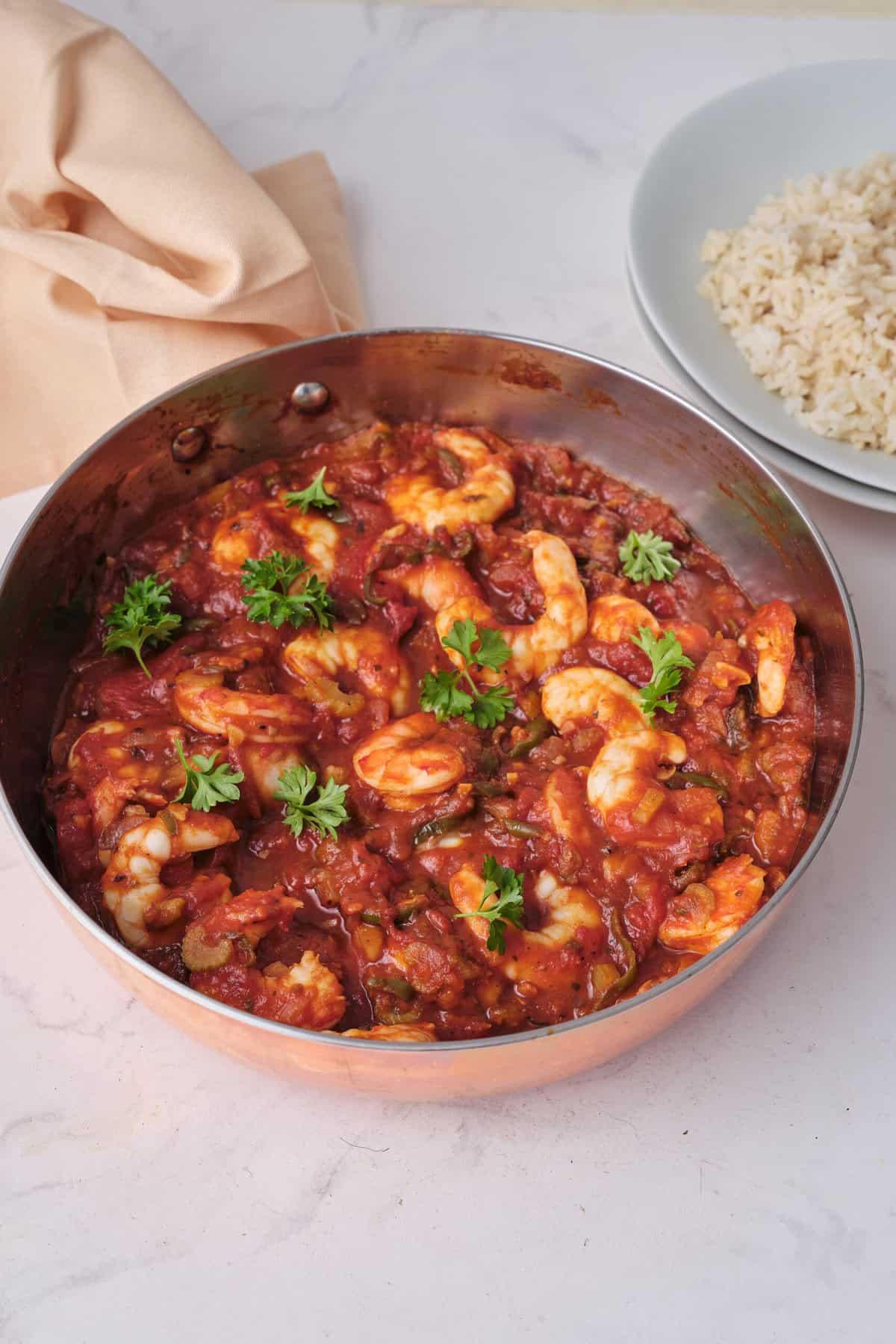
Your guests will be going back for seconds of this smoldering, seasoned seafood feast!
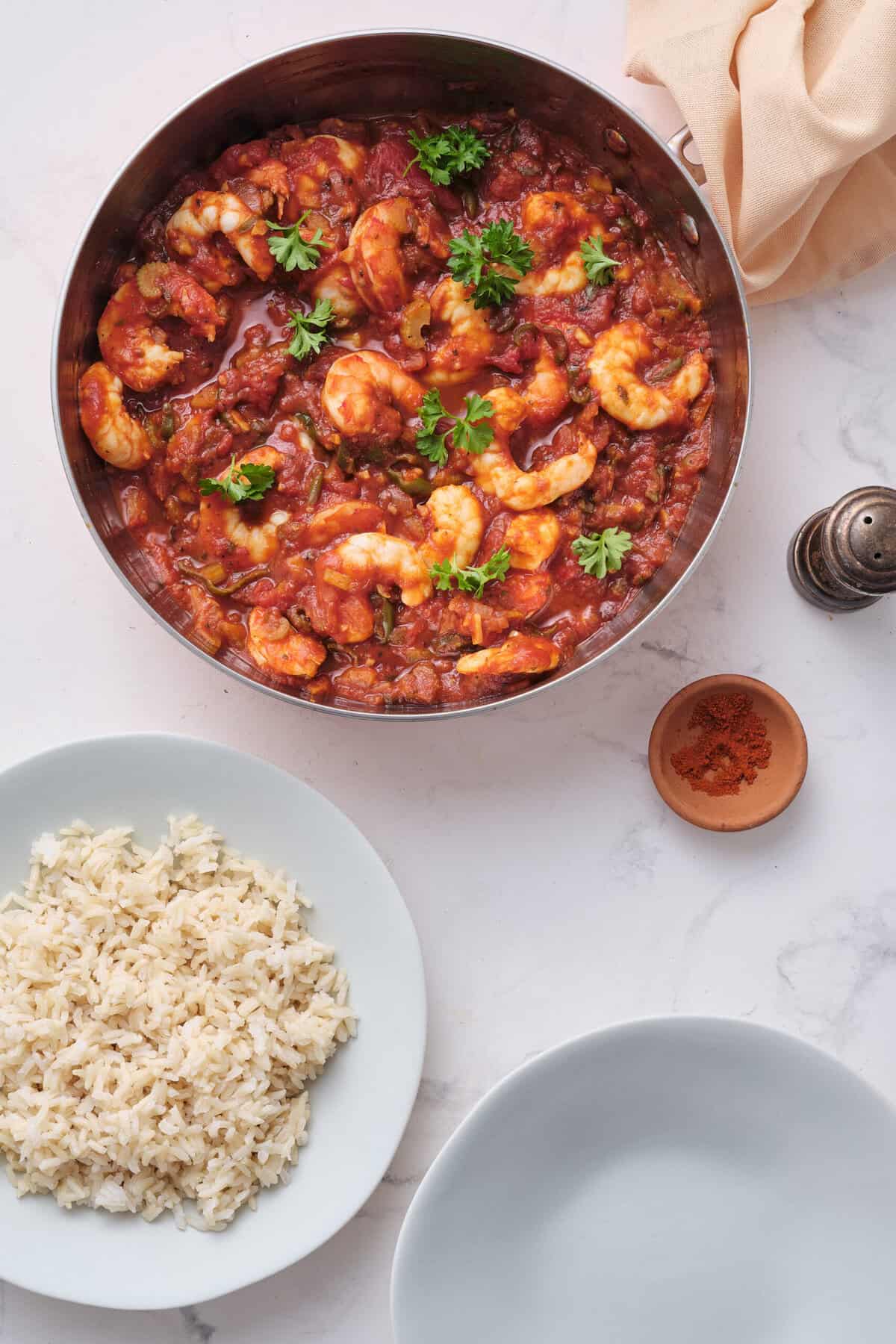
New Orleans has been my home for the past year, and Creole food has become a staple in my diet. Creole sauces, Creole-spiced meats, Creole eggs; hell, I even ate Creole-Chinese fusion food the other night. Also ubiquitous in New Orleans is shrimp, and a hefty percentage of the shrimp I eat every week is cooked Creole-style.
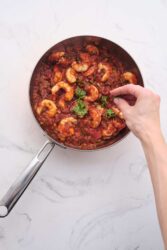
As a mix of African, French and Spanish influences, shrimp Creole is thick, tomatoey and filled with succulent seafood and a whole pantry of spices, herbs and vegetables.
I was told when I first moved to the Marigny neighborhood that, “New Orleanians don’t like spicy, but they do love flavor.” Shrimp Creole is emblematic of that statement; rich and full-bodied, with a whole smörgåsbord of flavors that dance around your mouth.
There’s nothing too spicy here, but if you swing that way, keep a bottle of Louisiana Hot Sauce on the table and you’ll be good to go. Pour this delicious seafood concoction over a bed of freshly steamed white rice, and you just might be able to hear sweet jazz playing in the background like you’re dining in the steamy French Quarter.
What is Creole Food?
Creole is the ethnic group descended from people who lived in colonial Louisiana before US statehood, when the French and Spanish were in charge. Creole is not a racial label; Africans, Europeans and people of mixed ancestry can claim Creole heritage.
The label grew to include Native Americans, people of the Caribbean and Germans, which in turn, greatly opened up the types of food served, but “Creole” as a label traditionally has stronger ties to French and Spanish colonial legacies.
Basically, Creole cuisine draws from a variety of influences, including African, Spanish and Native American traditions, and uses French cooking methods to prepare the ingredients. Characteristics include complex flavor combinations, a diverse array of ingredients and heavy usage of seasonings.
How to make ahead and store
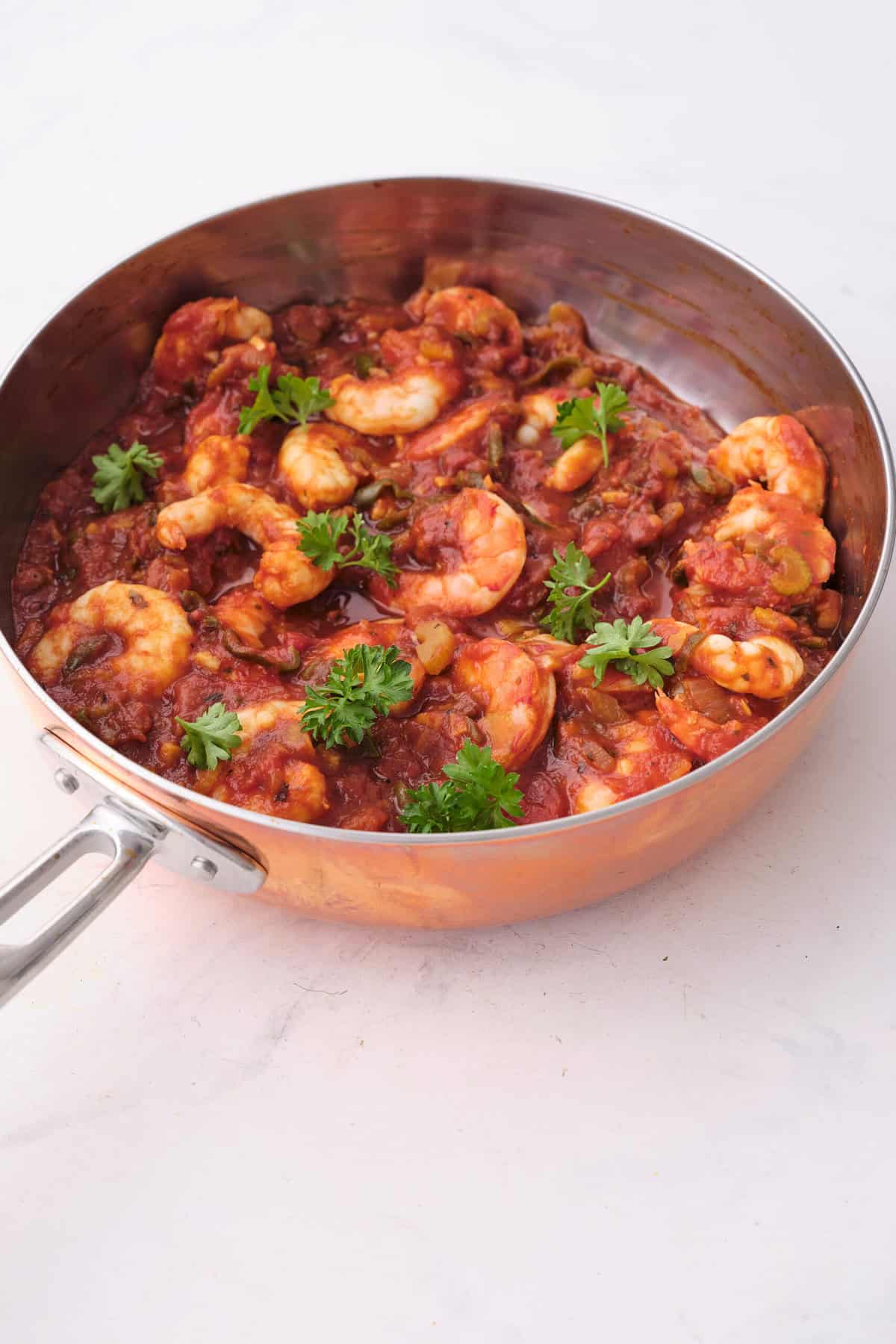
I make it the night before (without the shrimp) and store it in my refrigerator so that all those Creole seasonings can get to mingle. I reheat the sauce slowly before adding the shrimp. Leftovers will stay delicious in the refrigerator for 2 to 3 days.
Serving Suggestions
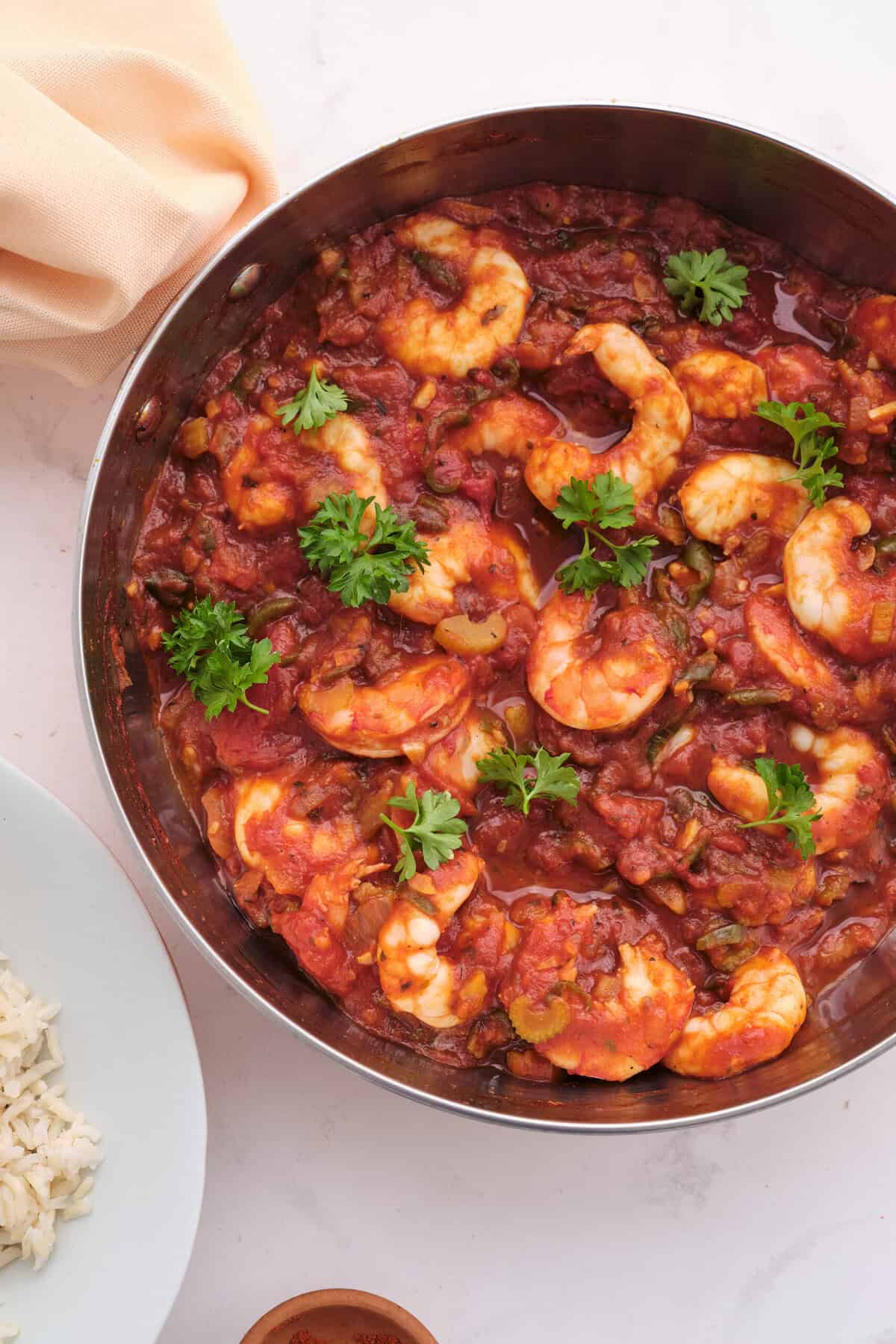
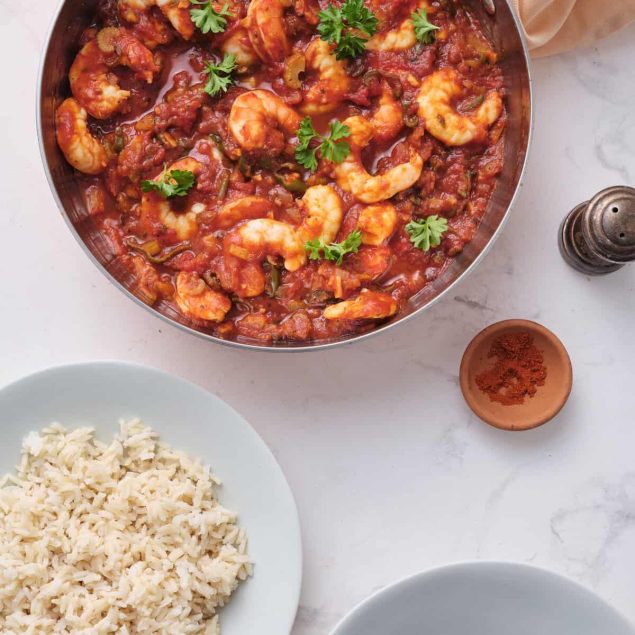
Classic shrimp Creole is served over a bed of steaming White Rice. You will also want some crusty Garlic Bread to sop up the mouth-watering sauce. No matter what Southern dish you are cooking, Cornbread is a must.
Some vegetable side dishes counteract the richness of my main course; Okra, Green Beans, and Corn are all Southern staples.
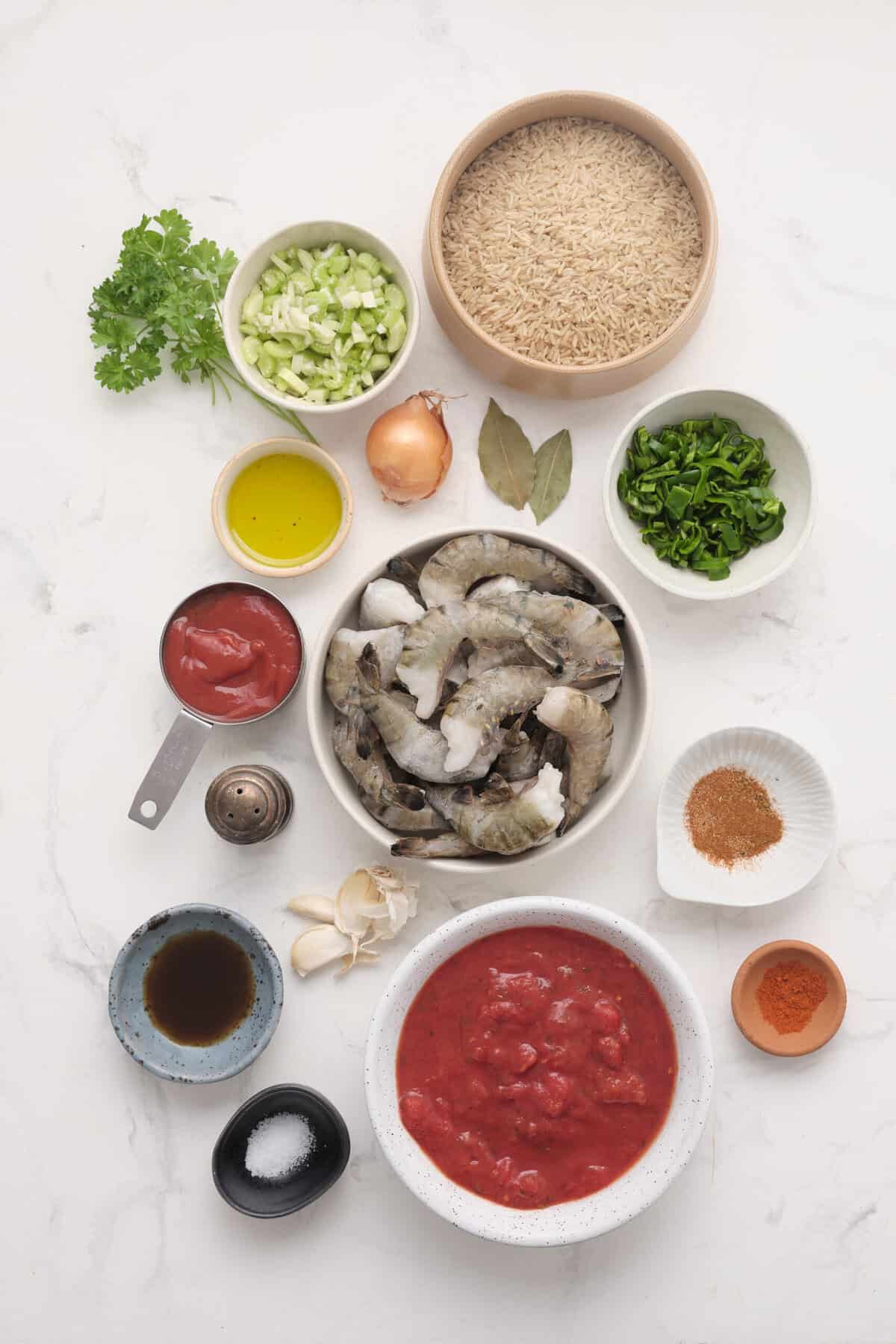
Ingredients
- 2 tablespoons olive oil
- 1/2 large onion chopped
- 1 green bell pepper chopped
- 2 celery stalks chopped
- 4 garlic cloves minced
- 1 can (14 1/2 ounces) diced tomatoes undrained
- 1/2 cup spicy tomato sauce
- 2 teaspoons Worcestershire sauce
- 2 bay leaves
- 1 tablespoon Creole seasoning
- Cayenne pepper to taste
- Salt to taste
- Ground black pepper to taste
- 1 pound large shrimp peeled and deveined
- Long grain rice cooked, for serving
- Fresh parsley chopped, for garnish
Instructions
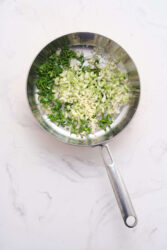
- Heat olive oil in a large skillet over medium heat. Add chopped onion, green bell pepper, celery, and garlic. Cook until the vegetables are tender, about 5 to 7 minutes.
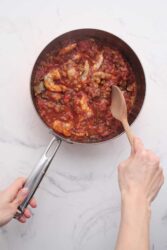
- Add diced tomatoes with their juice, tomato sauce, Worcestershire sauce, Creole seasoning, and bay leaves. Season with salt, black pepper, and cayenne.
- Bring to a simmer and cook uncovered for 20 minutes, allowing flavors to meld. Add some water if the mixture becomes too thick. Adjust seasonings as needed.

- Add the shrimp to the skillet and cook until they are pink and opaque, about 3 to 6 minutes. Remove the bay leaves.
- Serve hot over rice. Sprinkle with fresh parsley for garnish.
Nutrition Info:
Nutrition information are estimates only and may vary based on the specific brands, ingredients, and portion sizes you use. This data is provided for informational purposes only.



Leave a Comment