

I find roasting butternut squash is a deliciously simple method to let this veggie’s sweetness shine through!
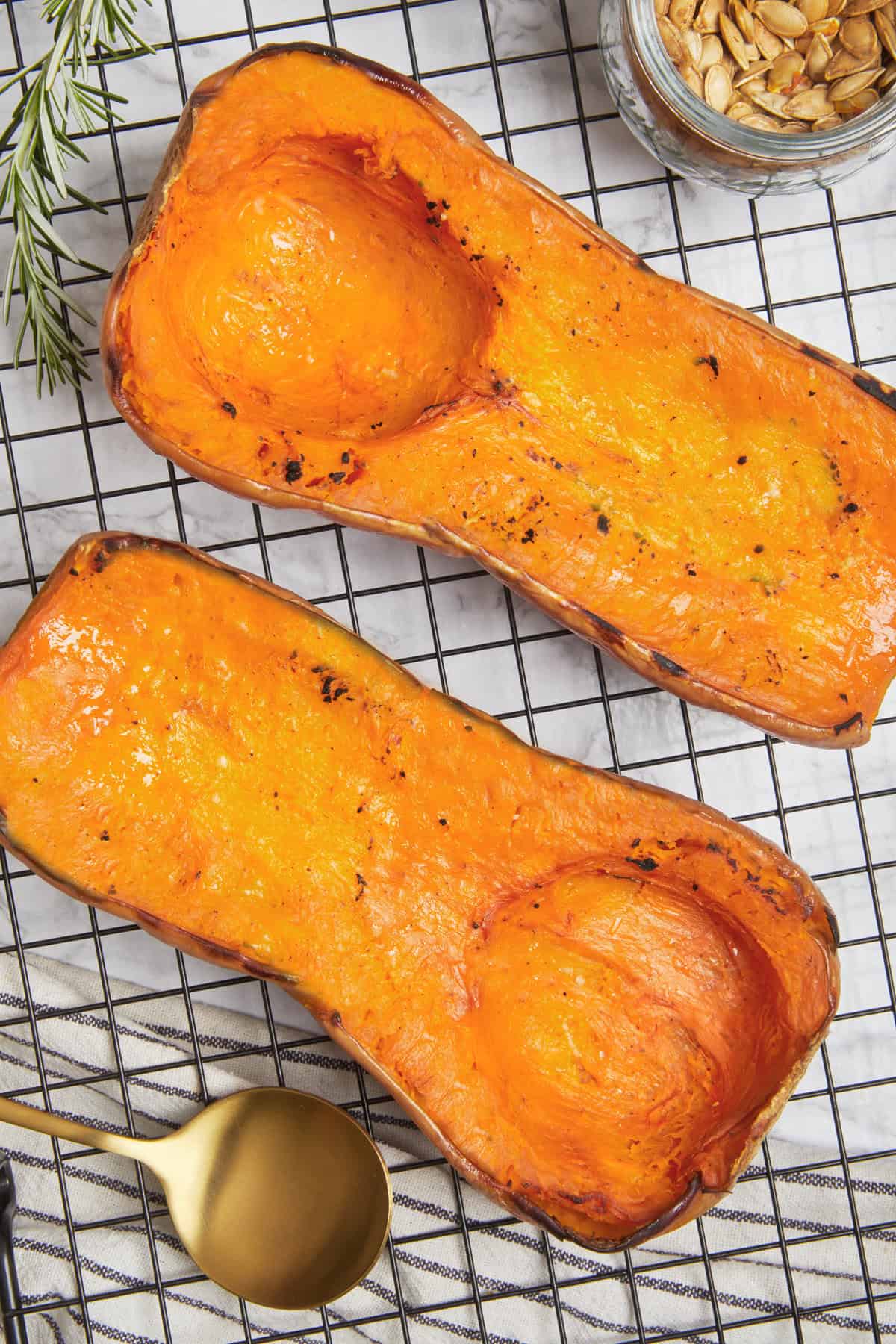
Butternut squash is known for both its orange color and its delightful, nutty taste. This versatile vegetable boasts a history and some quirky traits that add to its charm. Its roots are in Central and South America, where it has been a staple for generations. Native Americans cherished it not only for its flavor, but also for its long storage life, which ensured sustenance during the colder months.
The slender neck and bell-shaped bottom provide plenty of meaty flesh to eat, but don’t just stop there. While you’ll want to discard the skin, you can keep and eat the seeds. Roasted butternut squash seeds make for a nutritious snack loaded with protein and healthy fats.
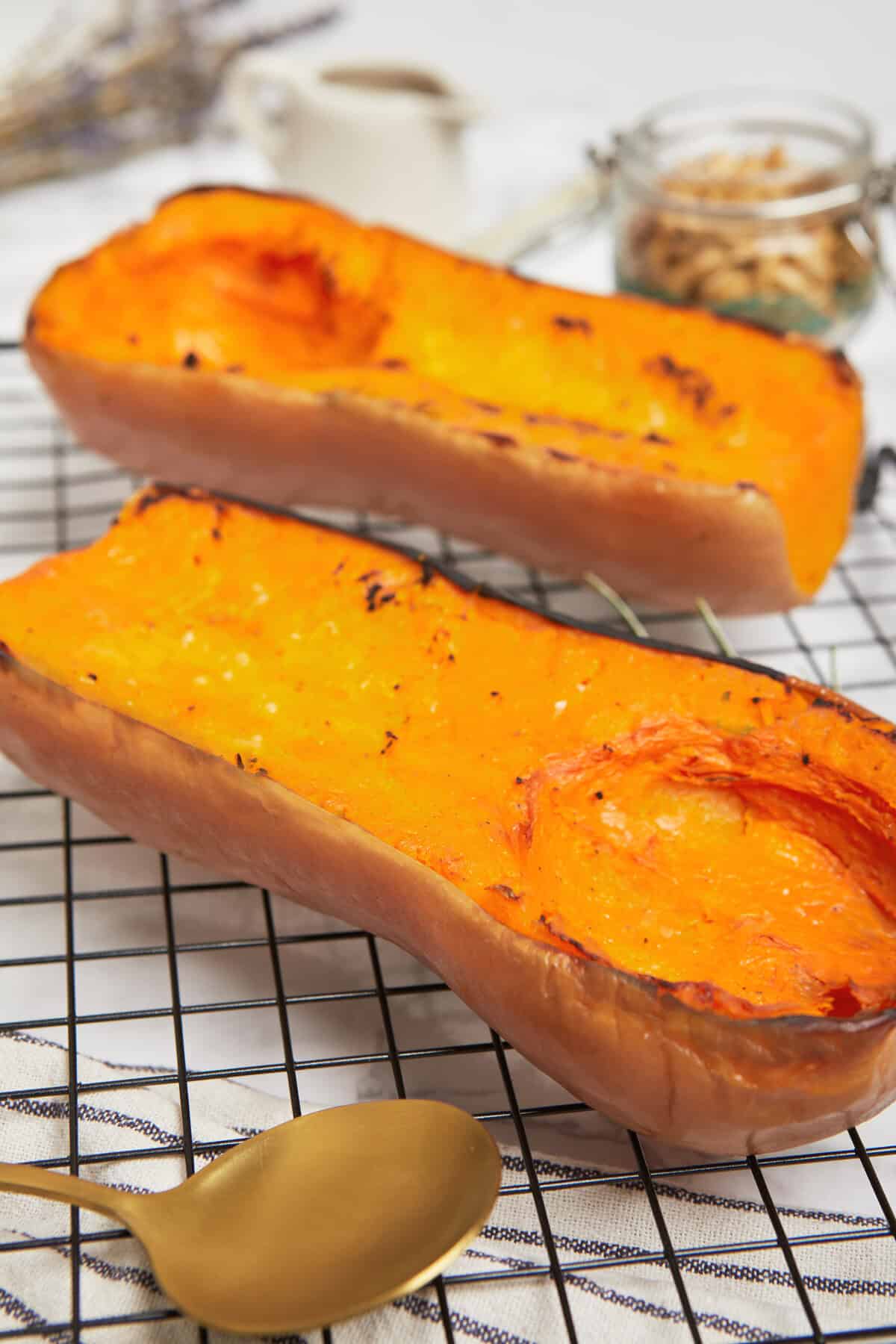
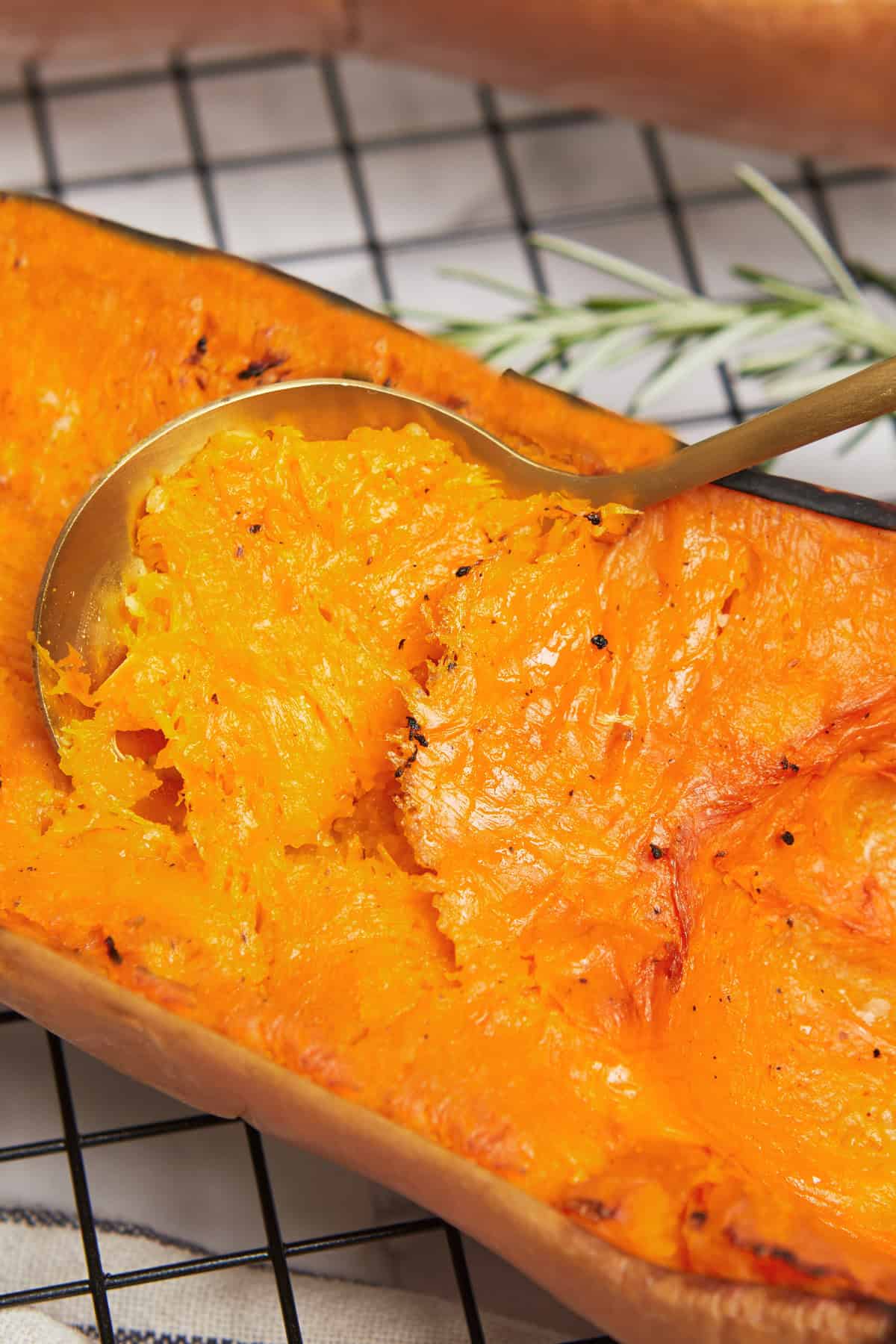
In this recipe, the heat of the oven works its magic. The outer edges will caramelize into a rich brown, forming a slightly crispy crust that reveals a sweet center. Butternut squash has a way of blending sweetness and savory flavors, especially when caramelized in this way.
Is Roasted Butternut Squash Healthy?
Butternut squash gets its beautiful orange color from beta-carotene, a precursor to vitamin A, which is an essential vitamin. It’s also a good source of fiber and is low in calories. Butternut squash is versatile and is often a popular source of nutrition in vegetarian or vegan-friendly foods. This is one such recipe.
Is All Squash The Same?
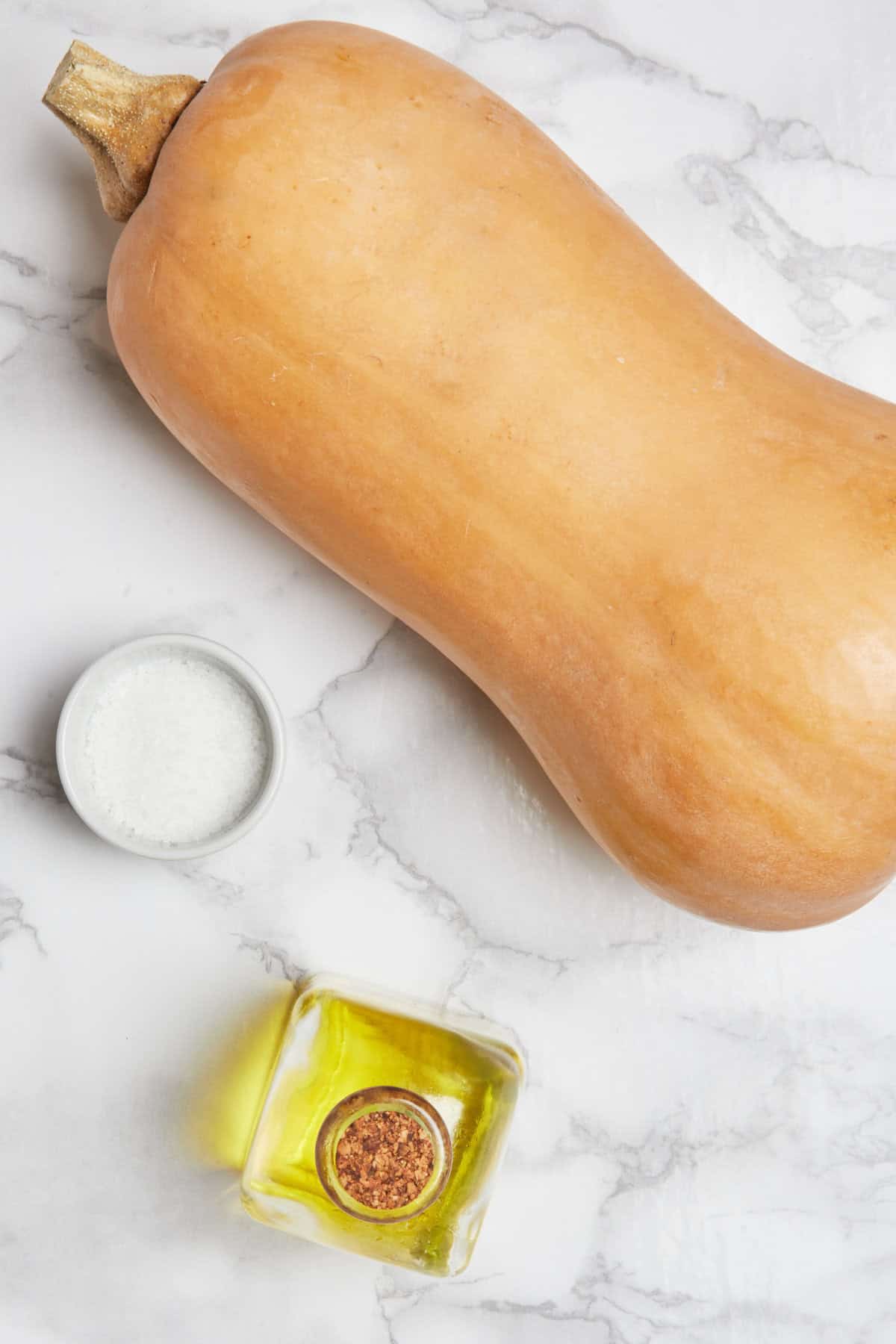
Not all squashes are created equal, and there are a few reasons why people prefer to roast butternut squash over other types.
Summer squashes like zucchini and yellow squash are tender and cook quickly. However, their texture isn’t “meaty” like the butternut. Winter squashes include acorn, buttercup squash, and butternut squash, among others. Each type has its own appeal and culinary uses.
What sets butternut squash apart is its versatility and rich buttery taste. Its natural sweetness makes it ideal for both meals and desserts. Whether you roast it, blend it into soups, or incorporate it into pies and casseroles, butternut squash’s smooth texture and natural sweetness always stand out.
How Do I Store Leftovers?
Store leftover butternut squash in an airtight container in the refrigerator for 3-5 days. You can also freeze your roasted squash for 8-12 months. The texture may change a little when frozen, but if you place it in the oven to reheat at 350 Fahrenheit for 10-12 minutes, it should bounce back to its creamy texture.
Serving Suggestions
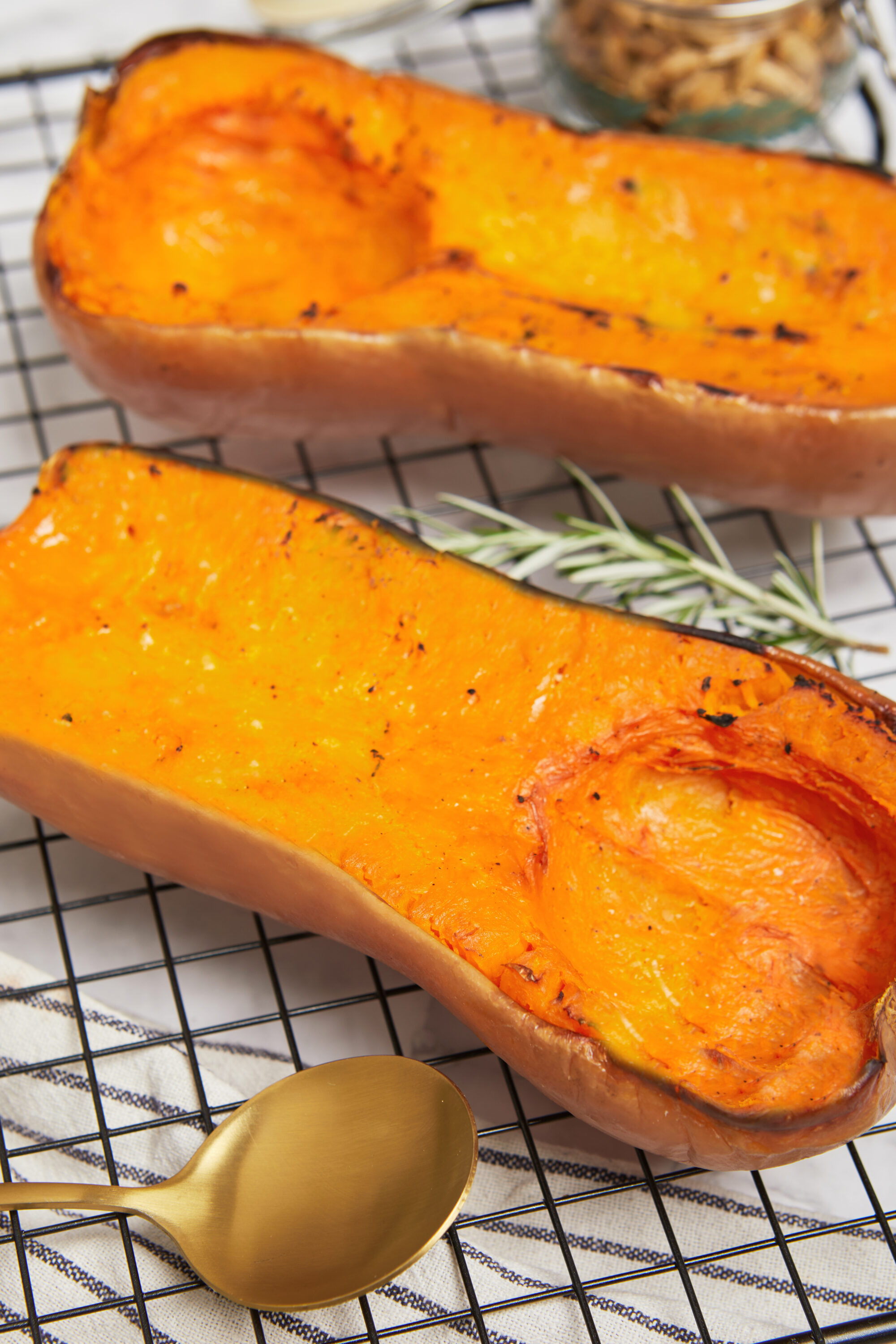
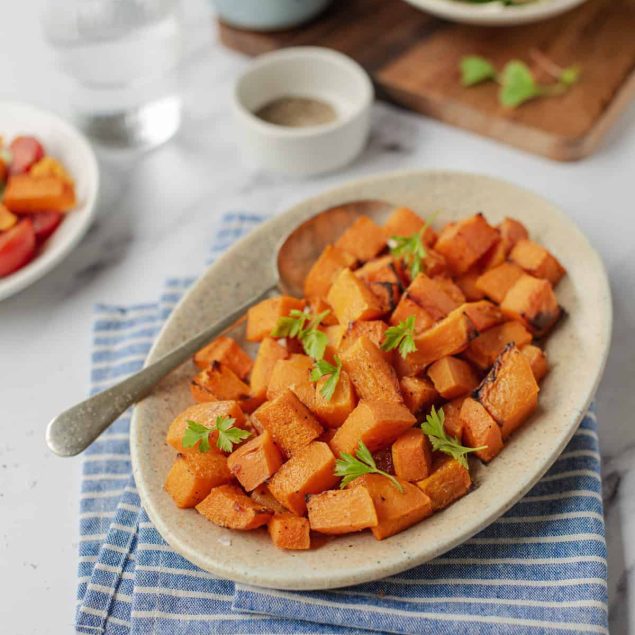
Butternut squash is an incredibly versatile food. You can enjoy it as a meal or side dish, or save butternut squash to add to other meals and desserts. I like to save mine for this Creamy Vegan Butternut Squash Pie and Butternut Squash Bread. If you want to try a sweet recipe for your butternut squash, you can top it with marshmallows, brown sugar, or caramel sauce. It’s also great chopped up in a salad, such as a Balsamic-Grilled Vegetable Salad or Vegan Paleo Broccoli Cashew Salad.
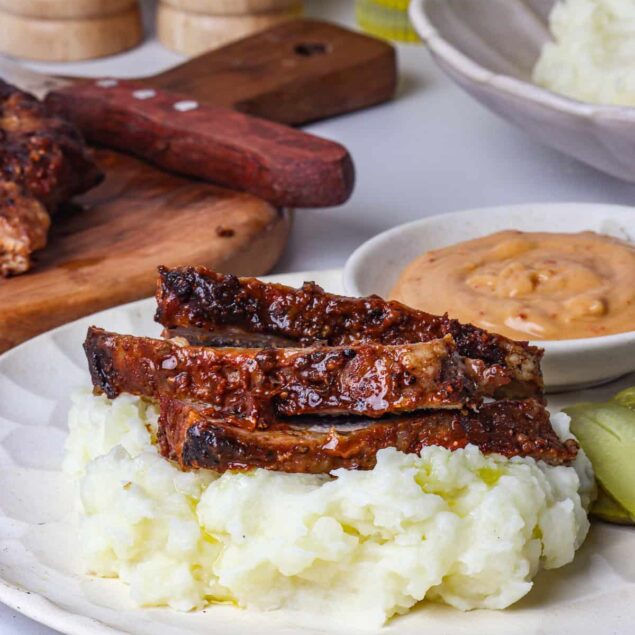
Pair roasted butternut squash with Easy Low-Carb Paleo Meatloaf for a healthy meal, or try it alongside Lemon-Pepper Chicken. I love it with fish, such as Grilled Tilapia or baked cod. The options are endless.

Ingredients
- 1 medium butternut squash
- 1 tablespoon olive oil
- 1 teaspoon sea salt
Instructions
- Preheat the oven to 400°F.
- Slice the butternut squash in half lengthwise and scoop out the seeds.

- Place the squash halves cut-side up on a baking sheet.

- Drizzle olive oil over the cut surfaces of the squash and sprinkle evenly with sea salt.

- Roast in the preheated oven until the squash is tender and can be easily pierced with a fork, about 45-50 minutes.
- Remove from the oven, let cool slightly, and serve as desired.
Nutrition Info:
Nutrition information are estimates only and may vary based on the specific brands, ingredients, and portion sizes you use. This data is provided for informational purposes only.


Leave a Comment