

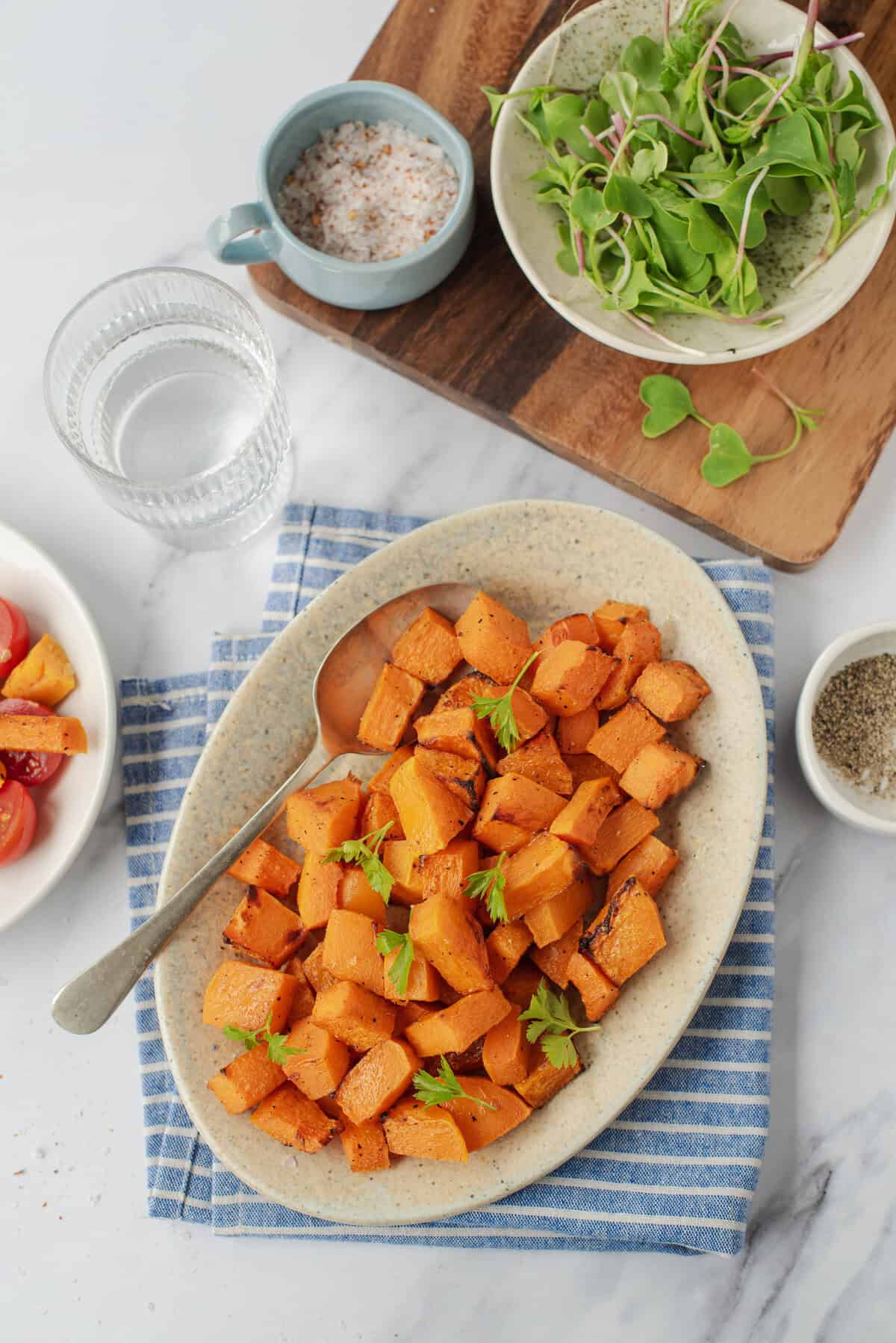
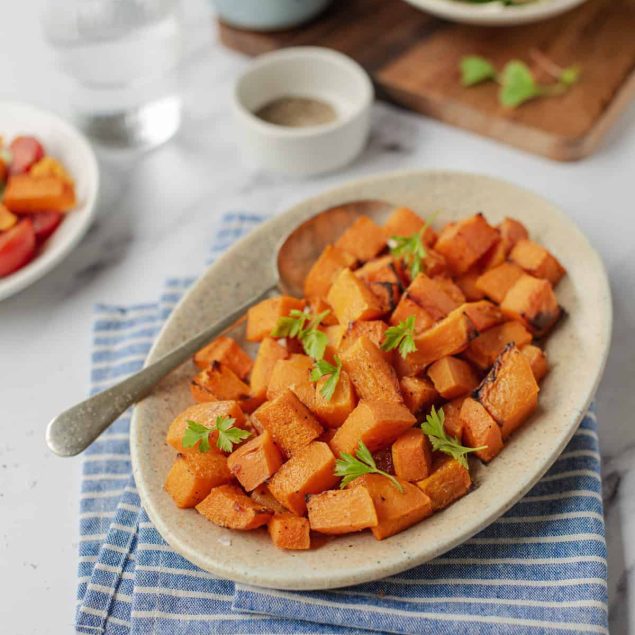
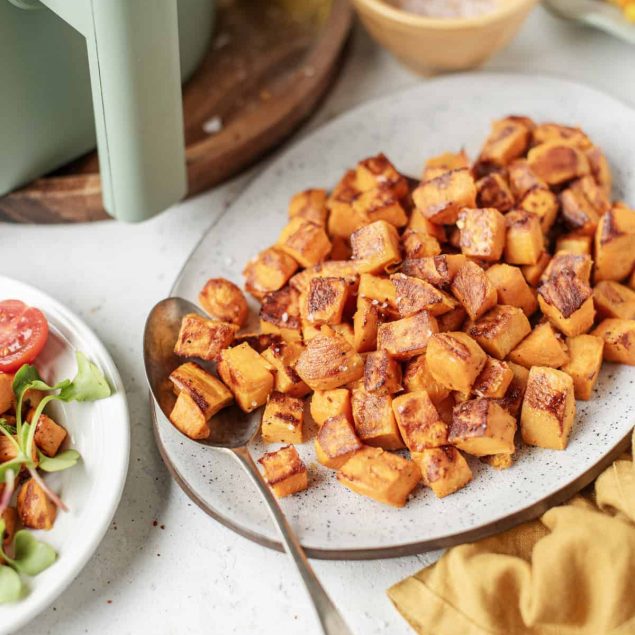
Perfectly Roasted Butternut Squash is tender, caramelized, and deliciously simple!
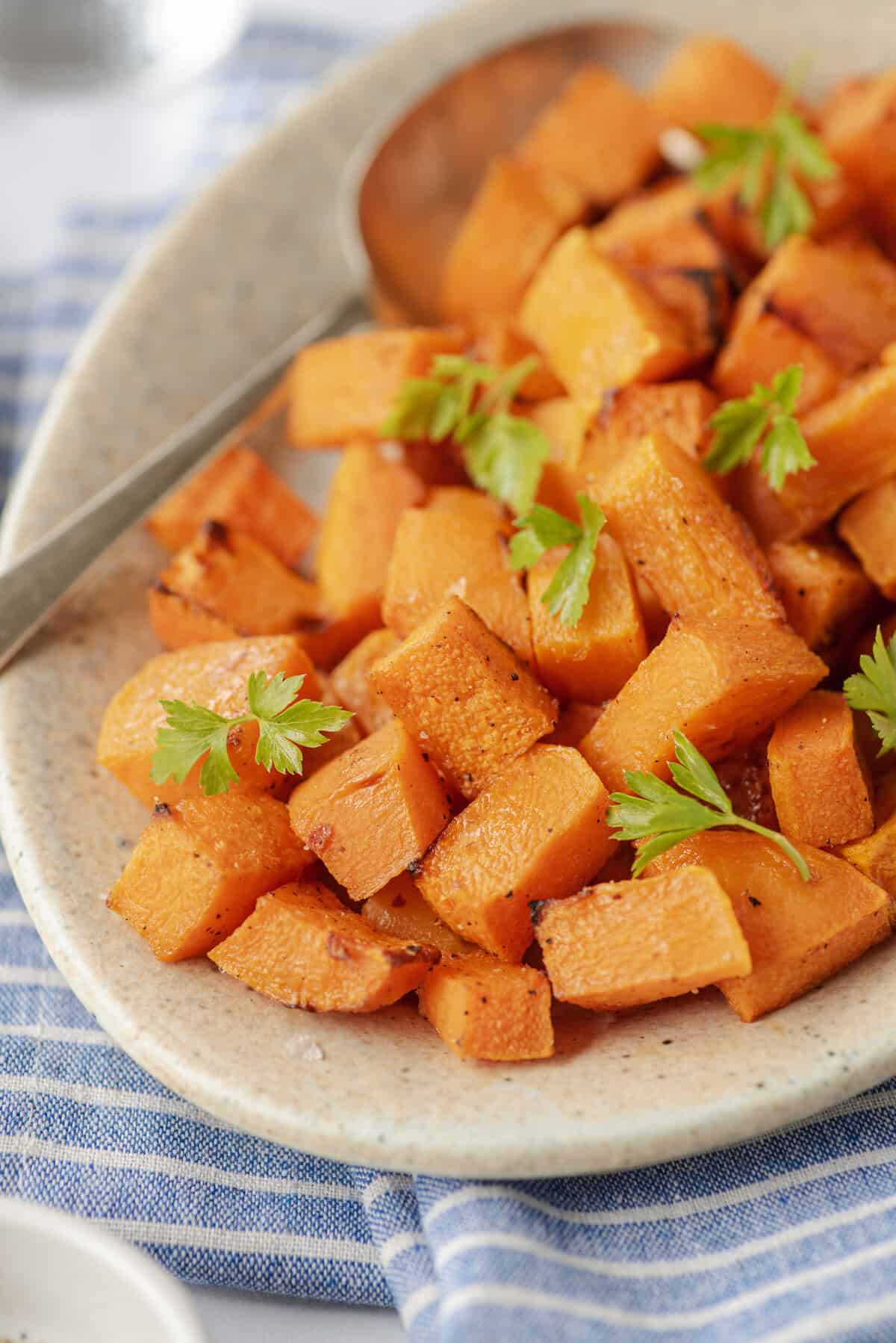
When someone says the word “gourd,” what comes to mind? Maybe Halloween carvings, autumn squash dishes, or those seemingly neglected bins of knobby, odd-sized vegetables at the grocery store? It’s true – gourds, like pumpkins and squash, often end up sidelined as fall décor or maybe used in seasonal soups, but they have so much more to offer. They’re versatile, tasty, and make a great choice for various diet-friendly swaps, especially when roasted to perfection.
When a plate of beautifully roasted butternut squash cubes hits the serving table, people might think you’re serving them sweet potatoes – but it’s time to give gourds, like butternut squash, their well-deserved spotlight. Full of fiber, vitamins, and fewer carbs than other sides, like roasted potatoes or even sweet potatoes, butternut squash is packed with flavor and nutritional benefits. This roasted butternut squash is a delicious side dish that checks all the boxes for taste and simple preparation.
Is Roasted Butternut Squash Healthy?
Butternut squash is brimming with vitamins and minerals. On top of that, it has more fiber than many other common vegetables. If you’re trying to cut back on carbs or calories but you still want a hearty, flavorful dish, butternut squash is an excellent substitute. Roasted butternut squash has a naturally sweet, nutty flavor that works well in many recipes where you’d typically use sweet potatoes. Though it may not be as crispy as regular potatoes when making fries, Butternut Squash Fries deliver a tasty alternative that’s both nutritious and comforting.
Roasted butternut squash is naturally keto-friendly, Paleo, vegan, and Whole30 compliant. You don’t need to alter anything in this recipe to fit these diets – just enjoy the rich, caramelized flavor of this simple dish knowing you’re also nourishing your body with plenty of goodness.
Roasting To Caramelized Perfection
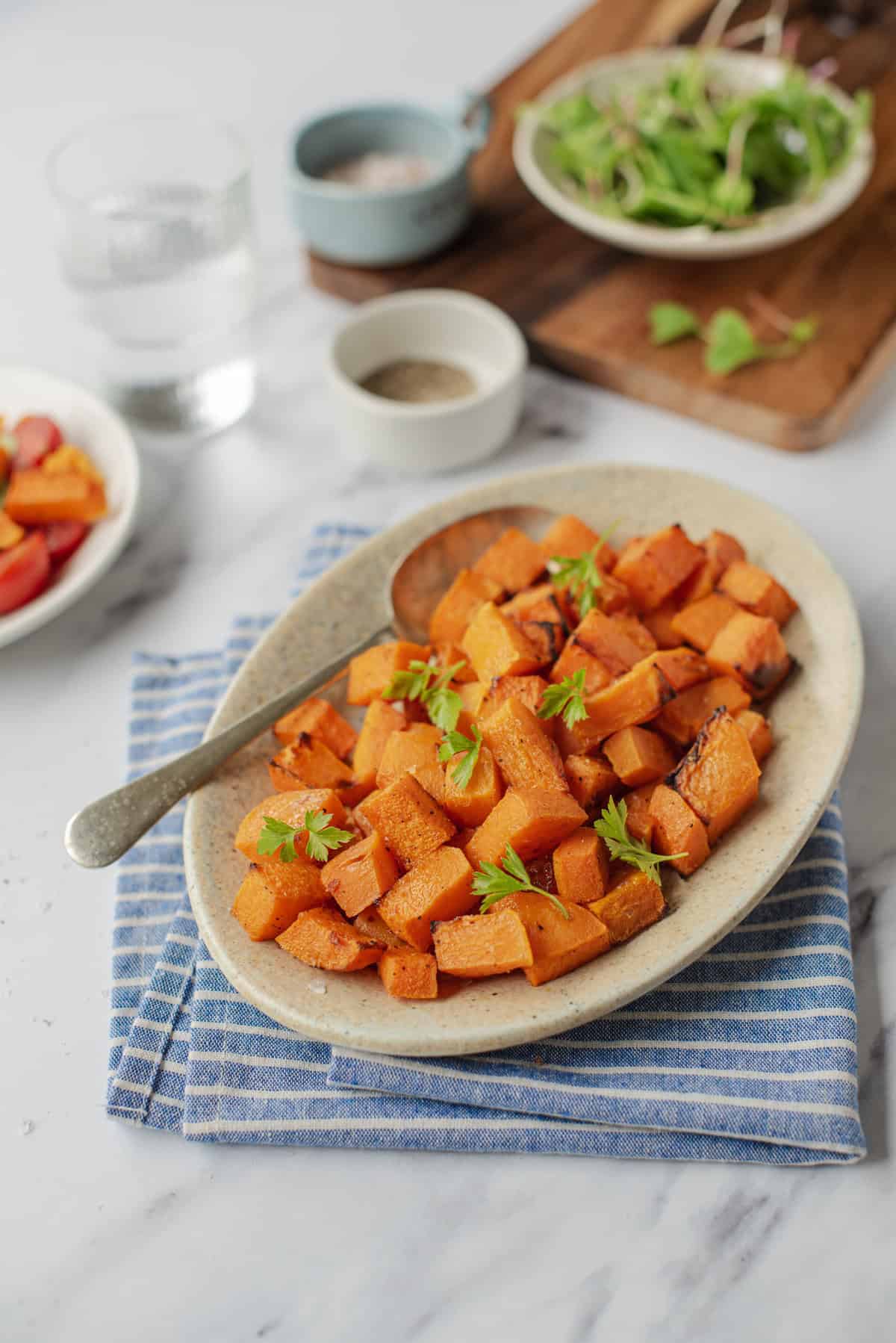
One key to getting that irresistible roasted flavor is allowing the butternut squash to caramelize. Caramelization occurs when the natural sugars in the squash break down and turn brown in the oven, creating that slightly crisp, golden exterior. The trick to achieving this is a few simple tips: Don’t crowd the pan, use high enough heat (400°F is perfect), and make sure the cubes are evenly coated in a bit of oil. It’s tempting to overfill your baking sheet, but allowing enough space between the squash pieces ensures the cubes roast rather than steam.
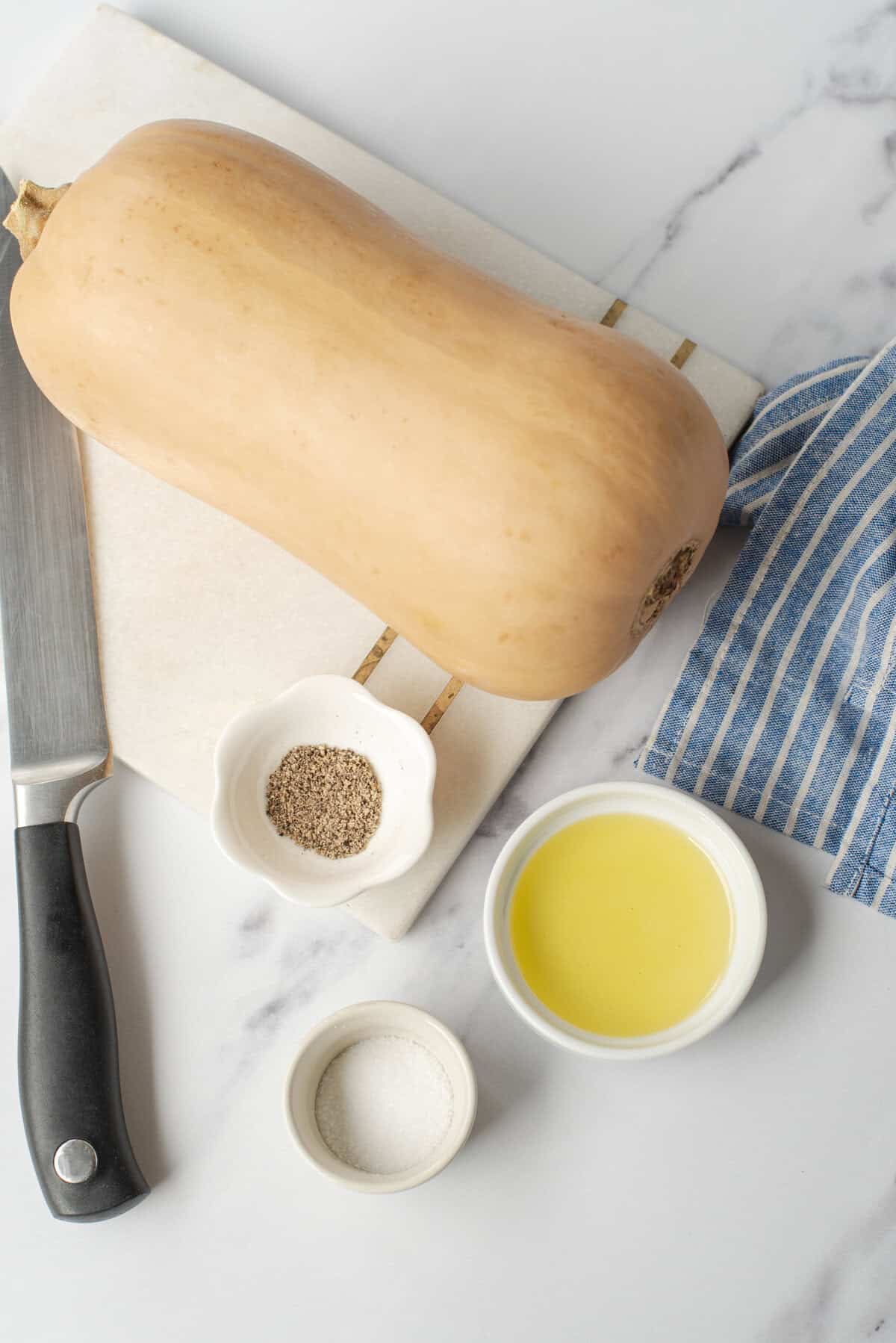
If you haven’t prepared butternut squash before, it’s fairly simple. Start by cutting off both ends of the squash with a very sharp knife. Then stand it upright on a cutting board and use a sharp vegetable peeler or a serrated peeler to remove the skin, peeling downward from the top of the squash. You can also microwave the squash for a couple of minutes to soften the skin slightly to make peeling slightly easier.
If you don’t want to mess with peeling and cutting your butternut squash into cubes, you can also try this Roasted Whole Butternut Squash.
How to Make Ahead and Store
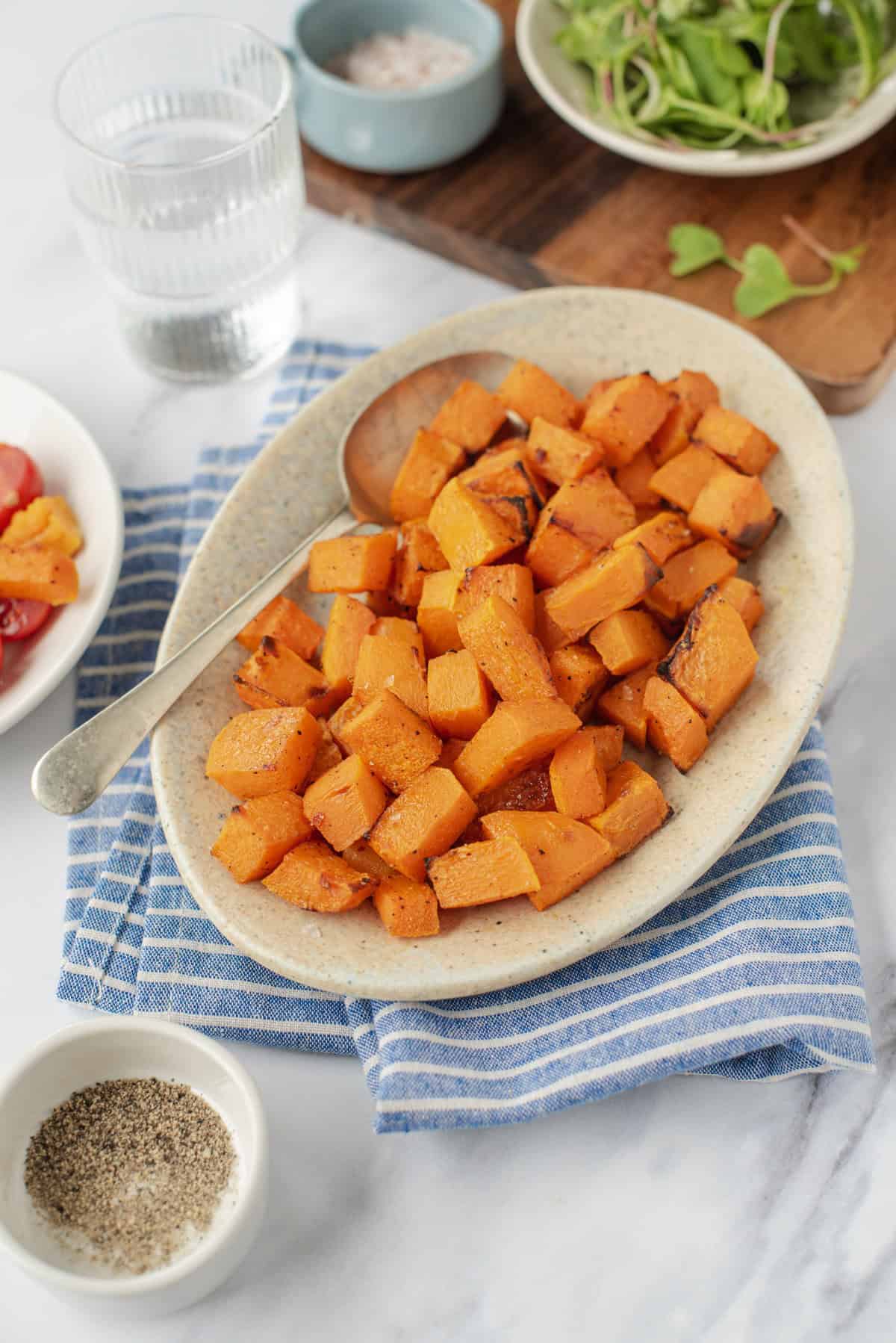
Store your roasted squash in an airtight container in the fridge for up to 3-4 days. To keep it from drying out, add a small drizzle of olive oil before storing. When reheating, toss it in a hot skillet until warmed through to help regain some of that crispness.
Serving Suggestions
Roasted butternut squash is the perfect substitute for any meal demanding a sweet potato side, especially when you’re serving keto favorites like Asparagus-Stuffed Chicken Breast or No-Bean Low-Carb Keto Turkey Chili. If you’re looking to use roasted butternut squash as a substitute for sweet potatoes in your next Paleo meal, try this Buffalo Chicken Paleo Sweet Potato Hash. You can even use this versatile vegetable to make a Butternut Squash Pasta Sauce, or spiralize it into these Butternut Squash Noodles.
Ingredients
- 1 medium butternut squash about 2-3 pounds
- 2 tablespoons olive oil
- 1 teaspoon sea salt
- 1/2 teaspoon ground black pepper
Instructions
- Preheat your oven to 400°F and line a baking sheet with parchment paper.
- Peel the butternut squash, cut it in half lengthwise, and remove the seeds. Then cut the squash into 1-inch cubes.

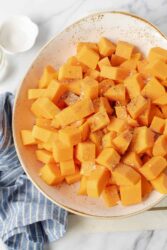
- In a large bowl, toss the butternut squash cubes with olive oil, salt, and pepper until they are evenly coated.
- Spread the seasoned squash cubes in a single layer on the prepared baking sheet, ensuring they are not touching for even roasting.
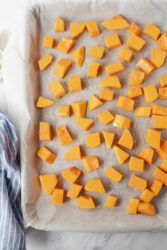
- Roast in the preheated oven for 25-30 minutes, or until the squash is tender and the edges are starting to turn golden brown. Halfway through, stir the squash to ensure even cooking.

Nutrition Info:
Nutrition information are estimates only and may vary based on the specific brands, ingredients, and portion sizes you use. This data is provided for informational purposes only.



Leave a Comment