

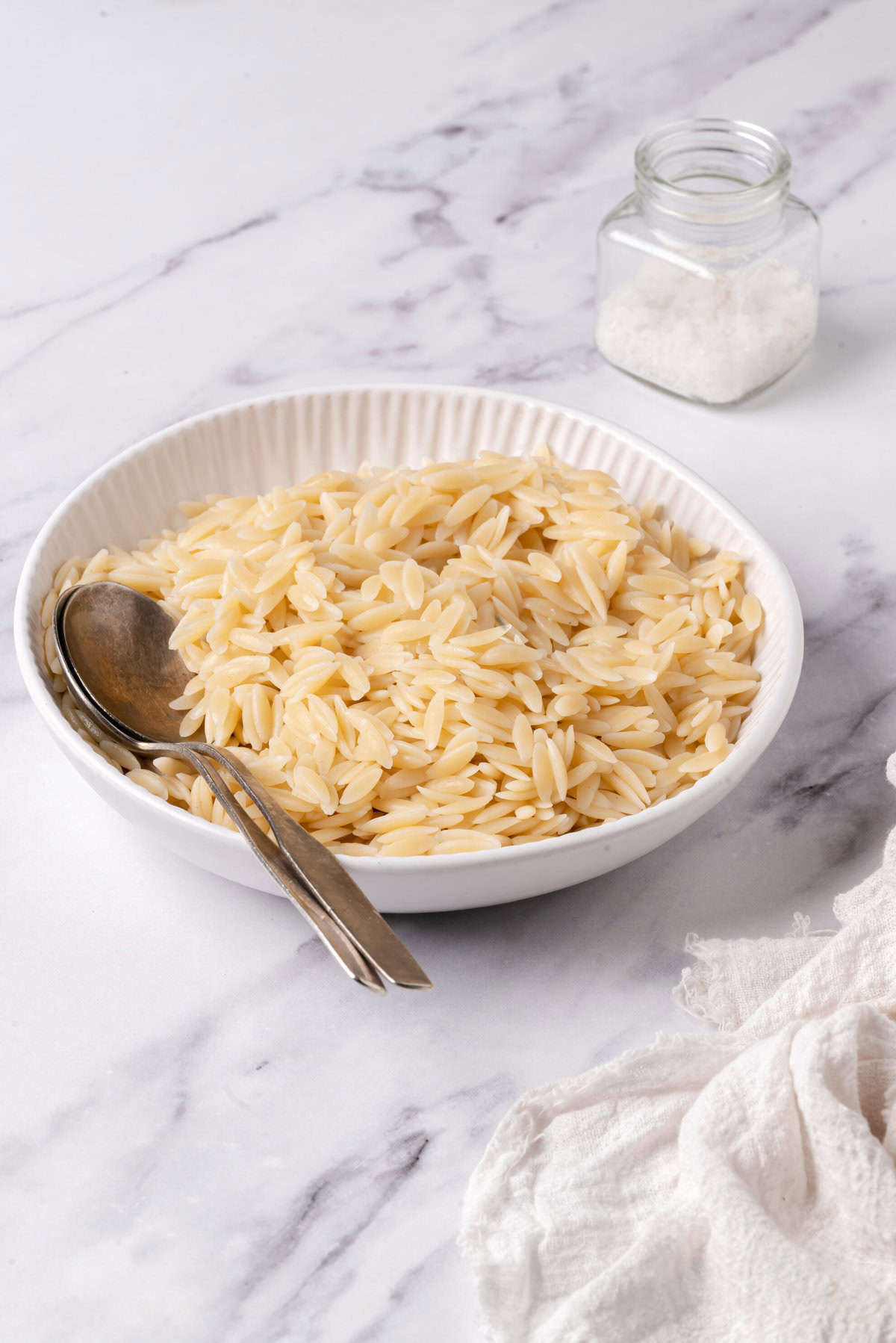
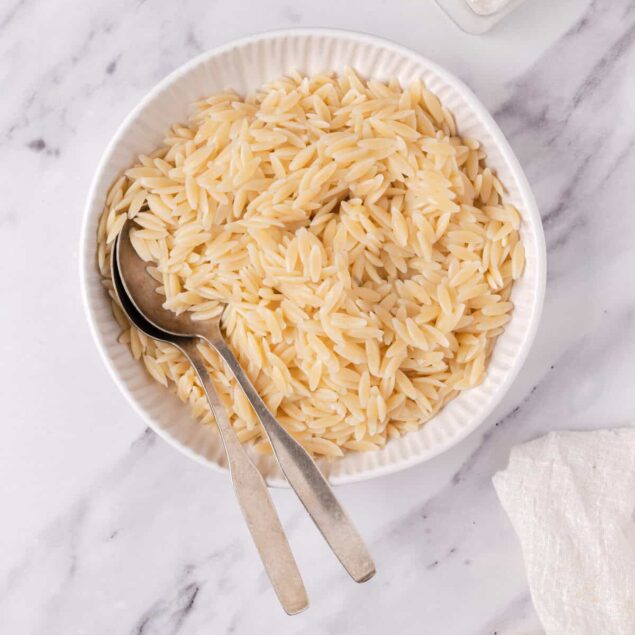
Simple, quick, and endlessly versatile, this foundational orzo recipe is the perfect base for countless flavorful creations.
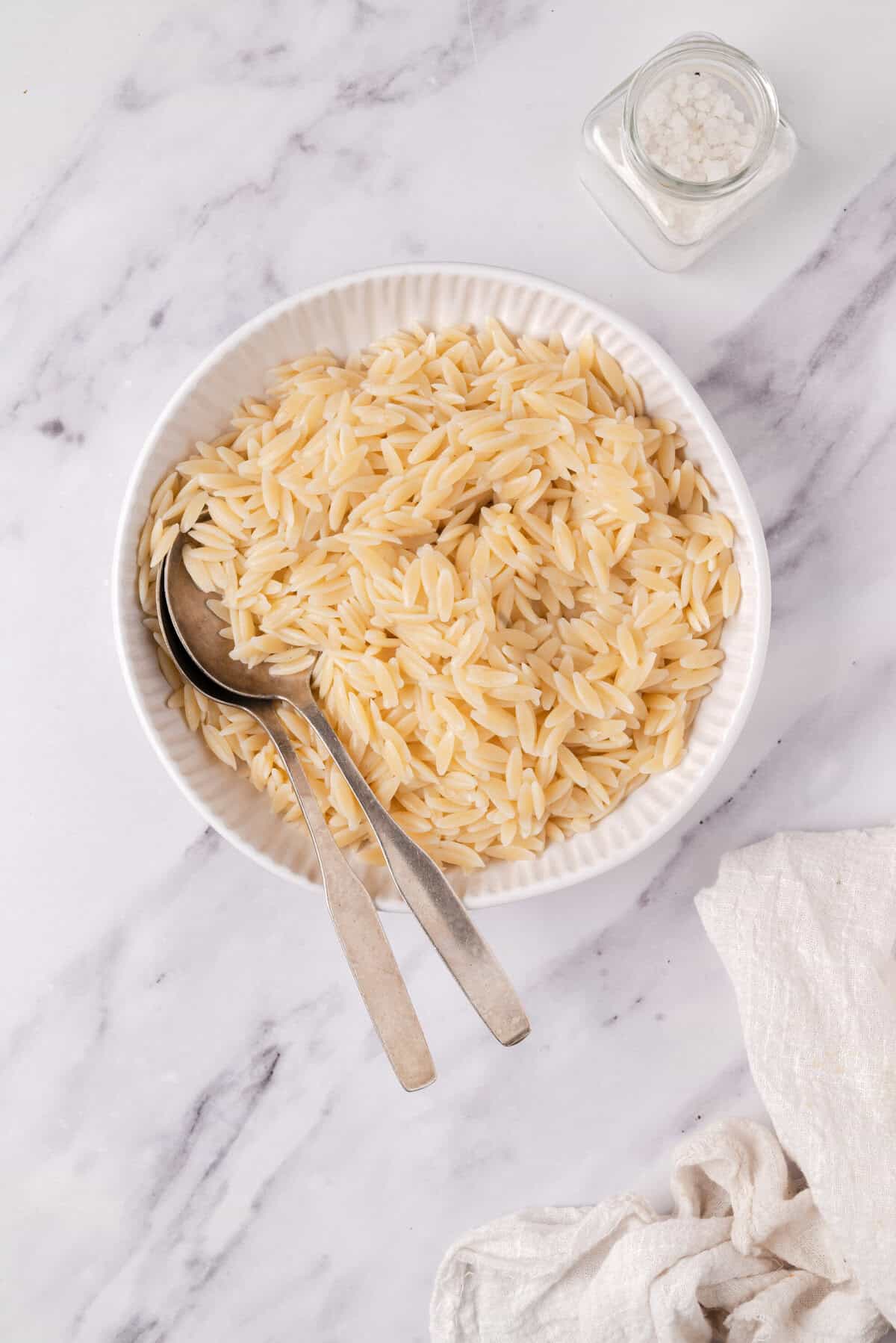
When you think of pasta, what comes to mind? Chances are, you’re thinking of something like tube-shaped penne, pocket-shaped ravioli, or stringy spaghetti smothered in sauce. But if you want to break out of predictable pasta dinners, why not use orzo?
While orzo often gets overshadowed in the pasta pantheon, it deserves a place in your recipe rotation. Orzo is a small, rice-shaped pasta that packs a tender bite and subtle nuttiness when cooked to perfection. Whether you’re crafting a creamy risotto-style dish, a bright and refreshing pasta salad, or a warming soup, orzo offers endless uses.
With orzo’s quick cooking time and ease of preparation, it’s perfect for both busy weeknights and special occasions. I always have a bag at the back of the cupboard, and I love to cook some on the weekend to craft speedy pasta lunch bowls during the week. The neutral flavor of this pasta allows it to absorb the vibrant tastes of broths, sauces, or vinaigrettes, making it a versatile base for countless dishes.
Is Orzo Healthy?
In its basic form, this orzo recipe is a light and straightforward choice with minimal ingredients and no added fats. Orzo is made from semolina or durum wheat, meaning it contains a good amount of complex carbohydrates, which are an excellent energy source.
To make this recipe healthier, consider swapping regular orzo for whole-grain orzo, which offers more fiber for a heartier, more nutritious option. For a protein boost, serve it alongside grilled chicken, fish, or plant-based protein like chickpeas or edamame. Adding a handful of steamed vegetables, fresh herbs, or a drizzle of olive oil can also enhance both the nutrition and flavor profile of your dish.
Is Orzo The Same As Rice?
While orzo looks similar to rice, it’s actually a type of pasta made from wheat flour, whereas rice is a grain. The texture of cooked orzo is softer and slightly chewy, while rice has a firmer bite. They both serve as excellent bases for dishes, but their uses can vary depending on the recipe. Orzo’s starchiness makes it ideal for creamy dishes, whereas rice holds its structure better in stir-fries or pilafs.
When it comes to digestion, orzo and rice behave differently. Orzo, being pasta, is processed more quickly in the body, especially if made from refined wheat. On the other hand, rice (particularly brown or wild rice) contains more fiber and digests more slowly, providing longer-lasting energy.
Despite these differences, orzo can often be substituted for rice in recipes for a fun and flavorful twist, as long as you adjust cooking times and liquid ratios accordingly.
How To Make Ahead And Store
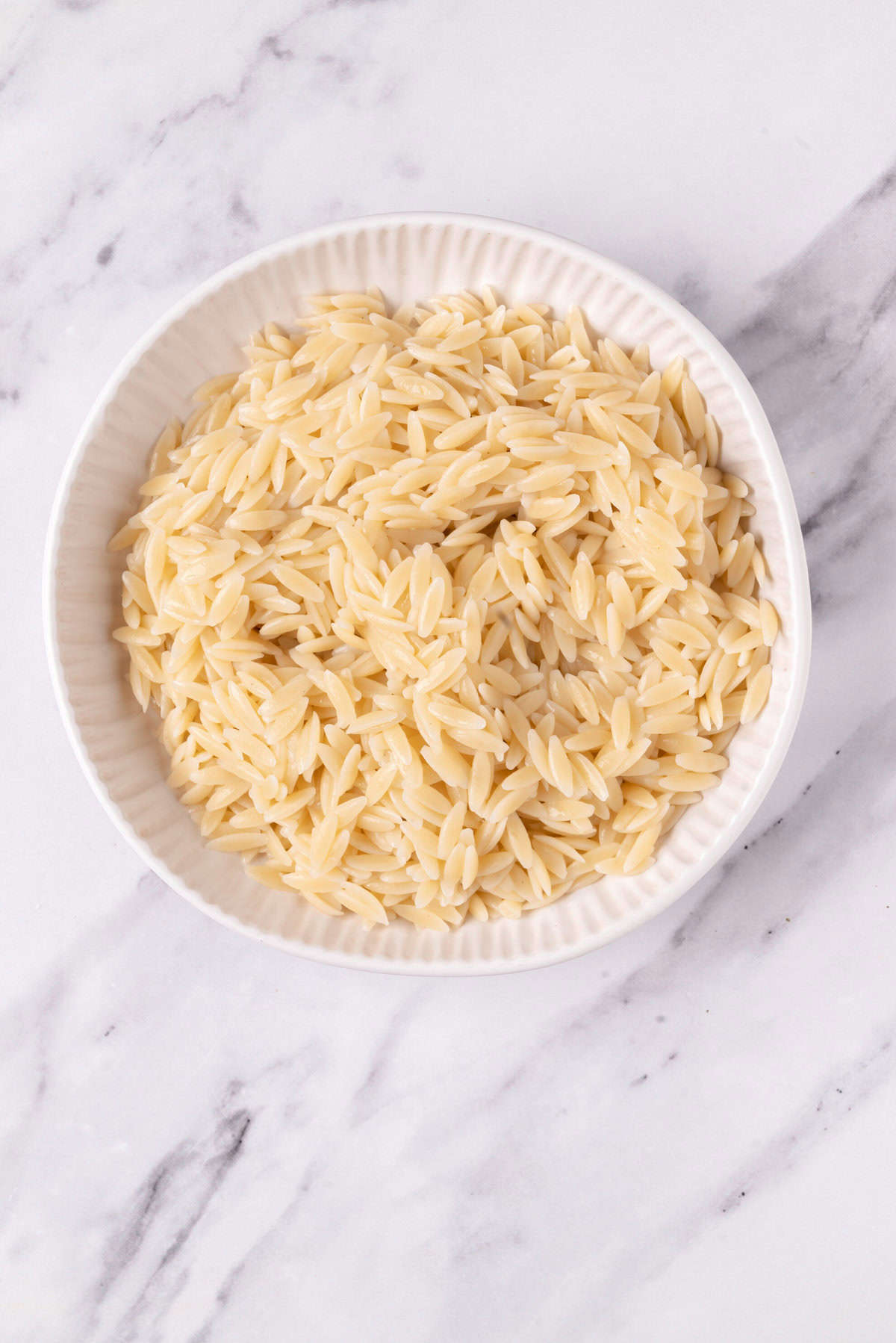
Cook the orzo, rinse it under cold water, and toss it with a small amount of olive oil to prevent sticking. Then store in an airtight container in the refrigerator for up to 4 days. To freeze, spread the cooled orzo on a baking sheet, freeze until firm, and then transfer to a freezer-safe bag or container. It keeps well for up to 2 months. Thaw overnight in the refrigerator if frozen, then reheat gently in the microwave or on the stovetop with a splash of water or broth to revive its texture.
Serving Suggestions
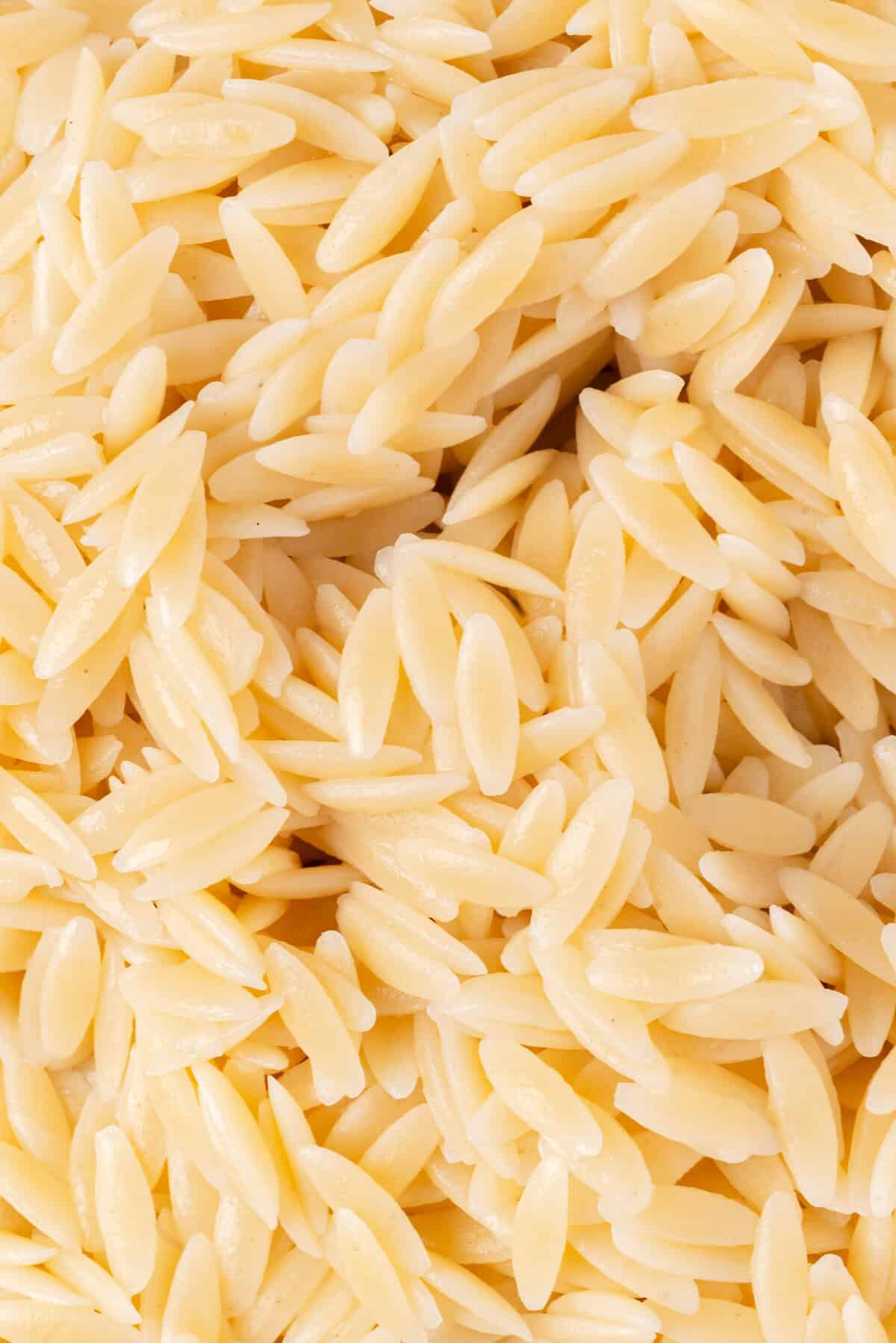
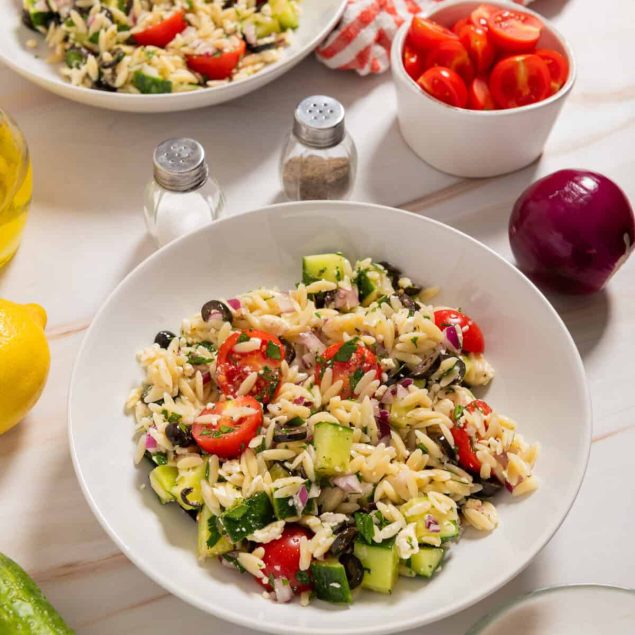
It’s common to use orzo as a starchy base for a salad recipe like this Lemon Orzo Salad or this Mediterranean Orzo Salad. You can also make a Rice Pilaf With Orzo, or fully substitute the rice in your regular Vegetable Rice Pilaf.
Throw some orzo into your soups and stews, including classics like Chicken Soup, Vegetable Soup, or Minestrone Soup, or try it in a Kimchi-Jjigae (Kimchi Stew) or an Instant-Pot Lamb Stew.
Ingredients
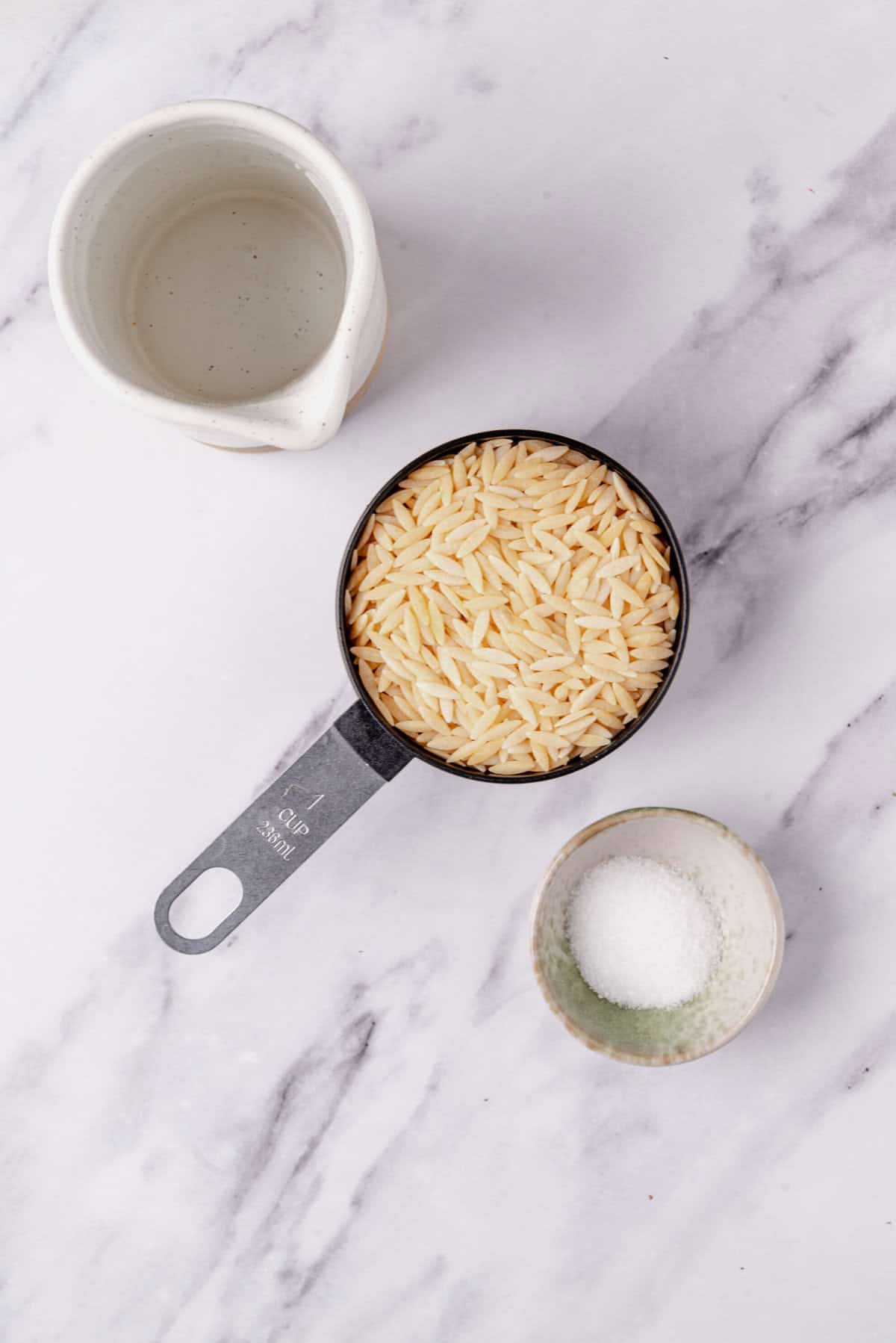
- 2 cups water
- 1/2 teaspoon salt
- 1 cup orzo pasta
Instructions
- Bring water to a boil in a medium saucepan over high heat.
- Add salt and orzo pasta to the boiling water, stir occasionally.

- Cook the orzo for about 10 minutes or until it is al dente. Stir occasionally to prevent sticking.
- Drain the orzo in a colander and, if you don't plan on using the orzo immediately, rinse under cold water to stop the cooking process.
Nutrition Info:
Nutrition information are estimates only and may vary based on the specific brands, ingredients, and portion sizes you use. This data is provided for informational purposes only.



Leave a Comment