

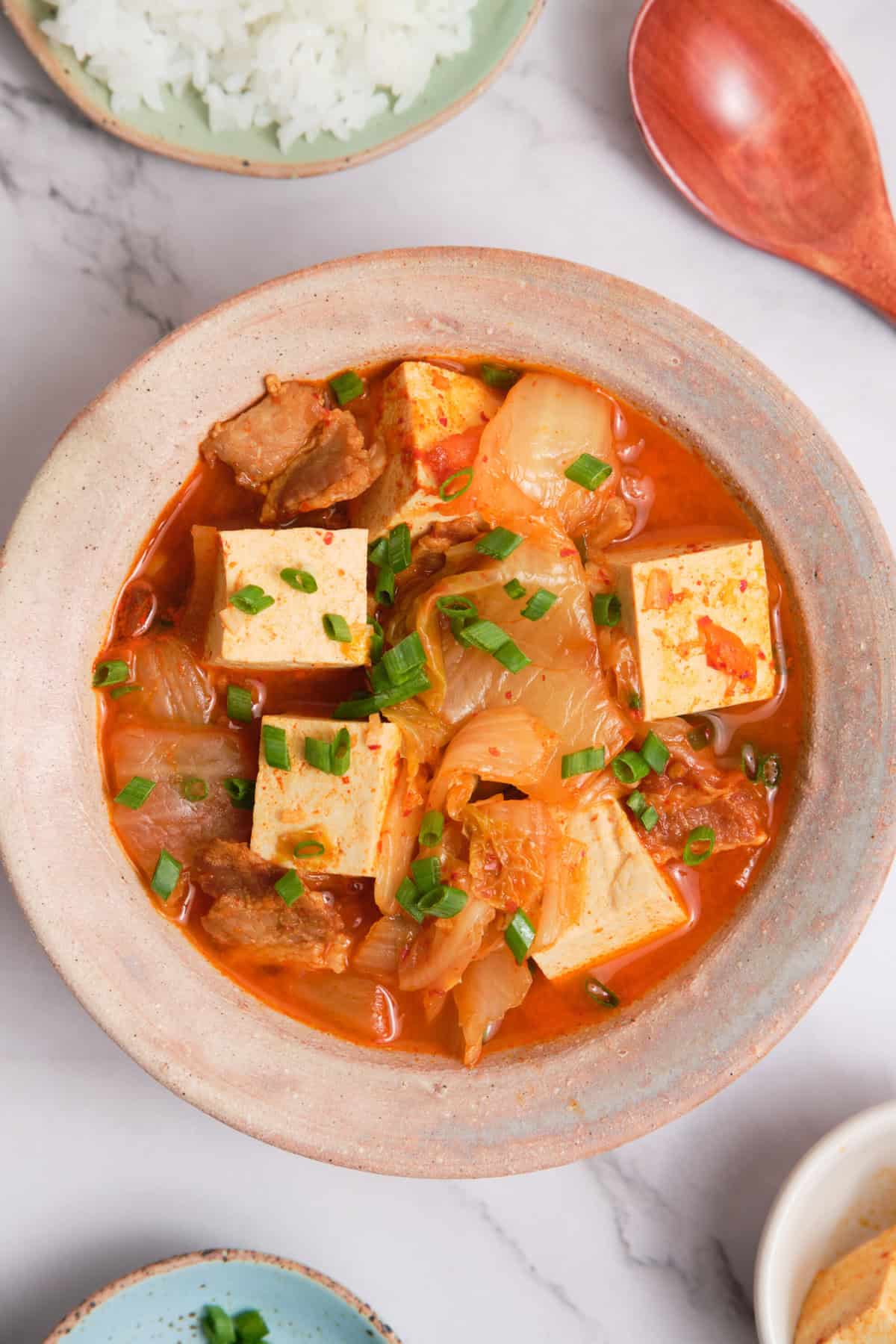
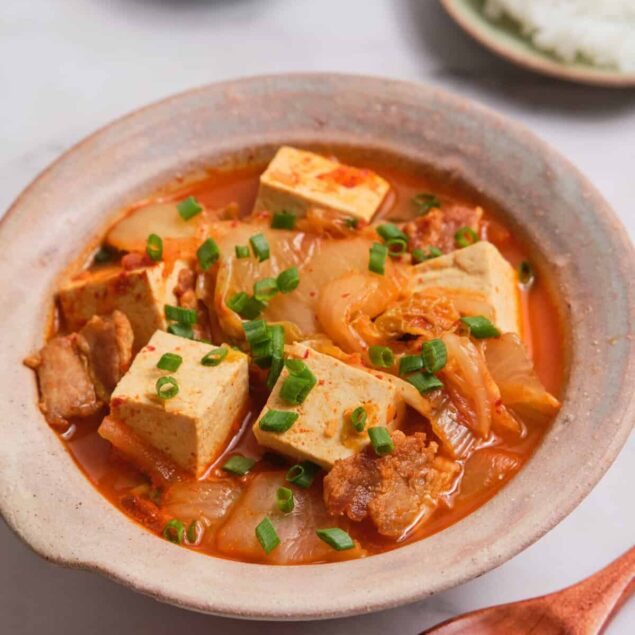
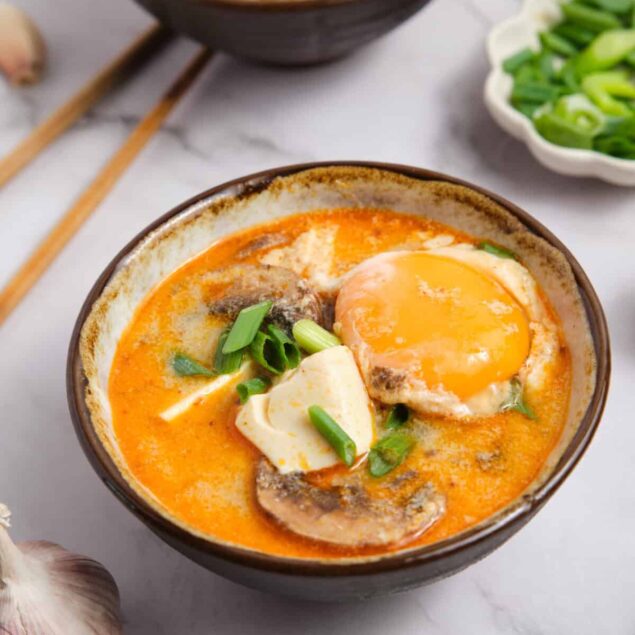
Craving something spicy and satisfying on a cold day? Try this classic Korean recipe for Kimchi-Jjigae!
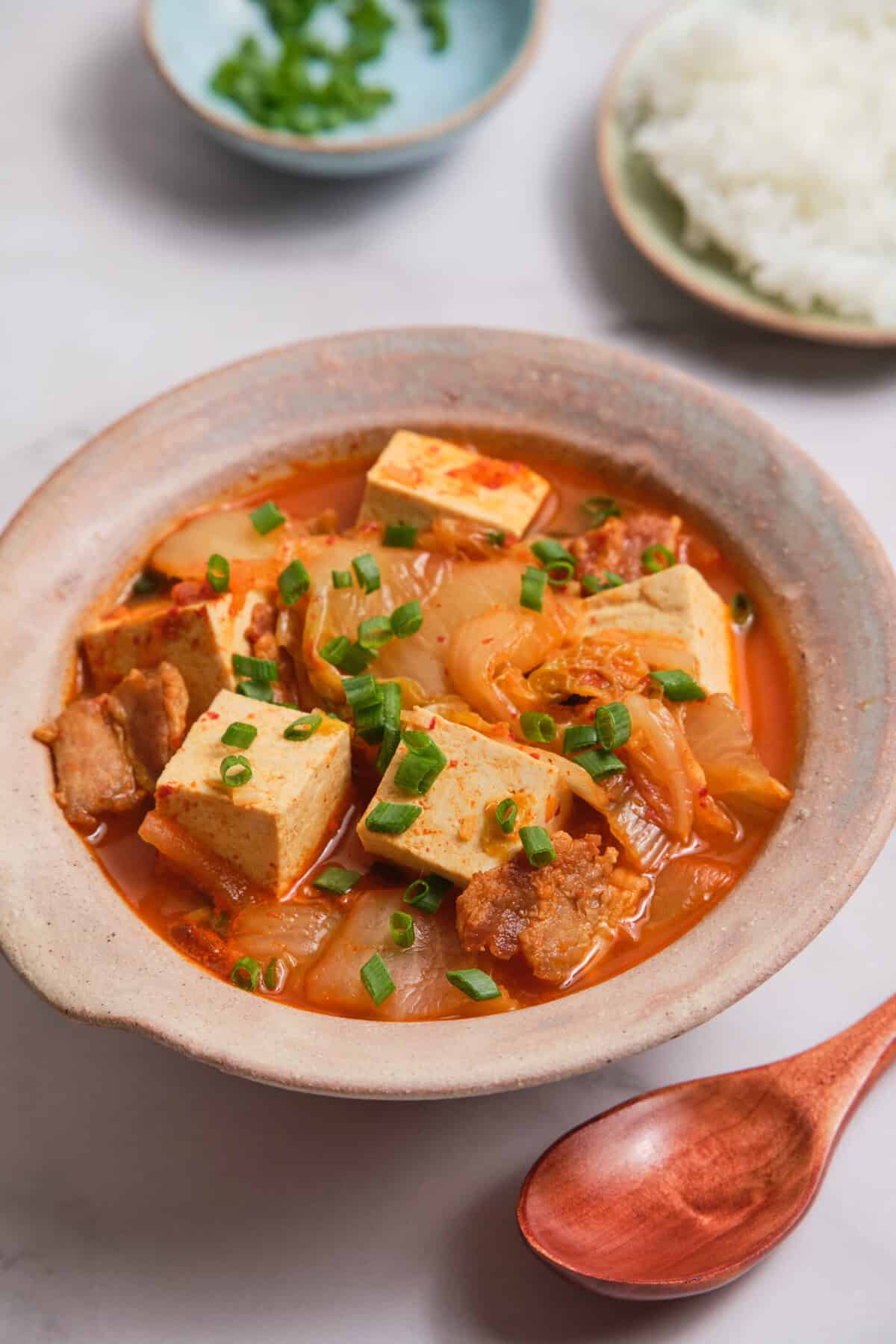
Few experiences are more cozy than sitting inside by a toasty fire on a chilly day. As snow falls or the wind beats against your window panes, you get to stay in and enjoy the warmth as the weather rages outdoors.
While sitting inside is comfy enough on these blustery days, you can easily kick the comfort factor up a few notches with some homemade stew. In fact, one traditional Korean stew—kimchi-jjigae—has all the flavors you need to stay warm, even during the dead of winter. Not only does this recipe have the spice you’d expect from Korean cuisine, but it also has plenty of tasty and tangy notes for a complex flavor explosion.
Whether you’re a seasoned Seoul traveler or a curious newcomer to Korean food, this recipe is a great “passport” into international comfort food. Find out how to make kimchi-jjigae, and let your taste buds take off the next time you need a spicy and scrumptious meal.
Is Kimchi-Jjigae Healthy?
There are good and not-so-good aspects to kimchi-jjigae from a health perspective. While kimchi is loaded with gut-boosting probiotics, this recipe is cooked—and fermented foods generally lose their probiotic benefits when they’re cooked. However, the actual components of kimchi itself (cabbage, sometimes radish) are still very nutritious, loaded with antioxidants, and low in calories. Tofu, another key ingredient, is also a great source of protein, calcium, iron, and other nutrients.
On the downside, pork belly is quite high in saturated fat. If you have health concerns, consider swapping out the pork belly for a leaner cut of meat like chicken, but keep in mind it won’t give you the same flavor. You could also substitute vegetable oil for something more nutritious, like avocado oil, which contains more heart-healthy monounsaturated fats.
The History Of Kimchi-Jjigae
Kimchi-jjigae has roots that stretch back thousands of years to the mid-Joseon era. While its exact origin isn’t clear, it’s thought that the dish came about after chili peppers were introduced to Korea. Kimchi was another dietary staple of the area, which Koreans began using as an ingredient in stews to create hearty, flavorful dishes. It was a natural pairing with the spicy chili peppers.
Kimchi-jjigae was historically a humble meal for commoners, made with whatever ingredients were available. The dish gained widespread popularity, and today, it’s a beloved comfort food enjoyed in homes and restaurants alike.
How Do I Store Leftovers?
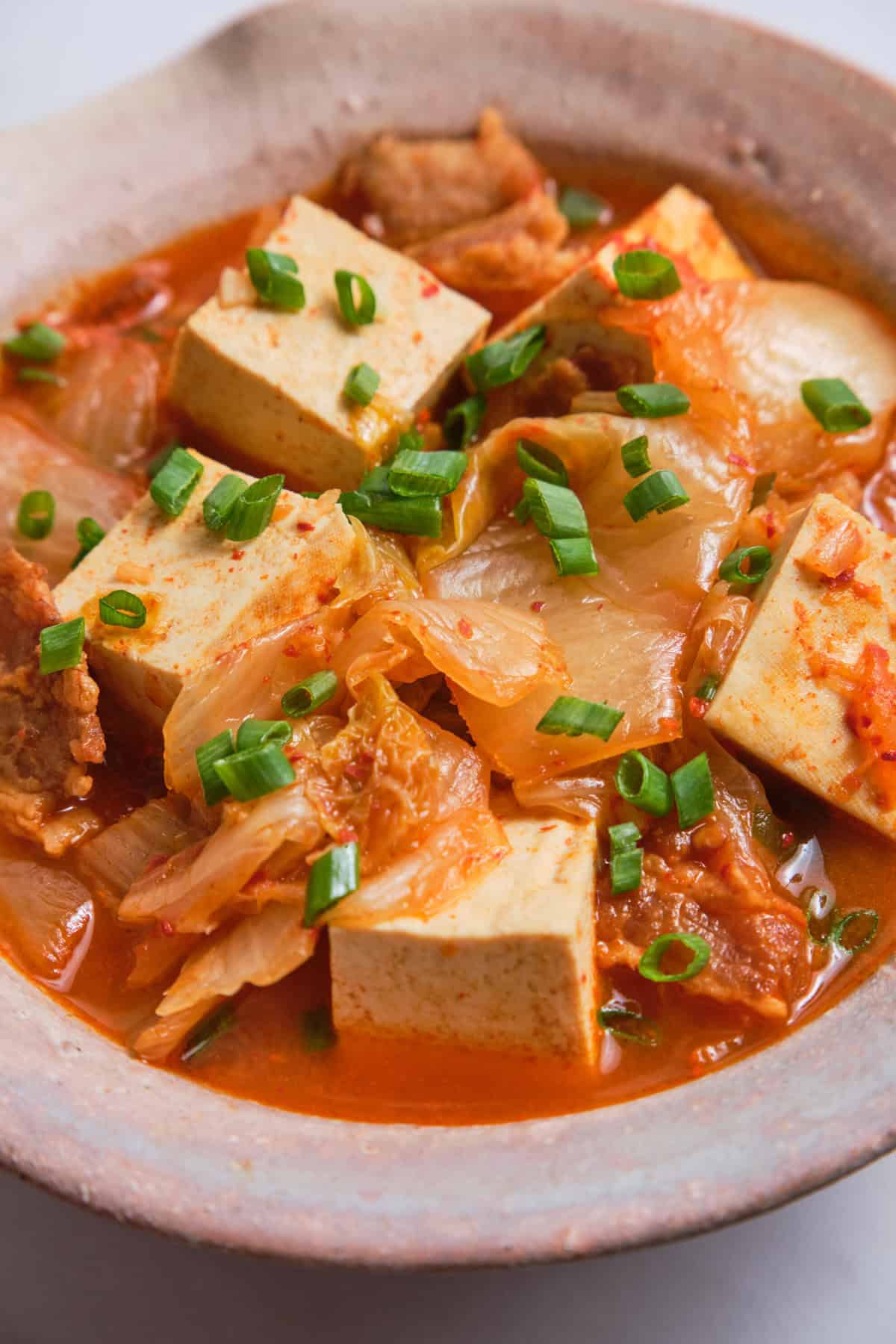
Transfer your cooled kimchi-jjigae to an airtight container and put it in the fridge for 3-4 days or in the freezer for up to 3 months. If freezing, thaw the kimchi-jjigae overnight and heat it on the stovetop or in the microwave until piping hot.
Serving Suggestions
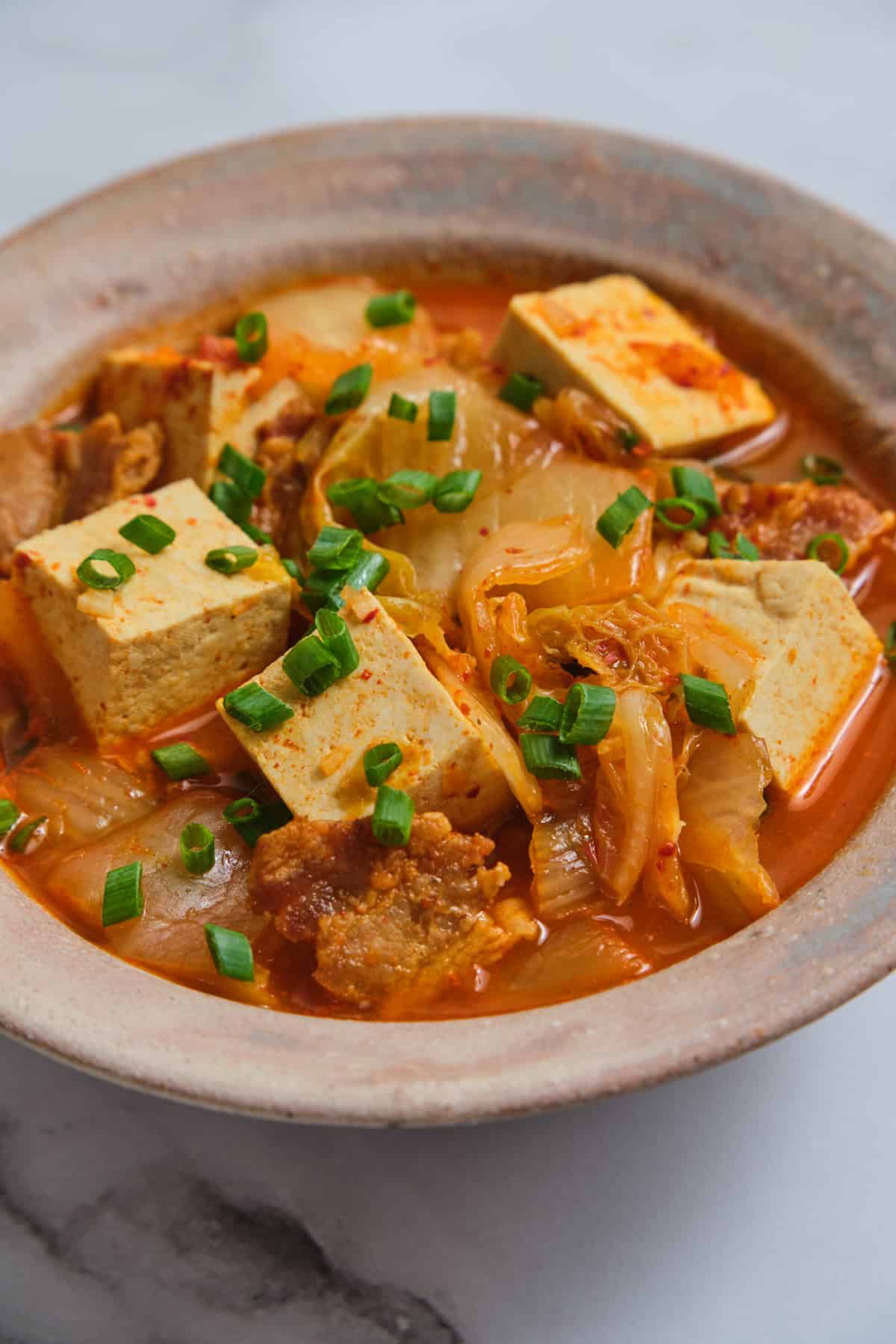
This Baked Rice would be a classic pairing for a steamy bowl of kimchi-jjigae, and it functions as a neutral component to all the complex flavors in this stew. However, if you want extra savoriness, consider serving the stew with a fried egg.
For those who want to add more veggies to this meal, consider serving kimchi-jjigae with a side salad like this Cucumber Salad. If you want a more authentic Korean dining experience, try a classic miyeok-muchim (a sweet-and-sour seaweed salad) instead.
Ingredients
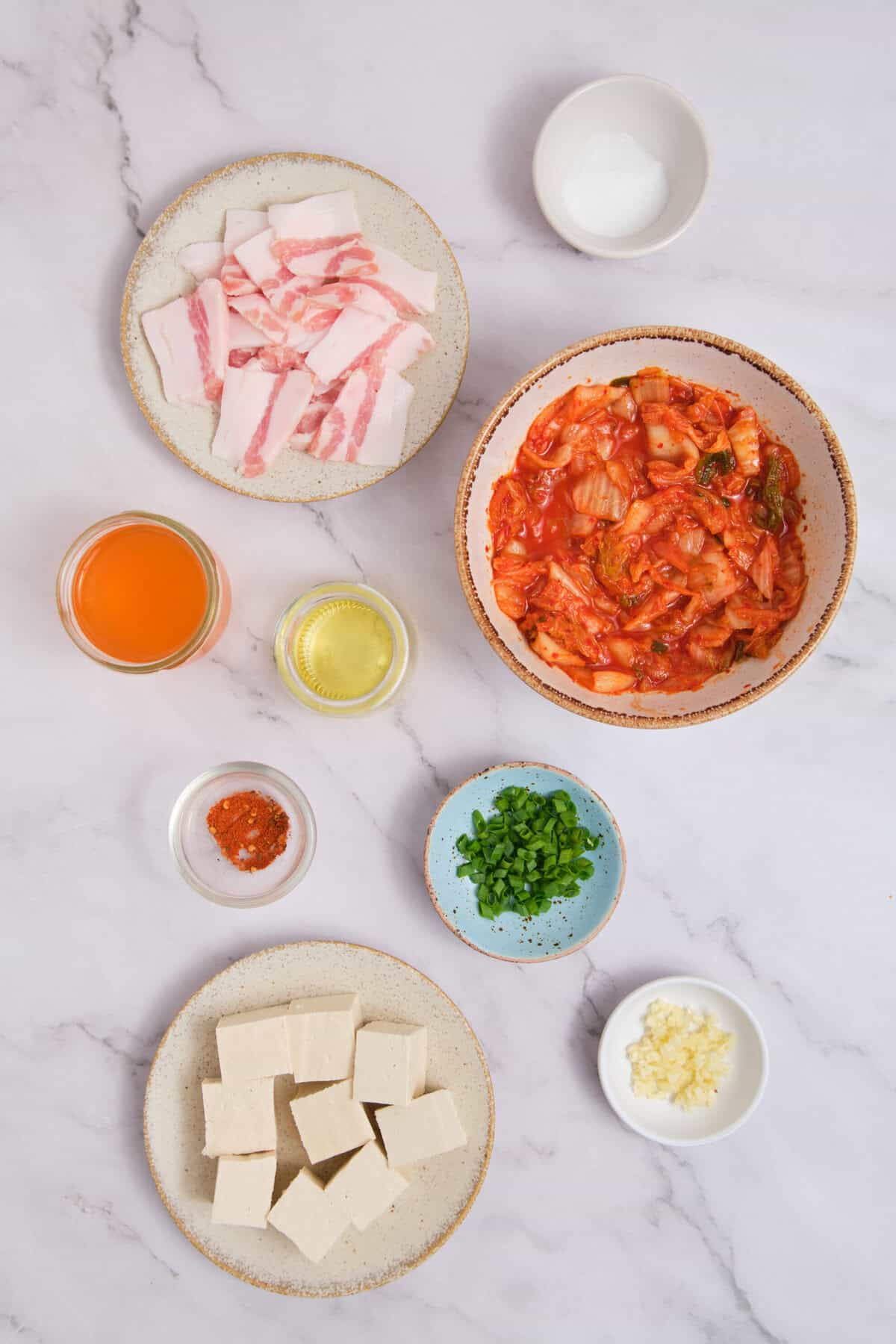
- 1 tablespoon vegetable oil
- 1/2 pound pork belly thinly sliced
- 2 cups well-fermented kimchi chopped
- 1 teaspoon garlic minced
- 1 tablespoon gochugaru Korean red chili pepper flakes
- 1/2 cup kimchi brine
- 2 cups water
- 1/2 teaspoon sugar
- 8 ounces firm tofu cut into 1-inch cubes
- 2 green onions sliced
Instructions
- Heat oil in a large pot over medium heat. Add pork belly and cook until it starts to brown.

- Add kimchi, garlic, and gochugaru to the pot. Cook for about 5 minutes until the kimchi starts to soften.
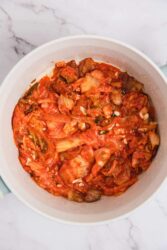
- Pour in kimchi brine and water. Stir in sugar. Bring to a boil, then reduce heat and simmer for 15 minutes.

- Add tofu to the pot and continue to simmer for another 10 minutes. Adjust seasoning with salt if necessary.
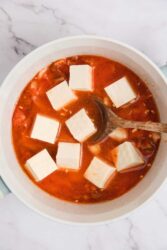
- Garnish with green onions and serve hot with steamed rice.
Nutrition Info:
Nutrition information are estimates only and may vary based on the specific brands, ingredients, and portion sizes you use. This data is provided for informational purposes only.



Leave a Comment