

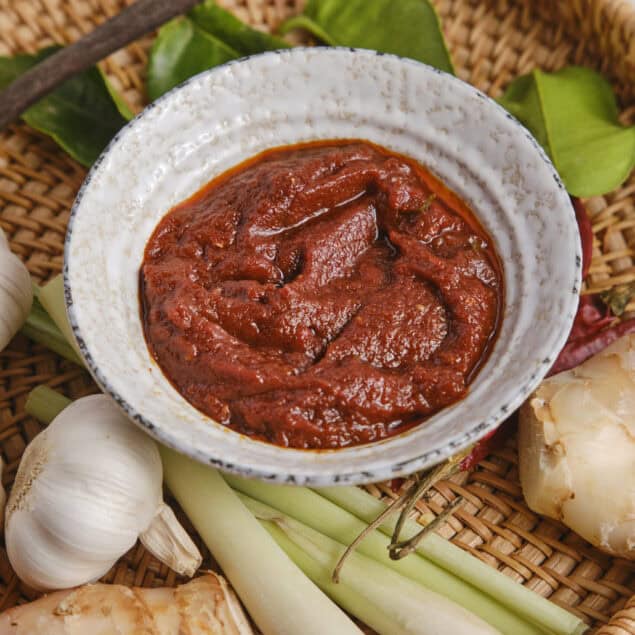
It doesn’t take long to make the Thai classic Tom Yum Paste, which adds an incredible depth of flavor to soups, stir-fries, and other dishes.
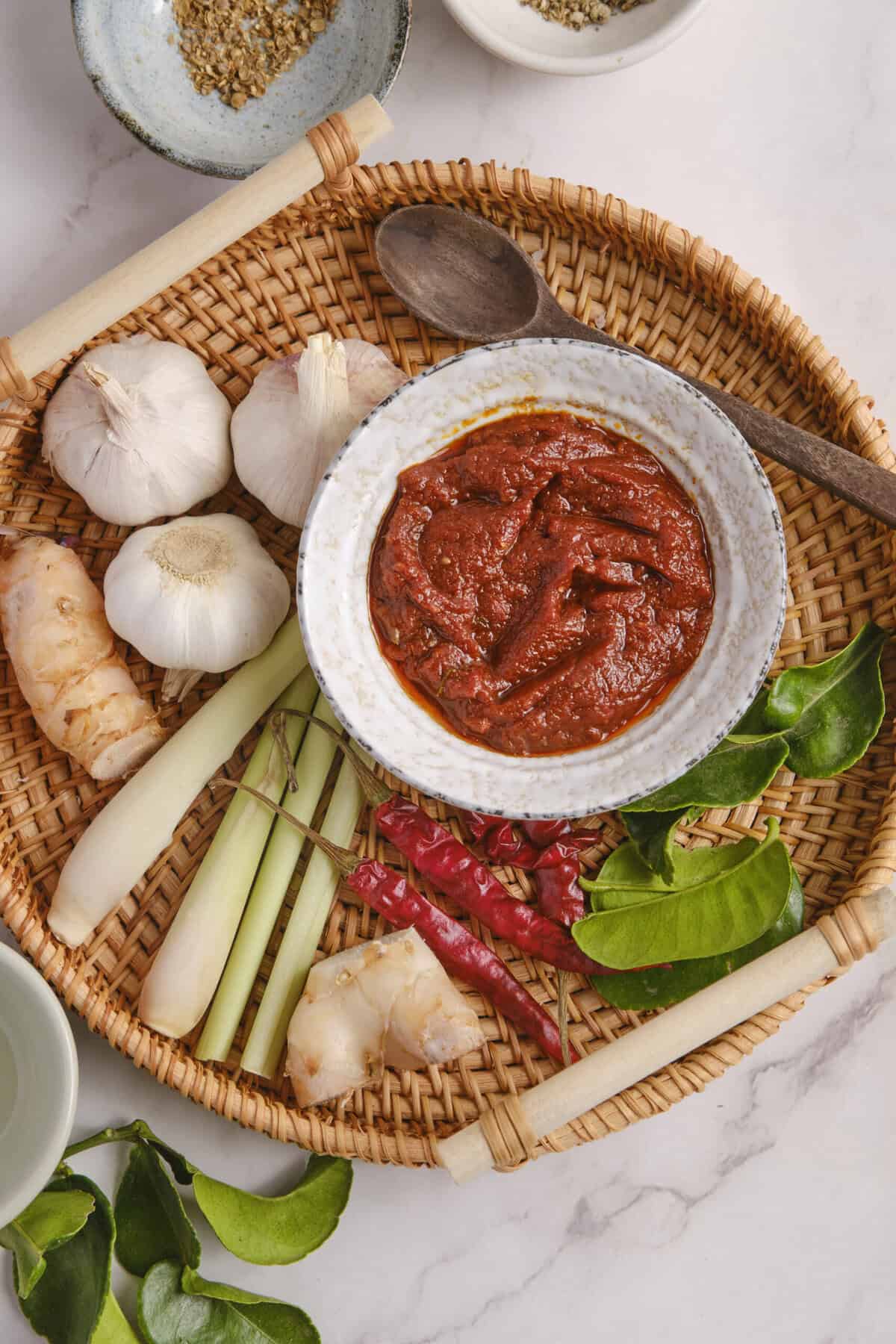
I love Thai food but often have trouble making up my mind when ordering soup. I love both tom yum and tom kha gai. These soups could not be more different. Tom yum has a spicy base of dried red chilies from the tom yum paste, while tom kha gai is a creamy coconut chicken soup.
While you can buy tom yum paste in many Asian markets, making it at home is easy and provides vibrant flavors without added unwanted ingredients. The best way to prepare this recipe is with a mortar and pestle, but if you’re anything like me, you’re pulling out your handy-dandy food processor. I have a small one for recipes like this, making it easy to use, wash, and store. Besides, all it takes is adding everything at one time to the food processor to make that vibrant red paste.
I want to share a word of caution before you start to make this paste. Although you use dried rather than fresh chilies, the oils and seeds can still irritate your skin and cause painful burning to your mouth, nose, or eyes. I always recommend wearing food preparation gloves when handling peppers and washing everything with soap and water afterward.
How to reduce sodium in tom yum paste
The elevated sodium levels in tom yum paste are from the optional fish sauce and shrimp paste. Without them, the recipe will not taste the same. Fish sauce is made by fermenting fish with salt. The best substitute for fish sauce in this recipe is reduced-sodium tamari or soy sauce, although the flavor will be quite different. Use equal parts tamari or soy sauce along with your choice of vinegar—white, wine, rice, or cider—to get the closest taste. A finely minced anchovy fillet can be added to provide some of the fishy taste.
The other high-sodium issue is the shrimp paste, which is also optional in this recipe. You can check product labels to find one with lower sodium than the others. Although not identical, miso paste can be used instead of shrimp paste for a similar umami flavoring. The other option is a different fermented soybean product called tua nao. These products may be available in some grocery stores, or you can find them at Asian markets.
How do I store leftovers?
Once the tom yum paste has cooled to room temperature, you can refrigerate it in a jar or other airtight container for up to 2 weeks. You can also portion it into ice cube trays to freeze for longer storage. Store the frozen cubes in a freezer bag, squeezing out extra air, and they’ll keep frozen for up to 3 months.
Serving suggestions
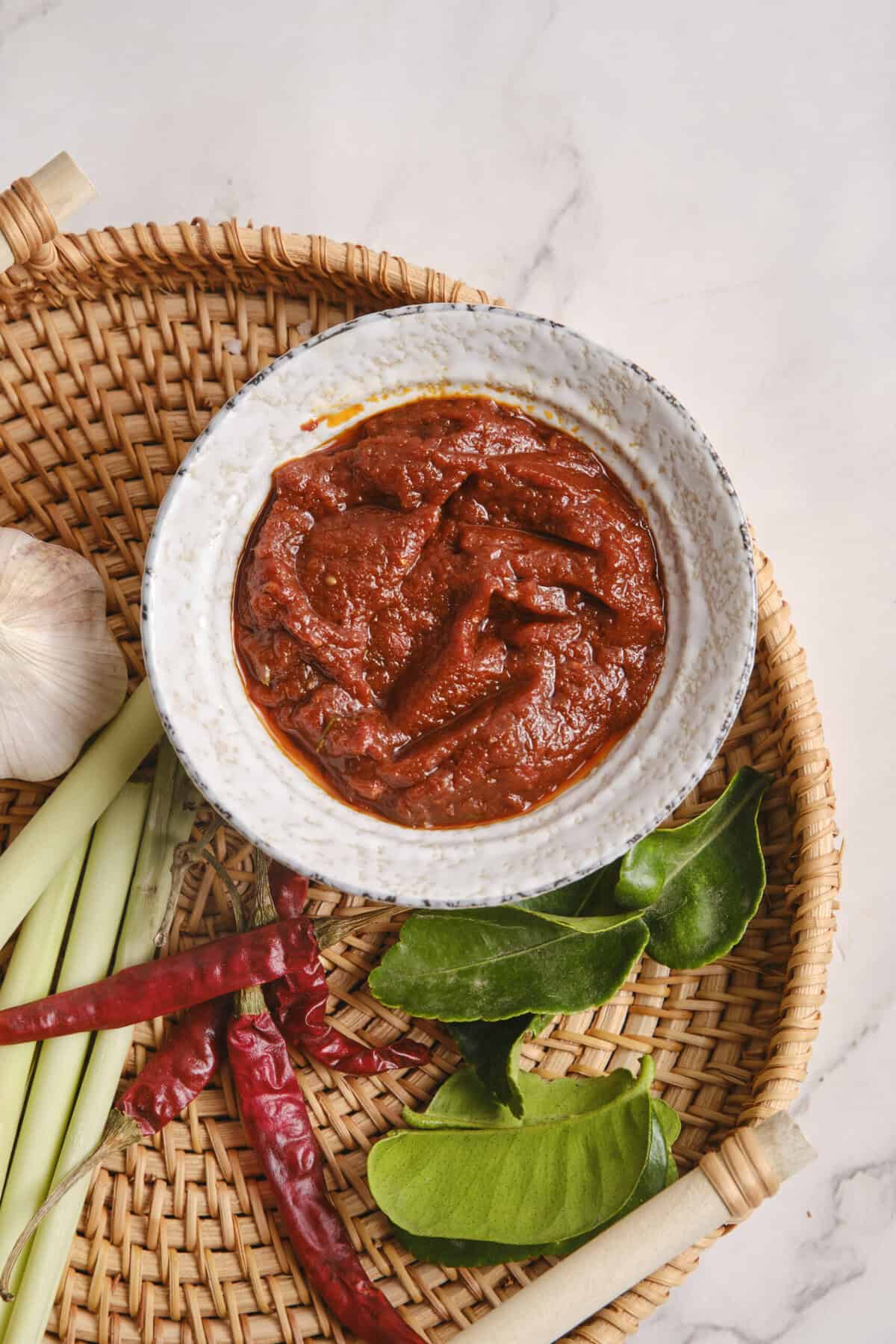
Although the first thing that comes to mind for tom yum paste is to make soup, there are many other ways to use this delectable Thai spice. It is wonderful mixed into Thai Fried Rice to bring some added umami and heat to the dish. Mix it into yogurt for a dip or spread on Flatbread. Of course, it is the perfect condiment to add more spice to this warming Spicy Thai Basil-Chicken Stir-Fry. Or stir a spoonful into this Thai Shrimp Curry to raise the heat even higher.
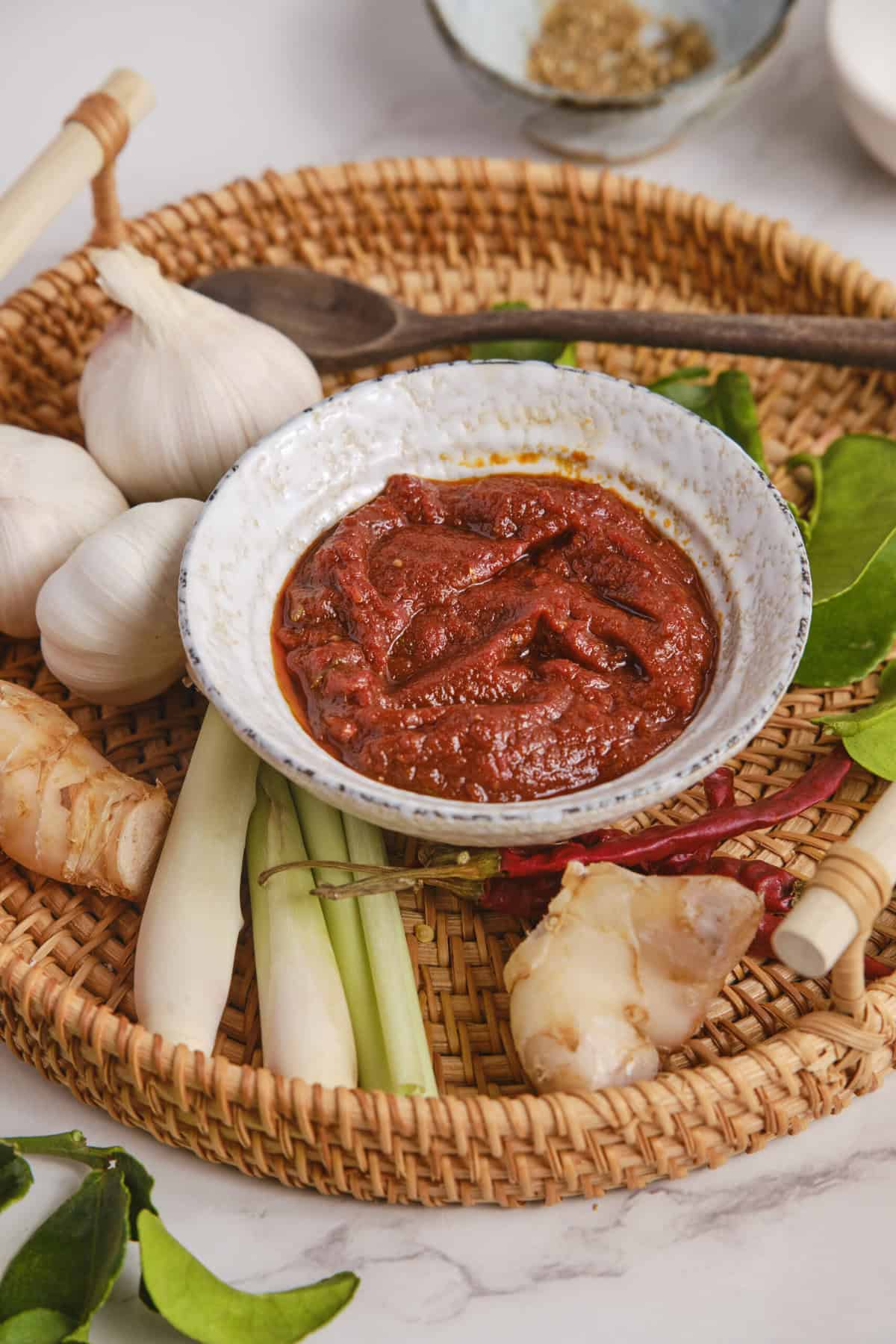
Ingredients
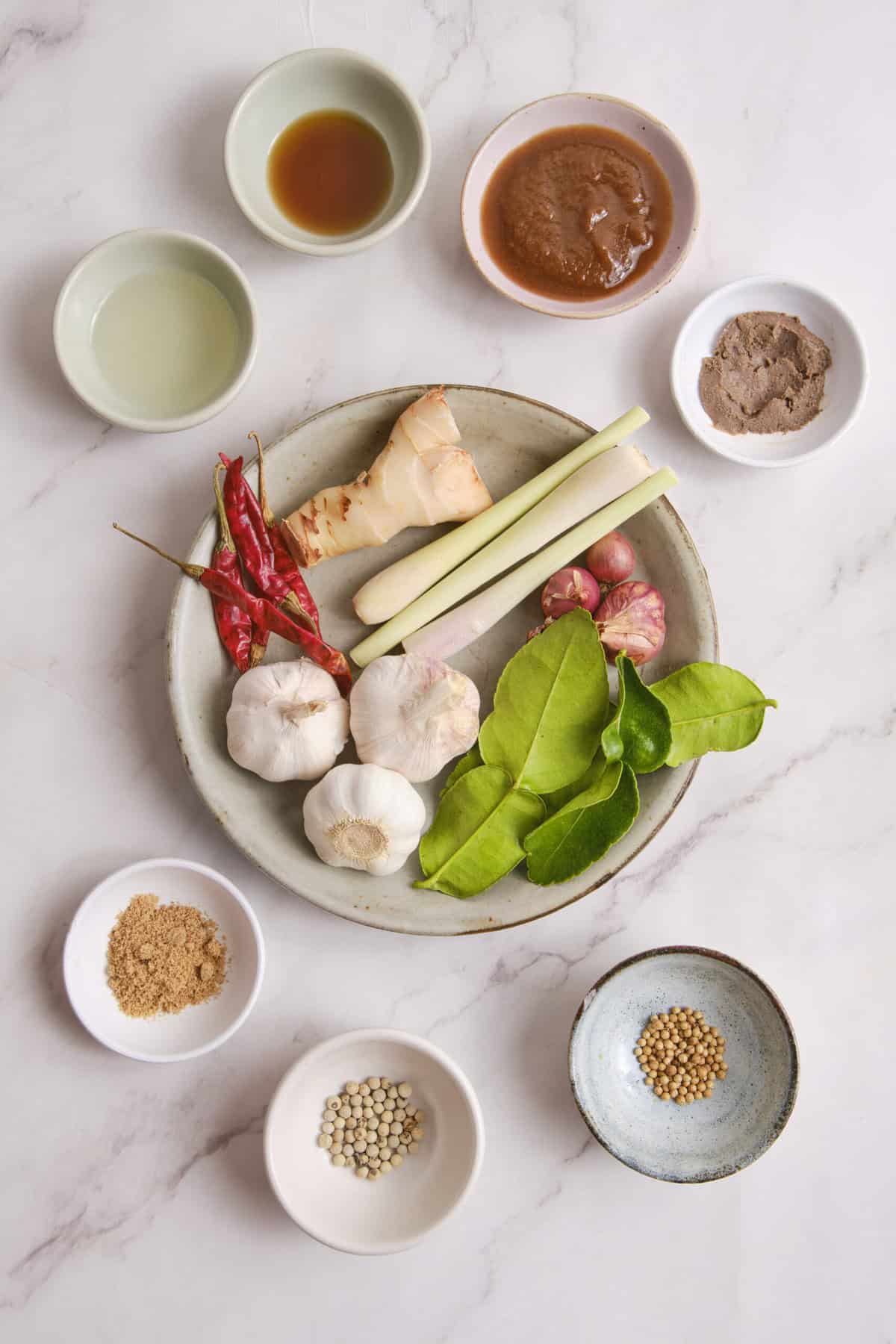
- 5 dried red chilies
- 3 stalks lemongrass bottom white part only, thinly sliced
- 2 inches galangal or ginger peeled and grated or minced
- 2 shallots chopped
- 3 cloves garlic chopped
- 5 kaffir lime leaves stems removed and thinly sliced (or zest of 1 lime)
- ¾ teaspoon ground coriander seeds
- 1 teaspoon ground white pepper
- 1 teaspoon shrimp paste optional
- 3½ tablespoons tamarind paste
- 1 tablespoon fish sauce optional, can use soy sauce instead
- 1 tablespoon brown sugar
- 1 tablespoon vegetable oil
Instructions
- Remove the seeds from the dried chilies and soak them in warm water for 10 minutes until softened. Then drain the water.

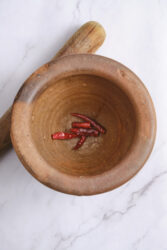
- Using a mortar and pestle, pound the softened chilies into a paste. Alternatively, use a small food processor.
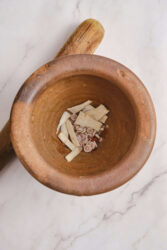
- Add the lemongrass and galangal (or ginger) to the mortar and continue pounding until a smooth paste forms.
- Add the chopped shallots, garlic, and kaffir lime leaves (or lime zest) to the mortar. Pound until combined into a paste.
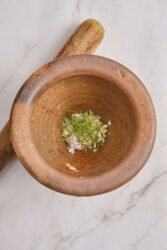
- Add the ground coriander seeds, ground white pepper, shrimp paste (if using), tamarind paste, fish sauce (or soy sauce), and brown sugar. Mix well until fully combined.
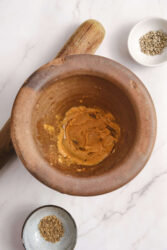
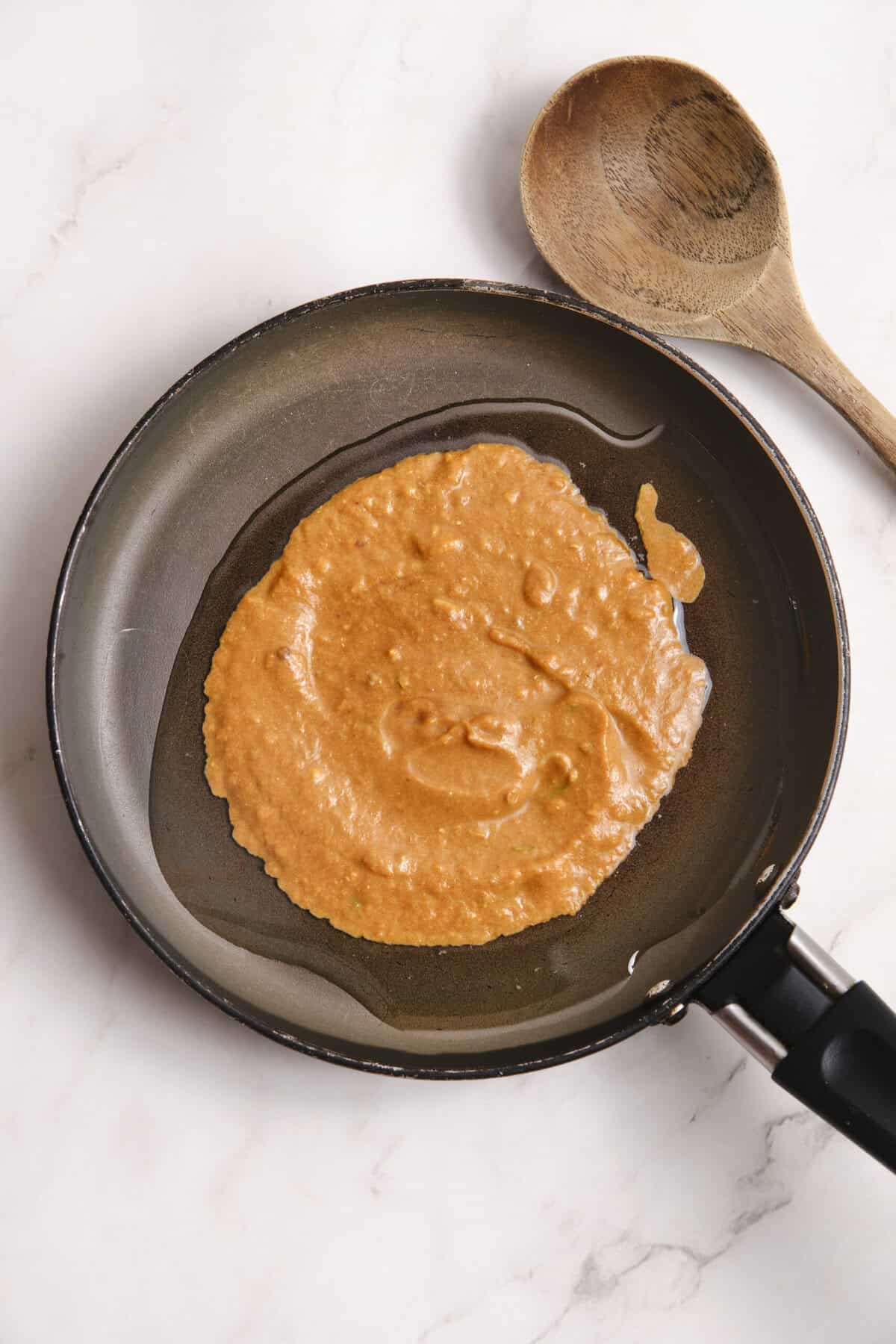
- Heat the oil in a pan over low heat. Add the paste and cook for 5-8 minutes, stirring constantly, until fragrant and slightly darkened.
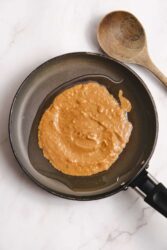
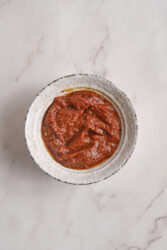
- Allow the paste to cool. Transfer it to an airtight container and store in the refrigerator for up to 2 weeks.
Nutrition Info:
Nutrition information are estimates only and may vary based on the specific brands, ingredients, and portion sizes you use. This data is provided for informational purposes only.


Leave a Comment