

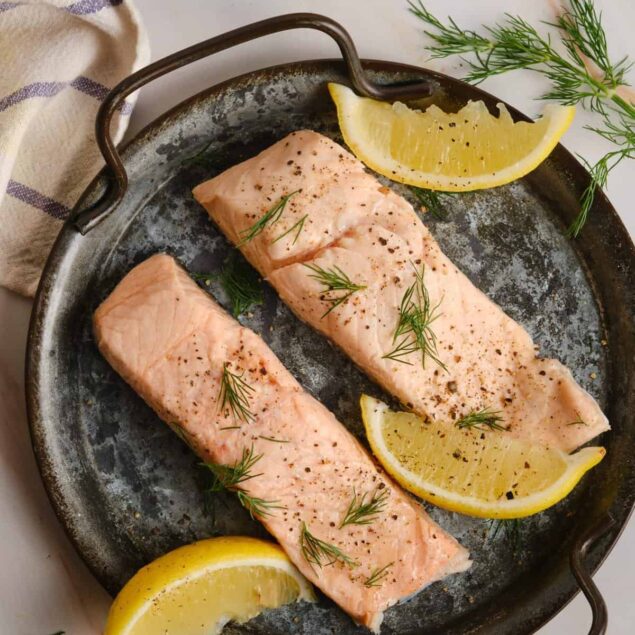
Create a flavorful, healthy meal in less than 20 minutes with this easy, delicious Poached Salmon recipe!
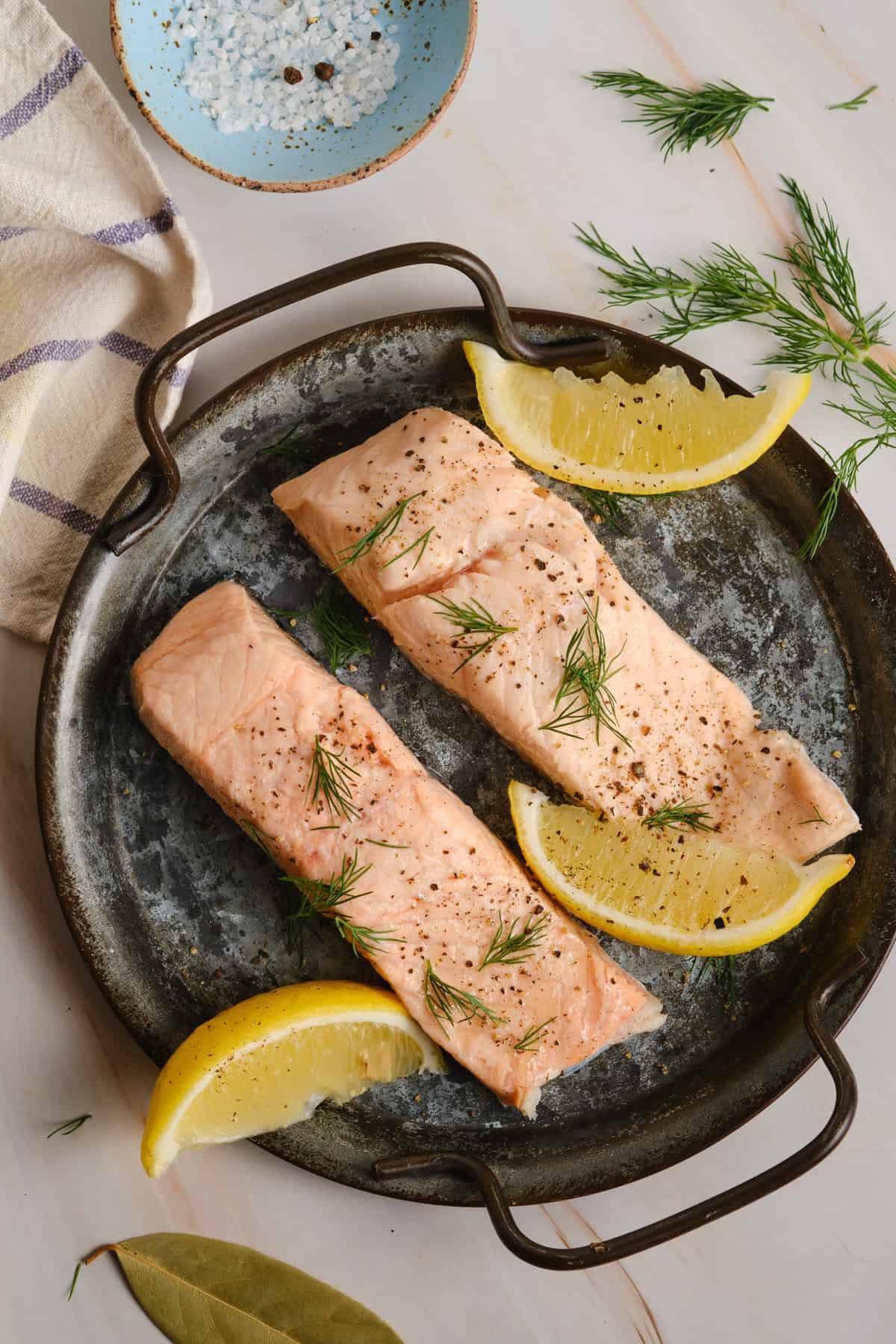
When I think of salmon, the first thing that comes to mind is how versatile it is. Whether I’m having smoked salmon on a bagel for breakfast, raw salmon in sushi, or baked salmon for dinner, each meal is sure to be a hit. It’s quickly become a weekly staple in my house, since there are so many ways to cook salmon. Aside from the health benefits, I just love that it has such a meaty flavor, while still tasting like a light dinner.
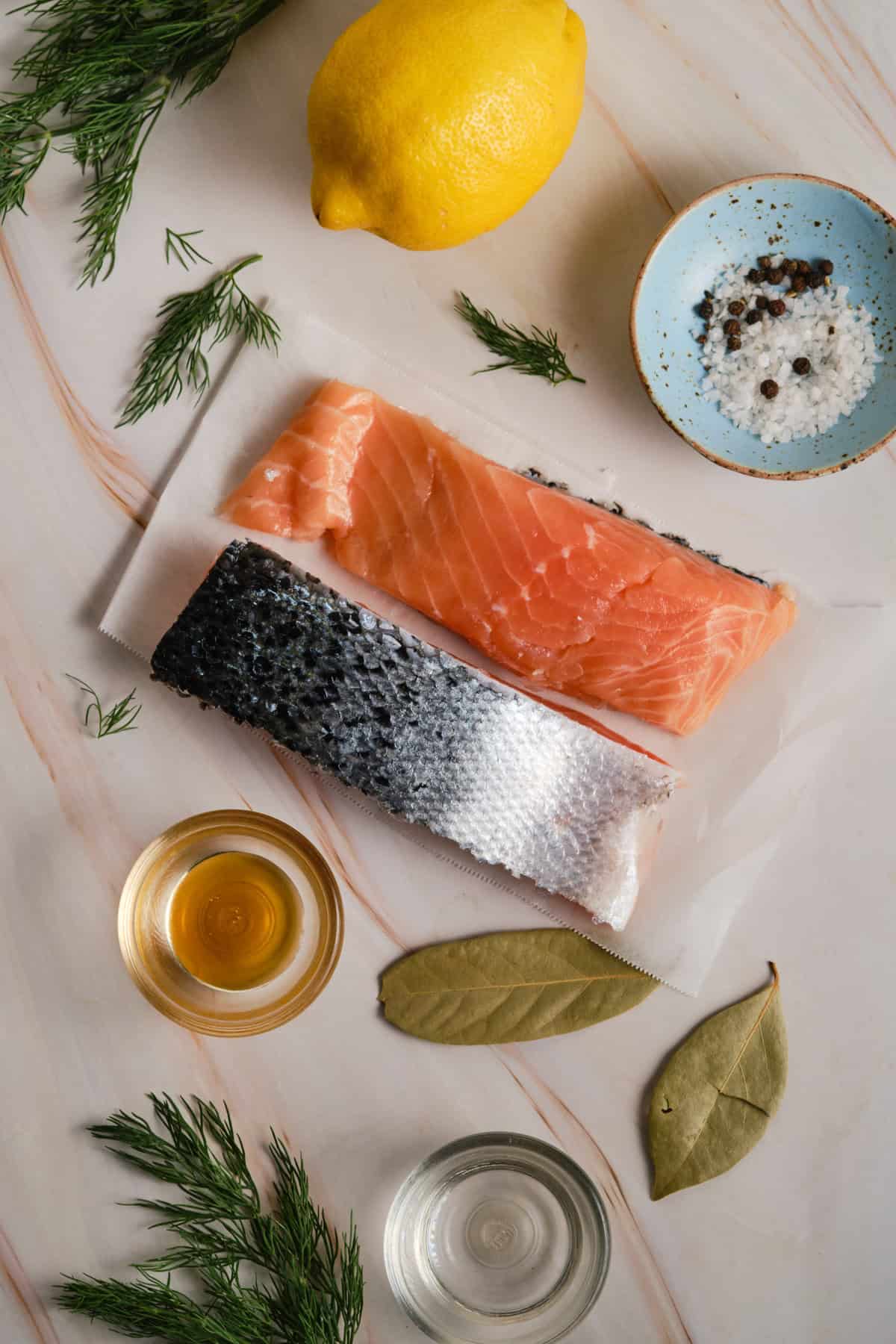
One of my favorites is this recipe for poached salmon. Infused with white vinegar, honey, and salt, this poached salmon becomes a sponge for the herbs of your choice. I opt for a simple seasoning of dill sprigs, peppercorns and a bay leaf. It’s a basic way to poach salmon without overpowering the natural taste of the fish. Once you have tried it, feel free to add more ingredients like shallots and lemon to expand upon the flavor profile of the dish!
Is Poached Salmon Healthy?
Thanks to the omega-3 fatty acids, vitamin D, and calcium, salmon is about as healthy of a protein as you can get. The benefits of this recipe don’t end there. While dill sprigs and bay leaves may just look like garnishes, they’re actually full of antioxidants. Fresh dill is also a good source of essential vitamins and minerals, like vitamins A and C. Honey provides some natural sweetness, as well as polyphenols and flavonoids. The simple yet versatile ingredients in this dish are gluten-free and dairy-free.
Infusing Flavor
I’m sure you’ve probably had a plain salmon fillet in your life and were left underwhelmed. You could just throw some salt in your water, and the end result will taste like plain salmon. But I prefer my salmon to be more than just plain. Infusing the water with a little flavor goes a long way toward making your salmon taste like an entrée you’d get at a fancy restaurant. The combination of white vinegar, honey, salt, dill, peppercorns, and bay leaf turns the water into an aromatic bath, allowing all those flavors to soak into the salmon. If done right, you’ll taste a harmonious blend of herbs and a subtle sweetness. While I usually marinate my salmon, poaching is perfect when time gets away from you. I’ve also found that poaching has a way of infusing flavors like no other cooking method can.
How Do I Store Leftovers?
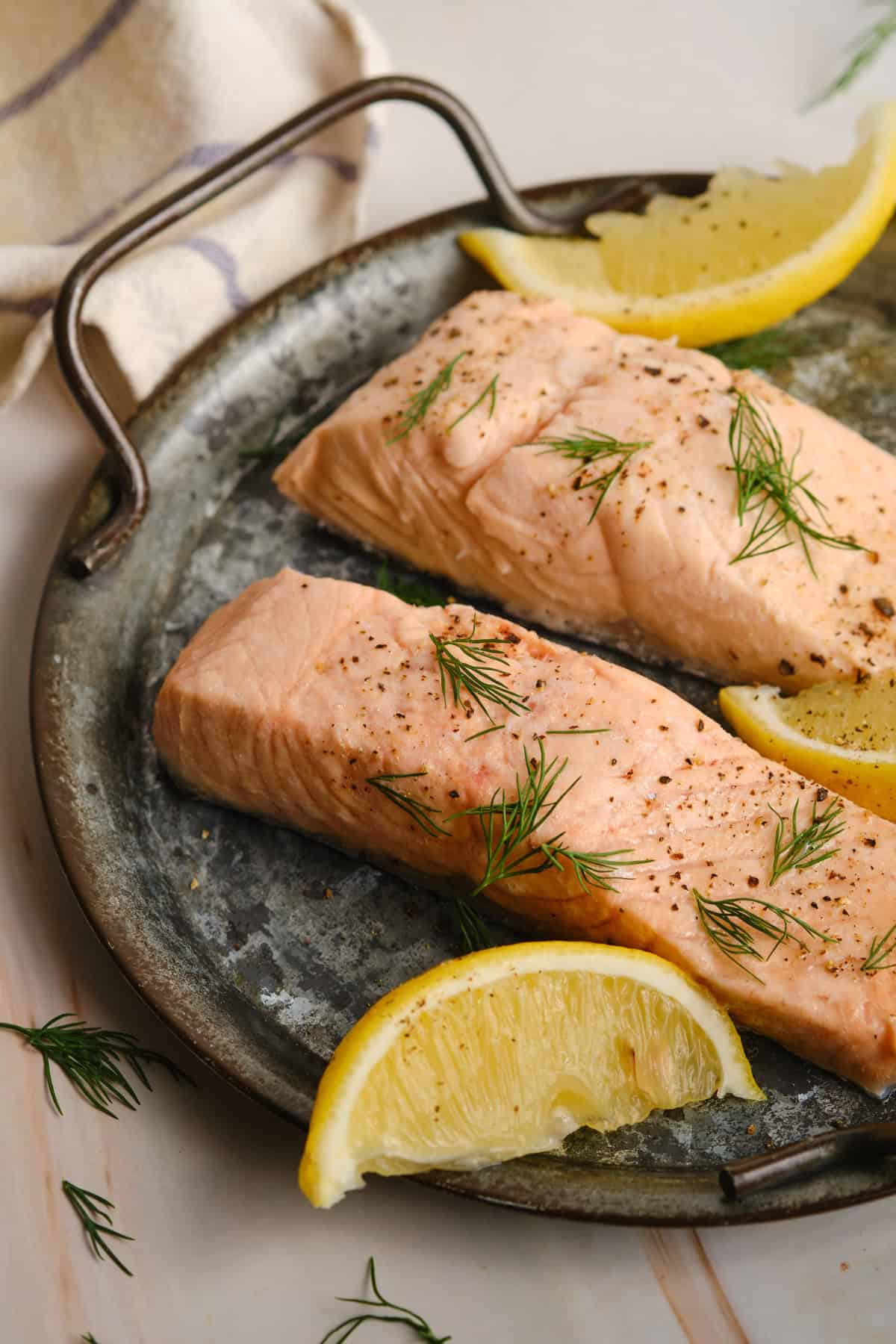
Once cooled, poached salmon can be placed in an airtight container in the fridge for up to 3 days. It can also be frozen for up to 3 months. I love that poached salmon can be eaten hot or cold.
Serving Suggestions
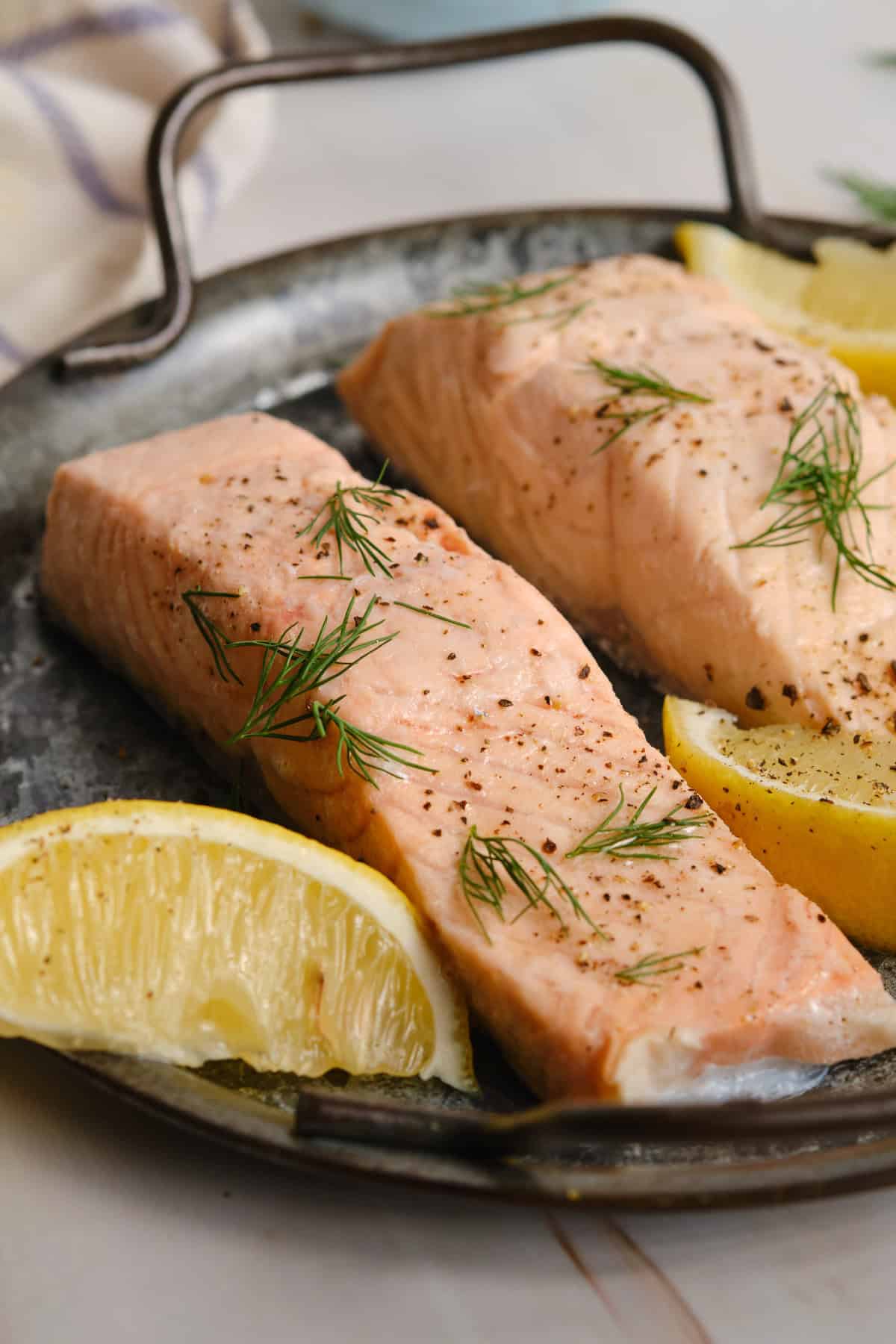
In my house, poached salmon goes with just about anything! The light, yet meaty fish is particularly delicious next to a hearty vegetable side like Roasted Sweet Potato Cubes. If you’re looking for a lighter veggie option, how about a side of Air-Fryer Asparagus? Poached salmon is also a perfect topping for almost any salad. My personal favorite way is to flake the fillet over a Mediterranean Low-Carb Broccoli Salad.
Don’t forget about the benefits of merging different flavors together. Since poached salmon has some basic flavors, it’s a great opportunity to pair it with robust and flavorful side dishes. For example, these cheesy Parmesan Carrots may seem basic, but they really amp up your meal!
Ingredients
- Water as needed to cover the salmon
- 2 tablespoons white vinegar
- 1 tablespoon honey
- 2 teaspoons kosher salt
- 4 center-cut salmon fillets 6 ounces each, skin on
- 12 fresh dill sprigs
- 6 whole peppercorns
- 1 bay leaf
- Chopped dill for serving
- Cracked black pepper for serving
- Lemon wedges for serving
Instructions
- Prepare a sauté pan by filling it with enough water to cover the salmon fillets when added. Stir in the white vinegar, honey, and kosher salt.
- Place the salmon fillets into the pan, ensuring they are submerged by adding more water if necessary.
- Add the fresh dill sprigs, whole peppercorns, and bay leaf to the pan.
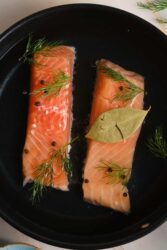
- Heat the pan over medium-high and bring the water to a gentle boil. Simmer the salmon for 5 to 10 minutes, keeping the water at a steady simmer.
- Check the salmon's internal temperature with an instant-read thermometer. Aim for 135 to 140 degrees Fahrenheit, then remove from heat.
- Carefully remove the salmon from the water with a spatula. Place on a plate, cover, and let rest for 4 minutes. Serve with chopped dill, cracked black pepper, and lemon wedges.
Nutrition Info:
Nutrition information are estimates only and may vary based on the specific brands, ingredients, and portion sizes you use. This data is provided for informational purposes only.



Leave a Comment