

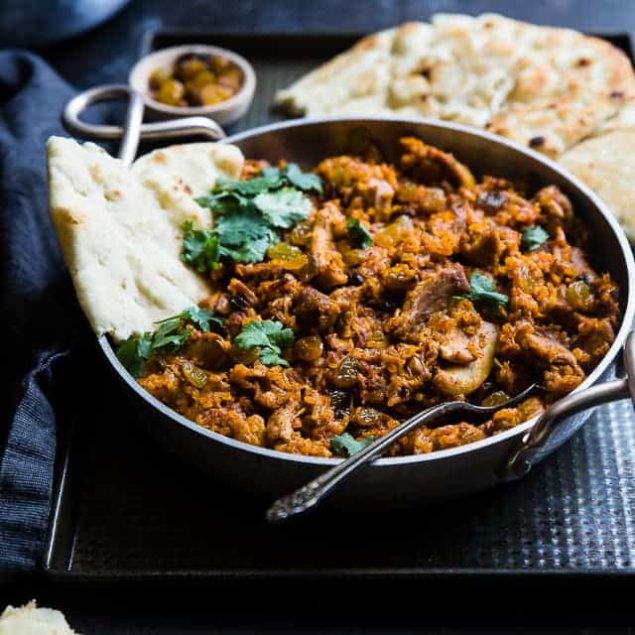
This gluten-free one-pot meal delivers authentic Indian flavors for a comforting and delicious crowd-pleaser!
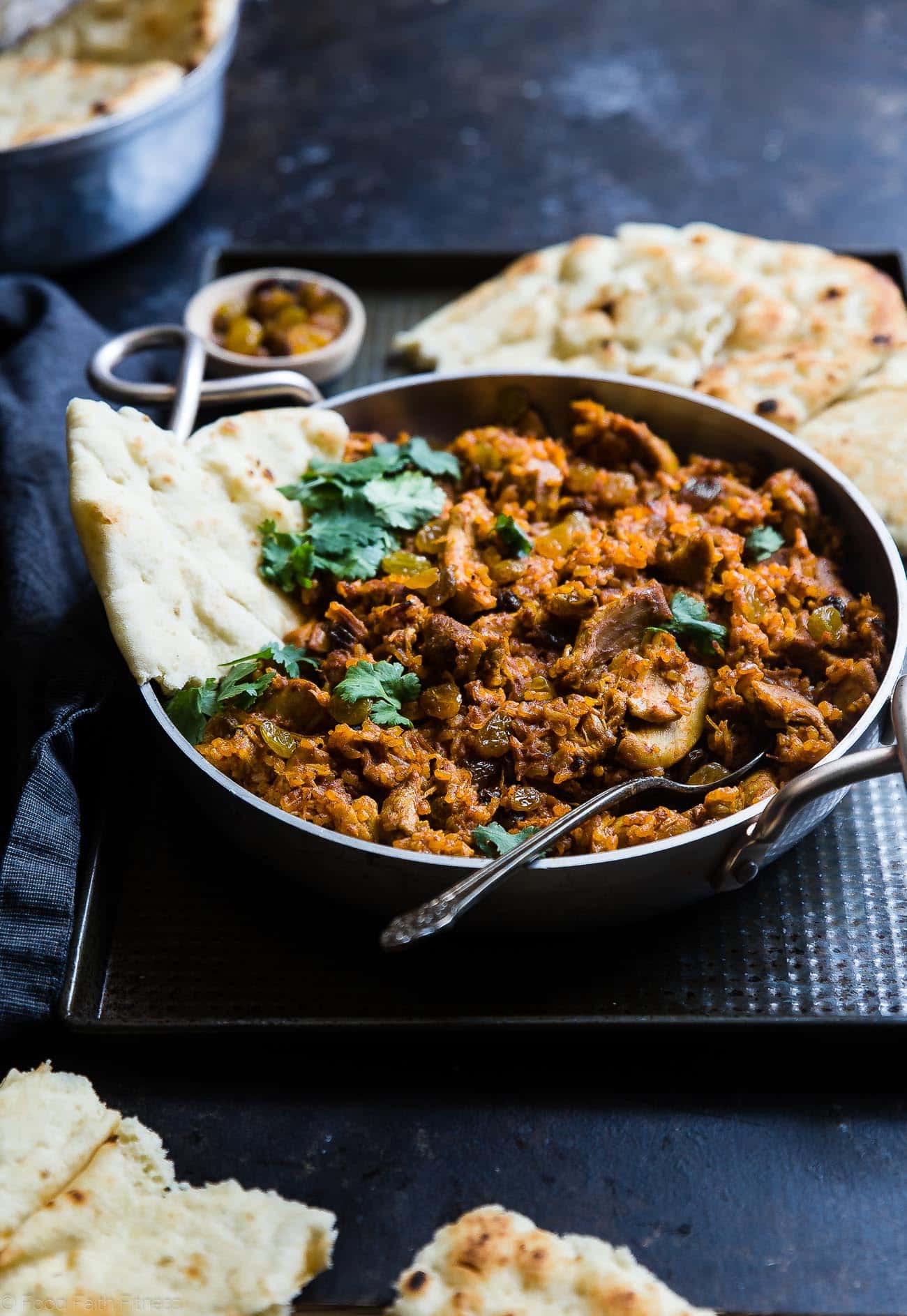
My partner and I love eating in Indian restaurants. But we’re trying to dine out less often for both our physical health and the health of our bank accounts. This has led us to explore homemade Indian food—and this Indian chicken rice casserole recipe tops my list of winners for several reasons.
First off, a one-pan meal helps us avoid the nightly negotiations of who’s going to do the dishes. Secondly, we both absolutely love an overnight marinade. That might sound odd, but we’re both pathological planners, so getting things prepped and ready ahead of time helps us feel like we’re in control. Plus, the whole stovetop part of my recipe comes together in just over half an hour—and fills our apartment with deliciously complex aromas!
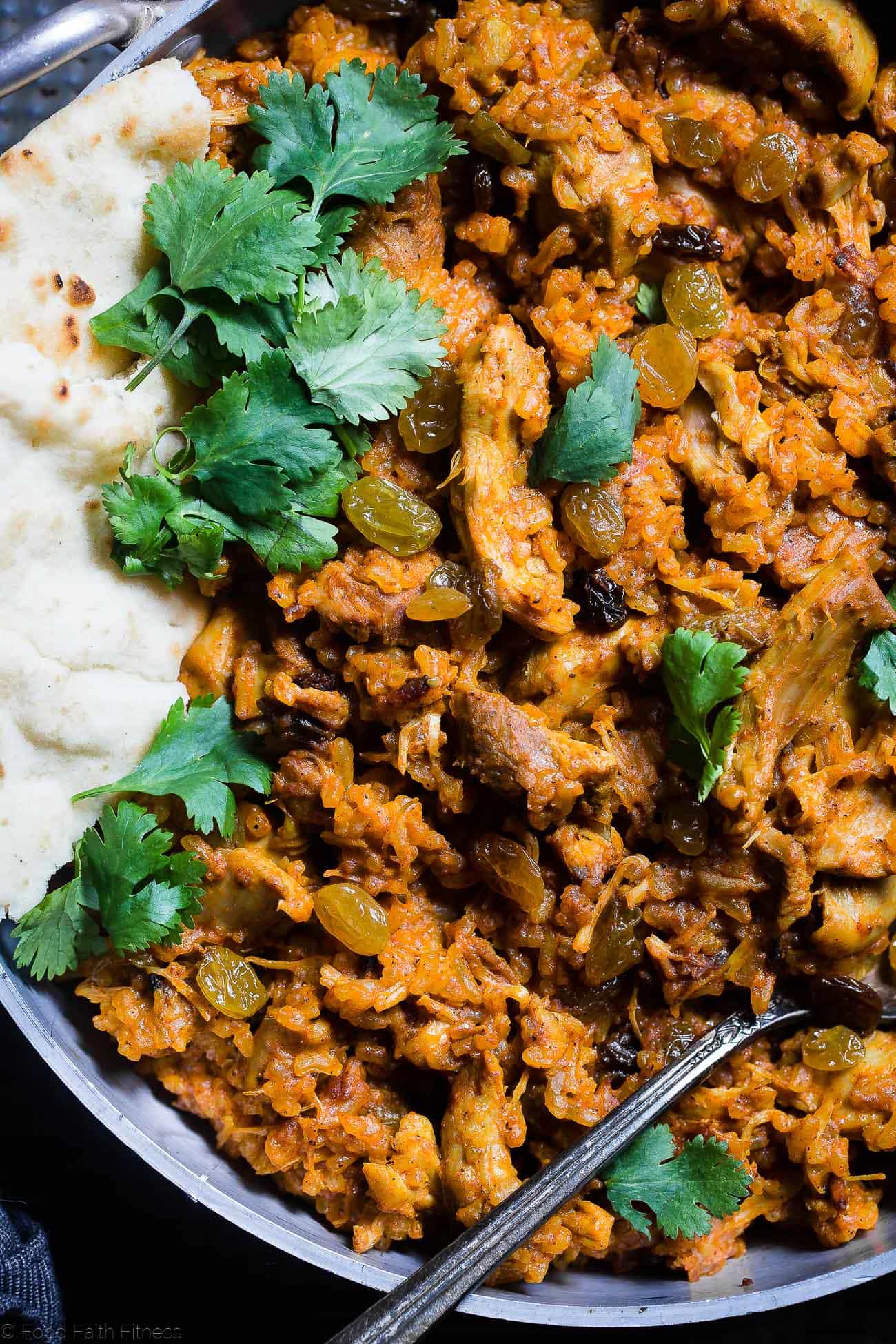
But the best part is that every bite of my casserole delivers an array of restaurant-quality flavors. Between the slight tang of the yogurt, the earthy depth of the garam masala and other spices, and the sweet acidity of the tomatoes—not to mention the creamy richness of the coconut milk and ghee—you get all the complexity promised by the aroma and so much more!
I’ve taken this casserole to one of the potlucks my partner’s family throws several times a year. It was a huge hit with everyone from his gluten-free dad to his weirdly particular cousin. His brother even suggested we should add more heat next time! Try this recipe once, and I guarantee you’ll come back to it again and again.
Is This Indian Chicken Rice Casserole Healthy?
The casserole is a flavorful, gluten-free, protein-rich dish that offers a balanced mix of protein, carbs, and healthy fats from a variety of whole-food ingredients. The chicken thighs are the primary source of protein, iron, zinc, and B vitamins, but they also contribute to the dish’s fat and cholesterol content. Greek yogurt adds protein, calcium, probiotics, and saturated fat, which the ghee also contributes, along with fat-soluble vitamins A, D, E, and K. Coconut milk adds some minerals and creaminess, while the strained tomatoes are a source of vitamin C, potassium, and antioxidants like lycopene. The onion, garlic, ginger, and spices add antioxidants, anti-inflammatory compounds, and micronutrients. Cilantro contributes some antioxidants and vitamins C and K, while the raisins provide natural sweetness and small amounts of fiber, iron, and potassium. The jasmine rice is the primary source of carbs. Overall, this is a healthy and nutritious main dish that fits into most well-balanced omnivore diets, including gluten-free diets.
The sodium content in this dish is moderate, but the fiber levels are low. Opting for low-sodium strained tomatoes and adding more veggies, like spinach or kale, would improve both of those. To lower the carbs, sub in cauliflower rice for the jasmine rice.
Garam Masala: The Heart Of Indian Flavor
Garam masala is a quintessential spice blend originating from the Indian subcontinent, celebrated for its complex aroma and the warmth it brings to countless dishes. The name itself comes from the Hindi and Urdu words garam meaning “hot” or “warm,” and masala meaning “spice mix.” In this context, “hot” refers not to chili heat but to the warming qualities of the spices, believed in Ayurvedic tradition to heat the body and stimulate metabolism. This blend has deep roots in Indian culinary history, with some tracing its origins as far back as the Mongol Empire in the 13th century.
What sets garam masala apart is its ever-evolving composition. There is no single recipe—each region, and often each family, has its own signature blend. Most commonly, garam masala includes a mix of cardamom, cinnamon, cumin, coriander, cloves, black pepper, nutmeg, and bay leaves. Some versions may add fennel, star anise, mace, or even ginger and chili. The spices are typically toasted whole to unlock their essential oils, then ground together to create a powder that is both fragrant and flavorful. The result is a seasoning that is earthy, sweet, and aromatic, with a subtle heat and a rich, layered complexity—perfect for elevating curries, stews, rice dishes, and even soups.
How Do I Store Leftovers?
Allow leftover casserole to cool to room temp, then store it in an airtight container in the fridge for up to 4 days. You can also freeze leftovers in a freezer-safe container for up to 3 months. Thaw overnight in the fridge. Reheat in the oven at 350°F, covered with foil, until the internal temp reaches 165°F.
Serving Suggestions
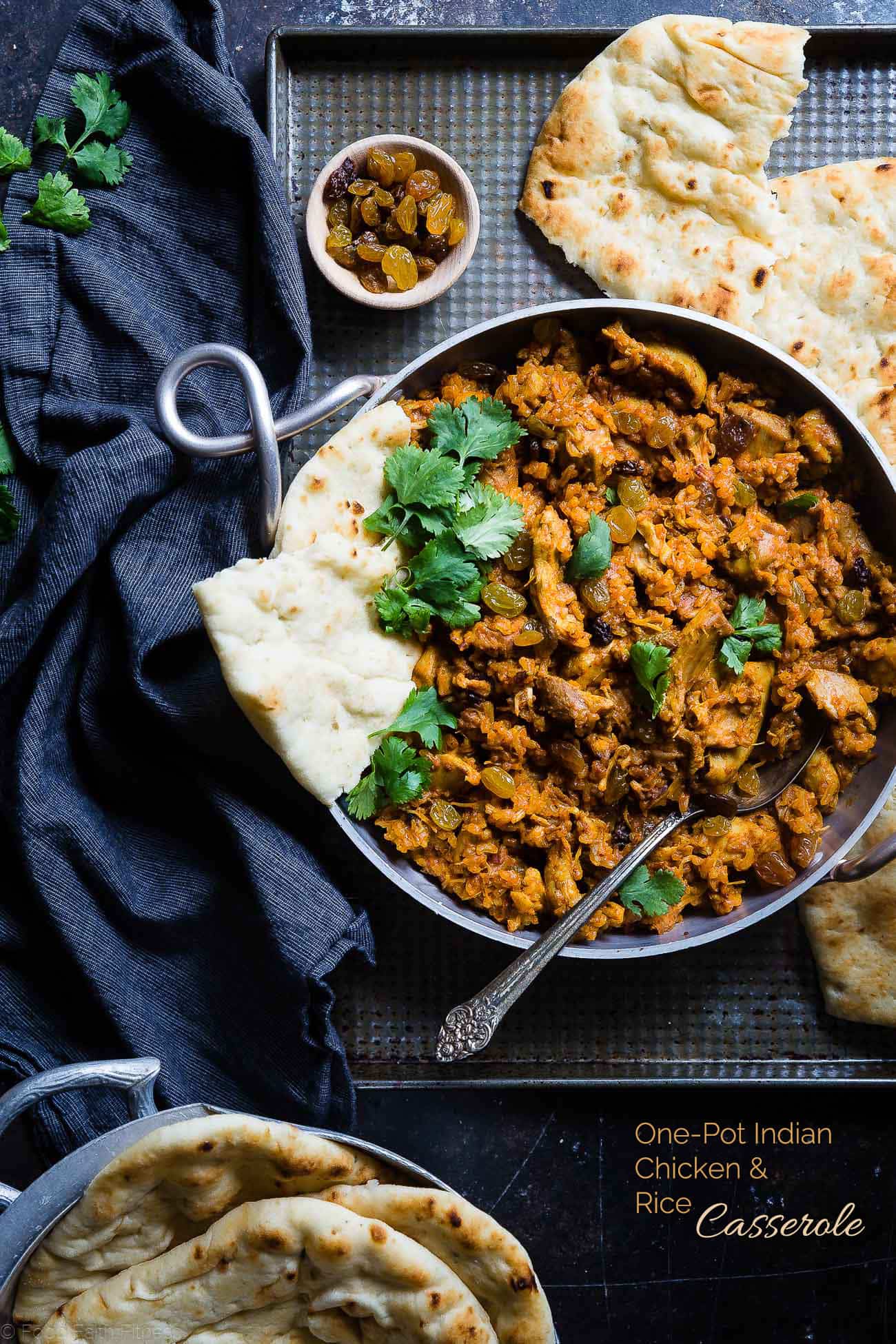
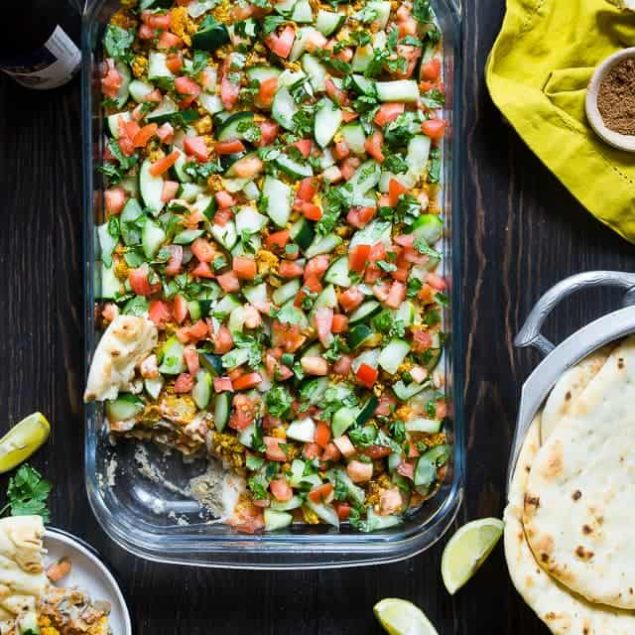
This Indian chicken rice casserole makes a hearty and filling dish all on its own. Add a refreshing bevvy, like Cucumber Agua Fresca, and a light dessert, like this gorgeous Fruit Tart for delightful dinner party fare. Or serve up an Indian-inspired buffet by pairing your casserole with this Indian 7-Layer Dip Recipe, Vegetable Biryani, Massaman Curry, this yummy Chickpea Salad, this Dal Tadka Recipe, and this easy homemade Naan Recipe. To finish, make each guest a creamy, dreamy Chai Latte.
Ingredients
For The Marinade:
- 1/2 cup + 2 tablespoons plain Greek yogurt
- 1/2 tablespoon fresh garlic minced
- 1 teaspoon fresh ginger minced
- 1/2 teaspoon chili powder
- 2 1/4 teaspoons garam masala
- 1/4 teaspoon ground cardamom
- 1 teaspoon ground cumin
- 1 teaspoon turmeric
- 1/2 cup lemon juice
- 1 1/4 teaspoons sea salt divided
- 2 1/2 pounds chicken thighs
For The Casserole:
- 1 1/2 tablespoons ghee
- 1/2 large onion thinly sliced
- 1 box strained tomatoes 26.46 ounces, about 1 1/3 cups
- 1 cup + 2 tablespoons full-fat coconut milk
- 1 1/2 cups white jasmine rice
- 3/4 cup cilantro roughly chopped
- 1/2 cup golden raisins
Instructions
Make The Marinade:
- In a large bowl, whisk together the Greek yogurt, garlic, ginger, chili powder, garam masala, cardamom, cumin, turmeric, lemon juice, and 1/2 teaspoon of the salt, reserving the rest for later.
- Roughly chop the chicken thighs and place them in the yogurt mixture, stirring so they are evenly coated. Cover and refrigerate at least 6 hours, up to overnight.
Make The Casserole:
- Once the chicken has marinated, heat the ghee in a large, nonstick, high-sided pan over medium/high heat. Add the onion and cook until tender, about 3-5 minutes.
- Scrape the chicken and the marinade into the pan. Cook until the chicken is tender, stirring frequently, about 5-10 minutes.
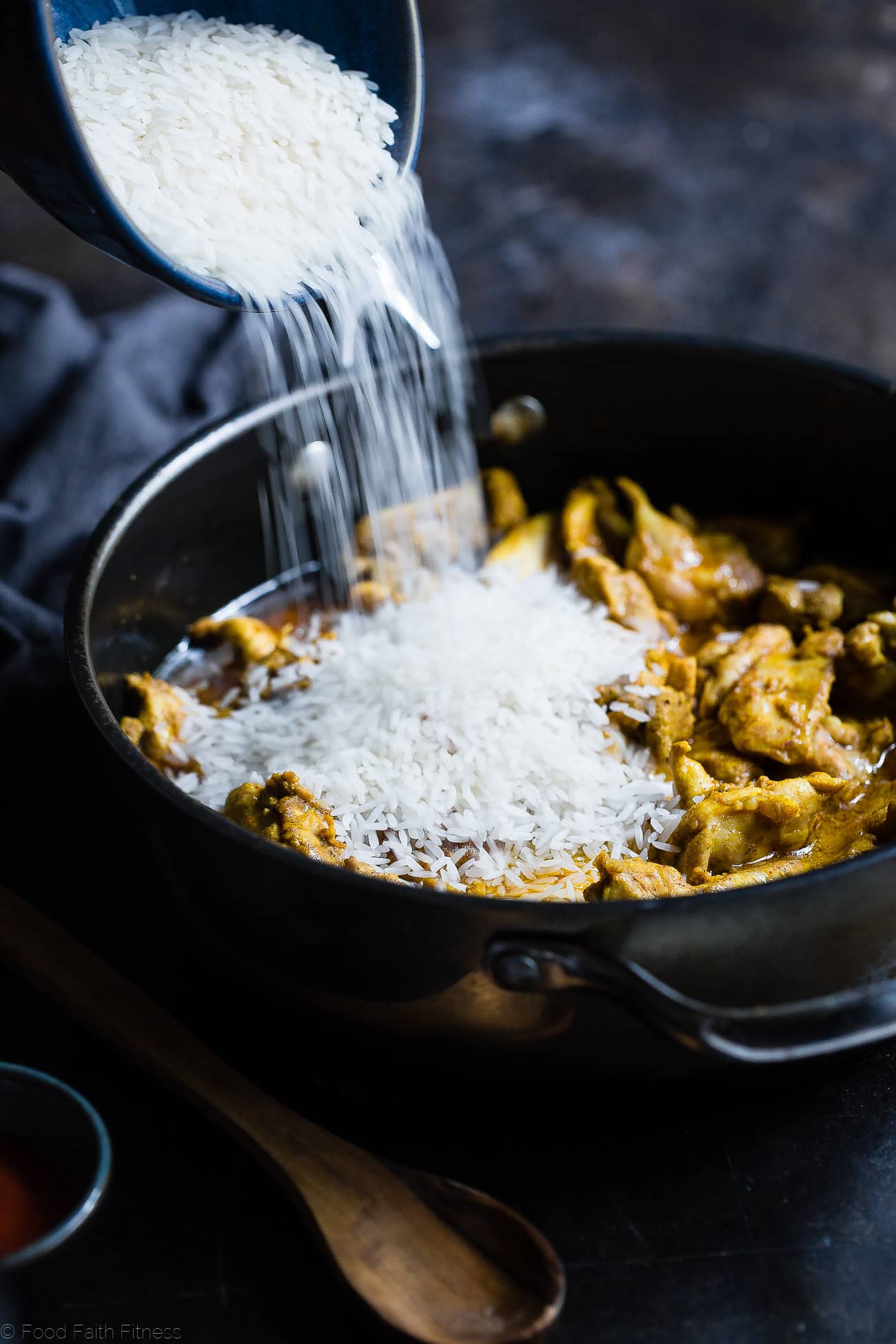
- Stir in the strained tomatoes, coconut milk, rice, and remaining salt until well combined. Bring the mixture to a boil. Stir constantly as it boils for 3 minutes to prevent the bottom from burning.
- Reduce the heat to medium/low. Cover and cook an additional 20 minutes, or until the rice is tender.
- Stir in the cilantro and golden raisins.
- Remove from heat and serve immediately.
Nutrition Info:
Nutrition information are estimates only and may vary based on the specific brands, ingredients, and portion sizes you use. This data is provided for informational purposes only.



Leave a Comment