

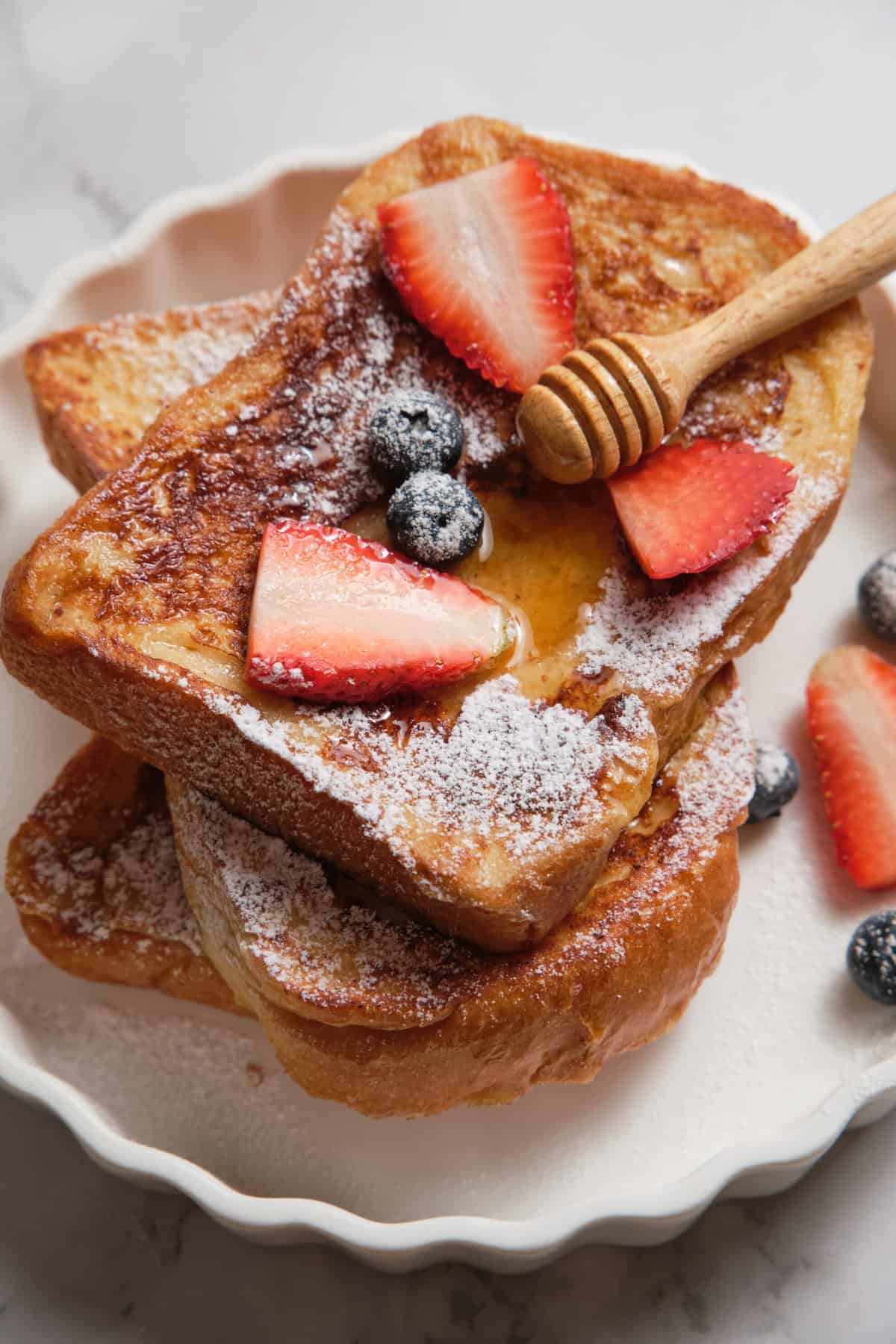
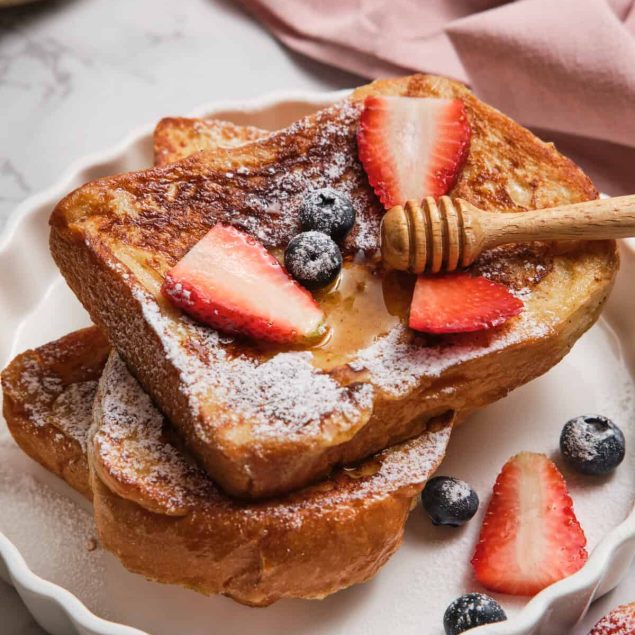
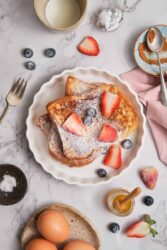
Brioche French Toast is a true breakfast of champions — rich and delicious and so easy to make!
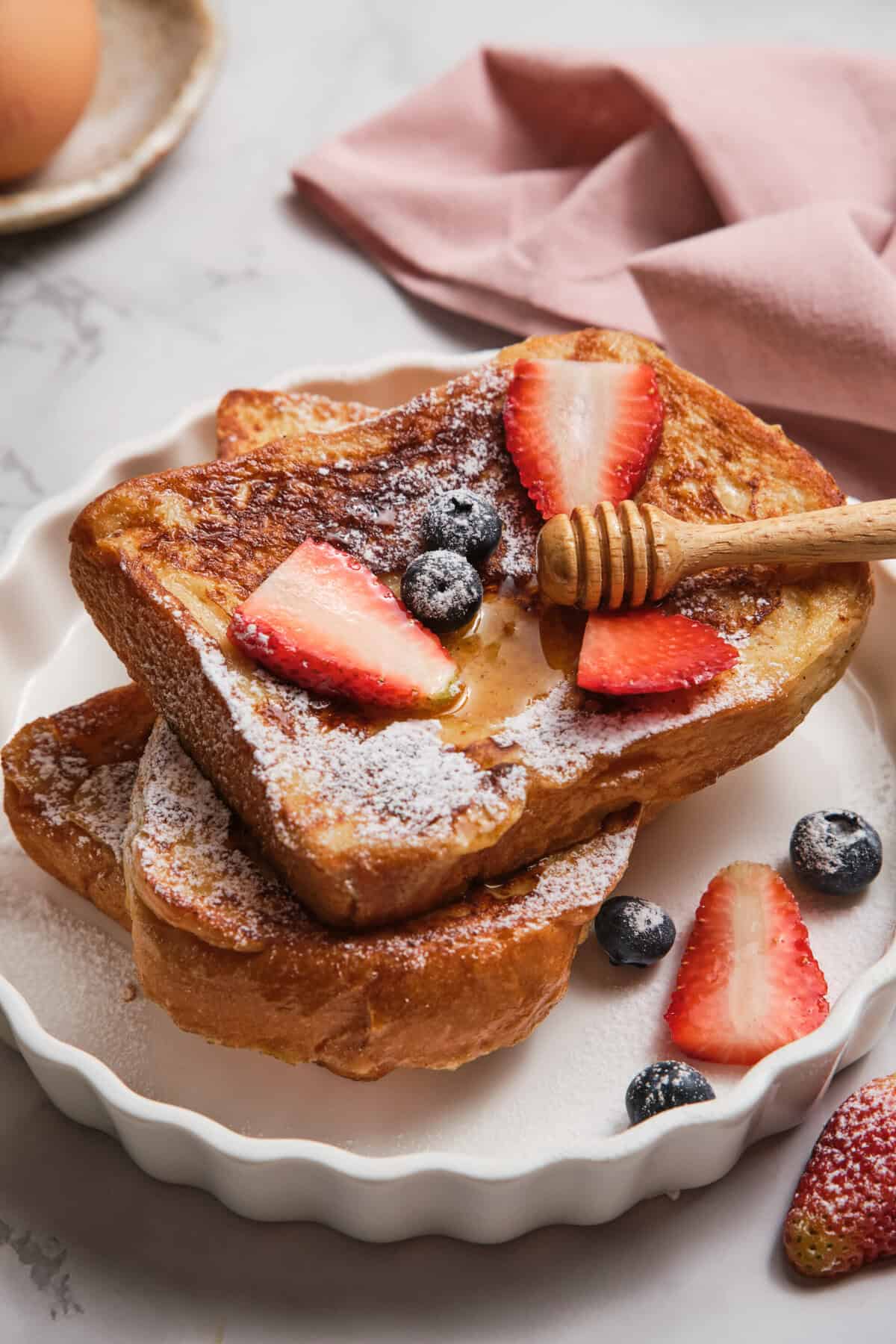
One of my favorite first date questions, along with “Have you ever been in a fight?” and “What is your favorite beach?” is “What do you choose: waffles, pancakes, or French toast?” I have a strict hierarchy, always have, with French toast being my standout favorite since childhood, and this is the version I make most often. Mom introduced me to French toast, with elaborate versions on weekends and sometimes making a quick on-the-spot version before school if my birthday landed on a school day.
The origin of French toast lies in Europe, with the earliest recipe being aliter dulcia which appeared in an ancient Roman cookbook from the 1st century AD. Tostées dorées (golden toasts) came around about 1300 in France, Arme Ritter (poor knights) dates from 14th century Germany, and the English published a guide to making pain perdu (lost bread) in the 15th century. From there this foundational food traveled around the world: Nowadays India sells Bombay toast; Brazil serves rabanadas at Christmas; and Hong Kong-style French toast can involve peanut butter, shredded meat or beef satay.
French toast is a resourceful hack for using up day-old bread. The bread should be stale so it can best soak up the delicious milky egg and spice concoction, absorbing and expanding until it’s slapped on the griddle and fried to the perfect golden hue. The outside becomes lightly crisp while the inside remains tender and moist. Tiny sugar crystals and hints of cinnamon dazzle the taste buds to create a mouthwatering breakfast feast.
What Is Brioche?
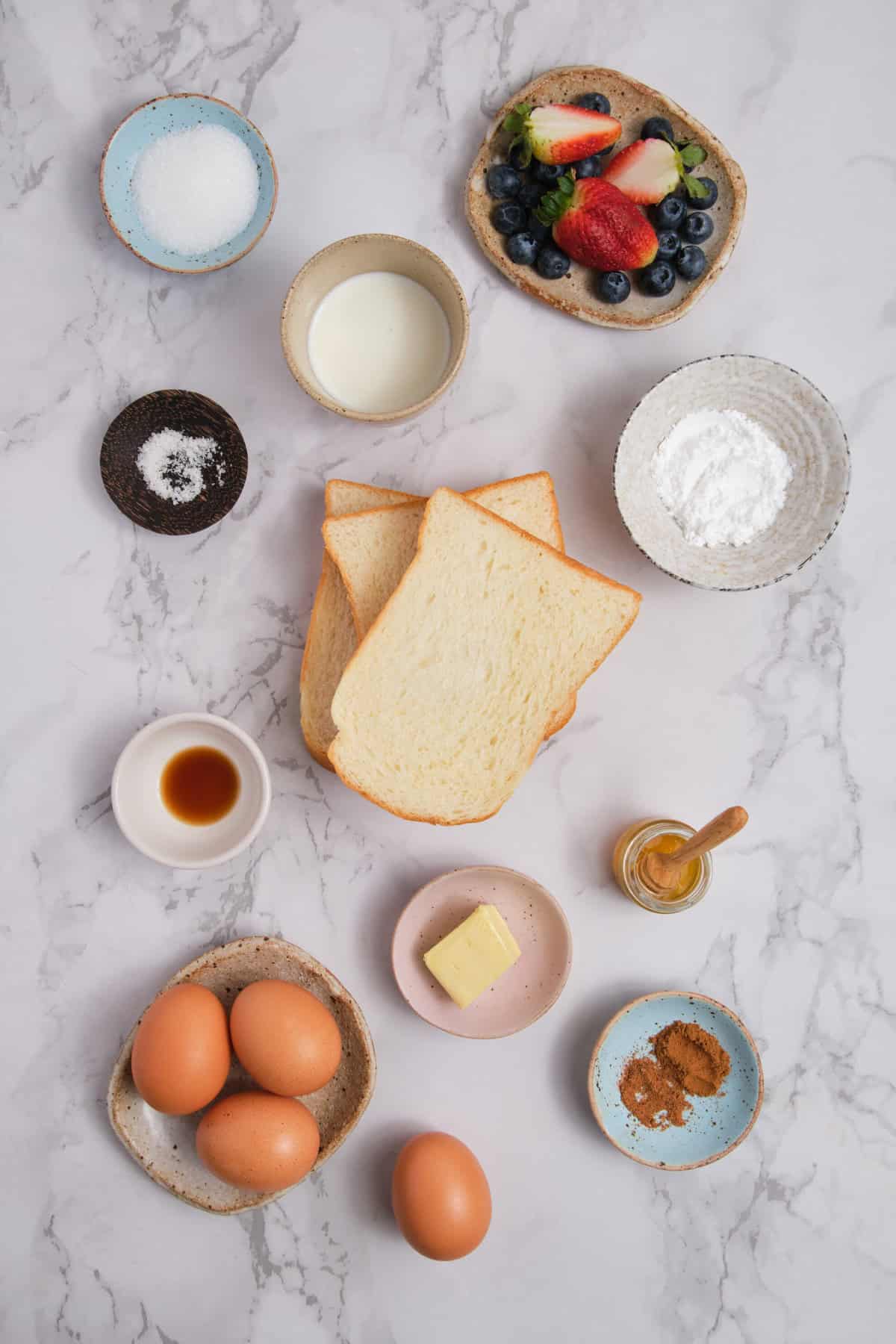
The French created brioche bread, a type of loaf that has a high egg and butter content and a dark, golden, chewy crust that’s made shiny with an egg wash. It’s delightfully light and fluffy, with a slight eggy flavor. Although centuries old, brioche is high on the list of food trends, with brioche sandwiches, burgers and toast being offered as options at restaurants around the world. For my French toast, the airiness of the bread lends itself well to soaking up the eggy mixture extremely well, making brioche a perfect bread for the dish.
How to make ahead and store
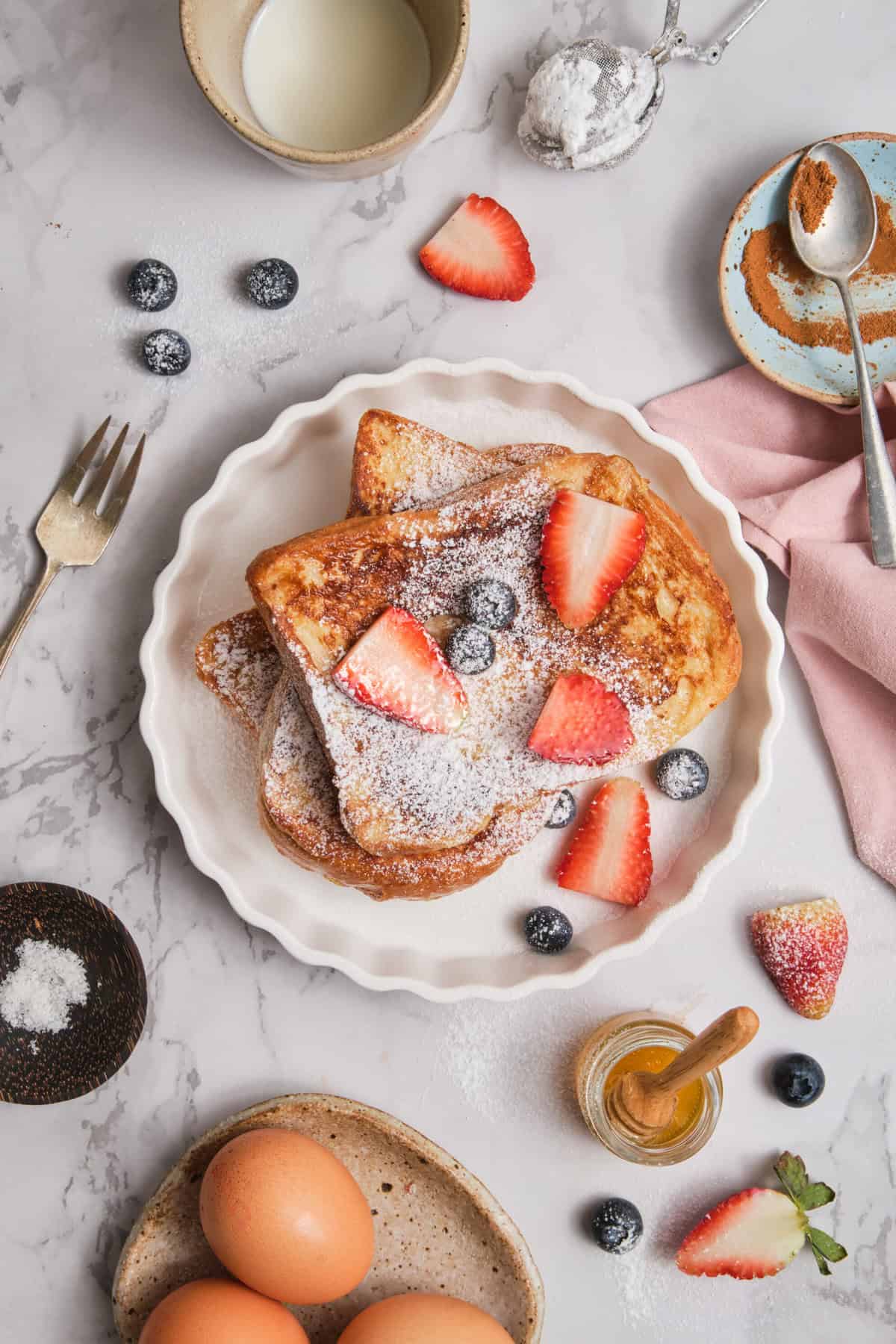
This brioche French toast can be prepared the night before. This was a favorite tactic of my mom, who learned quickly that a refrigerated overnight soak of the bread before frying resulted in more absorption and an even more luscious final product. I still do this when I want the most custardy centers. Leftover French toast will keep well in an airtight container in the fridge for up to 3 days. Freezing leftovers isn’t recommended since it will result in texture changes.
Serving Suggestions
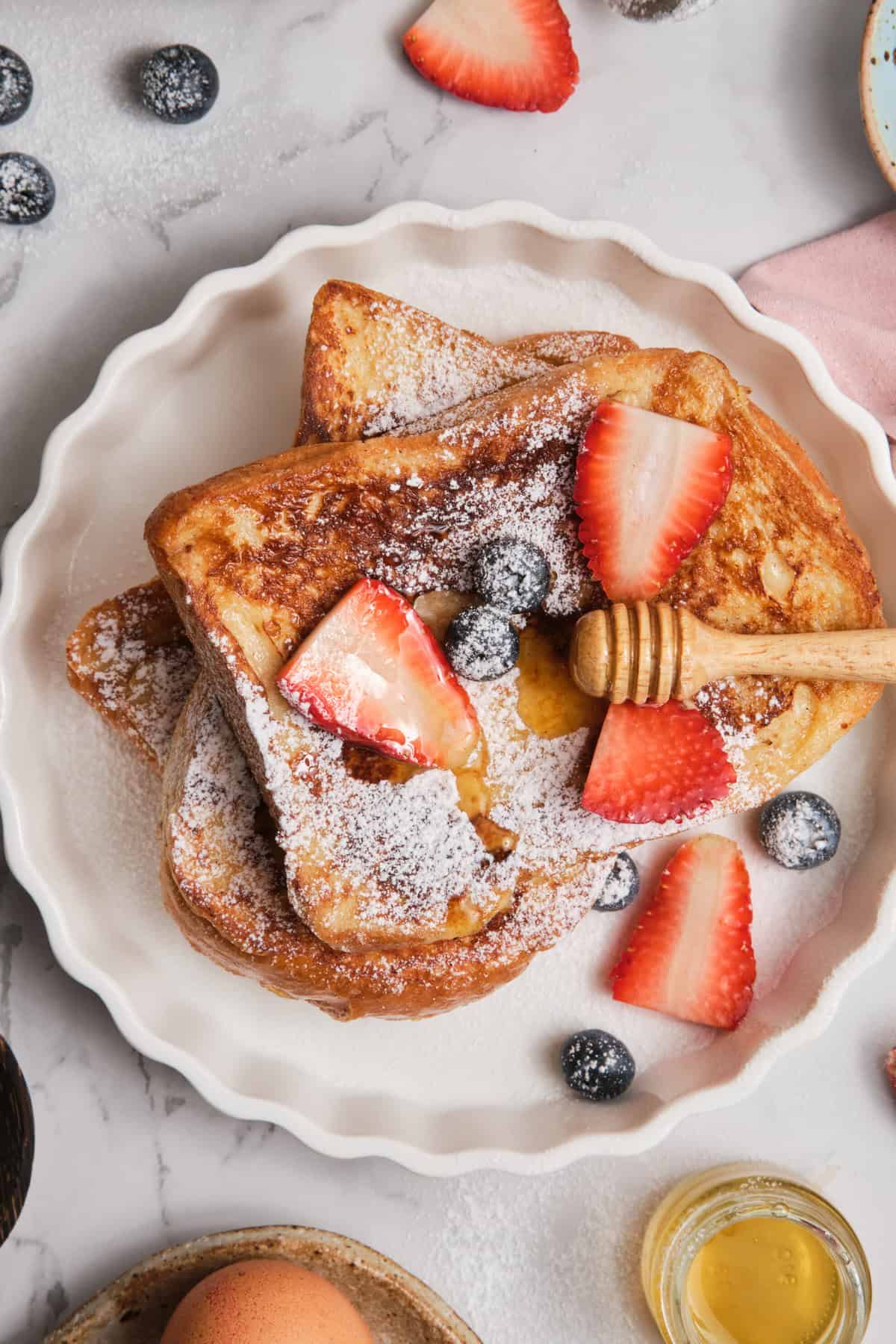
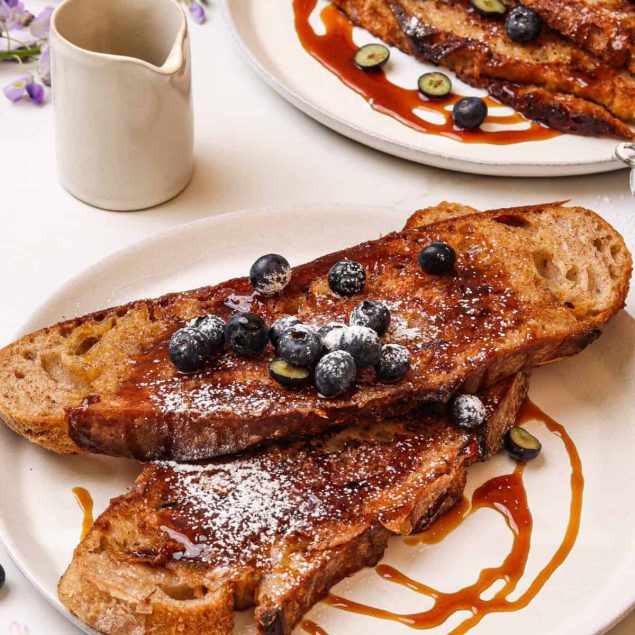
Brioche French toast is a standout dish that will bring huge smiles when set down on the breakfast table. I’m a purist and prefer just butter and maple syrup on top, but whipped cream, strawberries, bananas, and pecans can be added for your own perfect bite. You can’t go wrong with a classic side of bacon or sausage like Bacon In The Oven, Twisted Bacon (TikTok Recipe), or Air-Fryer Breakfast Sausage for dedicated carnivores. And if you’d like to try homemade whipped cream, this Strawberry Whipped Cream is a fun spin.
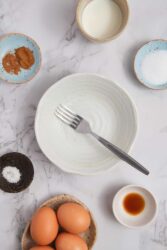
Ingredients
- 4 large eggs
- 1 cup whole milk
- 1 1/2 teaspoons pure vanilla extract
- 3 tablespoons granulated sugar
- 1/8 teaspoon grated nutmeg
- 1 pinch salt
- 1/2 teaspoon ground cinnamon
- Unsalted butter as needed
- 8 slices brioche bread
- Maple syrup, fresh fruit, or powdered sugar for serving
Instructions
- In a bowl, whisk together eggs, milk, vanilla extract, sugar, nutmeg, salt, and cinnamon until well combined. Transfer to a shallow dish.
- Melt enough butter in a large skillet over medium heat to coat the skillet.
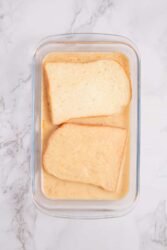
- Dip each slice of brioche bread into the egg mixture, coating both sides. Place in the skillet and cook about 2-4 minutes per side or until golden brown. Add more butter to the skillet in between slices as needed.
- Serve the French toast warm with maple syrup and other preferred toppings.
Nutrition Info:
Nutrition information are estimates only and may vary based on the specific brands, ingredients, and portion sizes you use. This data is provided for informational purposes only.


Leave a Comment