

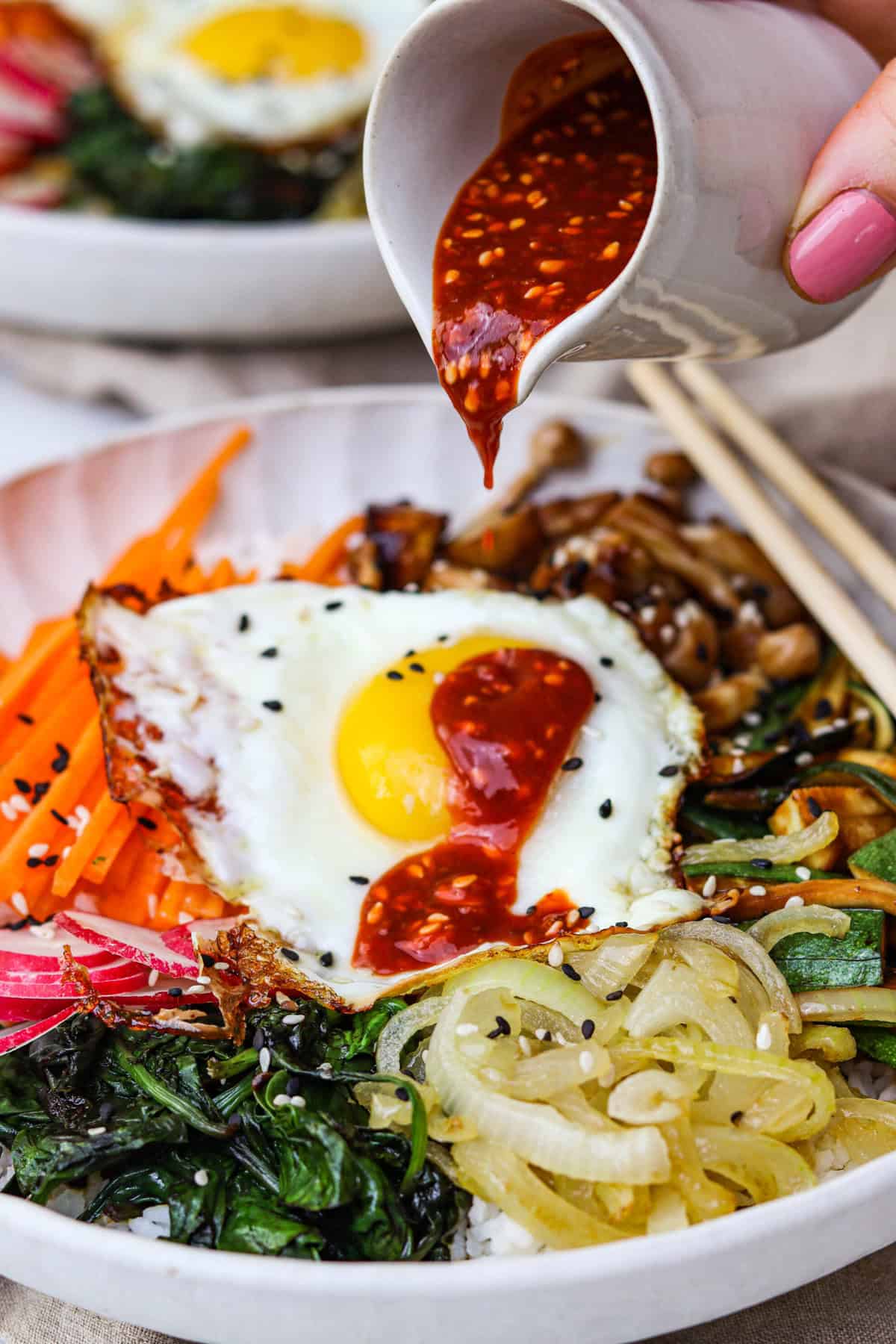
Enhance the taste of your bibimbap with the right sauce!
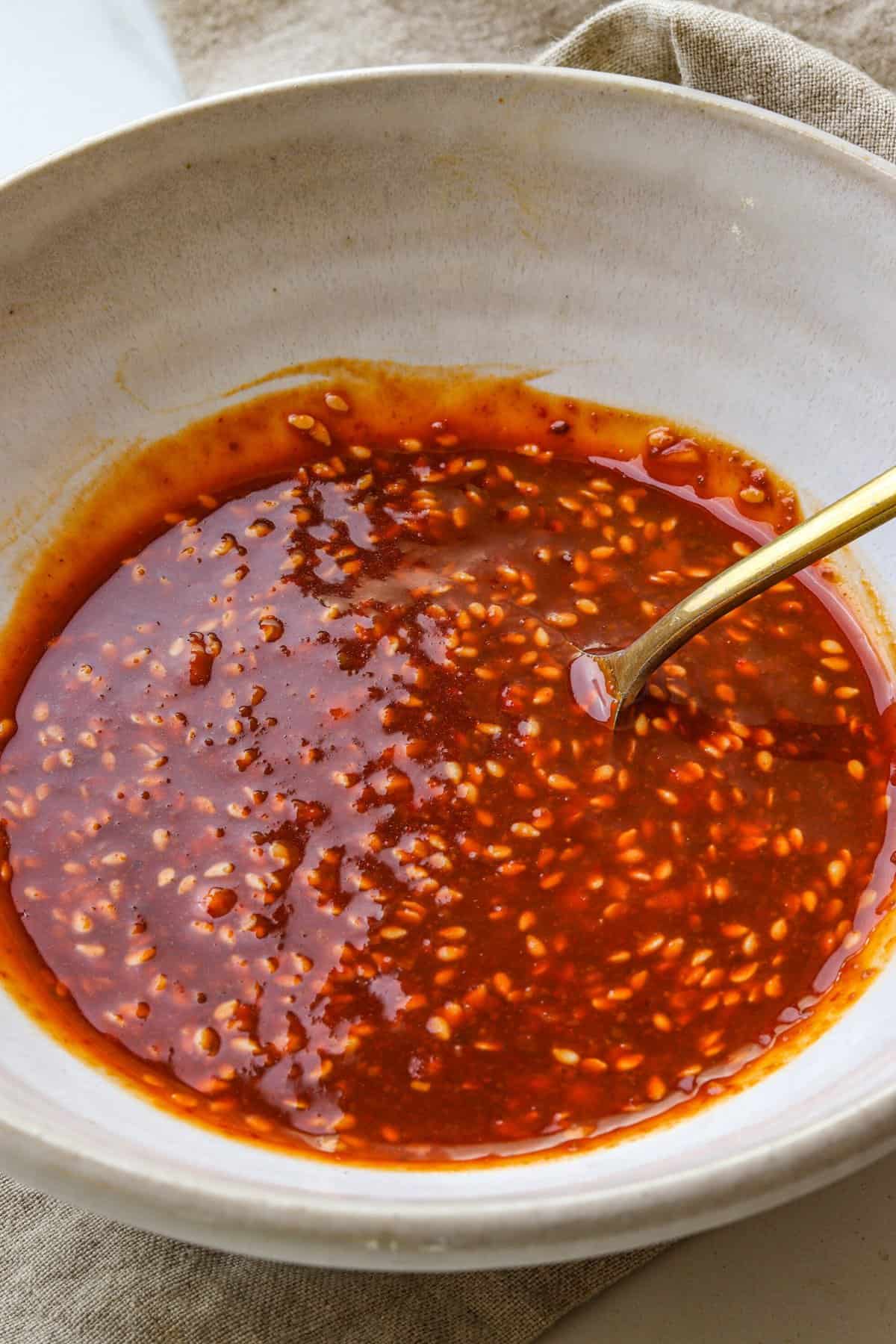
Bibimbap is a dish synonymous with Korean cuisine. Most of us have probably tried it at some point. Or maybe you eat it all the time! Either way, if you’re eating bibimbap without the right sauce, you’re doing your taste buds a disservice.
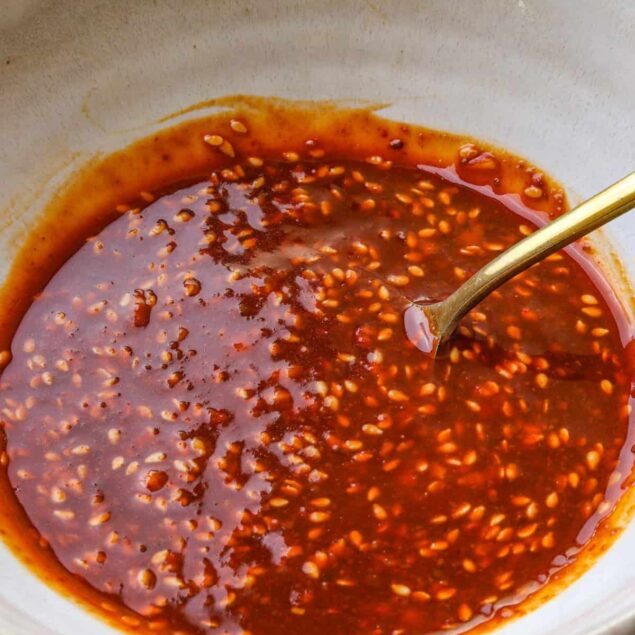
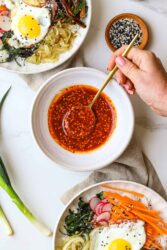
With just a handful of ingredients, this sauce couldn’t be easier to make. It doesn’t require any heat; just some good old-fashioned whisking. More importantly, bibimbap sauce perfectly balances salty, sweet, and spicy. While gochujang is the main ingredient, mixing it with other ingredients adds flavor, texture, and consistency that help make the flavors in bibimbap come out even more, enhancing the entire dish in a way I think you must taste to believe.
What is gochujang, you ask? Gochujang is a fermented red chili paste that combines all the best elements of sweet, savory, and spicy. It’s absolutely delicious in marinades, stir-fries, stews, and—as I’m about to prove—sauces!
Is This Bibimbap Sauce Healthy?
Bibimbap sauce has limited fat and calories, so it does relatively little harm from a health standpoint. In fact, gochujang contains capsaicin from the red chilis, an antioxidant purported to have anti-inflammatory properties. The sesame seeds in the recipe also add a small dose of healthy fats, and the garlic may have further anti-inflammatory benefits.
One thing to be mindful of is the sugar and sodium content of this sauce. Many store-bought gochujang pastes are high in both, and additional sugar is added in this recipe.
Freshness And Quality
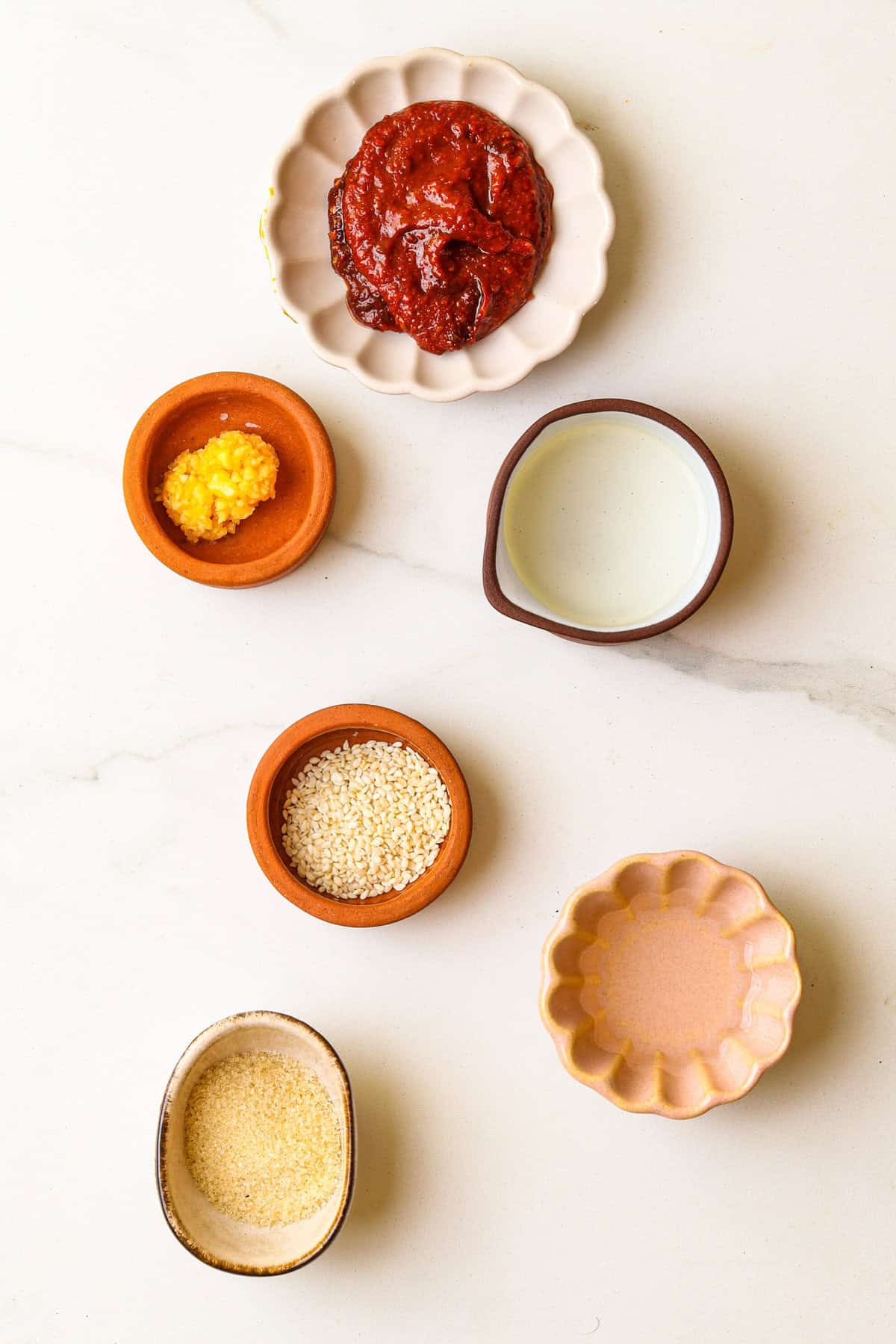
With so few ingredients in bibimbap sauce, the freshness and quality of those ingredients are of the utmost importance. My best advice is to find a high-quality gochujang. Whether you find it at a local market or online, get the most authentic gochujang available. Using freshly minced garlic is also important to get the best flavor possible in this sauce. If you can help it, try to avoid using the pre-minced jarred garlic or garlic paste you see in grocery stores.
How Do I Store Leftovers?
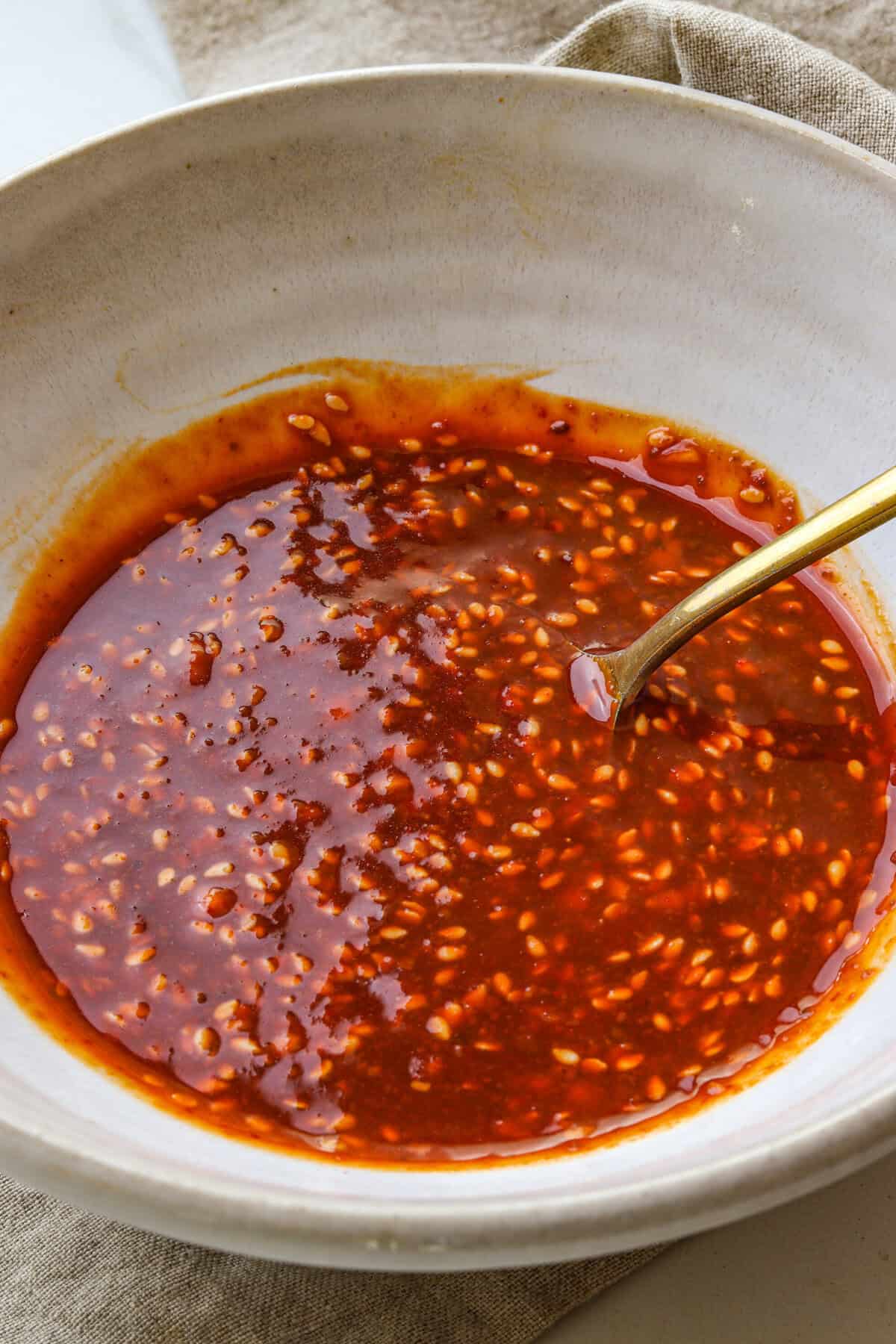
It’s best to store the bibimbap sauce in a glass jar in the fridge. Assuming the jar is tightly sealed, the sauce will remain good in the fridge for up to 1 week.
Serving Suggestions
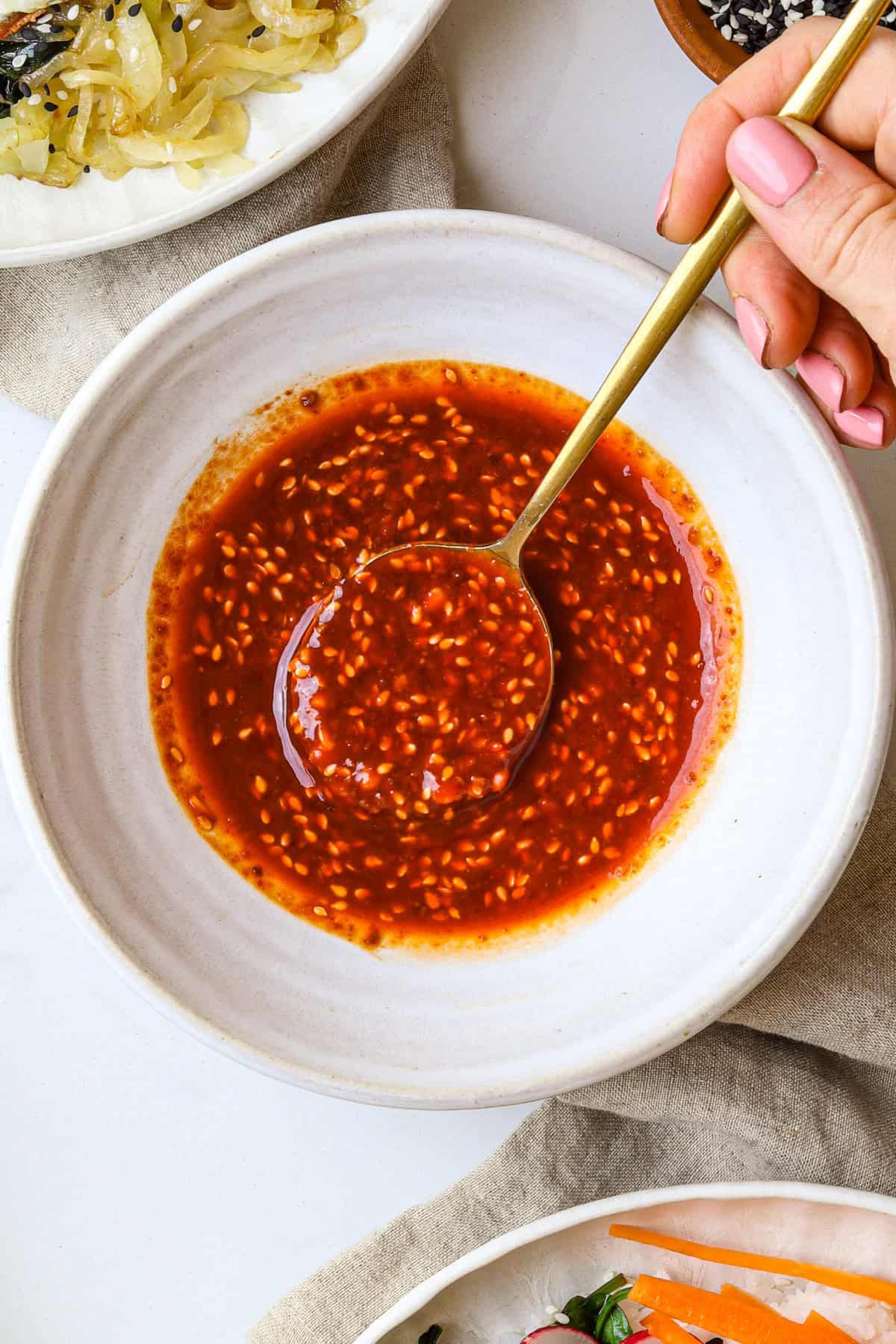
Naturally, you’ll want to use your bibimbap sauce whenever you make this Bibimbap Recipe. But there are a few more uses for bibimbap sauce that you may want to explore. It’s also a great complement to any grain bowl, including a healthy Buddha Bowl. I’d also recommend trying my sauce on any dish with roasted vegetables. That includes this recipe for Quinoa With Roasted Vegetables or even a side dish like Roasted Broccoli And Carrots.
Ingredients
- 2 tablespoons gochujang
- 1 tablespoon sugar
- 1 tablespoon water
- 1 tablespoon toasted sesame seeds
- 1 teaspoon apple cider vinegar
- 1 teaspoon minced garlic
Instructions
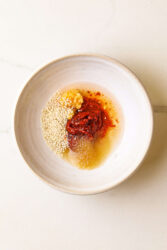
- Combine all ingredients in a small bowl.
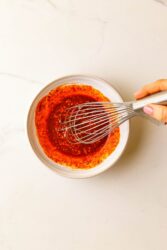
- Whisk thoroughly until the sugar is completely dissolved and the mixture is smooth.
- Use immediately or store in the refrigerator in an airtight container for up to 1 week.
Nutrition Info:
Nutrition information are estimates only and may vary based on the specific brands, ingredients, and portion sizes you use. This data is provided for informational purposes only.


Leave a Comment