

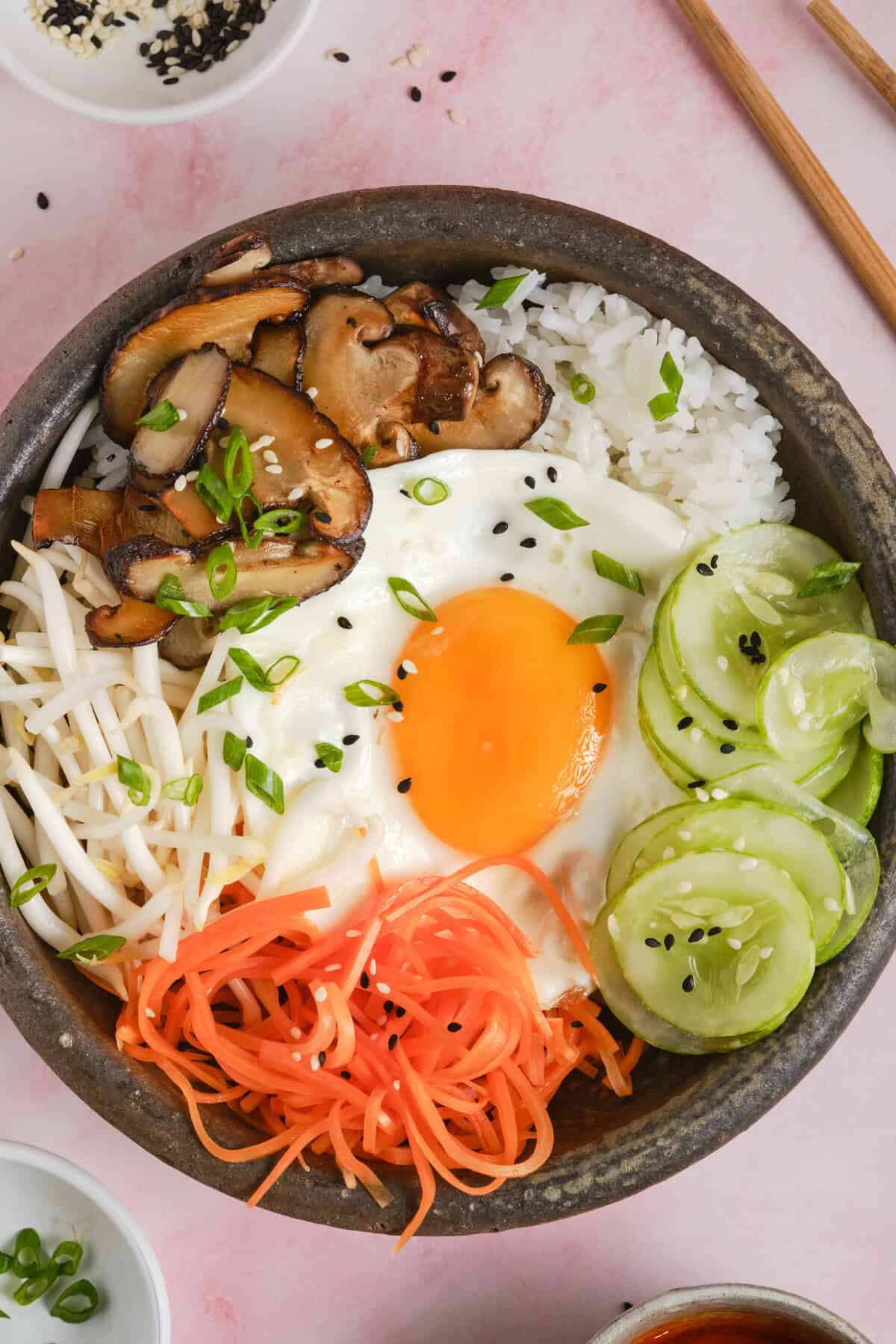
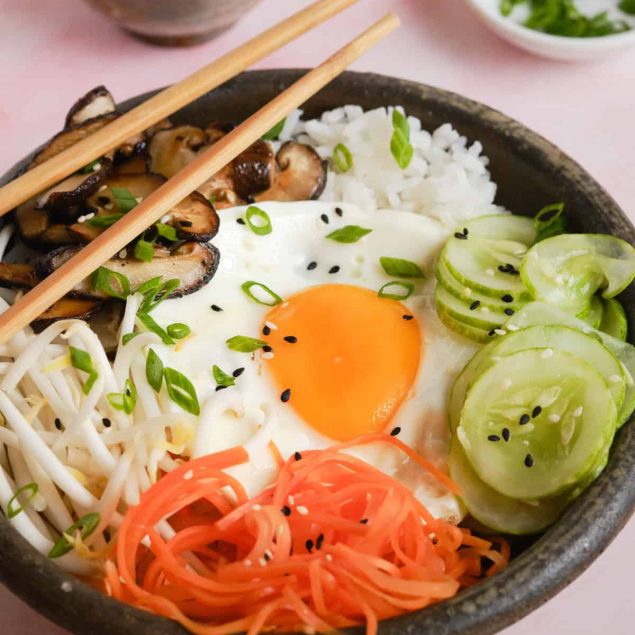
Take a trip to the heart of Korea with Bibimbap—a big bowl of perfectly cooked rice loaded with colorful veggies, tender mushrooms, and a fried egg.
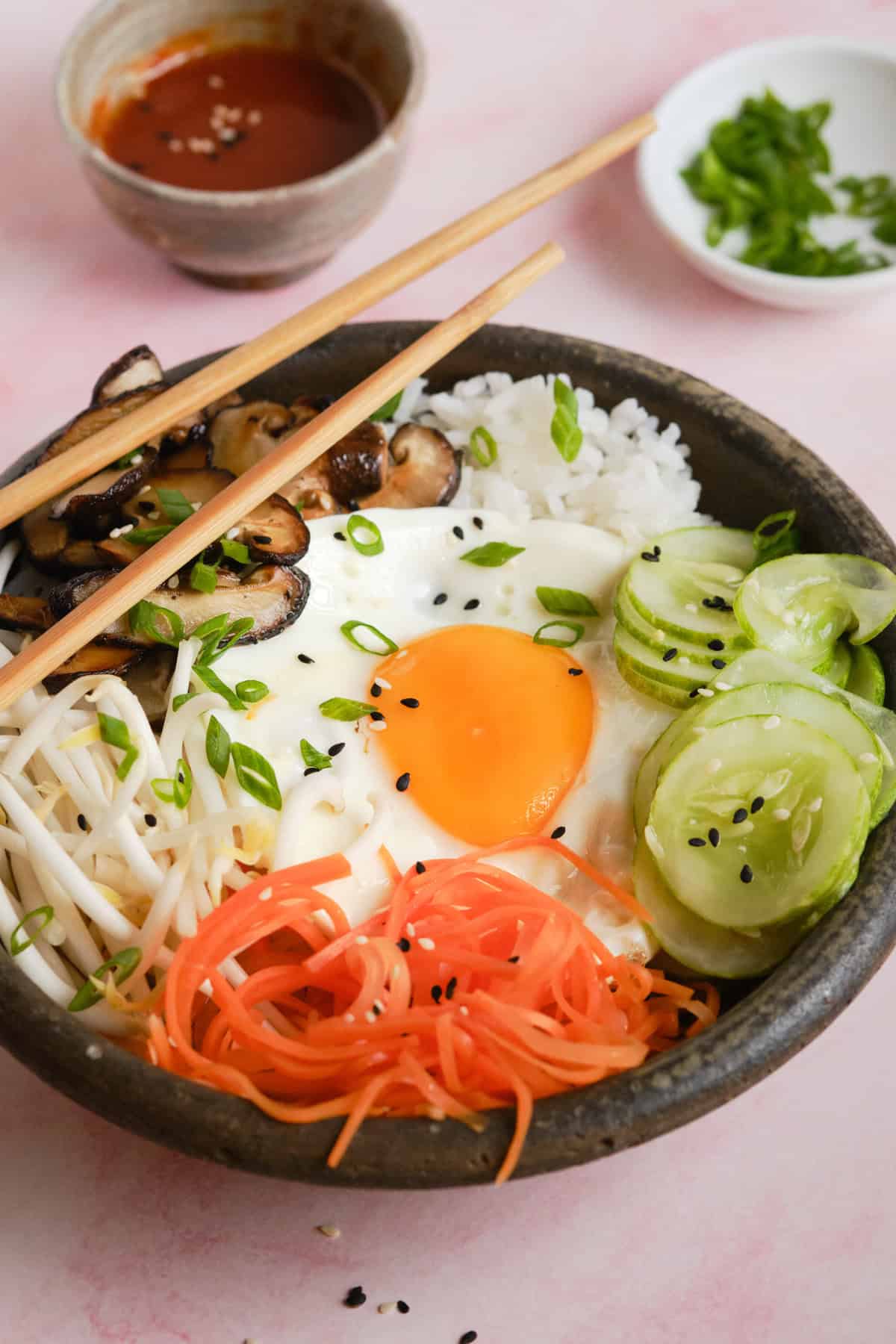
Do you know what the best thing about bibimbap is? It is the ultimate Korean food mashup that gets your taste buds doing a happy dance. Simply translated into “mixed rice with veggies,” bibimbap is an extensively customizable and endlessly comforting dish. Picture this: a bunch of yummy flavors, a medley of textures, and a rainbow of colors all in one amazingly appetizing bowl. Just one bite and you’ll be hooked, I promise!
So, what’s the secret to a perfect bibimbap? For me, it’s all about harmony and balance. This dish is a fusion of spicy, sweet, tangy, and savory, all in one recipe. You’ll mix a combo of thinly sliced veggies with shiitake mushrooms, a perfectly fried egg, and fluffy rice, all tucked underneath the divine spell of volcanic gochujang sauce. I think you’re not only going to turn into a bibimbap master, but your home cooking game is set for a major level up!
Is Bibimbap Healthy?
This is a fairly well-balanced meal. The rice offers carbs, while you also get protein from the eggs and fiber, vitamins, and antioxidants from all the veggies and mushrooms.
As far as dietary restrictions go, you can make some adjustments here to better suit your needs. Swapping the soy sauce for tamari or coconut aminos will make the dish gluten-free. Leaving out the egg (or replacing it with some tofu) would make it vegan. One thing to be mindful of is the gochujang, as some brands can contain a lot of sugar and salt. Always check the label!
Looking Back On Bibimbap
Bibimbap has deep roots in Korean history, though the exact origin is unclear. It was commonly a dish that people ate on the eve of the Lunar New Year, an occasion for which there was a lot of leftover food. Looking for a way to use up all the leftover bits from side dishes, everything was combined into one bowl to eliminate food waste and feed a large number of people.
As the years went on, bibimbap became less about using up leftovers and is now a celebrated comfort food beloved by many. Today, you can find bibimbap in Korean and fusion restaurants all over the world.
How Do I Store Leftovers?
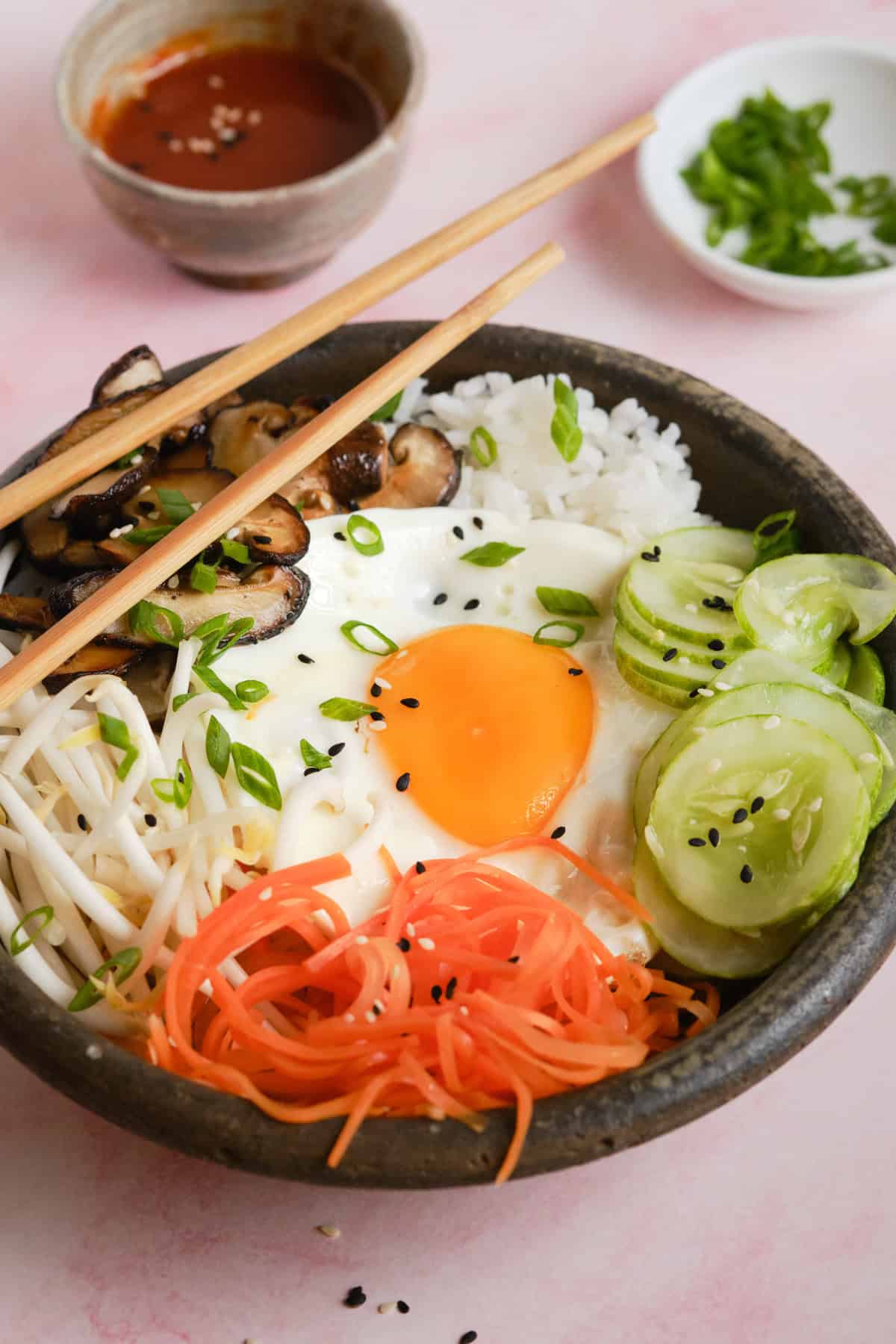
I recommend keeping your main ingredients separated: veggies, mushrooms, rice, eggs, and gochujang each get their own container. This will preserve the best texture. Keep your leftovers in the fridge and aim to consume them within 4 days. Leftover fried eggs are best consumed within 3 days.
Serving Suggestions
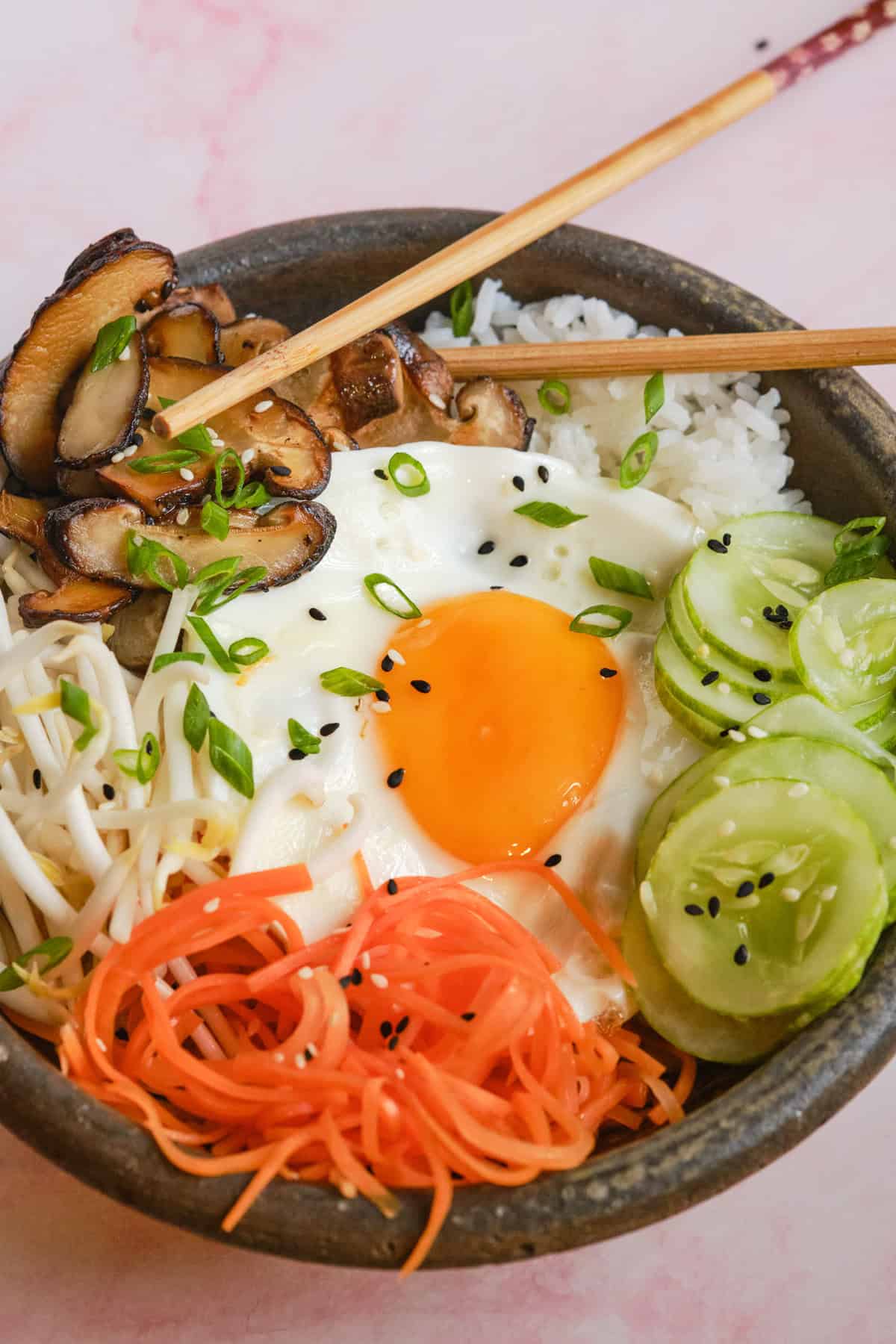
Serve your bibimbap with a side of Cucumber Kimchi for a delicious Korean-inspired meal. You could also have an appetizer of Kimchi-Jjigae, a stew with kimchi, tofu, and pork belly. I’m also a fan of adding some Pickled Daikon to the top of my rice bowl!
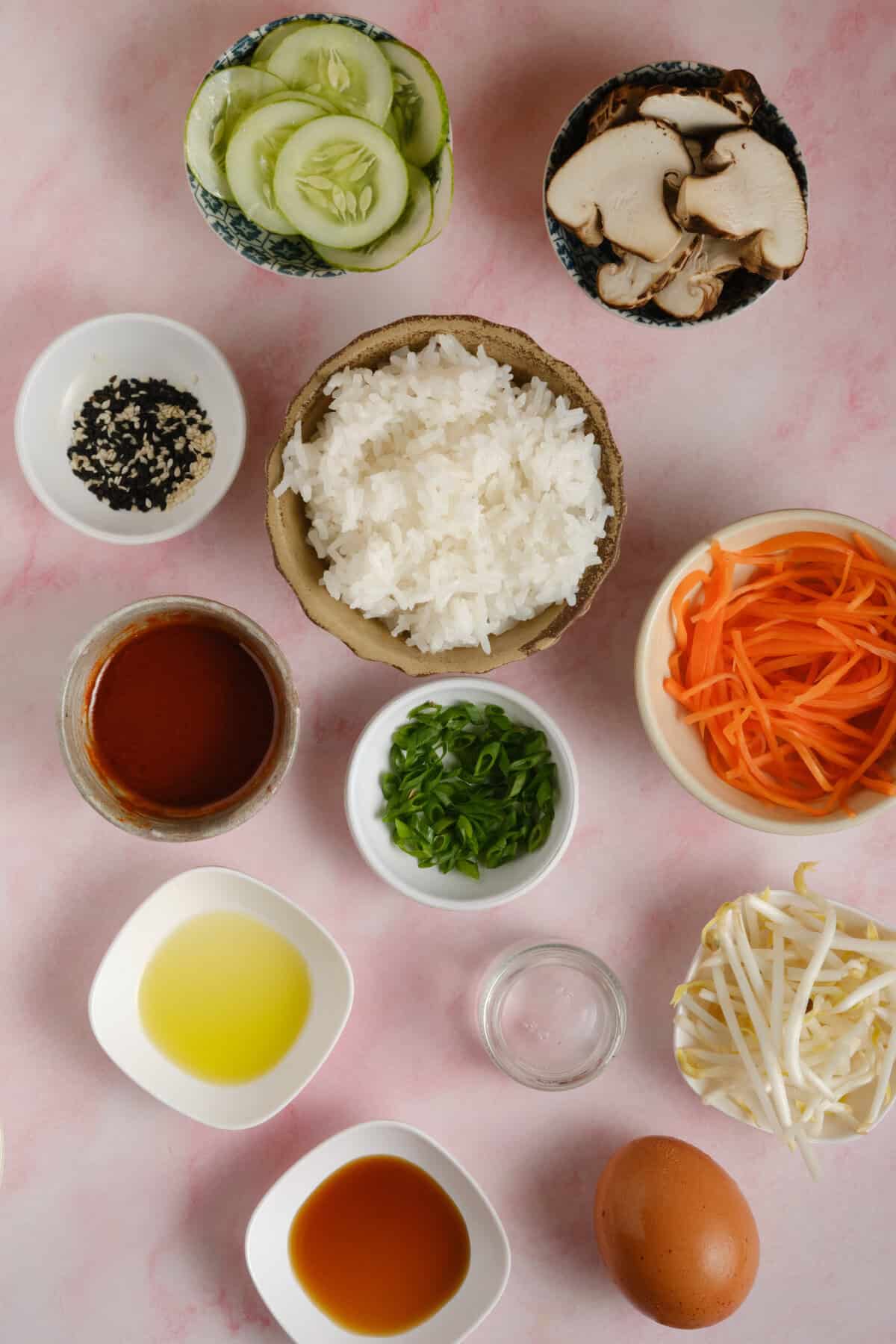
Ingredients
- 1 cucumber thinly sliced
- 2 teaspoons rice vinegar divided
- 1 1/2 tablespoons sesame oil divided
- pinch of sea salt
- 3 ounces shiitake mushrooms sliced
- 1 teaspoon soy sauce
- 2 eggs
- 2 cups white rice cooked
- 1 cup mung bean sprouts
- 1 carrot shredded
- 1 tablespoon scallions chopped, for garnish
- Black and white sesame seeds for garnish
- Gochujang sauce to taste, for garnish
Instructions
- In a small bowl, add the cucumber slices and toss with 1 teaspoon of rice vinegar, 1/2 tablespoon of sesame oil, and a pinch of sea salt. Set aside.

- In another small bowl, combine the shredded carrots with remaining 1 teaspoon of rice vinegar and a pinch of sea salt. Set aside.

- Heat 1 tablespoon of sesame oil in a medium skillet over medium-high heat. Add the sliced shiitake mushrooms and cook for 5 minutes, until cooked and browned. Season with soy sauce. Remove from the pan and set aside.

- In the same skillet, add the eggs and fry sunny-side up for about 3 minutes.

- Assemble two bowls with rice, cucumber slices, bean sprouts, carrots, and shiitake mushrooms. Top each with a fried egg and sprinkle with the chopped scallions and the sesame seeds. Drizzle with the gochujang sauce if preferred.
Nutrition Info:
Nutrition information are estimates only and may vary based on the specific brands, ingredients, and portion sizes you use. This data is provided for informational purposes only.


Leave a Comment