

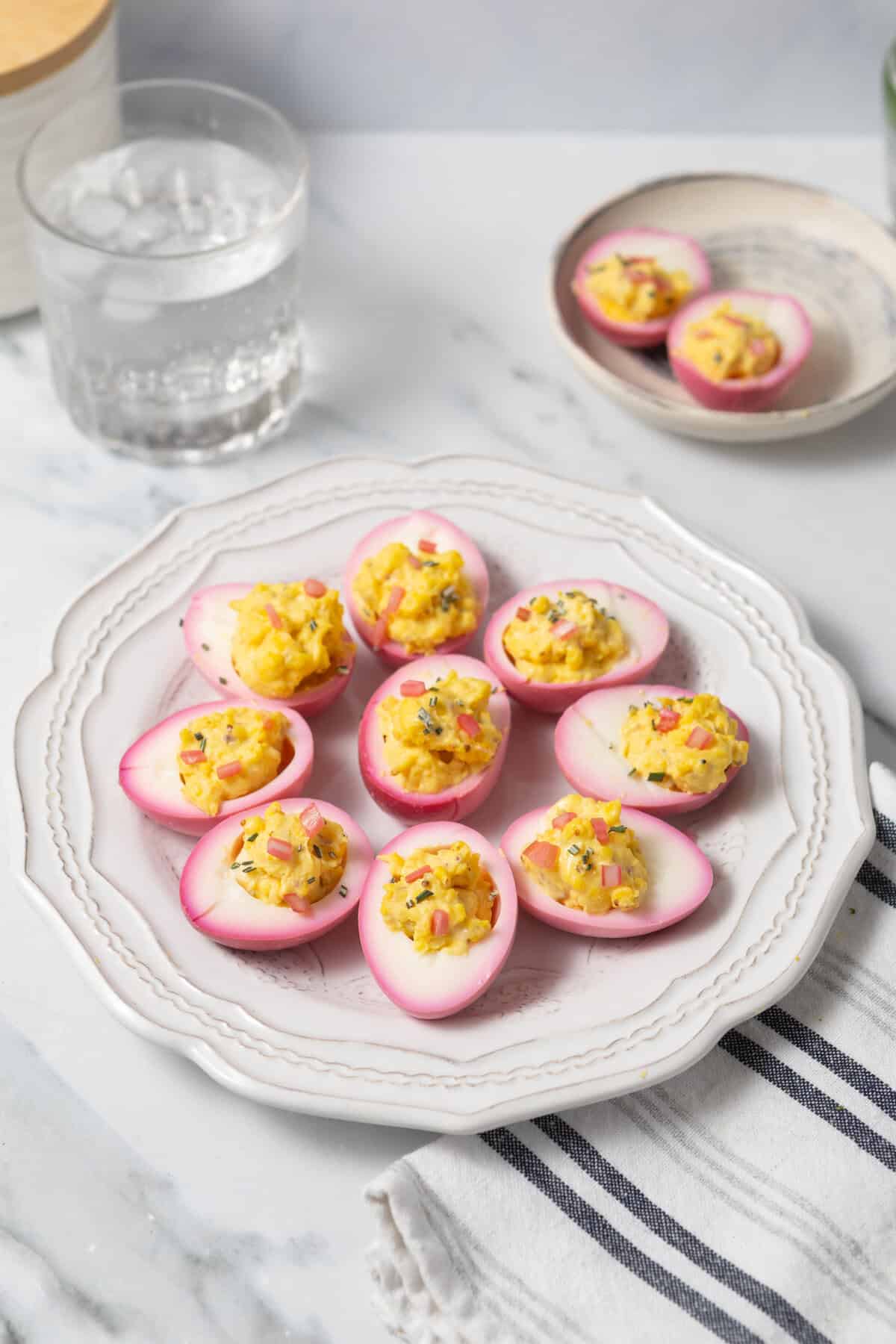
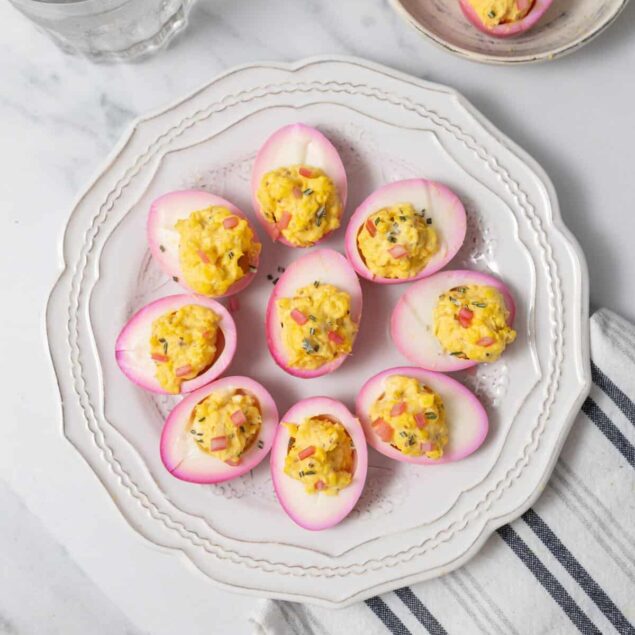
Incredible flavors and a beautiful pink color make these Beet-Pickled Deviled Eggs Barbie’s favorite—and we think they’ll be yours too.
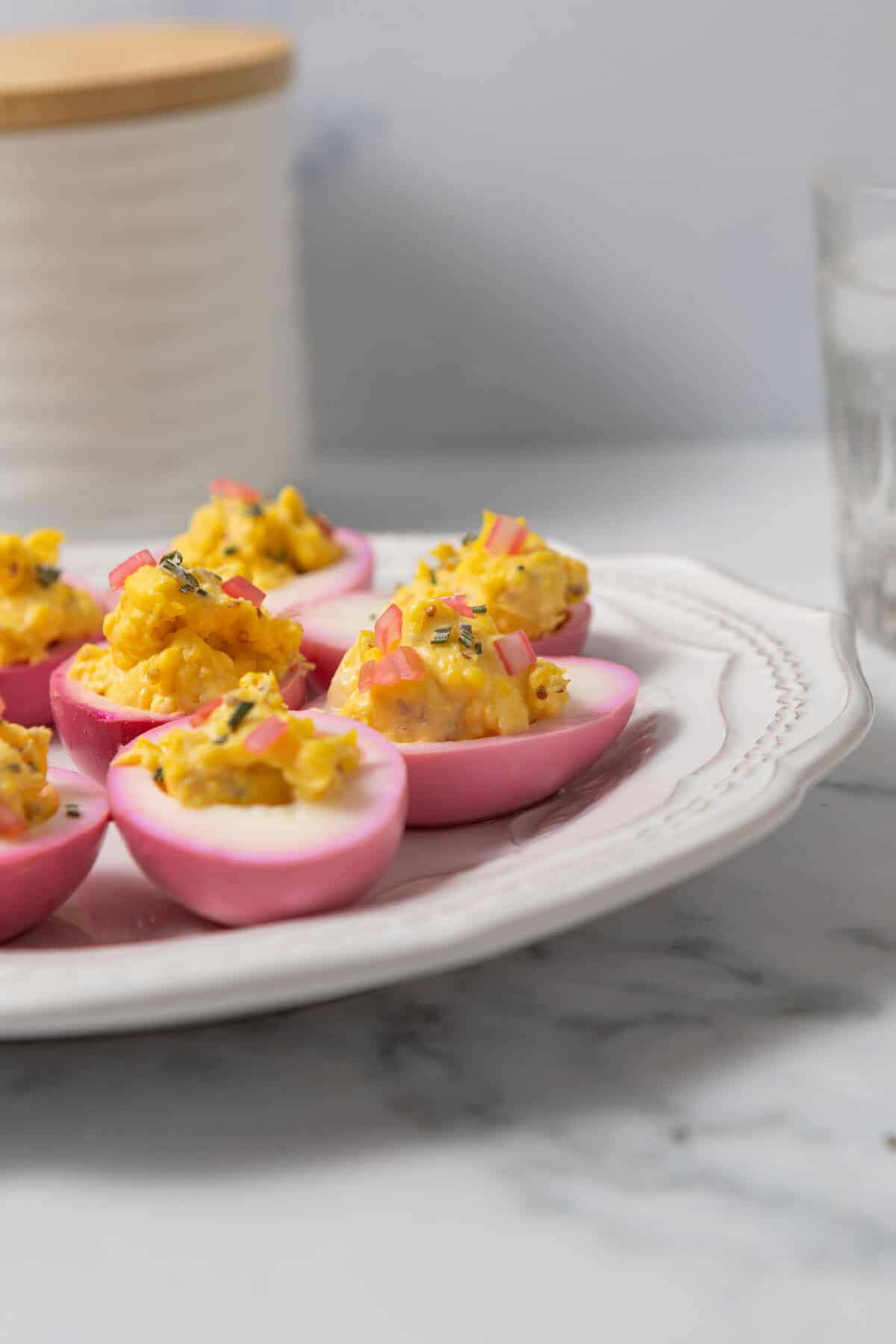
Deviled eggs have been a popular finger food for centuries, and with good reason. They were first created in England in the late 1700s and became so popular that to “devil” a dish became a verb meaning to make it spicy.
In the first decade of the 20th century, the introduction of commercially produced mayonnaise made deviled eggs even more popular in North America, and while they have somewhat fallen out of favor in England, their popularity in America has remained high.
There are so many versions of deviled eggs, and you’ll find quite a few on this website. This particular recipe is one I make often, and it’s special for a couple of reasons: Pickling the eggs gives the whites an earthy tang that you won’t find in other recipes that focus largely on how the yolks are seasoned. Second, they’re a wonderful pink color that we adore (courtesy of pickled beets), and I think that makes them the perfect appetizer for Halloween as well as Easter or any other spring celebration. Sweet, garlicky shallots are picked alongside the eggs, then diced and used to top these delectable deviled eggs along with herbal rosemary.
Are Beet-Pickled Deviled Eggs Healthy?
This recipe contains a fair bit of mayo, which makes the deviled eggs high in calories and fat, so it’s best to enjoy them in moderation. However, the good news is that eggs are a good source of protein. Shallots, rosemary, and beets provide fiber, potassium, and antioxidants. Add the fact that these are homemade with wholesome ingredients and are not fried as many finger foods are, and you have a colorful and inexpensive appetizer that is simple to make and will wow your guests.
Which Beets?
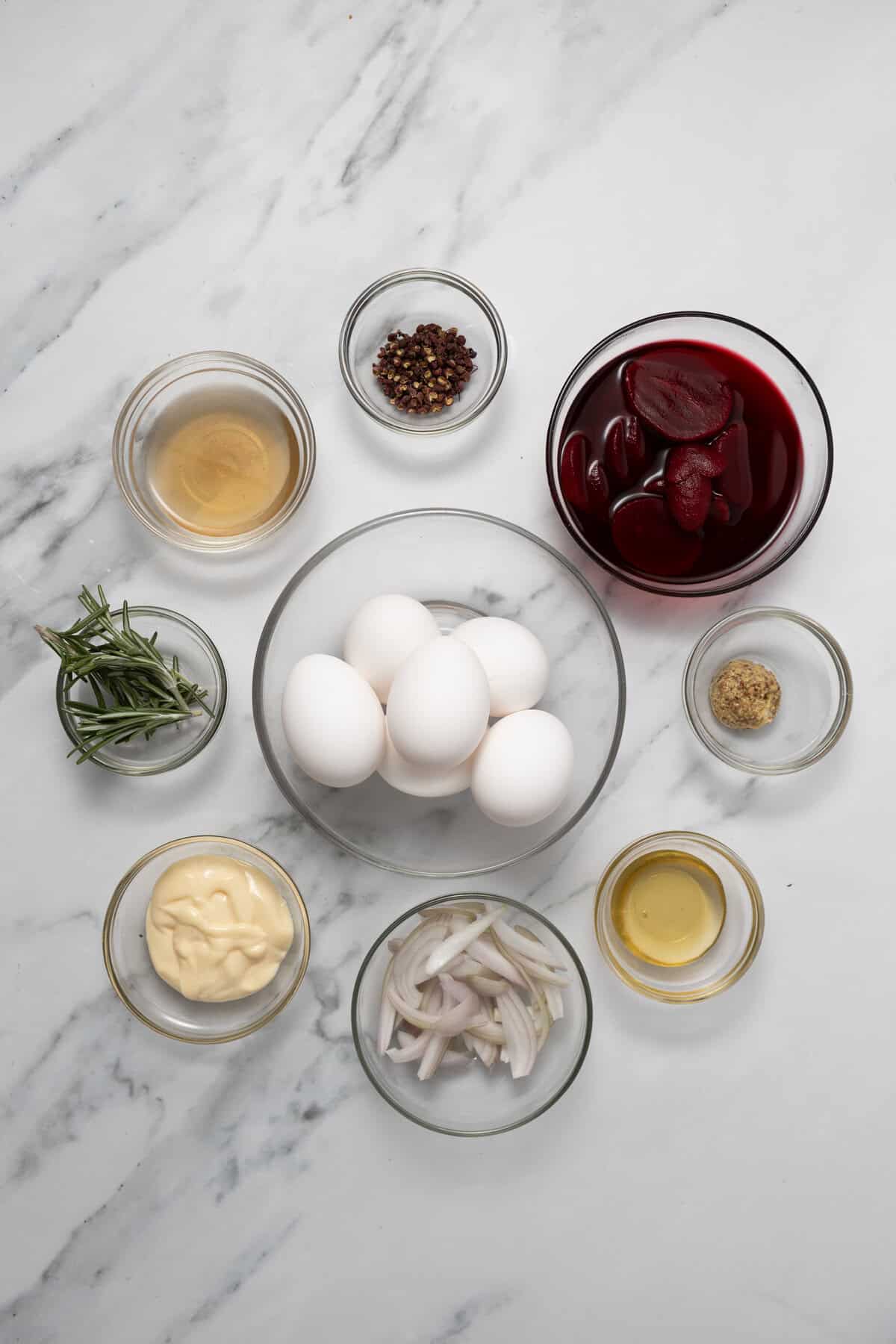
You want to have beets with a deep red color and rich liquid. Canned beets tend to be a lot milder than jarred beets, and we like the intense flavor and color you get from good-quality jarred baby beets. If you opt to take the milder route of canned beets, you might want to up the vinegar content a little, but for an intense pink and delicious earthy flavor, we suggest you go with the jarred variety and that you spend the extra few cents on a top-quality brand.
How Do I Store Leftovers?
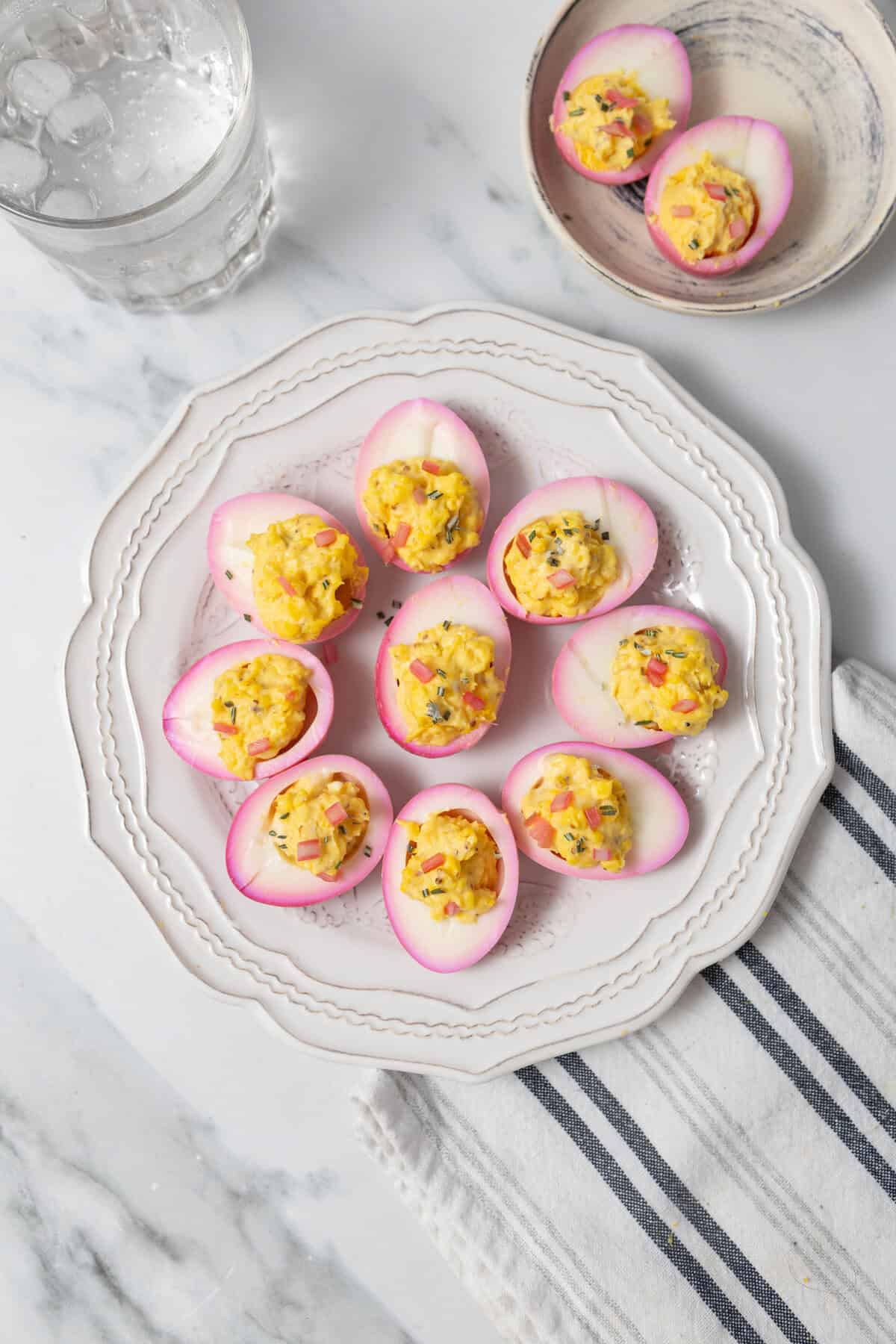
Pickled deviled eggs will stay good in the fridge in an airtight container for 4 days. If you want to make extra pickled eggs for another use, pickled eggs have a long shelf life of about 3 months in the fridge.
Serving Suggestions
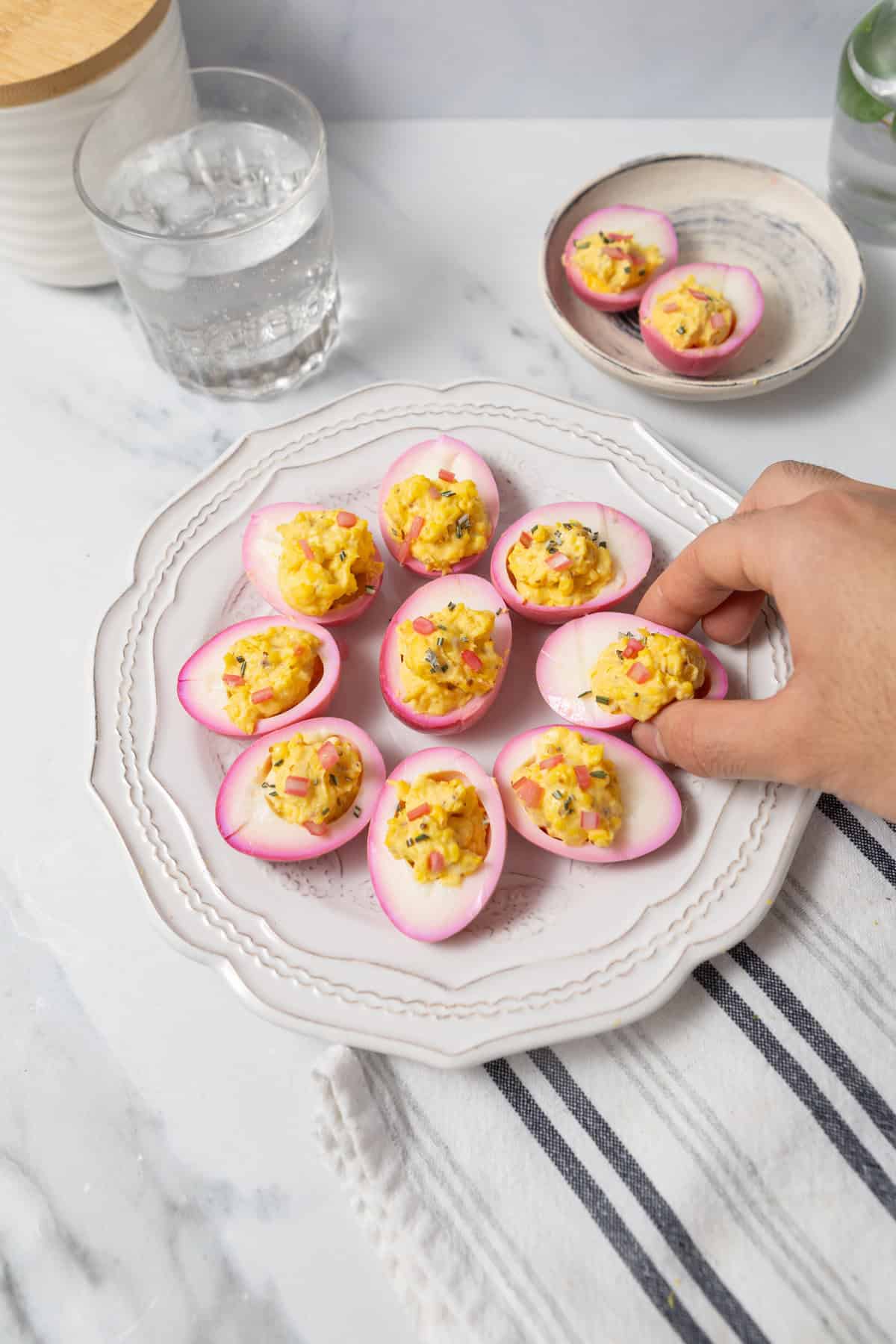
If you’re looking for cocktail party inspiration, other finger foods I love include Lemon-Sun-Dried Tomato Hummus And Goat Cheese Pesto Bites, Sausage-Stuffed Mushrooms, and Air-Fryer Apple Chips. It’s also fun to make a variety of deviled eggs at the same time, like Bloody Mary Deviled Eggs, Shrimp Deviled Eggs, and Avocado Deviled Eggs.
Ingredients
- 6 large eggs
- 2 pickled beets plus 1 cup beet liquid
- 1 tablespoon black peppercorns or your favorite peppercorns
- 3 tablespoons apple cider vinegar
- 1 sprig rosemary plus more to garnish
- 1 shallot sliced lengthwise
- 2 tablespoons honey
- 1/4 cup mayonnaise
- 2 teaspoon grainy mustard
- Salt and pepper to taste
Instructions
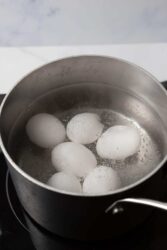
- Fill a small saucepot with enough water to submerge 6 eggs and bring to a boil. Place your eggs in the water using a spoon and boil for 10-12 minutes until yolks are hard. Once ready, remove from the saucepot and carefully place in an ice bath for 15 minutes. Peel your boiled eggs and set them aside.
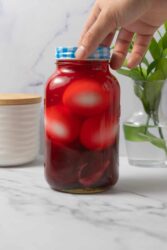
- Using a large mason jar, add the pickled beets and liquid, peppercorns, apple cider vinegar, rosemary, shallots, and honey, and stir to combine. Add the eggs and seal tightly. Refrigerate for at least 4-6 hours to allow eggs to pickle.
- Once ready, remove pickled eggs and shallots. Slice eggs lengthwise and separate yolks. Dice the shallots.
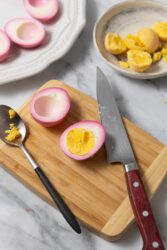
- In the large bowl, combine egg yolks, mayonnaise, grainy mustard, salt, and pepper.

- Begin spooning your deviled egg mixture into the eggs. Garnish with rosemary and diced pickled shallots.
Nutrition Info:
Nutrition information are estimates only and may vary based on the specific brands, ingredients, and portion sizes you use. This data is provided for informational purposes only.


Leave a Comment