

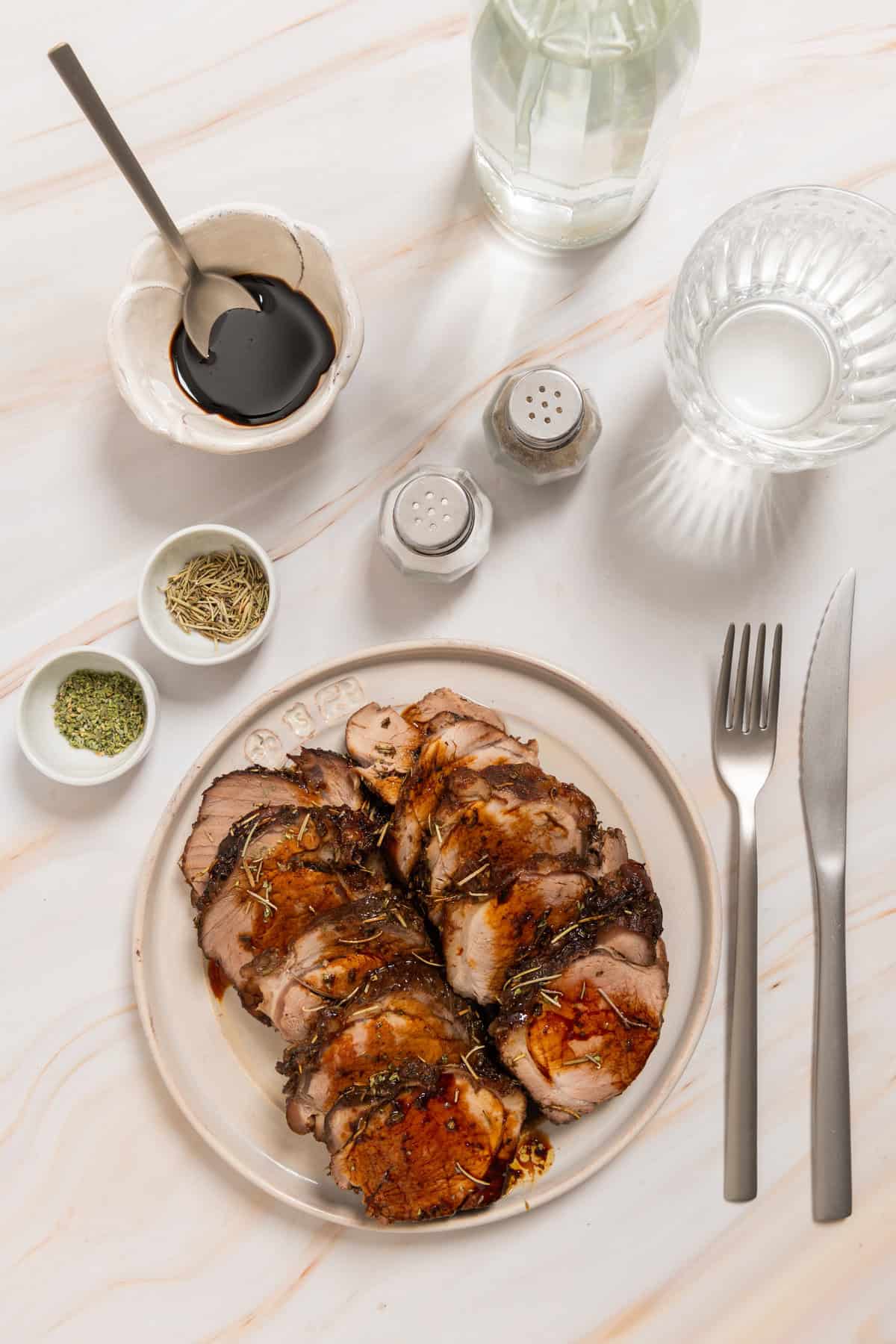
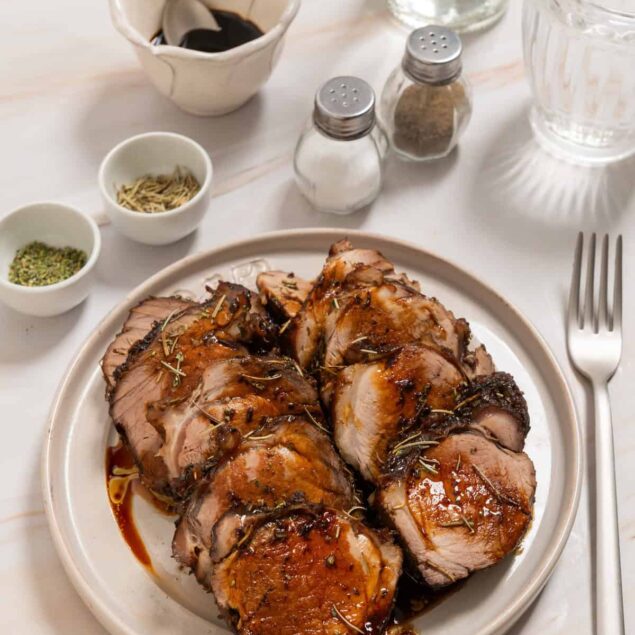
Herbs and sweet vinegar are the hallmarks of this Balsamic-Glazed Pork Tenderloin recipe. Try it for a tender, succulent main course!
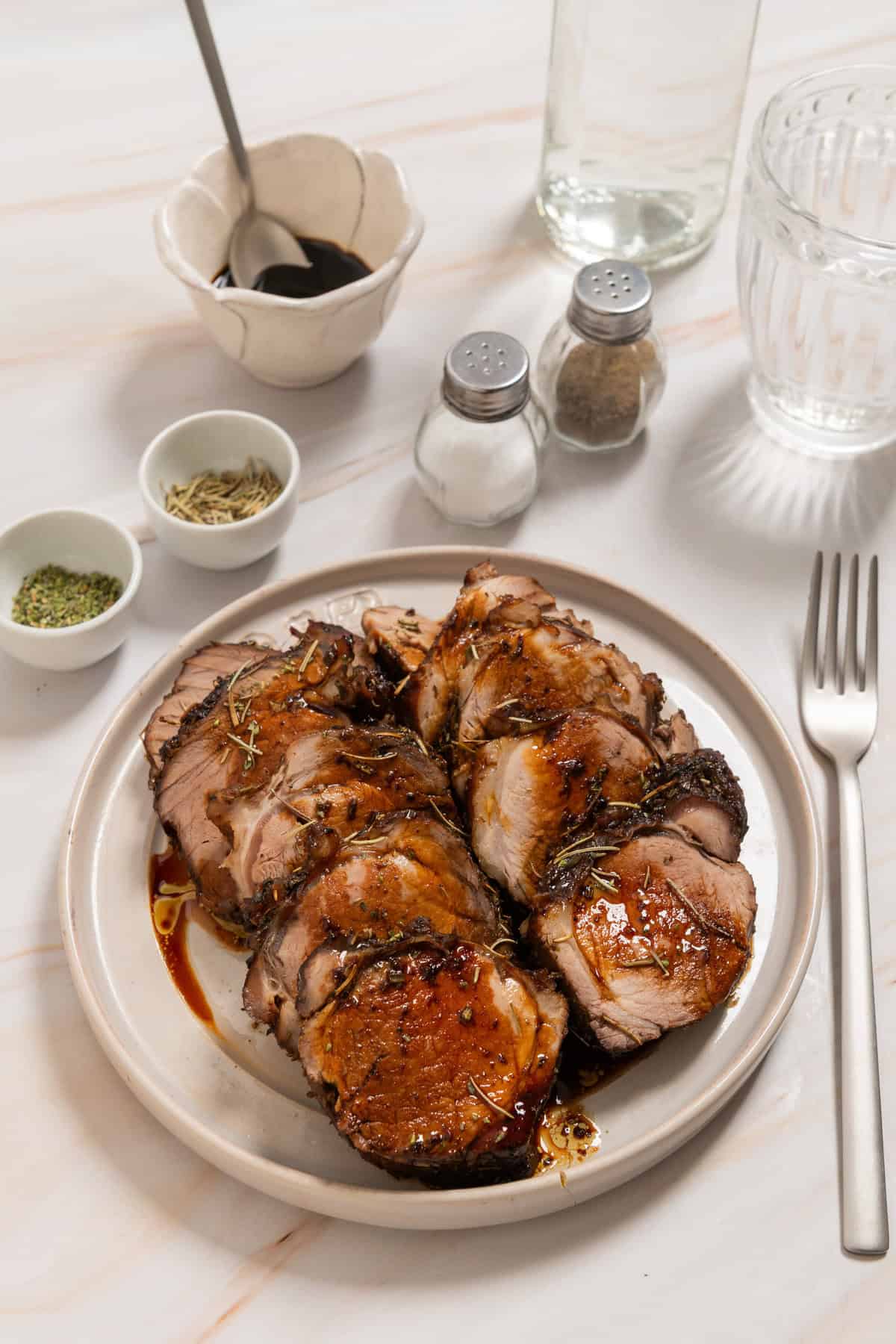
I’ll be the first to admit it: I was not a fan of pork tenderloin when I first started cooking it. I found it dry and lacking in flavor, no matter what seasonings I used. Then again, I wasn’t the most experienced home cook all those years ago. Pork tenderloin went on sale a lot at the time I moved into my first apartment, so many tenderloins were overcooked, under-salted, or otherwise sacrificed to my inexperience. The reason I didn’t care for pork tenderloin back then was that I didn’t know how to cook it properly.
All a pork tenderloin needs to achieve greatness is a little bit of sweetness, some herbs, and a cooking method that won’t dry it out. A marinade is a great way to add flavor, and it can help the tenderloin retain moisture during the cooking process.
This balsamic-glazed pork tenderloin recipe uses an extremely simple marinade to achieve a perfect oven roast, texture, and flavor. Balsamic vinegar is the primary ingredient in the marinade, and it’s flavored with a blend of herbs for a savory overtone. The vinegar tenderizes the pork tenderloin while it’s marinating, infusing the deep flavor notes into the meat. It’s all added to the baking dish with the pork when it goes into the oven, creating a delicious glaze when it’s finished. You’ll quickly become a fan of pork tenderloin with this recipe!
Is This Balsamic-Glazed Pork Tenderloin Healthy?
Pork tenderloin is a lean cut of pork, and it’s loaded with protein and important nutrients, such as iron and B vitamins. The nutrition of balsamic vinegar will depend on which type you buy, so try to get a variety that doesn’t have lots of added ingredients and sweeteners. Traditional balsamic vinegar only contains grape must, wine vinegar, and not much else, making it pretty healthy compared to many other condiments!
Overall, this dish is low in fat and carbs, free of gluten, and high in protein, which means it can be part of many different healthy diets.
Should You Sear Balsamic Pork Before Cooking?
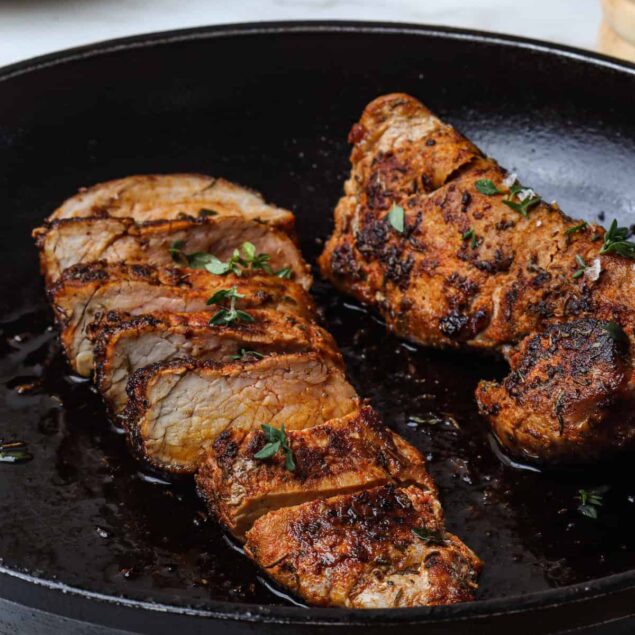
Some people swear by the sear. It’s by no means necessary, but if you want to create a gorgeous, crisp exterior, you might want to try it. Personally, I sear every hunk of meat that goes into the oven, including pork tenderloin.
Again, your pork will get plenty tender as it roasts in the oven, so there’s no need to worry about searing if you don’t have the time. On the other hand, if you’re cooking this for a crowd and want to “wow” everyone, scheduling some time to try this technique may be worthwhile.
How Do I Store Leftovers?
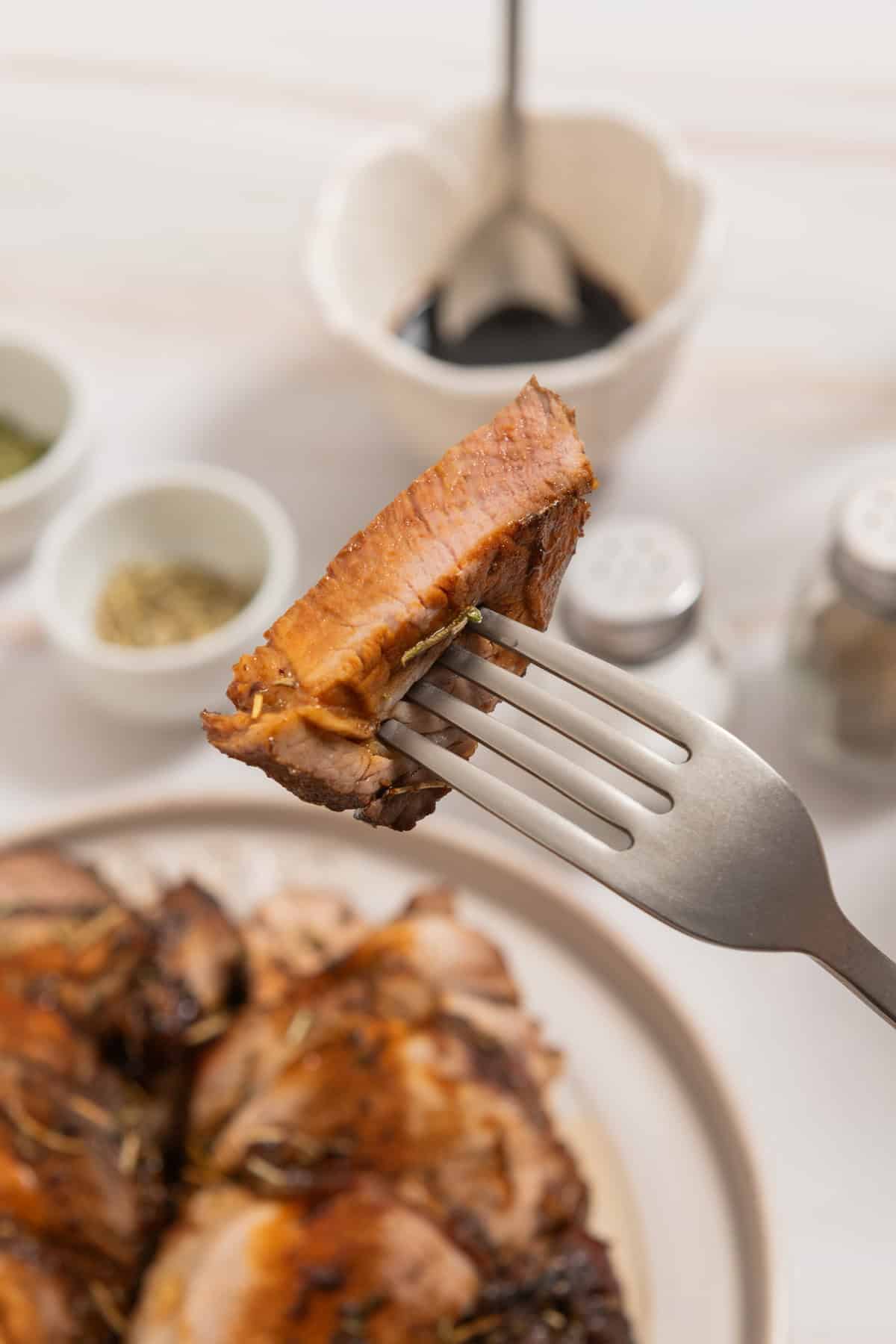
Store leftover pork tenderloin in an airtight container in the fridge for up to 4 days. You can also freeze leftovers (preferably not sliced yet) by transferring the meat to a freezer-safe ziplock bag and storing it in the freezer for up to 3 months. Thaw in the fridge overnight before reheating.
To reheat, you can put your thawed pork tenderloin in a preheated oven until it reaches an internal temperature of at least 145°F. You could also use the microwave or an air fryer.
Serving Suggestions
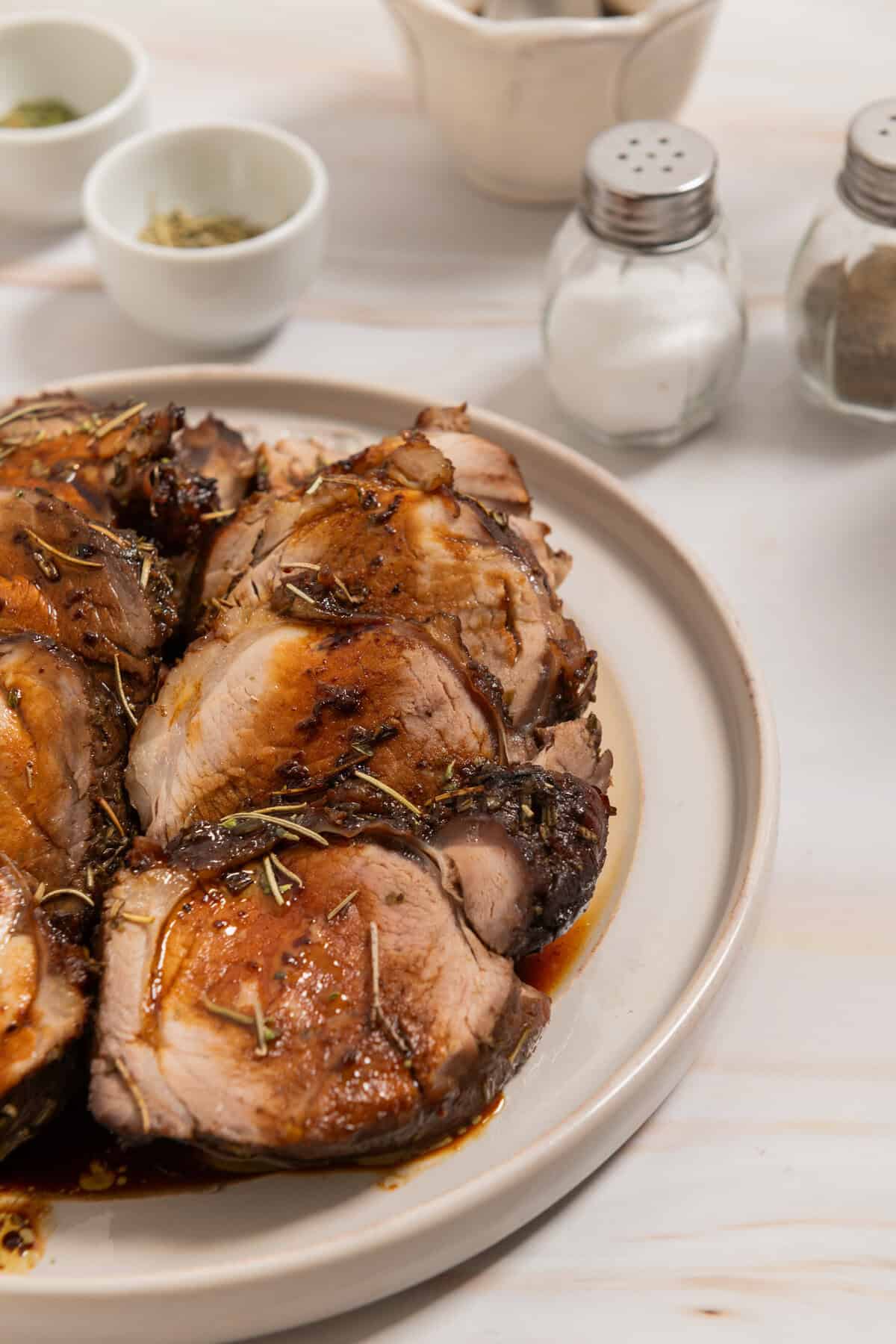
Balsamic pork tenderloin pairs beautifully with many sides, but roasted veggies are the most convenient (and healthy!) option. Since you’re already heating the oven, why not just put a tray of your favorite vegetables in with your main dish for a simple side? Check out recipes like Maple-Roasted Brussels Sprouts, Roasted Broccoli And Carrots, or Roasted Broccoli And Cauliflower.
Balsamic pork tenderloin also works great with potatoes. I love whipping up The Best Mashed Potatoes for sopping up all that balsamic sauce! You could also make some Roasted Russet Potatoes or Roasted Potatoes And Asparagus for a side that everyone will love.
Ingredients
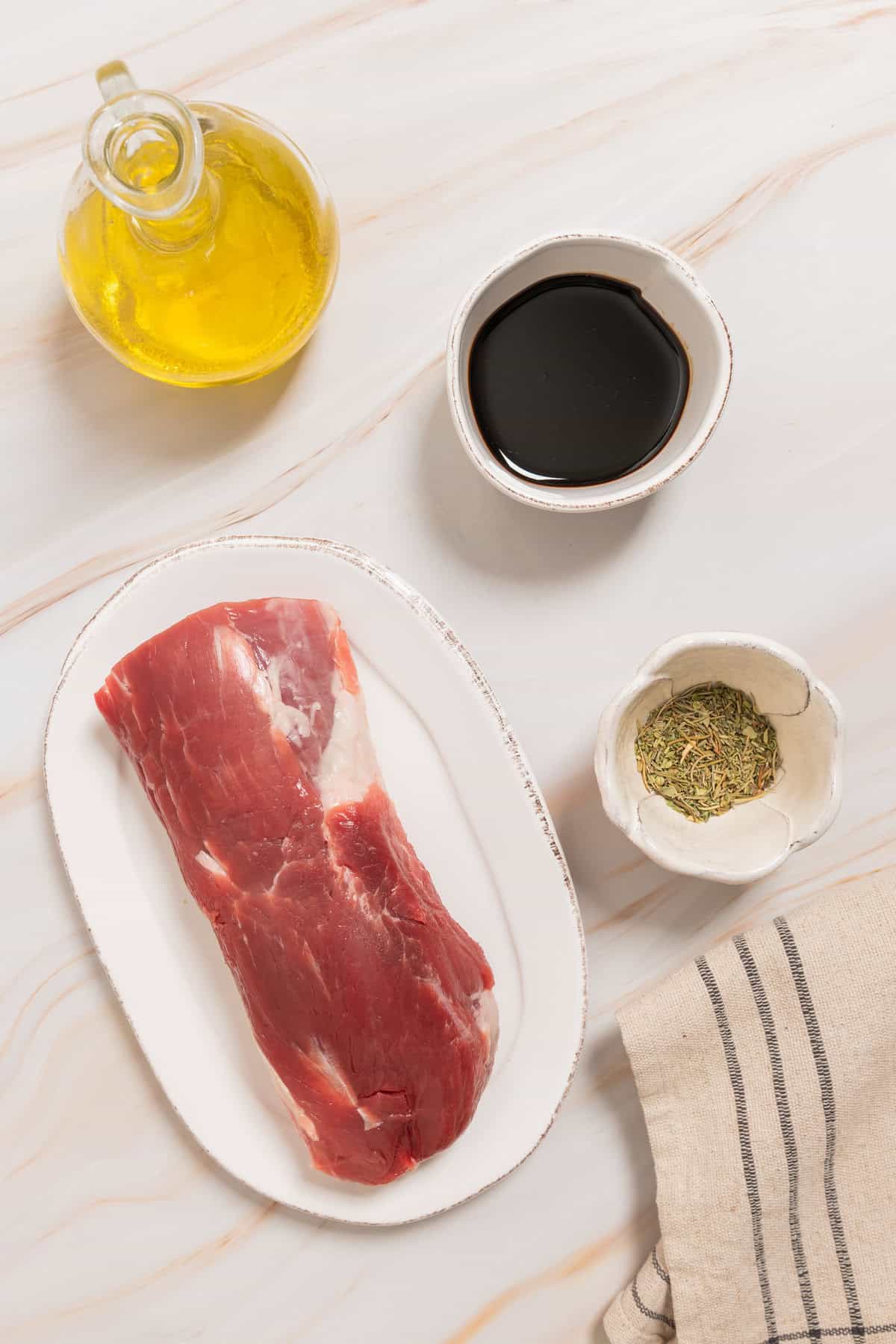
- ½ cup balsamic vinegar
- 2 tablespoons herb seasoning blend
- ½ cup olive oil
- 2 pounds boneless pork tenderloin
Instructions
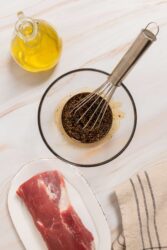
- Whisk together the balsamic vinegar and herb seasoning in a small bowl until the seasoning is fully dissolved. Gradually whisk in the olive oil to create the marinade.
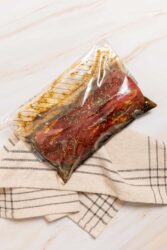
- Place the pork tenderloin in a resealable plastic bag and pour the marinade over the meat. Press out excess air and seal the bag, then turn to coat. Refrigerate for at least 2 hours, or overnight for deeper flavor.
- Preheat your oven to 350°F. Transfer the marinated pork tenderloin and all of the marinade into a high-rimmed baking dish, such as a casserole pan.
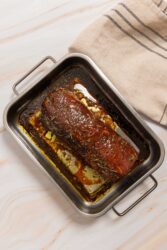
- Roast the pork tenderloin in the oven, basting with the marinade occasionally, until it reaches an internal temperature of 145°F, which typically takes about 1 hour.
- Remove the pork tenderloin from the oven and let it rest for 10 minutes. Slice and serve.
Nutrition Info:
Nutrition information are estimates only and may vary based on the specific brands, ingredients, and portion sizes you use. This data is provided for informational purposes only.


Leave a Comment