

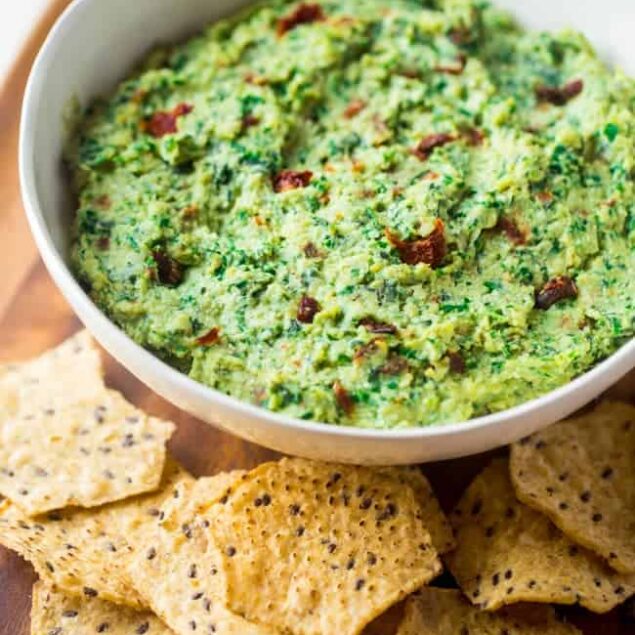
This quick and easy homemade hummus features kale pesto and sun-dried tomatoes for a healthy, vegan, gluten-free appetizer!
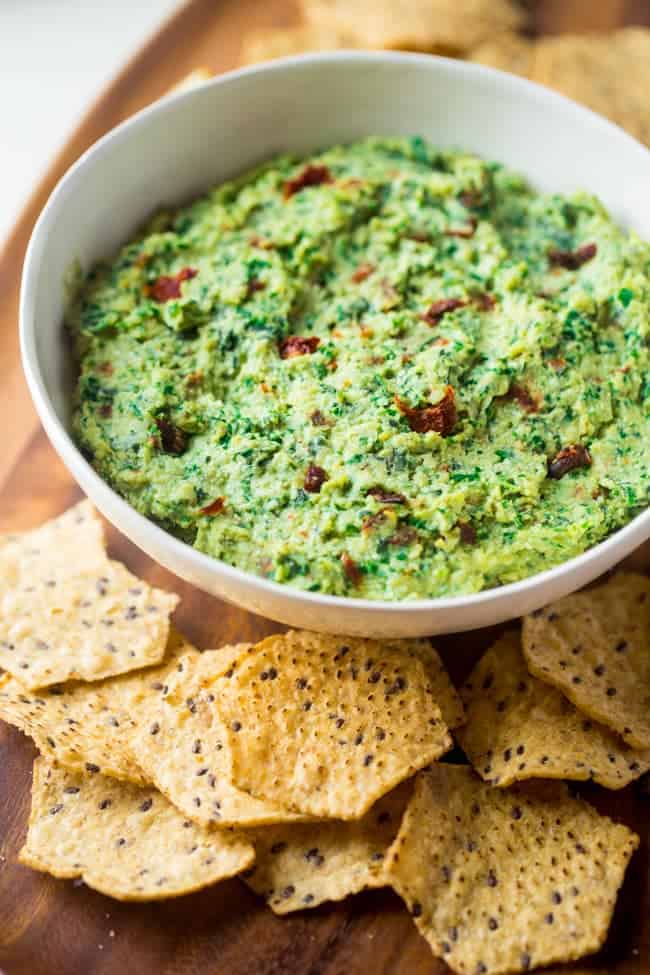
I’m something of a snacker. I love apple slices slathered in peanut butter, crackers topped with cheese, and popcorn sprinkled with Parmesan cheese. But when I’m hungry for a lighter snack that won’t necessarily derail my health goals, I inevitably reach for raw veggies and hummus. I still get that satisfying crunch, but I can feel really good about the vitamins and nutrients in the carrots, cucumbers, and celery.
This strategy rocked until my roommate announced she couldn’t share my hummus because she found out she was allergic to sesame seeds. I hadn’t even realized sesame seeds were part of my beloved hummus! Luckily, we teamed up and found this recipe that combined elements we both adore—pine nuts, kale, and loads of vibrant flavor—without the typical sesame-based hummus ingredient, tahini.
This dish is as versatile as it is healthy. You can snack on it with a wide array of dippers, yes, but you can also use it as a flavorful condiment on sandwiches or wraps, mix it into creamy salads, or serve it as part of an entire Mediterranean-inspired spread!
Is This Kale Hummus Without Tahini Healthy?
This plant-based dip is loaded with fiber, vitamins, minerals, and heart-healthy fats. It is naturally vegan and vegetarian—plus, omitting the tahini makes it suitable for those with sesame allergies while reducing the overall fat and calorie content. The chickpeas are high in carbs, but subbing in steamed cauliflower could make it more keto-friendly. The recipe is also easily adapted for nut-free diets by swapping the pine nuts for sunflower or pumpkin seeds. Overall, this recipe is a versatile, nutritious choice for a wide range of eaters.
What Is Tahini, And Why Isn’t It In This Recipe?
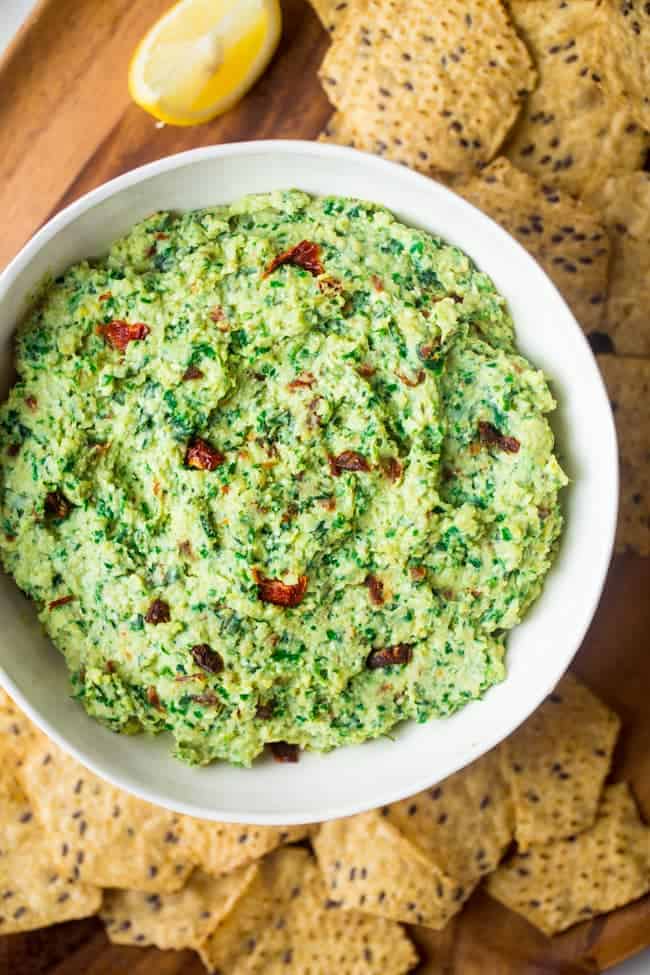
Tahini is a creamy paste made from ground sesame seeds that’s a key ingredient in many Middle Eastern and Mediterranean dishes—including many varieties of hummus and this Creamy Baba Ghanoush Recipe. The name tahini comes from the Arabic word tahn, meaning “to grind,” reflecting its simple preparation—hulled sesame seeds are toasted and finely ground into a rich, nutty, and slightly bitter paste. I love the strong taste of tahini, but I know plenty of people who don’t—as well as allergy sufferers, like my roommate—which is why I was delighted to find this hummus recipe without it. It can also be expensive and a little hard to find.
How Do I Store Leftovers?
Refrigerate leftover kale hummus in an airtight container for up to 1 week. Add a thin layer of olive oil on top to keep it from drying out. You can also freeze this hummus for up to 3 months in a freezer-safe, airtight container. Let it thaw overnight in the fridge, then mix well and consume within 3 days for the best flavor and texture.
Serving Suggestions
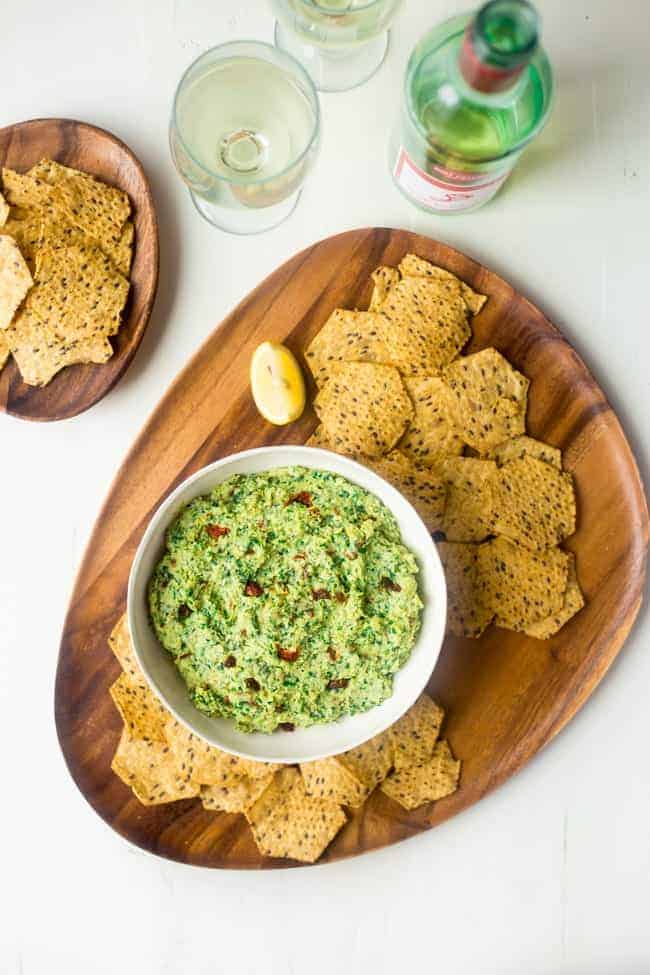
You can’t go wrong pairing this tahini-free hummus with cut fresh veggies for a light snack. I like sticks of carrot and celery, but feel free to include slices of cucumber and bell peppers, florets of broccoli and cauliflower, and even asparagus spears. Another great dipping choice is a crispy batch of Air-Fryer Tortilla Chips. If you’re looking for gluten-free or lower-carb dippers, consider these yummy Baked Plantain Chips or these Keto Tortilla Chips. To upgrade your kale hummus from a snack to a meal, just slather it on any handheld, like this Tomato Sandwich. This hummus is also a natural complement for other Mediterranean-inspired dishes, like falafel, Spinach Pie, or a Gyro Bowl.
Ingredients
- 1/2 cup pine nuts
- 1 cup kale roughly chopped and tightly packed
- 3/4 cup fresh basil roughly chopped and packed
- 1/2 cup fresh parsley roughly chopped and loosely packed
- 2 teaspoons lemon zest
- 2 teaspoons fresh lemon juice
- 1 teaspoon garlic minced
- 1/4 cup extra virgin olive oil
- 2 tablespoons water
- 1 13.5-ounce can reduced-sodium chickpeas drained and rinsed
- 1/4 cup sun-dried tomatoes with italian herbs minced
- 1/2 teaspoon salt or to taste
- Pepper to taste
Instructions
- Place the pine nuts in a large food processor and process until broken down, scraping down the sides as necessary to get them into small pieces.
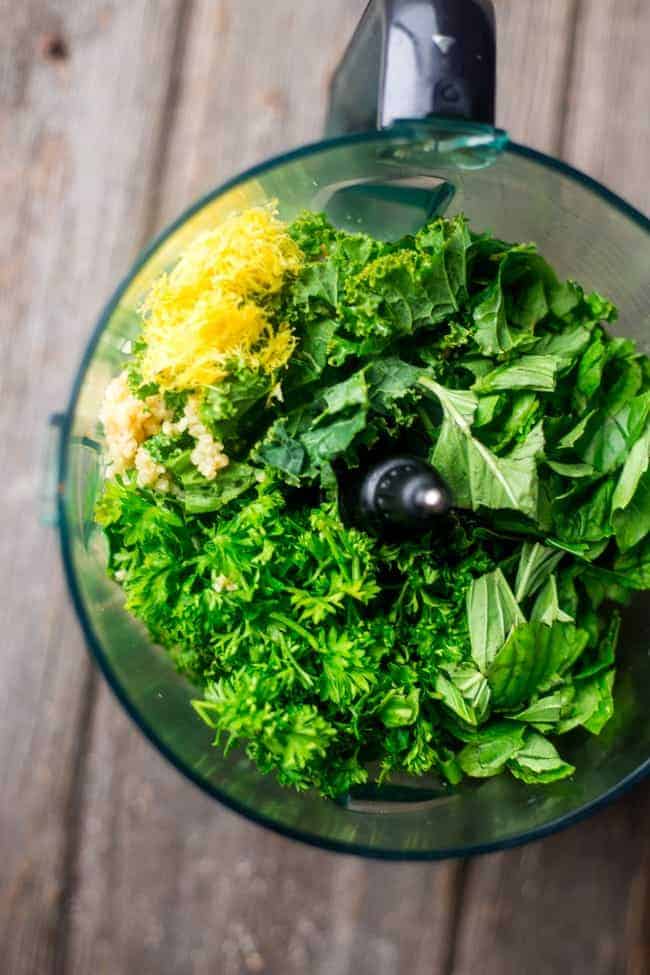
- Add the kale, basil, parsley, lemon juice, zest, and garlic. Process until broken down. Stop the food processor periodically to scrape down the sides.
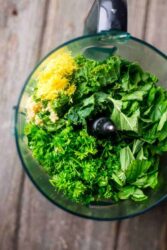
- With the food processor running, stream in the olive oil, followed by the water, and process until well mixed.
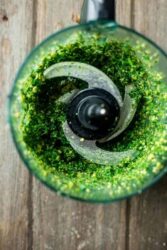
- Add the can of drained chickpeas and blend until creamy and smooth. Stop processor to scrape down the sides a few times.
- Transfer the dip to a large bowl and stir in the minced tomatoes, salt, and pepper. Adjust seasoning to taste. Serve immediately with chips, crackers, or cut veggies.
Nutrition Info:
Nutrition information are estimates only and may vary based on the specific brands, ingredients, and portion sizes you use. This data is provided for informational purposes only.



Leave a Comment