

This dish is an American icon for a reason—and it’s super easy to make at home!
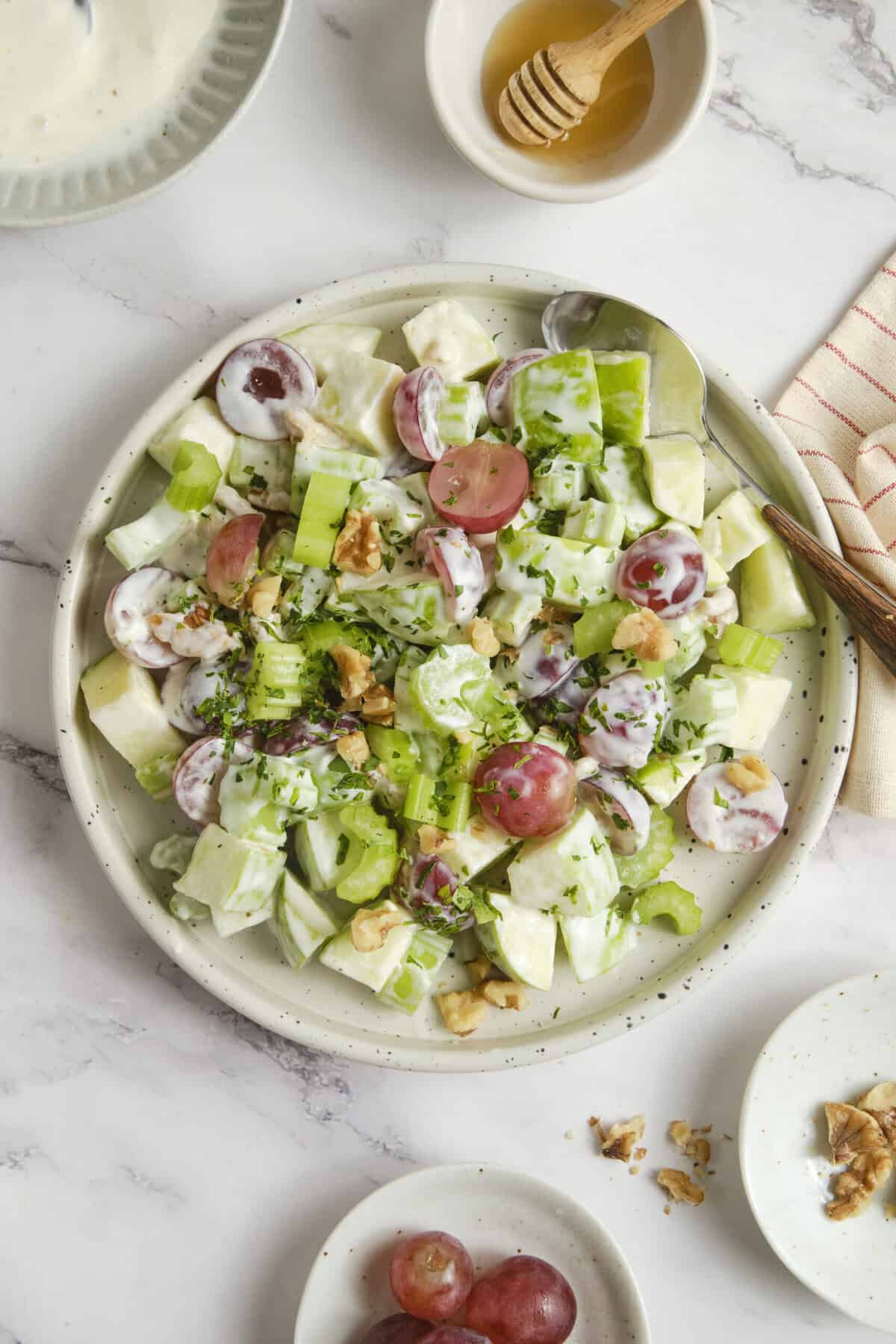
There really isn’t anything quite like the Waldorf salad. It’s more than a dish—it’s an American icon that dates all the way back to the 1890s. It was created for a charity ball at the Waldorf-Astoria Hotel in New York City by the maître d’hôtel, Oscar Tschirky. The dish went on to become an incredibly popular menu item soon after its inception and for the centuries that followed.
Over the years, several modifications have been made to the salad. For example, the original Waldorf salad consisted of apples, celery, and mayonnaise but did not include walnuts. The walnuts became a regular addition by the time the recipe was featured in a 1928 cookbook titled The Rector Cookbook. Grapes eventually became a staple ingredient, too. The Waldorf salad rose to even greater fame in 1934 after it was mentioned in Cole Porter’s song “You’re the Top.” The 1930s also saw a completely new take on the salad—one suspended in gelatin and renamed the “the New Manhattan Salad.” Don’t worry—there will be no vegetables congealed in Jell-O for this recipe.
It does, however, feature another popular modification. In addition to the mayonnaise, this recipe uses Greek yogurt, which adds a nice tangy element that balances well with the sweetness of the apples and grapes. In addition to the refreshing flavor, what I love most about this recipe is that it comes together quickly. After just 15 minutes of prep time (and a quick 15-minute chill), you’ll be ready to enjoy this crunchy, sweet, quintessential dish that’s been loved for well over a century!
The secret to making a perfect Waldorf salad
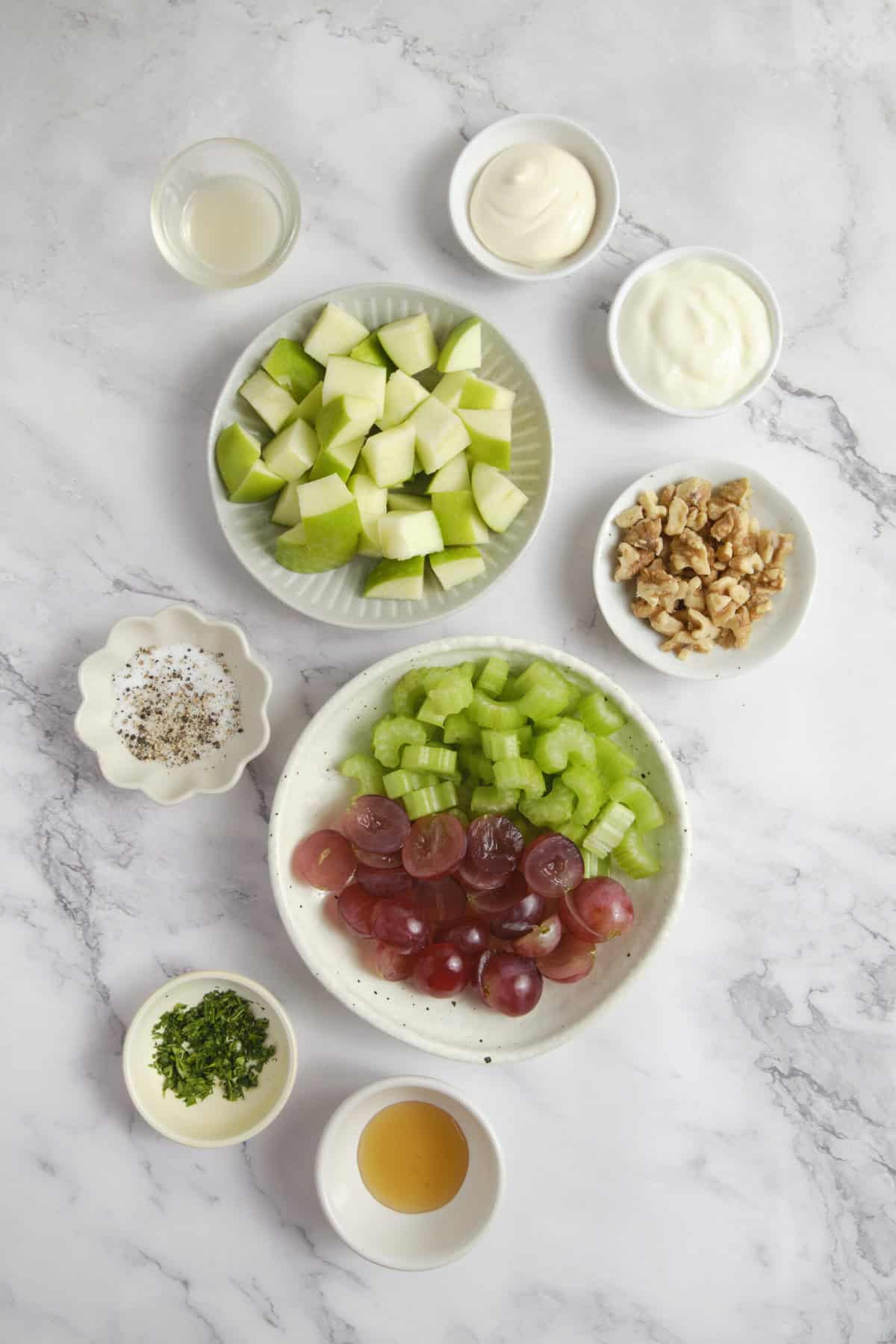
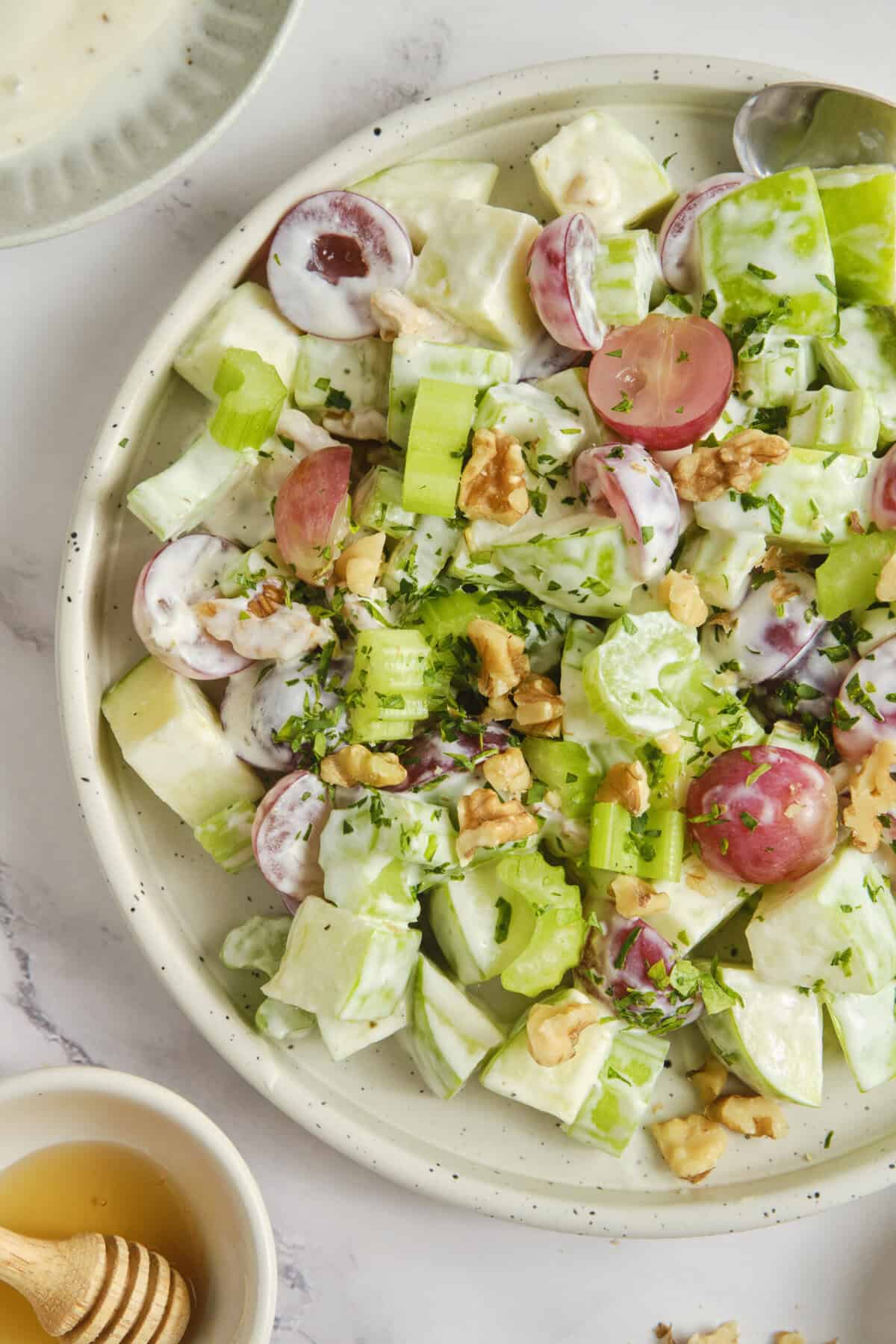
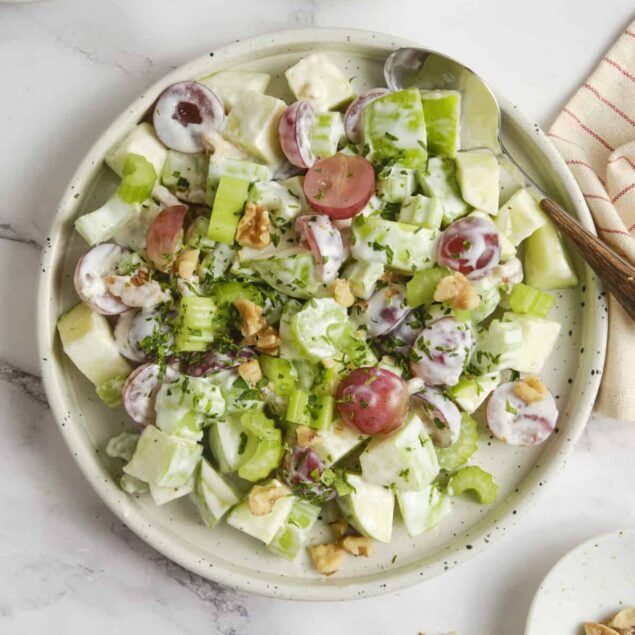
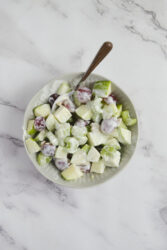
Wondering how to make your Waldorf salad absolutely perfect? The secret comes down to your cutting technique. As you chop up your fruits and veggies, try to keep them all as uniform as possible. My trick is to use the grapes as a reference. Since you’ll just be cutting the grapes in half, try to chop your celery and apples into the same size as the grape halves. That way, all of the ingredients will be distributed as evenly as possible in your salad and in each bite you take.
How do I store leftovers?
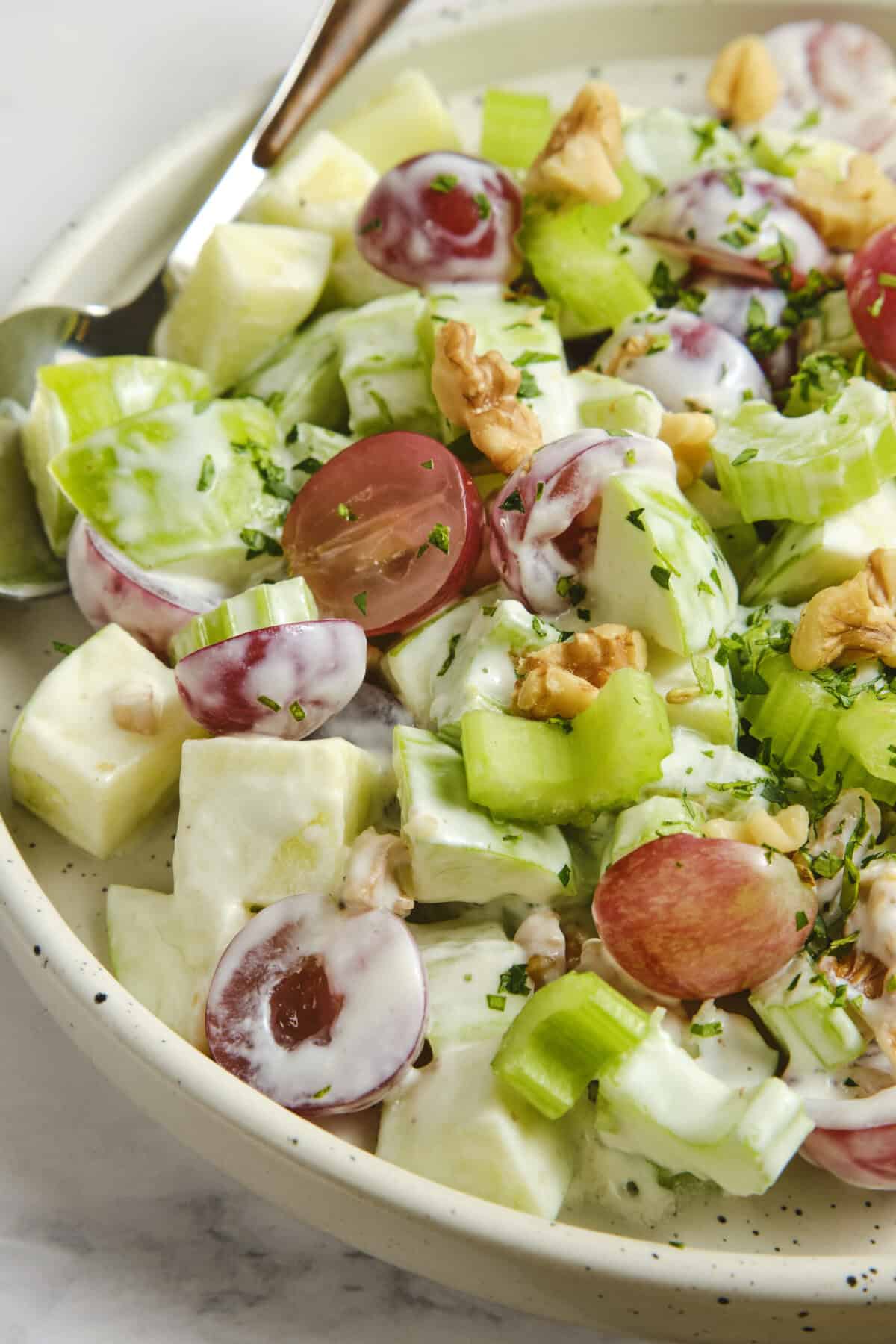
You can store leftovers in the fridge in an airtight container for 2-3 days. Keep in mind, though, that the apples may start to brown and the ingredients may begin to lose their crisp texture. The lemon juice should help to combat some of the oxidation, but it’s best to eat any leftovers as soon as possible. Unfortunately, this recipe is not one that freezes well.
Serving suggestions
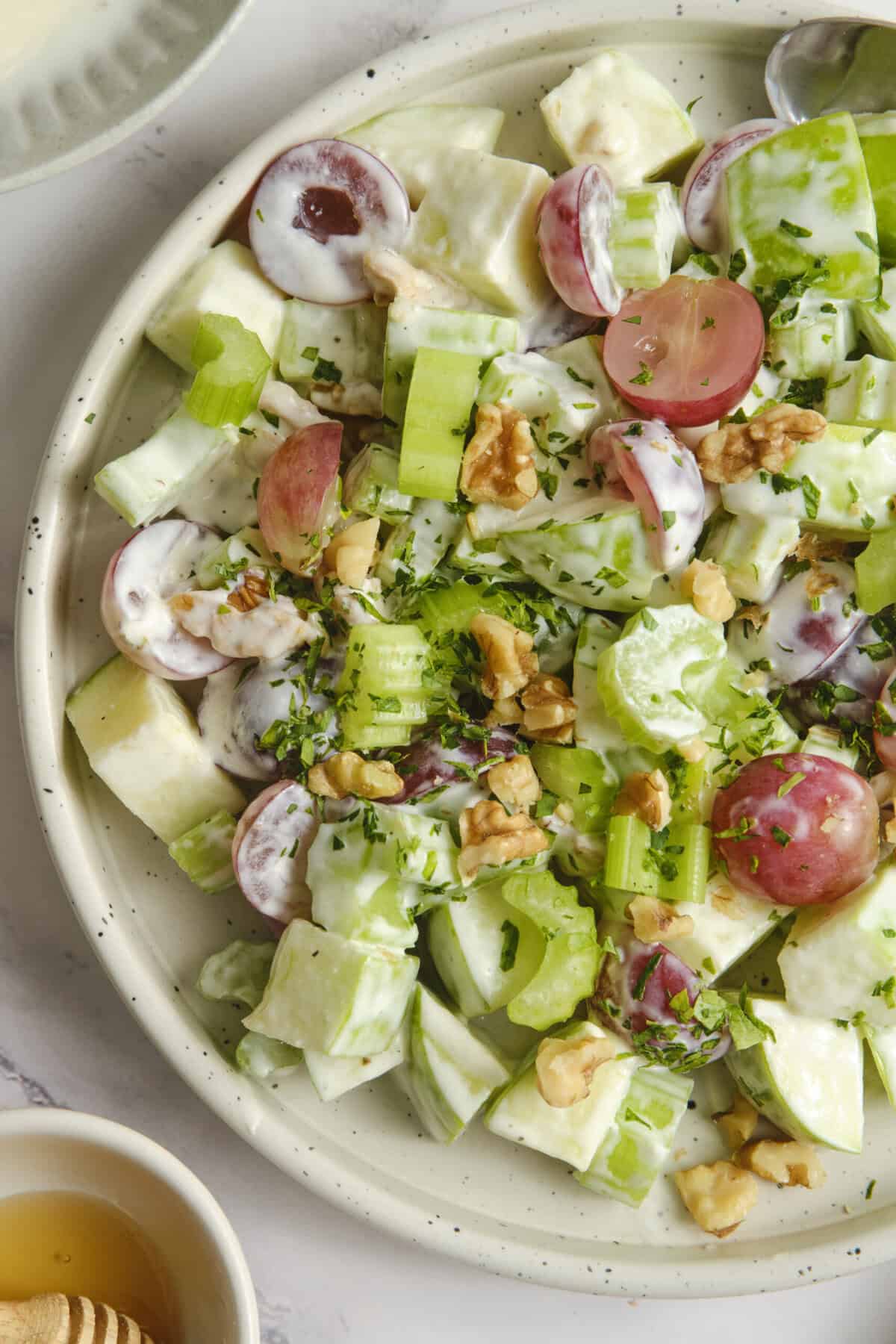
Though you could eat a Waldorf salad on its own as a light meal, I prefer to serve it with other dishes. A light sandwich could be a fantastic pairing, like this delicate Japanese Egg Sandwich or this elevated Cucumber Sandwich. Personally, I think the more you lean into the sophisticated afternoon tea vibe with this recipe, the better. Go for even more elegance with Deviled Eggs or these Mini Quiches. And while you’re at it, why not sip on a refreshing glass of Homemade Lemonade?
Ingredients
- 2 tart apples diced
- 4 teaspoons fresh lemon juice divided
- 3/4 cup celery diced
- 1 1/4 cups red grapes halved
- 1 cup walnuts toasted and chopped
- 3 tablespoons plain Greek yogurt
- 3 tablespoons mayonnaise
- 4 teaspoons honey
- Kosher salt to taste
- Freshly ground black pepper to taste
- Fresh parsley chopped, for optional garnish
Instructions
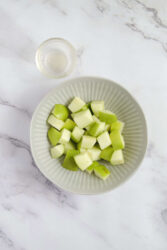
- Toss the diced apples with 2 teaspoons of lemon juice in a large bowl to prevent browning.
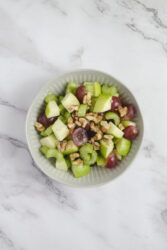
- Add the chopped celery, halved grapes, and toasted walnuts to the bowl.
- In a small bowl, whisk together the Greek yogurt, mayonnaise, remaining 2 teaspoons lemon juice, honey, salt, and pepper. Adjust taste as needed with more honey or lemon juice.
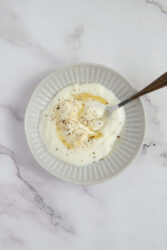
- Drizzle the dressing over the salad; then gently toss until evenly coated.
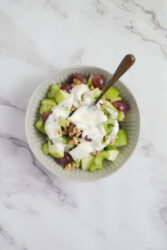
- Cover the bowl and refrigerate the salad for at least 15 minutes before serving to blend the flavors. Sprinkle with fresh parsley if desired.
Nutrition Info:
Nutrition information are estimates only and may vary based on the specific brands, ingredients, and portion sizes you use. This data is provided for informational purposes only.


Leave a Comment