

Add this Hawaiian favorite to your next dinner spread, and you’ll have everyone coming back for seconds!
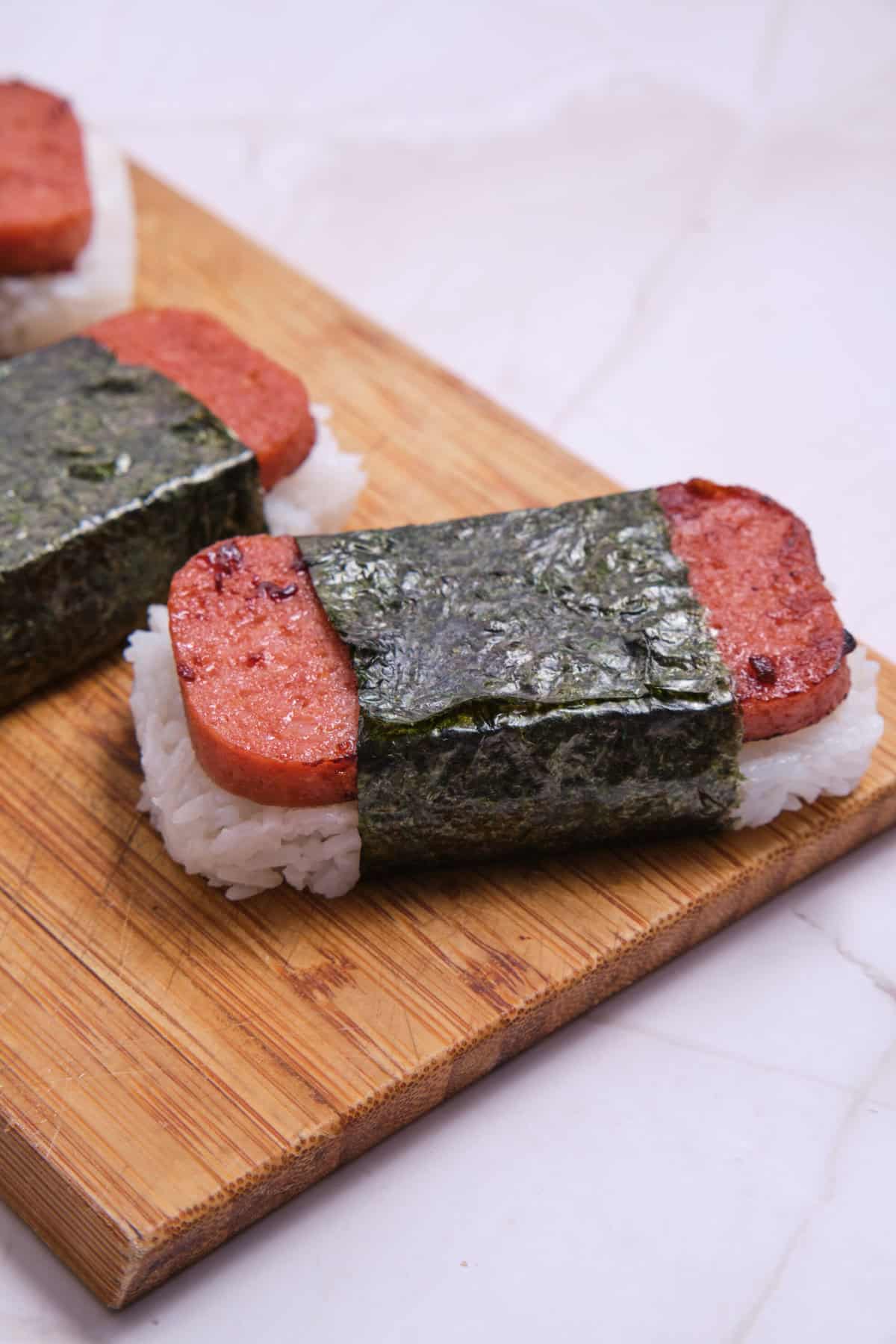
My first encounter with musubi was a recipe I tried from my co-op’s bimonthly magazine. It was absolutely delicious, and I’ve made it several times since. However, my co-op’s recipe called for tofu instead of Spam. Frankly, that was just fine by me. I had never had Spam before, but by the looks of all the pictures I’d seen of this salty protein, I wasn’t missing much. When I learned that Spam musubi was considered a Hawaiian staple, however, I just had to try the real deal.
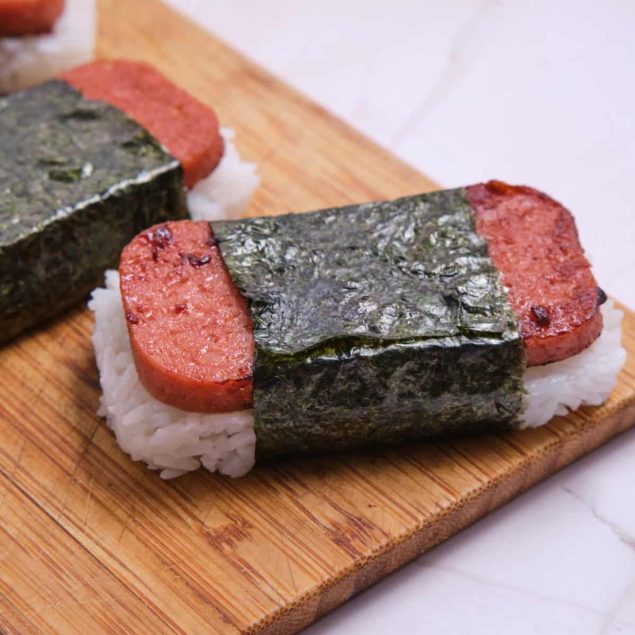
Spam musubi is all about the marinade, which is a simple mix of soy sauce, sugar, and oyster sauce. This gives the Spam a distinct umami flavor with a touch of savory sweetness. Then, of course, there is the sticky sushi rice and the nori sheet that holds everything together. Best of all, it’s fairly easy to make and is always a hit among friends and family!
Is Spam Musubi Healthy?
I wish it was, because it’s so delicious. Unfortunately, Spam contains a fair amount of fat. It’s also a processed meat, so the sodium content is pretty high. I’d definitely recommend using low-sodium soy sauce or even coconut aminos for this recipe. And feel free to swap the Spam with tofu for a tasty (and healthy) alternative.
The History Of Musubi
Spam musubi, a curious type of onigiri, became popular in Hawaii after World War II. In fact, Spam musubi seems to exist because of that war. After the Japanese bombed Pearl Harbor in December 1941, the U.S. deployed troops to Japan, the Philippines, and a number of other islands in the Pacific.
The troops had to eat, of course, and Spam was an ideal non-perishable meat product, so along went Spam into World War II. Spam also made it to Japanese-American internment camps domestically. In the aftermath of the war, the U.S. rationed Spam to war-torn nations like Japan and the Philippines. Spam became a staple survival food for many people, both in the U.S. and overseas.
The story gets a bit fuzzy after that, and no one is entirely sure who first wrapped nori around sushi rice and a slice of Spam. But some credit is given to a Japanese-American woman from Hawaii, Barbara Funamura, who sold Spam musubi out of a restaurant on the Hawaiian island of Kauai. There’s your history lesson for the day.
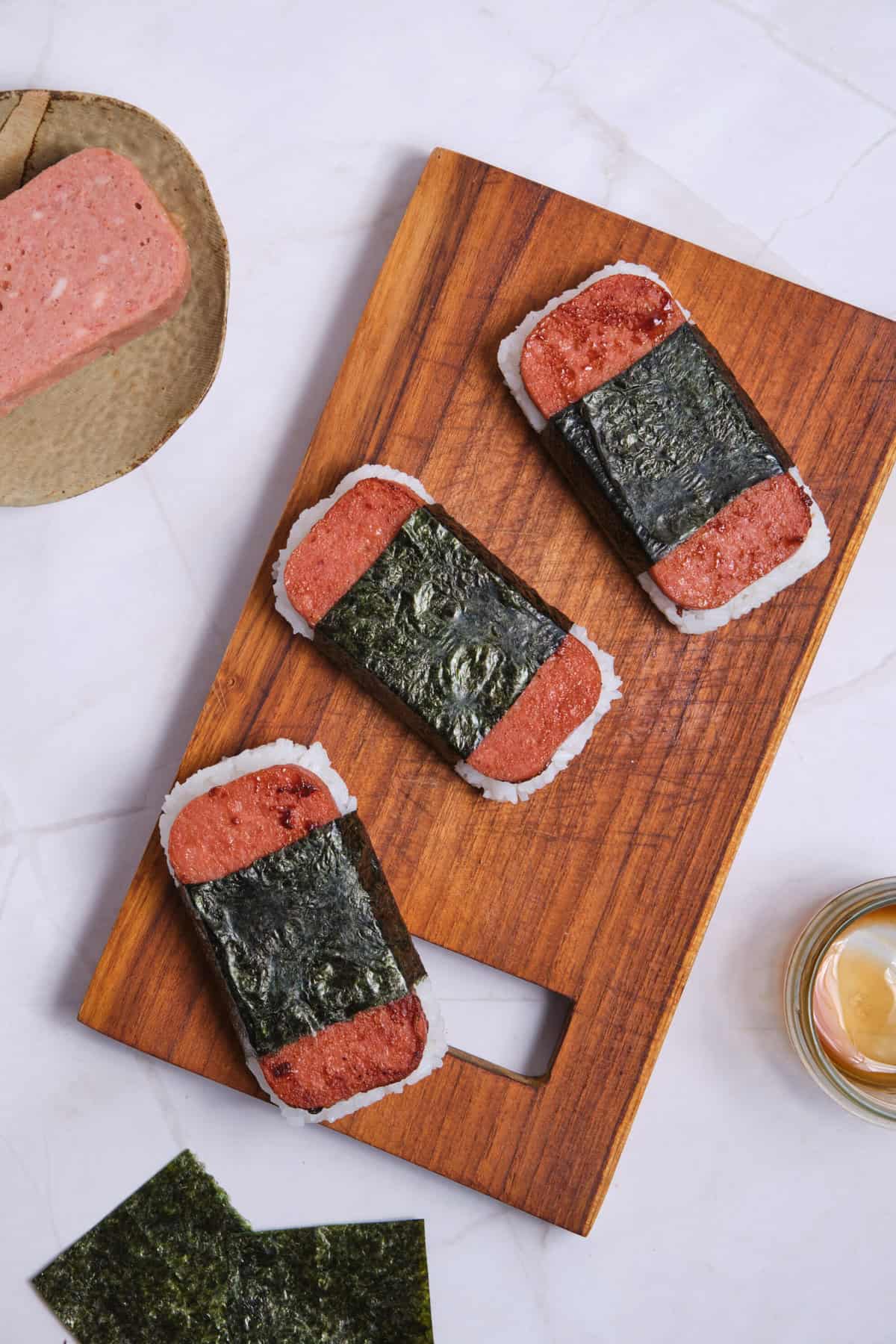
How To Make Ahead And Store
If you’re making Spam musubi ahead of time, store the rice and Spam separately and wrap in nori just before serving. Leftovers should be good in the fridge for up to 3 days before the sushi rice loses its texture. Wrap each musubi in plastic wrap for best results.
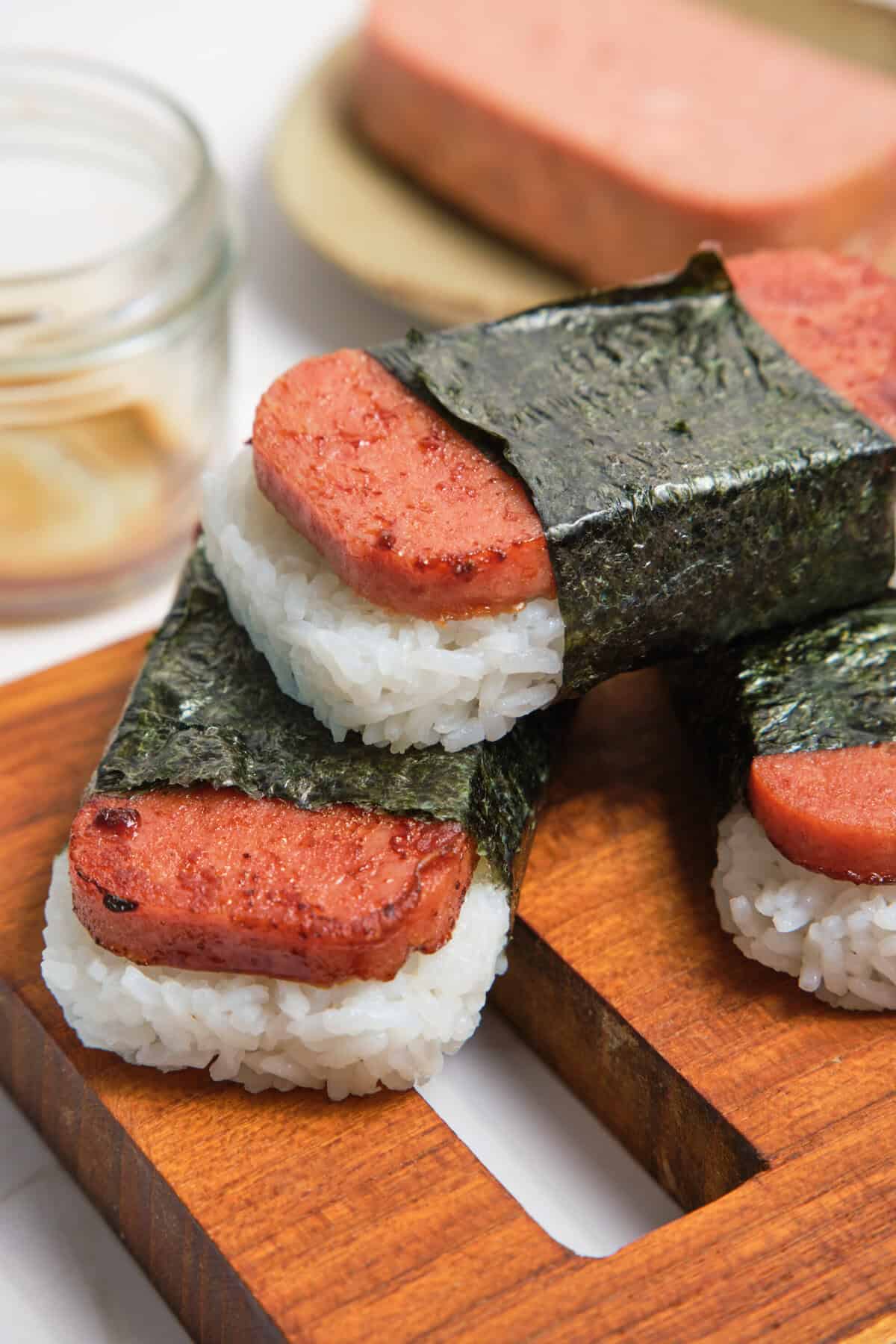
Serving Suggestions
Spam musubi is the perfect addition to any Hawaiian-themed meal. A Spicy Ahi Tuna Poke Bowl is a fine pairing. If you’re especially hungry, why not make a few Hawaiian Pizza Burgers? Or, go for something lighter, like these Vegan Cucumber-Noodle-Mango Summer Rolls With Almond-Coconut Dip. And after all that food, you’ll probably be thirsty, so wash it down with a refreshing Blue Hawaiian Cocktail.
Ingredients
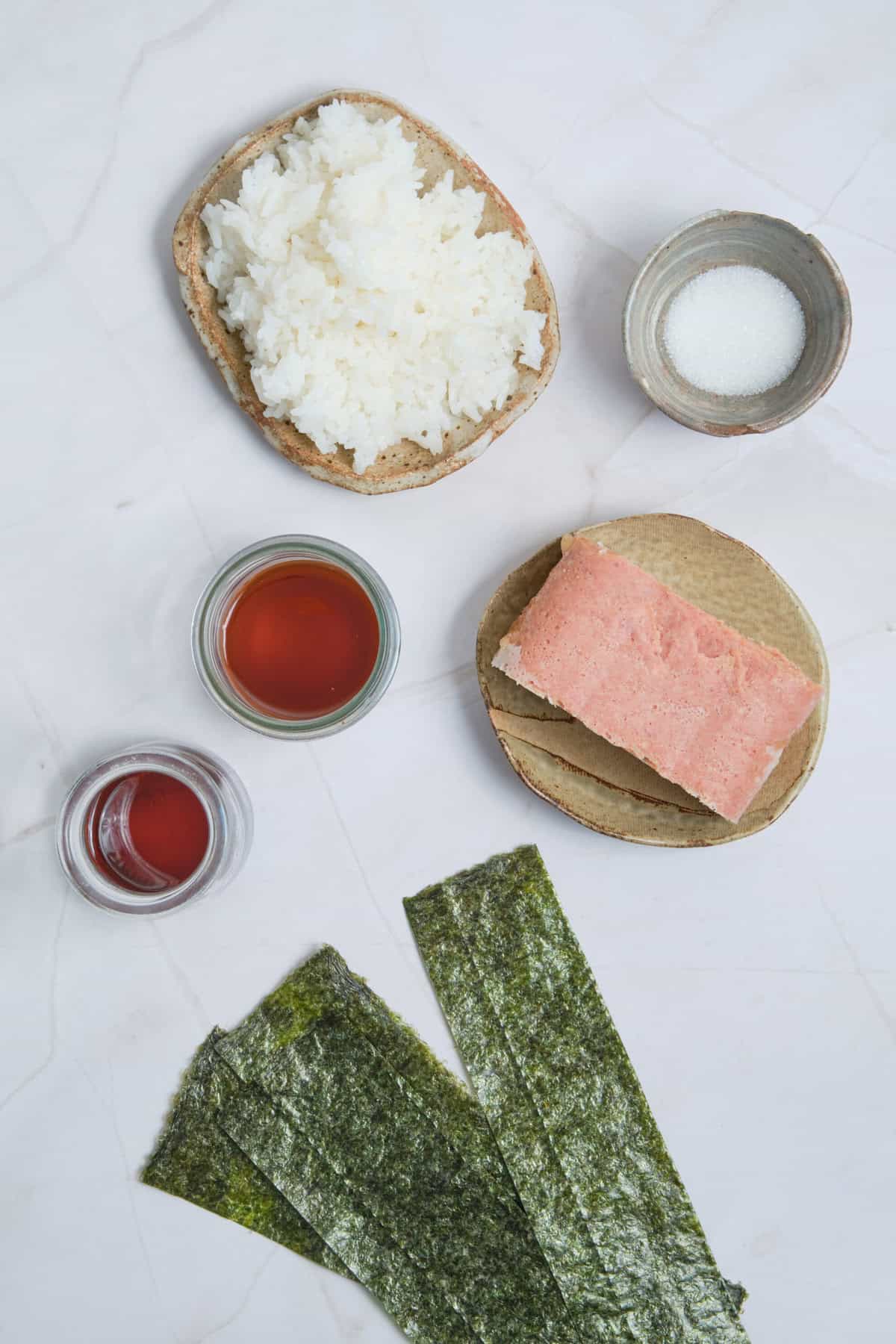
- 1 can Spam 12 ounces
- 1/4 cup soy sauce
- 1/4 cup oyster sauce
- 1/2 cup sugar
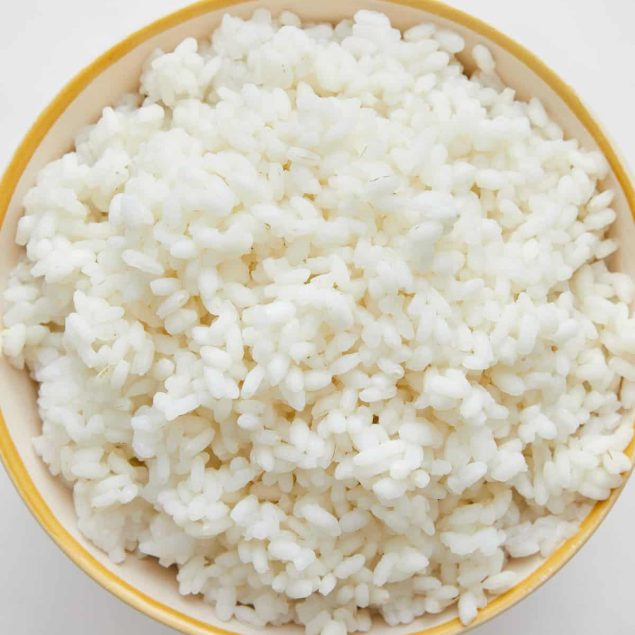
- 6 cups cooked sushi rice
- 4 sheets nori (roasted seaweed) cut into halves or thirds
Instructions
- Slice the Spam into 8 slices. Mix soy sauce, oyster sauce, and sugar until sugar is dissolved. Marinate Spam slices in the mixture for about 15 minutes.
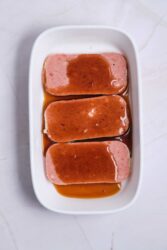
- Discard the marinade and fry Spam slices over medium heat until slightly crispy, about 2-3 minutes per side.
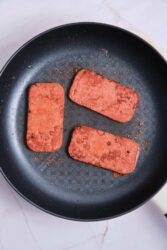
- Place a strip of nori on a clean surface. Place a musubi mold across the middle of the nori.
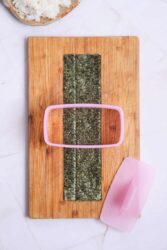
- Add 3/4 cup of sushi rice to the mold, pressing down firmly to about 1-1.5 inches thick. Remove the mold.
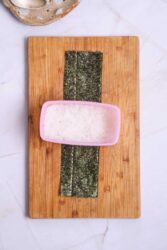
- Place a slice of cooked Spam on top of the rice. Wrap one side of the nori over the Spam, then wrap the other side, sealing with a bit of water if needed. Repeat until you've used all the Spam and rice.
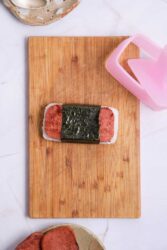
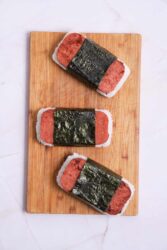
- Serve warm. Optionally, you can dip in soy sauce, or enjoy as is.
Nutrition Info:
Nutrition information are estimates only and may vary based on the specific brands, ingredients, and portion sizes you use. This data is provided for informational purposes only.


Leave a Comment