

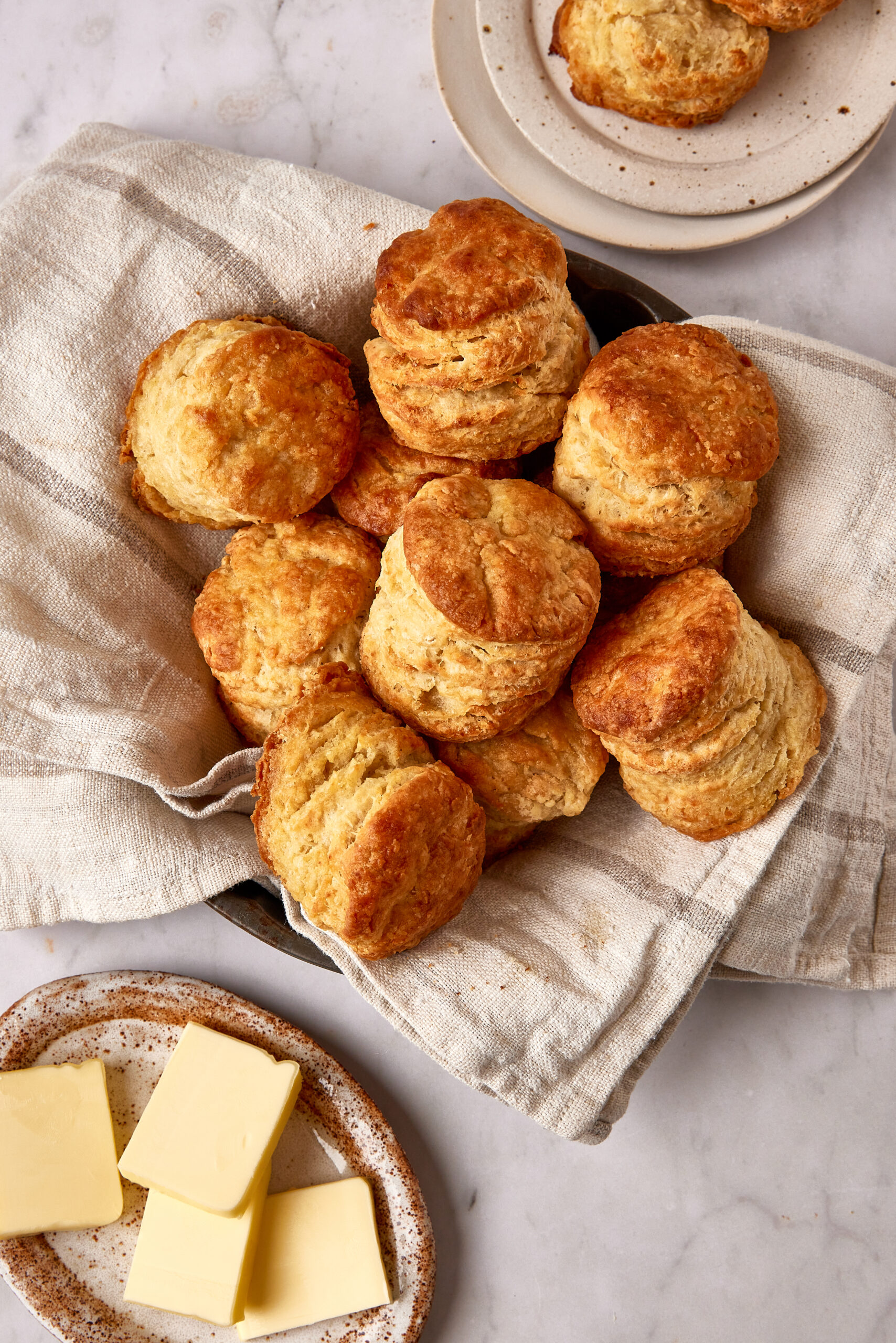
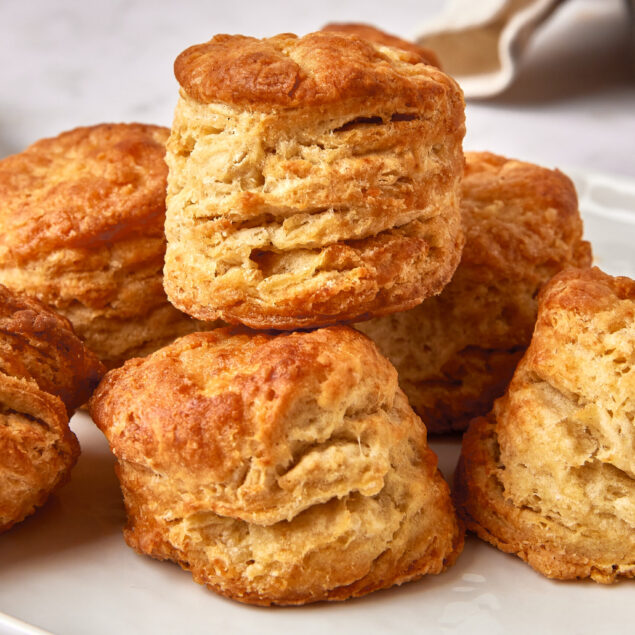
Flaky, buttery, and melt-in-your-mouth delicious, these biscuits deliver homemade comfort in less than an hour.
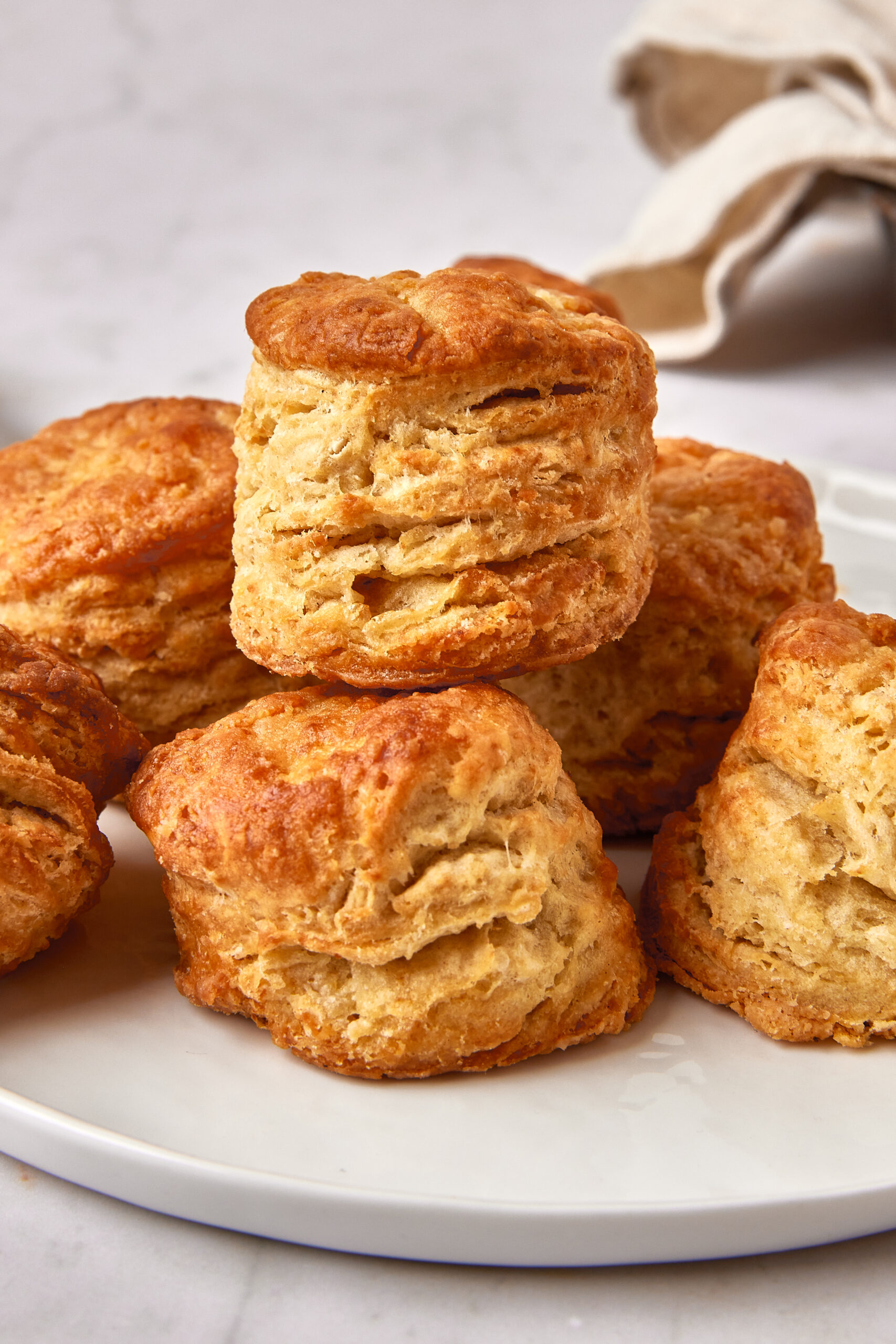
In my household, biscuits were always reserved for special occasions or weekends. That’s mostly because our biscuits were always made from scratch. No store-bought mix boxes or tubes of premade biscuits allowed! Plus, my mother only made buttermilk biscuits, where the tang and acid from the buttermilk deliver that signature flavor while keeping them moist and ever-so-light and delicious.
As I got older, the allure of my mother’s biscuits wore off. I started traveling and found more exotic food to get excited about. When I moved to New York, I found certain Southern-inspired restaurants that had gained fame through their so-called signature biscuits. They were fine, but nothing to write home about. Then I took a sick day at home and got food delivered from the Harlem Biscuit Company. For once, I was blown away. Buttery, flaky, soft, and with a height that rivaled those of my childhood, this biscuit meant business.
They became the standard by which I started judging all biscuits—until I discovered this Southern biscuit recipe. It delivers the winning combo of sweet, tangy flavors and cloud-like texture I adored in my mother’s biscuits. It’s hard to believe they’re ready to devour in less than an hour! Whether you make these for a special occasion or as a fun activity on a random weekend, I know you’ll love their comforting deliciousness.
A brief history of biscuits
Biscuits as we know them today in the American South have evolved significantly from their early origins. While the concept of a biscuit originally came from Europe, it was in the American South—especially before the Civil War—that biscuits began to take on their unique identity. Early Southern biscuits were usually tough, flat, and rare. White wheat flour was expensive and often had to be shipped from the North, so only wealthy households could afford to bake them regularly. The best-known version was the beaten biscuit, which required pounding or kneading the dough for up to 15 minutes to develop tenderness. Given the labor involved and the cost of ingredients, most families relied on cornbread as their daily bread.
Soft, fluffy biscuits—which are now a hallmark of Southern cooking—only became common in the 19th century. As flour mills spread through the Midwest and flour prices dropped, more Southern cooks gained access to wheat flour. The invention and widespread adoption of chemical leavening agents, such as baking soda and baking powder, revolutionized Southern biscuits, transforming them into the tall, tender, flaky bread we enjoy today—no heavy beating required.
How do I store leftovers?
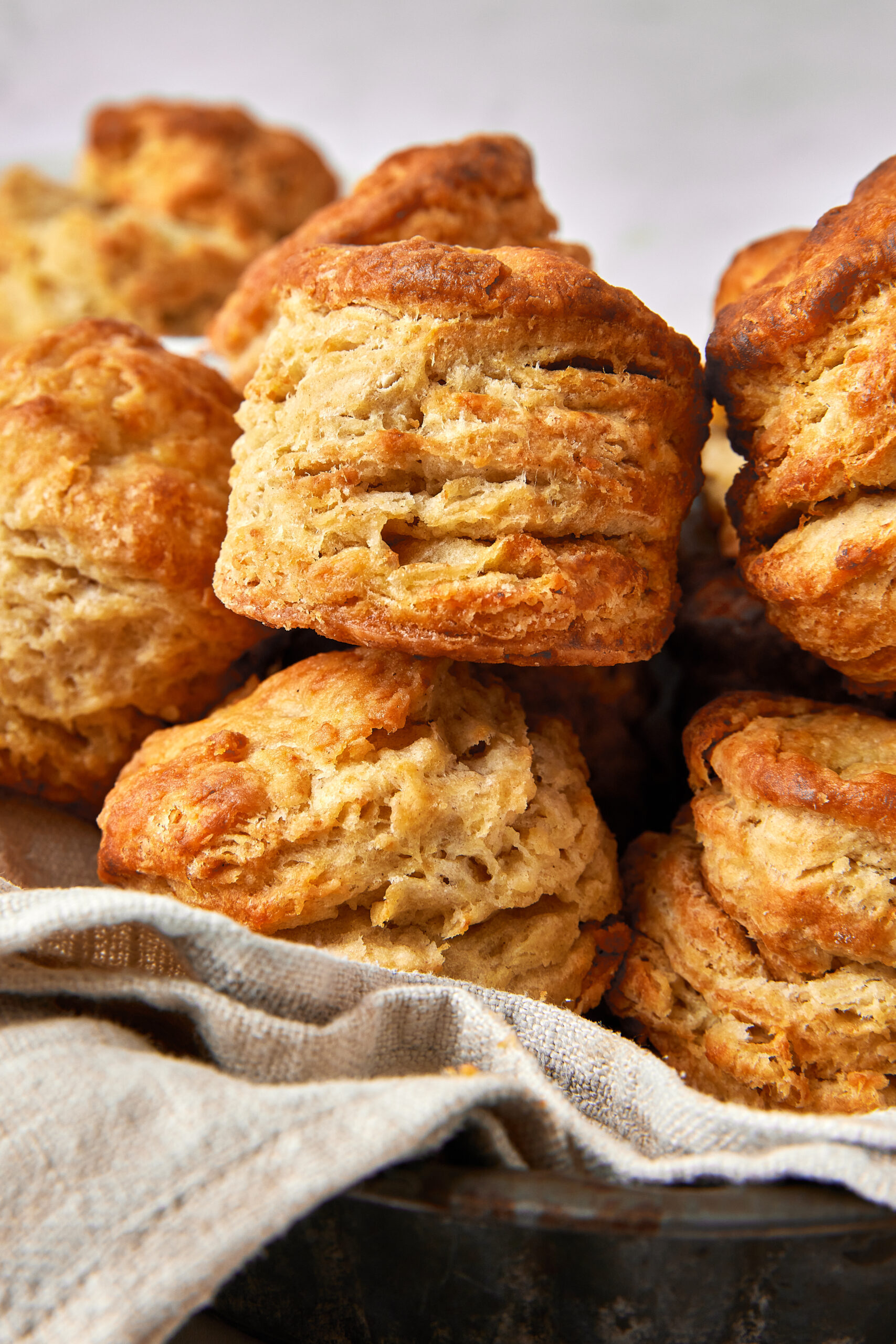
You can store these biscuits as unbaked dough or after fully baking them. Place unbaked, shaped biscuits on a baking sheet and freeze them solid. Then transfer them to an airtight container, separating layers with parchment paper, and keep them in the freezer for up to 3 months. Bake straight from frozen, adding 5-10 minutes to the recipe’s baking time.
For leftover baked biscuits, let them cool completely before storing them in an airtight container at room temp for up to 2 days. It may be counterintuitive, but it’s not a good idea to refrigerate them, as doing so can cause them to dry out. If you won’t enjoy them within 2 days, freeze fully cooled leftover baked biscuits in an airtight container for up to 3 months. Reheat in a 250°F oven for 10 minutes if at room temp or 25 minutes if frozen to achieve a desirable texture.
Serving suggestions
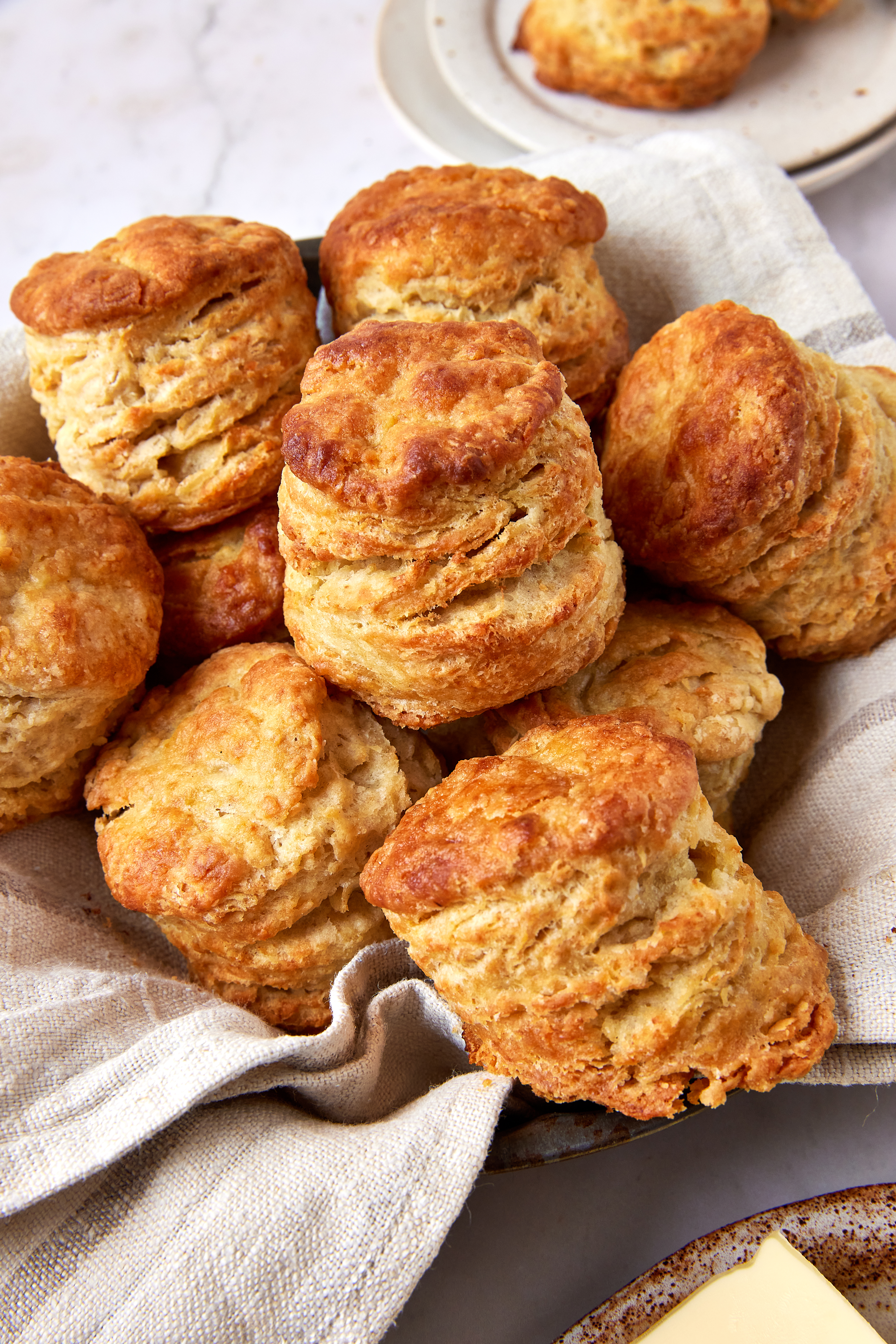
The beauty of biscuits is that they pair well with a host of condiments, from this Hot Honey Recipe with a kick to this sweet and savory Red Pepper Jelly or even a dollop of Healthy Strawberry Chia Jam. I love slathering my biscuits with a hefty smear of Pimento Cheese. You could impress your family by learning How To Make Butter from scratch for your homemade biscuits. You could even use these biscuits to make a hearty Biscuits And Gravy Casserole for a special Sunday brunch treat.
Ingredients
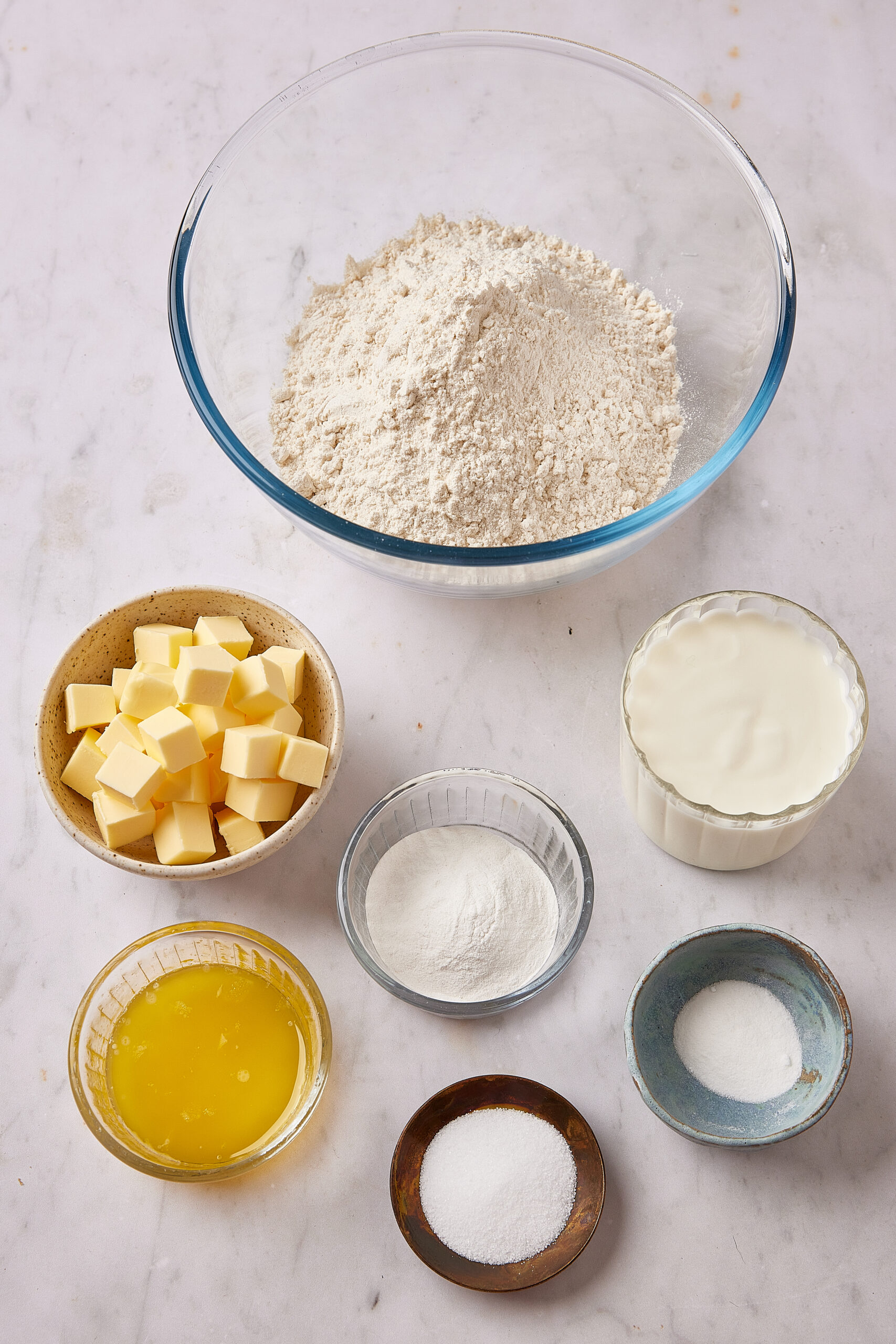
- 3 cups all-purpose flour plus extra for dusting
- 4 1/2 teaspoons baking powder
- 3/4 teaspoon baking soda
- 1 1/4 teaspoons salt
- 4 ounces cold unsalted butter cubed
- 1 cup cold buttermilk plus more as needed
- Melted butter for brushing
Instructions
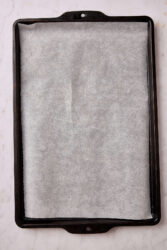
- Preheat your oven to 450°F and line a baking sheet with parchment paper.
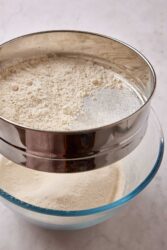
- In a large bowl, sift together the flour, baking powder, baking soda, and salt.
- Cut in the cold, cubed butter using a pastry blender or two butter knives until the mixture looks like coarse peas.
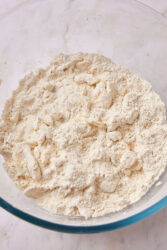
- Add 1 cup of cold buttermilk and stir gently until the dough forms. If it seems dry, you can add up to another 1/4 cup of buttermilk, a little at a time.
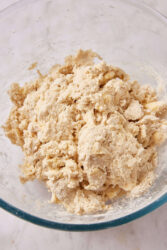
- Turn the dough onto a lightly floured surface and pat it into a 1-inch thick rectangle.
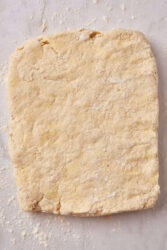
- Using a 2-inch round cutter dipped in flour, cut out biscuits without twisting. Re-roll any scraps to make more biscuits.
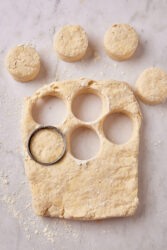
- Place biscuits on the prepared baking sheet. For soft sides, let them touch. For crusty sides, space them about 2 inches apart. Brush the tops with melted butter.
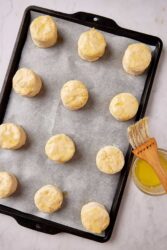
- Bake in the preheated oven until the biscuits are lightly golden and puffed, about 12-16 minutes.
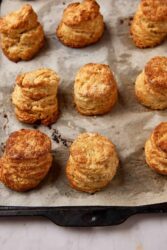
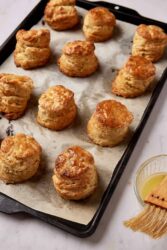
- Remove the biscuits from the oven. Brush with extra melted butter if desired and serve warm.
Nutrition Info:
Nutrition information are estimates only and may vary based on the specific brands, ingredients, and portion sizes you use. This data is provided for informational purposes only.


Leave a Comment