

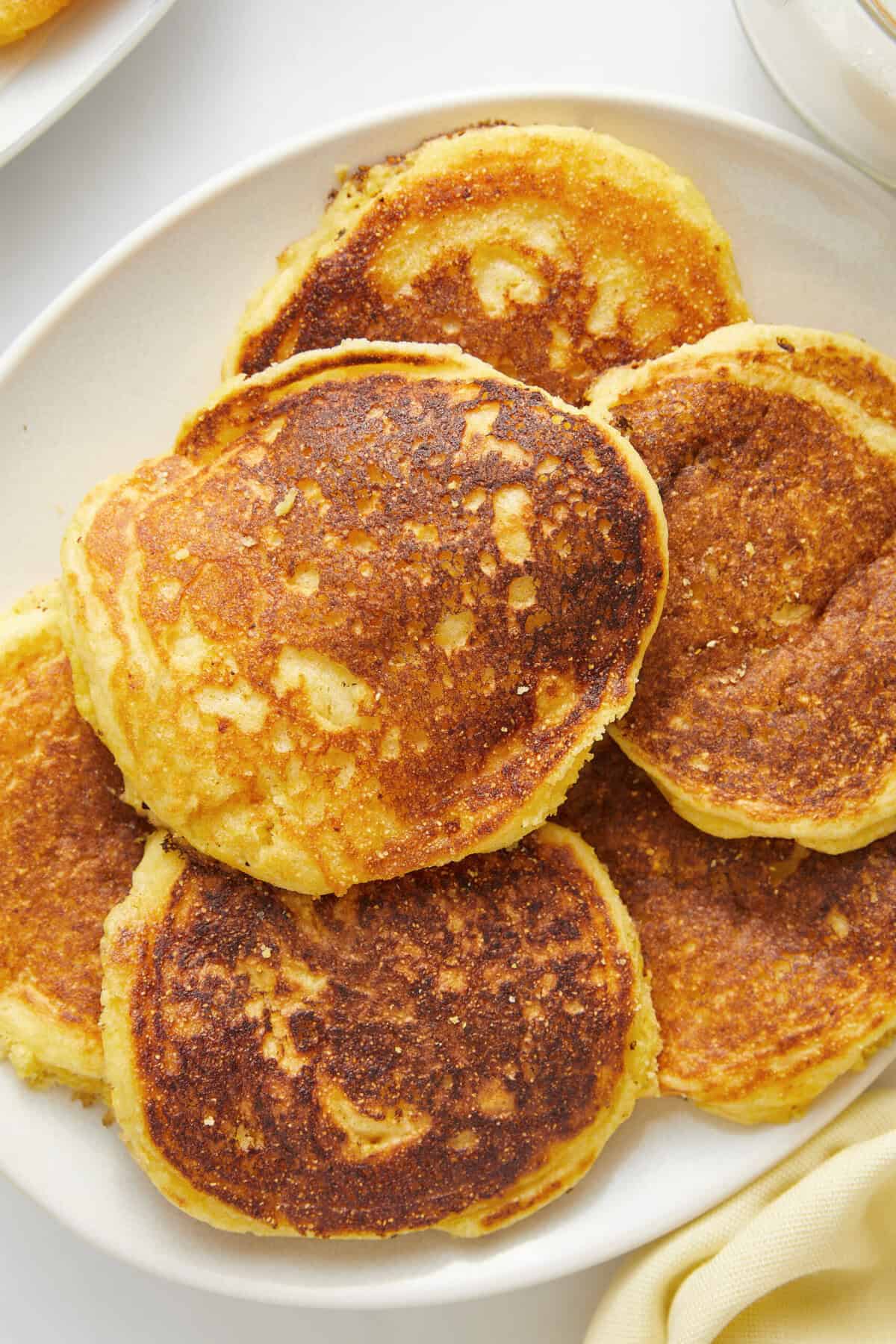
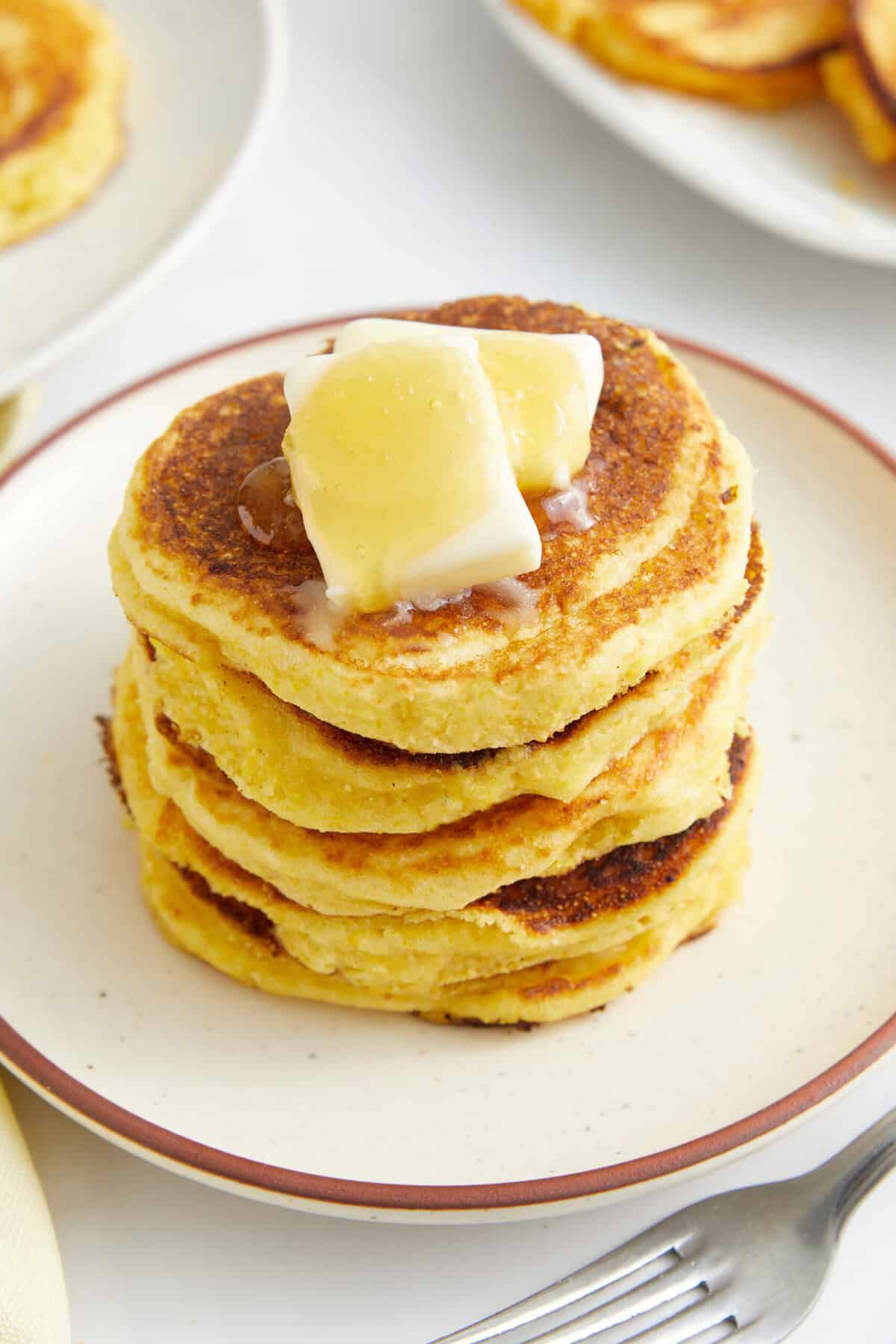
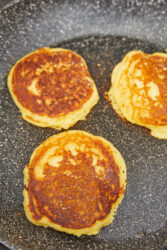
Nothing makes a more delicious start to your day than golden Fried Cornbread cakes.
When I was growing up, pancakes were a well-loved weekend brunch staple. And why shouldn’t they be? They were the perfect, cozy dish to enjoy on a leisurely Saturday or Sunday morning, piled around the TV watching cartoons, while my mom flipped one pancake after another on the griddle, the scent of butter and maple syrup filling the house.
While she always made regular pancakes with all-purpose flour, I’ve come to love a Southern version known as “fried cornbread,” or sometimes also referred to as “hoecakes” or “johnnycakes.” Made with a blend of cornmeal and flour, these little golden brown discs are a delicious twist on regular pancakes. As the name implies, it tastes like a cross between cornbread and pancakes.
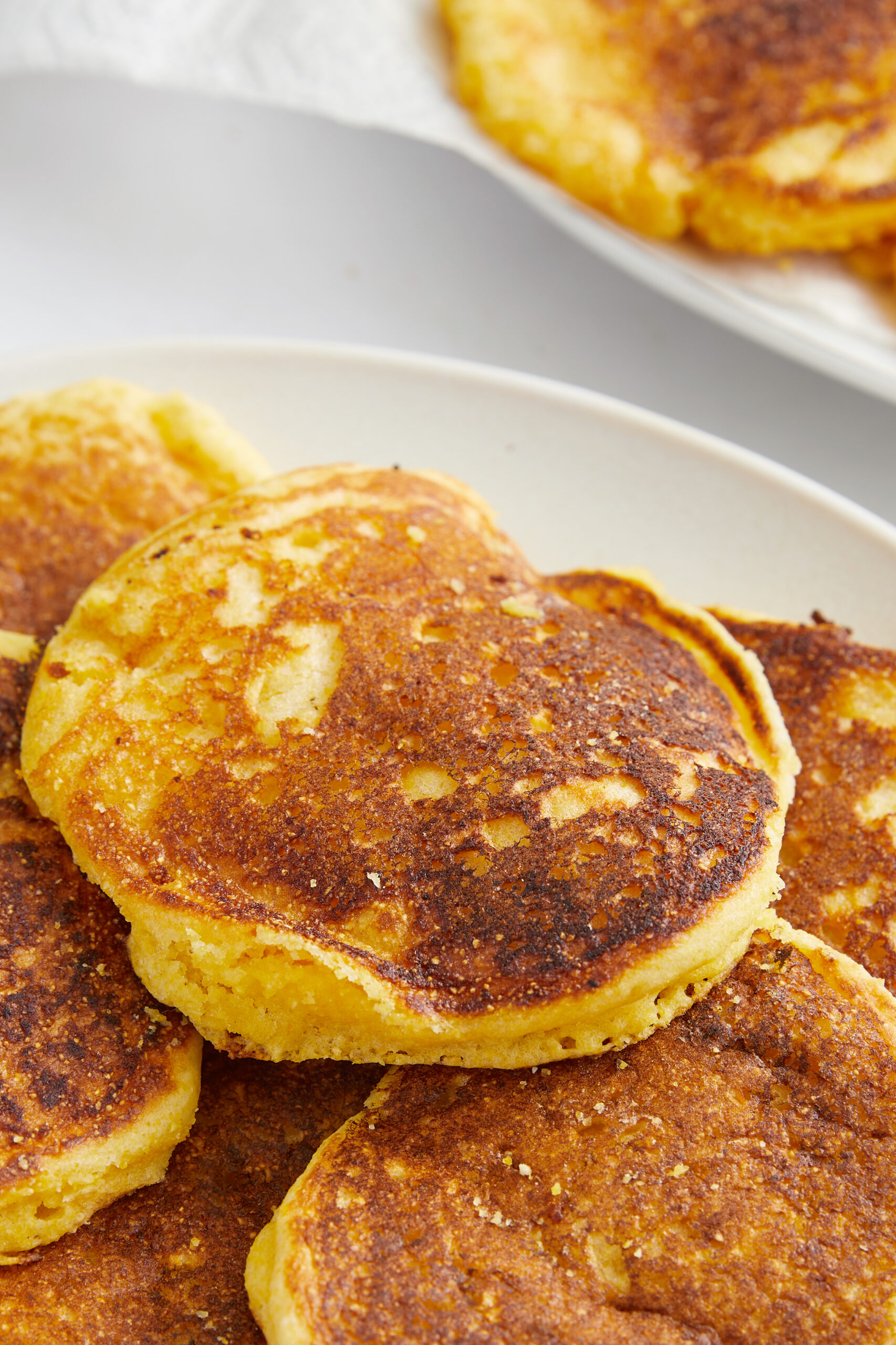
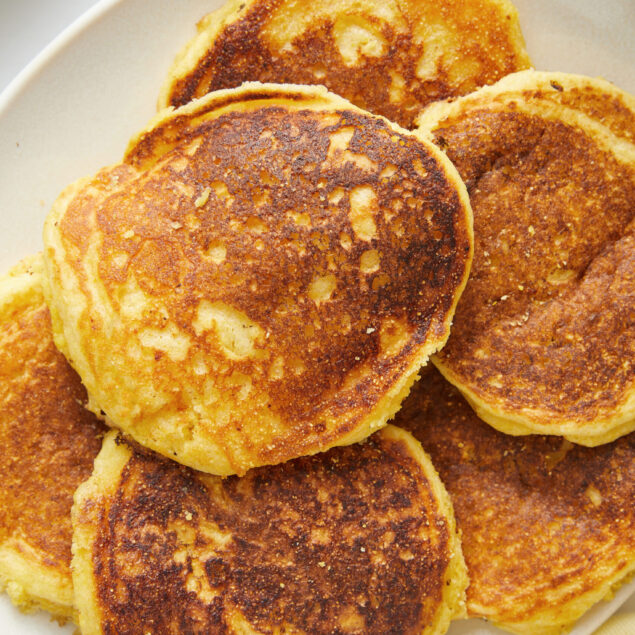
Slightly grainier and grittier in texture, the addition of cornmeal to the batter gives you a pancake with a great bite. And when cooked in a cast-iron skillet, these fried cornbread cakes develop a phenomenal outer crust. Best of all, they’re super versatile, as you can pair them with savory ingredients like fried chicken or sweet ones like fruit and honey.
Where did fried cornbread come from?
According to John Egerton’s book, Southern Food, fried cornbread finds its roots in indigenous Native American cooking and forms the basis of what Native Americans were eating when European settlers arrived in North America. The original recipe involved simple ingredients native to the land—ground corn kernels, salt, and water. Mixed together, these ingredients would form a thick batter that was baked on hot stones or in hot ashes and eaten as a staple carbohydrate. Despite its humble origins, the recipe has stood the test of time—with the addition of modern ingredients and cooking methods, of course. Nevertheless, the dish is just as hearty and homey as it’s ever been.
How do I store leftovers?
While these fried cornbread cakes are best eaten fresh, once they have cooled completely, they can be individually wrapped in plastic wrap and tinfoil or stored in an airtight container. They will keep in the refrigerator for 3-4 days. If you’re looking to bulk prep breakfast (or perhaps easy snacks for the road), wrap these as you would for the fridge and freeze in a freezer-safe bag for up to 2-3 months.
To reheat, either warm them up in a skillet with a bit of vegetable oil over medium heat, cooking on each side for a couple of minutes, or reheat them in an air fryer or 350°F oven for several minutes to maintain their crispy exterior crusts.
Serving suggestions
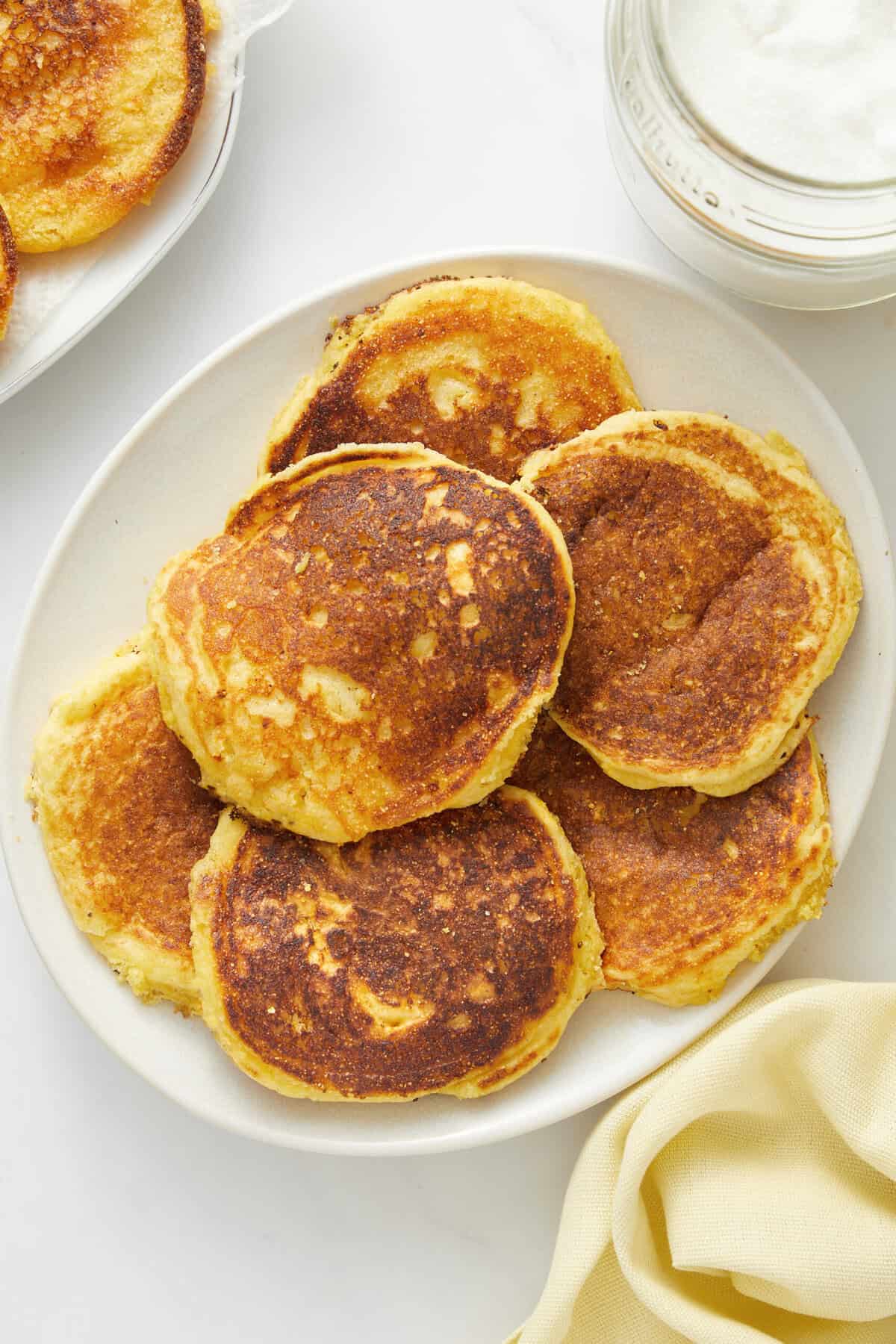
My fried cornbread cakes are served best with a pat of butter. I recommend trying this Vegan Butter, but they would also pair well with a Slow-Cooker Apple Butter or a Healthy Strawberry Chia Jam. For a savory twist, top them with Red Pepper Jelly or a healthy slathering of Pimento Cheese. Or, for a sweet treat, top them with a dollop of Cream Cheese Crêpee Filling or a tart Homemade Cranberry Sauce With Maple And Orange.
Ingredients
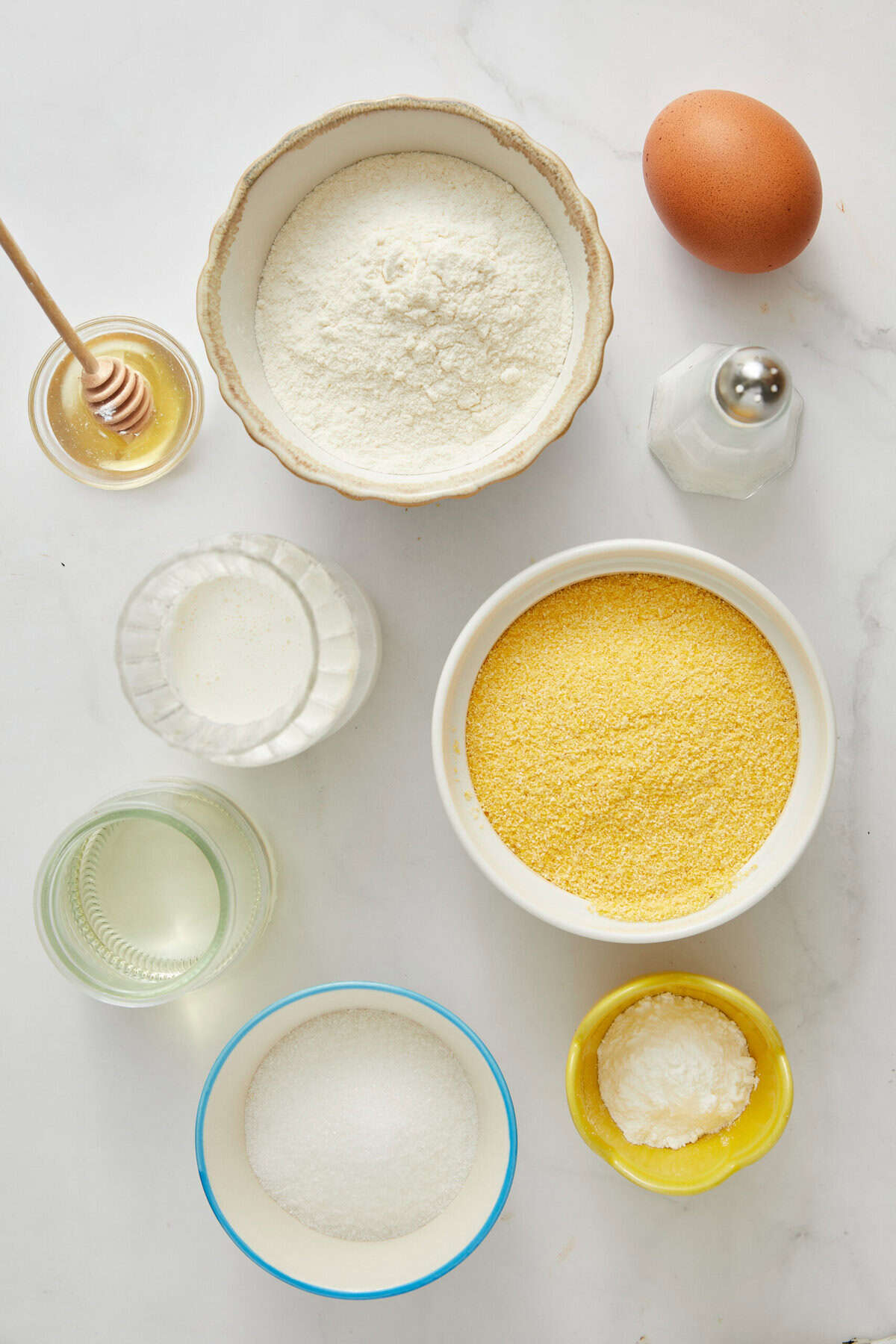
- 1 1/2 cups cornmeal
- 1/2 cup self-rising flour
- 2 teaspoons baking powder
- 1 1/4 teaspoons salt
- 1 teaspoon granulated sugar
- 1 cup buttermilk
- 1 teaspoon honey
- 1 large egg
- 1/4 cup vegetable oil plus more as needed (for frying)
Instructions
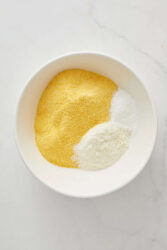
- Combine the cornmeal, self-rising flour, baking powder, salt, and sugar in a mixing bowl, using a fork to mix evenly.
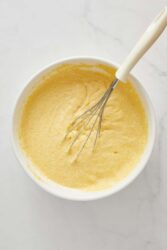
- Separately, in a small bowl, whisk together the buttermilk, honey, and egg. Pour the wet mix into the dry ingredients and stir until all of the dry ingredients are fully incorporated. The dough will be thick.
- Heat 1/4 cup of the vegetable oil in a 10-inch skillet over medium heat. Drop a heaping tablespoon of the batter into the hot oil to form a patty.
- Fry until the bottom is golden brown, about 2-3 minutes, and then flip and fry the other side for 2-3 minutes. Add more oil as needed for subsequent batches. Place the patties on paper towels to drain excess oil before serving.
Nutrition Info:
Nutrition information are estimates only and may vary based on the specific brands, ingredients, and portion sizes you use. This data is provided for informational purposes only.


Leave a Comment