

These Shortbread Cookies With Jam will show you just how melt-in-your-mouth delicious this classic treat can be!
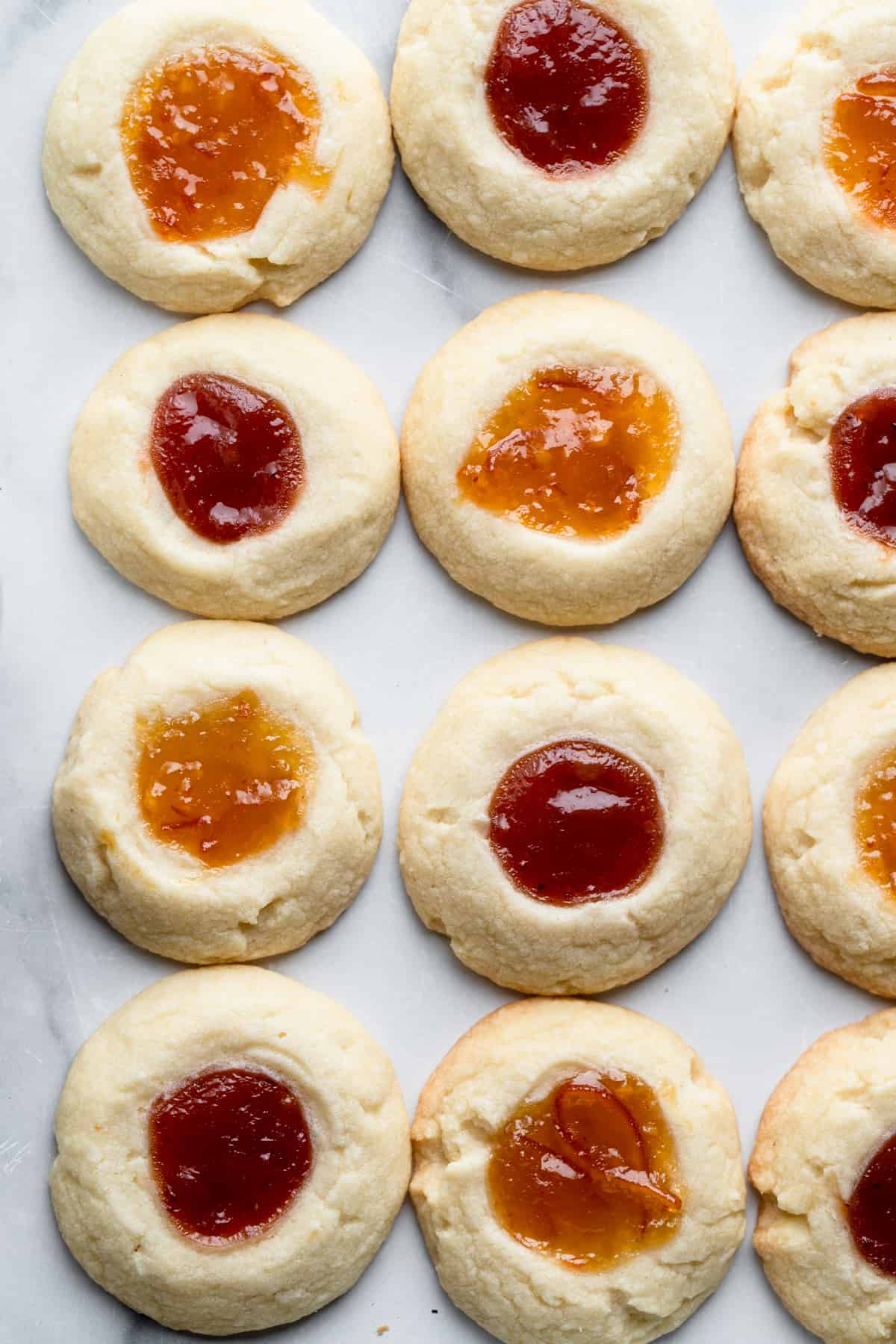
Cookies are a longtime passion of mine. At any given time, you can find balls of frozen homemade cookie dough in my freezer, waiting for the right after-dinner snack attack. Chocolate chip, oatmeal, double chocolate, even butterscotch—all are on my recipe radar, and I have searched far and wide for my favorite varieties of them all. Give me all the gooey, crispy, fudgy, cakey cookies out there!
I’m far less acquainted with classic cookie types, however, and my huge gaps in knowledge became clear when I started watching the Great British Baking Show. Here I was, thinking I was some kind of cookie expert, only to find out there is a whole other classification of them: “biscuits.” Realizing I had a lot of catching up to do, I started with arguably the easiest of all the biscuits, and I’m glad I did!
Shortbread is a rich, crisp, buttery cookie that doesn’t have any leavening agents, so there’s no puffy rise, and they pretty much stay the same shape throughout the bake. They’re incredibly delicious cookies with nothing added except a smidgen of fruity jam baked onto the top. It’s hard to wrap my mind around how good these are with such minimal ingredients, but they simply melt in your mouth with all their richness.
Are My Shortbread Cookies With Jam Healthy?
These cookies are mostly made of butter, powdered sugar, and flour, so I wouldn’t consider them healthy. The butter adds lots of saturated fat and calories, and flour, of course, lends lots of carbs. These cookies are an excellent occasional sweet treat, meant to be eaten in moderation.
If you’re following a vegan diet, you can try these amazing Dairy-Free Vegan Shortbread Cookies. Similarly, this recipe for Gluten-Free Almond Flour Shortbread Cookies will work for the gluten-free folks.
A Short History Of My Shortbread
For the uninitiated, shortbread comes from Scotland originally. Shortbread dough itself is traced back to the 12th century, but shortbread’s modern form is credited to Mary, Queen of Scots, in the 16th century. Whether or not Mary ever baked shortbread herself is unknown, but the first printed shortbread recipe appeared in 1736, written by a Scottish woman named Mrs. McLintock. (Thanks, Mrs. McLintock!)
Shortbread is named so because of its texture: it’s crumbly. The word “short” might be better understood in terms of shortening (like Crisco, for example). Adding shortening will produce a crumbly texture, as opposed to well-developed “long” strands of gluten gained by kneading floury dough.
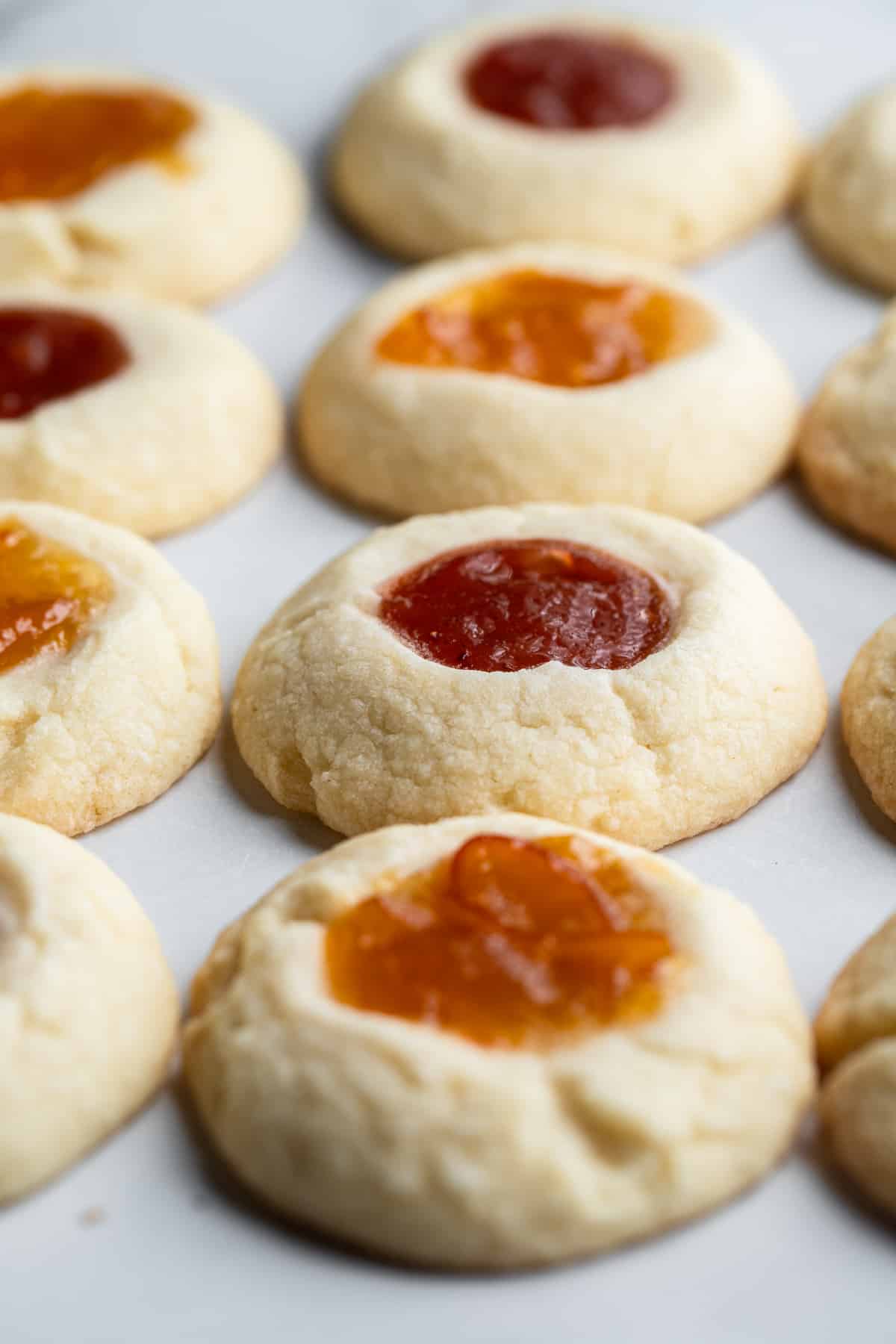
Shortbread traditionally comes in three different shapes: a big circle that’s cut into slices (like a pie) immediately after baking, a thick rectangle cut into bar-like servings, and tiny circles, like this recipe yields.
How Do I Store Leftovers?
Shortbread cookies don’t usually need to be stored in the fridge, but adding the jam to the top of these likely makes them more perishable at room temperature. If you plan on keeping them longer than a week, transfer them to an airtight container and store them in the fridge. You can also freeze these cookies! To freeze, transfer them to a freezer-safe container and separate layers of cookies with parchment paper to prevent sticking. They should keep in the freezer for up to 3 months. Thaw at room temperature, uncovered.
Serving Suggestions
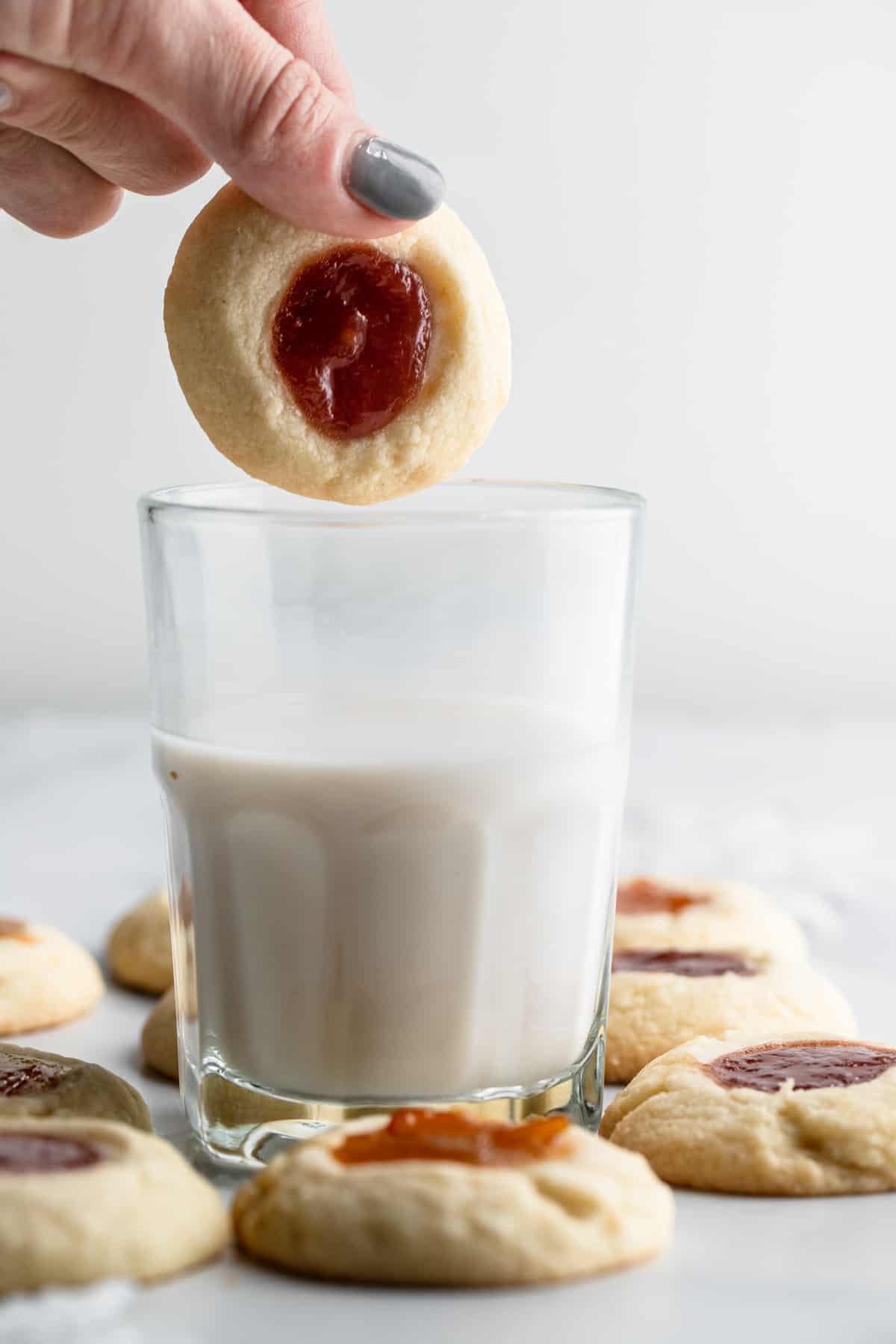
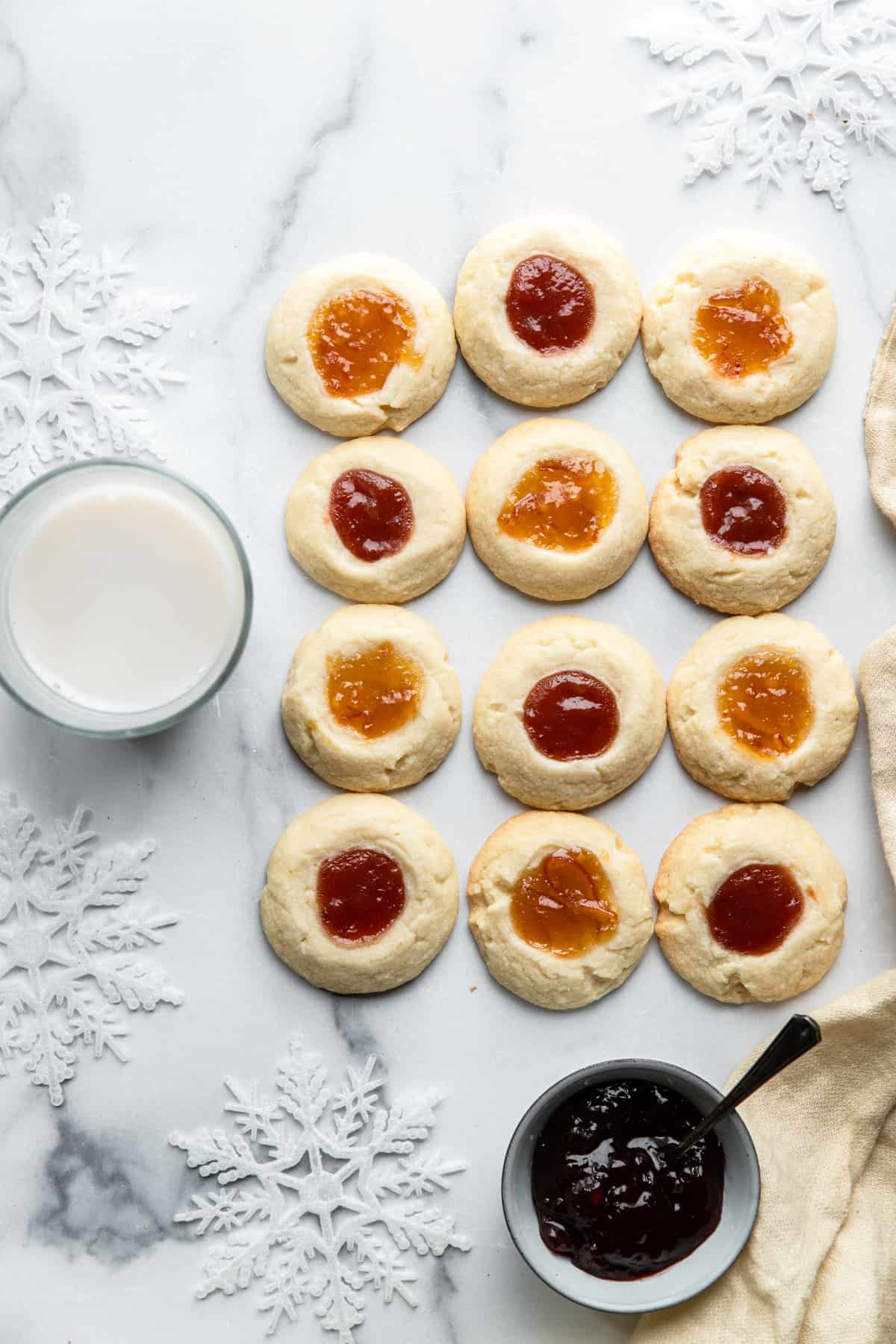
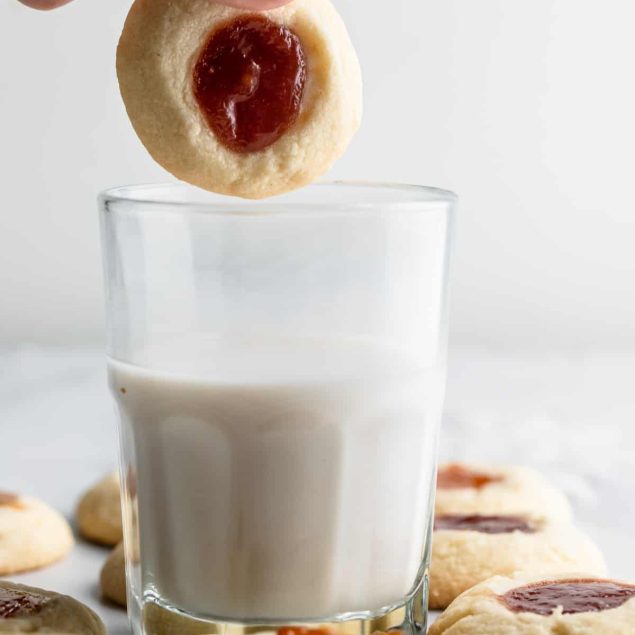
Serve these tasty shortbread cookies alongside your morning cup of coffee (or tea) or with a cold glass of milk for a nighttime snack. They’re associated with the holidays in Scotland, so consider adding these cookies to a holiday cookie tin as a gift, along with other assorted cookies. I love pairing them with Seven-Layer Cookies, Gluten-Free Chocolate Chip Cookies, Waffle Cookies, and Healthy Gingersnaps.
Ingredients
- ½ cup butter softened at room temperature
- ½ cup powdered sugar (60 grams)
- ½ teaspoon vanilla extract
- ¼ teaspoon almond extract
- 1 cup all-purpose flour (145 grams)
- Pinch of salt
- 2 tablespoons jam of your choice
Instructions
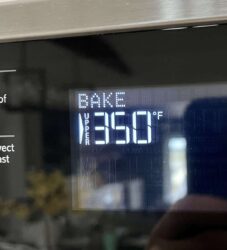
- Preheat your oven to 350°F.
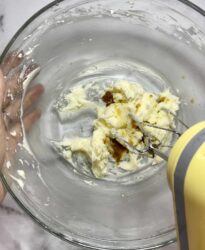
- In a large bowl, use an electric hand mixer to beat together the butter and sugar. Add in the extracts and beat again.
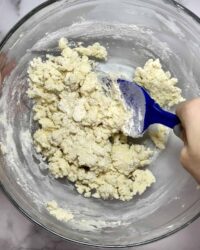
- Stir in the flour and salt until well combined.
- Roll dough between your hands into 1 tablespoon-sized balls, and place each ball on a parchment-lined baking sheet. Use your thumb to make an indentation in the center of each ball.
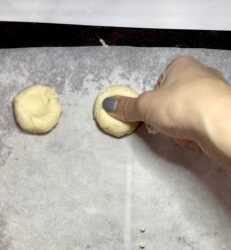
- Fill each indentation with ½ teaspoon of jam.

- Place the pan in the freezer for 10 minutes to firm up the butter.
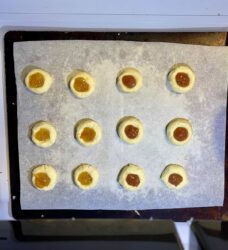
- Bake until the edges are just lightly browned, about 20 to 22 mins.

- Cool on the pan completely before serving.
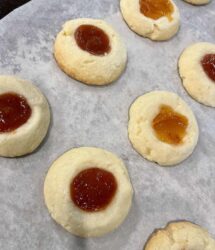
Nutrition Info:
Nutrition information are estimates only and may vary based on the specific brands, ingredients, and portion sizes you use. This data is provided for informational purposes only.


Leave a Comment