

One superfood to rule them all.
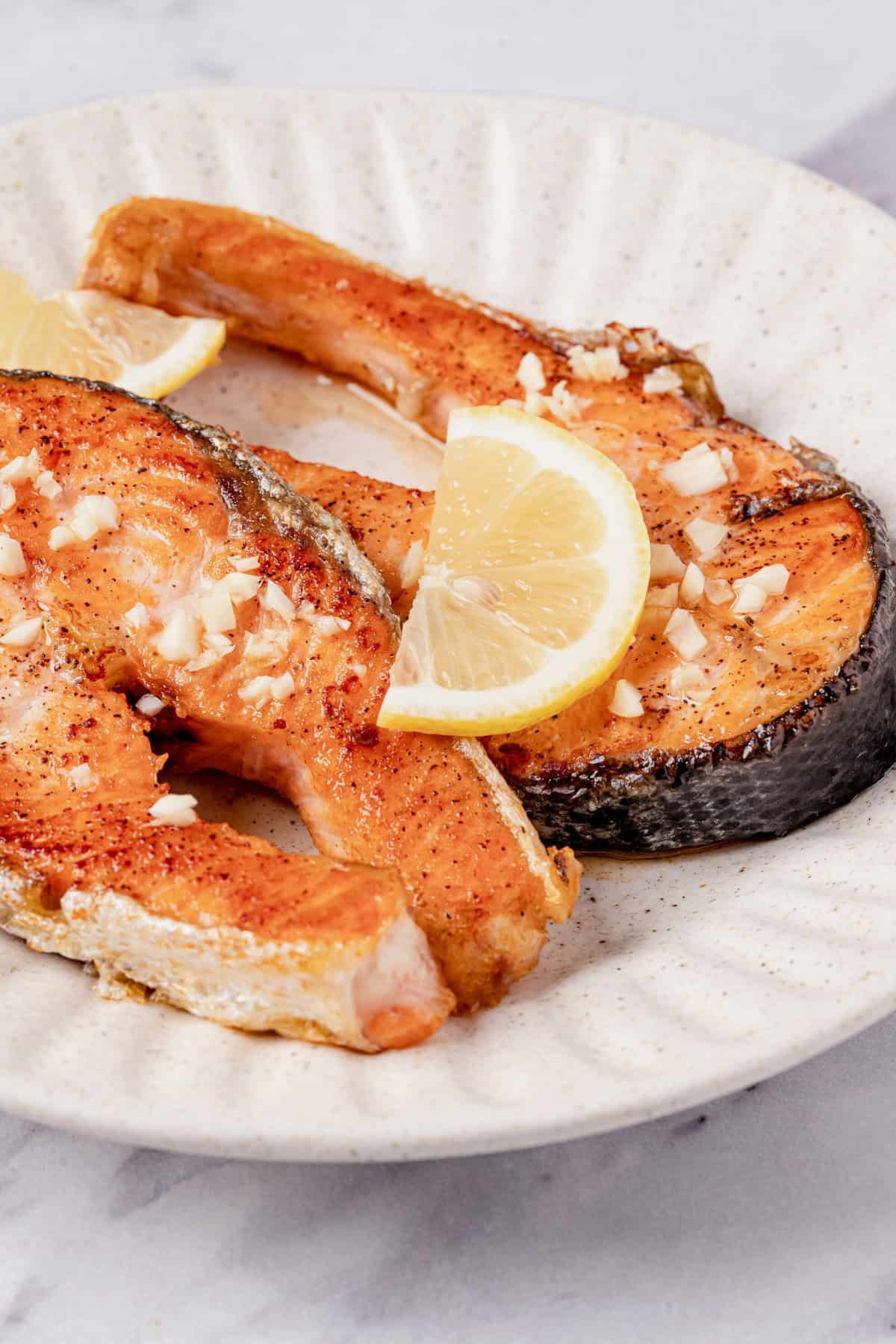
High school was ending when I finally lifted my embargo on non-fried seafood. It was almost a religious awakening when I discovered that a succulent piece of salmon might even be tastier, and give me more energy post-meal, than a juicy steak.
My mom read somewhere that one serving of seafood per week supposedly reduced the risk of Alzheimer’s and, operating under the theory that if one pill is good for you, five are better, immediately loaded the freezer with salmon steaks. She really came into her own with a piece of broiled salmon marinated in honey and balsamic vinegar served over a bed of spring greens, something she always describes as her “most elegant dish.” I took her love of salmon and ran with it—salmon tacos, Asian spiced salmon bowls, salmon and eggs for breakfast—I was hungry for it. I even dropped $50 on a giant Pacific salmon filet when road-tripping through Washington State.
Salmon is a rich and filling fish, with flesh that is both juicy and flaky. The taste is a bit buttery and savory, added with a hint of sweetness. Salmon is prized for not having a strong “fishy” taste; although the flavor can be bold at times, it is tasty and easily enhanced by seasonings, particularly lemon, garlic, dill, pepper, and salt.
Is Salmon Steak Healthy?
Salmon is prized for its health benefits and is commonly referred to as a superfood. High in healthy omega-3 fatty acids, protein, and B vitamins, this fish packs a punch in benefits for heart, brain, and immune health. I’m not saying you’re going to live forever if you eat this, but salmon might be as close to the Fountain of Youth as we’ve got.
Wild vs Farmed
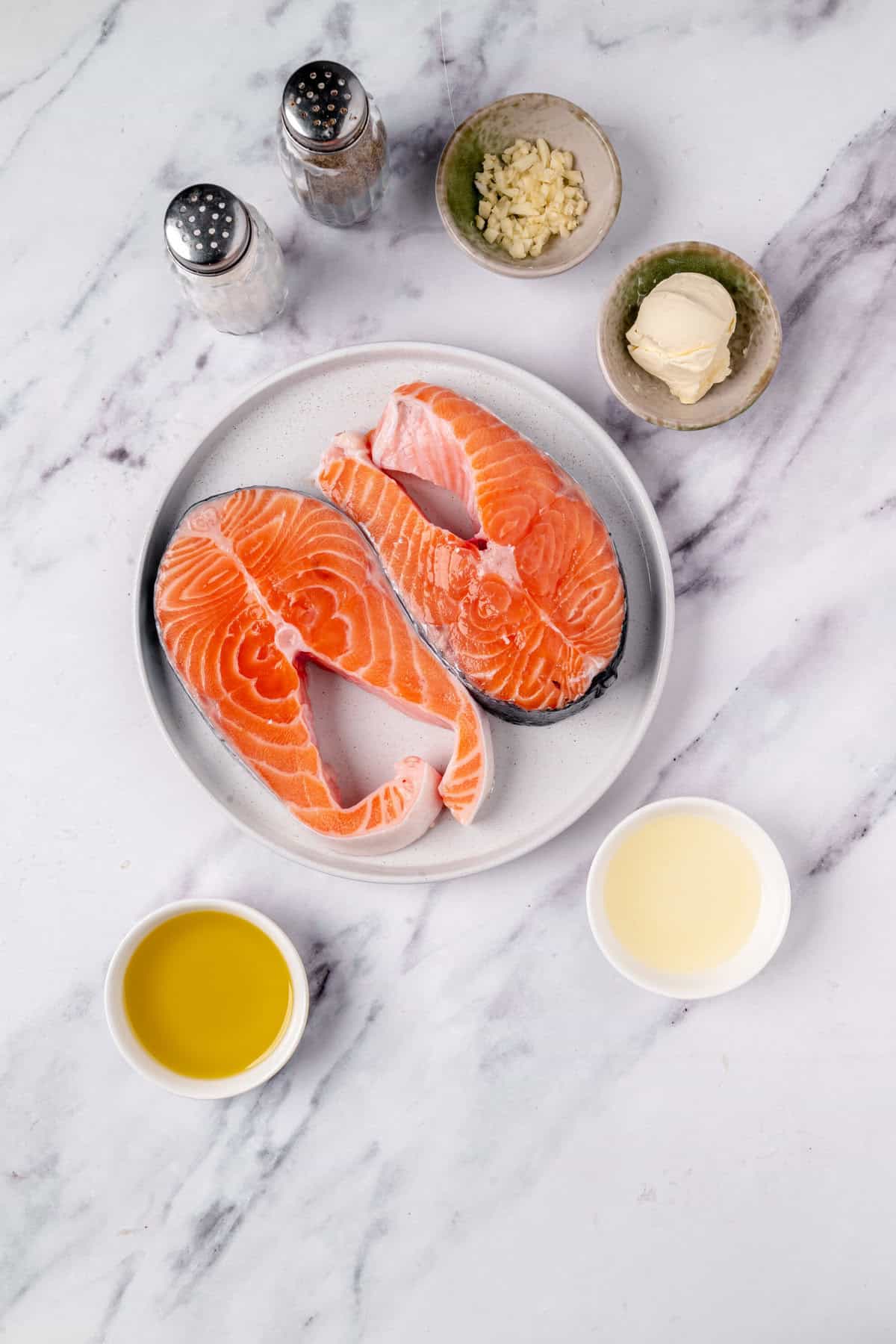
Wild salmon refers to fish being caught in natural environments: the ocean, rivers, or lakes. However, more than half of the salmon sold worldwide comes from fish farms, or aquaculture (underwater farming). Wild salmon eat plankton, squid, small insects, eels, and shrimp. Farmed salmon eat fish food, which is a combination of fish meal and fish oil mixed with other vitamins. Both types offer similar health benefits, although wild salmon has more minerals and farmed salmon has a higher fat content. Wild salmon is more expensive, whereas farmed salmon may have added antibiotics. However, doctors say that both types are full of omega-3 fatty acids, so eating either wild or farmed salmon in moderation is an excellent idea.
How to make ahead and store
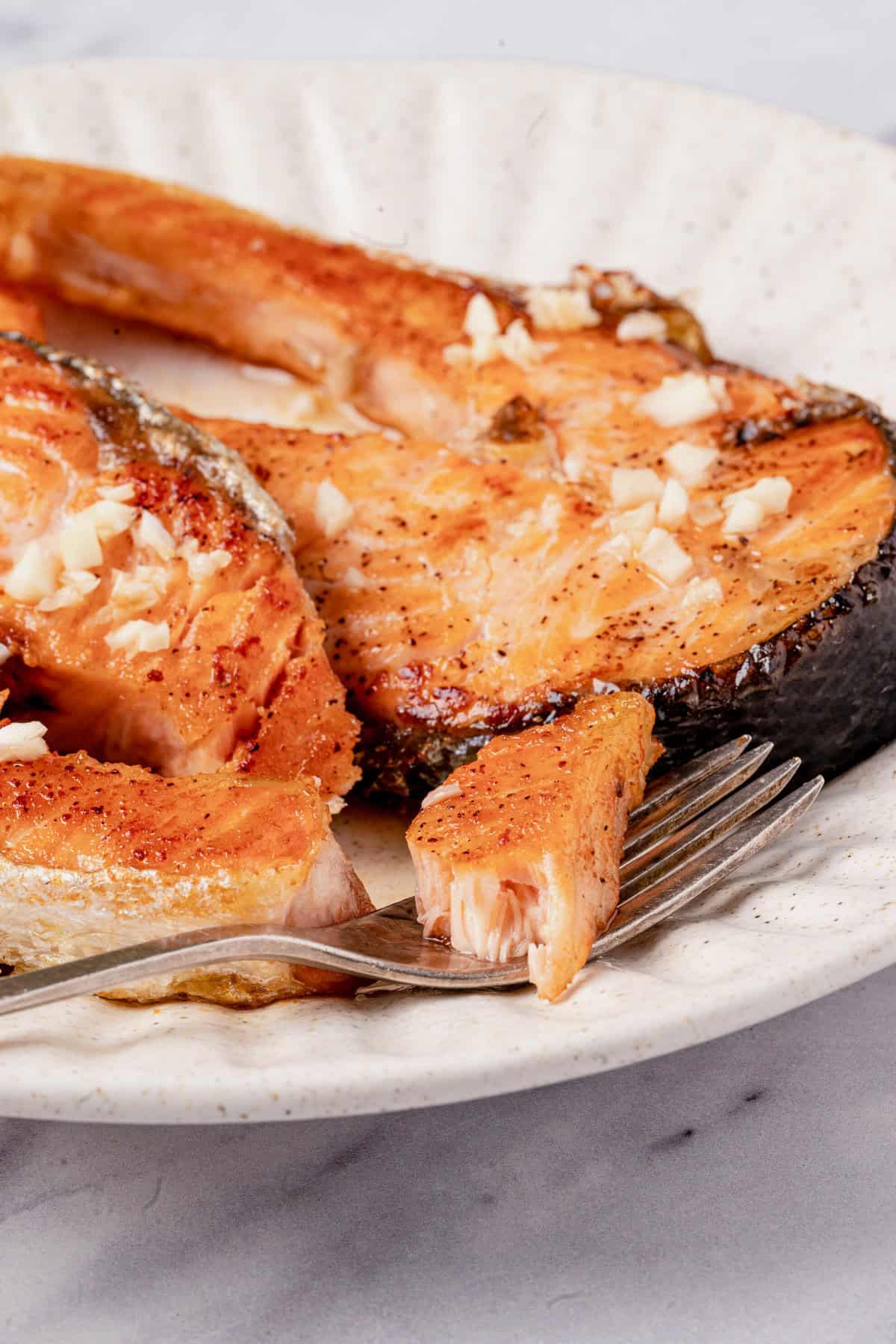
Keep salmon cold until it’s ready to cook. It can be seasoned or marinated and stored in an airtight container in the fridge for up to 24 hours before cooking. Once cooked, leftover salmon will keep in the fridge for 3-4 days, perfect for salads or a stir-fry.
Serving Suggestions
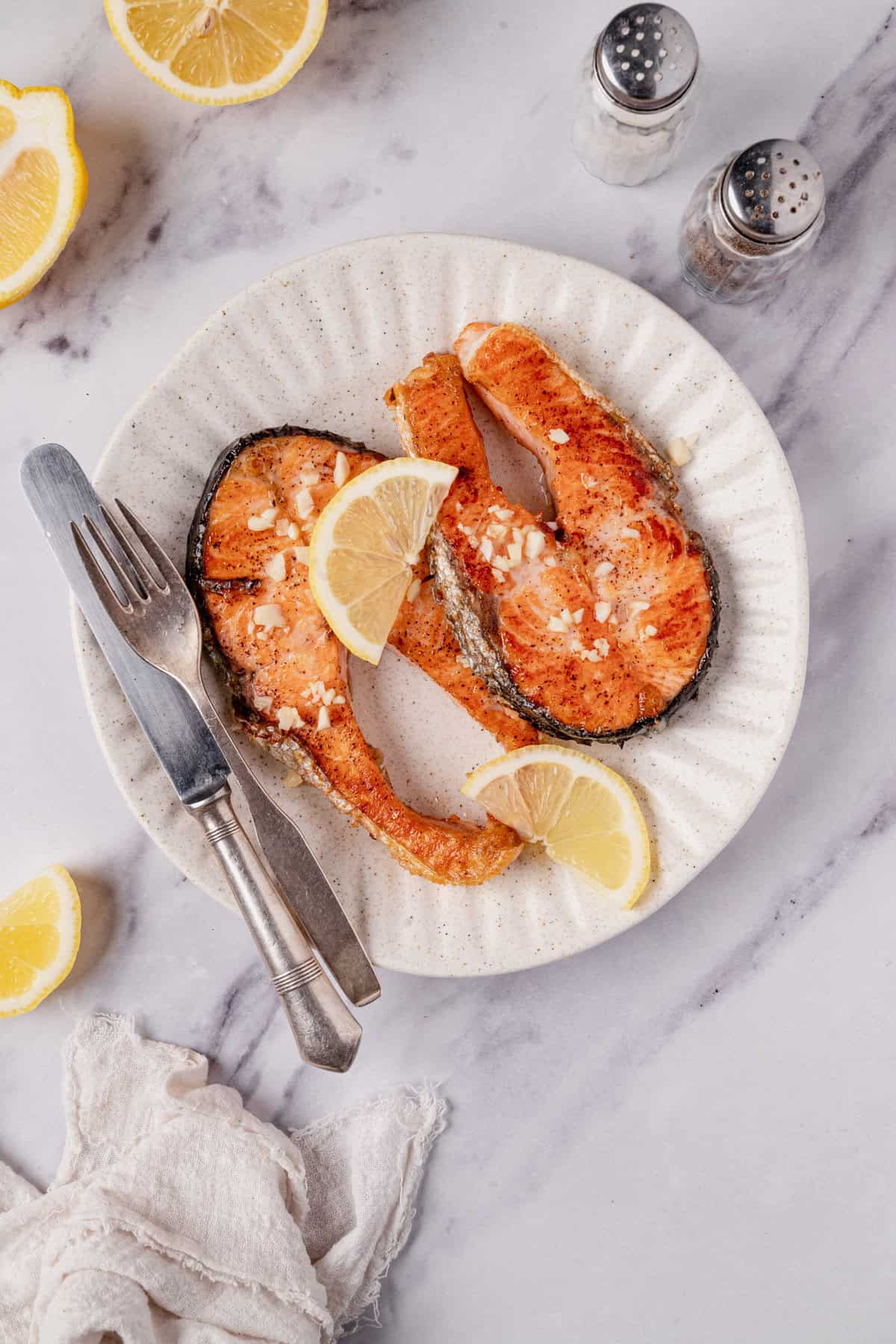
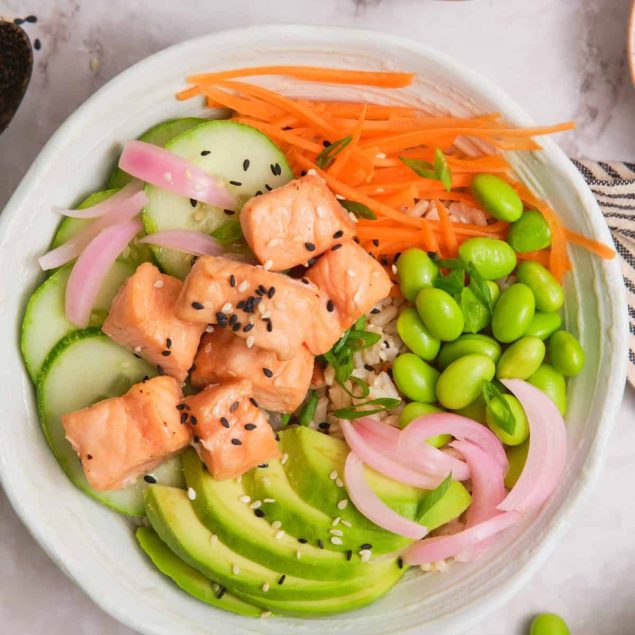
Salmon is extremely versatile. Serve with rice and vegetables for a lean meal, on top of greens to be super-healthy, or as a sandwich for a tasty, not totally guilty, pleasure. On top of noodles, next to mashed potatoes, or shredded and mixed in with scrambled eggs on top of a bagel, you really can’t go wrong.
For more of your new favorite food, give the following recipes a try: Smoked Salmon Salad, Asian Salmon with Soy and Ginger, Baked Honey Cajun Salmon, and Miso-Glazed Salmon.
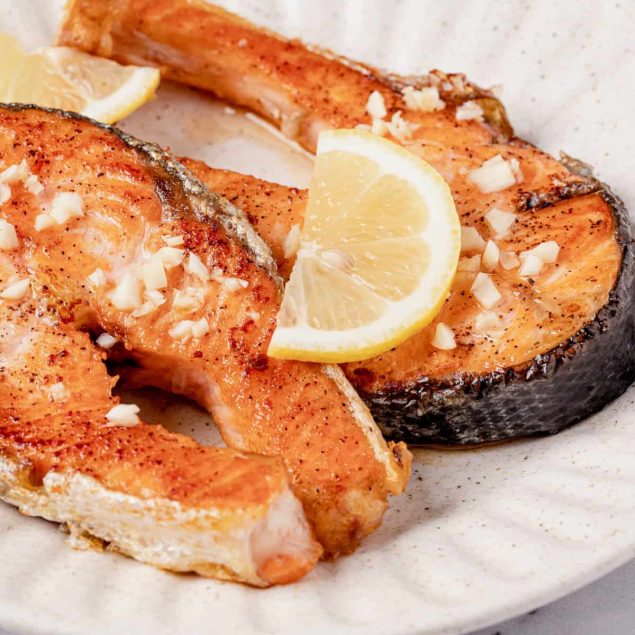
Ingredients
- 2 salmon steaks 1-inch thick, about 6 ounces each
- 3/4 teaspoon sea salt
- 1/4 teaspoon black pepper
- 1 1/2 tablespoons olive oil
- 1 tablespoon unsalted butter
- 1 tablespoon fresh lemon juice juice of 1/2 lemon
- 1 teaspoon minced garlic
Instructions
- Season both sides of the salmon steaks with sea salt and black pepper.
- Heat olive oil in a non-stick skillet over medium-high heat.
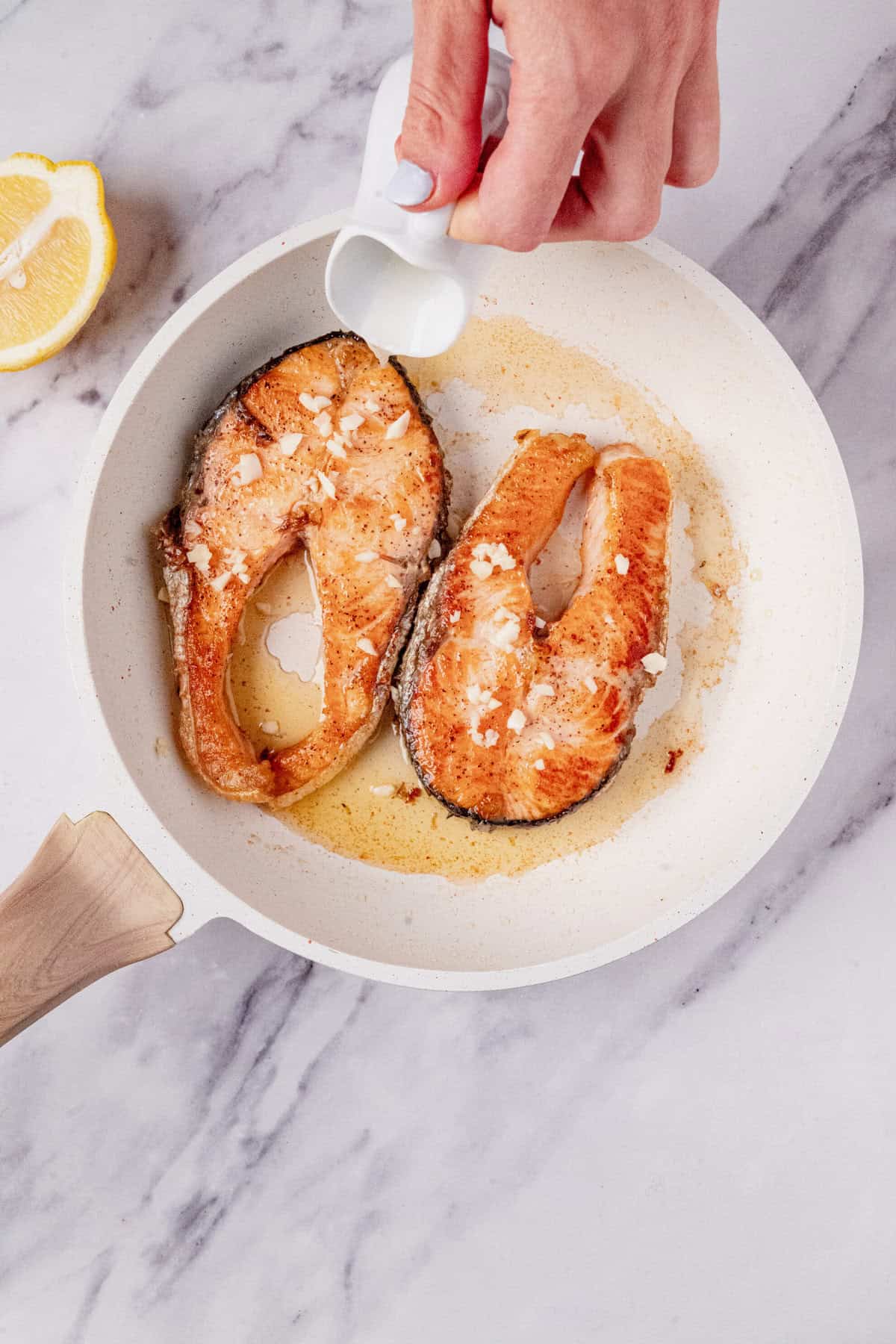
- Place the salmon steaks in the skillet. Cook for about 4 minutes undisturbed on one side until golden and crisp. Flip the steaks, add butter and garlic to the skillet, and cook for an additional 4 minutes, basting the salmon with the melted butter.

- Squeeze fresh lemon juice over the cooked salmon steaks and serve immediately.
Nutrition Info:
Nutrition information are estimates only and may vary based on the specific brands, ingredients, and portion sizes you use. This data is provided for informational purposes only.


Leave a Comment