

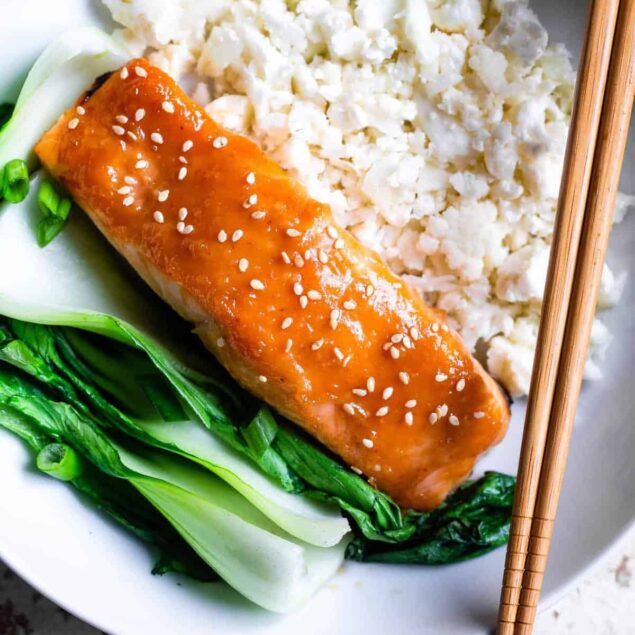
If you’re tired of the same old ways of cooking fish, this sweet-and-salty, umami-filled Miso-Glazed Salmon recipe is for you.
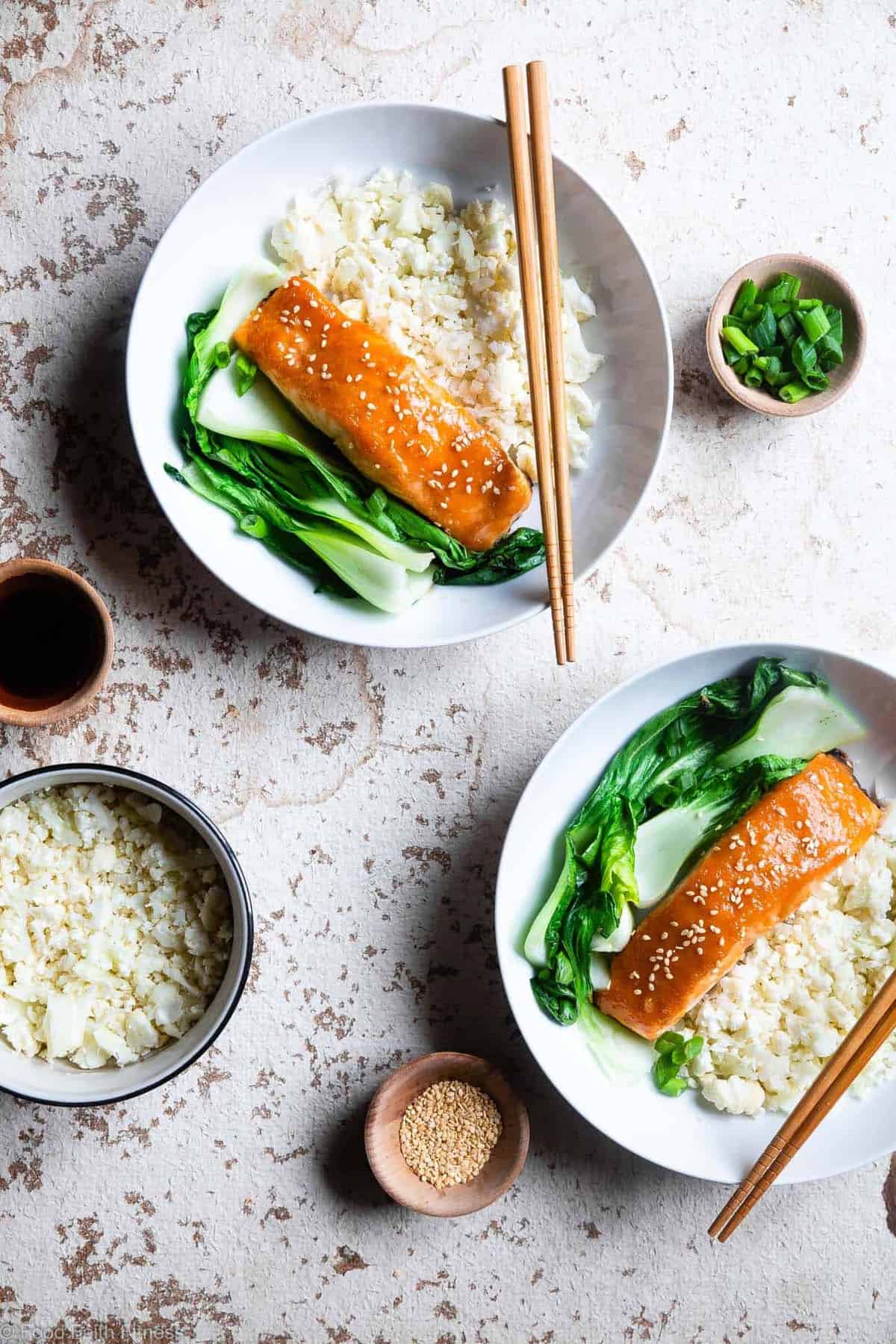
There are a million ways to eat a salmon fillet. You can throw it on the grill with salt and pepper or throw it in a hot pan over the stove and top it with a béarnaise sauce. You can smoke slices of salmon for salmon jerky or smoke it whole for a softer texture. You can even go the Japanese route and eat it raw as sashimi.
But by far, my favorite way to prepare a nice salmon fillet is with a sweet-and-salty glaze and a fast, hot broil. This adds to the pile of evidence I have of my theory that most things end up tastier with a quick, high-heat cooking method. Nothing could be truer about a fish fillet, in my opinion. It’s easy to overcook fish, and it’s so incredible when it’s cooked exactly right.
This is my go-to recipe for a salmon fillet. It’s a delicious miso-glazed salmon that incorporates honey and sriracha into the salty, umami flavors of miso. Layered on top of salmon’s succulent flavor, every bite is a showstopper. Once you’ve had this plate of perfectly cooked salmon, you’ll want it multiple times a week. And you can do that because it’s pretty healthy!
Is This Miso-Glazed Salmon Healthy?
This miso-glazed salmon is such a nutrient-dense meal. Salmon contains lots of protein and healthy omega-3 fatty acids, along with plenty of B vitamins, vitamin D, potassium, and selenium. White miso is also a nutrient powerhouse in itself, even in small servings, providing B. vitamins, protein, and even some iron. This recipe uses coconut aminos instead of soy sauce for a lower sodium (but still plenty salty!) option that’s also gluten-free. Honey is a natural, unrefined sweetener, and lots of people prefer it to refined sugar. Pair this salmon with a few healthy sides, and you’ve got yourself a winning dish!
Overall, this dish is suitable for gluten-free and dairy-free eaters, and it’s low enough in carbs to be considered keto-friendly. The sodium content in this dish isn’t outrageous, but if you’re watching your sodium intake, consider cutting back on the quantity of coconut aminos and miso.
All About Miso
Miso is a savory, umami-rich paste made from fermented soybeans. (If you’ve never had it, don’t say “ew!” just yet.) Miso has been a staple in Japanese cooking for centuries, so it’s a time-tested ingredient that flavors a ton of different Japanese dishes.
Traditionally, it’s made by combining soybeans with salt and a fermentation starter called koji—a culture made from rice, barley, or soybeans that’s been inoculated with a special mold. The result is a thick, deeply flavorful seasoning paste that varies in taste, color, and intensity, depending on how long it ferments and what it’s made with. Miso is generally healthy, adding B vitamins and even some protein to anything it flavors, though it does contain a significant amount of sodium. As an added benefit, miso has the superpower of staying good in the fridge for a long time when stored properly.
White miso (the kind used in this recipe) is sweet and mild, making it great for dressings and soups. Yellow miso has a slightly stronger, earthier flavor that works well in marinades and glazes, so if you know you like miso already, consider trying the yellow type out in this recipe! Red miso is aged the longest, making it the saltiest and boldest of the bunch.
How Do I Store Leftovers?
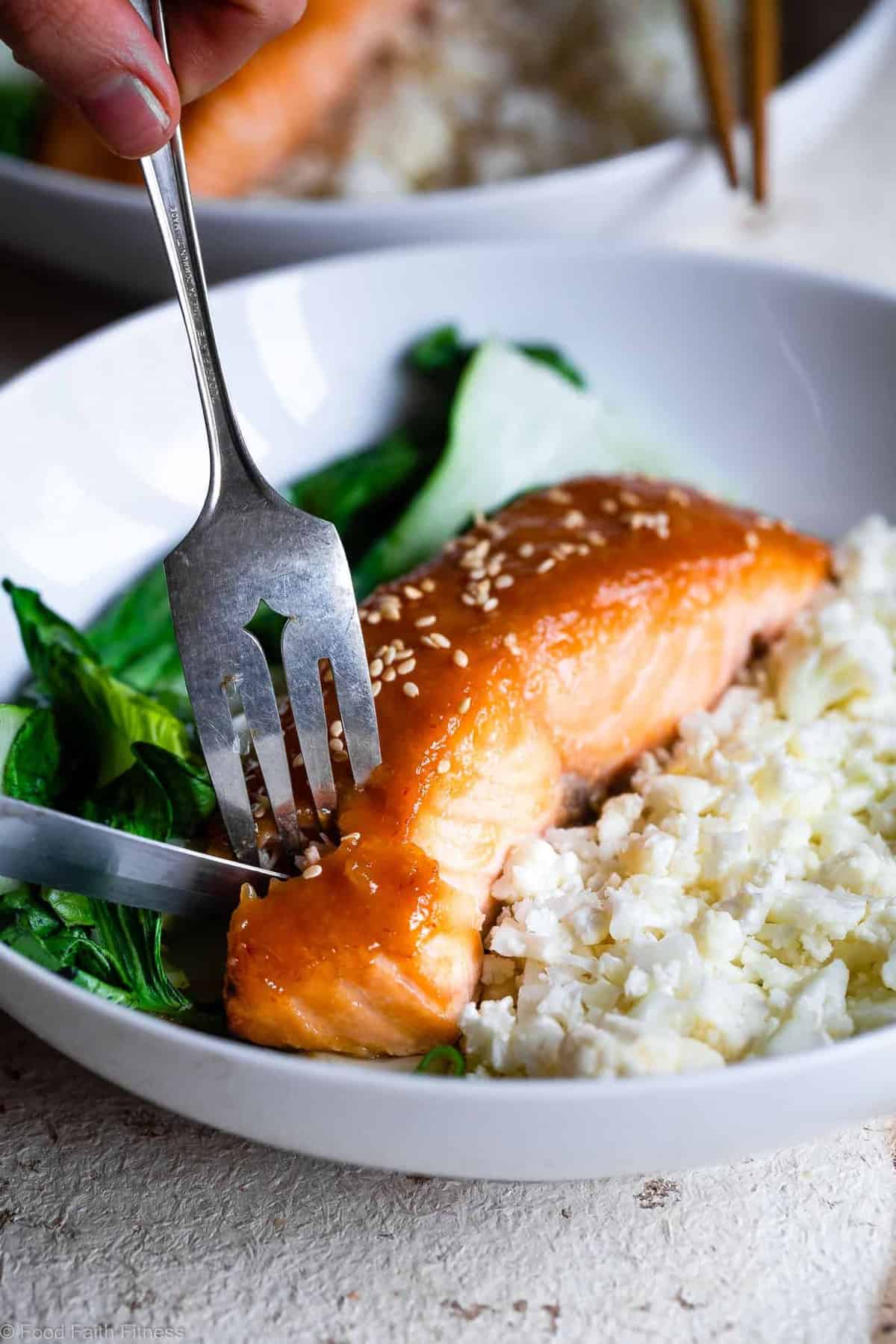
Let the salmon cool completely, transfer it to an airtight container, and store it in the fridge for up to 3 days. When you’re ready to eat, let it sit at room temperature for about 10 minutes to take the chill off. You can freeze leftover salmon in a freezer-safe Ziploc bag with the air squeezed out for up to 3 months. Let it thaw in the fridge overnight before reheating.
For best results, reheat it in the oven at 350°F for 10-15 minutes or on the stove in a pan with some butter or oil over medium heat for about 5-10 minutes. You can also air fry leftover salmon. Microwaving will work, but it’s much better reheated in a skillet!
Serving Suggestions
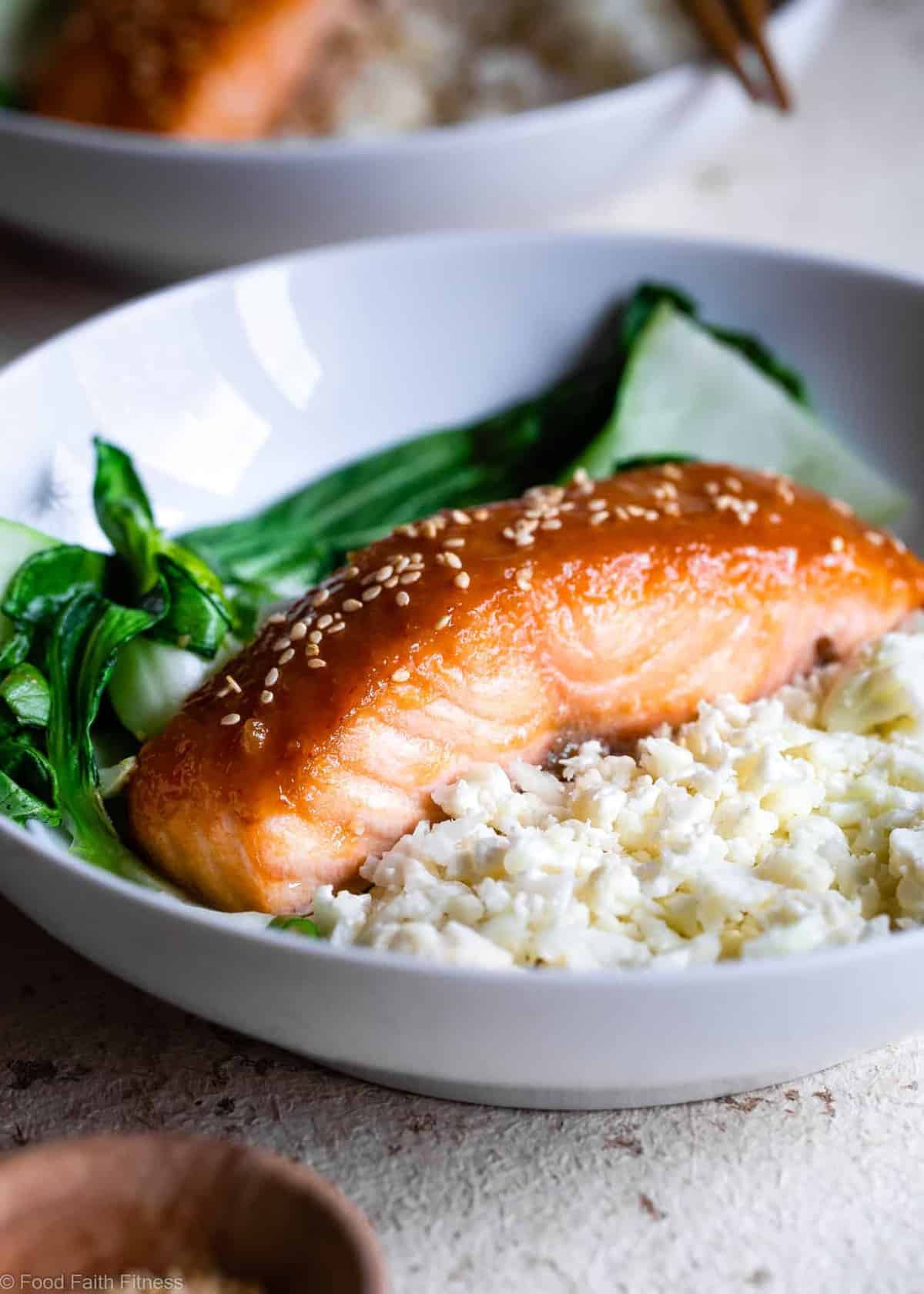
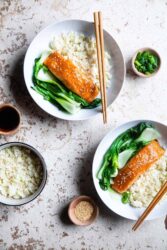
Serve this salmon alongside some healthy sides for a super nutritious meal. I love serving mine with warm brown rice and this delicious Bok Choy Recipe. You could also go for some Pan-Fried Broccoli or a Cauliflower Rice Stir-Fry on the side. Personally, I slice up cucumbers to add a fresh, neutral flavor to the plate and use pickled ginger as a garnish. Freshly chopped green onions are also a lovely and flavorful garnish to sprinkle on your salmon.
Ingredients
- 1½ tablespoons white miso gluten-free if needed
- 1 tablespoon hot water
- ½ tablespoon coconut aminos or soy sauce
- 2½ teaspoons honey
- ½ teaspoon sriracha
- ½ teaspoon fresh ginger minced
- 4 fillets Atlantic salmon 4 ounce each
Instructions
- Preheat your broiler to high, and spray a rimmed baking sheet with cooking spray.
- In a medium bowl, whisk together all the ingredients except the salmon.
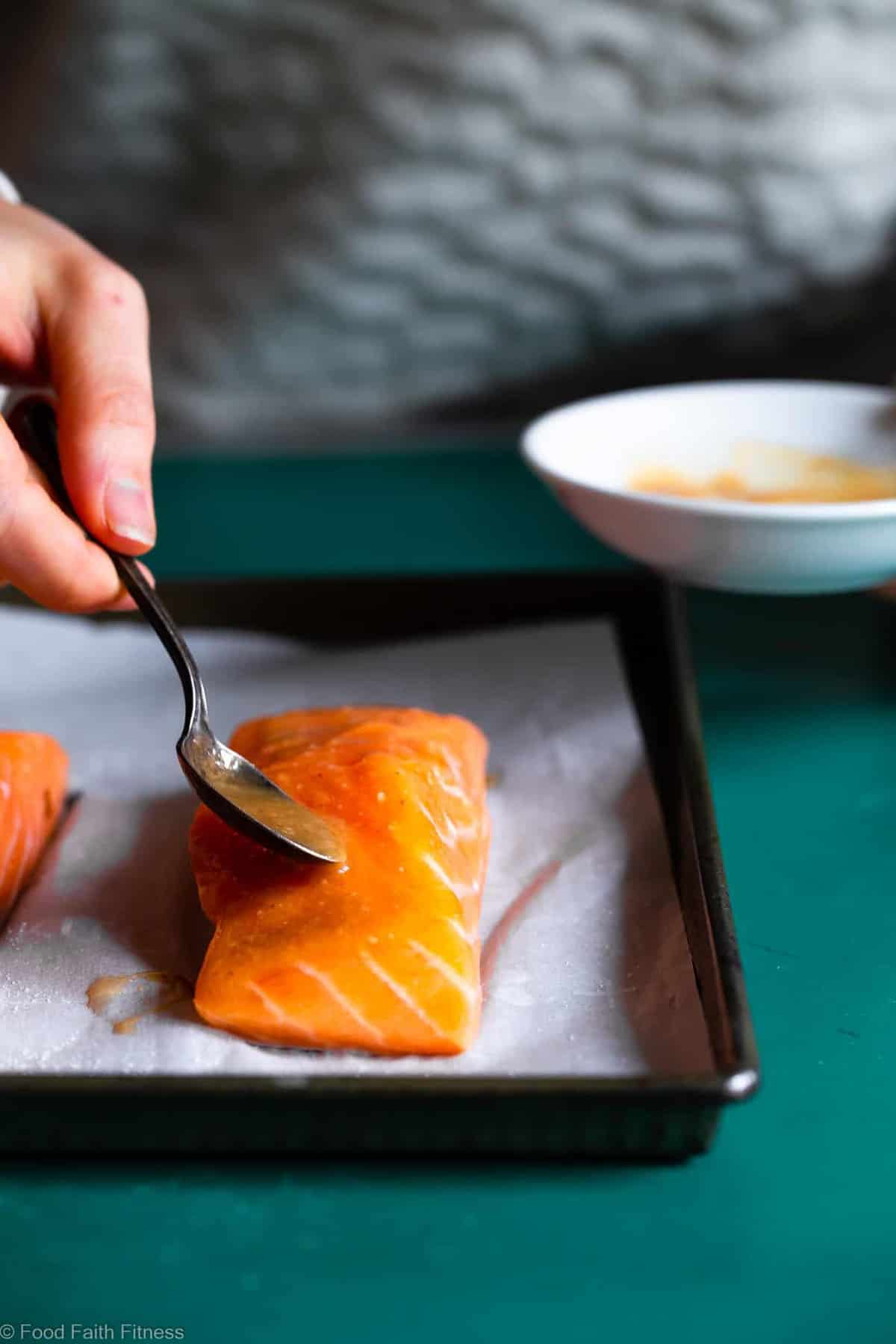
- Line the salmon up on the baking sheet. Evenly spread half of the miso glaze over the tops of the fillets, and sprinkle with salt.
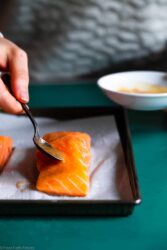
- Broil for 5 minutes. Then, spread the rest of the sauce over the fish and broil until it flakes easily with a fork, about another 2-4 minutes. Serve immediately.
Nutrition Info:
Nutrition information are estimates only and may vary based on the specific brands, ingredients, and portion sizes you use. This data is provided for informational purposes only.


Leave a Comment