

Stir up dinner in less than half an hour with this easy and delicious dish!
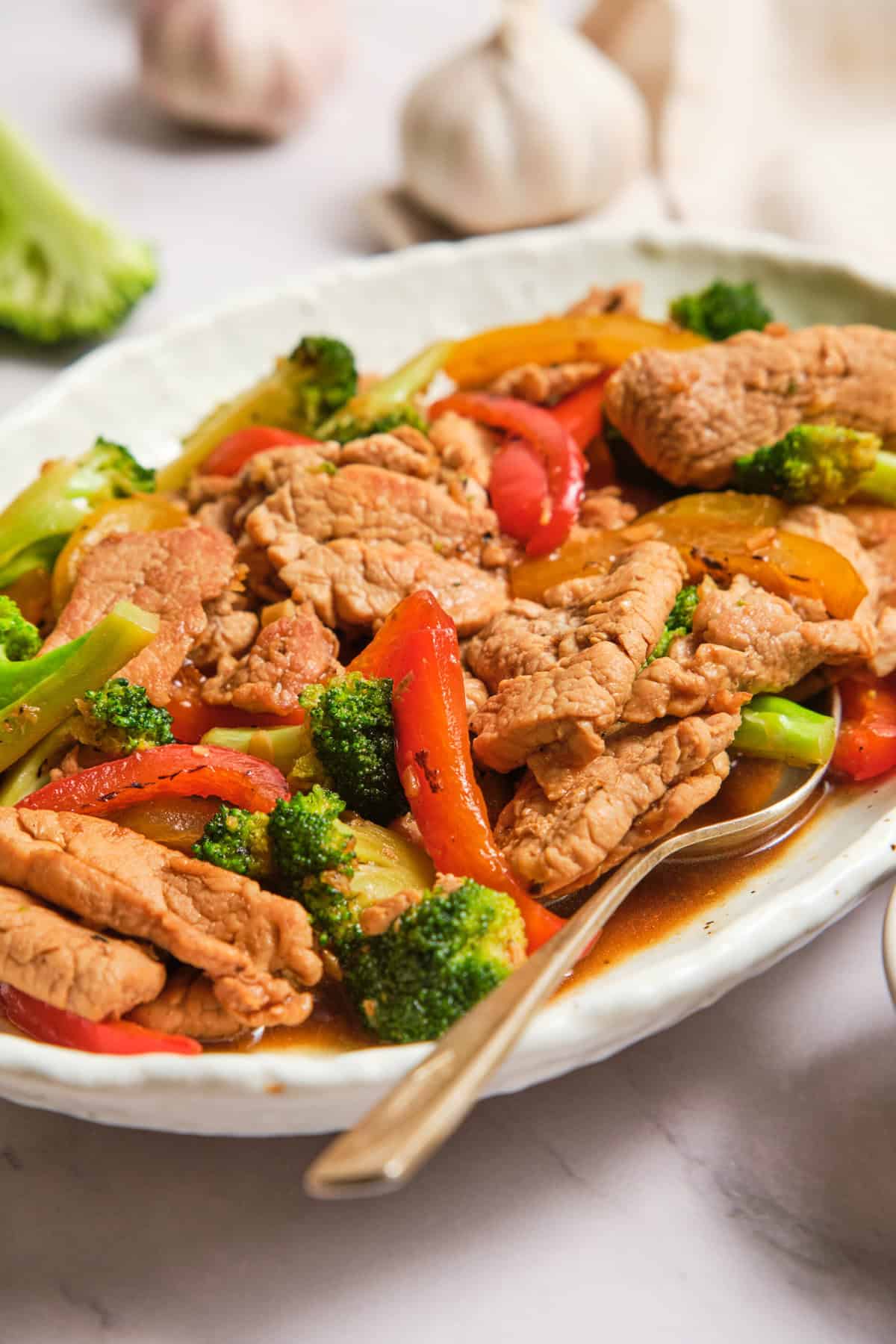
It’s funny how I always assume that restaurant dishes are difficult to make. Whether it’s a fancy French dish, a plate of Italian pasta, or a stir-fry at an Asian place, I imagine the cooks slaving for hours over complicated machinery in a hot kitchen to craft the menu item I ordered. So when I came across this pork stir-fry recipe, I almost didn’t try it. I didn’t even own a wok! My partner brought his over and walked through the directions with me. It was positively foolproof!
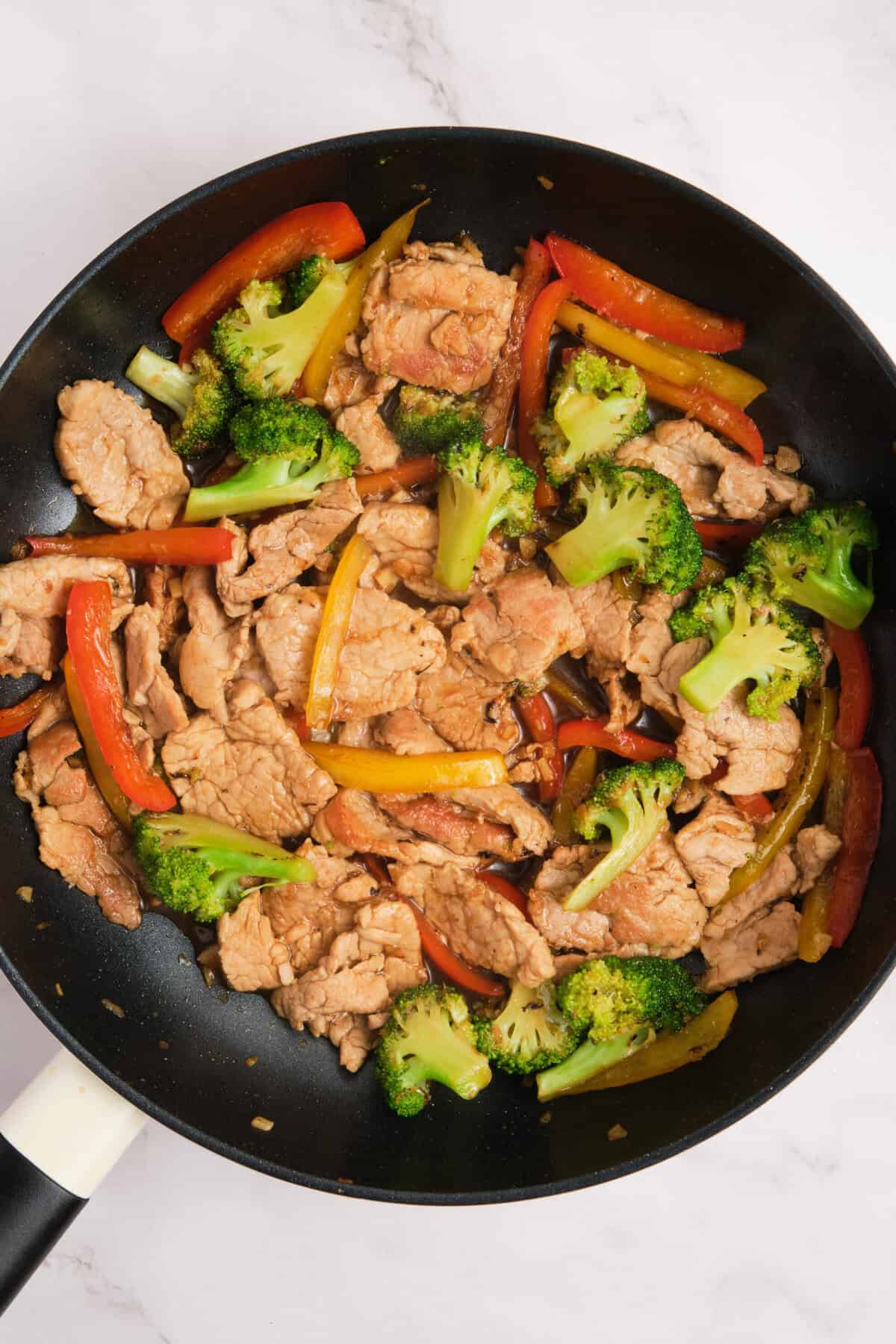
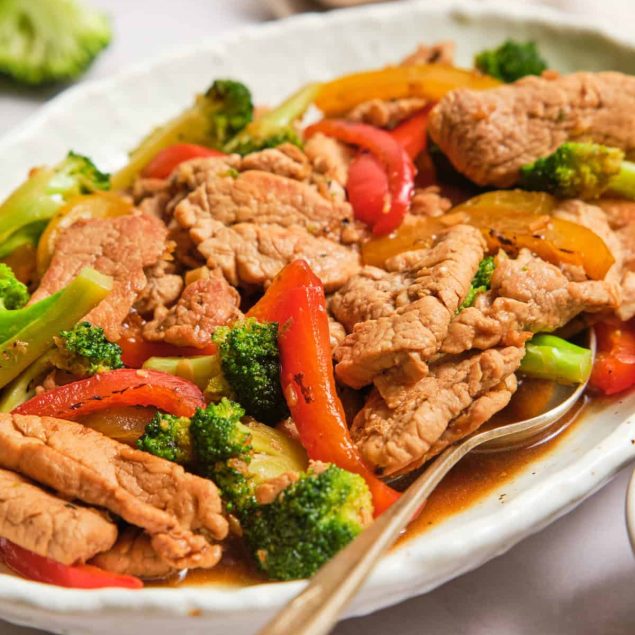
Something I like about this recipe is how perfectly it blends meat and vegetables. The pork always comes out tender, while the vegetables add a lot of color and texture to the dish—not to mention plenty of nutritional value. Of course, the stir-fry sauce also adds incredible flavor. It’s a little bit spicy and a little bit sweet, with the garlic and ginger playing off each other beautifully. Ultimately, all of the ingredients in this recipe are in perfect harmony!
Plus, this dish is table-ready in just under half an hour. That makes it a weeknight dinner dream! I made it with tamari instead of soy sauce when my gluten-free niece came over for dinner—and, honestly, I liked it better. It tasted less salty but richer.
Is Pork Stir-Fry Healthy?
This pork stir-fry is a healthy, balanced meal that’s rich in protein, vitamins, and minerals while staying low in calories and saturated fat. Pork tenderloin is a lean cut of meat that delivers a good amount of protein and iron. Broccoli and bell peppers are rich in vitamins A and C, potassium, fiber, and antioxidants. The garlic and ginger boost flavor and add anti-inflammatory properties, while the honey adds a touch of natural sweetness. The rice vinegar and cornstarch help balance flavors and thicken the sauce without adding significant calories or fat.
Those watching their sodium intake might consider diluting the soy sauce with water. Make this dish gluten-free by swapping the soy sauce for tamari. Make a Paleo-friendly version by subbing in coconut aminos for the soy sauce and arrowroot powder or tapioca starch for the cornstarch.
Pork Stir-Fry: Rooted In Culture And History
Stir-frying is a cooking technique with deep roots in Chinese culinary history. Originally developed as a practical solution for cooking quickly with minimal fuel, stir-frying became popular in China because it preserved the color, texture, and nutritional value of ingredients while using little oil and fuel. The wok—that iconic vessel used for stir-frying—was first used for drying grains and only later adapted for cooking meats and vegetables. It has evolved into a symbol of efficiency and versatility in the kitchen.
Pork, in particular, holds a special place in Chinese cuisine and culture, as pigs were among the first animals domesticated for food in ancient China. It became the most widely consumed meat in the country, eventually symbolizing prosperity, family, and celebration. When Chinese recipes mention “meat” without specification, it almost always refers to pork—a testament to its cultural importance.
How Do I Store Leftovers?
Store leftover pork stir-fry in an airtight container in the fridge for up to 4 days. You can also freeze it in a freezer-safe bag or container for up to 3 months. Thaw overnight in the fridge. Reheat in a skillet or wok over medium heat, stirring occasionally, until heated through, about 5–7 minutes. Add a splash of water or broth if the stir-fry seems dry. To microwave leftovers, cover them loosely in a microwave-safe dish and heat on high for 1 or 2 minutes. Stir and continue heating in 30-second intervals until hot.
Serving Suggestions
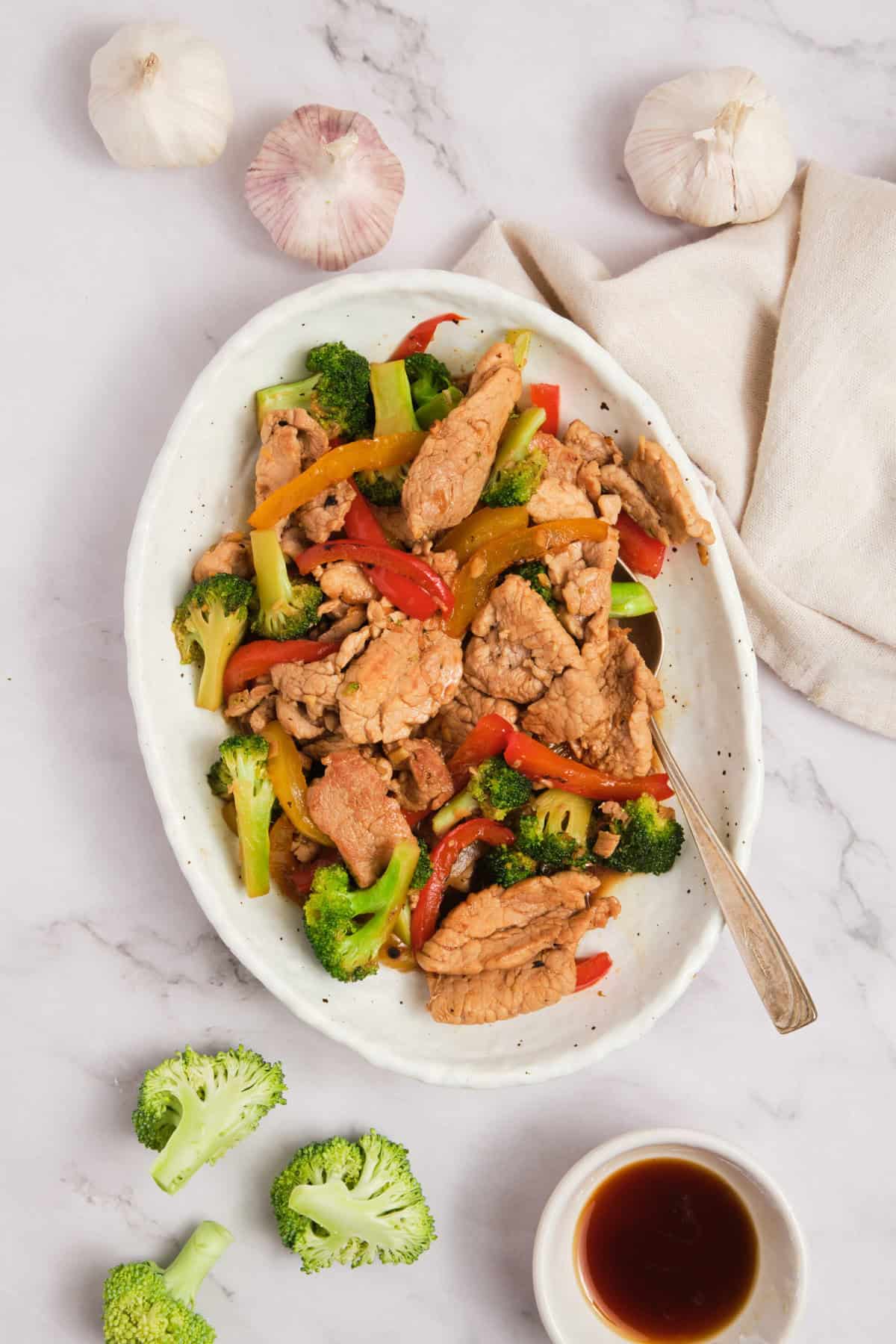
A bed of rice is always a good way to complement a stir-fry dish. I tend to prefer this Vegetable Fried Rice Recipe, although Brown Rice Pilaf is a good option as well. A noodle dish like Soba Noodles or Honey-Garlic Instant Pot Noodles can also be a good complement for a pork stir-fry. If you want to keep the carbs low, try Roasted Cauliflower Rice or this Cilantro-Lime Cauliflower Rice for extra bright flavors.
Ingredients
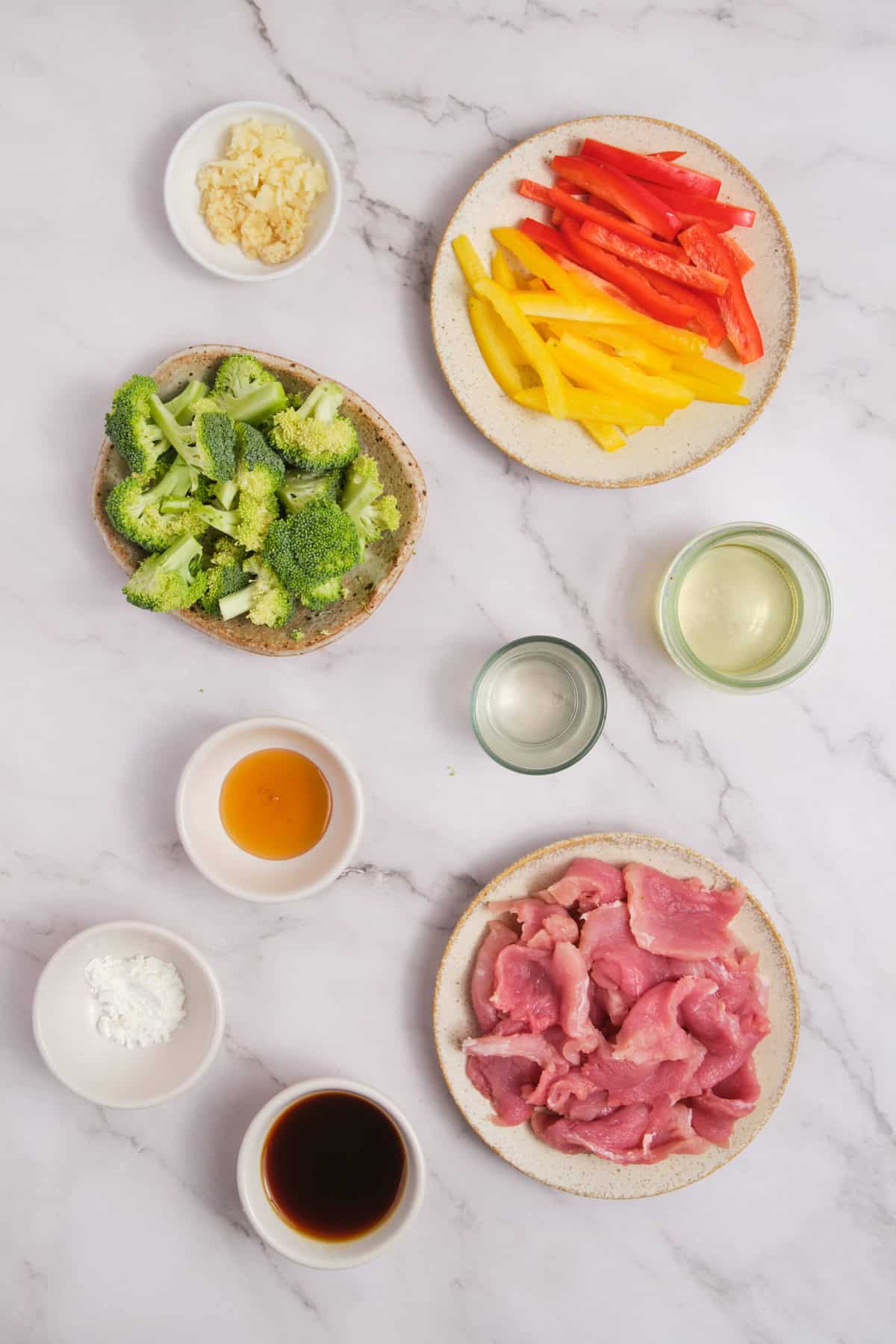
- 1/4 cup low-sodium soy sauce
- 2 tablespoons honey
- 1 tablespoon rice vinegar
- 1 teaspoon cornstarch
- 1/4 cup water
- 2 tablespoons vegetable oil divided
- 1 pound pork tenderloin thinly sliced
- 2 cups broccoli florets
- 1 red bell pepper sliced
- 1 yellow bell pepper sliced
- 1 tablespoon garlic minced
- 1 tablespoon ginger grated
Instructions
- In a small bowl, whisk together soy sauce, honey, rice vinegar, cornstarch, and water until smooth. Set aside.
- Heat 1 tablespoon of the vegetable oil in a large skillet over medium-high heat. Add pork slices. Stir-fry until browned and nearly cooked through, about 4-5 minutes. Remove pork from skillet and set aside.
- In the same skillet, add the remaining tablespoon of oil, the garlic, and the ginger. Sauté for 30 seconds. Add broccoli and bell peppers. Stir-fry until the vegetables are tender-crisp, about 4 minutes.
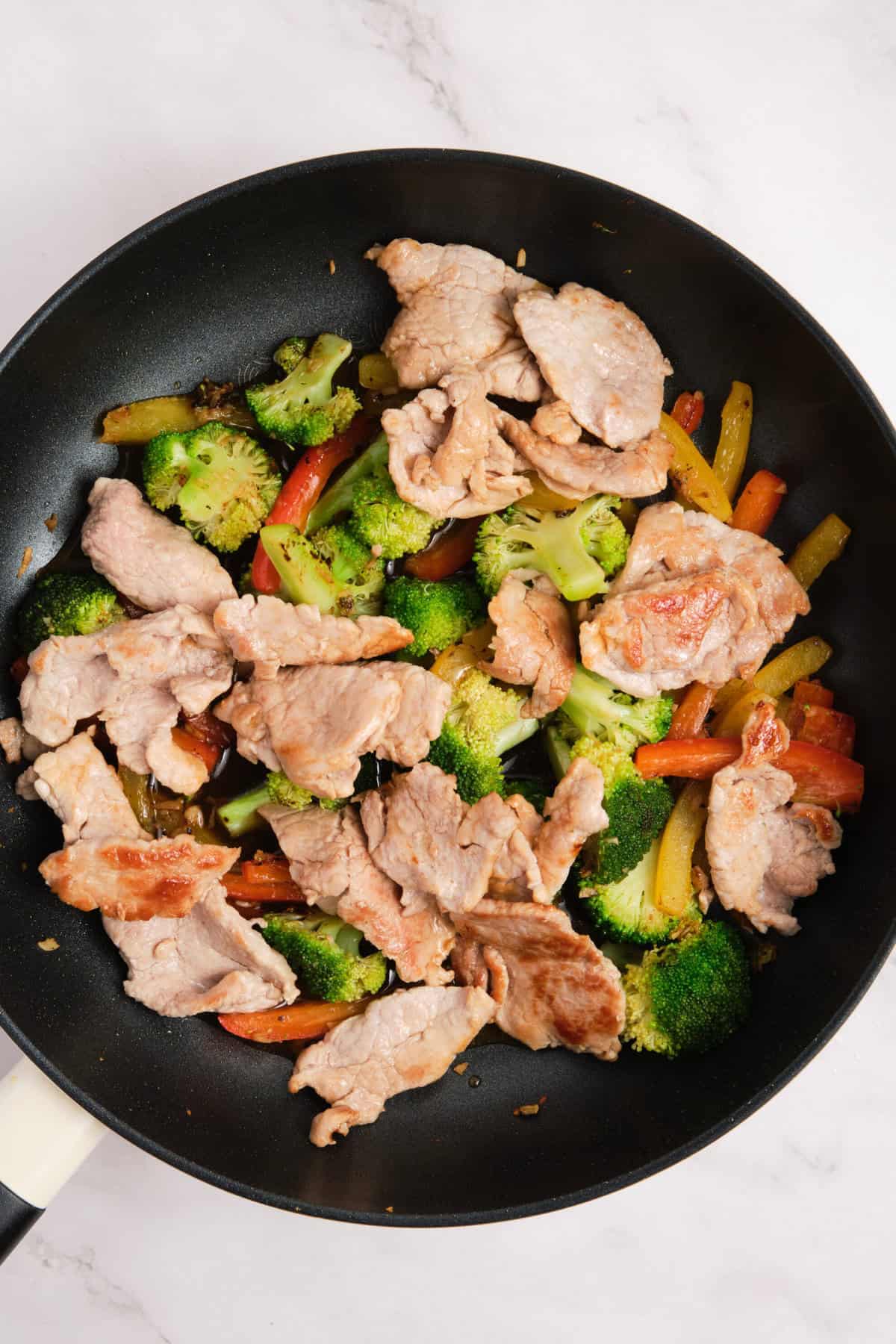
- Return the pork to the skillet. Pour the prepared sauce over the pork and vegetables. Stir well to coat. Cook for an additional 2 minutes or until the sauce has thickened and the pork is cooked through.
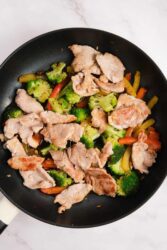
- Serve immediately.
Nutrition Info:
Nutrition information are estimates only and may vary based on the specific brands, ingredients, and portion sizes you use. This data is provided for informational purposes only.



Leave a Comment