

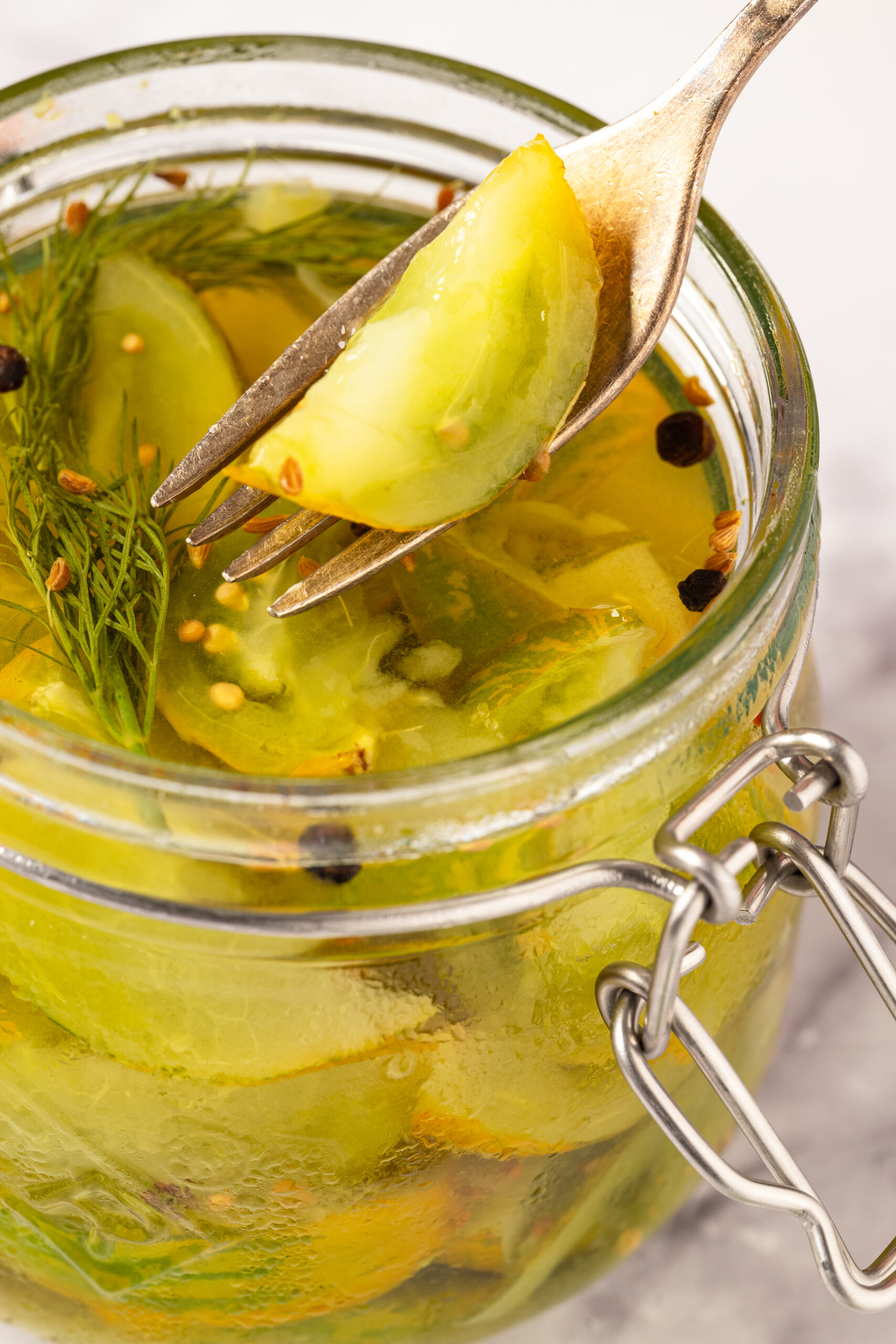
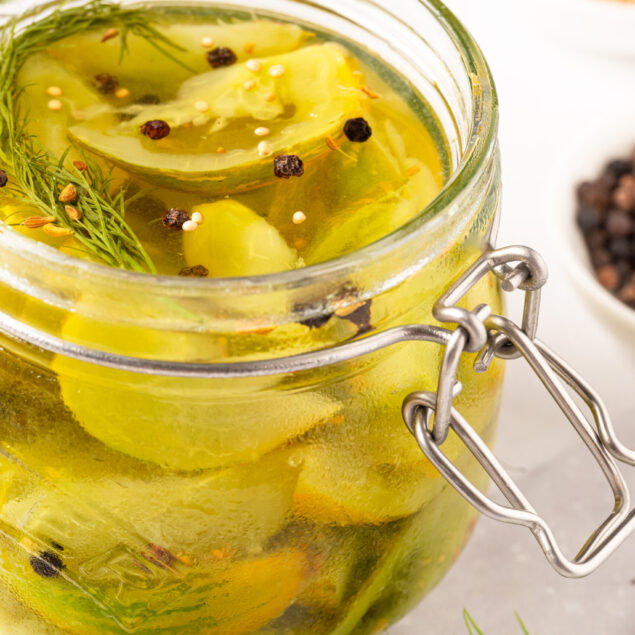
Bright and vibrant, these Pickled Green Tomatoes pack in quite the punch and are a great addition to any Southern-style sandwich you make!
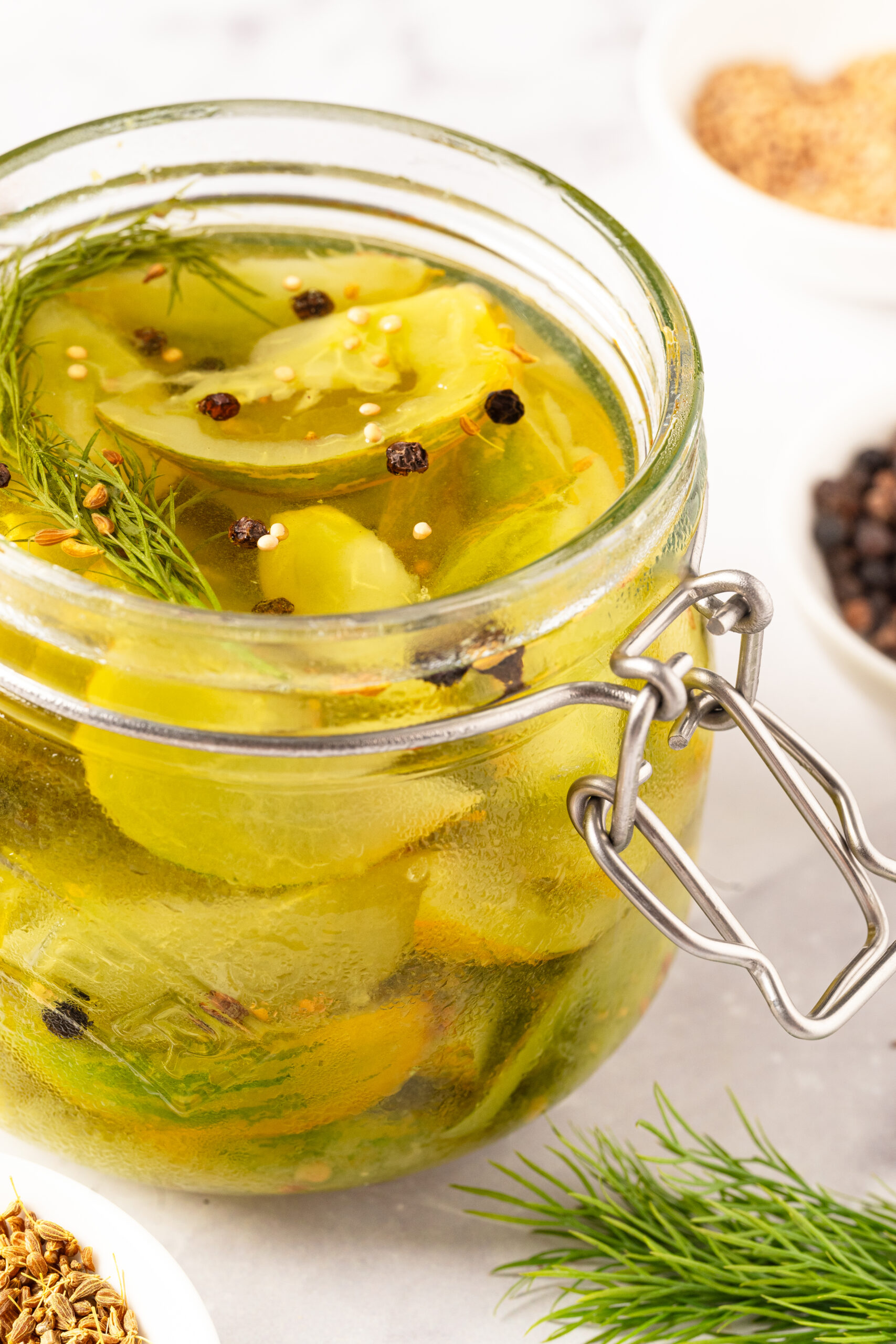
The summer season is a cause for celebration for many reasons—warmer weather, lazy days by the pool, copious amounts of ice cream, and summer holidays mean that as the summer months approach, even as a kid, you’re full of excitement.
Of course, adult life is different, but every year, my friend and I look forward to the summer for a different reason—tomato season. We’ve replaced poolside sips with afternoons in her garden, admiring the bounty that she has carefully nurtured, from sweet peppers and zucchinis to green tomatoes.
The first year, we hardly knew what to do with them! Her garden had birthed so many, and while neither of us is from the South, both of us can’t say no to a perfectly fried green tomato dipped in remoulade or “comeback” sauce. As we’ve gotten older, so have our palates, our ages shooting up along with our cholesterol levels. We’ve had to find different ways to use up those green tomatoes, so when the idea of pickling was brought about, it seemed like the perfect fit.
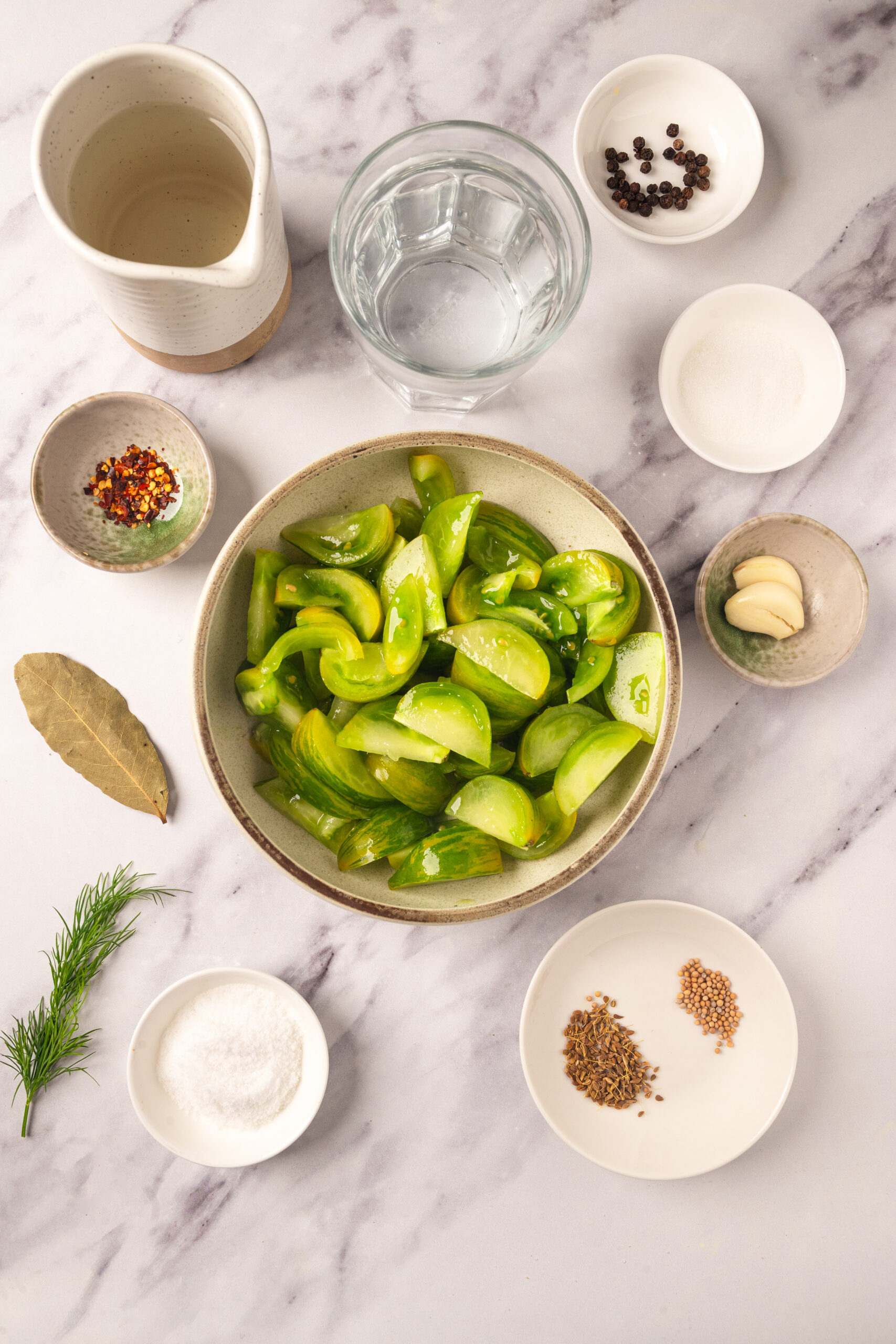
What’s the secret to the perfect, pickled green tomato?
For the best texture—like any pickled vegetable—it’s best to use unripe, firm green tomatoes; the smaller, the better. Make sure to keep the tomatoes fully submerged in the pickling liquid to better absorb the layers of flavors and complex spices you’re including in the mix, and don’t forget to include the sugar in your pickling liquid. While this recipe only calls for a teaspoon, that amount goes a long way in balancing the flavor of your pickles and preventing them from becoming too astringent or acidic. And as much as you can, try to let the pickles “rest,” or sit in the liquid, for at least two days before consuming. The longer, the better!
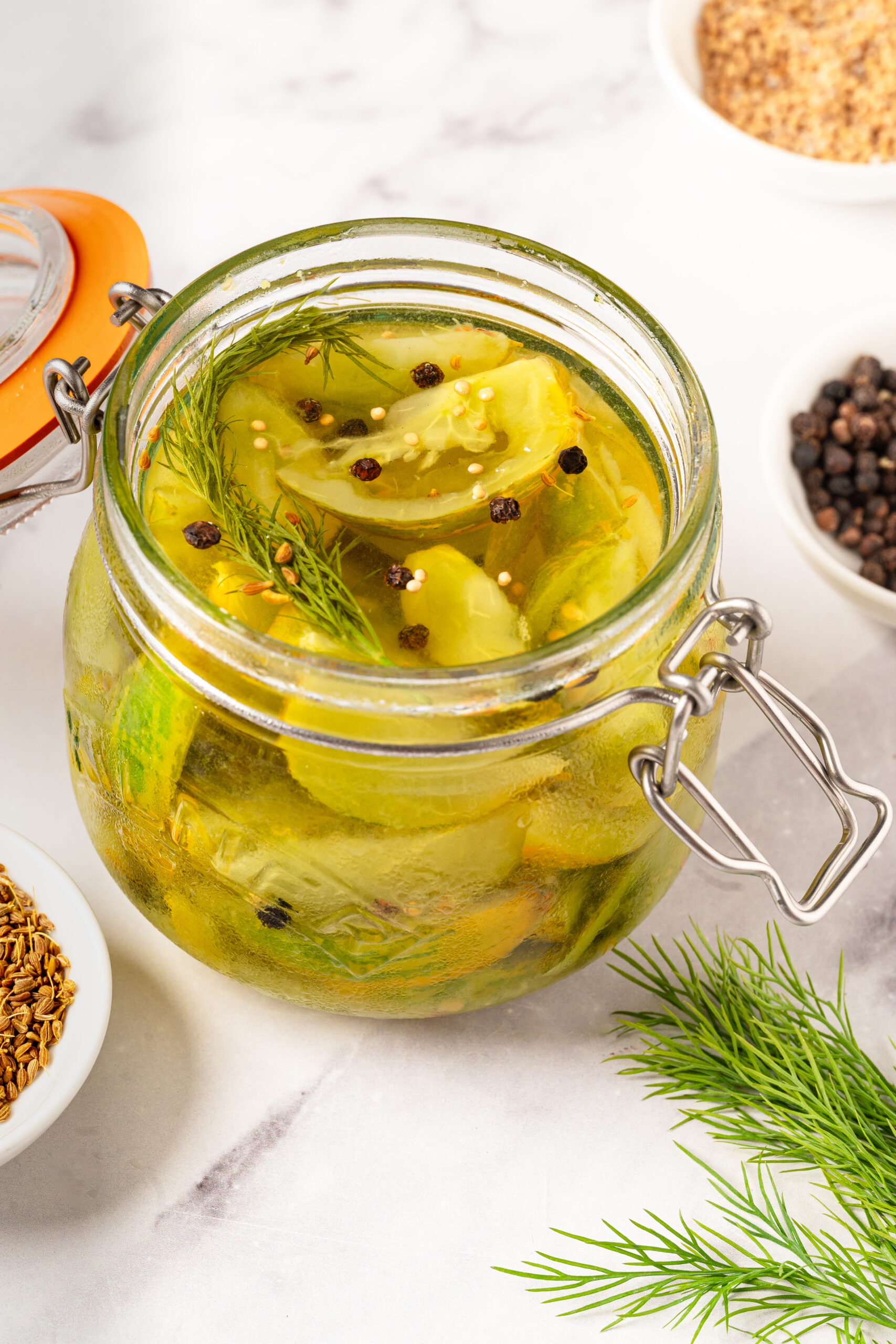
How do I store leftovers?
Just like fine wine or aged cheeses, pickles often only get better with time, as long as they are stored properly. Jarring the pickles as directed in this recipe gets you halfway there in terms of proper storage. While refrigerated pickles could last in the fridge for up to several months, it is best to consume them within 1-2 months of preparing them—any longer and you risk a deterioration of texture and color. Make sure that all your equipment is clean and sanitized when you’re preparing your jars, and ensure proper sealing and cooling, as directed in step 4, for safety and the best-quality pickles.
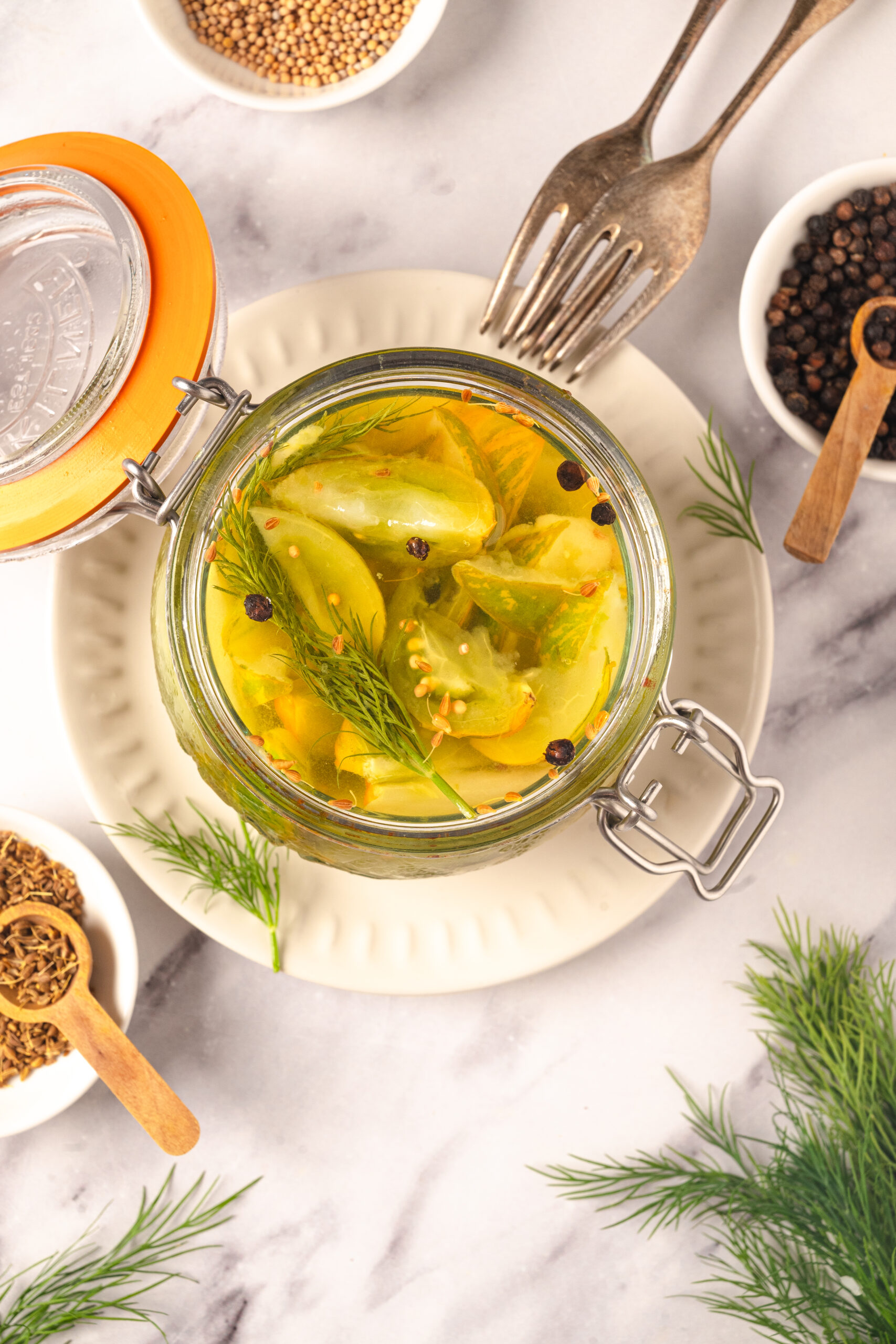
Serving suggestions
These pickled green tomatoes can pair well with a host of dishes, from a Hot Dog Chili topping (that turns into a Chicago-style dog with a spoonful of these pickles) to Stuffed Baked Potatoes. Better yet, add it as a topping to your own DIY Baked Potato Bar and let people make their own custom, pickled creation. You can add them to a simple Bacon Sandwich to cut through the rich, fatty meat or swap out the red, ripe tomato slices with a few of these pickled nuggets in a classic BLT Sandwich, giving your sandwich a bit of a kick.
Ingredients
- 1 cup hot water
- 1 cup distilled white vinegar
- 1 teaspoon sugar
- 2 1/2 teaspoons kosher salt
- 1 pinch red pepper flakes optional
- 2 garlic cloves peeled and lightly crushed
- 1 bay leaf
- 1 pound green tomatoes, cut into halves or chunks
- 1/4 teaspoon black peppercorns
- 1/4 teaspoon cumin seeds
- 1/2 teaspoon mustard seeds
- 1 sprig fresh dill
Instructions
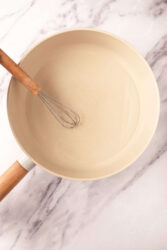
- In a small saucepan, combine hot water, vinegar, sugar, and kosher salt. Add red pepper flakes if using. Whisk until the salt and sugar dissolve and bring the mixture to a boil for 2-3 minutes.
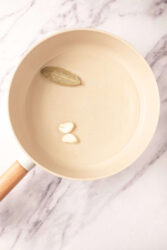
- Remove the saucepan from heat. Add garlic cloves and 1 bay leaf to the brine to infuse flavor.
- Place the cut green tomatoes in a clean jar along with black peppercorns, cumin seeds, mustard seeds, and 1 sprig fresh dill. Carefully pour the warm brine over the tomatoes until fully submerged.
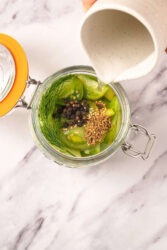
- Tap the jar gently to release any air bubbles, seal it, let it cool to room temperature, and then refrigerate for at least 2 days for best flavor.
Nutrition Info:
Nutrition information are estimates only and may vary based on the specific brands, ingredients, and portion sizes you use. This data is provided for informational purposes only.


Leave a Comment