

Discover how to craft the tastiest homemade pickles in a simple, easy way.
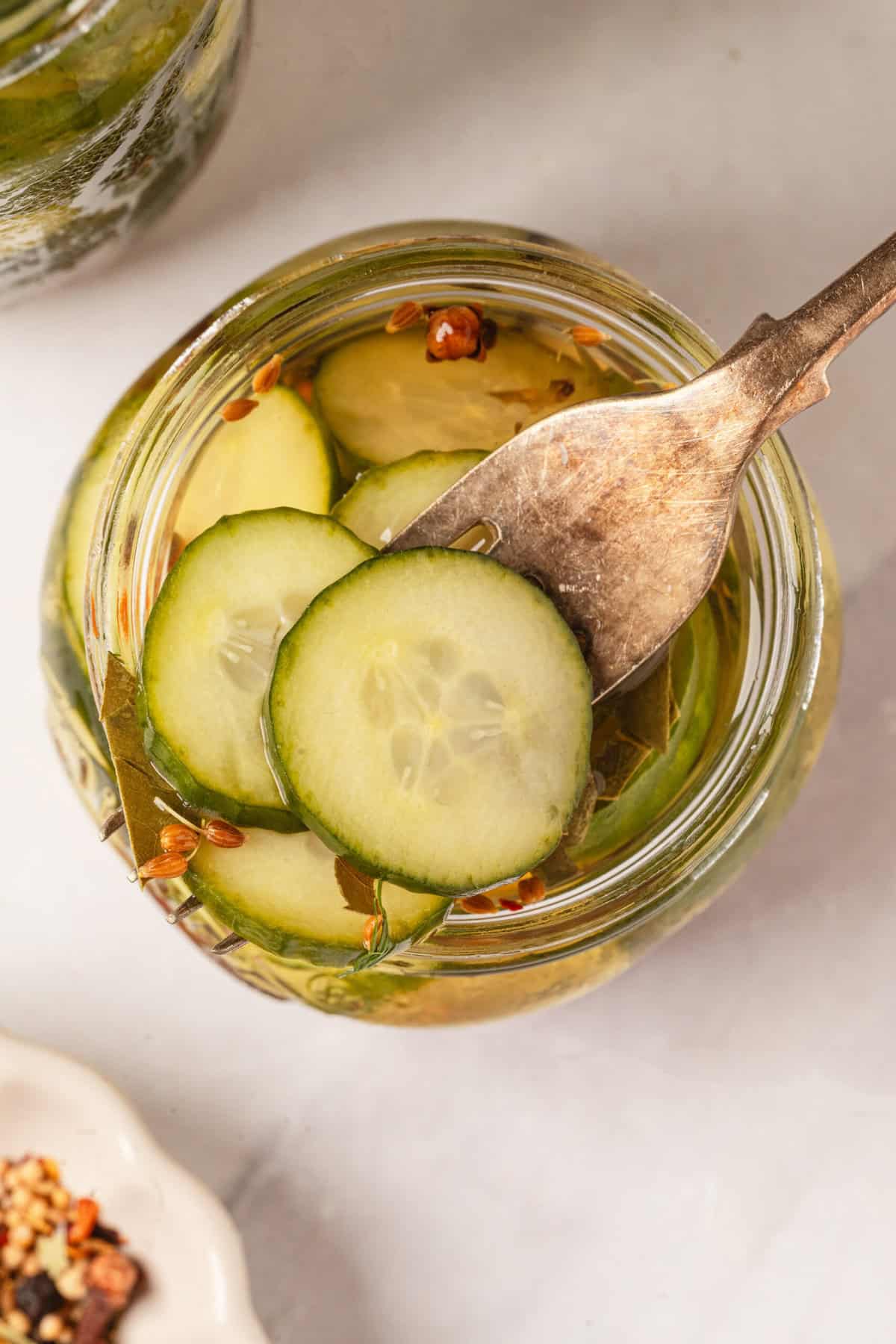
In high school, one of my friends invited our whole group over to help her and her mom can pickles. At first, I was intimidated by the process because it seemed like there were a lot of steps. But once everything was prepped, I realized the process wasn’t the problem—it was my lack of knowledge.
As it turns out, canning pickles can be easy and straightforward. It just takes time and attention to execute well. But my recipe not only simplifies the process—it also leads to pickles that overflow with spicy, tangy, and salty flavors. Seeking a tasty, dynamic, and homemade snack that doubles as a condiment for sandwiches or salads? This is my go-to.
Canning pickles transforms plain cucumbers into zesty, crunchy masterpieces that can make a meal complete. Adults and kids alike can savor each spicy bite by itself or with burgers for lunch or dinner. Really, there are plenty of options to choose from, so don’t for a second think that these pickles aren’t versatile enough. You can pick all kinds of dishes to serve them in!
Why are homemade pickles better than store-bought?
My childhood friends all swore by home-canned pickles because they tasted fresher and more flavorful than the store-bought stuff. But I have another reason, too—many store-bought pickles are made with added food coloring to tint them a brighter green hue. This is all for marketing purposes, of course. The more colorful a product is, the more likely it is to catch a consumer’s attention. But for homemade pickles, the goal isn’t to add more, but less. A little seasoning goes a long way, and the chlorophyll, which naturally resides in cucumbers, reacts beautifully with the acidic brine, producing an olive-emerald tone that cheap additives can’t replicate. So, enjoy the wholesomeness of your finished pickles and remember to share them with friends!
How do I store leftovers?
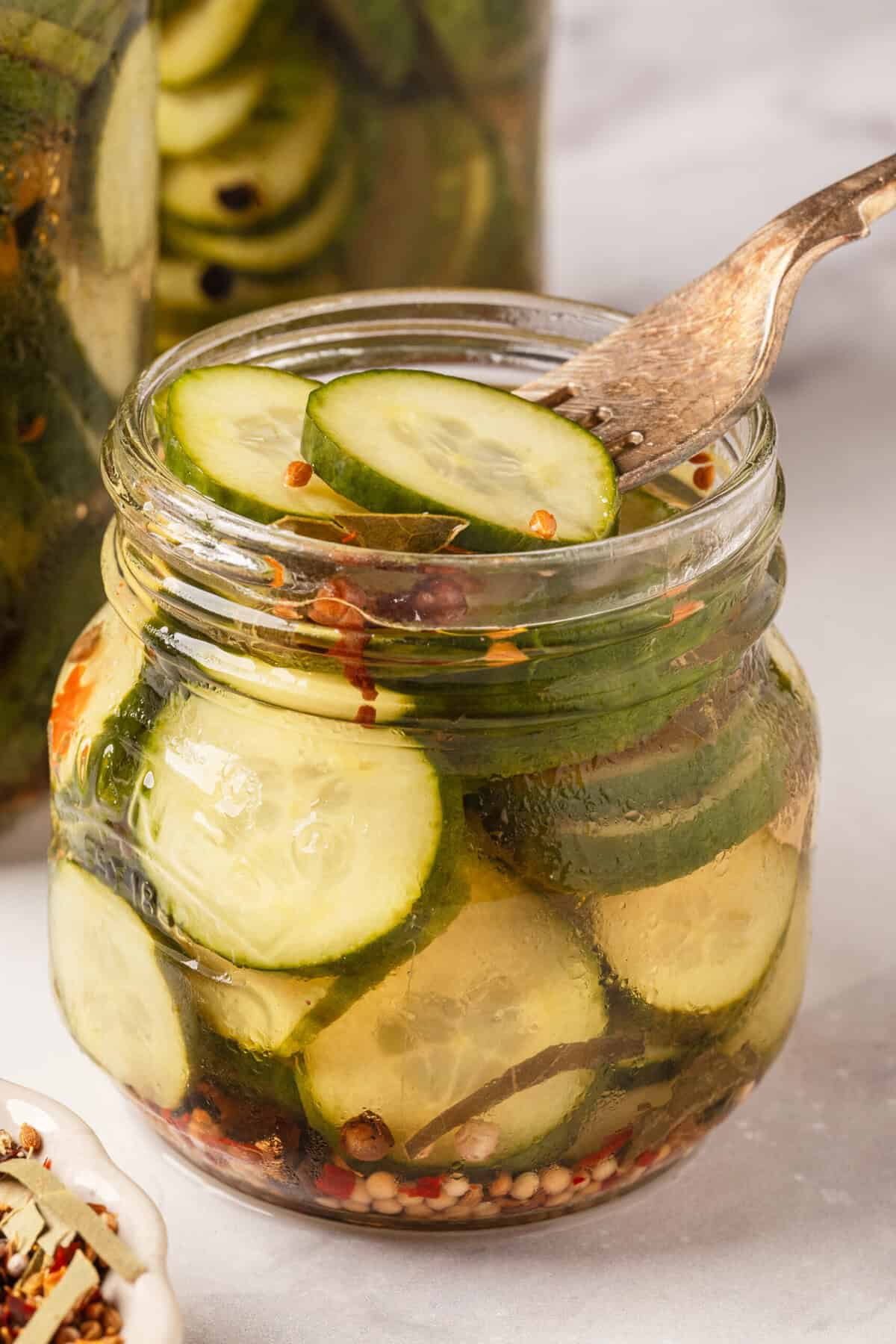
Although many people prefer to keep their pickles in the fridge, you don’t actually have to, especially if you plan to eat them sooner rather than later. Once the jars are fully sealed and cooled to room temperature, you only need to store them in a cool, dry place like a pantry. There, they will last for months—even up to a year! In the fridge and opened, they’ll last for up to 4 weeks.
Serving suggestions
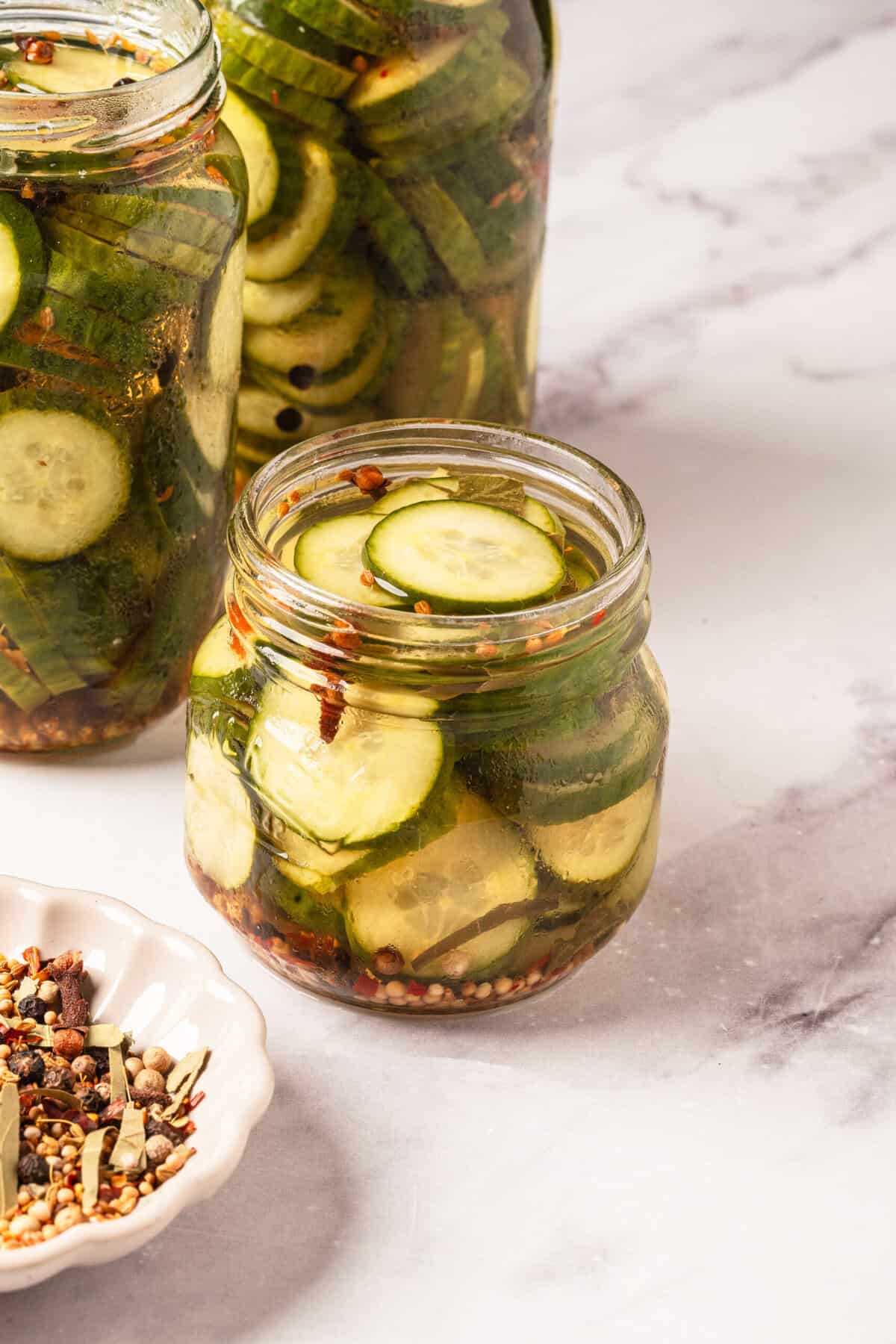
If you’re seeking more than a simple snack, add your pickles to Turkey Burgers In The Oven, Cubano Sandwiches, Instant-Pot BBQ Chicken, or Black Bean Burgers if you’re vegetarian. A decent rule of thumb for pickles is—the more variety, the better. Tart, crunchy pickles can complement all kinds of flavors. With this in mind, I prefer pickles on Healthy Egg Salad or spicy Jalapeño Coleslaw.
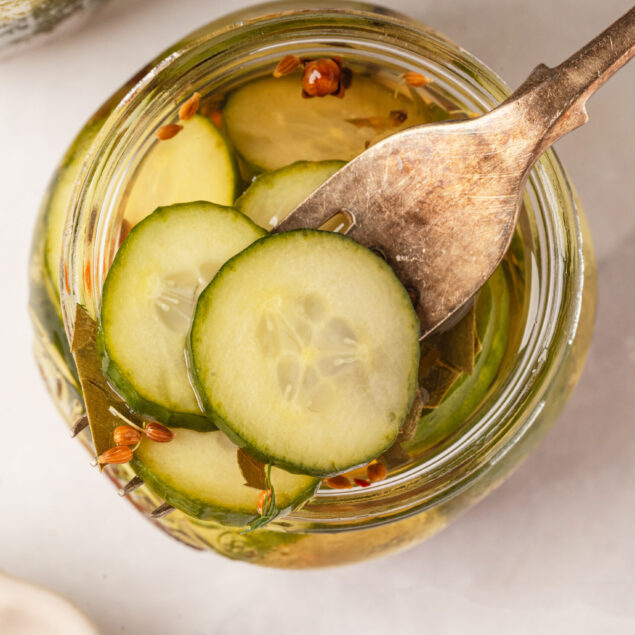
Ingredients
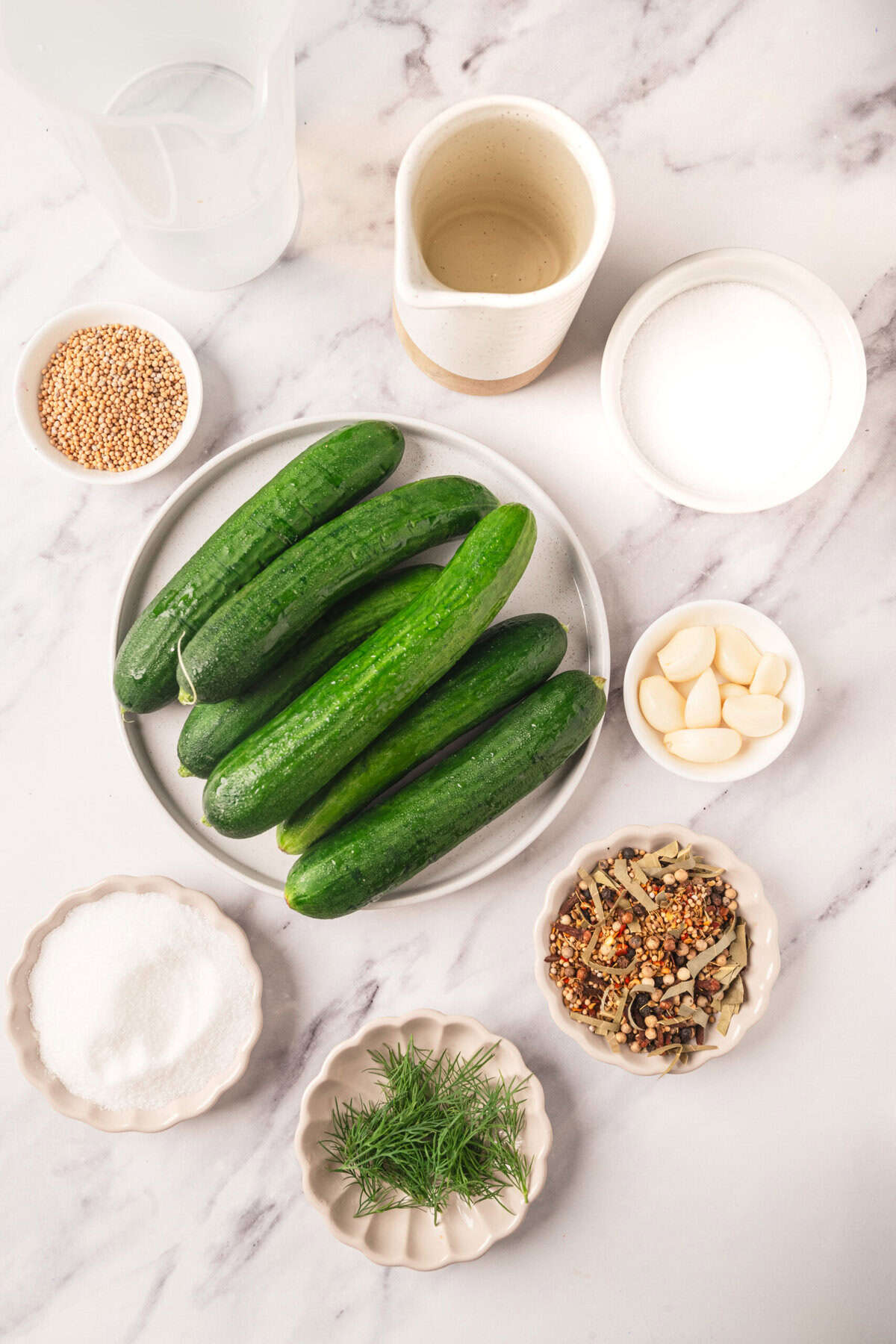
- 8 cups filtered water
- 6 cups white distilled vinegar 5% acidity
- 5 tablespoons sugar
- 1/2 cup pickling salt
- 4 teaspoons pickling spices
- 8 cloves garlic
- 2 1/2 tablespoons mustard seed
- 8 teaspoons dill seed or 8 small sprigs fresh dill
- 8 pounds pickling cucumbers washed and trimmed
Instructions
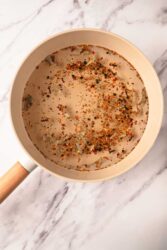
- In a large pot, combine filtered water, white distilled vinegar, sugar, pickling salt, and pickling spices. Bring this mixture to a boil.
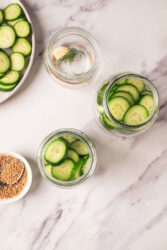
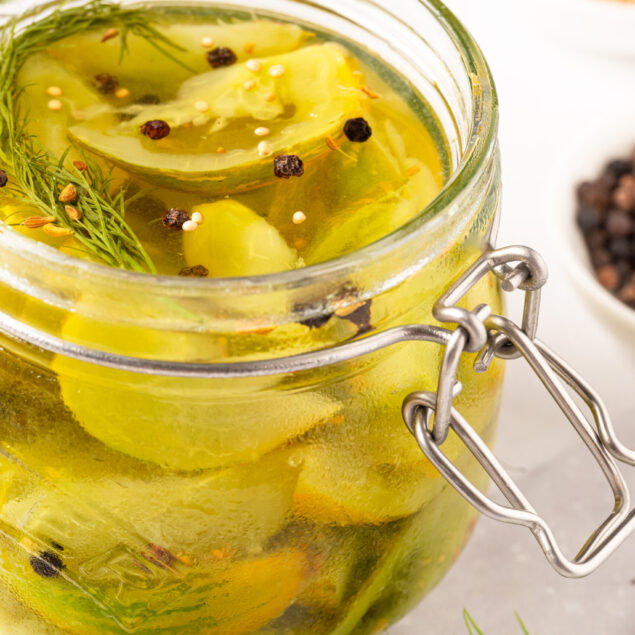
- Wash and sterilize 8 pint jars with lids and rings. In each jar, place 1 clove garlic, about 1 teaspoon mustard seed, and 1 teaspoon dill seed (or a small sprig of fresh dill).
- Slice the cucumbers into spears, coins, or chips and pack them tightly into the jars.
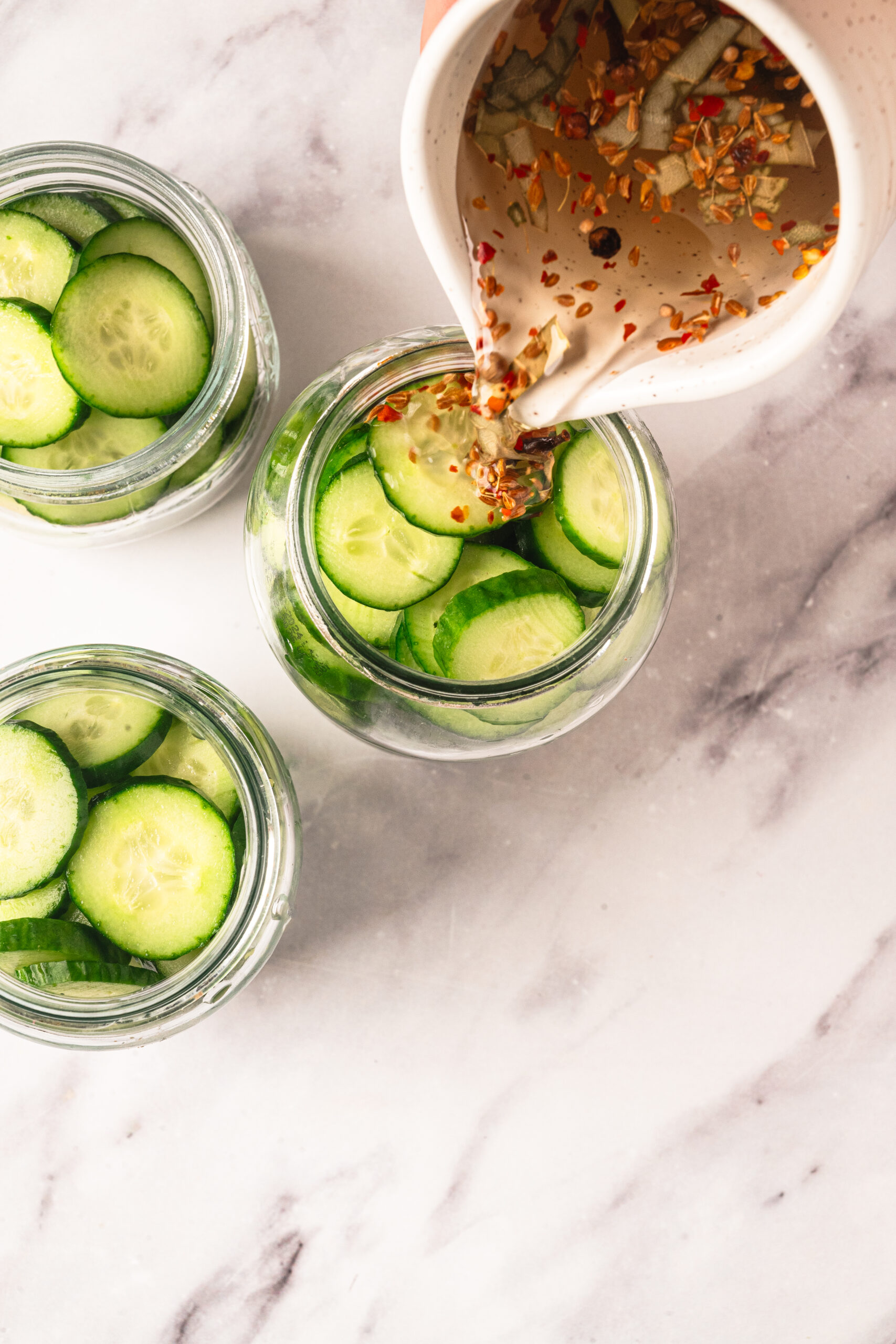
- Pour the hot brine into each jar, leaving a 1/2-inch headspace at the top.
- Use a bubble remover or a clean knife to slide around the inside edge of each jar to release trapped air. Adjust the headspace if needed.
- Place the filled jars into a water bath canner. Ensure they are covered by at least 1-2 inches of water and maintain a water temperature of about 180°F. Process the jars for 30 minutes.
- Carefully remove the jars with a jar lifter and set them on a towel-lined counter. Allow them to cool undisturbed for at least 12 hours. After cooling, check the seals and store the jars in a cool, dark place.
Nutrition Info:
Nutrition information are estimates only and may vary based on the specific brands, ingredients, and portion sizes you use. This data is provided for informational purposes only.


Leave a Comment