

Who knew roasted eggplant could transform into something so rich, velvety, and delicious?
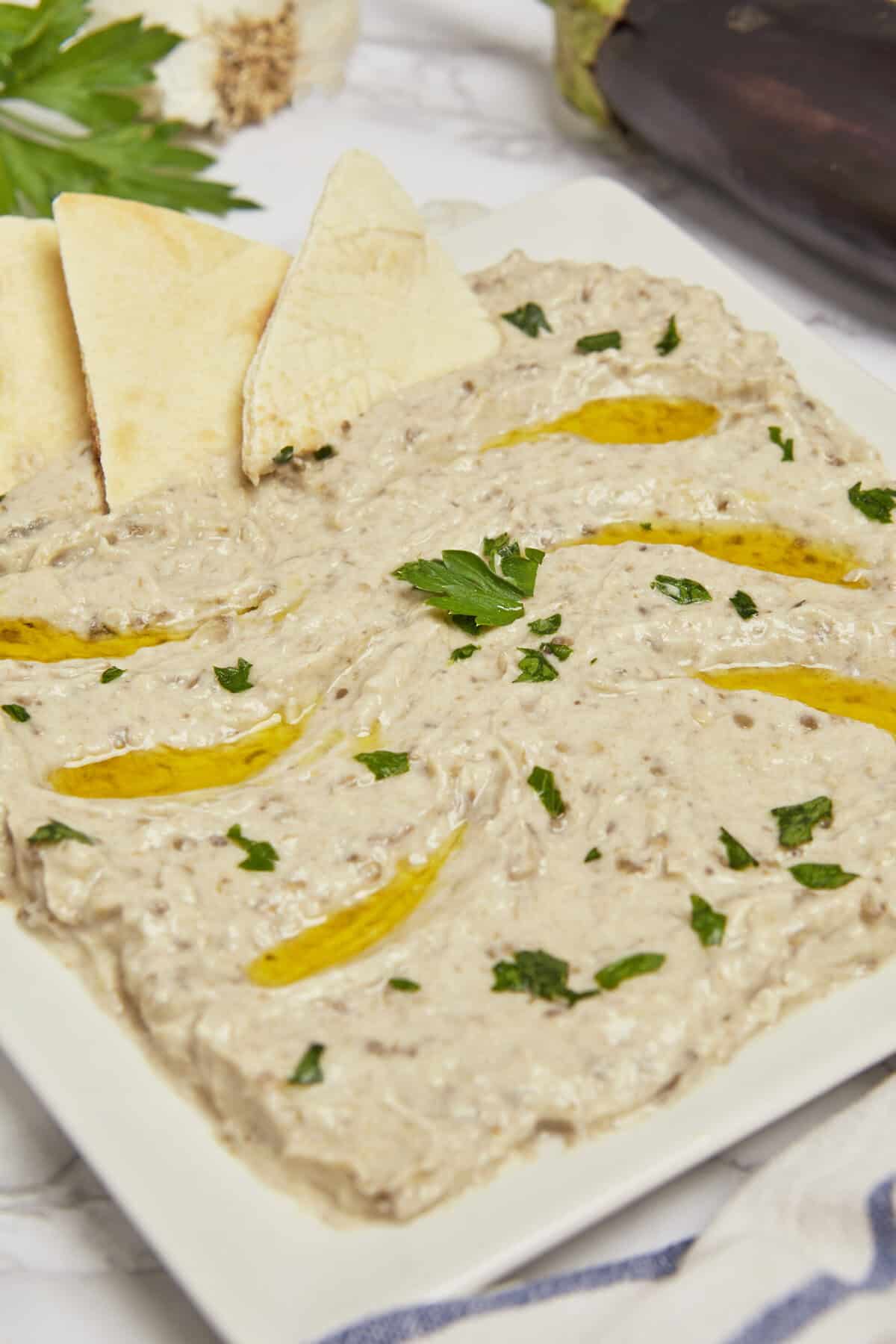
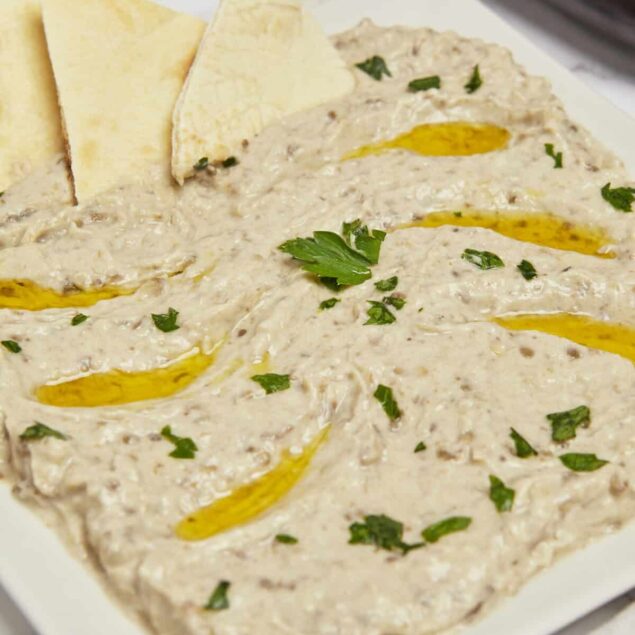
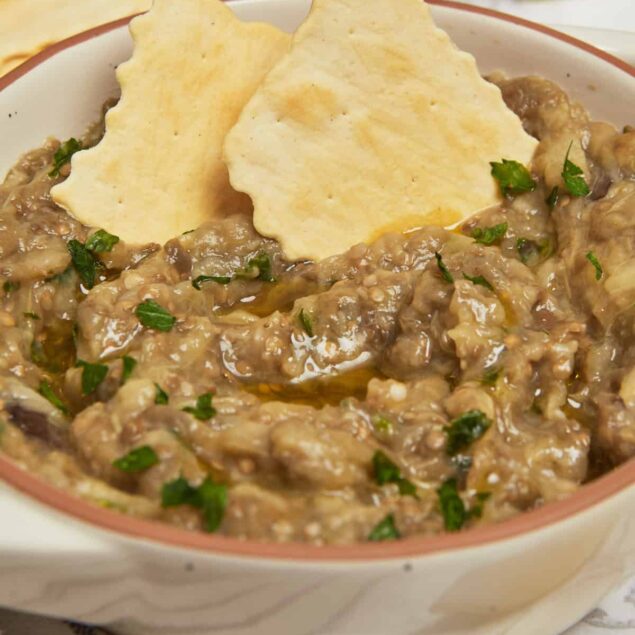
Similar to baba ghanoush, this Middle Eastern dip is beyond delish. It’s made by charring eggplant and then blending it to perfection with tahini and seasonings, creating a nice balance of smoky and nutty flavors. With the tangy burst of lemon and the creamy Greek yogurt, it has a unique flavor profile that will be appreciated by many. Think of it as the perfect crowd-pleaser to whip up for friendly gatherings or as a midweek treat for your family.
Traditionally, mutabal is served on a mezze platter with pita and other dips and dippable snacks, but the possibilities are endless. For example, I like to spread it over falafel or on a Mediterranean veggie panini. You can also dollop it onto salads or rice bowls. Whether you go for finger food or forkables, mutabal is a mouthwatering delight that will elevate any meal or snack.
Is Mutabal Healthy?
Not only is mutabal pretty healthy, it’s also vegetarian and gluten-free. To make it totally vegan, you can replace Greek yogurt with plant-based yogurt or coconut cream. Eggplant is a great source of fiber, potassium, and other antioxidants, while tahini offers healthy fats, protein, and B vitamins. The olive oil brings in additional heart-healthy fats and vitamin E, while the Greek yogurt contains additional protein, calcium, and vitamin D (when fortified). With no added preservatives, sugars, or coloring, this recipe is a win for everyone!
Are Mutabal And Baba Ghanoush The Same?
Roughly translated from the Arabic word “tabala,” mutabal means “spiced” or “seasoned.” Baba ghanoush means “spoiled father” or “pampered old man.” While both sauces are similar in their base of eggplant, mutabal calls for tahini. There is also a difference in texture: Mutabal is more often made with yogurt, while baba ganoush is not. This makes mutabal creamier, whereas baba ghanoush is usually chunkier.
How Do I Store Leftovers?
In a well-sealed jar, mutabal will last in the fridge for up to 4 days. For longer storage, you can freeze it for up to 3 months, but keep in mind that once you thaw it in the fridge, you’ll need to thoroughly mix it again. I recommend enjoying my mutabal as soon as possible for the best flavor and texture.
Serving Suggestions
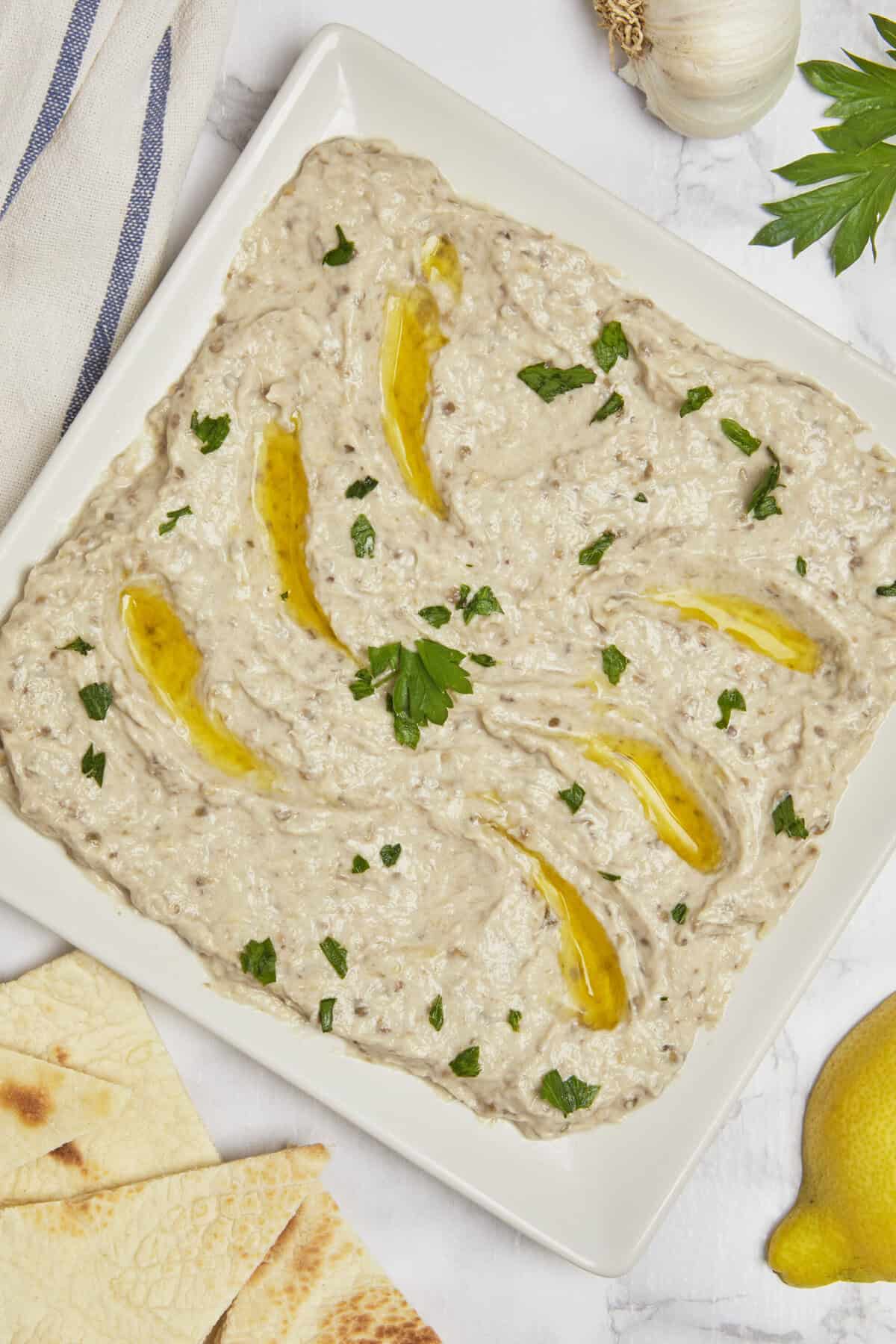
You can go the classic route and serve this dip alongside some Homemade Hummus and Keto Tzatziki with a side of toasted Pita Bread. Or, you can enjoy it as a topping for the satisfying rainbow Falafel Bowl.
Ingredients
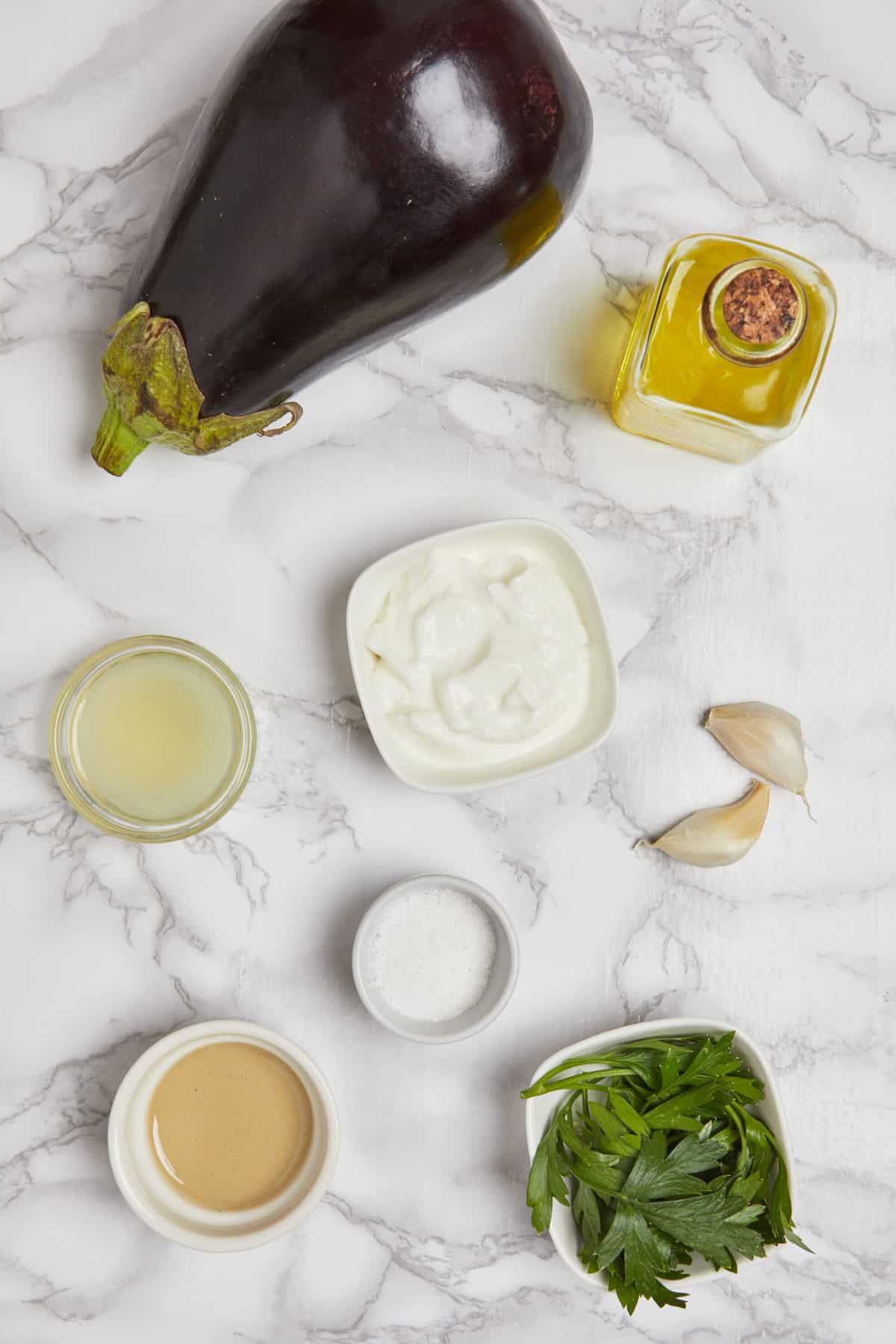
- 1 large eggplant
- 2 tablespoons tahini paste
- 1 tablespoon lemon juice
- 2 cloves garlic minced
- 2 tablespoons Greek yogurt
- 1/2 teaspoon salt
- 2 tablespoons olive oil
- fresh parsley optional for garnish
Instructions
- Preheat your oven to 400 degrees Fahrenheit.
- Pierce the eggplant with a fork multiple times and place on a baking sheet.

- Roast in the oven for about 40 minutes, or until the skin is charred and the flesh is soft.
- Remove from oven and let cool. Peel off the charred skin and discard.
- In a mixing bowl, combine the roasted eggplant flesh with tahini, lemon juice, minced garlic, Greek yogurt, and salt. Mash together until smooth.

- Transfer the mixture to a serving dish, drizzle with olive oil, and optionally garnish with fresh parsley.
- Serve with pita bread or fresh vegetable sticks.
Nutrition Info:
Nutrition information are estimates only and may vary based on the specific brands, ingredients, and portion sizes you use. This data is provided for informational purposes only.


Leave a Comment