

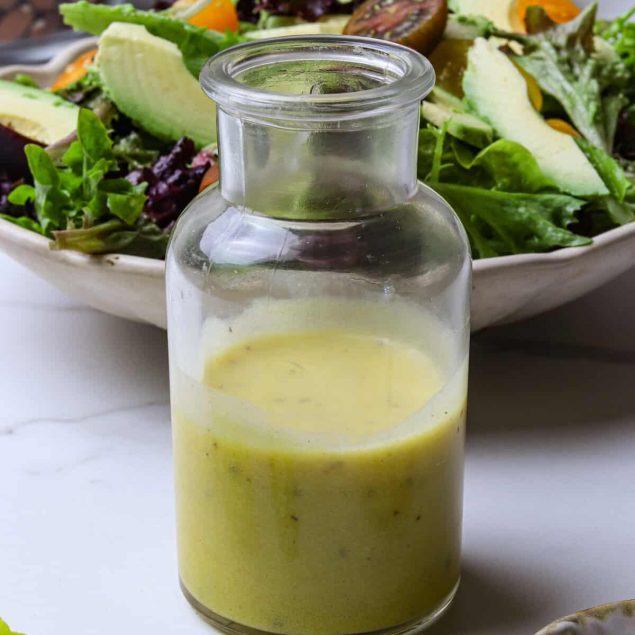
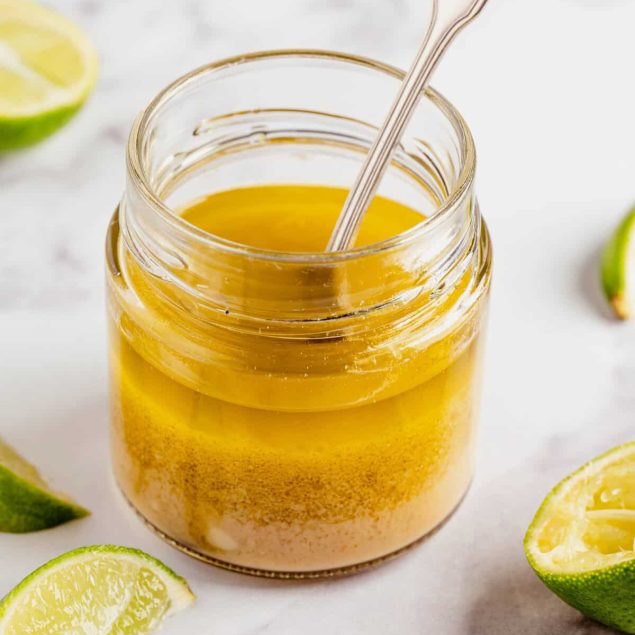
Using only five ingredients you probably already have in your kitchen, whip up this easy Mustard Vinaigrette to brighten any salad in no time!
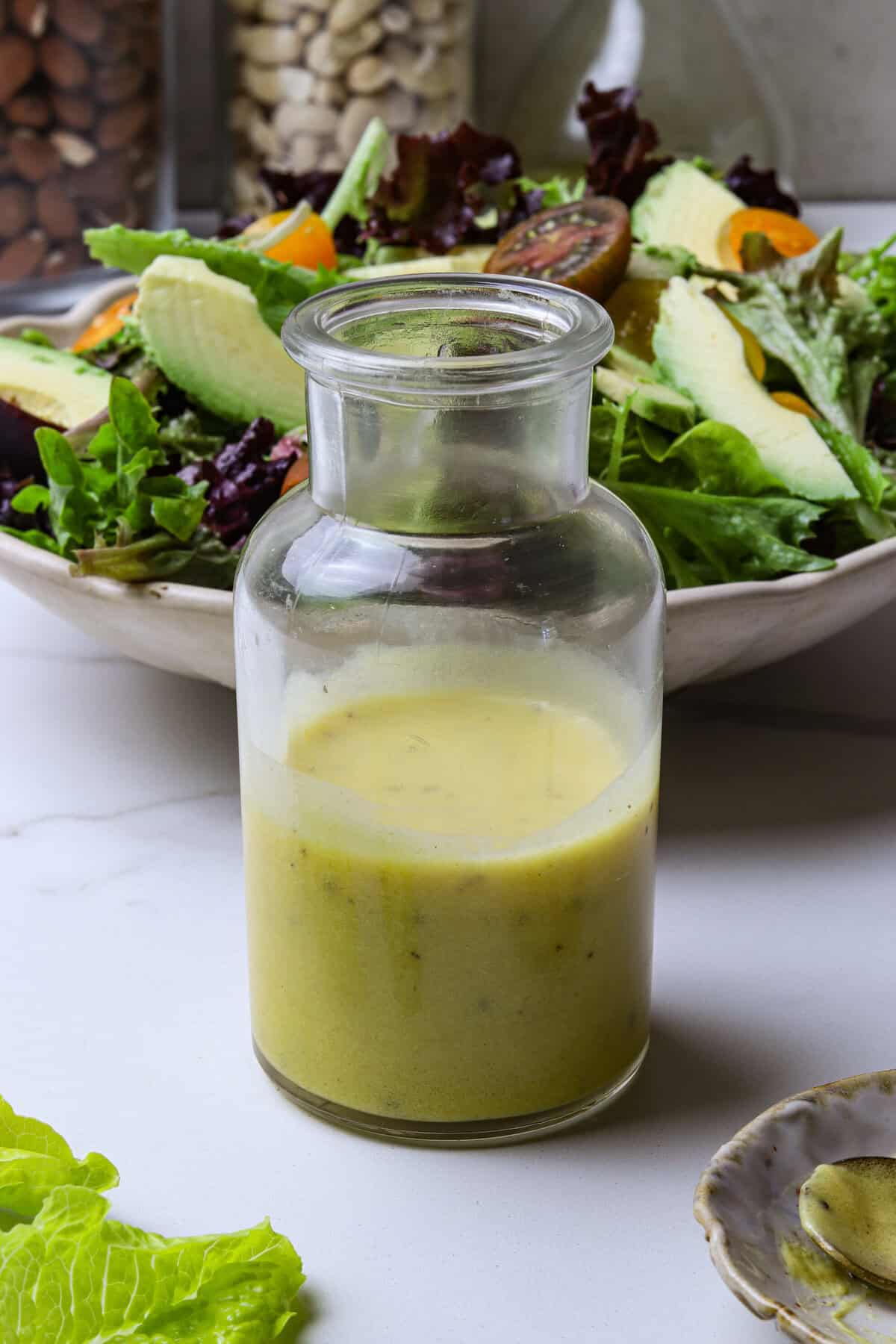
Homemade salad dressings can be either really good or really bad. If you’ve never made one before, and you think it’s just a haphazard combination of oil and vinegar, chances are your first homemade salad dressing will be the bad kind: too oily, with only vinegar as a flavoring. If that’s you, I’m glad you’re here, because I’m going to teach you how to make the really good kind of salad dressing. Thankfully, it’s not hard at all!
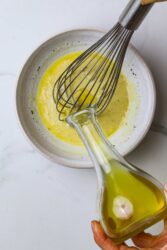
The key to a good homemade vinaigrette is creating an emulsion. An emulsion is a suspension of two otherwise unmixable liquids—in this case, oil and vinegar. To create the emulsion, you need to add the oil to the vinegar mixture very slowly while whisking rapidly. An “emulsifying agent” helps bind the two liquids—typically mustard, egg yolks, honey, or a small amount of nut butter such as tahini. The result is a creamy texture that’s thick and perfectly coats all your veggies. It’s like magic!
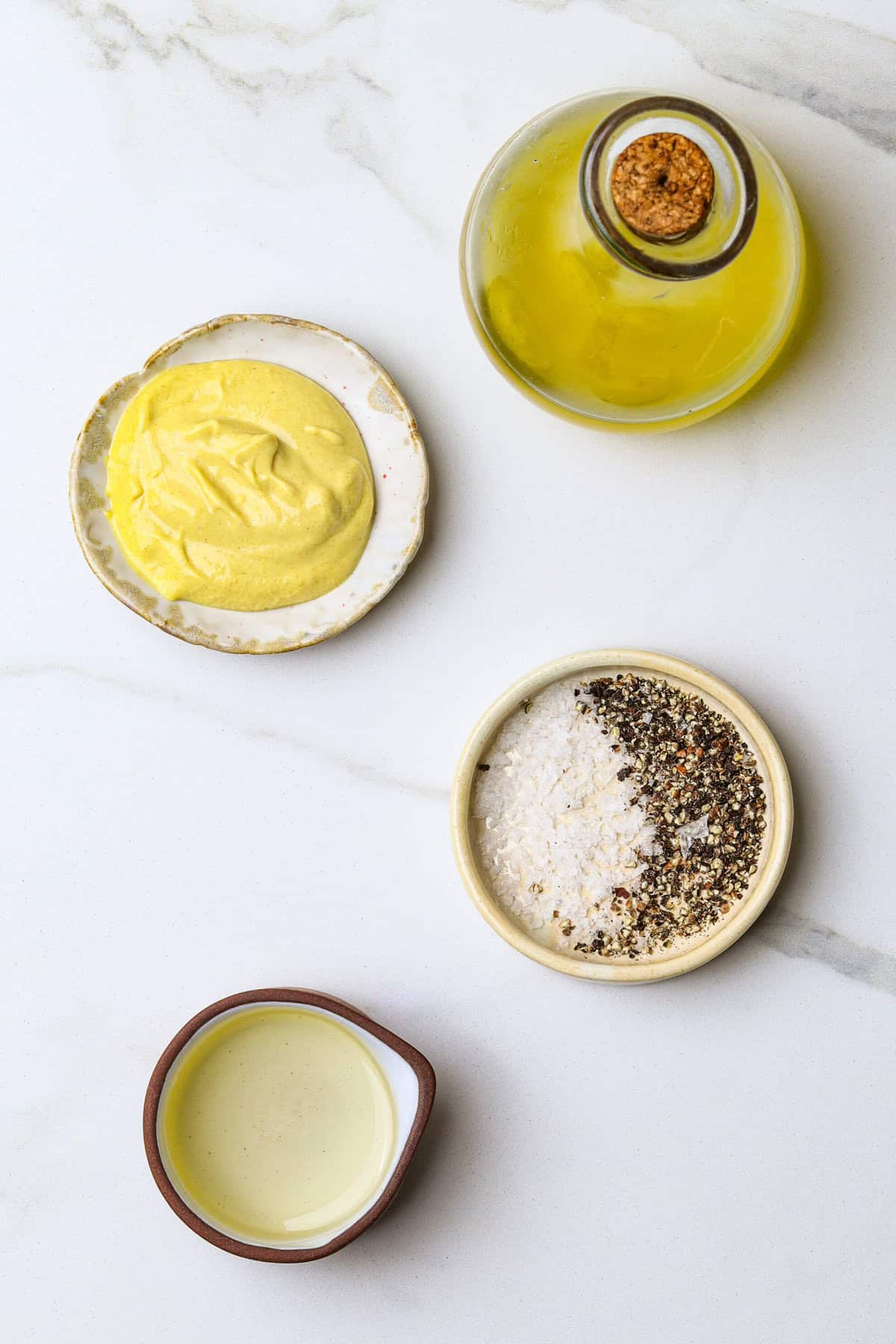
This mustard vinaigrette is an emulsion of olive oil and white wine vinegar, with the addition of tangy Dijon mustard for a little bit of spice and salt and pepper to round out the flavor. This dressing is perfect for a salad, but you can also add it to rice, use it as a sauce on chicken dishes, or dip crunchy raw veggies in it!
Is This Mustard Vinaigrette Healthy?
This mustard vinaigrette recipe is free of artificial preservatives, canola oil, and other ingredients you’ll find in a lot of store-bought dressings. It features olive oil, which is rich in healthy monounsaturated fats. Dijon mustard adds flavor with minimal calories. Overall, this recipe is vegan, gluten-free, and low in carbs, which makes it easy to enjoy in moderation for folks who follow lots of different diets and lifestyles.
Playing With Flavors And Colors
Think of this vinaigrette recipe as a primer in vinaigrettes. It’s delicious as written, but it uses only the most basic ingredients, and there’s a lot of room to experiment with flavors and colors in homemade oil-and-vinegar-based salad dressings. Most are made with four basic elements: oil, vinegar, something salty, and other seasonings. Here are a few variations I alternate at my own dinner table.
- Balsamic-Tamari Vinaigrette: Swap the white wine vinegar out for balsamic vinegar, and swap the salt for a few drops of tamari (or soy sauce). Add half a teaspoon of honey and a pinch of garlic powder. Omit the Dijon mustard. The balsamic vinegar and honey lend the dressing more sweetness.
- Lemon-Turmeric-Honey Vinaigrette: Swap the vinegar out for lemon juice, add a quarter teaspoon of turmeric and a teaspoon of honey, and keep all the other ingredients the same as below. Lemon juice adds brightness to the dressing, while the honey gives it a nice sweetness, as well as helping the dressing to emulsify.
- Basil-Pomegranate-Tahini Vinaigrette: Swap the Dijon mustard for pomegranate juice, add some fresh basil (chopped very finely!) and a teaspoon of tahini. Keep all other ingredients the same as below. Pomegranate is a mixture of sweet and tangy, which goes perfectly with the white wine vinegar. The tahini acts as the emulsifying agent in this version and lends a nutty flavor to the dressing. I love this dressing on salads with fresh berries or apples!
Can I Prep This Ahead?
Yes, this recipe is practically made for that! Pour the vinaigrette into a small, leak-proof container with a lid, like a mason jar, and place it in the fridge for up to 1 week. Let it sit at room temperature and warm up before using, as the oil may harden when cold. Before using, give the container a good shake to emulsify the dressing again. I wouldn’t recommend freezing this dressing.
Serving Suggestions
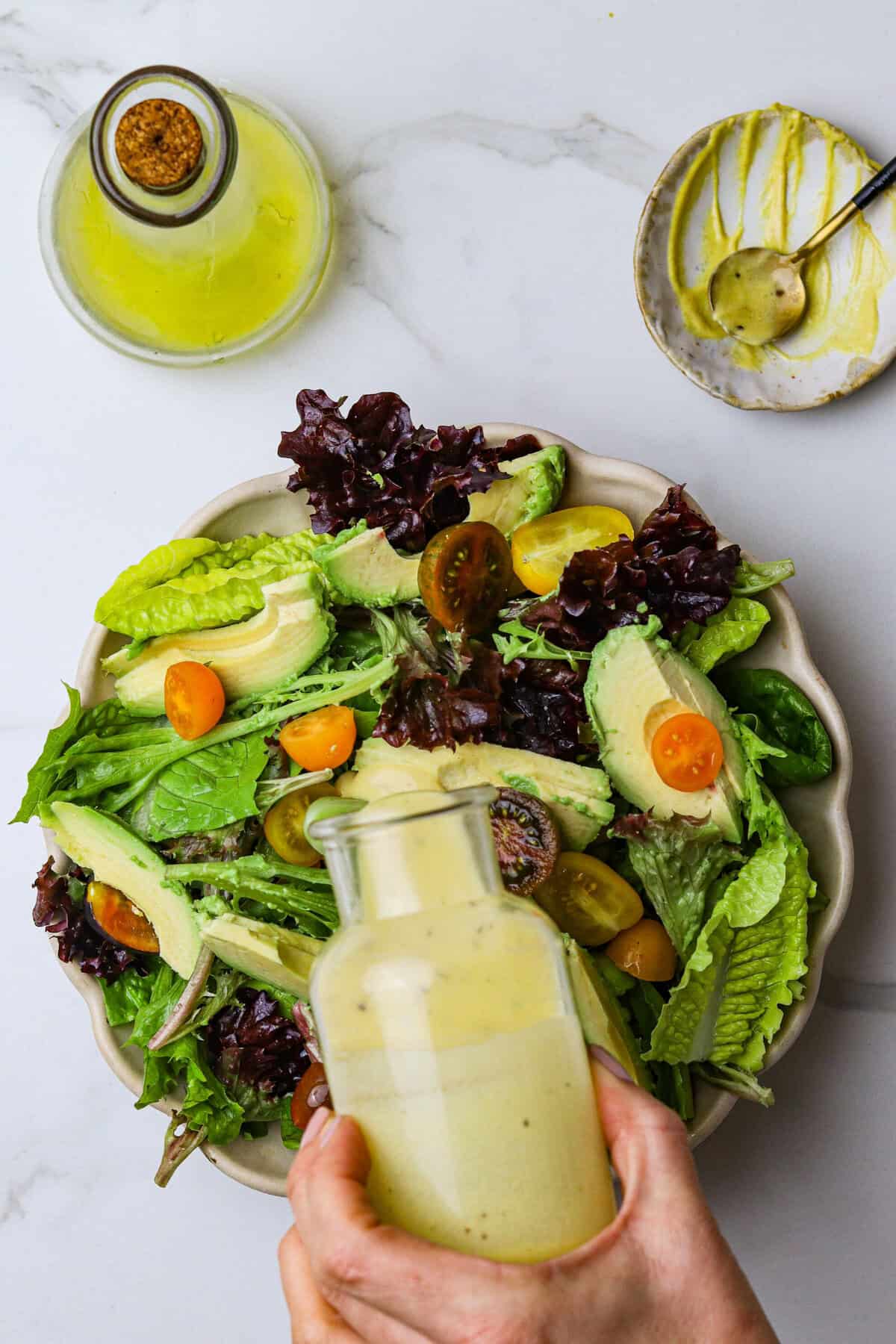
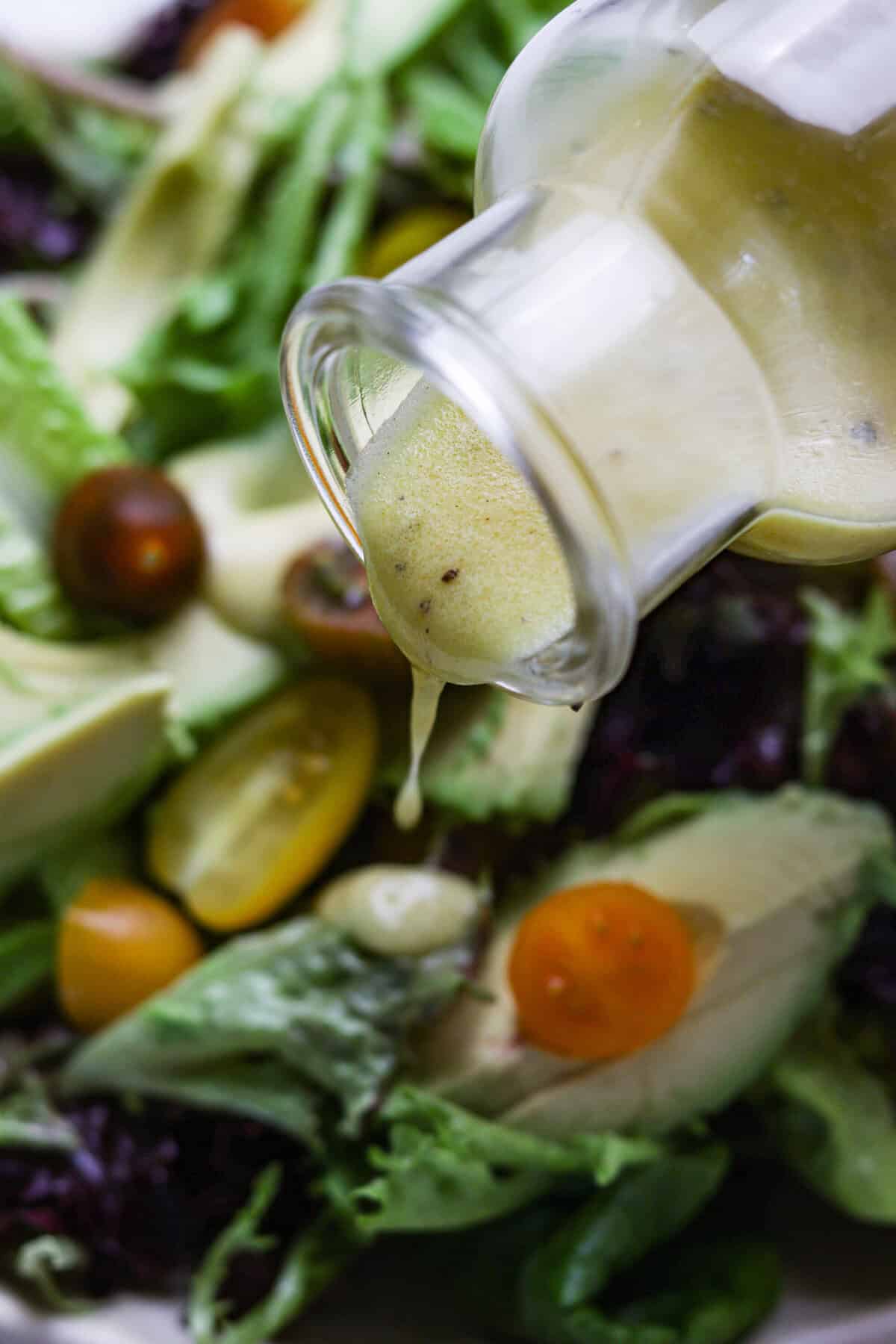
This mustard vinaigrette can be used in salads as well as on meats, fish, and vegetables. It complements protein recipes like Baked Parmesan-Crusted Chicken and Pan-Fried Boneless Pork Chops. It also works really well with vegetarian meals, such as this Roasted Whole Butternut Squash, and adds an amazing pop of flavor to this Roasted Brussels Sprouts And Carrots recipe. And, of course, try it on your favorite salad. My favorite FFF salad pairing with this dressing is this simple Green Salad. Simply replace the balsamic dressing with this vinaigrette recipe.
Ingredients
- 1 tablespoon Dijon mustard
- 1 tablespoon white wine vinegar
- ¼ teaspoon salt
- ¼ teaspoon black pepper
- 3 tablespoons olive oil
Instructions
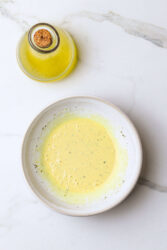
- In a small bowl, whisk together the Dijon mustard, white wine vinegar, salt, and pepper.
- Gradually add the olive oil to the mixture while continuously whisking to create an emulsion.
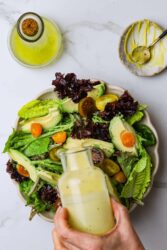
- Taste and adjust seasoning if necessary. Use immediately or store in the refrigerator in a sealed container for up to a week.
Nutrition Info:
Nutrition information are estimates only and may vary based on the specific brands, ingredients, and portion sizes you use. This data is provided for informational purposes only.



Leave a Comment