

Once you learn How To Make Mirepoix, you are well on your way to delicious meals.
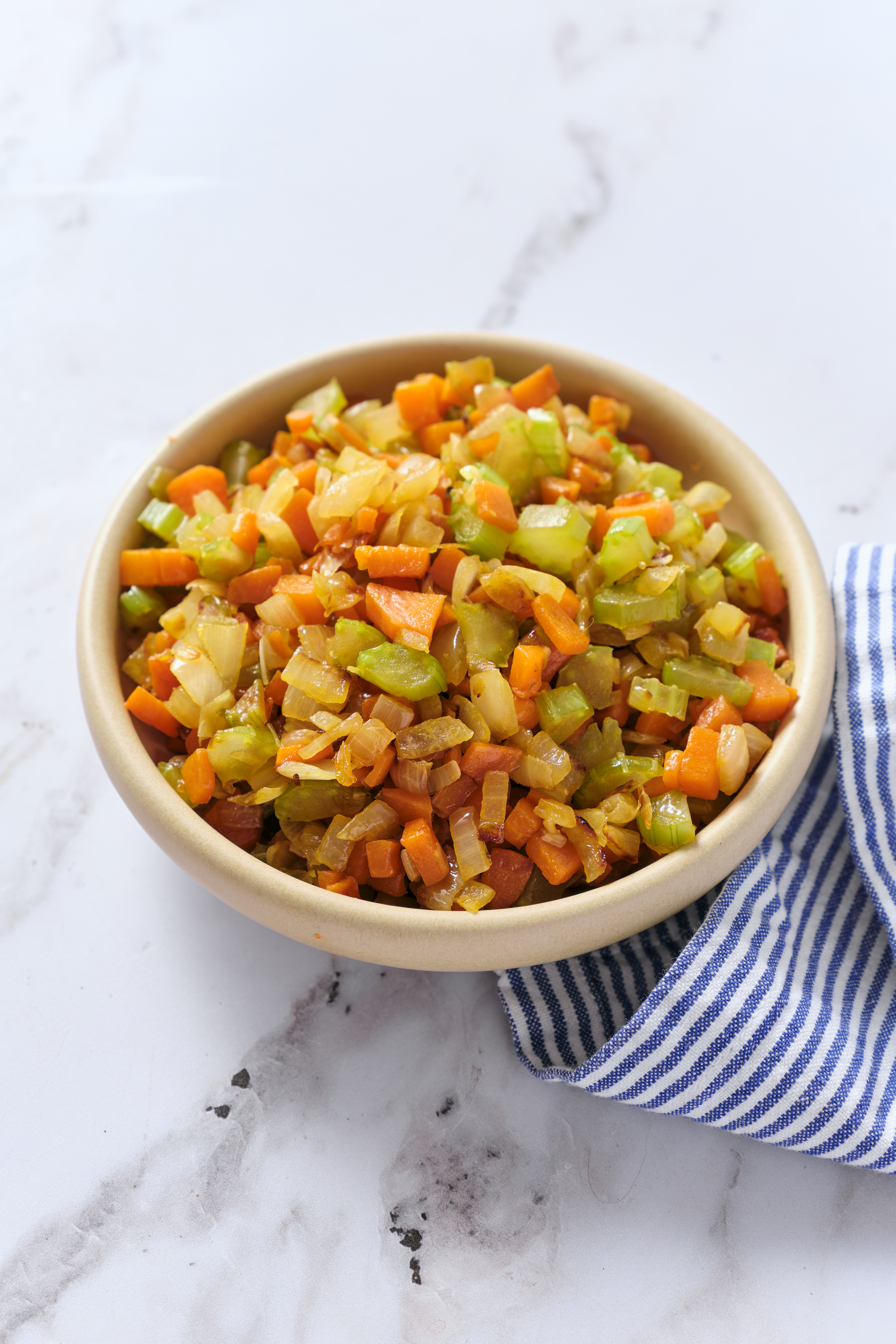
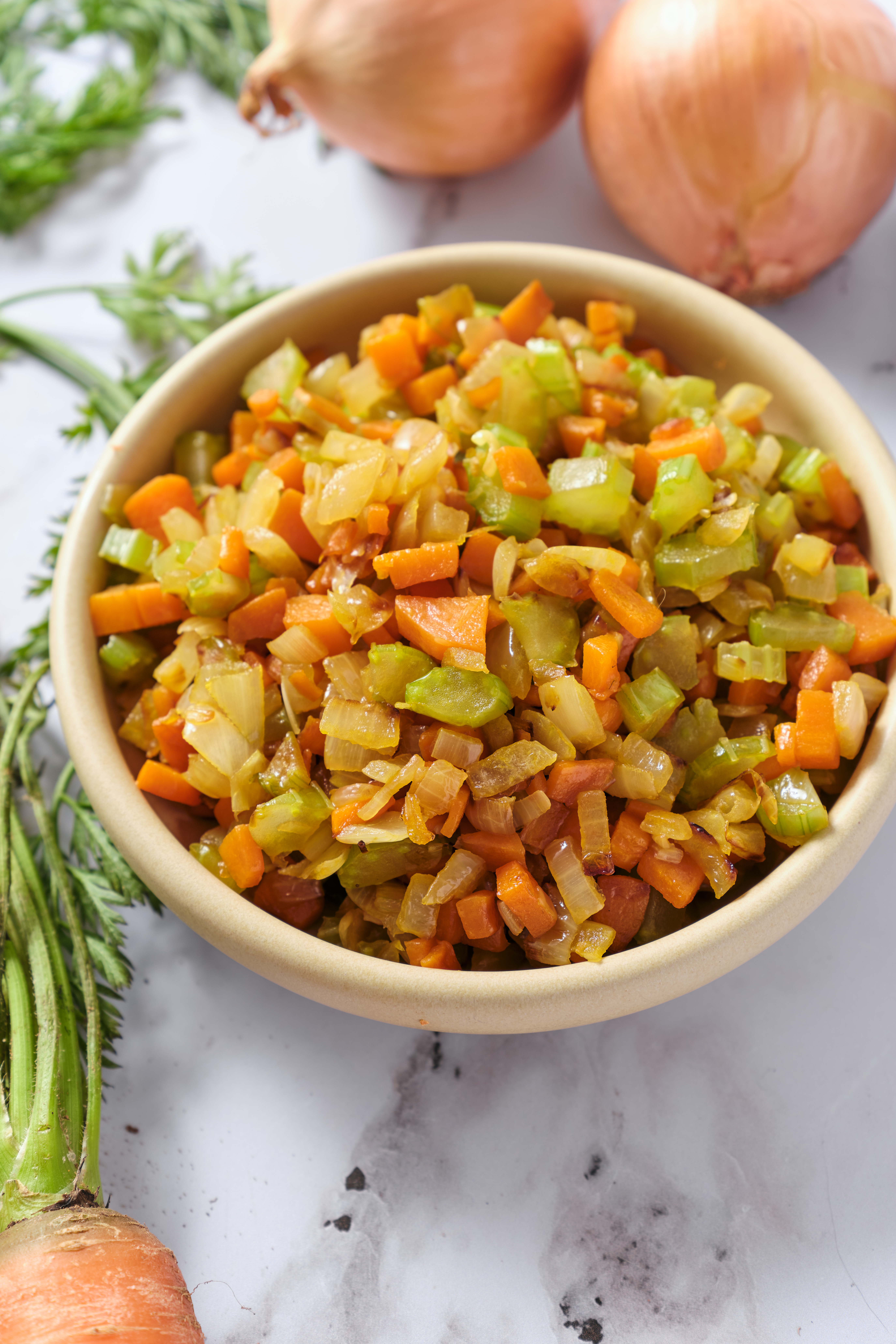
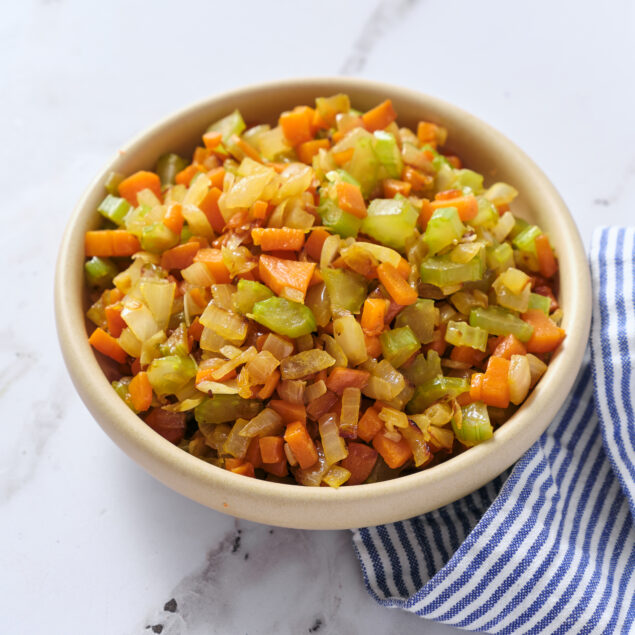
One of the most essential things cooks need to know is how to make mirepoix, the base for many soups, sauces, stuffings, stews, and other recipes. What is a mirepoix, you ask? It is the essential vegetable base consisting of onions, carrots, and celery. These vegetables are sautéed slowly in oil or butter over low heat until soft, “sweating out” their flavor. High heat will cause the vegetables to burn or caramelize, which is not wanted when making a mirepoix.
By the way, for those like me who had no idea how to pronounce the word, mirepoix is pronounced meer-PWAH. I won’t even tell you how far off I was on my original pronunciation before looking it up.
After using mirepoix in some recipes, the vegetables are strained out before serving, such as in smooth gravies or sauces. In other recipes, such as vegetable soups and stews, the mirepoix remains a staple. While there is no rule to cooking order when it comes to meat and mirepoix, many recipes call for the meat to be browned in oil first, removed from the pan, and then the mirepoix to be cooked in the remaining fat for added flavor.

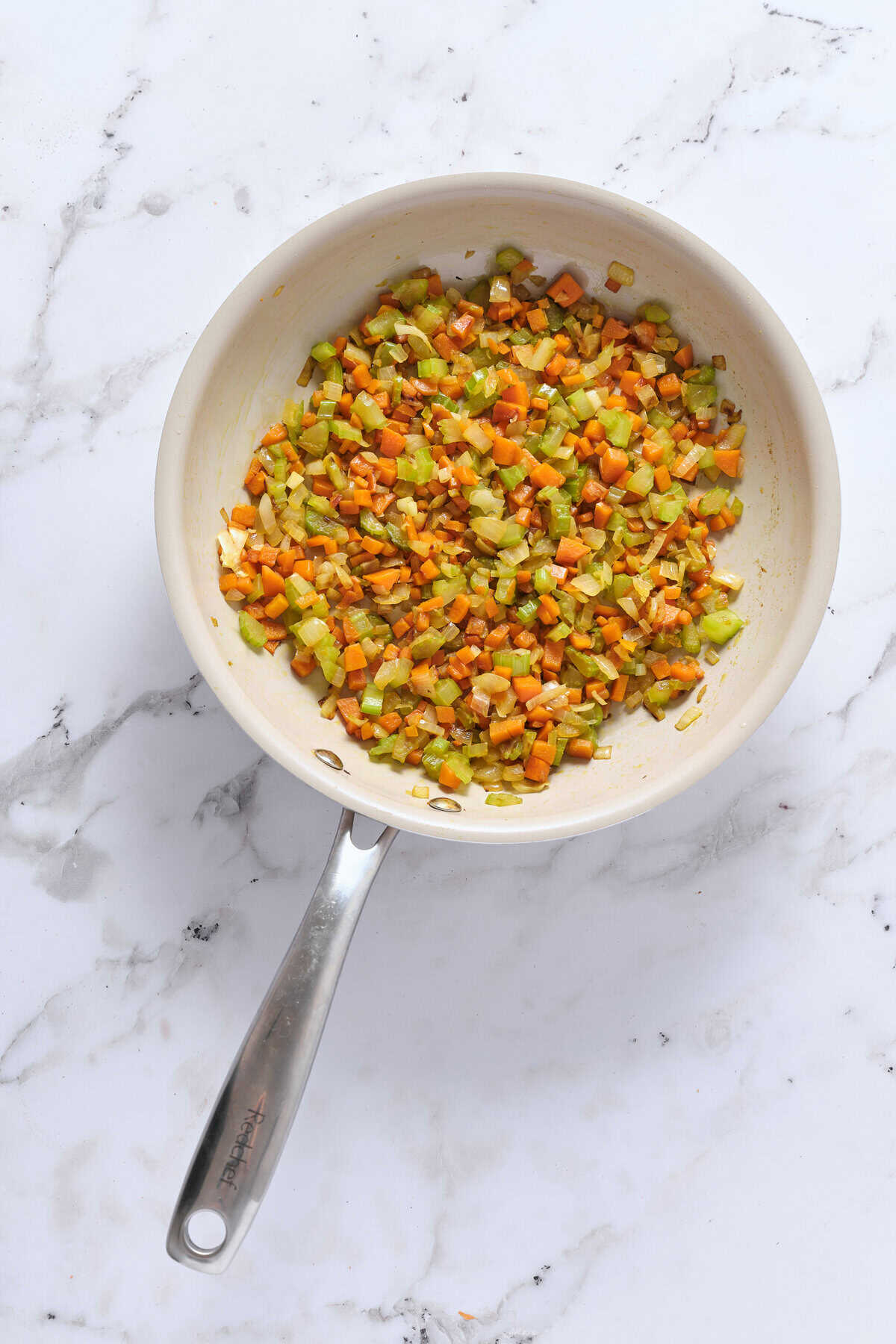
The traditional recipe features only four ingredients: onion, carrot, celery, and oil or butter, with the ratio being two parts onion to one part each of celery and carrot. You’ll notice our version has a slightly tweaked ratio. The vegetables are cooked for about 10 minutes over medium-low heat. If your burners run too hot, lower the temperature slightly. Once the vegetables become translucent and soft, they are ready for use in other recipes.
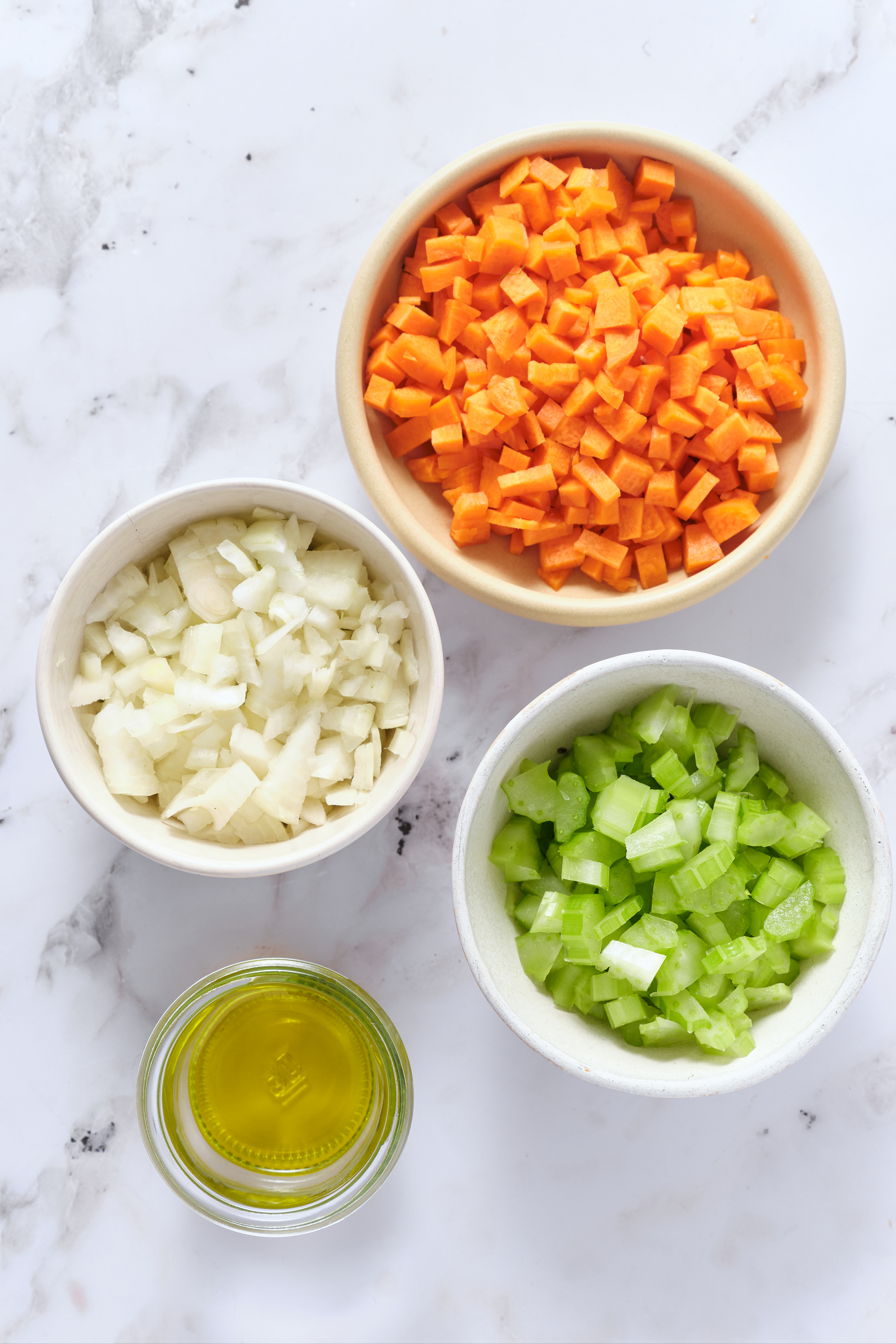
The size of your vegetable cuts matters. When making stir-fries or sautés, cut the vegetables into one-eighth to one-quarter-inch pieces. For soups and stews, cut them slightly larger, into pieces half to three-quarters of inch in size. When making broth or stock, larger pieces of one to two inches are fine. Similar-sized pieces cook evenly, allowing you to extract their maximum flavor.
Uncovering the origin of mirepoix
When I first learned how to make mirepoix, I never thought much about its name. I decided to delve into this subject more deeply, since I had always just made it without thinking about its origins. It turns out that in the 18th century, Charles Pierre Gaston François de Lévis, the Duke of Mirepoix (a town in the Ariege region of southwestern France), had a personal chef who created a specific combination of diced vegetables to add complexity and depth to various dishes.
The duke was a dignitary in the court of King Louis XV. It is said that his head chef created this recipe. Since it was customary during the reign of Louis XV for aristocrats to have dishes named in their honor, we now have the basis for many dishes—mirepoix.
How do I store leftovers?
Mirepoix can be made ahead or in large batches to save time for future recipes. You can store it in airtight containers in the refrigerator for up to 4 days after it has cooled to room temperature. Freezing in freezer-safe containers or zippered bags is also possible for up to 3 months. However, I recommend using the defrosted mirepoix in blended soups, as the consistency of the cooked vegetables will change and become mushy once they are frozen.
Serving suggestions
Now that you know how to make mirepoix, you can use it in many other recipes, including Chicken Stew, Pastina Soup, Short Rib Soup, and 15-Bean Soup. You’ll notice that each of those recipes features some variation of mirepoix, including the addition of garlic at times. In this Mushroom Stuffing Recipe, mushrooms are sautéed with the other vegetables until they are all soft. You will even find it used in Pork Osso Bucco. There are many ways to use a mirepoix, including to add additional moisture and flavor to burger patties, meatballs, and meatloaf.
Ingredients
- 1 tablespoon olive oil
- 1 large onion chopped into 1/2-inch pieces
- 1 large carrot chopped into 1/2-inch pieces
- 1 large celery rib chopped into 1/2-inch pieces
Instructions
- Heat the olive oil in a large pan over medium-low heat.
- Add the chopped vegetables and stir frequently for about 10 minutes until the onions become translucent and the vegetables soften. Take care that they do not brown.

Nutrition Info:
Nutrition information are estimates only and may vary based on the specific brands, ingredients, and portion sizes you use. This data is provided for informational purposes only.



Leave a Comment