

Dish out this tender, tasty side to brighten your lunch or dinner.
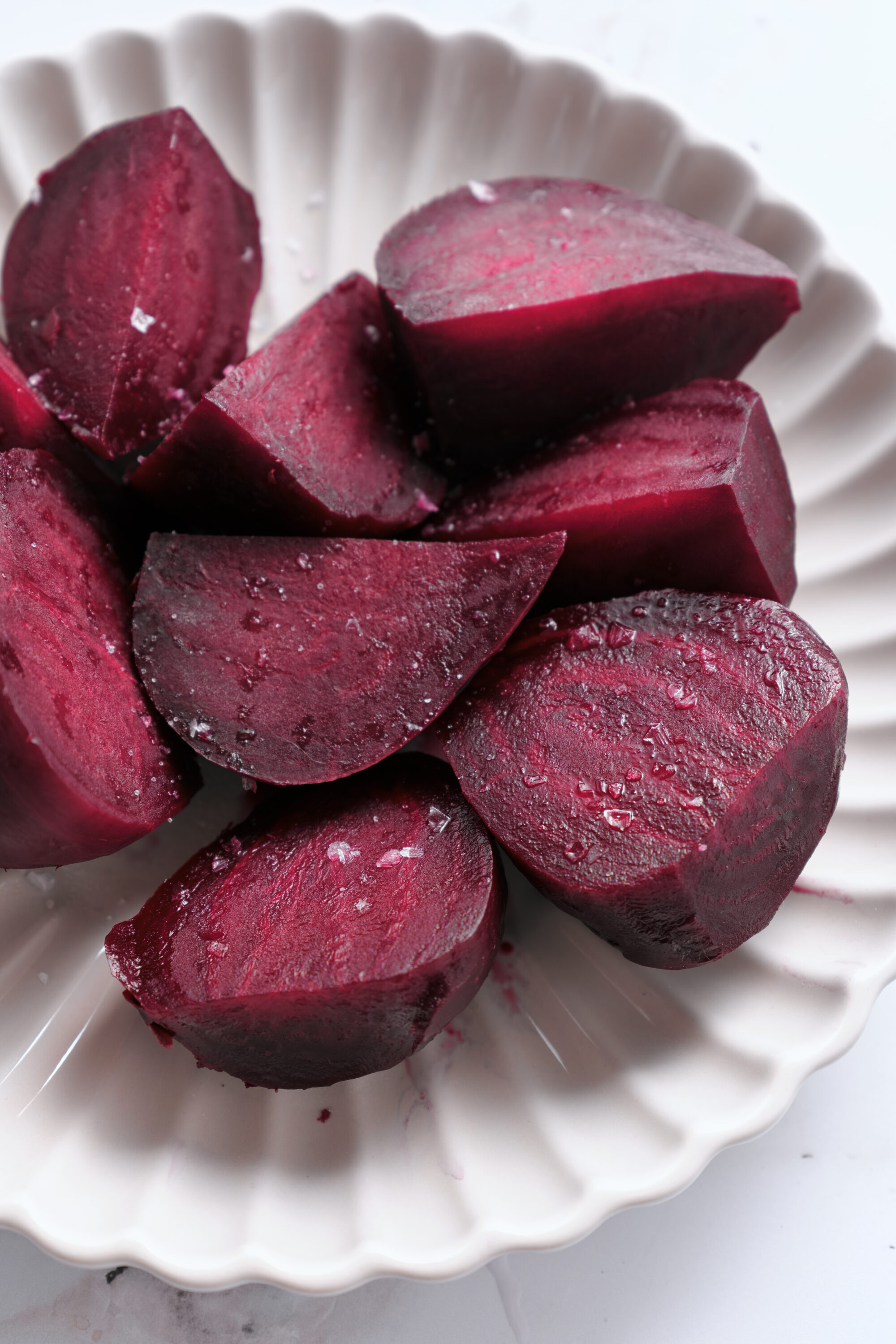
For the past decade, I’ve been low-key obsessed with boiled beets. Why? Well, there are so many opportunities for creativity here! Although the actual process of boiling beets is quite simple and straightforward, the finished product comes out tender, tasty, and totally versatile. You can incorporate it into almost any meal as a fresh, bold, and earthy complement to all kinds of main dishes. Not only that, but the water you boil the beets in is worth using, too—but I’ll share more about it in a moment.
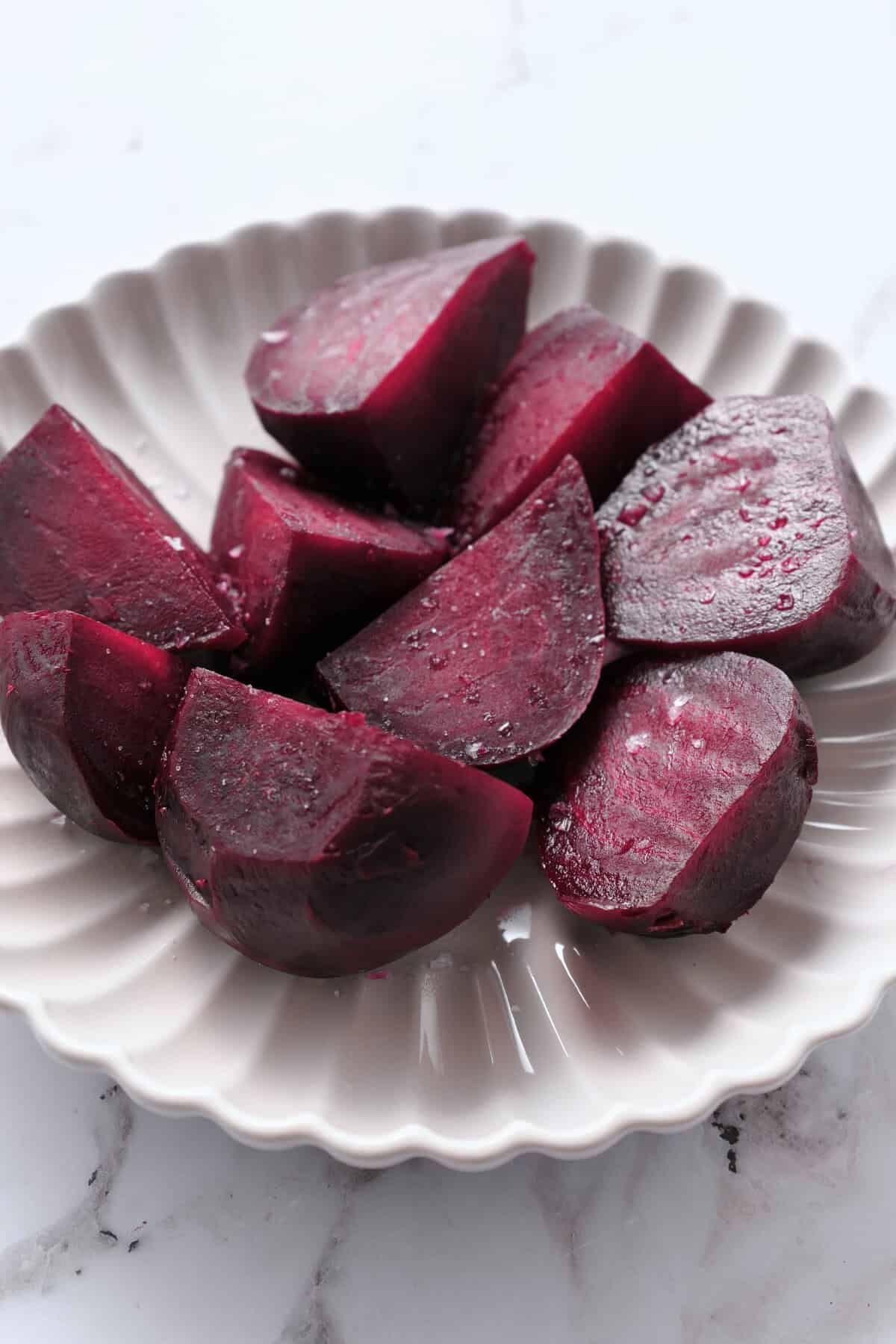
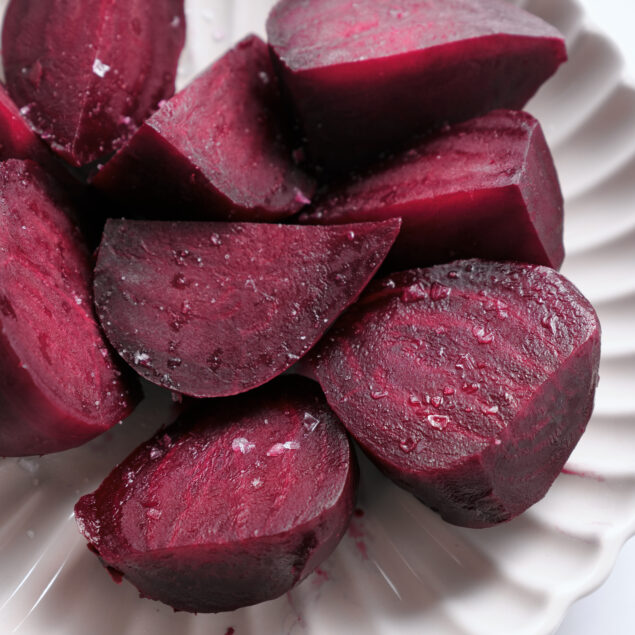
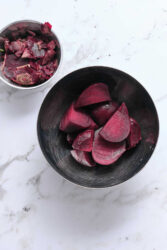
First, let’s consider the magic that happens when beets are boiled. Raw, these root veggies are hard and crunchy, with a tough skin that’s hard to peel. But once they’ve soaked long enough in boiling water, the skins peel off easily, leaving behind a pink kiss on your fingers and a glistening ruby beet that’s ready to be eaten. Just make sure to let them cool in an ice bath after boiling them so you don’t burn your hands.
For these reasons and many more, beets are one of my favorite veggies to cook with. There’s always something fun and flavorful about them that keeps me grounded in an enjoyable culinary experience. But don’t take my word for it—try boiled beets for yourself and enjoy!
Don’t discard the beet water! Here’s why…
By boiling beets in water with a hint of white vinegar, we draw out much of the color that beets naturally have. It’s a red-violet plant pigment called betacyanin, most commonly found in beets but also present in dragon fruit. This turns the water a brilliant pinkish hue that can be used for dyeing eggs during Easter or watercolor finger painting with your little ones on an artsy afternoon. But if these crafty options don’t entice your creative spirit, then try saving the beet water as a broth for soup. I like to cook white quinoa in beet water, because it turns the quinoa a lovely shade of pink and adds a yummy hint of earthy flavor.
Overall, there are plenty of reasons to keep your beet water handy, so once it’s cooled off, pour it into a jar and seal it to save in the fridge for later. You never know when it could come in handy!
How do I store leftovers?
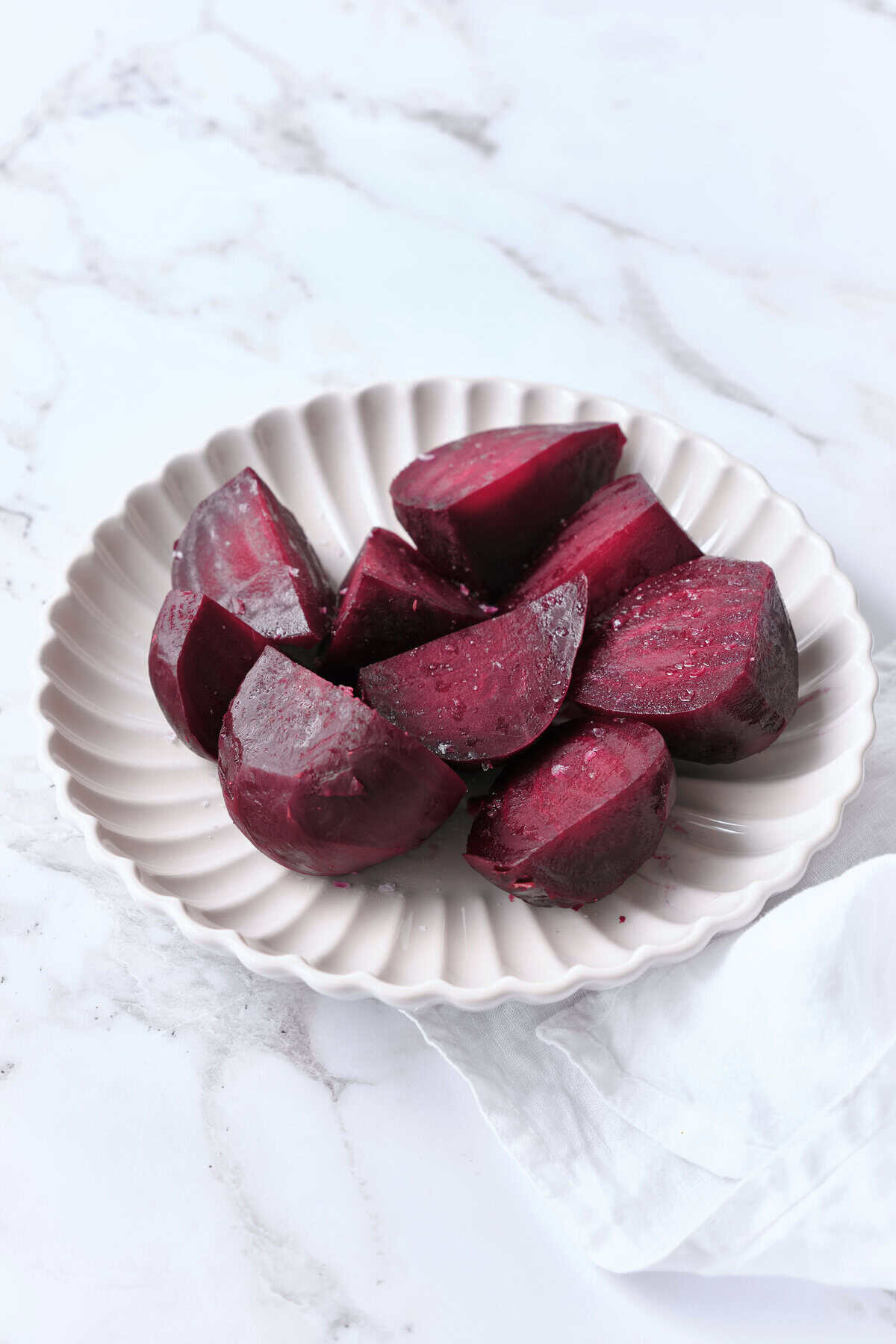
Once cooled to room temperature, boiled beets can be stored in an airtight container for 3-5 days in the fridge. Alternatively, you can freeze them for up to a month, making sure to thaw them in the fridge overnight before reheating. You can heat them in the oven at 350°F for 10-15 minutes, until they’re completely warm. You may also skip this step and enjoy them cold, especially if you’re going to top them on a salad.
Serving suggestions
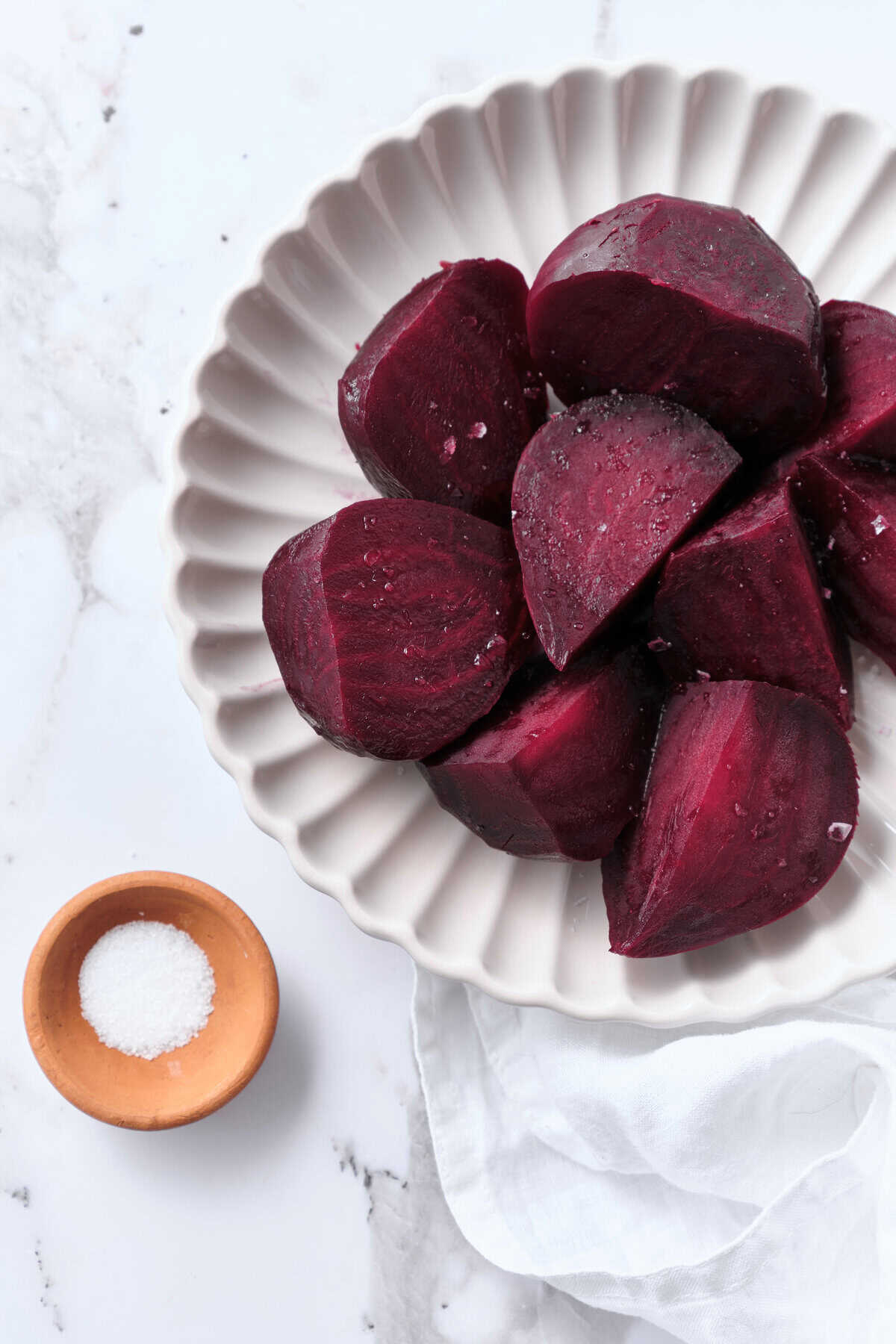
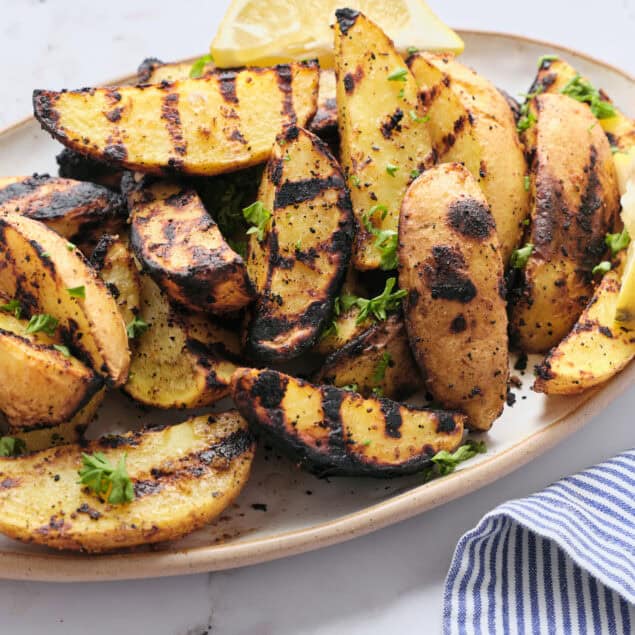
If you’d like to serve an easy but attractive meal, pair your boiled beets with a Sous Vide Steak and Steamed Potatoes. They also go marvelously with Air-Fryer Pork Tenderloin and Grilled Potatoes, or Baked Falafel plus Roasted Brussels Sprouts And Sweet Potatoes. Regardless of whether it’s a veggie-based or meaty meal, boiled beets can be an excellent part of it.
Ingredients
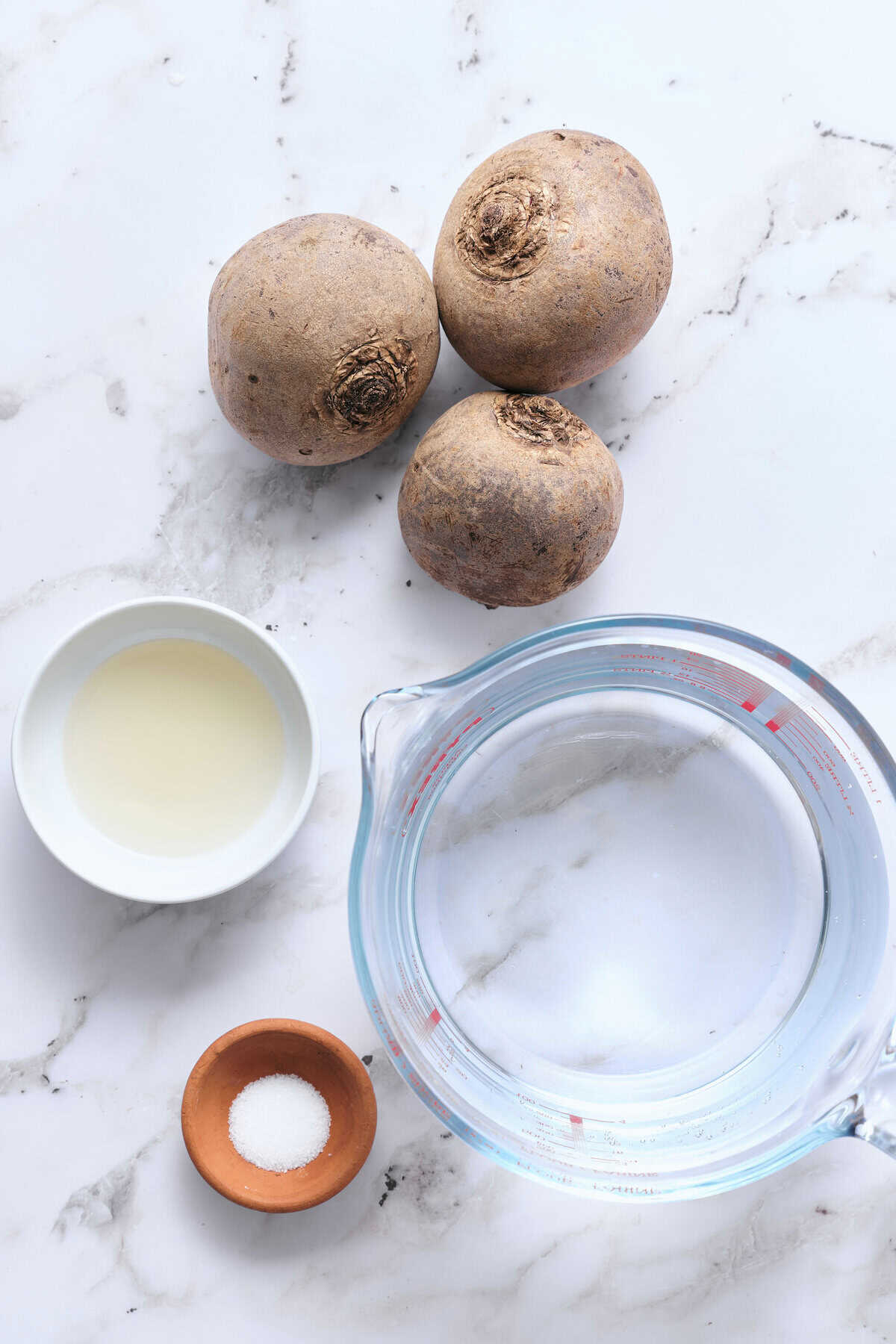
- 1 pound medium red beets washed and with stems trimmed (leave about 1 inch attached)
- 8 cups water or enough to cover the beets by a few inches
- 2 teaspoons white vinegar
- Salt to taste
Instructions
- Place the beets in a large pot and add water until they are covered by a few inches. Stir in the white vinegar. Bring the water to a full boil over high heat, then reduce the heat to a simmer. Cook until the beets are fork tender (about 30-45 minutes), adjusting timing based on the size of the beets.
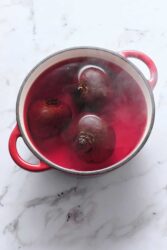
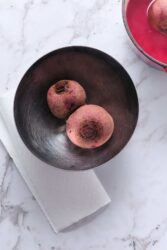
- Once the beets are tender, remove them from the hot water with a slotted spoon and let them cool until you can handle them. Use a paper towel or your fingers to gently rub off the skin—it should come off easily. For a quick chill, submerge the boiled beets in an ice bath for 5 minutes before peeling.
- Transfer the peeled beets to a serving bowl. Sprinkle with salt to taste. Enjoy warm or refrigerate in an airtight container for up to 3-5 days.
Nutrition Info:
Nutrition information are estimates only and may vary based on the specific brands, ingredients, and portion sizes you use. This data is provided for informational purposes only.


Leave a Comment