

Learn How To Freeze Eggs for all your meal-prepping, baking, and breakfast-related needs.
These days, with the price of eggs fluctuating again, backyard chickens are once again in vogue. I’ve raised chickens a few times throughout my life, and every time, they’re such a joy. Not only are they lively and smart, but they’re a great way to turn old cheese, pizza crusts, and all manners of vegetable peels into fresh eggs. The only problem I (and many other chicken keepers) end up with is a ridiculous amount of eggs.
Generally, this isn’t a problem for me because I eat eggs daily. But when you have ten chickens that each lay an egg per day, well… pretty soon, you’ll need to devote a whole room in your house to egg storage. If you’ve found yourself in a situation where you might soon drown in excess eggs, I’ll let you in on a little secret: you can freeze them.
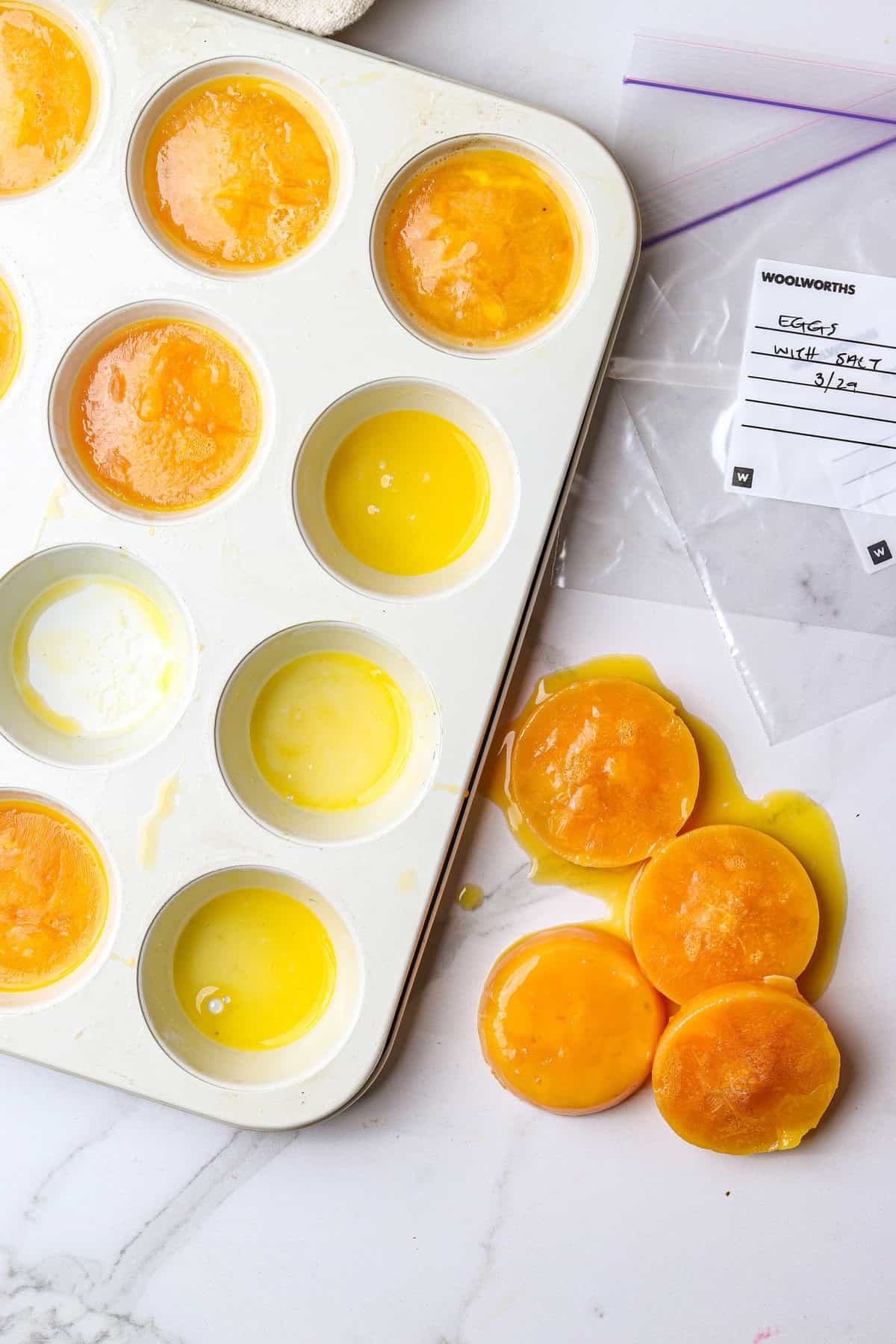
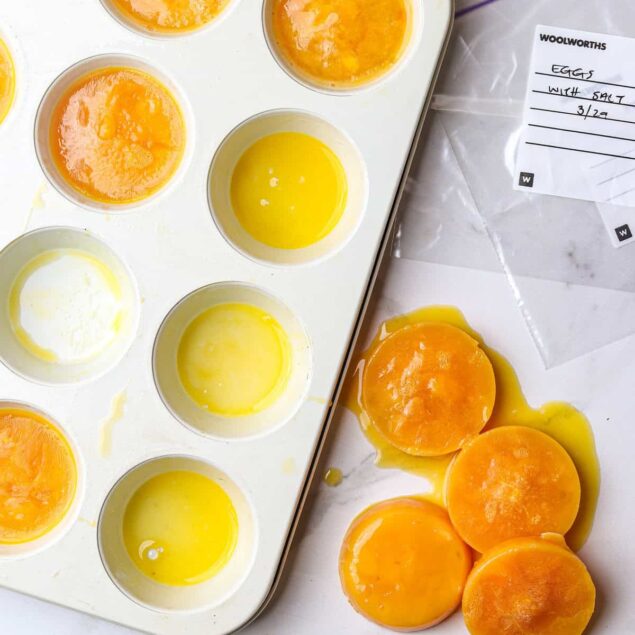
All you have to do is crack them open, stir them up with salt or sugar (depending on what you’ll use them for later), and pour them into muffin tins to freeze. Frozen eggs act just like regular eggs in most ways, and the taste is similar. Keep this handy recipe around for times of plenty, and you’ll be stocked up!
Are Frozen Eggs Healthy?
Frozen or not, eggs are healthy for most people. They’re a great source of protein, choline, healthy fats, and vitamins A and D, along with several B vitamins. In fact, the protein in eggs is considered “complete,” which means they contain all nine essential amino acids. Unless you have an egg allergy, eating eggs regularly shouldn’t be a problem and can be part of a healthy diet. Freezing eggs has little to no effect on their nutritional value.
You’ll notice that this recipe includes a small amount of sugar or salt, either of which will help maintain the egg’s natural texture during freezing. Sugar, specifically, will add a few calories to the nutritional tally. If you don’t add salt or sugar, the egg yolks will thicken into a more gelatinous texture in the freezer, which isn’t the most enjoyable quality in eggs, so don’t skip that part, if you can help it.
How To Use Frozen Eggs
There are a few rules of thumb to keep in mind when you’re ready to use your frozen eggs. First, you should always thaw eggs in the refrigerator overnight or under cold running water. Second, use the thawed eggs immediately.
Frozen eggs can be used for most things that call for fresh eggs, such as baked goods, casseroles, and omelets, but in my experience there are some notable exceptions. You obviously won’t be able to fry a thawed egg the same way as a fresh egg, because the yolks and whites are already whisked together. Also, only use thawed eggs in dishes that thoroughly cook the eggs! In other words, don’t use these in any recipe that calls for a raw egg without a cooking process somewhere.
How Do I Store Leftovers?
If you have leftover eggs after you’ve thawed them, find a use for them immediately. Don’t store thawed eggs in the fridge for more than 12 hours, or you’ll risk bacteria growth and spoilage.
Serving Suggestions
Use your frozen eggs to make Oven-Baked Scrambled Eggs, Scrambled Eggs In The Microwave, or a Sausage And Egg Breakfast Casserole. But you don’t have to stick to breakfast with frozen eggs, so branch out and use these wherever a beaten egg is called for. I use frozen eggs to make cookies, such as my favorite Oatmeal Cookies, and other baked goods like this delicious Lemon Cake. They also work just fine for boxed cake and brownie mixes!
Ingredients
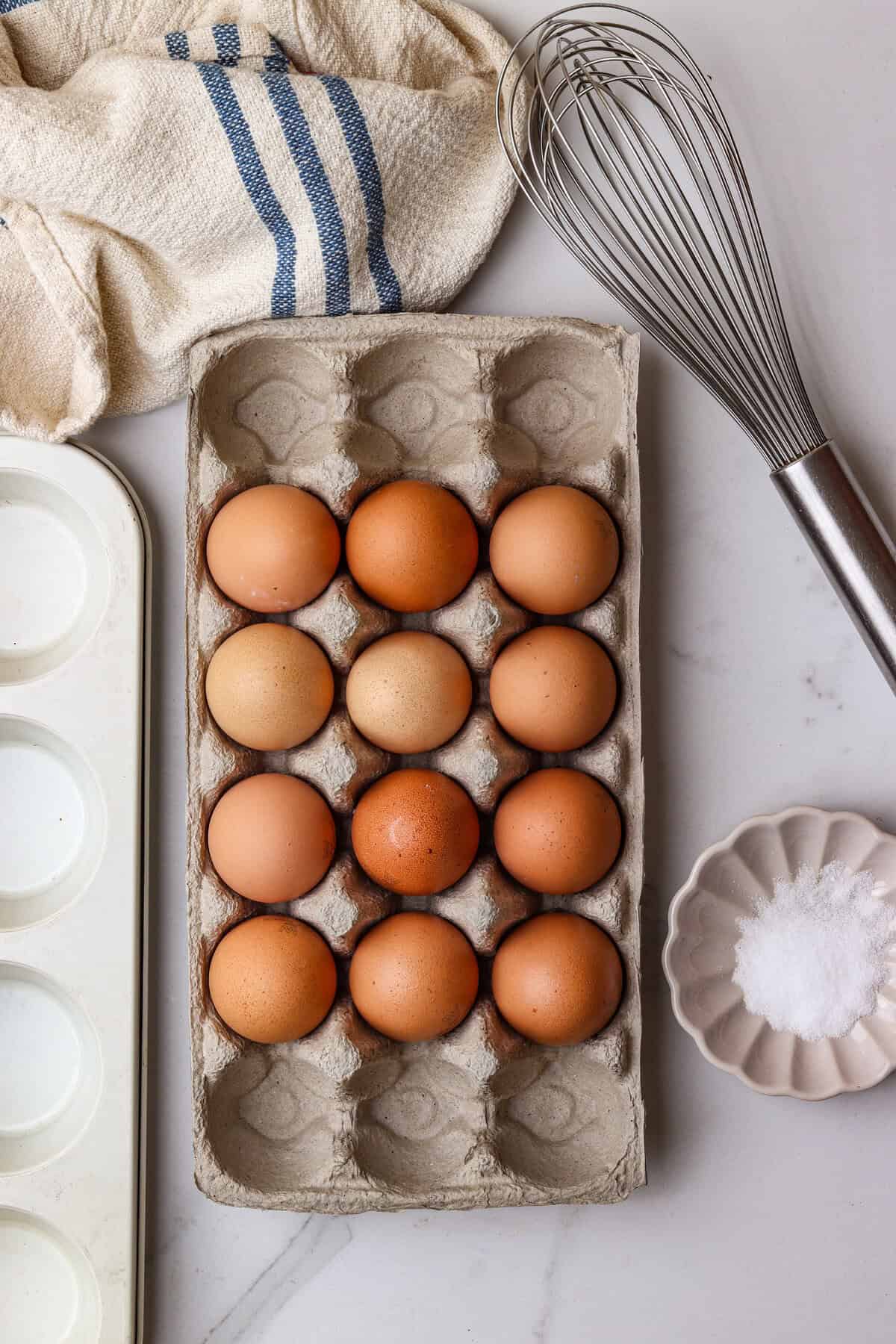
- 12 large eggs
- 1½ teaspoon salt or sugar use salt for savory dishes, sugar for sweet dishes
Instructions
- Whisk the eggs in a bowl until the yolks and whites are fully blended.

- Mix in salt or sugar to prevent the yolks from thickening when frozen. Use 1 teaspoon per cup of mixed eggs, or 1/8 teaspoon per individual egg.

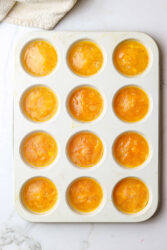
- Pour the egg mixture into the wells of a muffin tin or into an ice cube tray, cover, and freeze until solid, about 4-6 hours.

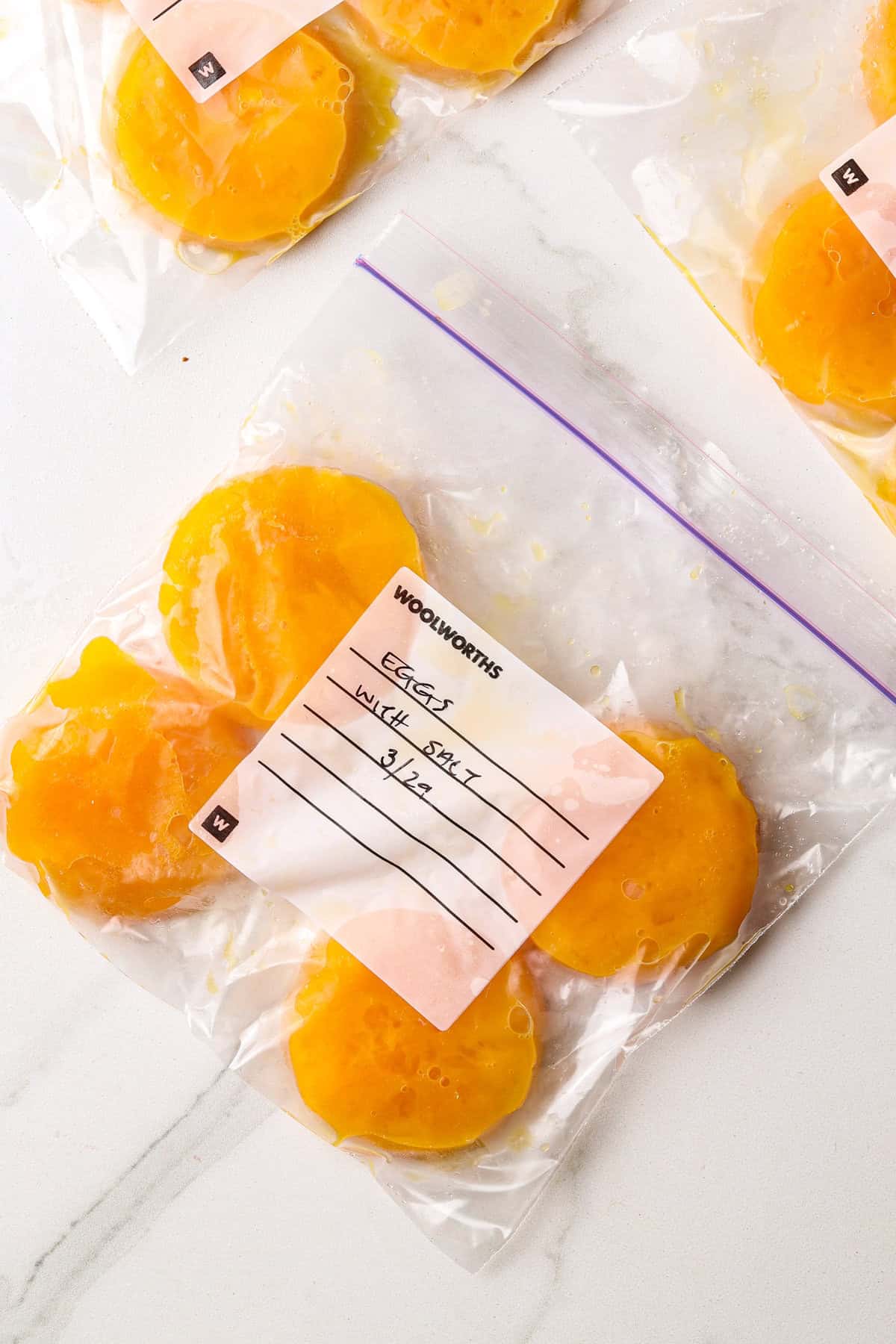
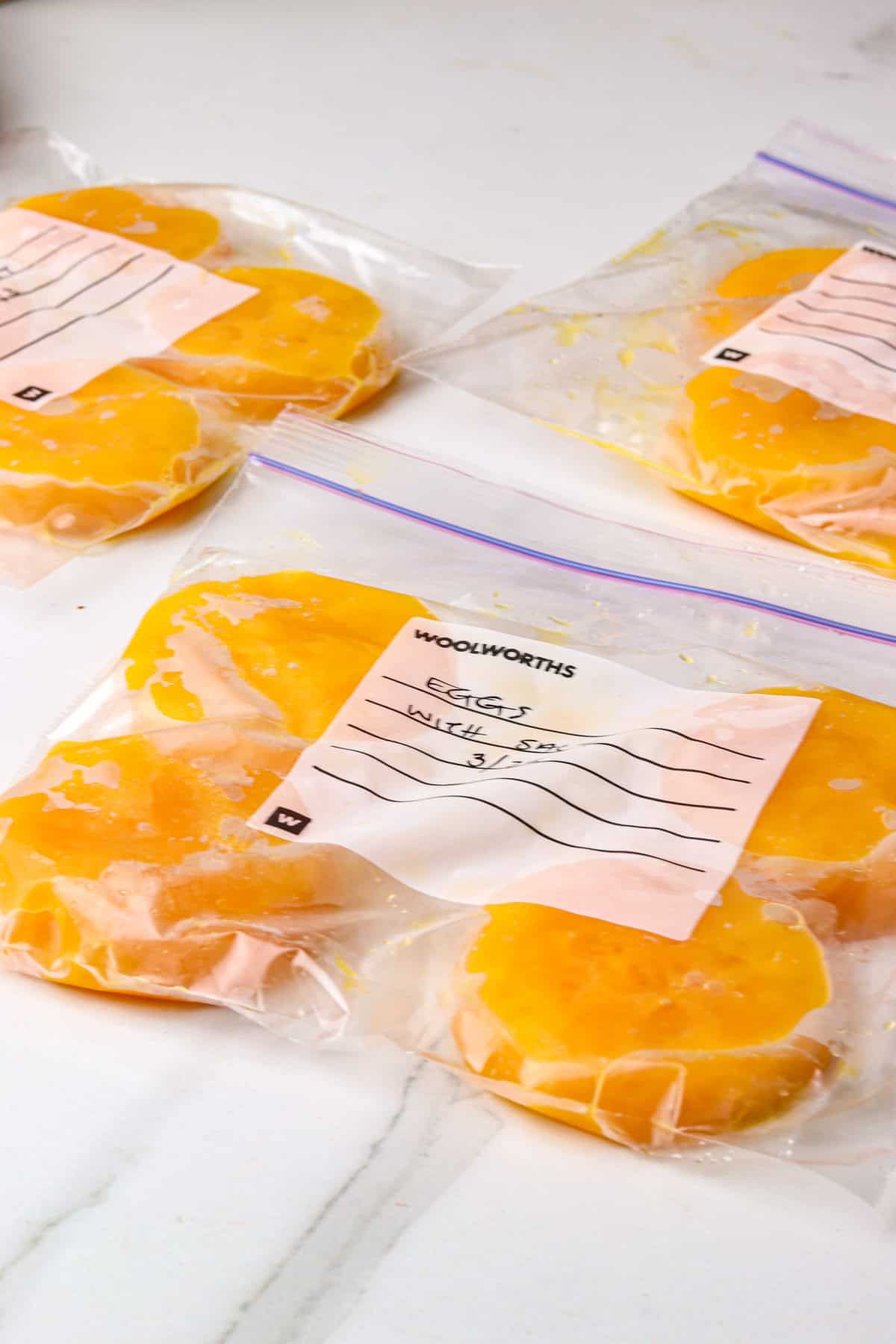
- Transfer the frozen eggs to freezer containers or freezer-safe bags, label with the date and whether you used salt or sugar, and store in the freezer for up to a year.
Tips & Notes:
Nutrition Info:
Nutrition information are estimates only and may vary based on the specific brands, ingredients, and portion sizes you use. This data is provided for informational purposes only.


Leave a Comment