

Bring this great ancient grain to your dining table for a nutritious, plant-based feast.
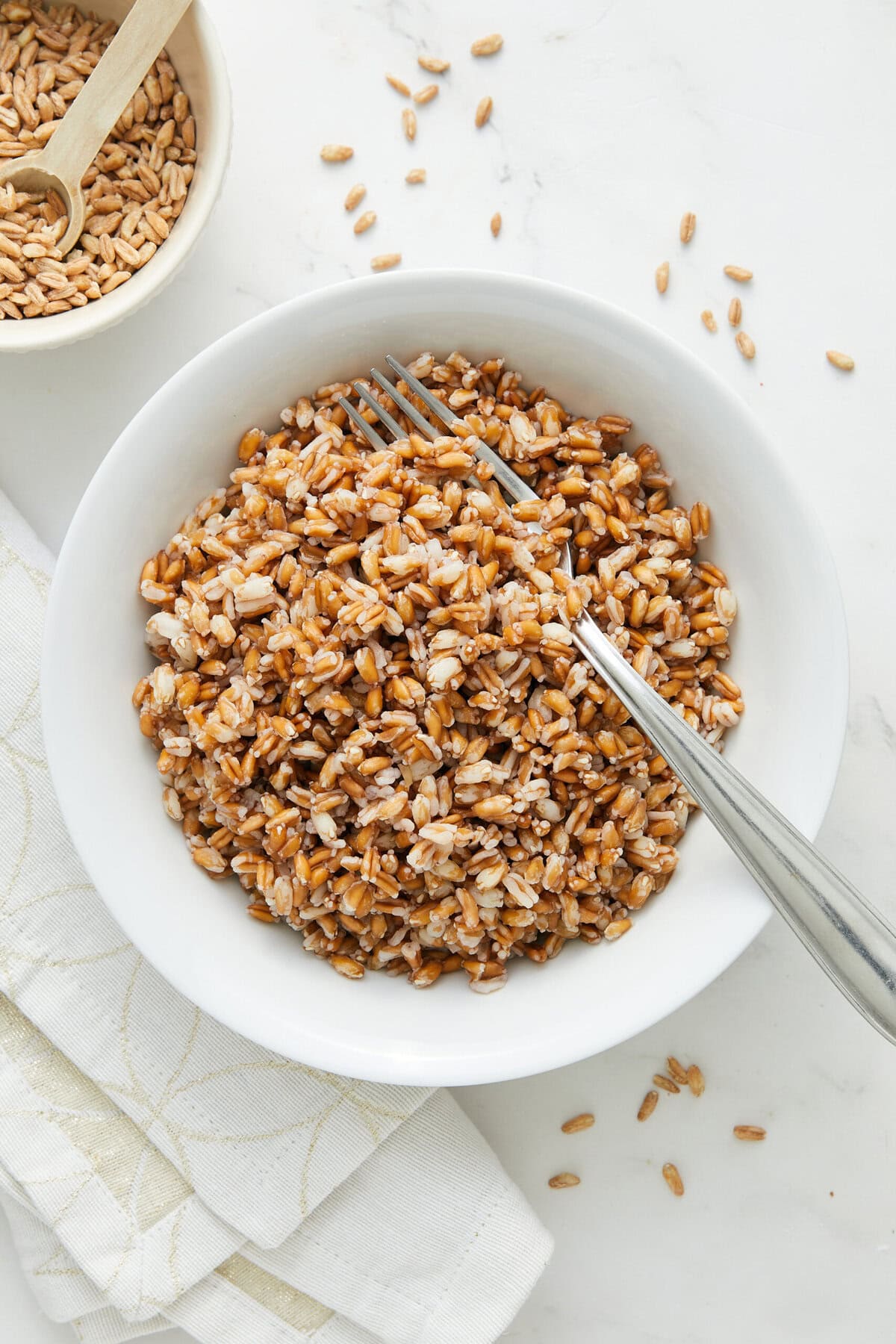
Of all the grains on this earth, farro is one of the most filling and flavorful. But it’s not as talked about here in the States as it might be in its native regions in the Fertile Crescent—the cradle of agriculture encompassing parts of modern-day Iraq, Iran, Syria, Turkey, Palestine, and Israel. Archaeological evidence shows that wild and domesticated forms of farro were grown there as early as 10,000 years ago. Its cultivation quickly spread across the Mediterranean basin. The grain became a fundamental food source for ancient civilizations, including the Egyptians, Greeks, and especially Romans, who adopted it as a dietary staple and even used it to feed their armies.
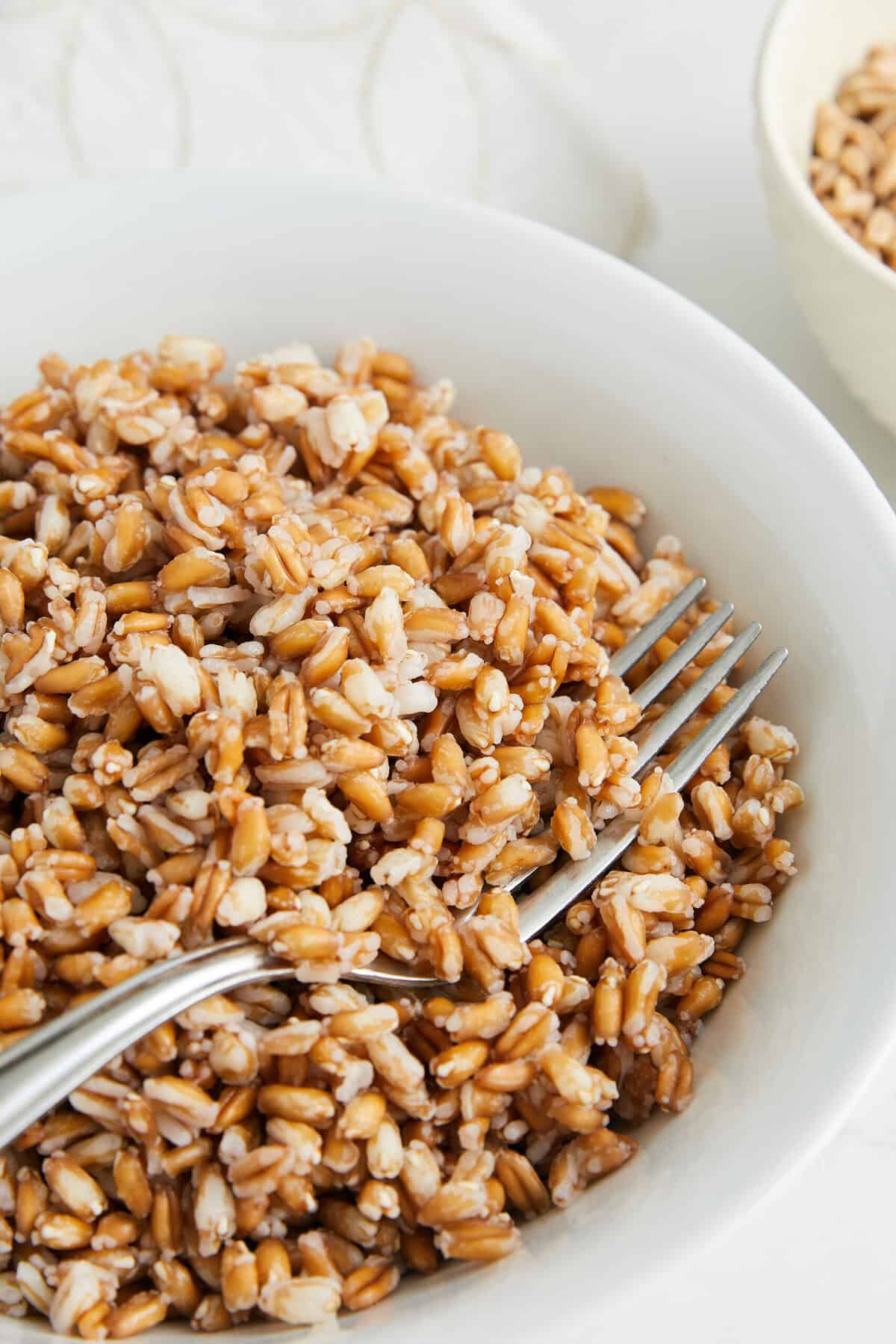
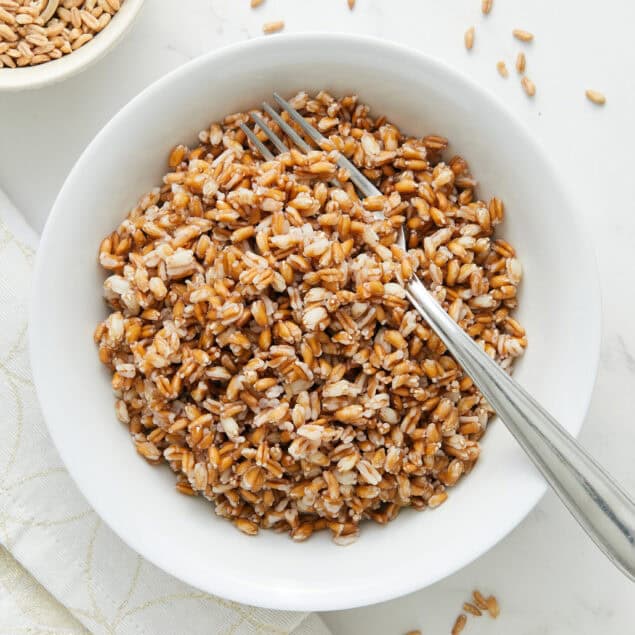
Today, people around the globe enjoy farro in salads, soups, or by itself. This chewy and nutty grain becomes delightfully fluffy when cooked, and each bite is so hearty, you don’t need much of it to feel full. And that’s exactly why a lot of people like it.
I enjoy farro as a satisfying base for Buddha bowls, which are plant-based bowls full of grains, greens, and tasty toppings like avocado or cherry tomatoes. Although it may seem simple and even bland at first glance, farro is actually very versatile. You can really get creative in the kitchen with this grain for almost any meal!
Is farro gluten-free?
No, farro is not gluten-free. This is very important to note, especially if you or a loved one has celiac disease or a gluten sensitivity. Farro refers to a type of wheat, so it naturally contains gluten. Specifically, “farro” can describe three ancient wheat grains—einkorn, emmer, and spelt—all of which are sources of gluten. These are some of the ingredients used in ancient grain breads you might find in a grocery store. They’re hearty, nutty-tasting, and very filling—but they are not suitable for anyone following a gluten-free diet.
How do I store leftovers?
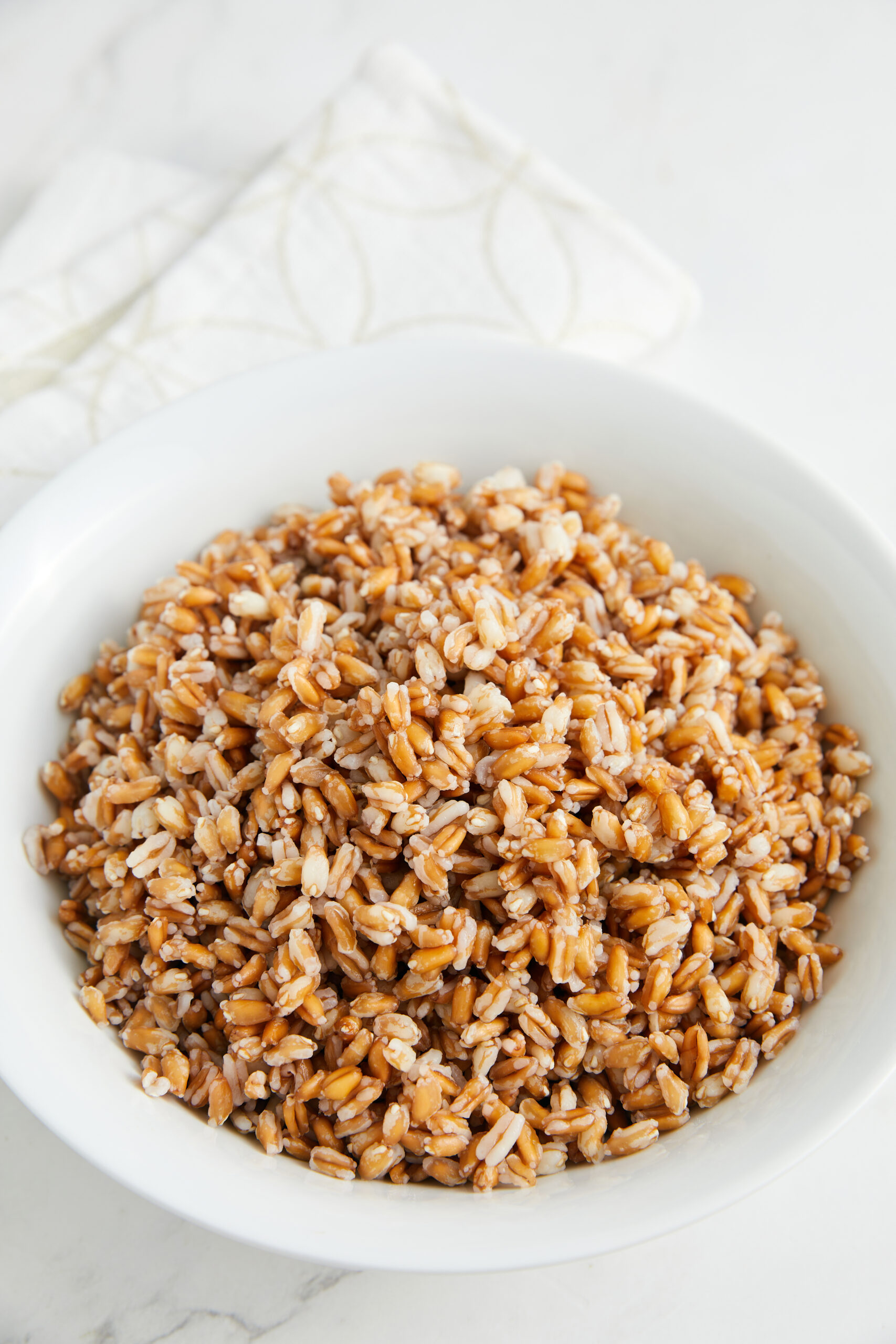
Allow leftover farro to cool completely, then store it in an airtight container in the fridge for up to 5 days. Alternatively, transfer your farro to a freezer-safe container and freeze it for up to 3 months. I recommend letting it thaw in the fridge overnight before reheating. Then, simply pop it into a pot on the stovetop with a splash of water and heat it over medium heat until it’s warm all the way through. Remember to stir occasionally so it heats evenly.
Serving suggestions
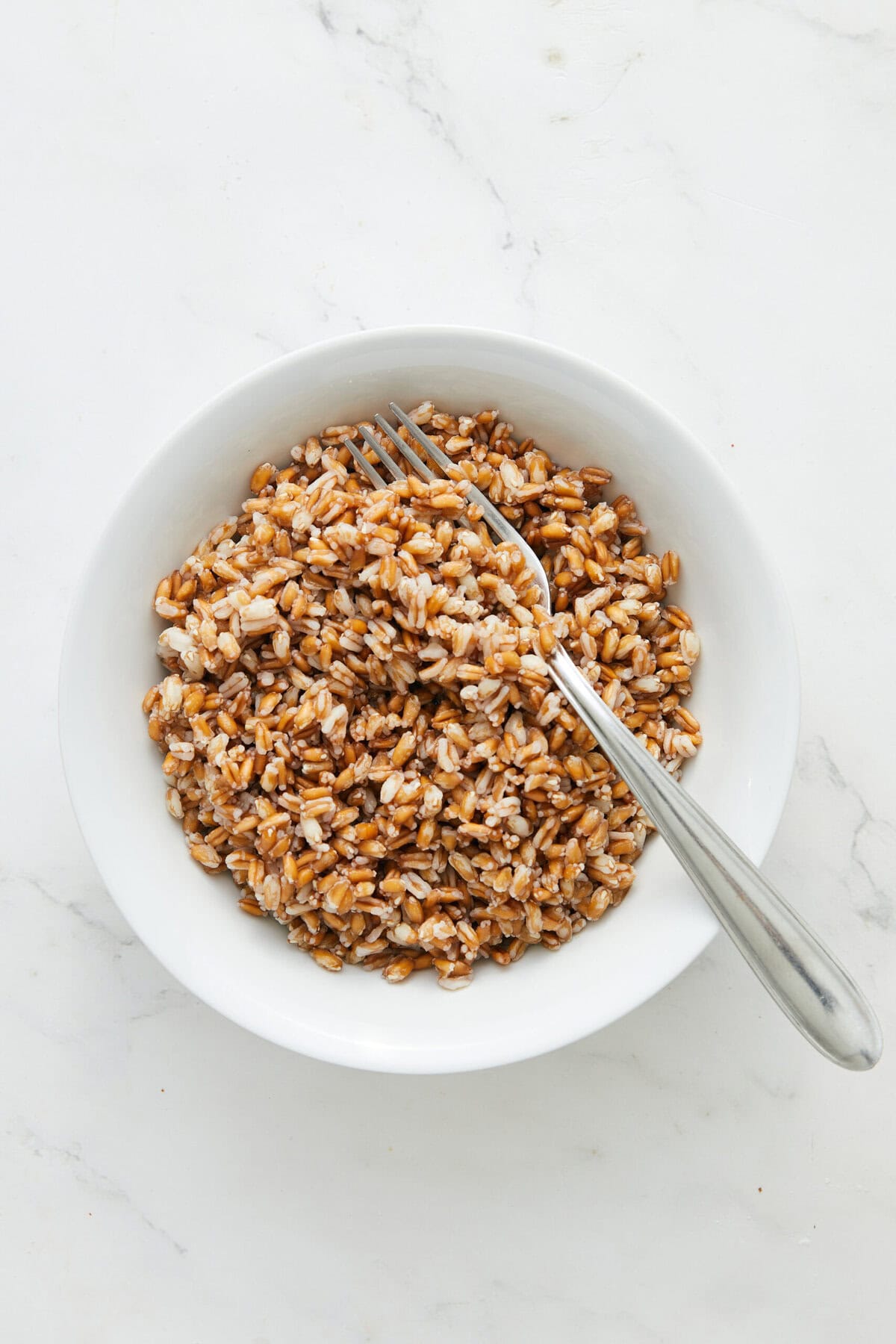
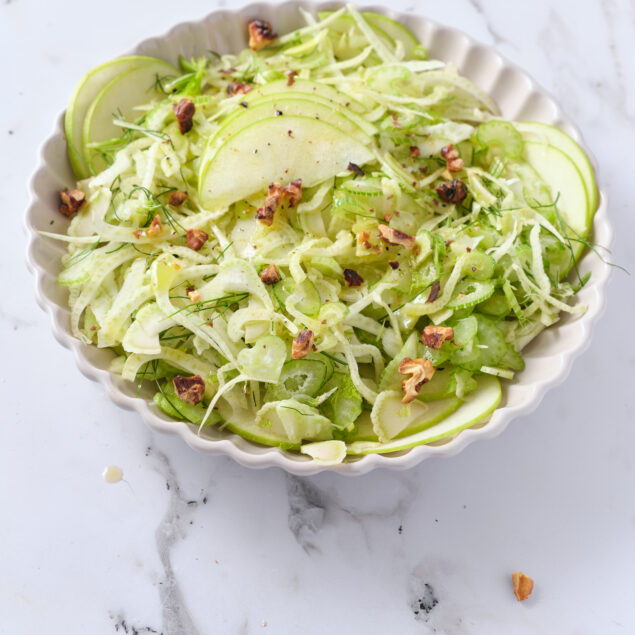
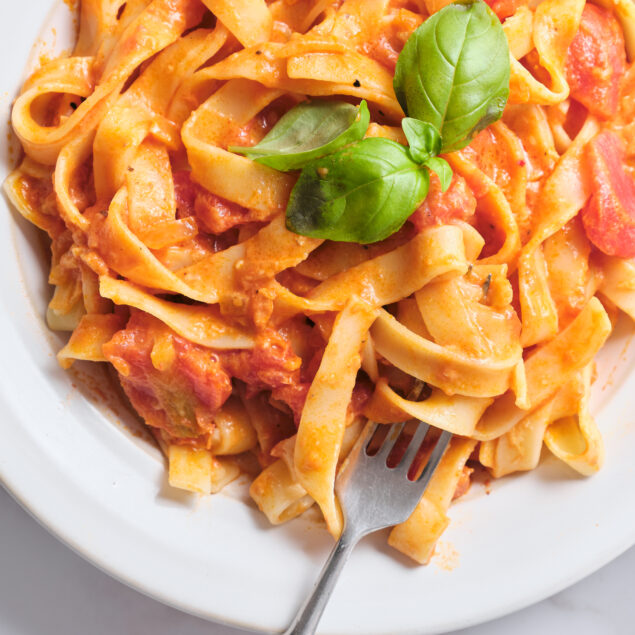
While this recipe reveals how to cook farro with a simple seasoning of salt, you can also add any spices or herbs you’d like. Personally, I enjoy adding a teaspoon each of garlic powder, onion powder, cumin, and Italian seasoning for a subtly spicy Mediterranean flair. Or you can treat it like pasta and top it with Creamy Pumpkin Pasta Sauce, Mushroom Sauce, or this light and bright Zucchini Pasta Sauce. For more protein, top your farro with Greek Chicken Meatballs, Garlic Butter Steak Bites, or plant-based Air-Fryer Tofu. I also recommend trying a scoop of farro mixed into this Chickpea Salad or a 7-Layer Salad. Pick your favorite dishes and see how farro can spruce them up.
Ingredients
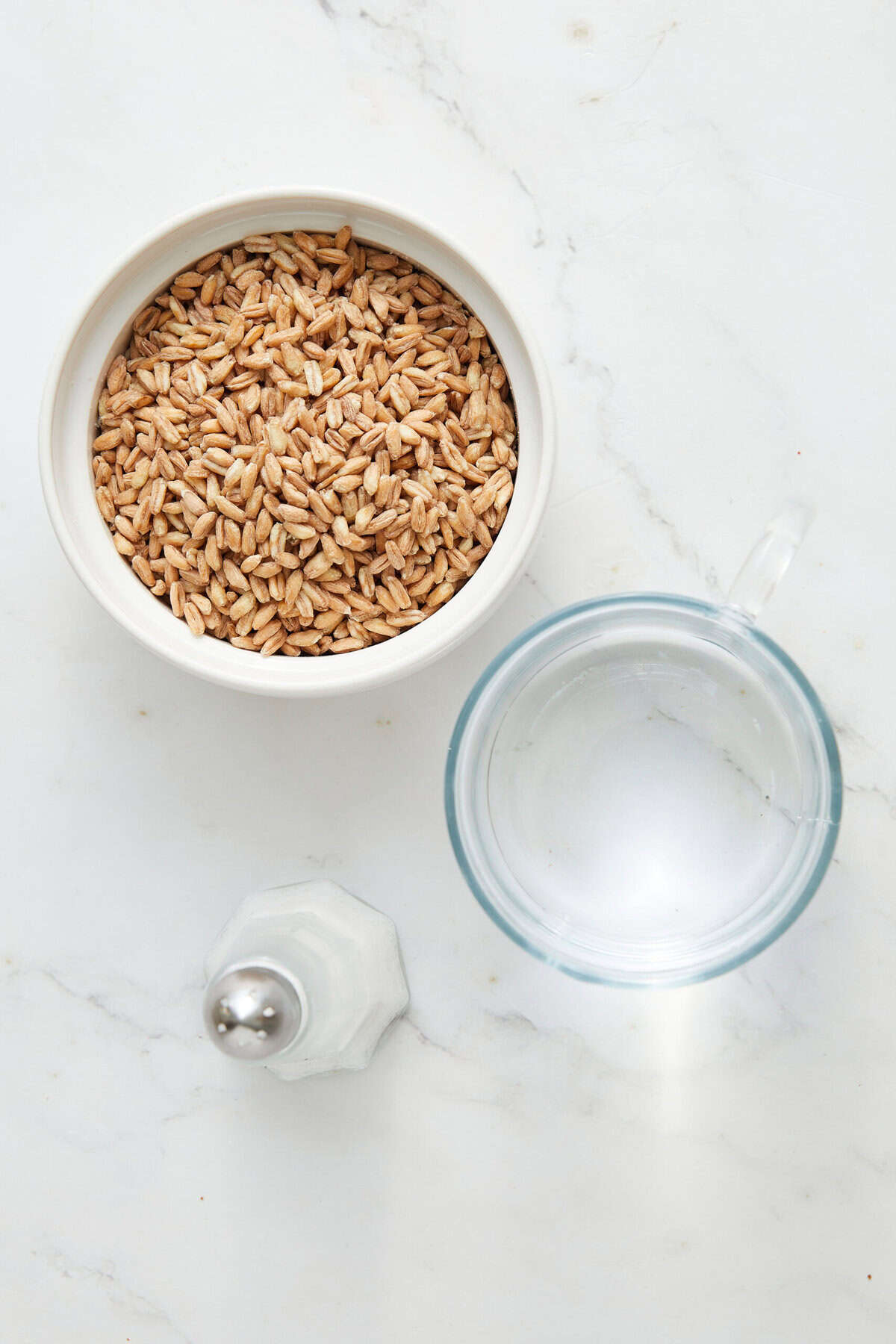
- 3 cups water
- 1 cup uncooked farro rinsed and drained
- 1/4 teaspoon kosher salt plus more to taste
Instructions
- In a medium saucepan, bring the water to a boil over high heat.
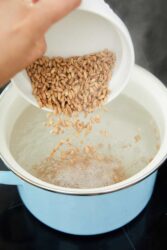
- Add the rinsed farro and salt to the boiling water. Reduce the heat to maintain a gentle simmer and cook until the farro is tender and chewy, about 15-20 minutes for pearled farro.
- Drain the farro completely in a fine-mesh strainer and fluff with a fork. Taste and add extra salt if needed. Serve warm.
Nutrition Info:
Nutrition information are estimates only and may vary based on the specific brands, ingredients, and portion sizes you use. This data is provided for informational purposes only.


Leave a Comment