

Drizzle this Greek Salad Dressing on any bed of greens with your favorite toppings for a Mediterranean twist!
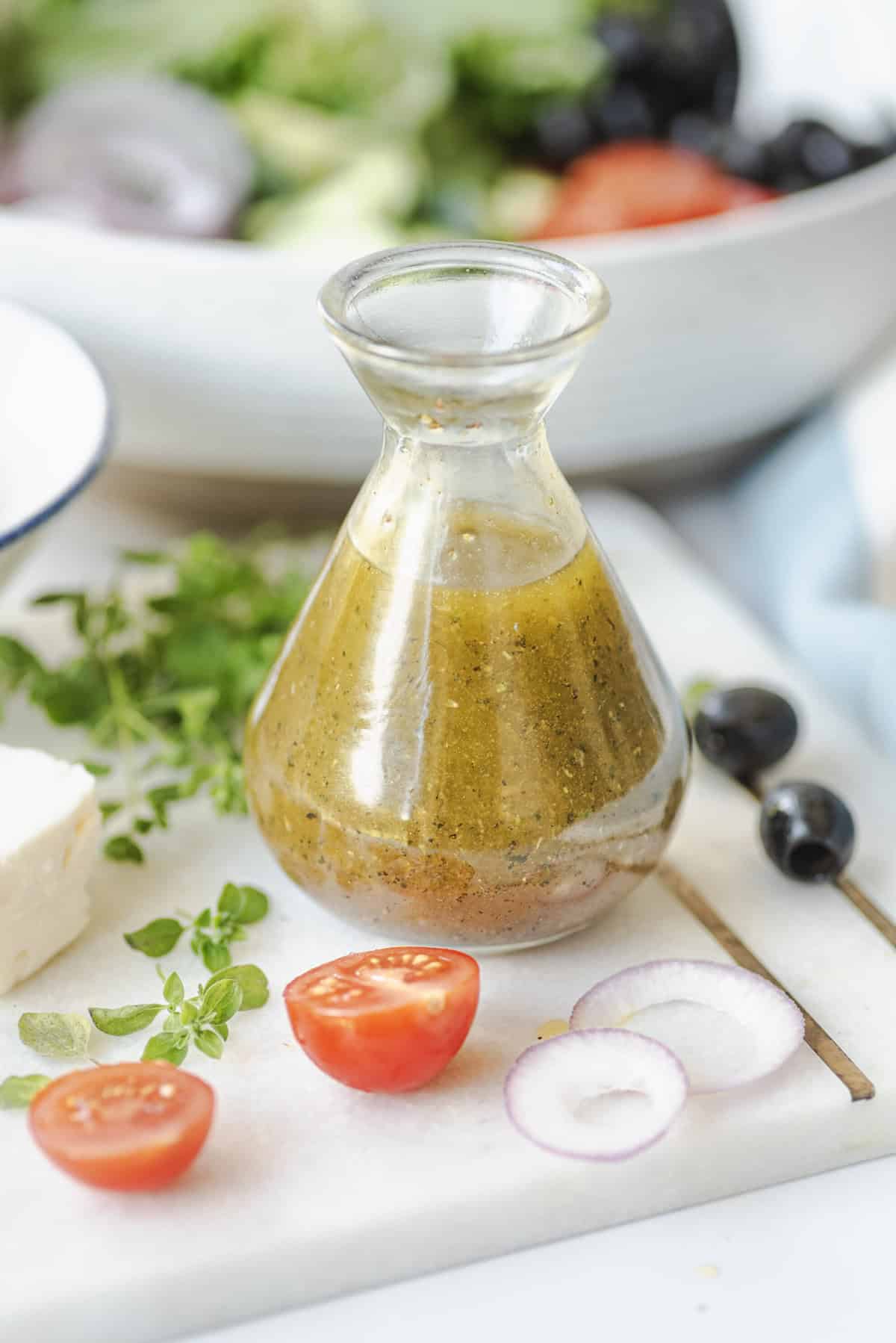
As someone who isn’t a big fan of most store-bought salad dressings, I wasn’t much of a salad eater growing up. My parents’ fridge always had the usual creamy dressings—Thousand Island, ranch, and blue cheese—and sometimes a bottle of Italian dressing. I liked the Italian more than the creamy dressings, so when I began to make my own salad dressings, I started with an oil-and-vinegar base and played around with different herbs and spices until I ended up creating something I loved. Homemade salad dressing is a game changer; I’m much more likely to eat a salad when I have a homemade dressing stocked in the fridge.
This Greek salad dressing is one of my favorites. It gets its depth of flavor from red wine vinegar, garlic, and Dijon mustard, while the lemon juice and oregano give the dressing brightness and zest. No matter what type of salad you drizzle with this Greek-inspired dressing, it will take on the distinct flavors of Mediterranean cuisine!
Is This Greek Salad Dressing Healthy?
Compared to many commercial salad dressings, homemade Greek salad dressing is healthy. This dressing uses olive oil, which contains healthy monounsaturated fatty acids. Garlic is a source of antioxidants, while lemon juice gives the dressing a dose of vitamin C. Made without preservatives or processed sugar, this wholesome dressing doesn’t have a long list of ingredients like many store-bought dressings do. Overall, this recipe is gluten-free, vegan, and keto-friendly, so it’s suitable for many diets.
Greek Vs. Italian Dressing
Italian and Greek dressings are quite similar in that they are both typically vinaigrettes made with a base of vinegar and oil and flavored with herbs. Italian dressing usually includes a mix of herbs like oregano, basil, and parsley, while Greek dressing typically relies on oregano for the herb component rather than mixing in other herbs. Both dressings are light and tangy, but Greek dressing can sometimes be slightly thicker if ingredients like feta cheese or yogurt are added.
How To Make Ahead And Store
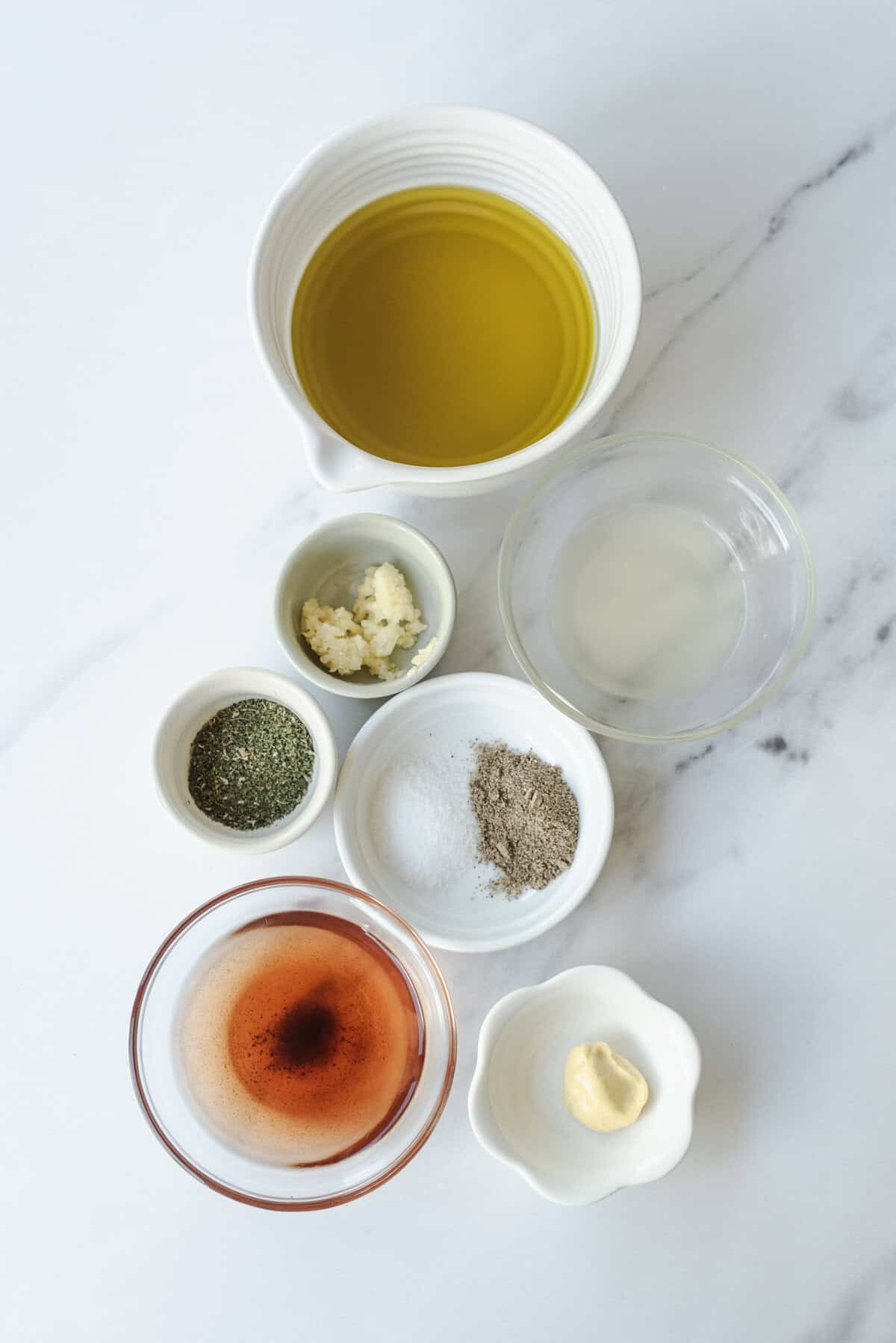
This dressing is ideal for making in big batches and storing in the fridge. In well-sealed jars, it will last for up to 2 weeks. Keep in mind that the oil will separate in the fridge, so give it a good shake before serving. If the olive oil has solidified in the fridge, let it sit out at room temperature before serving. Alternatively, place the sealed jar in a bowl of warm water to liquefy the oil faster.
Serving Suggestions
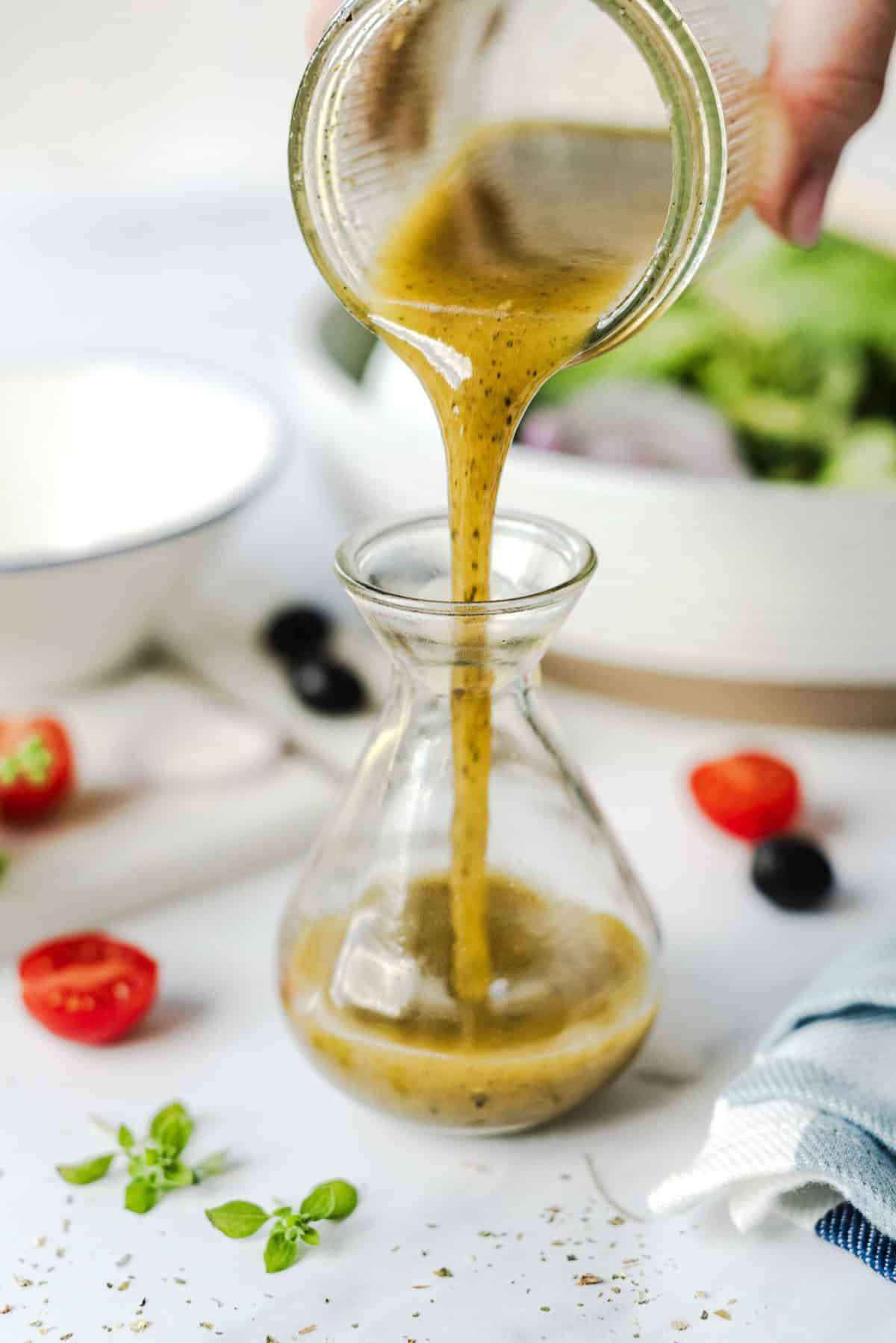
Greek salad dressing is excellent on pretty much any salad you can come up with, but I think drizzling it all over a classic Greek Cucumber Salad is a great place to start! My personal favorite salad with this dressing is The Best Quinoa Salad You Will Ever Try (trust the name). Just skip the dressing suggested in this recipe.
If you want to incorporate Greek salad dressing into different meals, it makes a mouthwatering marinade for Air-Fryer Chicken Breast or Oven-Baked Lamb Chops.
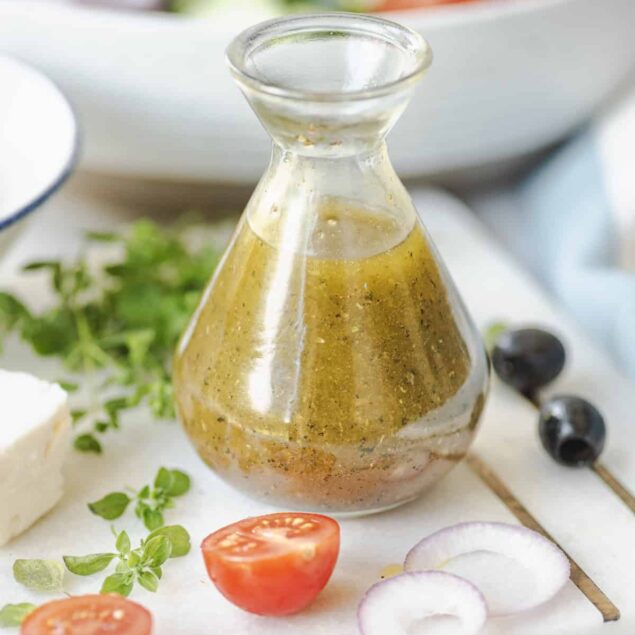
Ingredients
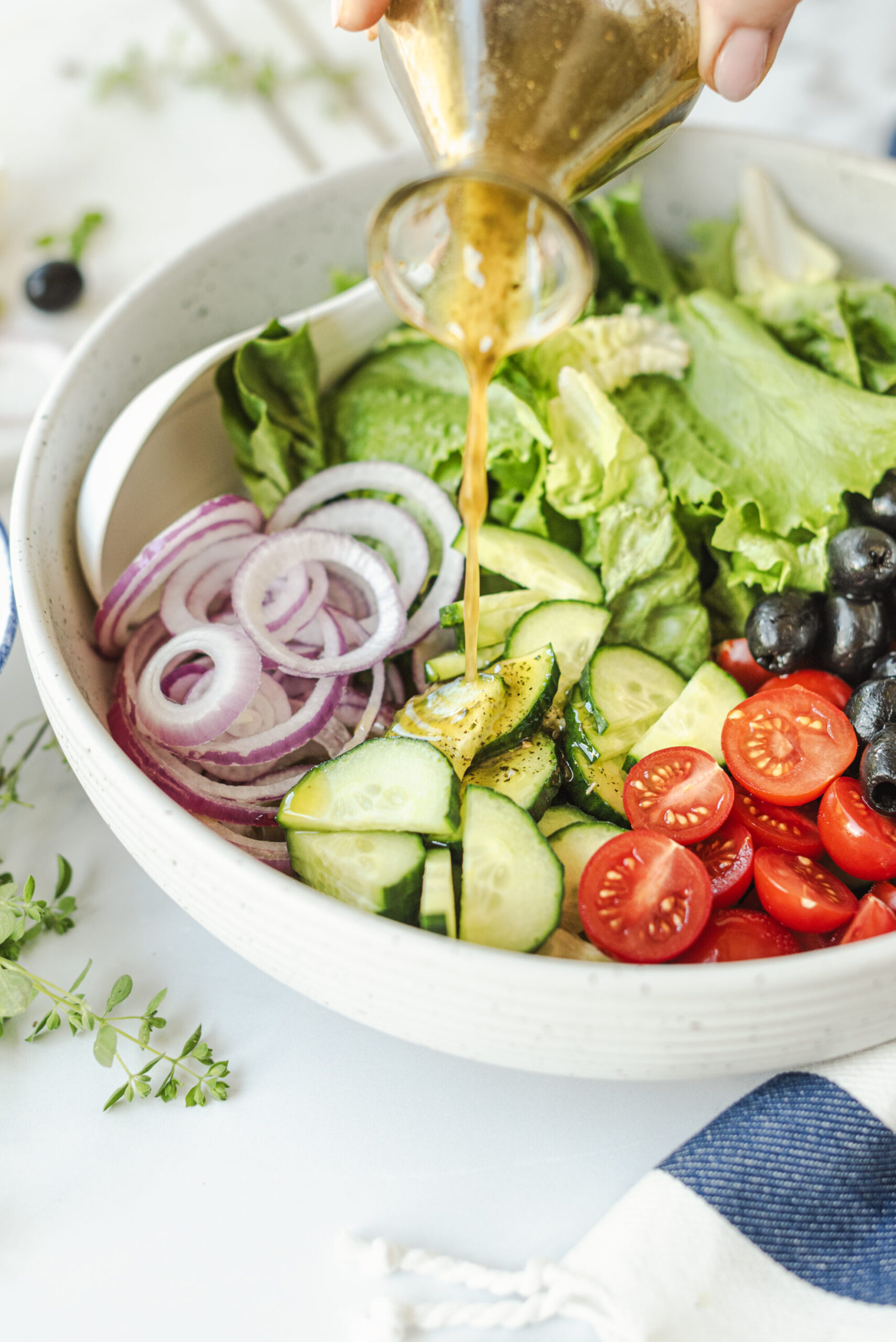
- 1/2 cup extra-virgin olive oil
- 3 tablespoons red wine vinegar
- 1 tablespoon fresh lemon juice
- 2 cloves garlic minced
- 1 teaspoon dried oregano
- 1/2 teaspoon Dijon mustard
- 1/2 teaspoon sea salt
- 1/4 teaspoon freshly-ground black pepper
Instructions
- In a small bowl or jar, combine olive oil, red wine vinegar, lemon juice, minced garlic, oregano, mustard, salt, and pepper.

- Whisk or shake the mixture vigorously until the ingredients are well combined and the dressing is slightly emulsified.

- Taste and adjust seasoning if necessary. Use immediately or store in the refrigerator for up to 2 weeks.
Nutrition Info:
Nutrition information are estimates only and may vary based on the specific brands, ingredients, and portion sizes you use. This data is provided for informational purposes only.



Leave a Comment