

This spicy, sweet, and salty Gochujang Sauce Recipe will light up your rice bowls, bibimbap, and veggie stir-fry dishes with its deep, complex flavor.
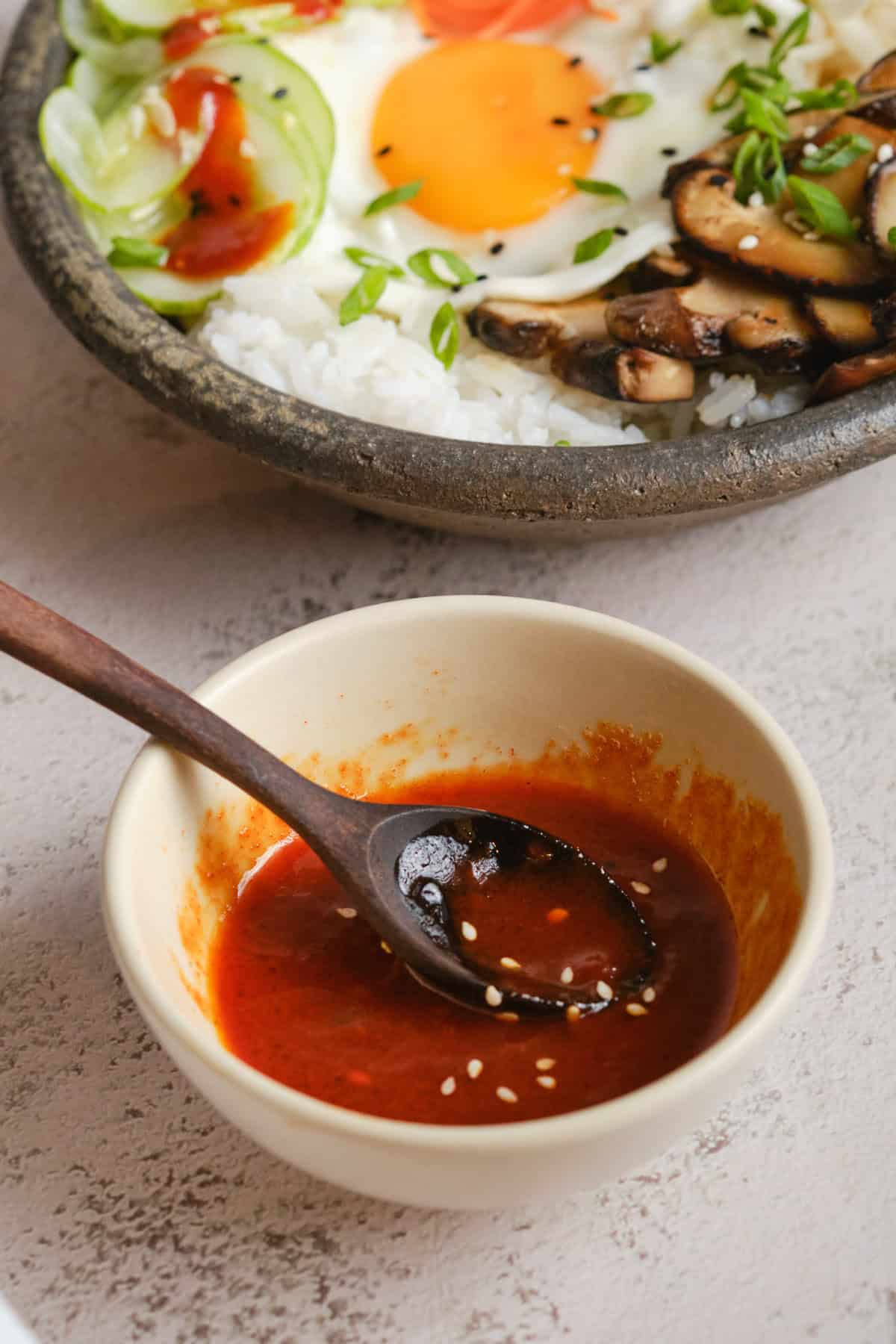
For centuries, Koreans have been making gochujang—a signature red pepper paste made out of chili peppers, fermented soybeans, salt, and glutinous rice flour. While varieties of Korean pepper pastes have been documented historically as far back as the mid-9th century, gochujang specifically arose from the introduction of chili peppers to Korea by Portuguese merchants in the early 16th century. This thick concoction can be rubbed on whole cabbage leaves with salt, then fermented with carrots, ginger, garlic, and radishes to create crunchy, aromatic kimchi.
The rich, spicy-sweet, fermented flavors of gochujang paste aren’t only for making kimchi, though. You can make the paste into a sauce, which adds a bright, Korean-inspired flavor to tons of dishes.
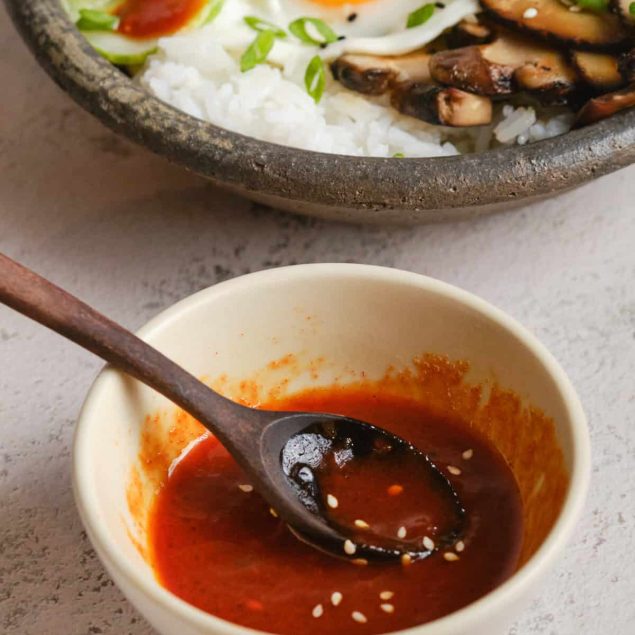
This gochujang sauce recipe takes all the intense flavors of the bright red pepper paste and adds a touch of rice vinegar, the nuttiness of sesame oil, and the sweet notes of honey. The result is an incredibly versatile sauce that you can enjoy on dumplings, stir-fry dishes, and anything over a bowl of rice—such as bibimbap!
Is This Gochujang Sauce Recipe Healthy?
This recipe contains a lot of gochujang paste, which is low in calories and fat and high in carotenoids, capsaicinoids, and flavonoids—all of which are antioxidants. Rice vinegar doesn’t add much notable nutritional value, but sesame oil is a good source of healthy mono- and polyunsaturated fats, and sesame seeds add small amounts of protein and fiber. The honey adds some sugar to the sauce, but not in high amounts. If you’re concerned about sodium intake, keep in mind that some brands of gochujang paste are higher in sodium than others, so be sure to look at the label when you’re shopping!
All in all, this recipe is suitable for vegetarians and can work for vegan diets if you use the suggested maple syrup swap instead of honey. It can be made gluten-free by ensuring the gochujang paste is made without gluten.
More About Gochujang Paste
If you’re new to gochujang paste, don’t worry. It’s relatively easy to find, use, and store. You can find it at virtually any Asian grocery store, and some regular grocery stores even carry it. It typically comes in a red tub, so it’s hard to miss.
Say you go to an Asian grocery store, and there 12 varieties of gochujang to choose from. Suddenly, you have no idea what you’re looking for! Gochujang paste comes in different spice levels. If you aren’t a fan of very spicy food, I suggest you aim for the “regular” or “medium” spice level. If you’d rather have it way less spicy, look for “slight hot” or “mild hot” on the label.
One final note: unless you’re planning to cook a lot of gochujang dishes, go for the smaller tub of paste. You don’t need much of it to flavor a stir-fry or make this sauce recipe. Tightly closed, gochujang will stay well in the fridge for at least a year.
How Do I Store Leftovers?
Leftover gochujang sauce can be stored in the fridge in an airtight container, and it will stay good for up to 2 weeks. You can freeze it, if you like, for up to 3 months. I like to freeze it in ice cube trays for a few hours until the cubes are solid, and then transfer them to a Ziploc freezer bag for convenient storage.
Serving Suggestions
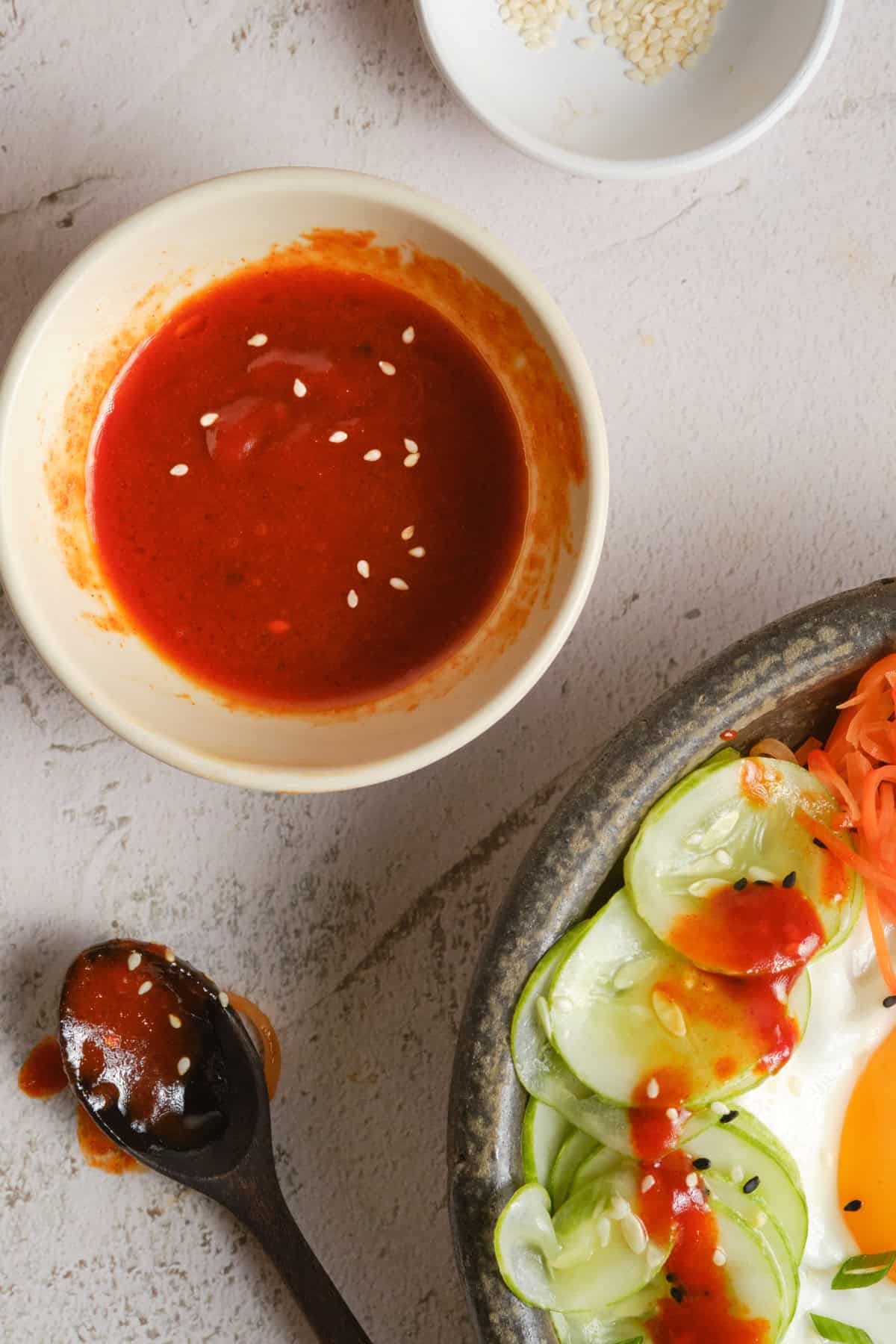
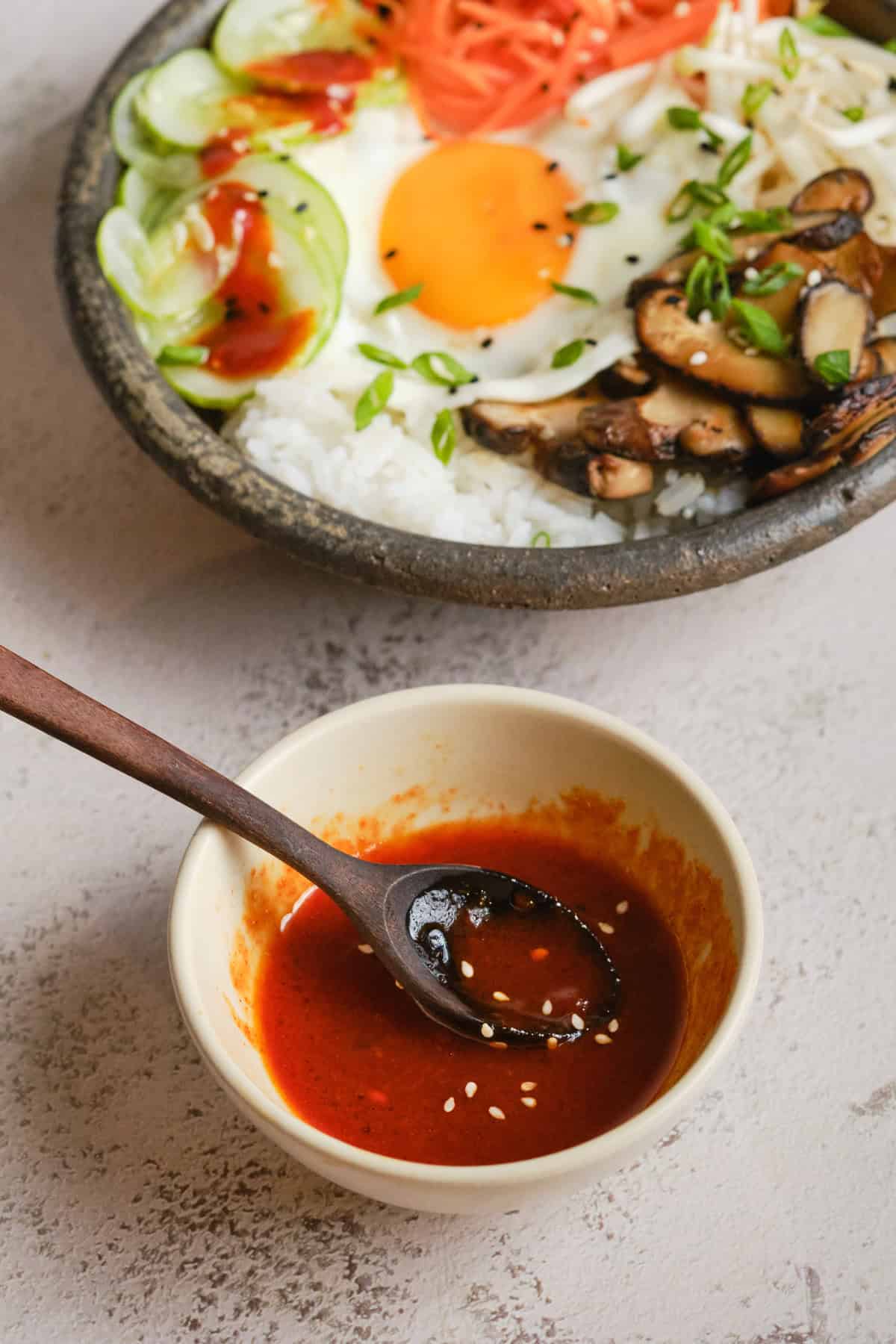
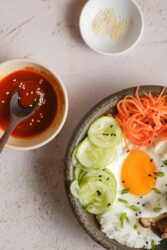
This sauce is versatile and can be used as a dip, a salad dressing, a sauce for rice and stir-fried dishes, or a marinade. Try it on this Bibimbap Recipe, as bibimbap and gochujang sauce go hand in hand. I also love it as a marinade for Juicy Grilled Chicken Breast, drizzled on top of a Chopped Salad, or incorporated into this Chicken Stir-Fry.
Ingredients
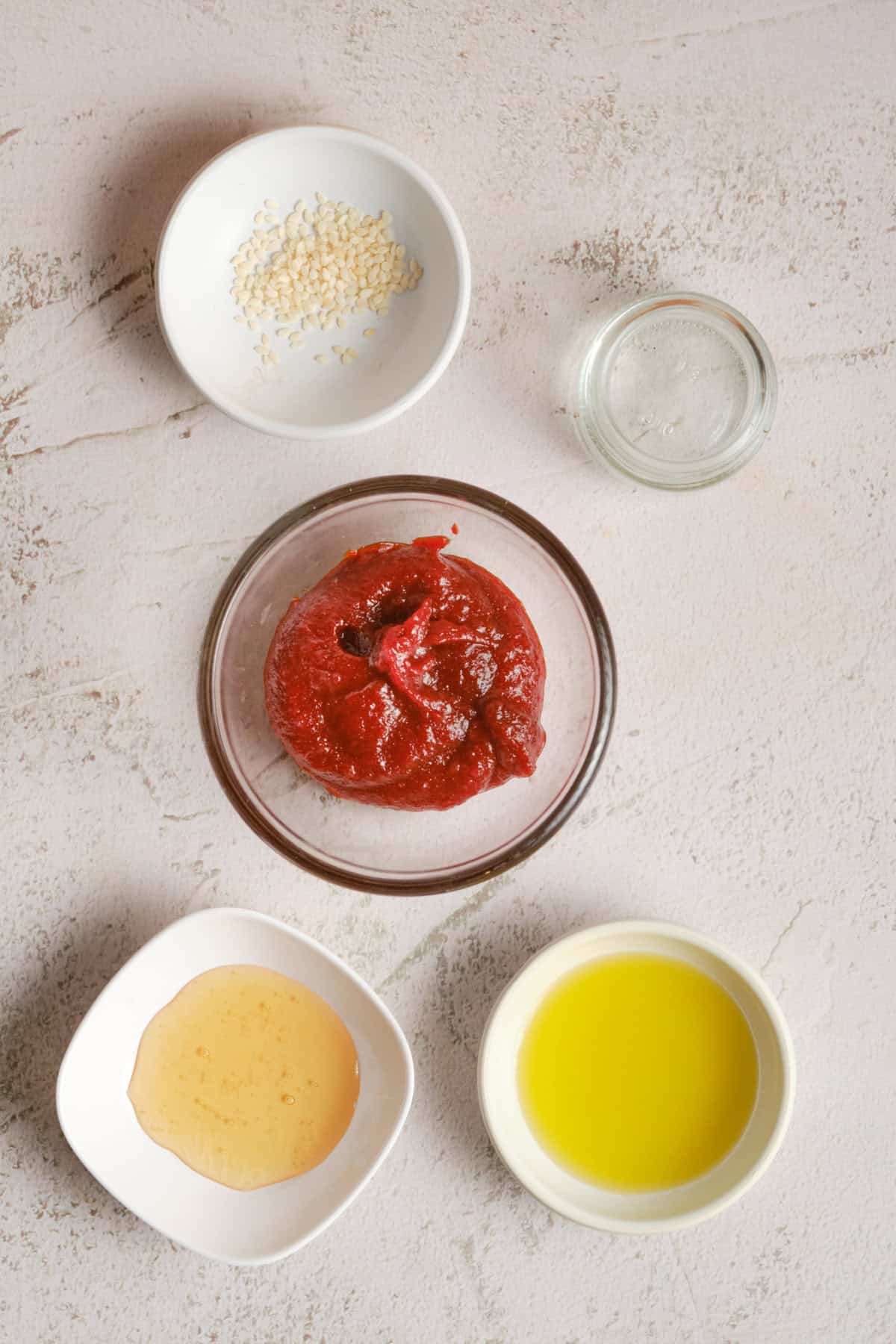
- 2 tablespoons gochujang paste
- 1 tablespoon rice vinegar
- 1 tablespoon sesame oil
- 1 tablespoon honey or maple syrup
- White sesame seeds for topping
Instructions
- In a small bowl, add the gochujang paste, rice vinegar, sesame oil, and honey or maple syrup.
- Whisk well until combined.
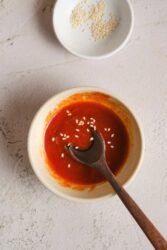
- Transfer the gochujang sauce to a bowl and top with white sesame seeds. Serve this sauce alongside bibimbap or any rice bowl or stir-fry dish.
Tips & Notes:
Nutrition Info:
Nutrition information are estimates only and may vary based on the specific brands, ingredients, and portion sizes you use. This data is provided for informational purposes only.


Leave a Comment