

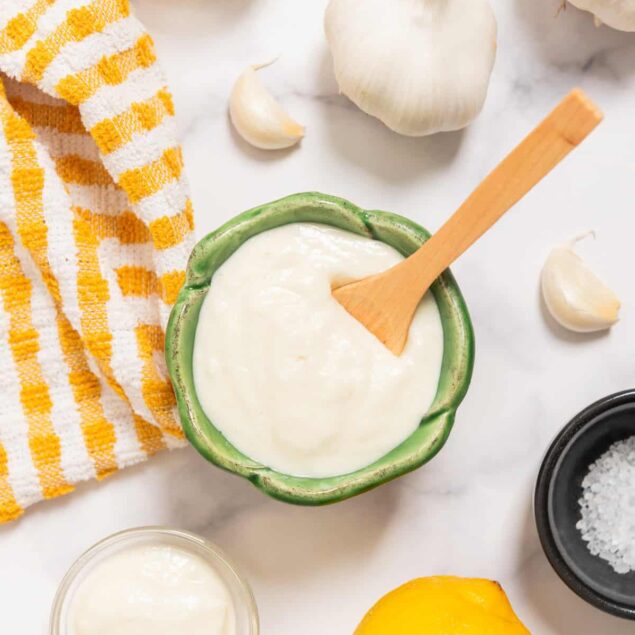
Creamy, garlicky Toum is divine on chicken or as a dip, and it’s surprisingly simple to make at home.
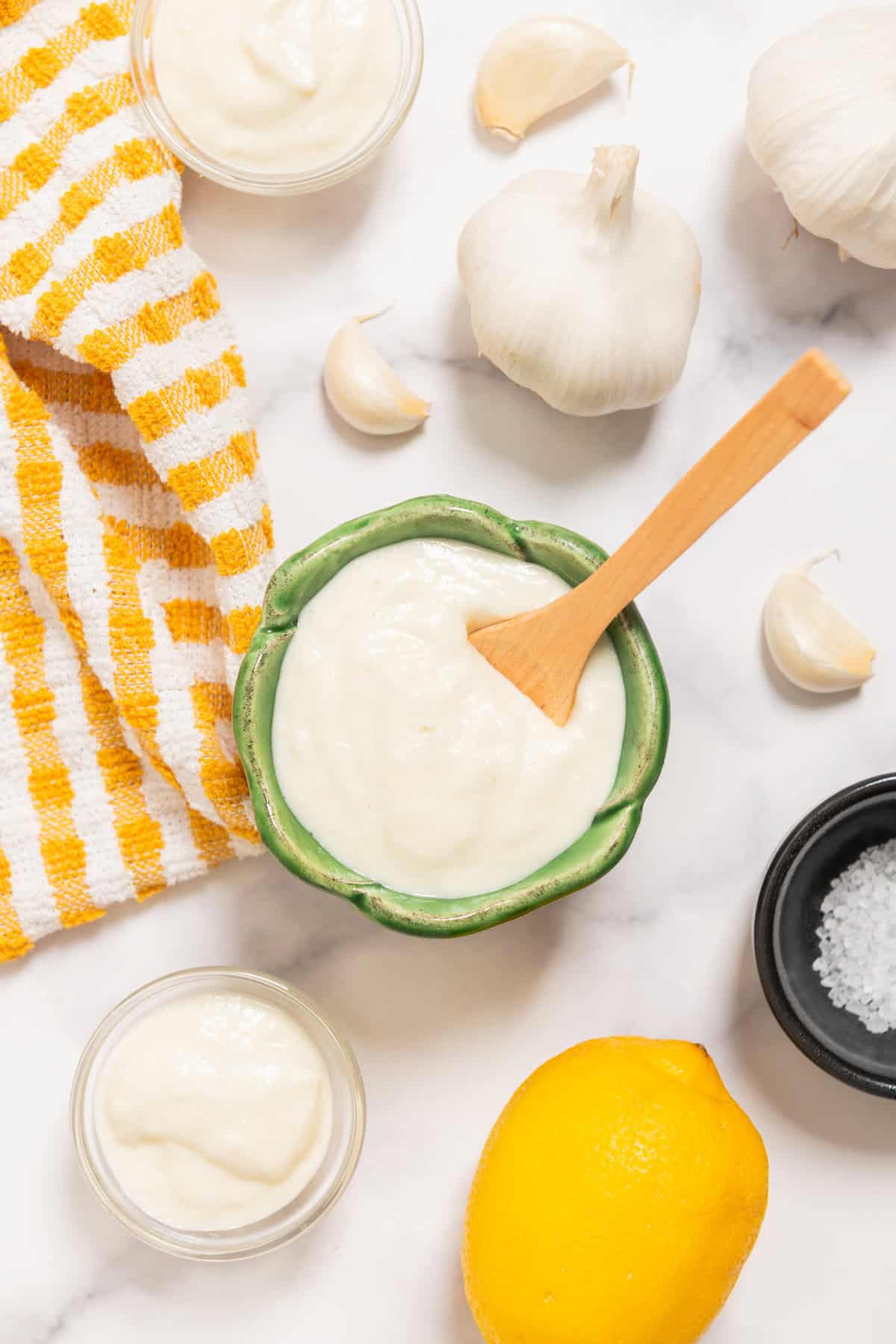
As a self-described “sauce person,” I’ve spent a silly amount of time seeking out sauces that taste good on French fries. If there’s something new out there that could be a good match for fried potatoes, I’m first in line to try it. Aioli-style dips have been a favorite for several years now, so I thought I had tried them all.
A few years ago, I walked into a small Lebanese restaurant in New Orleans with a friend for lunch. We both got the chicken shawarma plates, which came with fluffy, fresh focaccia bread and a side of… aioli? It was white, but more airy than aioli, and a lot more garlicky than any aioli I’ve ever had. I became obsessed with the stuff. That was my first introduction to toum.
Toum originated in Lebanon and is commonly found in the Levant region, where it’s served with many different chicken dishes and used as a dip for—wait for it—French fries! It’s like aioli, but it does not contain eggs; rather, it’s an emulsion of oil, lemon juice, and a lot of garlic.
Is Toum Healthy?
Toum is mostly comprised of grapeseed or canola oil and garlic, which both have some health benefits. Garlic is known for its heart-healthy properties, and if you choose to use grapeseed oil, it provides mostly healthy fats along with vitamin E. The lemon juice brings some vitamin C to the sauce, too. But because of all the oil, this sauce is high in calories and fat and low in substantive nutrition, like protein, carbs, and fiber. So, it’s best to treat toum like any other rich aioli-style dip and eat it in moderation.
Toum Vs. Aioli
Toum and aioli sure do look alike. They’re both emulsions, and they even use some of the same flavors. So what’s the difference? Very little, as it turns out!
Origins: Both toum and aioli originated around the Mediterranean coast, though in different geographic regions. Toum is Lebanese, while aioli originated in Spain and France, where they border the Mediterranean.
Ingredients: Toum is an emulsion of oil and garlic and often includes lemon juice. Aioli is also an emulsion of oil and garlic, but there are many modern variants that contain lemon juice and eggs or egg yolks. There is usually less garlic in aioli compared to toum.
Ultimately, the biggest difference between the two sauces is that toum typically does not include eggs, while aioli often (but not always) includes eggs.
How Do I Store Leftovers?
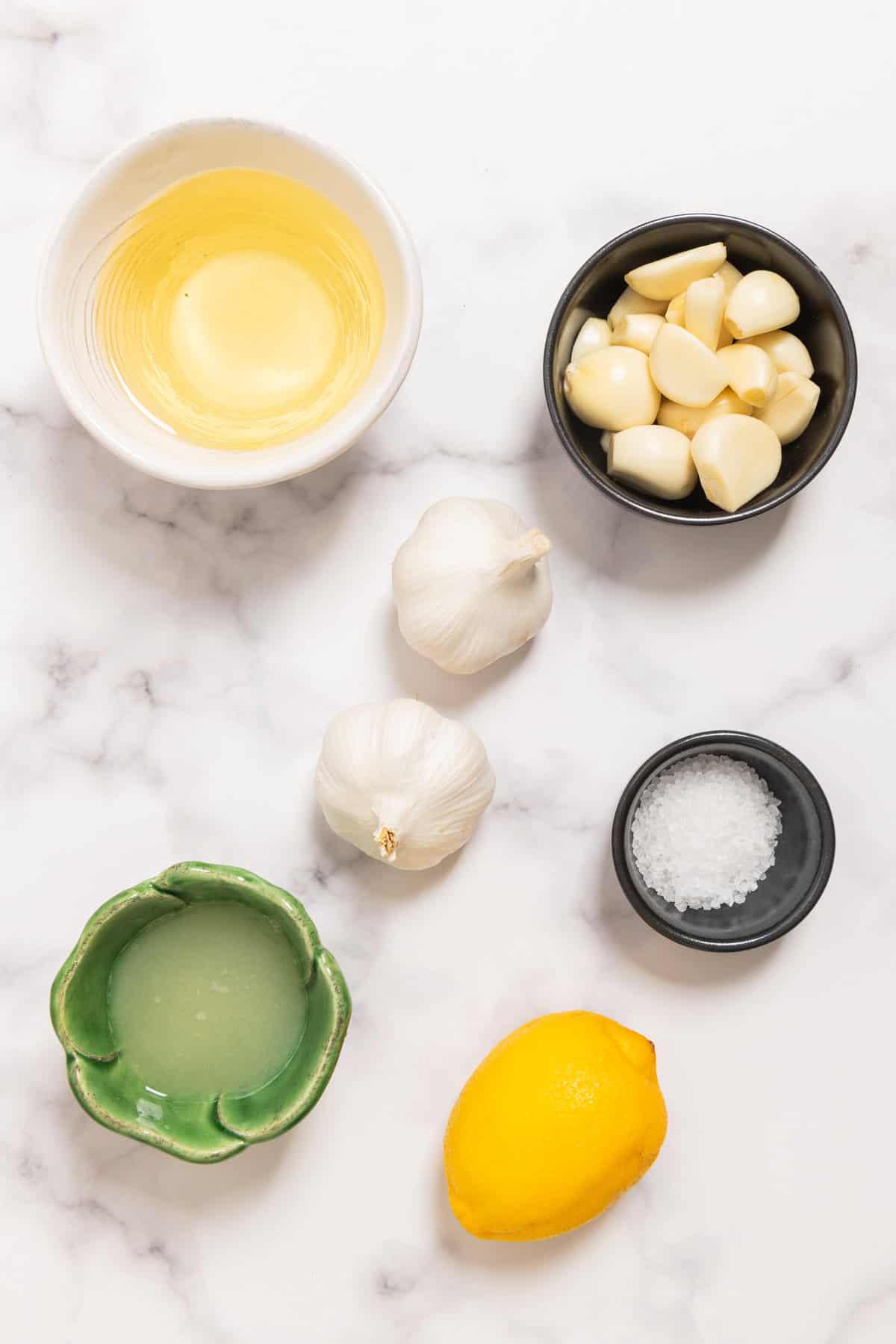
I store leftover toum in an airtight container in the fridge. Refrigerated toum should remain good for at least 5 days, and some people keep it for up to 1 month. Freezing toum might affect the texture, so I don’t recommend it.
Serving Suggestions
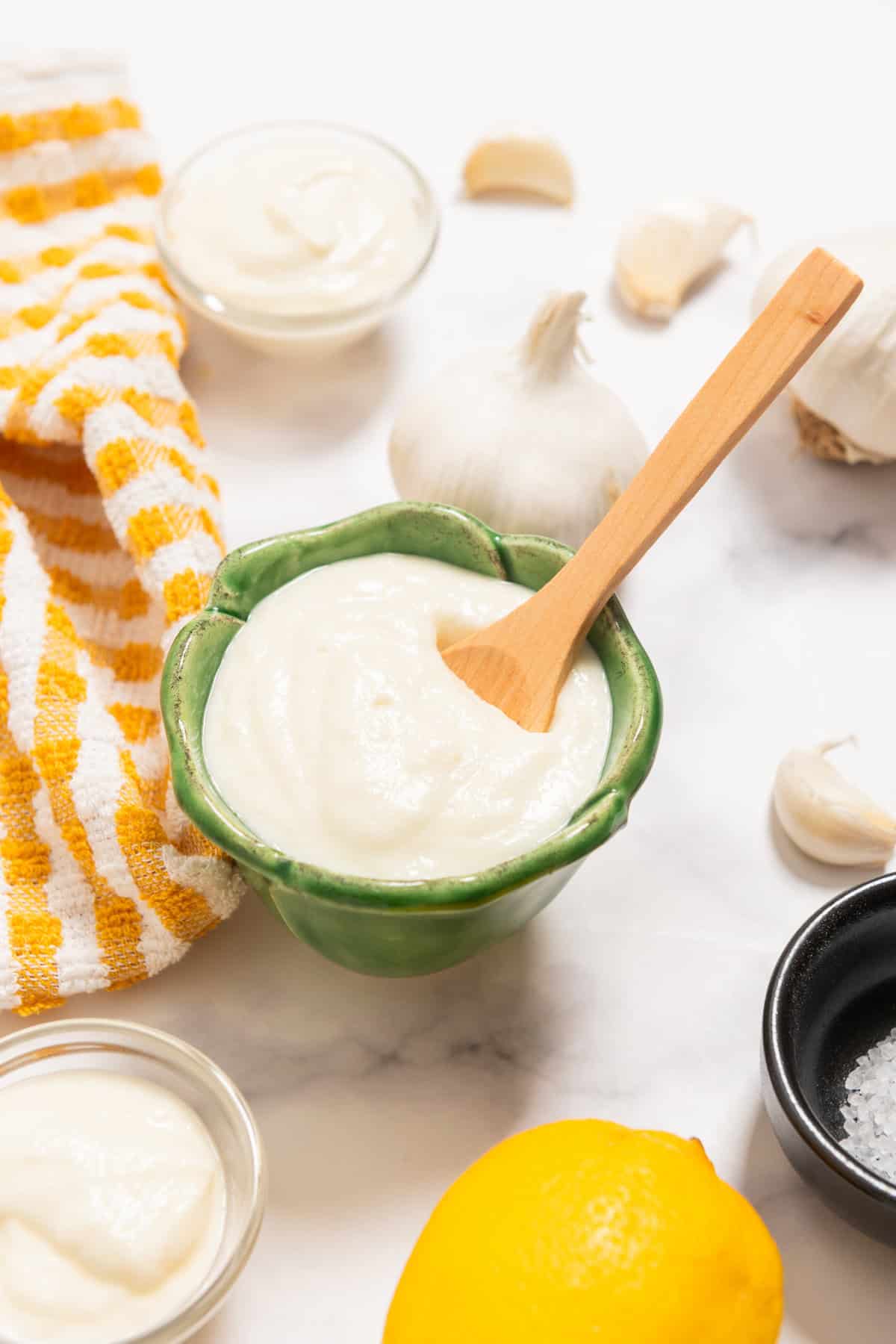
There are so many dishes that I think benefit from a side of toum. For starters, Air-Fryer Falafel stuffed in a pita with some toum is incredible. These Middle Eastern Slow-Cooker Chicken Thighs, these Paleo Grilled Moroccan Chicken Bowls, or practically any main chicken dish, is going to be excellent with toum.
If you don’t have the energy to cook falafel or chicken, there’s always my old standby: a big plate of hot Homemade French Fries.
Ingredients
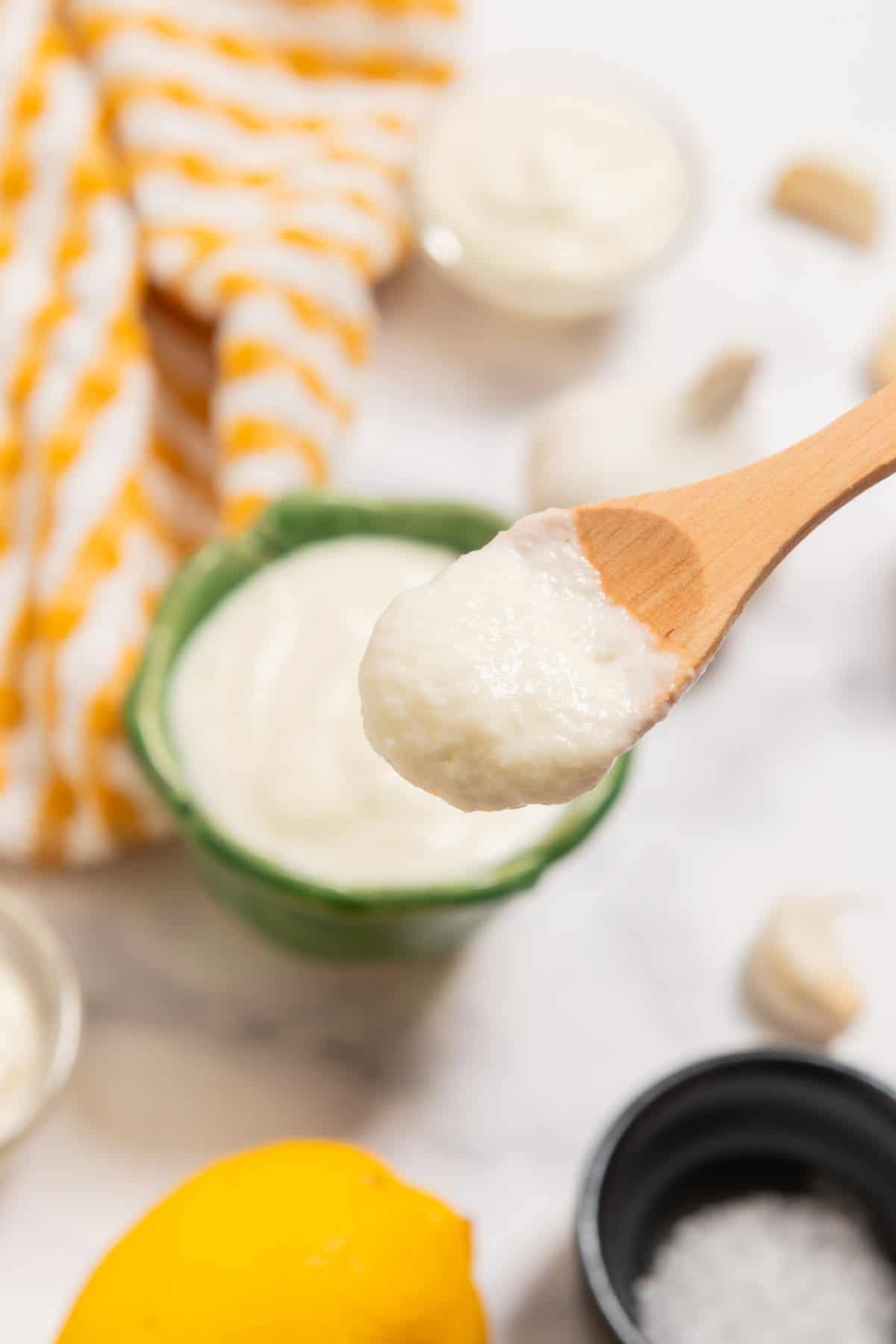
- 1 cup garlic cloves peeled
- 1 teaspoon kosher salt
- ⅓ cup lemon juice freshly squeezed
- 3 cups neutral oil such as grapeseed or canola
Instructions
- In a food processor, combine the garlic cloves and kosher salt. Pulse until the garlic is finely minced into a paste, scraping down the sides as needed.

- With the processor running, slowly add the lemon juice, then gradually drizzle in the oil in a thin, steady stream until the mixture becomes thick and creamy, resembling mayonnaise.

- Once emulsified, transfer the toum to an airtight container and refrigerate. Allow it to rest for a few hours before using to let the flavors meld.
Nutrition Info:
Nutrition information are estimates only and may vary based on the specific brands, ingredients, and portion sizes you use. This data is provided for informational purposes only.



Leave a Comment