

A zesty spread that’s perfect on toast but can also add a bold shot of sun-drenched flavor to a variety of dishes!
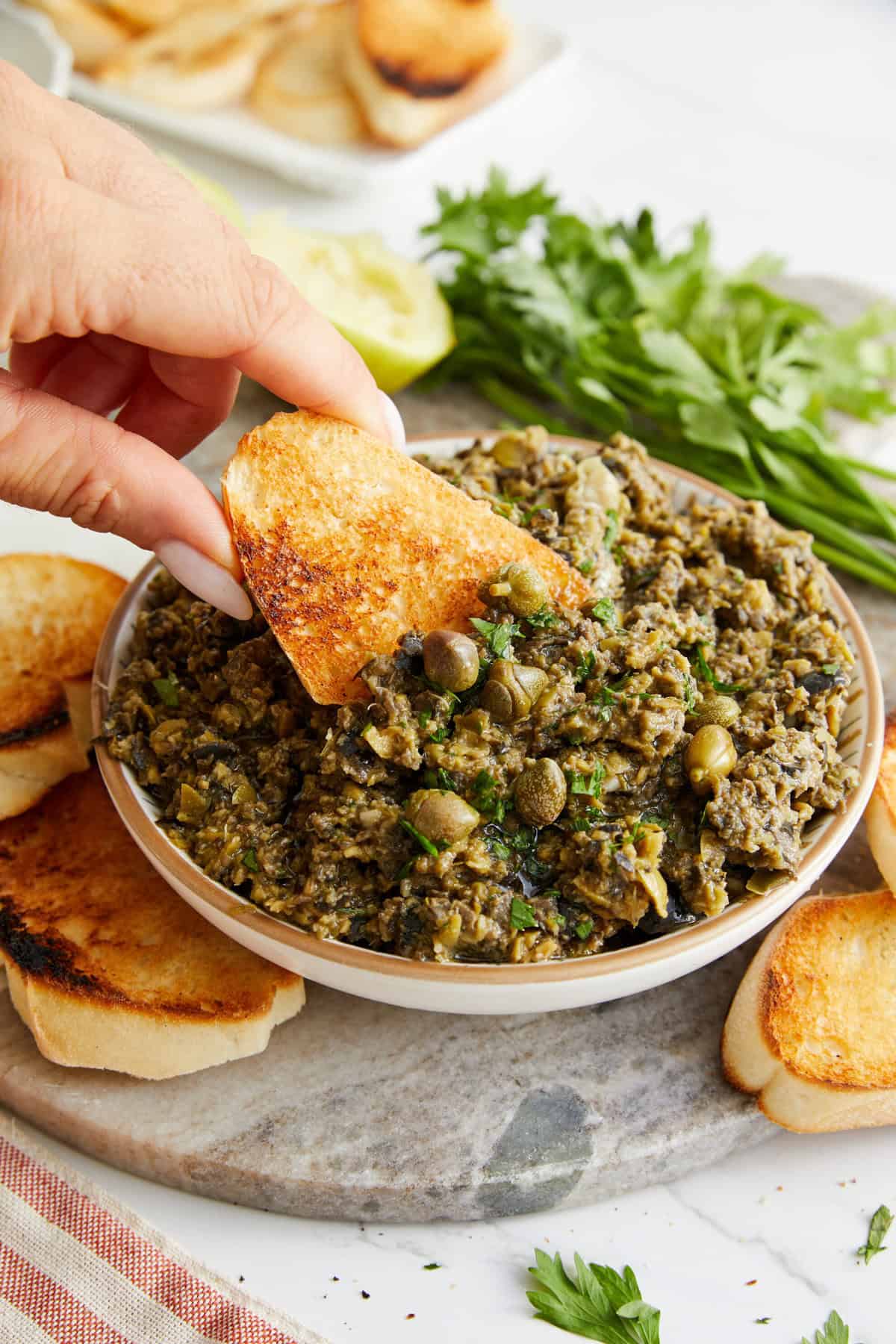
If there is one taste that immediately takes me back to France, it’s the zesty deliciousness of tapenade. Though the origins of olive pastes can be traced back to ancient times when they were already being enjoyed by the Greeks and Romans, the classic French version we now know and love was probably first made in Marseille, a vibrant Mediterranean city in Provence, in 1880. It is said to have been the creation of Chef Meynier—of restaurant La Maison Dorée—who delighted his guests by serving it atop hard-boiled eggs. Though olives form the base of the spread, the name is actually derived from the word tapenas, meaning “capers” in Provençal. And indeed, these zesty little nuggets of flavor are also an essential ingredient in tapenade.
I have fond memories of eating tapenade with friends while vacationing in the sunny south of France, but there’s no need to book a plane ticket just yet. With a few simple ingredients, you can experience the vibrant, zingy taste of an olive spread that is so much more than the sum of its parts. If you love robust flavors, the tangy salinity of this delectable tapenade will have you saying, “Ooh la la!”
The perfect consistency
Though this recipe calls for making the tapenade in a flash with the use of a food processor, if you’d like a slightly thicker consistency, you can do it without a food processor. Chop up the olives and capers first before pounding them with the garlic using a pestle and mortar, much in the same way you would make a traditional pesto. Once you have a paste-like consistency, stir in the finely chopped parsley and lemon juice before slowly drizzling in the oil. You may need a little less oil than the quarter cup suggested in this recipe.
How do I store leftovers?
Tapenade can be made in advance and stored in the fridge in an airtight container for up to 5 days. With time, the flavors will meld and become stronger, so keep that in mind. In order to prevent the tapenade from spoiling and drying out, keep it covered with a thin layer of oil. Stir before serving.
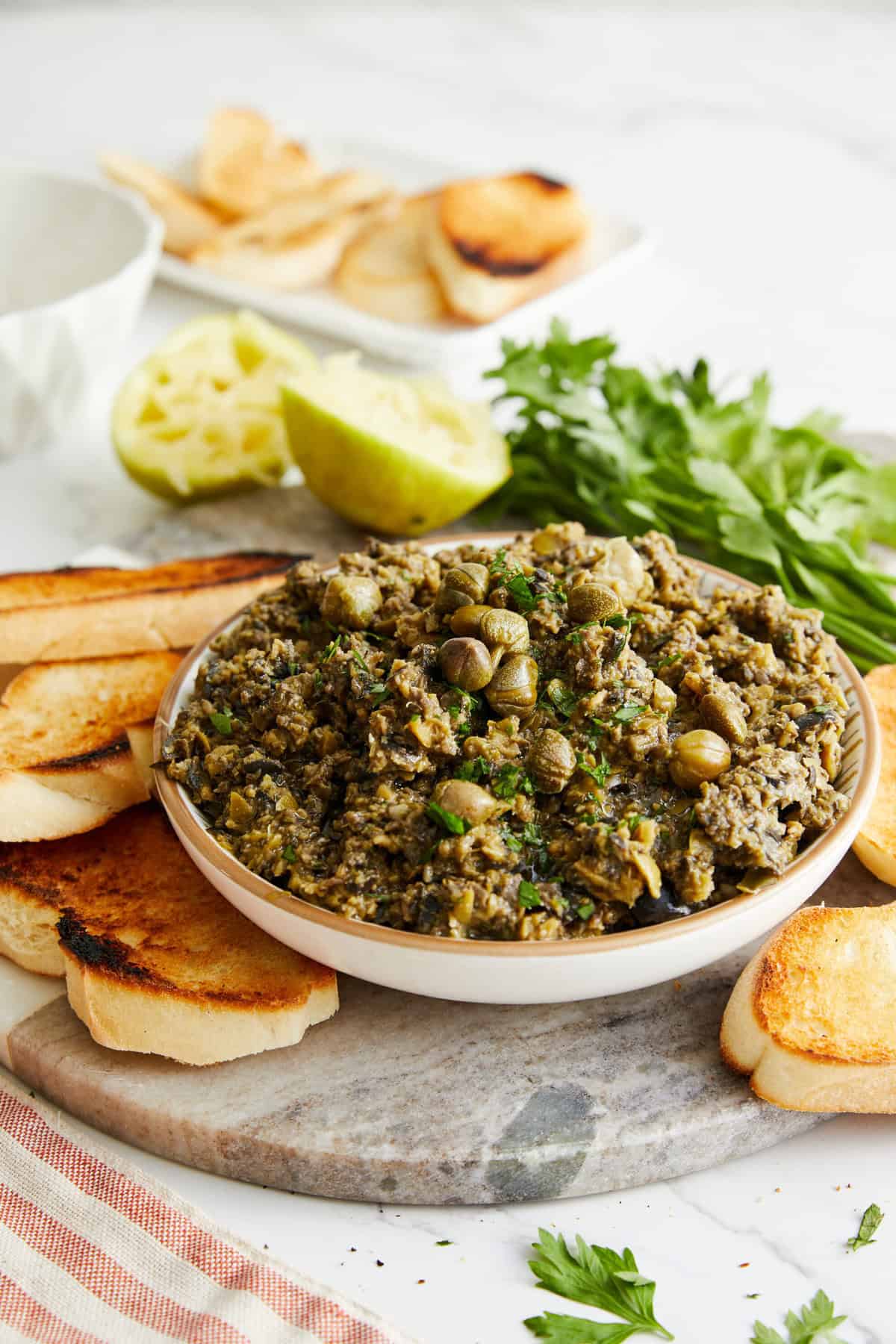
Serving suggestions
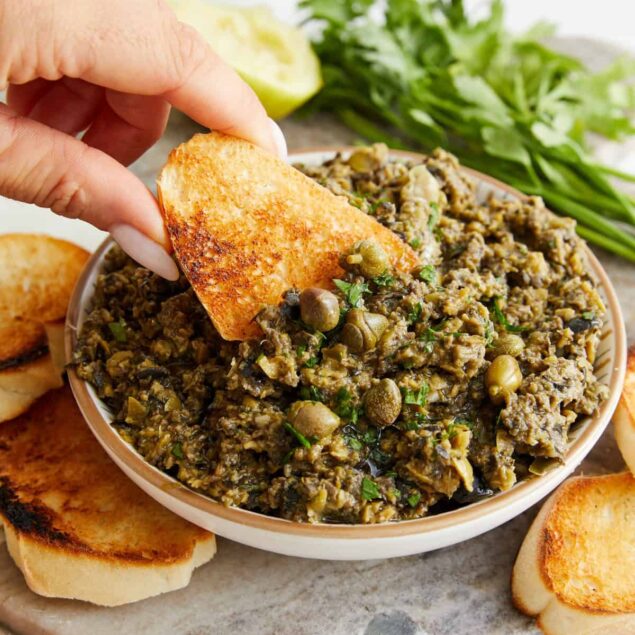
Though tapenade is often served as an appetizer on thin slices of crusty French baguette, toast, or crackers, it can also be used as a dip for crisp, fresh veggies such as carrots, cucumbers, pink radishes, and cherry tomatoes. But the possibilities don’t stop there!
Tapenade can add zest to a variety of dishes. Stir it into mashed potatoes or cooked vegetables (I especially love it with green beans). Use it to lift the flavor of chicken or fish. Or, add a little to elevate the zing of a basic Salad Dressing. And my favorite tip? Line ready-made puff pastry with a layer of tapenade, top with heirloom tomatoes and a drizzle of olive oil, and pop in a preheated (400°F) oven. Bake for 20 minutes, or until the pastry is golden and beautifully crisp. Finish with a dash of sea salt flakes and serve warm!
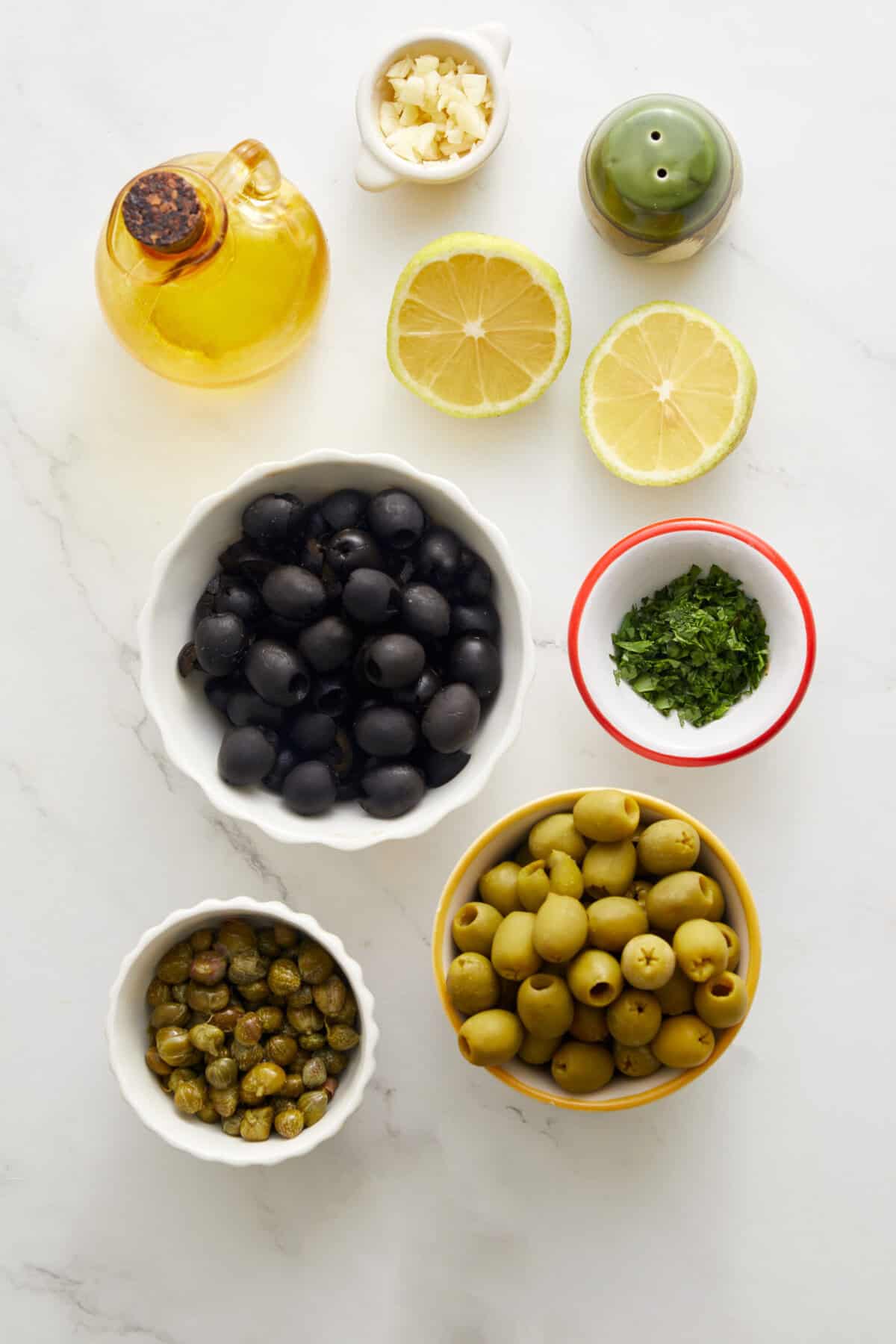
Ingredients
- 1 cup pitted kalamata olives
- 1 cup pitted green olives
- 2 tablespoons capers drained
- 2 cloves garlic minced
- 1/4 cup fresh parsley chopped
- 1 tablespoon lemon juice
- Black pepper to taste
- 1/4 cup extra-virgin olive oil
Instructions
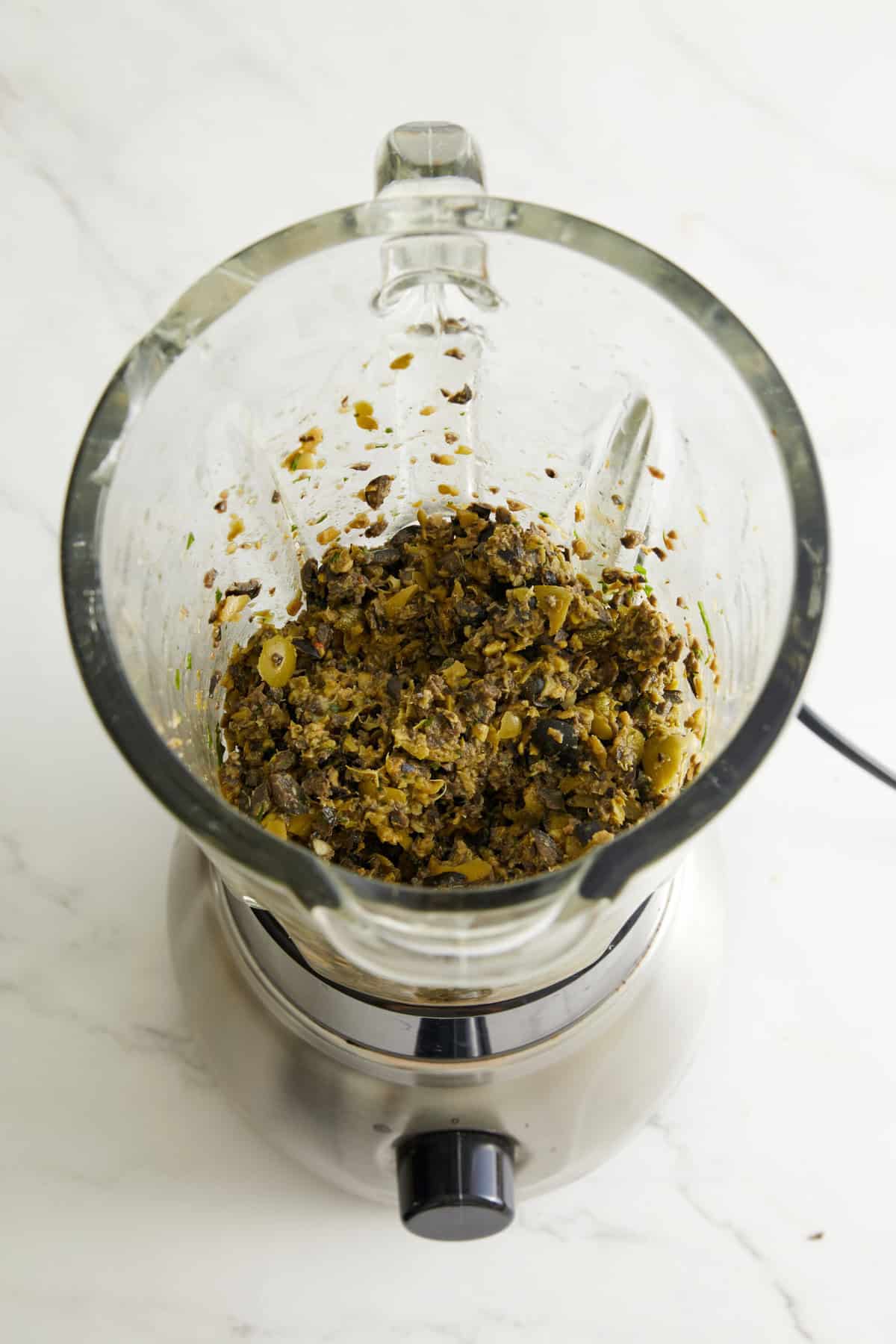
- In a food processor, combine kalamata olives, green olives, capers, minced garlic, chopped parsley, lemon juice, and black pepper.

- Pulse the mixture until it is coarsely chopped, ensuring not to over-process to keep some texture. Scrape the sides of the food processor occasionally between pulses.

- Drizzle in half of the olive oil and pulse a couple of times to combine.

- Transfer the tapenade to a bowl, drizzle with remaining extra virgin olive oil, and serve with slices of baguette or as a condiment.
Nutrition Info:
Nutrition information are estimates only and may vary based on the specific brands, ingredients, and portion sizes you use. This data is provided for informational purposes only.


Leave a Comment