

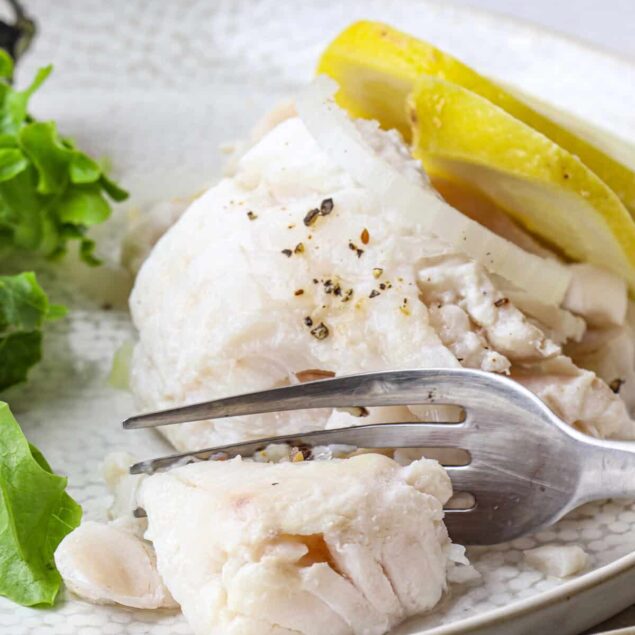
Quick, easy, and healthy, this Poached Fish recipe perfectly produces tender and flaky meat out of any fish you choose.
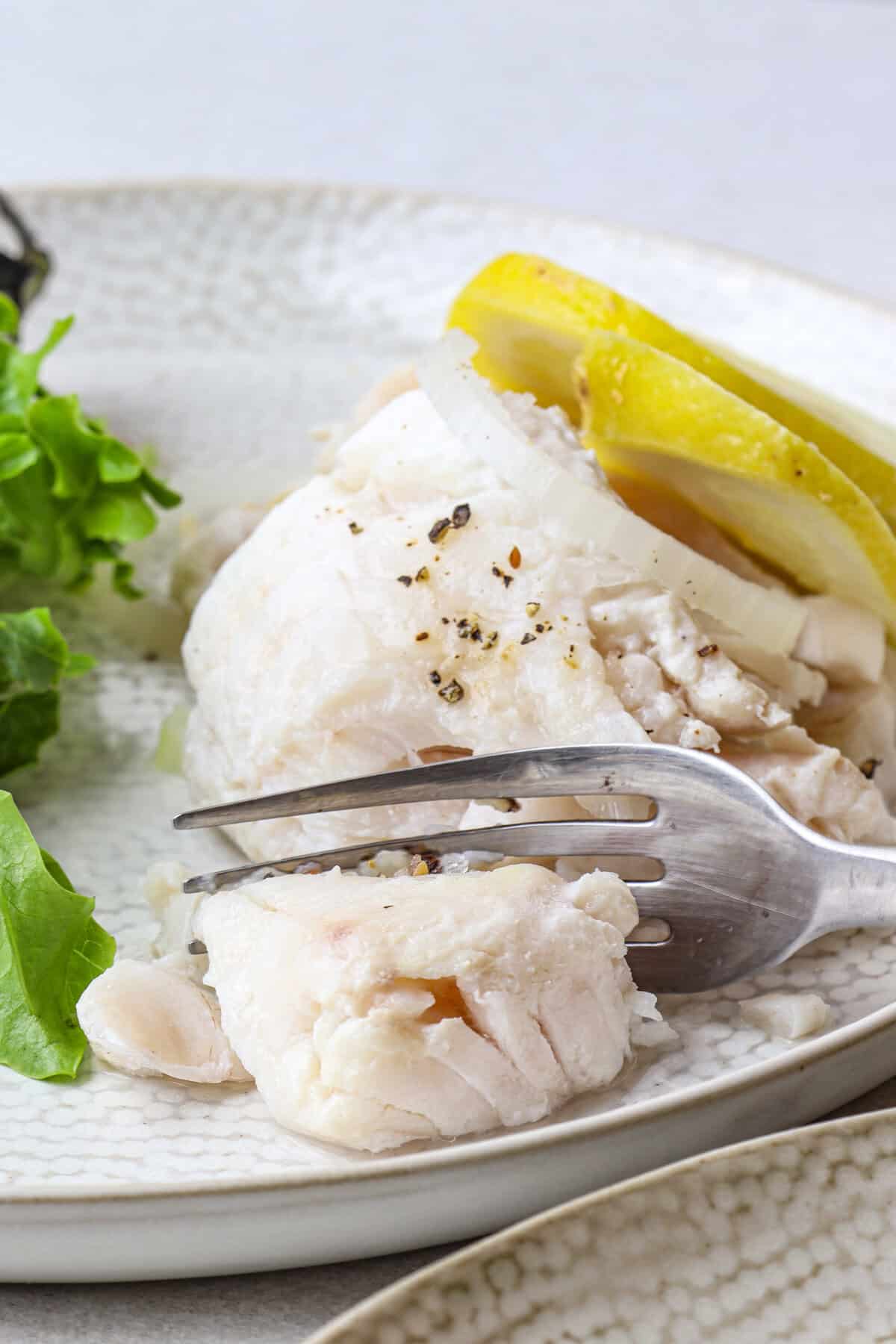
I must admit that I used to be intimidated by cooking fish. I figured that such delicate meat requires delicate treatment. It was a logic that stuck with me far longer than I care to admit. Then, a friend took me under her wing (or fin, perhaps) and showed me how easy a fish fry can be. Suddenly, a whole new world (er, sea) opened up to me. It was the biggest revelation in my seafood-cooking life. Until now.
Poaching fish makes my previous methods of fish preparation seem as complicated as brain surgery. It is so simple, it is almost foolproof. In no time, and with very little effort, anyone can have a perfectly flaky fish fillet on their plate. I almost feel like a fraud when I invite friends over for dinner, and they praise my entrée. Do I go fishing for compliments? No, but I won’t toss them back in the water either, if you know what I mean.
What had me hooked was the fact I could use this method with pretty much any kind of fish I fancied. This opens this recipe up to an ocean of possibilities. Do you have fish on hand but not sure how to cook it? Give poaching a go.
Is Poached Fish Healthy?
Poached fish is incredibly healthy. Fish provides a lean source of protein and omega-3 fatty acids, which are vital to both brain function and heart health. And by poaching, you’ll avoid using any fats, keeping the whole meal very light in calories.
Not surprisingly, this meal adheres to a Mediterranean diet, as well as low-carb, keto, Paleo, and gluten-free diets.
The Best Fish To Poach
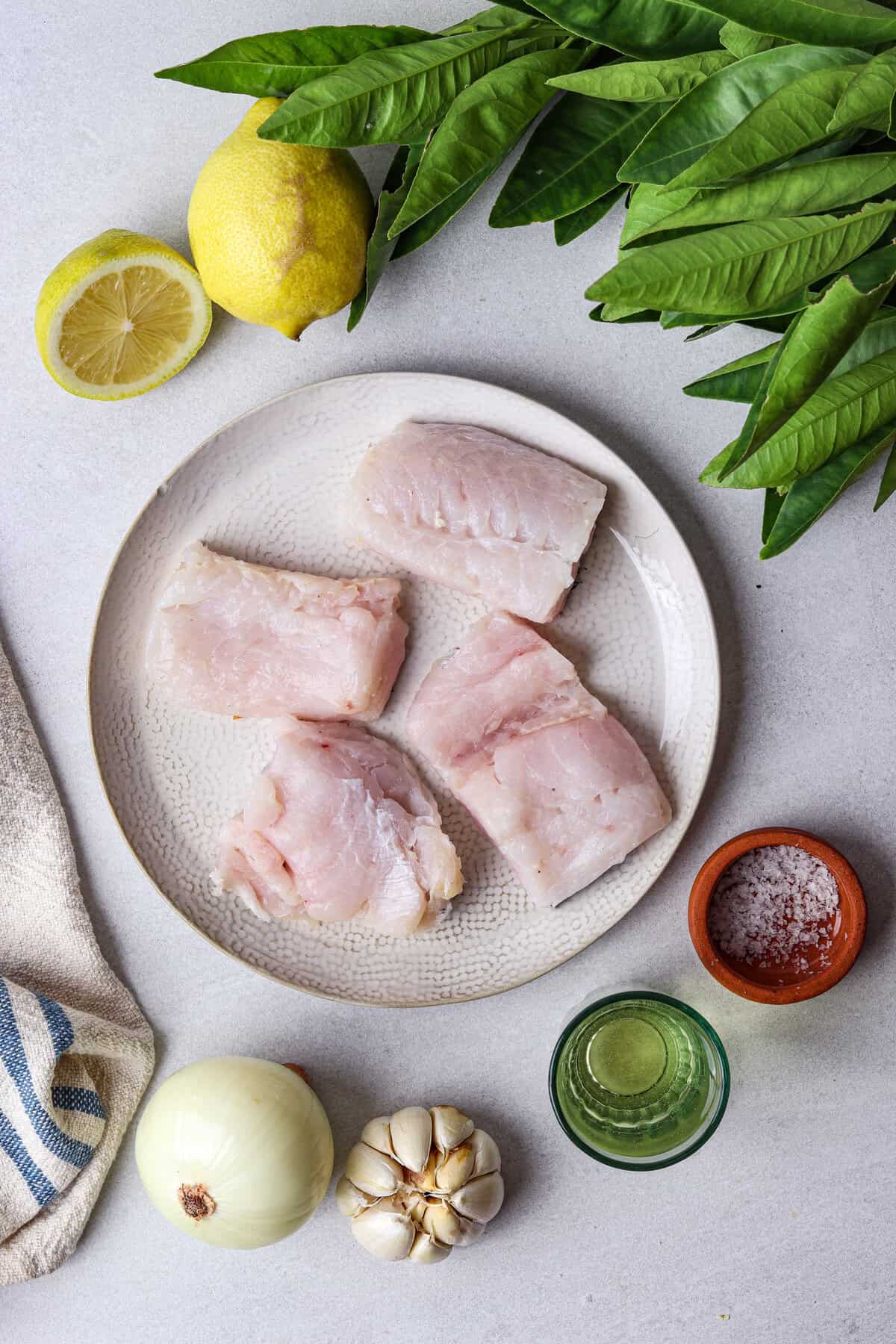
When poaching, it’s important you use fish that is firm enough to hold together in the cooking liquid. You will also want to find fresh fish with a mild, clean scent (it should not smell “fishy”). And, it’s always best to try to find fish that is ethically sourced and sustainable.
As for particular types of fish, these are some of my favorites:
Salmon: Fatty, somewhat buttery, and mildly sweet in flavor.
Cod: Slightly sweet, mild flavor with a delicate texture.
Halibut: Clean, slightly sweet taste with firm and flaky flesh.
Trout: Similar to salmon, but milder with a slightly nutty note.
Snapper: Lightly sweet and nutty with a firm and flaky texture.
How Do I Store Leftovers?
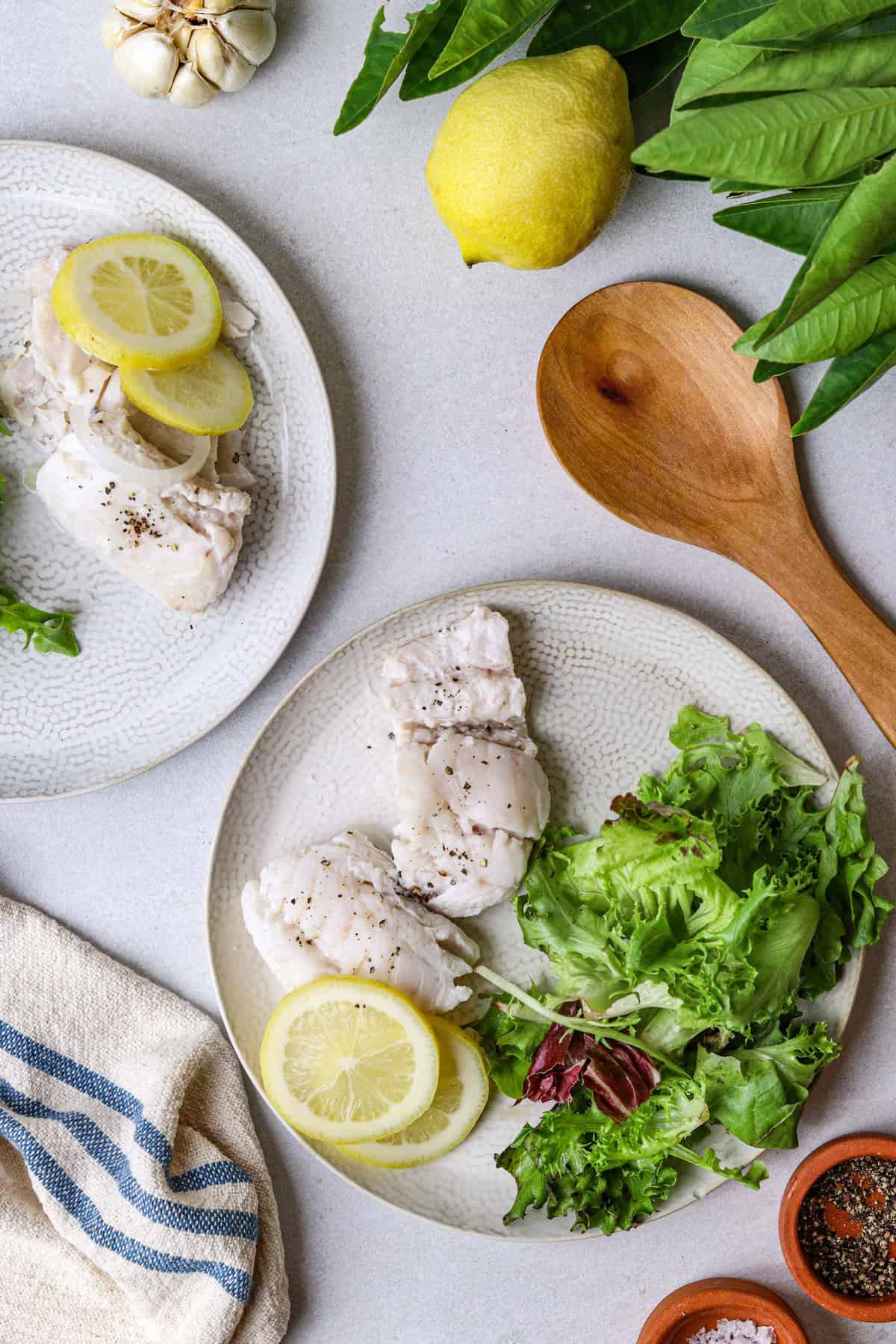
Let the fish cool, then store it in an airtight container in the fridge. It should last for around 2 days. To reheat, put it in the microwave on low power. I don’t recommend freezing it; the texture will change and will be less than palatable.
Serving Suggestions
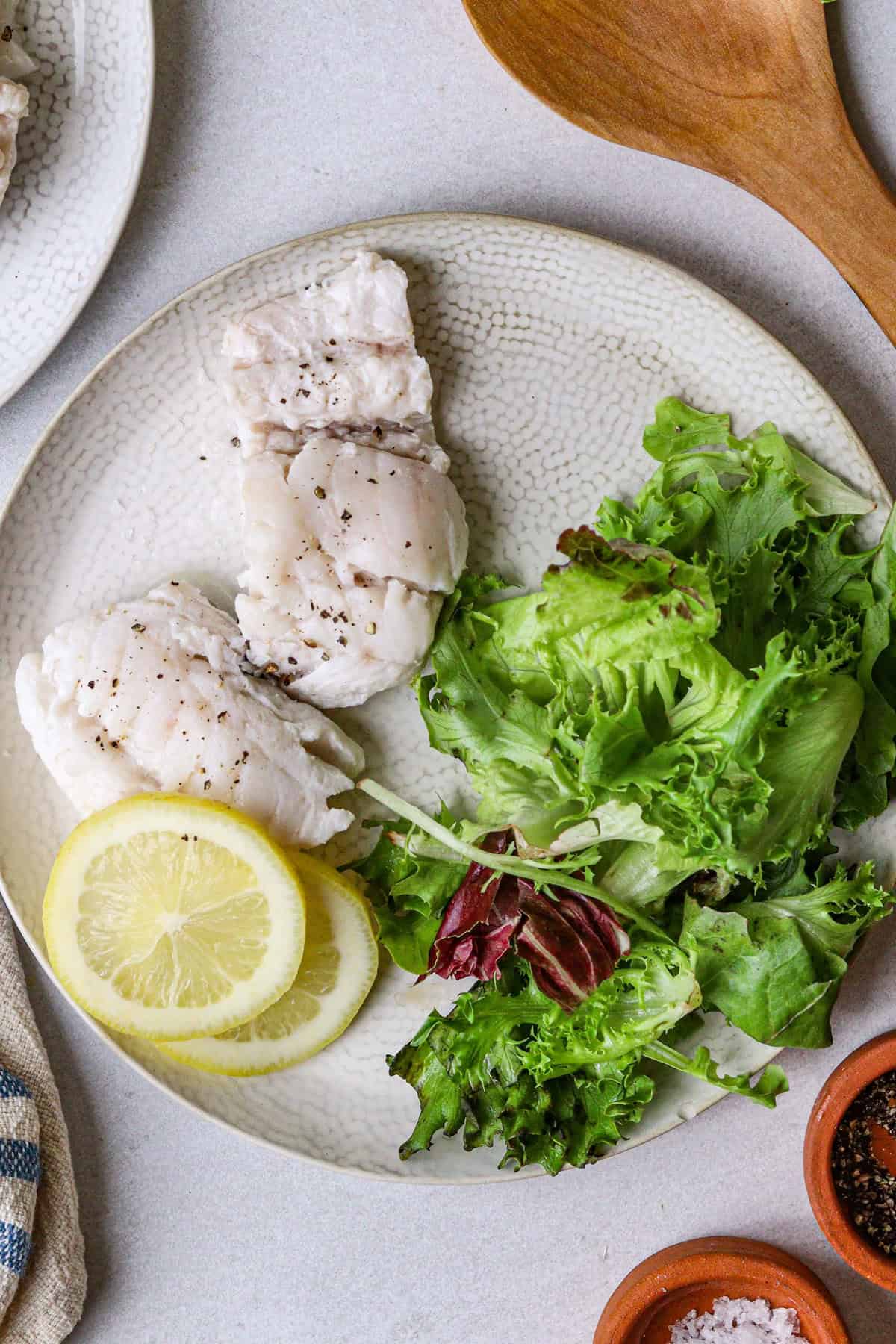
I usually call upon some Oven-Roasted Potatoes, Cilantro-Lime-Cauliflower Rice, or Asian-Inspired Roasted Broccoli as dependable side dishes whenever I serve fish. All three are healthy additions to this meal; all three taste great with the lemon, onion, and garlic. You can also do up a small pasta dish or side salad, along with a loaf of crusty bread to soak up that flavorful juice.
Ingredients
- 1/2 cup dry white wine
- 1/2 medium onion sliced
- 2 cloves garlic crushed
- 1/2 lemon sliced
- 1/2 teaspoon sea salt
- 4 fillets of your preferred fish
Instructions
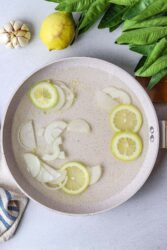
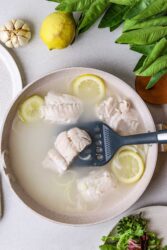
- Combine white wine, onion slices, crushed garlic, lemon slices, and sea salt in a large skillet with high sides. Add enough water to rise 2 inches above the bottom of the pot. Heat on medium until the water reaches 140 degrees Fahrenheit (it should be steaming with a slight movement). Reduce heat to maintain temperature.
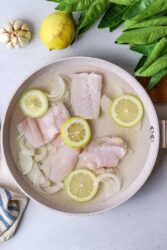
- Place the fish fillets in the skillet, ensuring the water temperature remains steady at 140 degrees Fahrenheit (otherwise you risk overcooking the fish).
- Poach the fish until it reaches an internal temperature of 145 degrees Fahrenheit. It typically takes about 10 minutes, depending on thickness. It is ready when the fish flakes with a fork.
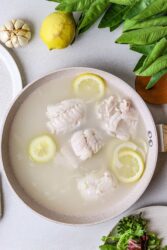
- Using a slotted spatula, carefully lift the fish from the poaching liquid and serve immediately.
Nutrition Info:
Nutrition information are estimates only and may vary based on the specific brands, ingredients, and portion sizes you use. This data is provided for informational purposes only.



Wow great sense of humour to add to the fishy dish. Really enjoyed. Thank you
Glad to hear you enjoyed this recipe! Thanks for reading.