

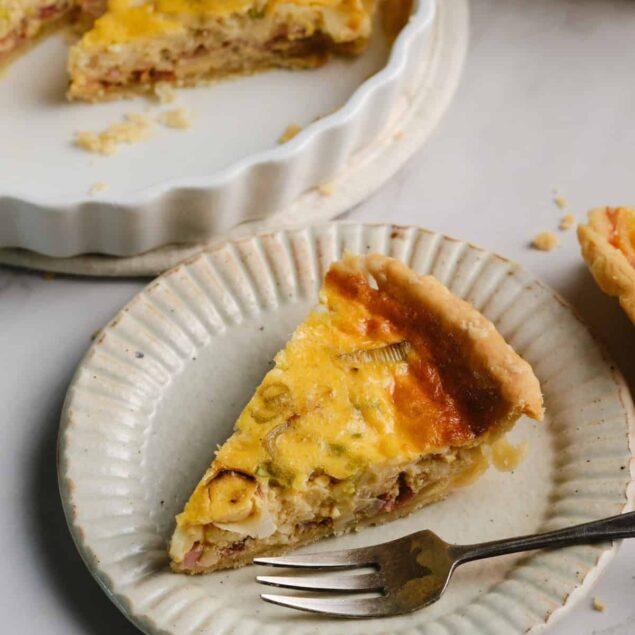
This Quiche Lorraine is delicious and easy as pie—even if it’s technically a tart!
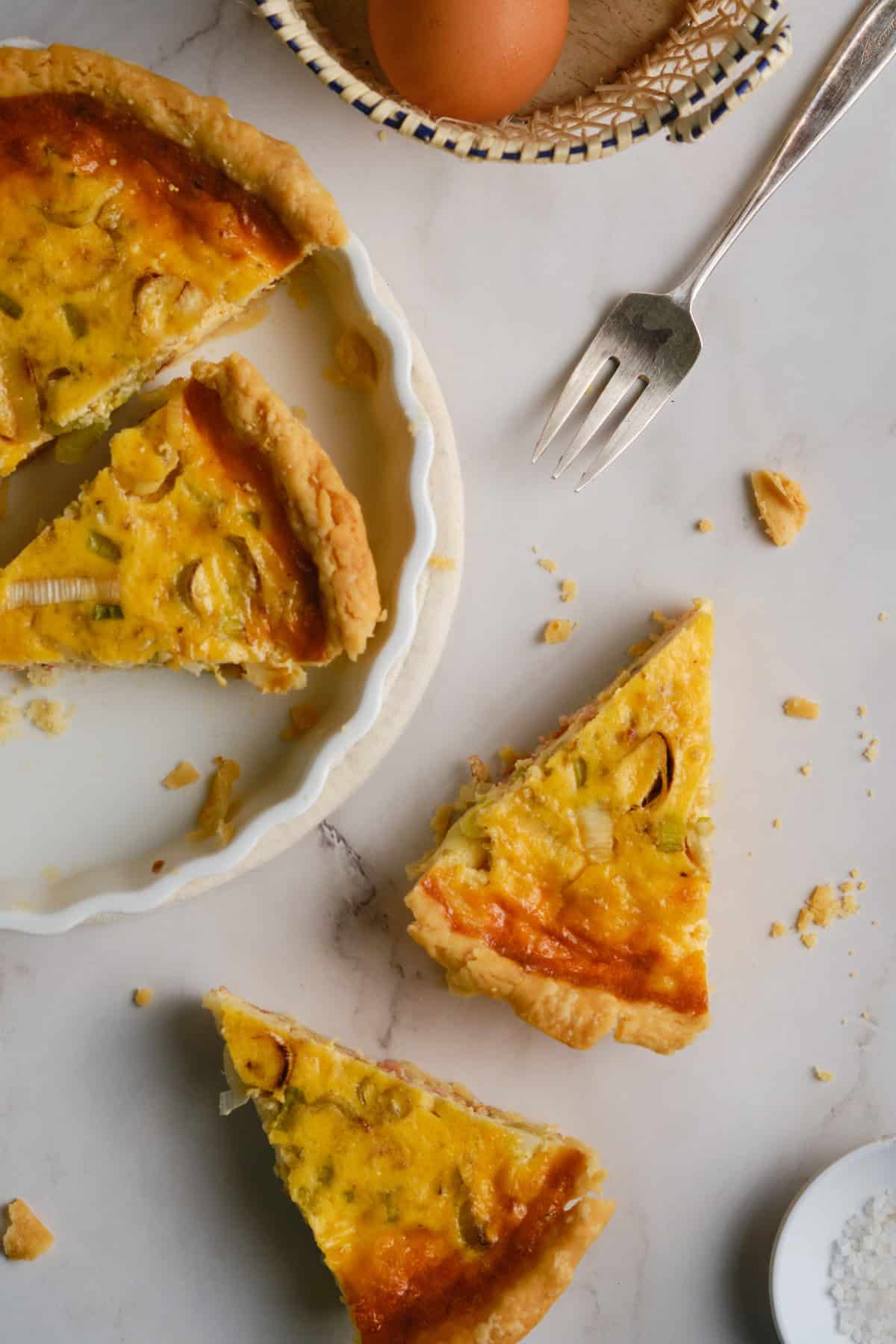
Today, we know quiche Lorraine as a quintessential French delicacy. Heck, it hails from the Lorraine region of France, so why wouldn’t it be French? Well, unsurprisingly, there’s a little bit more to it than that.
The word “quiche” actually derives from the German word “kuchen,” meaning “cake.” Pretty odd terminology for a French dish, no? Well, that’s because, at the estimated time of the invention of the quiche Lorraine, the Lorraine region of France was under German rule. Since then, the region has fallen under French control, and, as a result, the dish has been culturally grandfathered into French cuisine and colloquialism. Now, we serve quiche Lorraine at the France pavilion at EPCOT and at French bakeries across the nation!
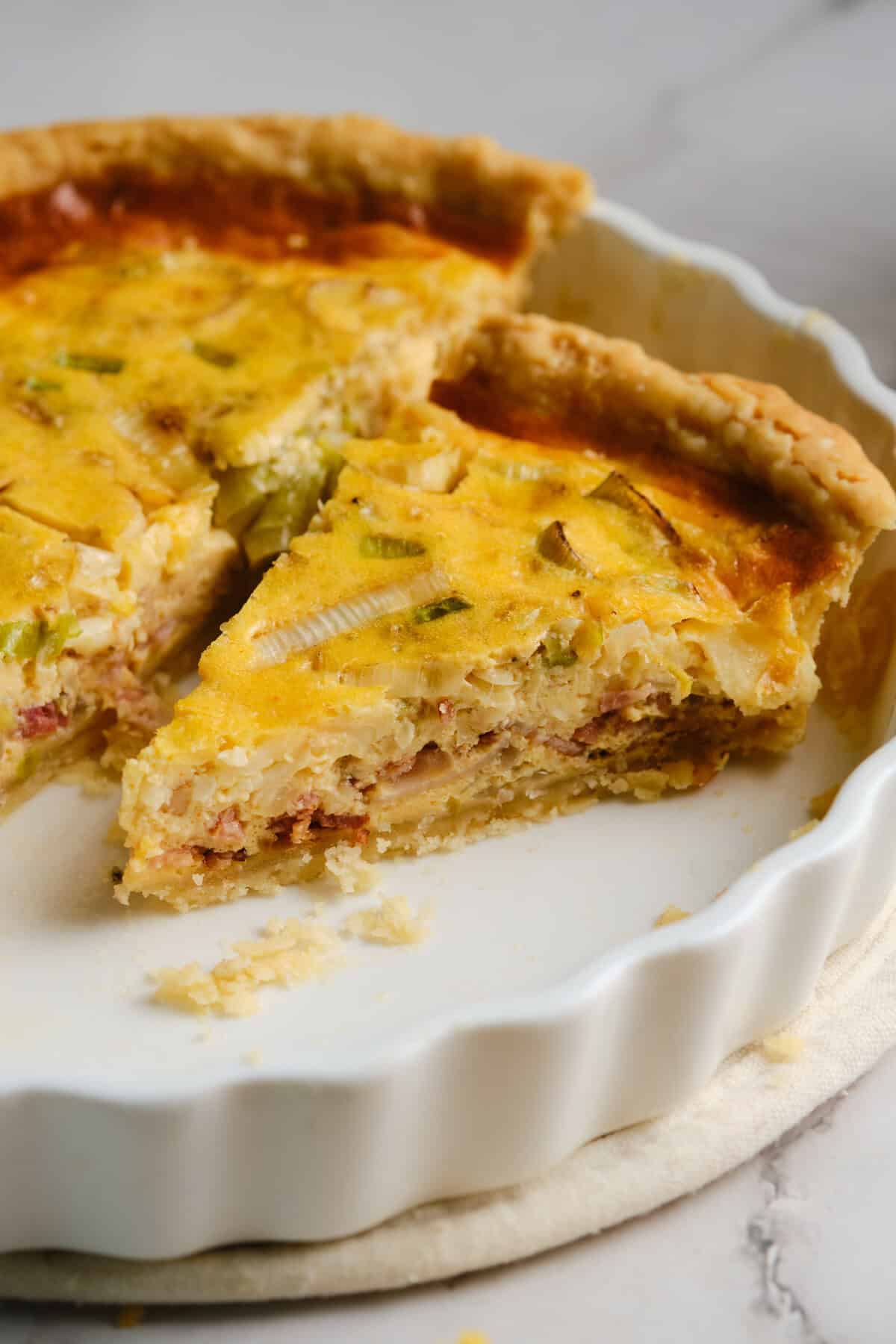
Regardless of its true origin, quiche Lorraine is still delicious, and that’s a truth held by the FFF take on this classic recipe. You’ll think so too once you take a taste of the tantalizing combination of savory bacon, shallots, and decadent egg, all on top of a flaky pie crust.
Is This Quiche Lorraine Healthy?
This quiche Lorraine has a solid dose of protein from the bacon and the eggs, not to mention the protein found in the heavy cream and Gruyère. However, quiche is a luxurious dish rich in carbs, fat, sodium, and calories. Bacon, heavy cream, cheese, and pie crust are the types of ingredients meant to be enjoyed in moderation rather than every day. But, don’t let that stop you from indulging once in a while!
Making Your Own Pie Crust
The perfect pie crust can send even an average egg tart into superstardom, but pie crust can be intimidating to make from scratch. If you want to take your fabulous quiche Lorraine to the next level, it’s your lucky day; I’ve got the Perfect Pie Crust recipe for you to try!
It comes together with just a few simple ingredients—all-purpose flour, salt, unsalted butter, vegetable shortening, and ice water—and spends most of its prep time chilling in the fridge. While making your own crust isn’t a must (there are plenty of perfectly delicious options at the grocery store!), it’s certainly one way to take your quiche up a few notches.
How Do I Store Leftovers?
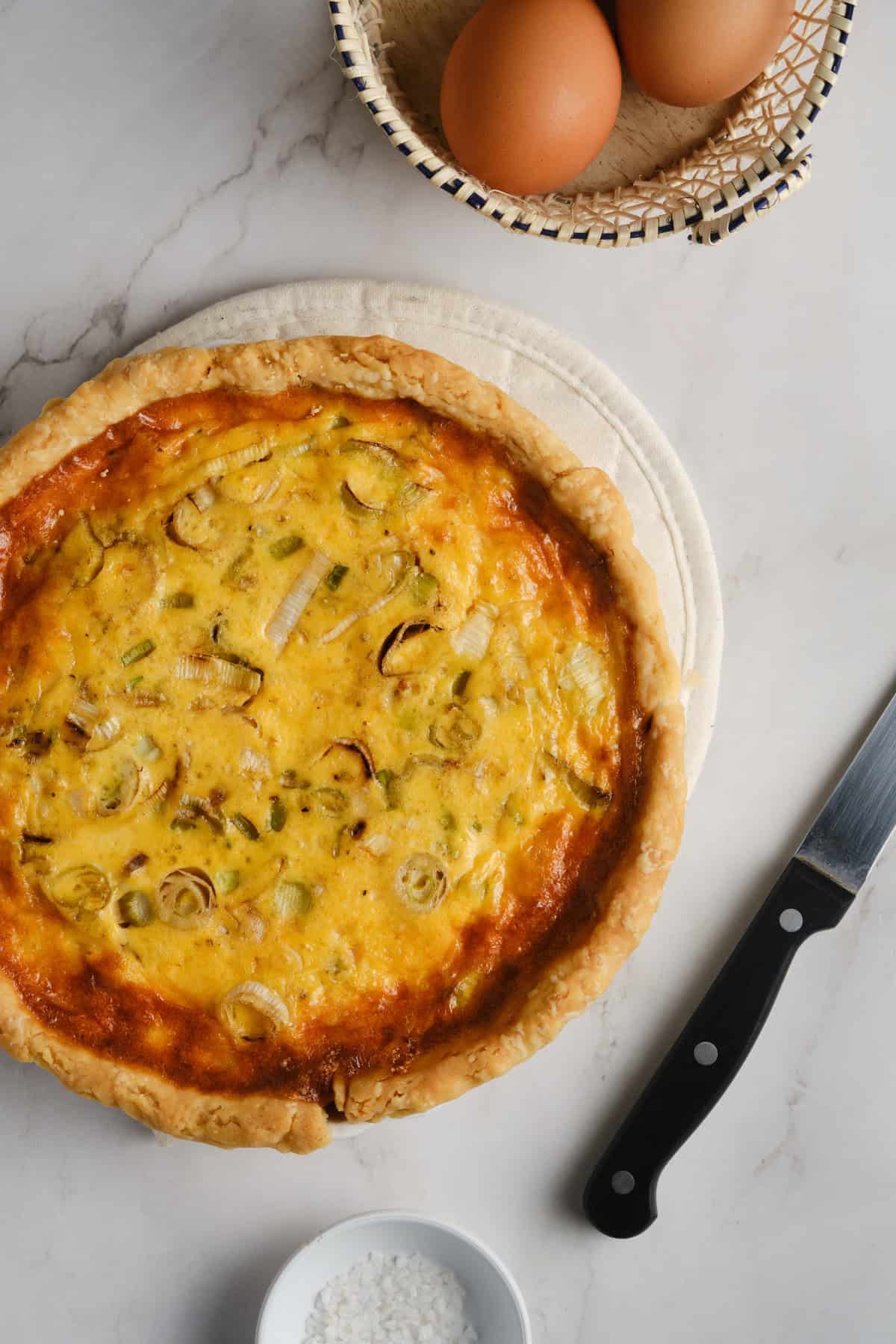
Quiche is the perfect dish to refrigerate after cooking! Just cover the top of your pie dish with plastic wrap and store it flat on a shelf in your fridge for 3-5 days. You can microwave slices to eat (covered by a damp paper towel to ensure you don’t dry out your quiche) or take the whole quiche and pop it in the oven at 350 degrees Fahrenheit for 10-15 minutes.
Serving Suggestions
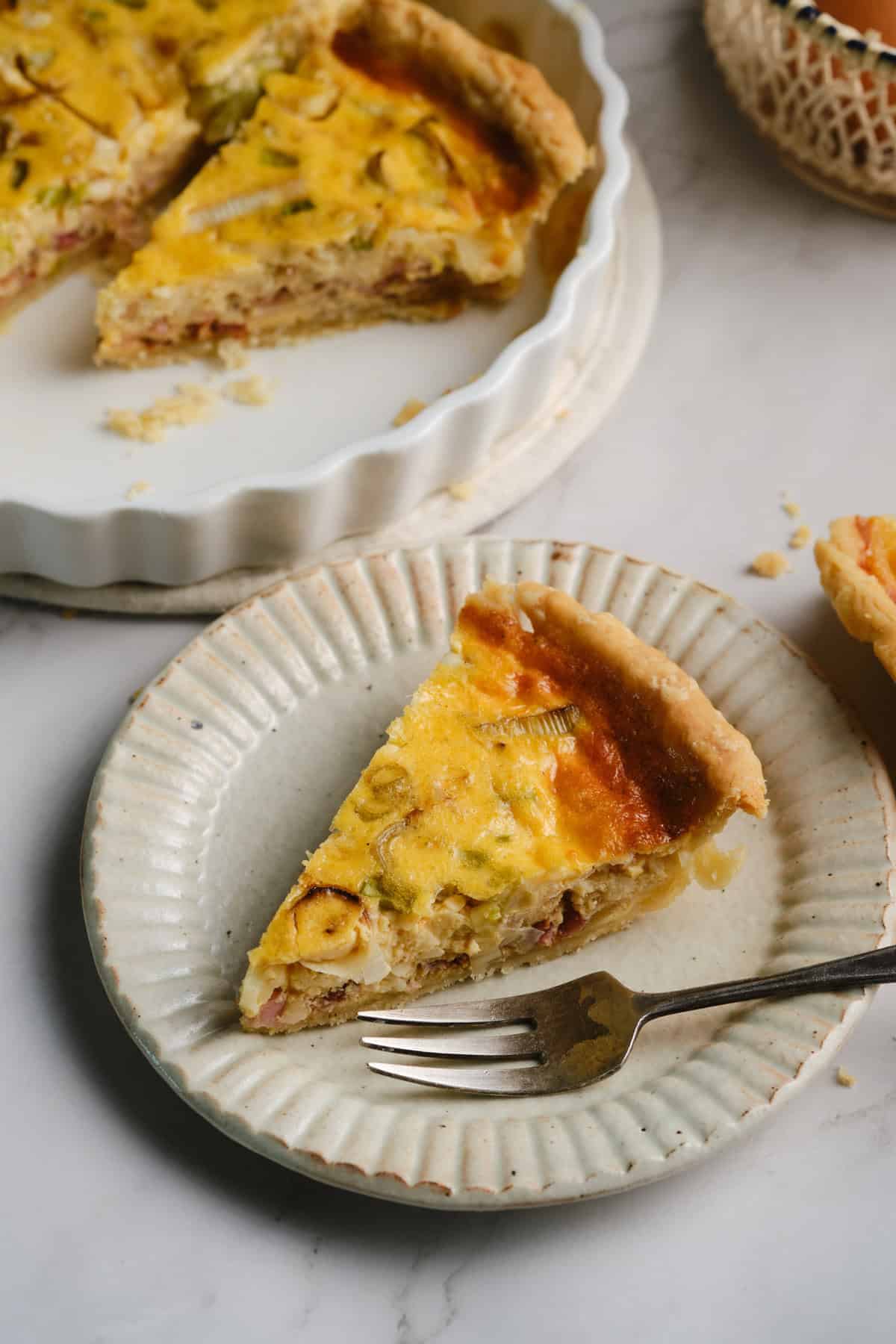
Egg tarts like quiche Lorraine go perfectly with acidic and astringent flavors to cut the fatty, savory goodness in the bacon and eggs. Complement your savory pie with the fresh flavors of a Broccoli Salad or contrast it with the snappy bite of some Air-Fried Peppers. If you’re searching for a decadent drink to go with your quiche Lorraine, go for something like the citric bite of a caipirinha or the mellow brunch flavors of a mimosa!
Ingredients
- 1 9-inch, deep-dish frozen pie crust
- 8 ounces thick-cut bacon diced
- 1/2 cup shallots chopped
- 4 large eggs
- 1 1/4 cups heavy cream
- 1/4 teaspoon salt
- 1/8 teaspoon cayenne pepper
- pinch ground nutmeg
- 4 ounces Gruyère cheese finely shredded
Instructions
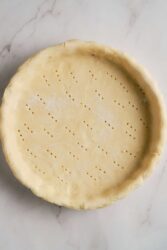
- Preheat the oven to 400 degrees Fahrenheit and position a rack in the middle. Thaw the pie crust slightly and prick it with a fork. Blind bake on a sheet until golden, about 10-15 minutes, then reduce oven temperature to 325 degrees Fahrenheit.
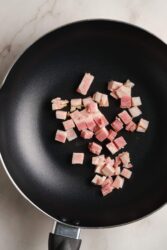
- Cook the bacon in a pan until crisp, then transfer to a paper towel. Sauté the shallots in the remaining bacon fat until soft and translucent.
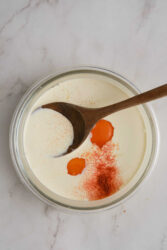
- Whisk together eggs, heavy cream, salt, cayenne pepper, and nutmeg in a bowl.
- Layer the shallots, half the bacon, Gruyère cheese, and remaining bacon in the crust. Pour the egg mixture over the top.

- Bake the quiche at 325 degrees Fahrenheit for 45-50 minutes, until the custard sets. Serve hot or warm.

Nutrition Info:
Nutrition information are estimates only and may vary based on the specific brands, ingredients, and portion sizes you use. This data is provided for informational purposes only.


Leave a Comment