

The perfect tangy and vibrant addition to your rice bowls, ramen, and sushi!
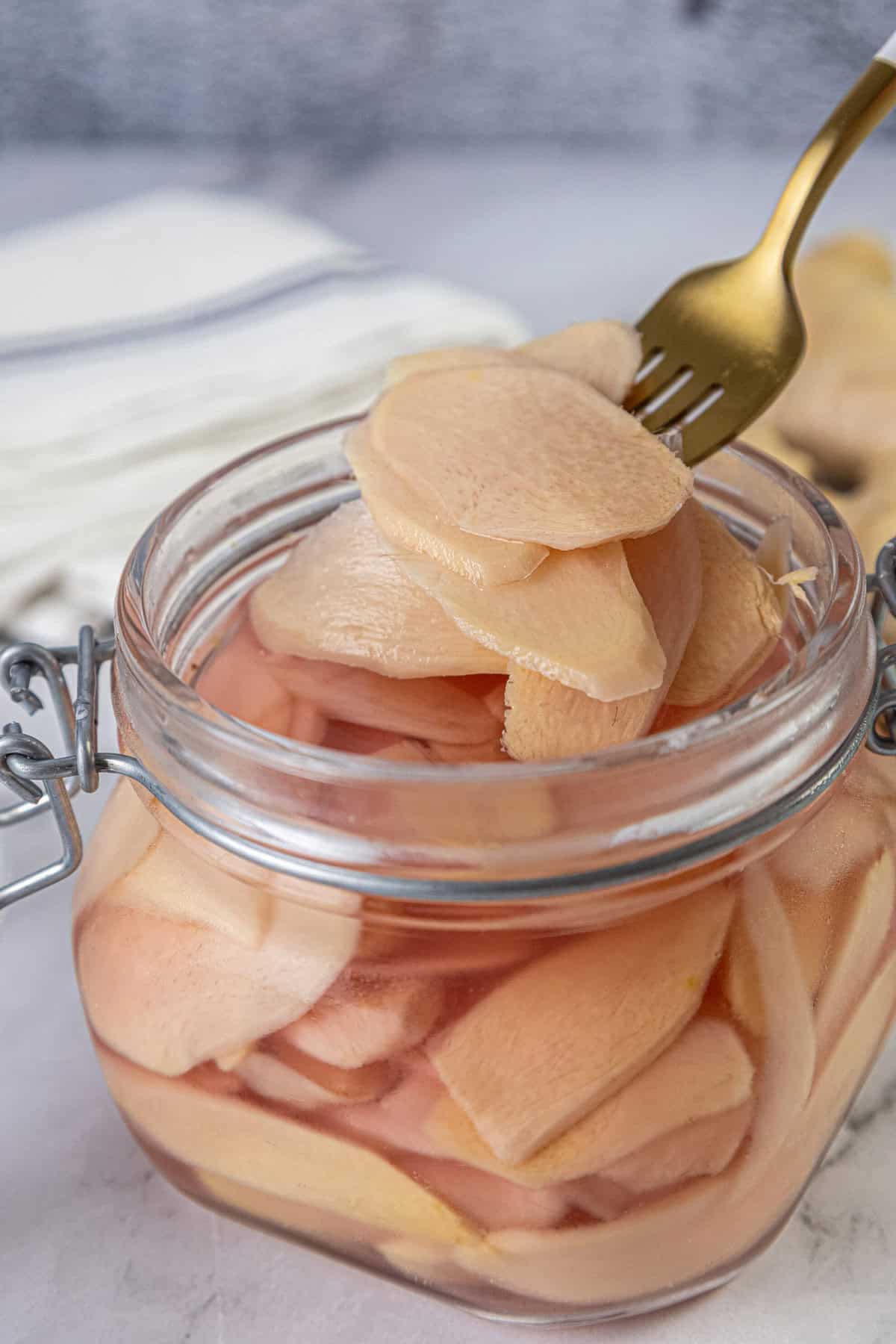
Whenever I order sushi at a restaurant, I always end up asking for more pickled ginger. Whenever I swing by my local Asian grocery store, I always pick up an extra jar of pickled ginger. And whenever I have takeout ramen at home, I always reach for one of the many jars of pickled ginger in the back of my fridge. Needless to say, I am truly obsessed, and I’ve become even more obsessed since learning how to make it myself!
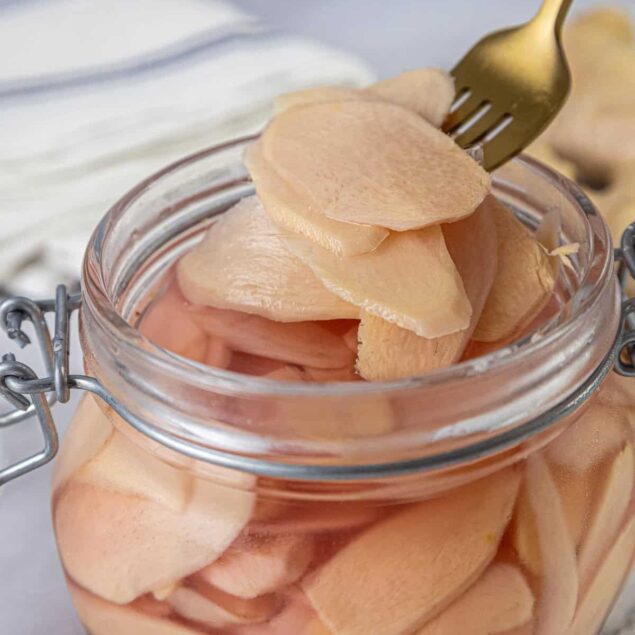
With its sour, slightly sweet, and bright flavor, it’s a fantastic addition to any meal that can balance fatty foods and cleanse the palate between dishes. My favorite way to enjoy pickled ginger is by itself between different sushi flavors, stirred into my steaming bowl of ramen, or as a garnish on my favorite rice bowl. It’s also a great addition to Asian-inspired salads, and you can chop it up to put into salad dressings or stir it through your fresh veggies.
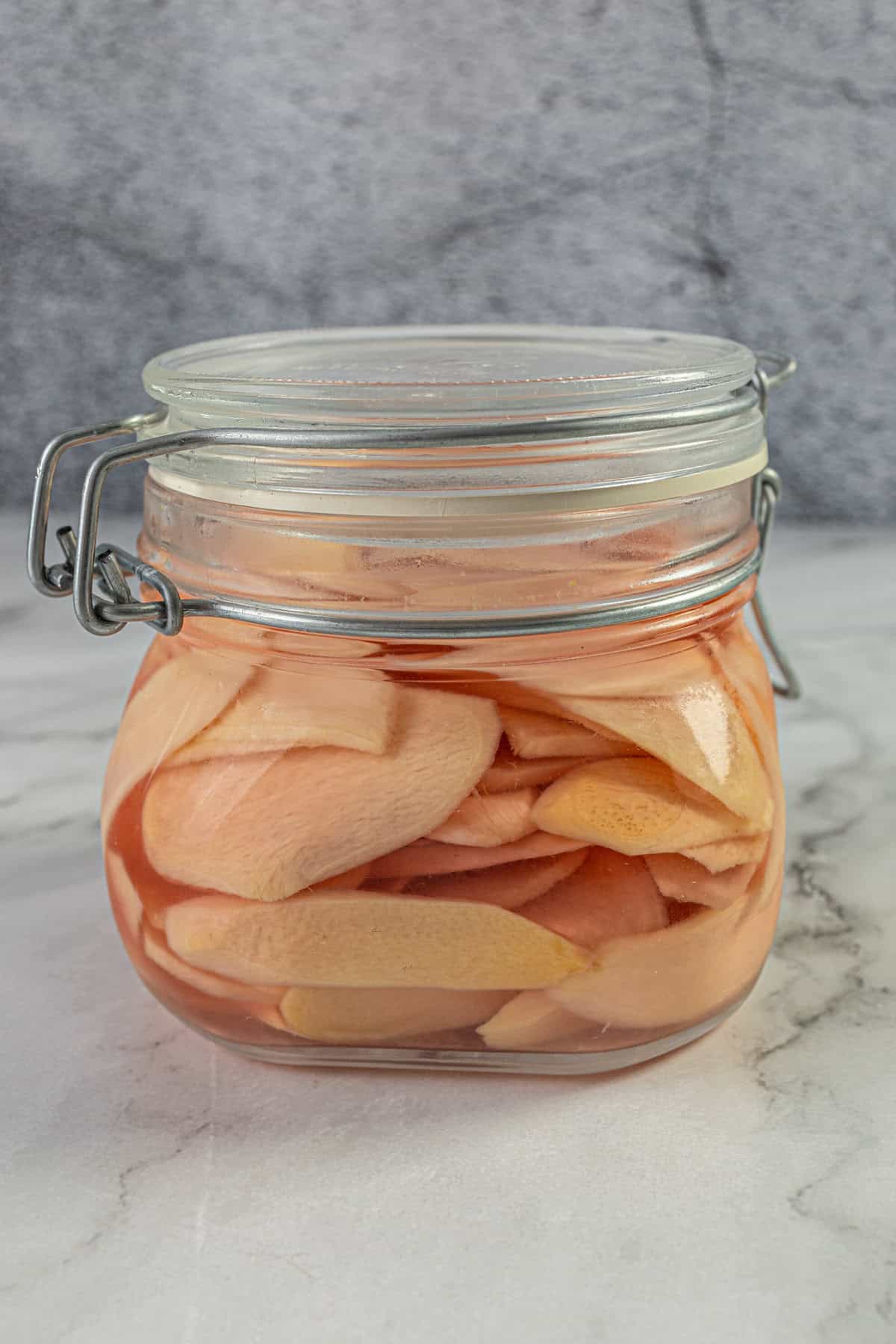
With only four ingredients required, this pickled ginger recipe brings a punchy flavor with minimal effort. It’s also free of artificial preservatives or dyes, which are common in grocery store brands and often give it that signature pink hue. No matter how you enjoy your pickled ginger, this is a recipe to keep in your mental cookbook for later!
Is Pickled Ginger Healthy?
Ginger has many health benefits, including supporting gut health and being anti-inflammatory. It’s also low in calories and fat-free. The vinegar-based quick-pickling liquid also carries its own health benefits, including aiding digestion and even containing probiotics, especially if you swap the rice vinegar for organic and unfiltered apple cider vinegar.
Want to make this recipe even healthier? Add your favorite dried spices like black peppercorns, star anise, and bay leaves for extra flavor and nutritional benefits. You can also adjust the salt and sugar levels to your dietary needs; I like my pickled ginger not too sweet, and I’ll often substitute the granulated sugar for a natural sweetener like honey.
The History Behind Pickled Ginger
Known as gari in Japan, pickled ginger has been a staple of Japanese cuisine for generations. Tsukemono, otherwise known as the practice of pickling vegetables, can be traced as far back as the mid-eighth century, and ginger most likely was introduced via China and Korea around the first millennium.
Pickled ginger is most commonly made from young ginger roots, as they are softer and less spicy in flavor. Some chefs will even blanch the ginger before cooking it to soften its texture further. While this is a no-fuss, no-frills recipe, it is important to slice your ginger as thin as possible, as this is how you achieve the perfect crunch without having your socks blown off!
While it is commonly used in ancient medicinal practices, pickled ginger is most prominently known for its use as a palate cleanser between sushi. As its intense flavor is able to cut through fatty flavors very easily, it creates the perfect baseline to then enjoy new flavors without them being changed by what you previously ate.
How To Make Ahead And Store
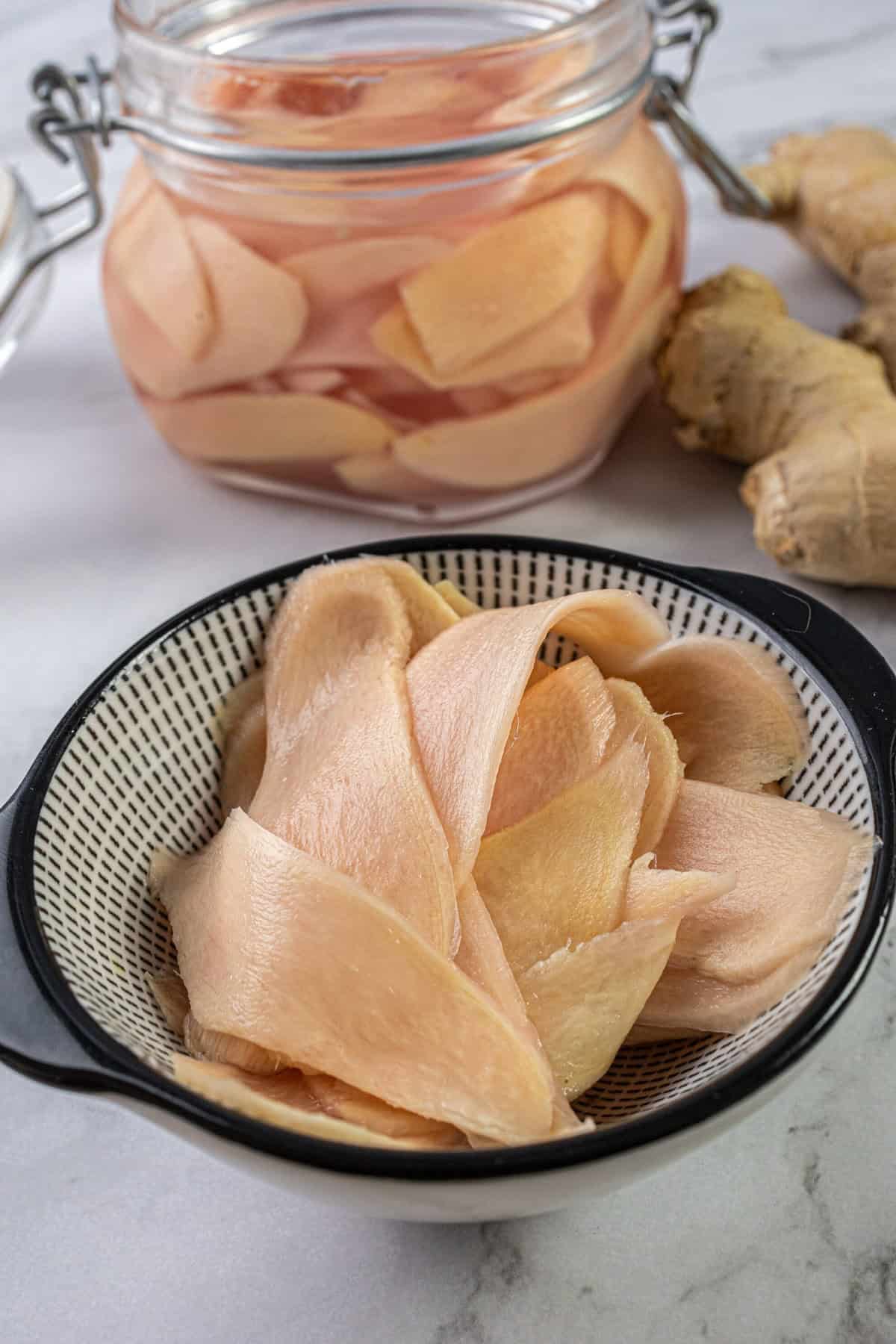
Store your pickled ginger in an airtight container or jar in the refrigerator for 1 to 3 days before enjoying. I find that it tastes best after 1 week. The pickled ginger should stay fresh for up to 6 months in the refrigerator. Just remember that this is a quick-pickling method that doesn’t require fermentation, so this recipe is not shelf-stable.
Serving Suggestions
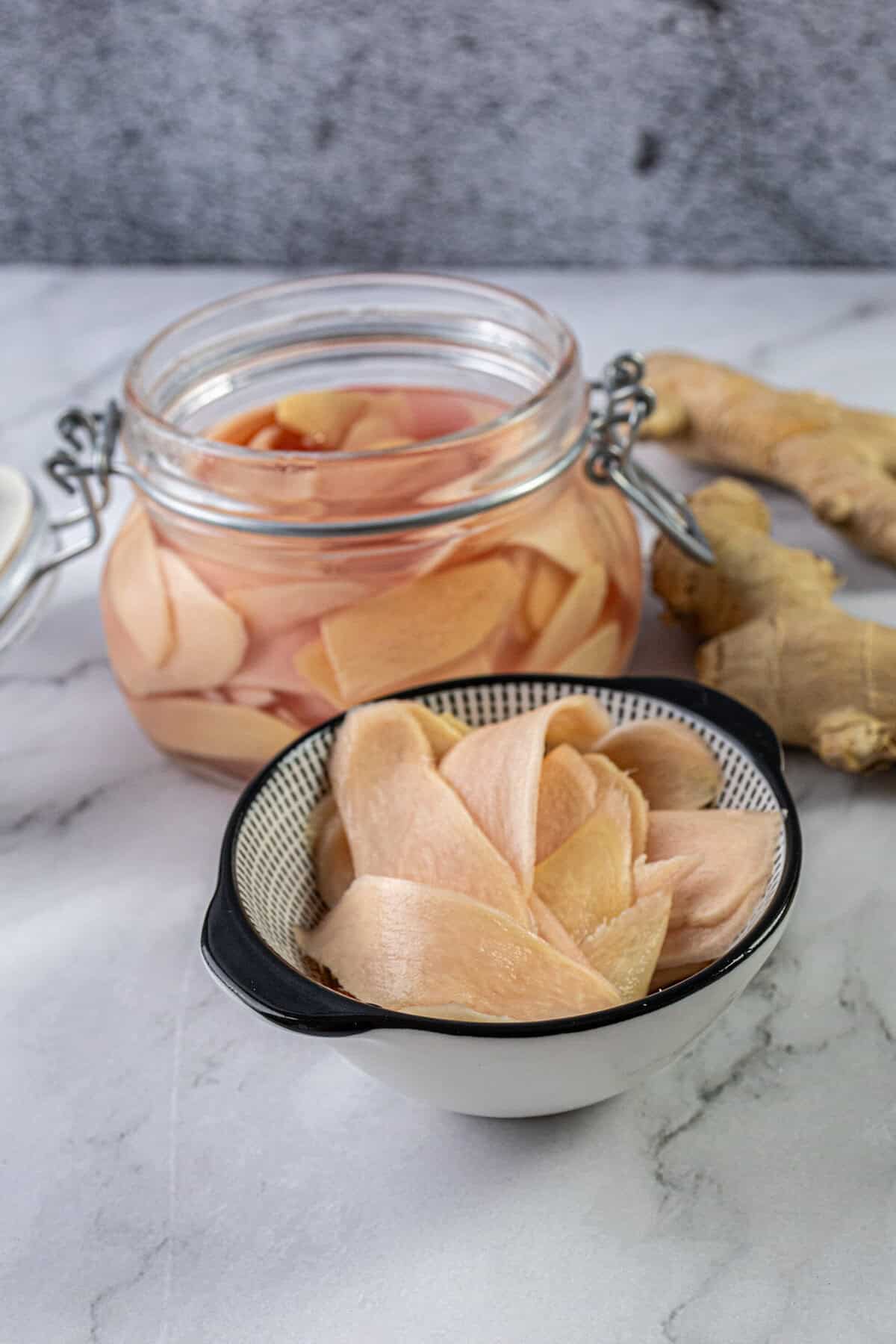
I love to serve pickled ginger with a platter of sushi or sashimi. It’s also a great addition to your Low-Carb Poke Bowl or California Roll Sushi Bites, and for something a bit unconventional, I also serve it with this Sushi Burrito. Naturally, any dish that includes tuna or salmon is also a good time for pickled ginger; this includes a Spicy Ahi Tuna Poke Bowl or this delicious Baked Honey Cajun Salmon.
Ingredients
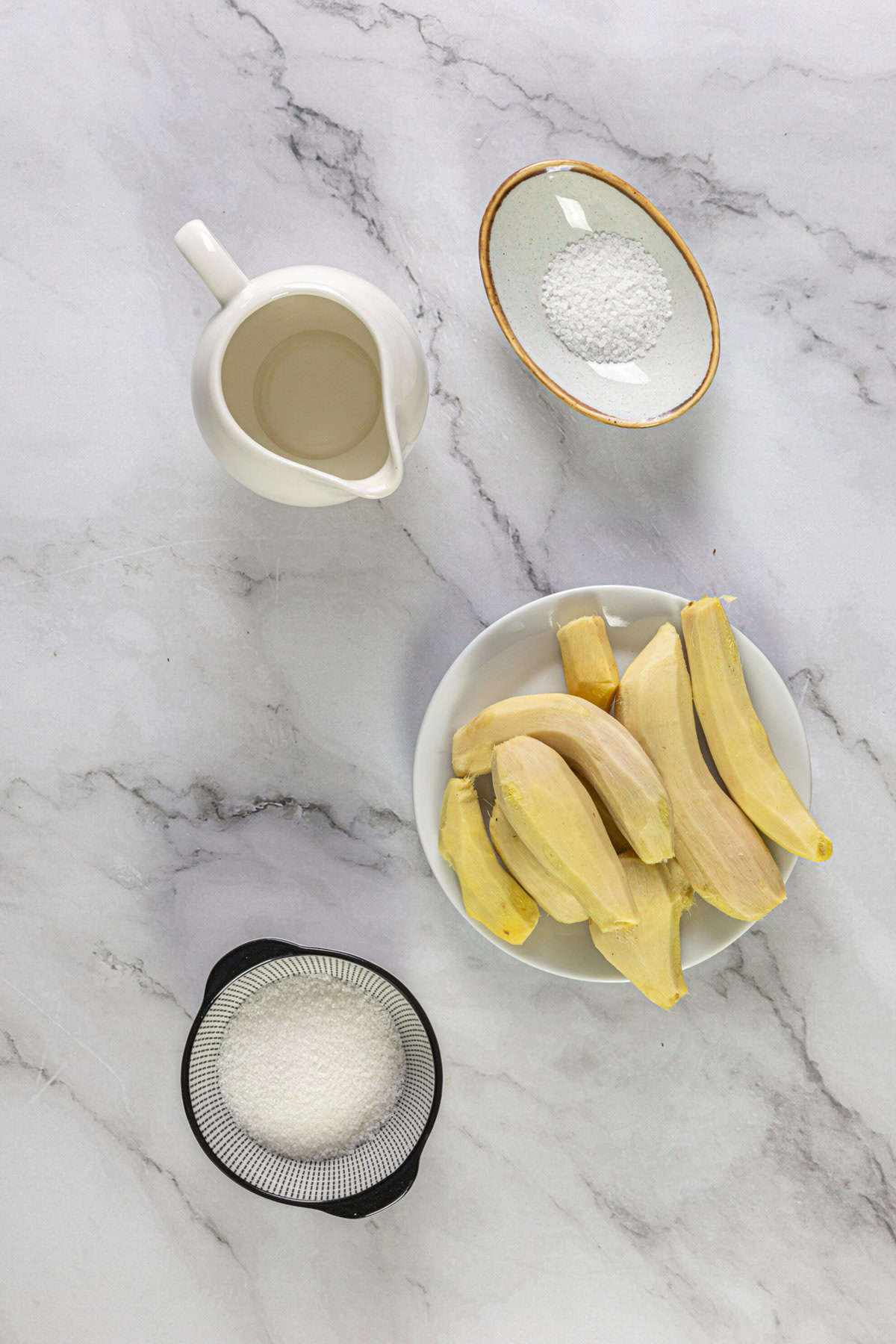
- 8 ounces fresh, young ginger peeled
- 1 cup rice vinegar
- 1/4 cup granulated sugar
- 1 teaspoon kosher salt
Instructions
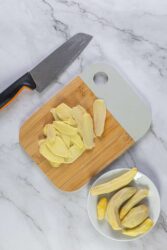
- Thinly slice the peeled ginger using a mandoline or sharp knife for uniform thinness.
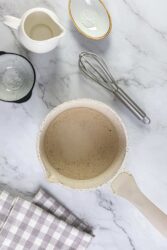
- In a saucepan, combine rice vinegar, sugar, and salt. Bring to a simmer over medium heat, stirring until the sugar dissolves.
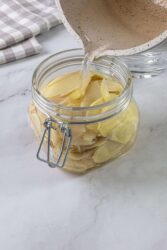
- Place the sliced ginger in a clean jar. Pour the hot vinegar mixture over the ginger and ensure all the slices are submerged. Allow to cool to room temperature, then seal the jar and refrigerate.
Nutrition Info:
Nutrition information are estimates only and may vary based on the specific brands, ingredients, and portion sizes you use. This data is provided for informational purposes only.


Leave a Comment