

This Miso-Lemon-Tahini Dressing is big on flavor and so easy to make. You’ll want to drizzle it on salads and everything else!
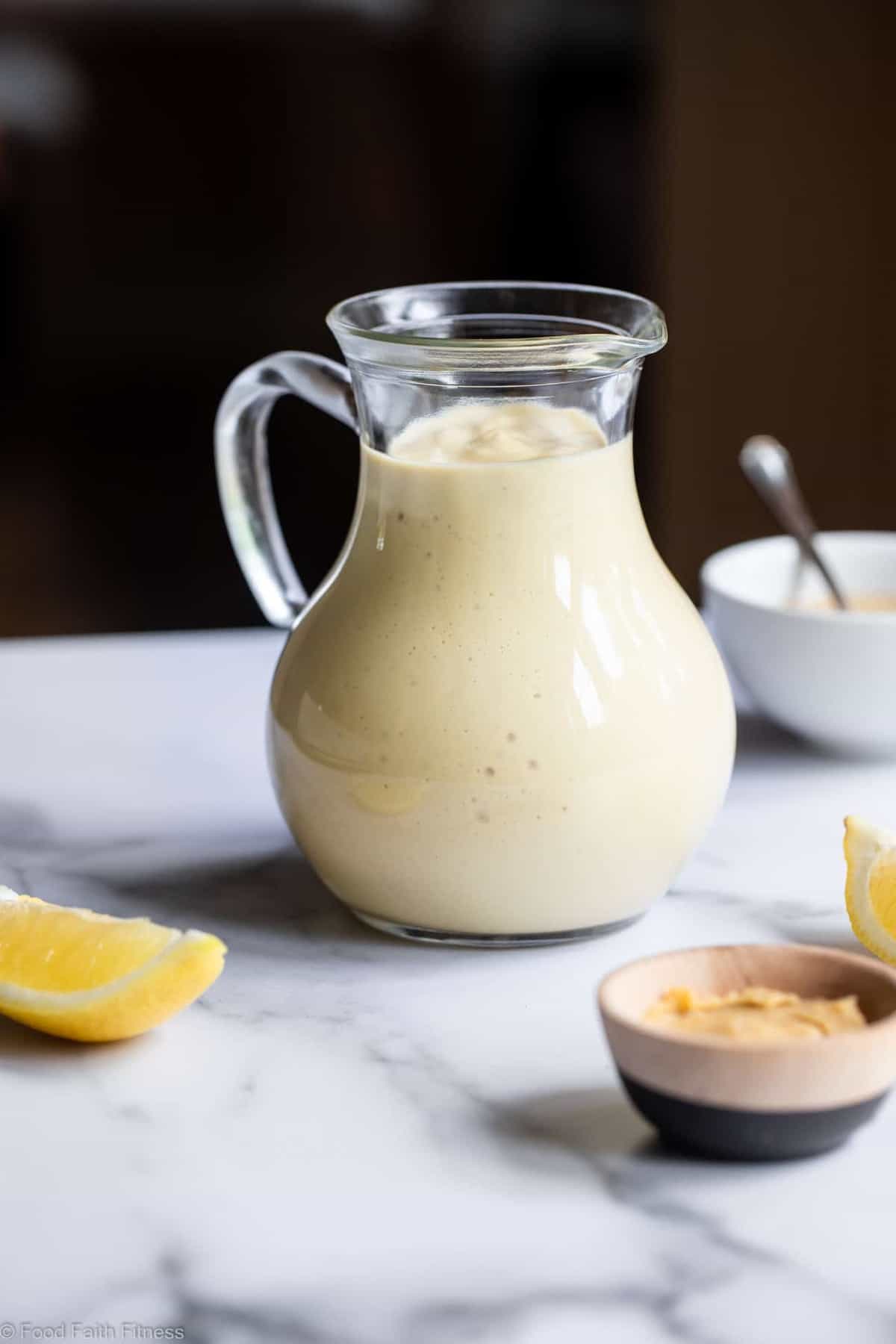
Some recipes are so simple and delicious, you make them every few days, and then they blend into your life so well that you forget to tell anyone else about them. That’s how I see this miso-lemon-tahini dressing: it’s such a regular part of my life that my brain just assumes everyone has this stuff in their fridge at all times. So I’m making a point to yell about this one from the rooftops.
This dressing whips up so fast that when you run out unexpectedly, making another batch is barely an inconvenience. If you tend to cook a lot, you probably have most of the required ingredients in your fridge and pantry already. And if you don’t have miso on hand, I’ll tell you all about why you should get some later on in this post.
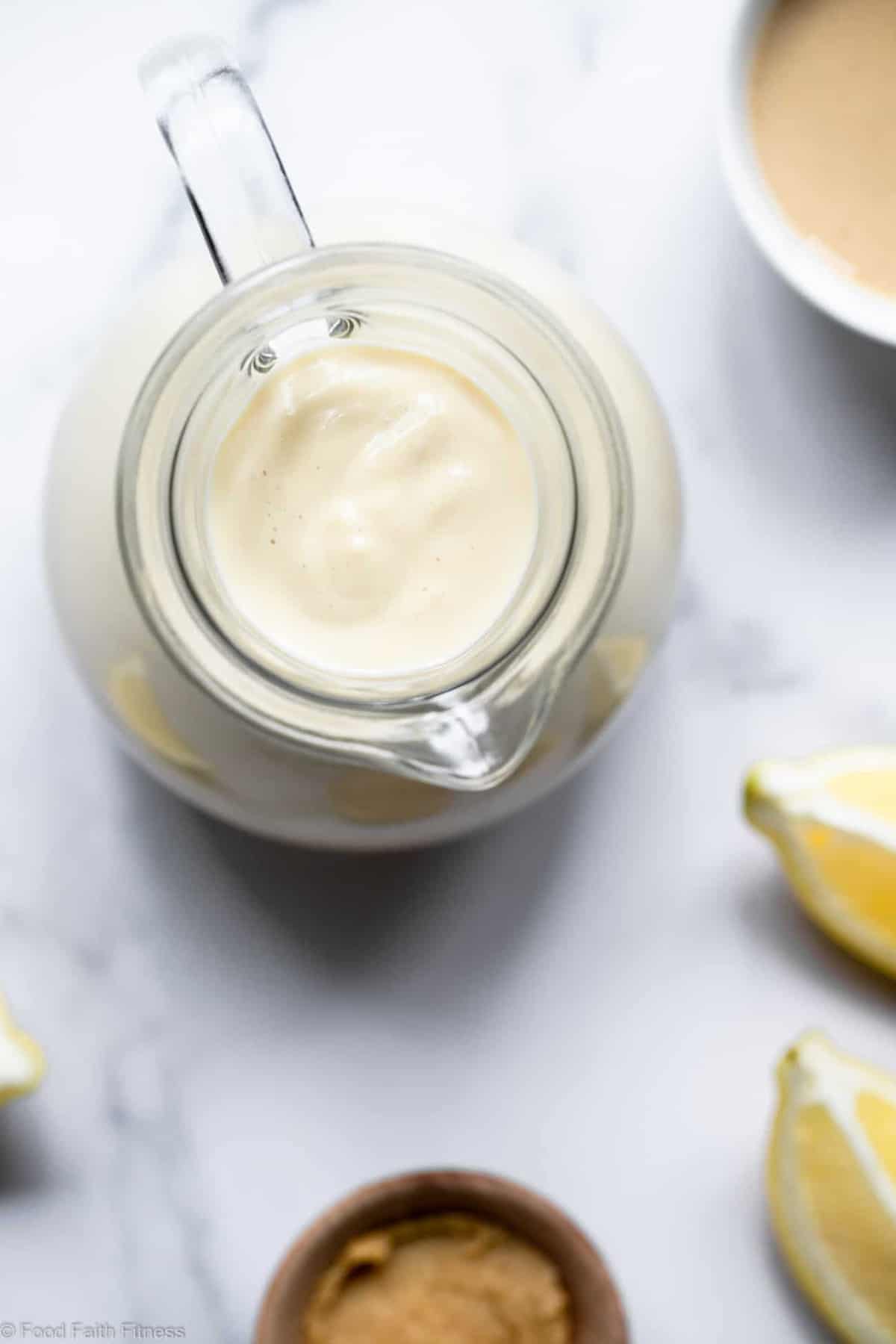
This dressing combines the salty umami of miso with the nutty creaminess of tahini, tangy lemon juice, and a LOT of roasted garlic. All of that is blended with the zing of white wine vinegar and a hint of yellow mustard, plus some honey for balance. You really can’t go wrong with this mix, and it’s so dreamy drizzled on a salad or used as a dip for fresh veggies.
Is This Miso-Lemon-Tahini Dressing Healthy?
In a wide world of salad dressings that are full of partially hydrogenated oils and saturated fat, this one is remarkably healthy. It has good fats from the olive oil and tahini and lots of garlic (which is a source of antioxidants). Miso brings some protein and an assortment of B vitamins and minerals like iron and magnesium. The lemon juice provides a dose of vitamin C, too. Overall, this dressing is low-calorie and low-fat. To make it fully vegan-friendly, use agave nectar or maple syrup instead of honey.
What Is Miso?
Miso is a soybean paste fermented with Aspergillus oryzae (called “koji” when mixed with white rice) and is used primarily in Japanese cuisine. It’s very salty and brings lots of umami flavor notes to anything it touches, so you don’t need to use much of it to flavor something. (That bowl of miso soup you order at sushi restaurants only has about a tablespoon of miso paste, for reference.) The fermentation and salt content of miso means it lasts a long time in the fridge—six months to a year, in fact. This is a good thing, considering I’ve never seen a small container of miso for sale anywhere. That said, your year-old miso may taste a little different from freshly opened miso, but some folks claim it tastes better the longer it sits.
There are a few different types of miso paste, and each has a slightly different flavor profile. The most common types are white (shiro), red (aka), and yellow (awase).
White miso is the mildest in flavor of all the types, due to its short fermentation time. It has more sweetness than red or yellow miso. This dressing recipe uses white miso.
Red miso is fermented longer than white miso and contains more soybeans, resulting in a stronger, deeper flavor. Most Japanese restaurants use red miso for miso soup.
Yellow miso is simply a mix of red and white miso pastes. It combines the two flavor profiles for a middle-of-the-road intensity.
Keep in mind that not all miso is gluten-free, so if you’re sensitive to gluten, be sure to check the label before you buy your miso.

How To Make Ahead And Store
This dressing will keep in the fridge for up to 2 weeks when stored in an airtight container. Let it come to room temperature and give it a good shake after you take it out of the fridge.
Serving Suggestions
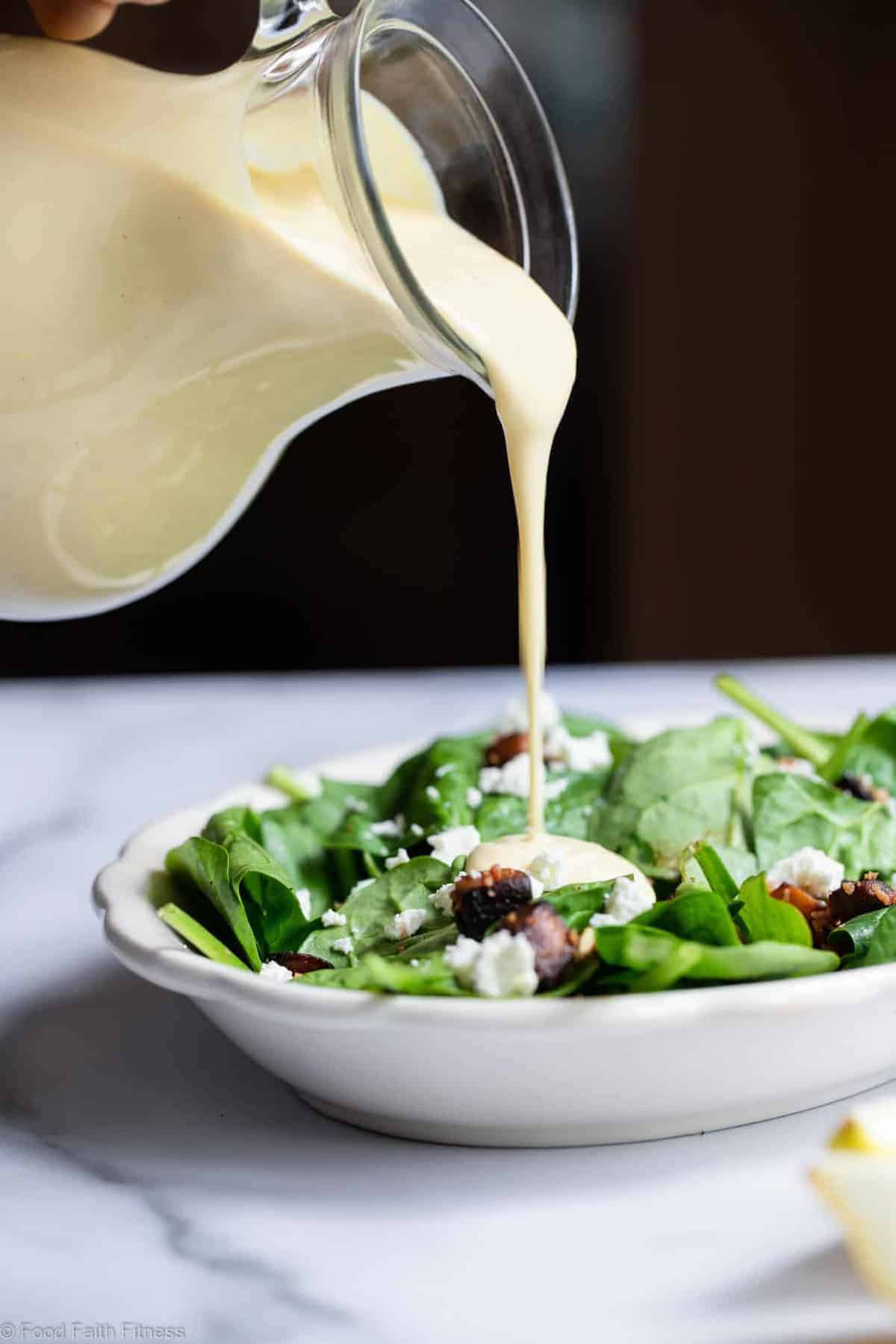
This delicious dressing is great on a Chicken Cobb Salad for lunch. I love this dressing on a simple salad next to a serving of Crispy Skin Salmon, too. But this dressing wasn’t only made for salads! Try a bit of this dressing on top of Sautéed Green Beans, Cumin Roasted Carrots, or any other roasted (or raw!) vegetable. And if you want to try something fun, drizzle a bit of this dressing on any toasted sandwich before you assemble it. Personally, I love dipping this Gluten-Free Grilled Cheese Hummus Sandwich in my miso-lemon-tahini dressing. Don’t knock it ’til you try it, folks.
Ingredients
- 1 head garlic
- 2 tablespoons + 1 teaspoon olive oil divided
- 1/4 cup white miso paste (gluten-free, if needed)
- 1/4 cup white wine vinegar
- 7 tablespoons warm water
- 2 tablespoons honey (agave nectar for vegans)
- 2 tablespoons tahini
- 2 tablespoons fresh lemon juice
- 1 teaspoon prepared yellow mustard
Instructions
- Preheat your oven to 400°F.
- Cut off the top of the head of garlic to expose all the cloves. Rub the 1 teaspoon of oil into the garlic.
- Place two pieces of foil on top of each other (shiny side in) and place the garlic between them. Wrap tightly to make a little packet and bake until soft, tender, and easily pierced with a fork, about 40-50 minutes.
- Once roasted, squeeze all the cloves of garlic out of their skins, and into a high-powered blender. Add all the remaining ingredients.
- Blend on high speed for about 30 seconds until smooth and creamy.
- Transfer to an airtight container and refrigerate for at least 2 hours to develop flavors.
Nutrition Info:
Nutrition information are estimates only and may vary based on the specific brands, ingredients, and portion sizes you use. This data is provided for informational purposes only.



Leave a Comment