

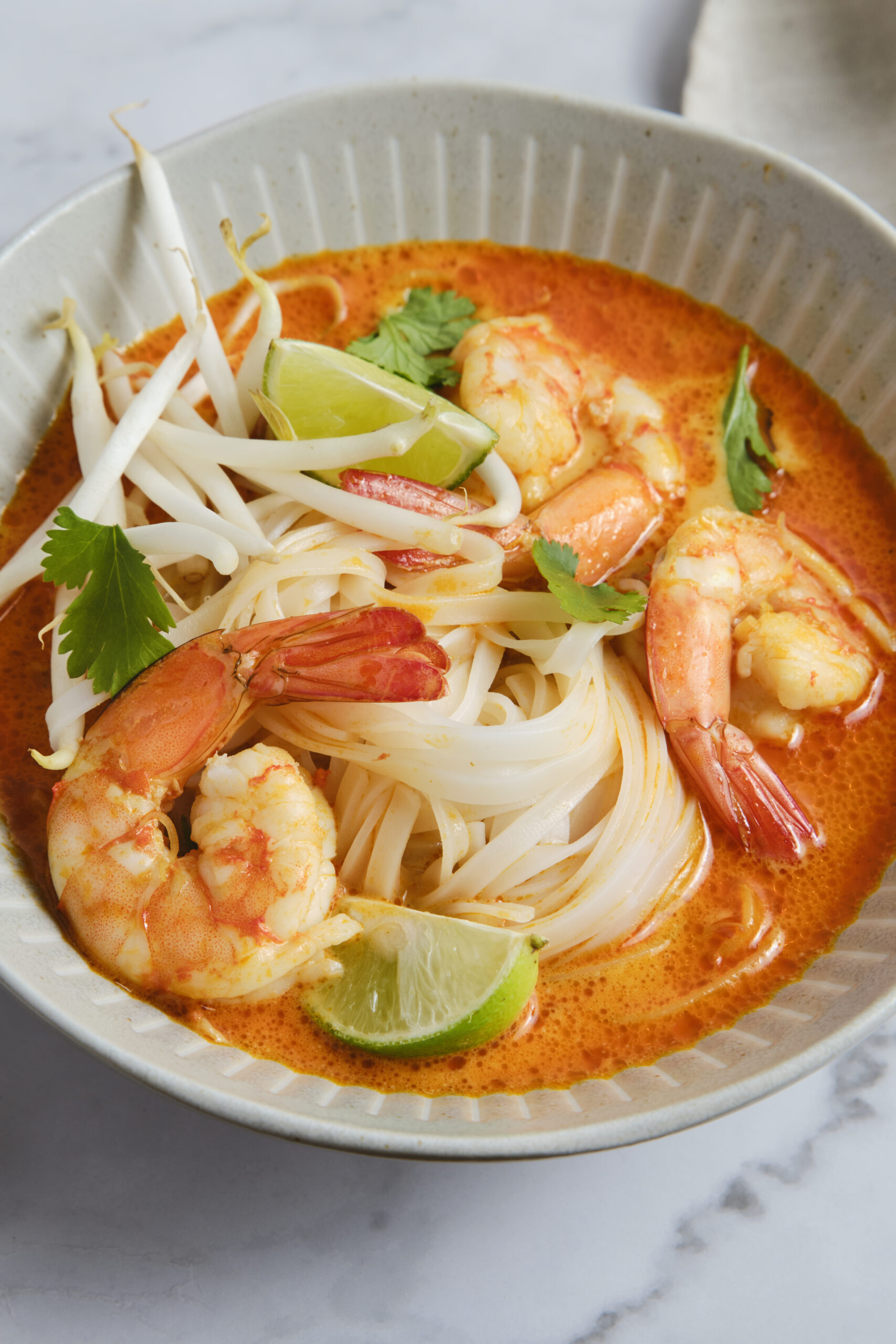
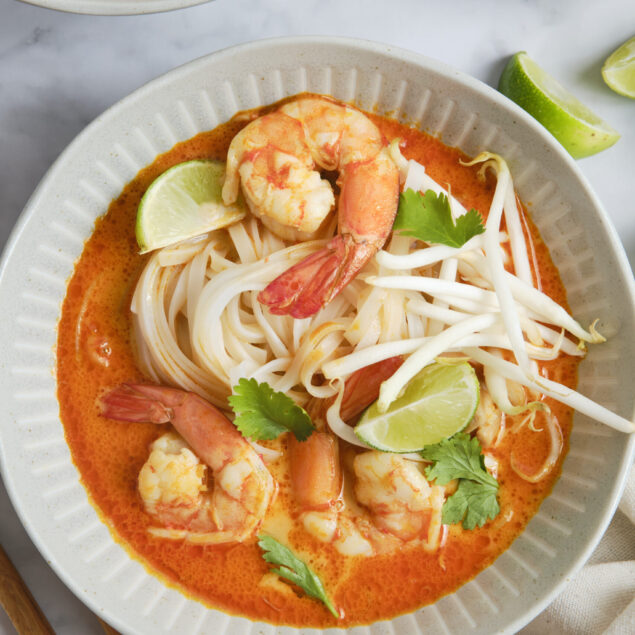
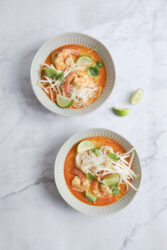
This bowl of comfort marries the best of tangy, savory flavors with sweet heat and, the most addictive part of them all: a bundle of noodles.
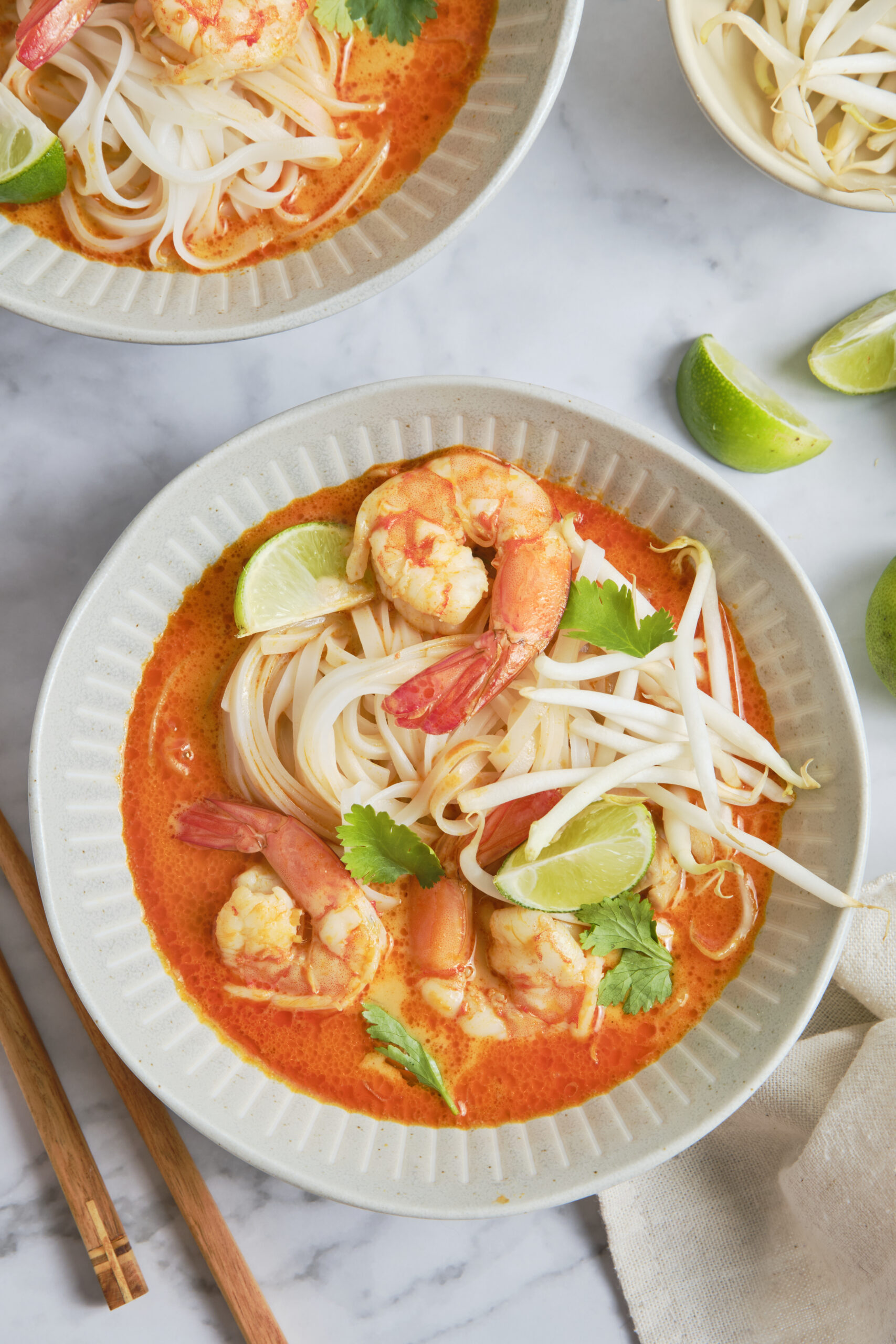
As a South Indian vegetarian, I can’t say I’ve eaten a lot of laksa in my day. It often comes loaded with shrimp and is hard to modify—and even harder to find! But as the close friend of a proud Malaysian girl growing up in Midwestern America, I can say I’ve heard tons about laksa. Namely, about just how good it is.
While living in Chennai, India, I became even more acquainted with laksa, courtesy of the many Southeast Asian-inspired restaurants that dot the city and one of their latest claims to fame, a Peranakan restaurant helmed by a Masterchef winner. The laksa is a standout dish, celebrating the best of Chinese, Malay, and Indonesian cuisines, and its unapologetic spiciness makes it a favorite among Indians, too.
The origin of the name laksa is debated; some say it comes from the Persian word for noodles, while others claim it comes from the words for “spicy” and “grainy” in the Min dialect of Chinese. Whatever the true origin, one thing can be agreed on: it’s a bowl of pure deliciousness.
What does laksa soup taste like?
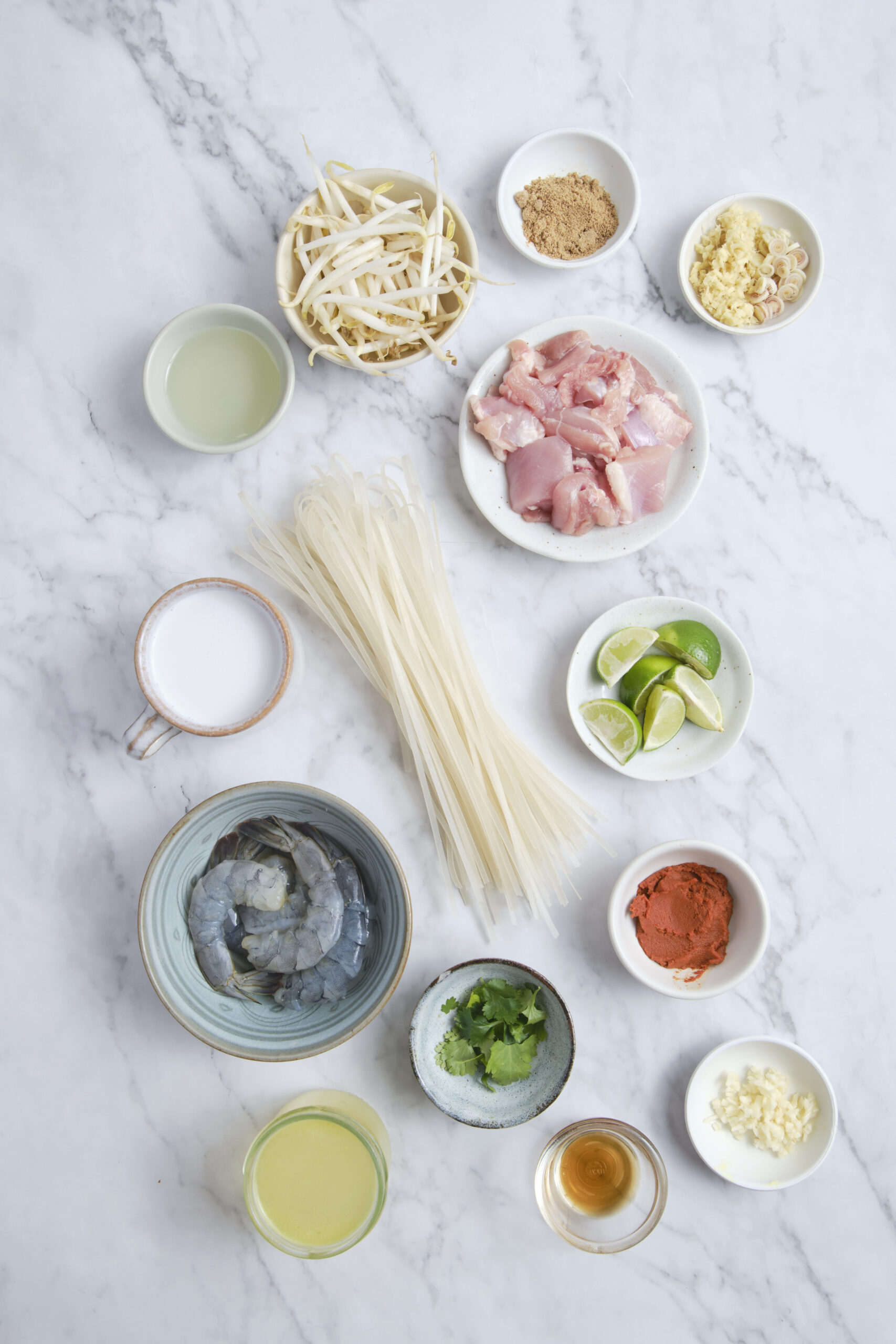
Laksa itself is strongly flavored and not at all subtle, carrying notes of fresh ginger, garlic, chiles, lime or lemongrass, and creamy coconut milk that amalgamate to form a flavorful broth that is bright yet full of depth. This recipe in particular also features an aromatic red curry paste, as well as fish sauce and chicken broth for added depth. It’s definitely a year-round dish, but like any other brothy noodle soup, it tends to hit the spot best on a chilly fall or winter night.
How do I store leftovers?
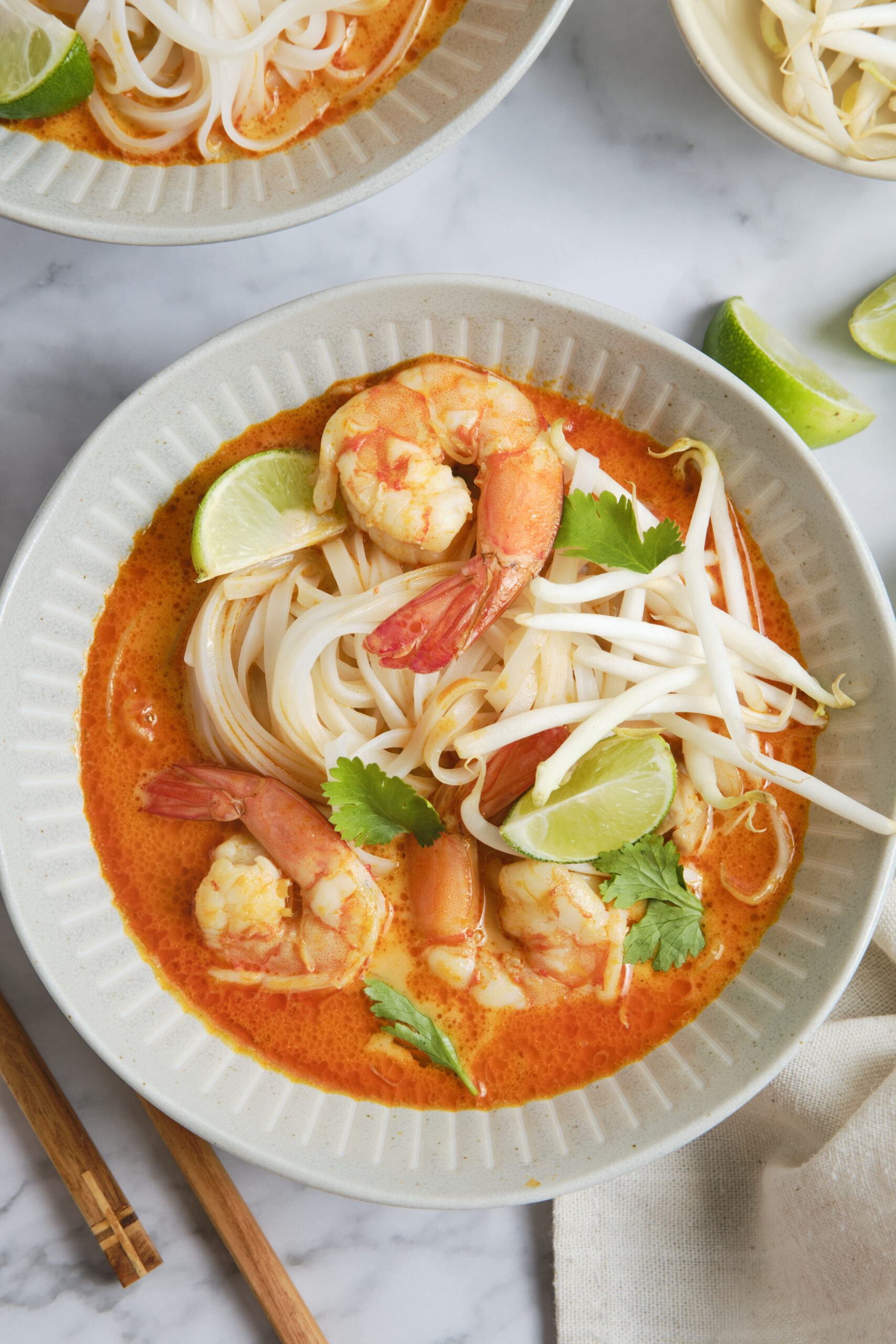
Once made, leftover laksa will last up to 3 days in an airtight container in the refrigerator. While you can definitely store the laksa as-is, it’s best to save the broth without the noodles, as the noodles might get mushy when left in the broth for multiple days. Then, when needed, you can reheat the curry broth and simply cook a fresh batch of rice noodles for the perfect bowl. Laksa soup can also be frozen for 2 to 3 months in a freezer-safe container or Ziploc bag.
Serving suggestions
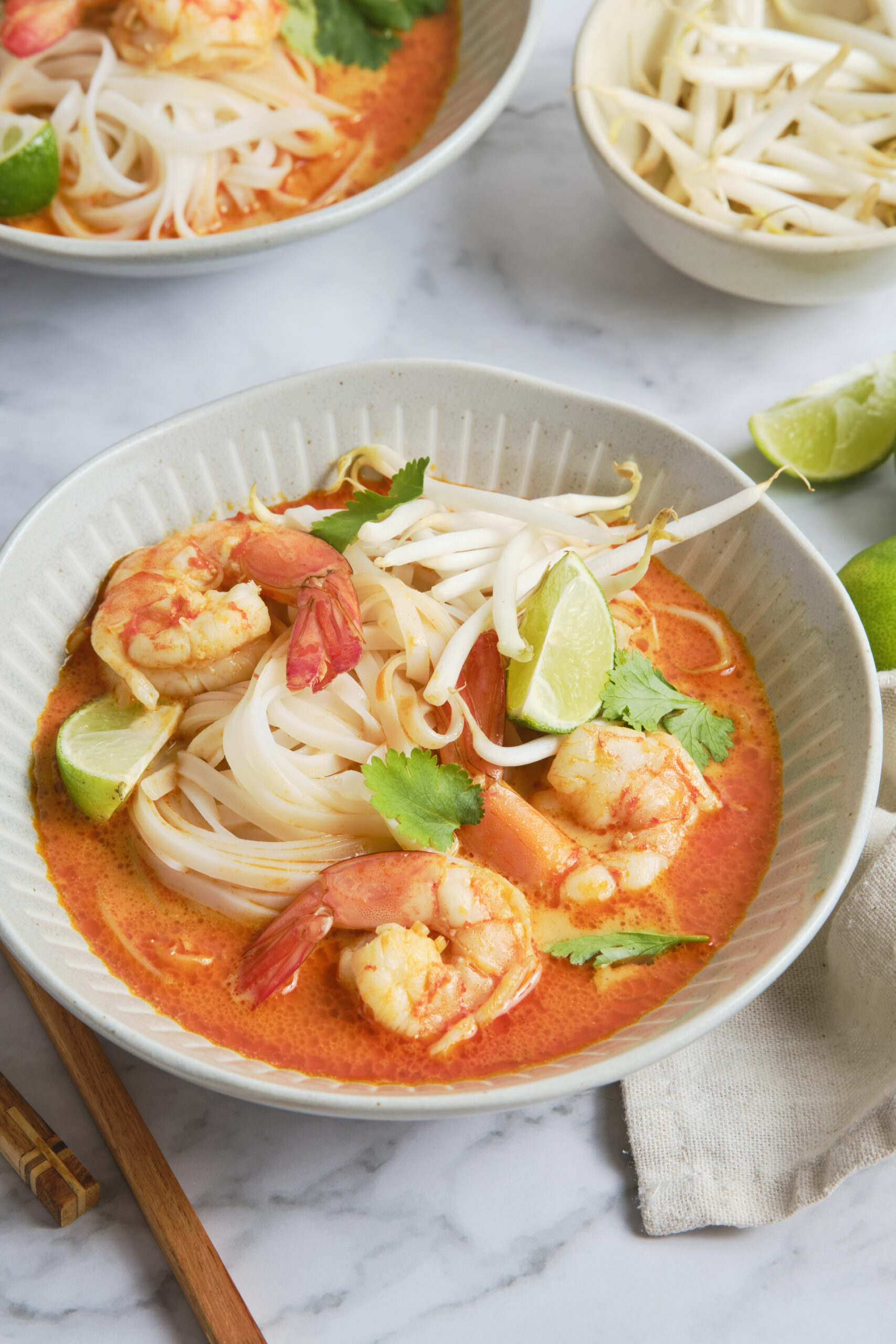
Laksa can often be a standalone dish, similar to ramen. A bowl, especially when full of rich proteins like chicken thighs and shrimp, is truly satisfying. But you can also top your laksa soup with a quick Hard-Boiled Egg or a Korean Mayak Egg, if you want to fuse even more cuisines together. If vermicelli, or the rice noodles used in this dish, aren’t to your liking, feel free to serve the soup atop a bowl of Steamed Rice. If you really want to embrace the Indonesian influences in this dish, don’t be afraid to pair it with a flavorful Nasi Goreng for a little variety.
Ingredients
- 8 ounces rice noodles
- 1 tablespoon vegetable oil
- 4 cloves garlic minced
- 1 tablespoon minced fresh ginger
- 2 stalks lemongrass white part only, minced
- 2 1/2 tablespoons red curry paste
- 4 cups chicken broth
- 2 cans 13.5 ounces each coconut milk
- 1 1/2 tablespoons fish sauce
- 1 1/2 tablespoons brown sugar
- 1 pound boneless, skinless chicken thighs cut into bite-sized pieces
- 12 ounces shrimp peeled and deveined
- 1 cup bean sprouts
- 1/2 cup fresh cilantro leaves
- 1 lime cut into wedges
Instructions
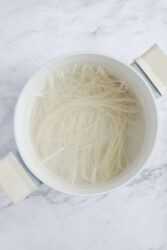
- Cook the rice noodles according to the package instructions. Drain and set aside.
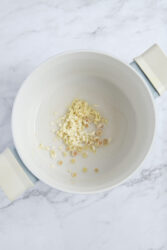
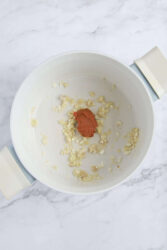
- In a pot, heat oil over medium. Add minced garlic, ginger, and lemongrass; cook for 2 minutes until fragrant.
- Stir in the red curry paste and cook for another minute, stirring constantly.
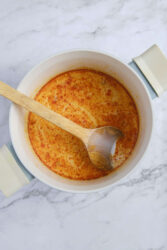
- Pour in the chicken broth and bring to a boil. Add the coconut milk, fish sauce, and brown sugar. Stir to combine.
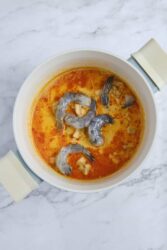
- Place the chicken pieces in the pot. Lower the heat and let it simmer for 10 minutes or until the chicken is fully cooked.

- Stir the shrimp into the soup and cook for 3 to 4 minutes, or until they turn pink and are fully cooked.
- Taste the soup and adjust seasoning if needed.
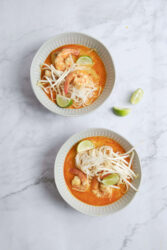
- Divide the cooked noodles among serving bowls. Ladle the soup over the noodles. Top with bean sprouts and cilantro leaves. Serve with lime wedges on the side.
Nutrition Info:
Nutrition information are estimates only and may vary based on the specific brands, ingredients, and portion sizes you use. This data is provided for informational purposes only.


Leave a Comment