

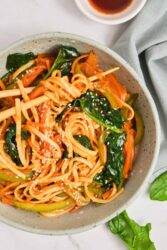
Sweet-and-spicy gochujang paste is the standout flavor in this veggie-packed, sweet potato-based Korean Noodles recipe.
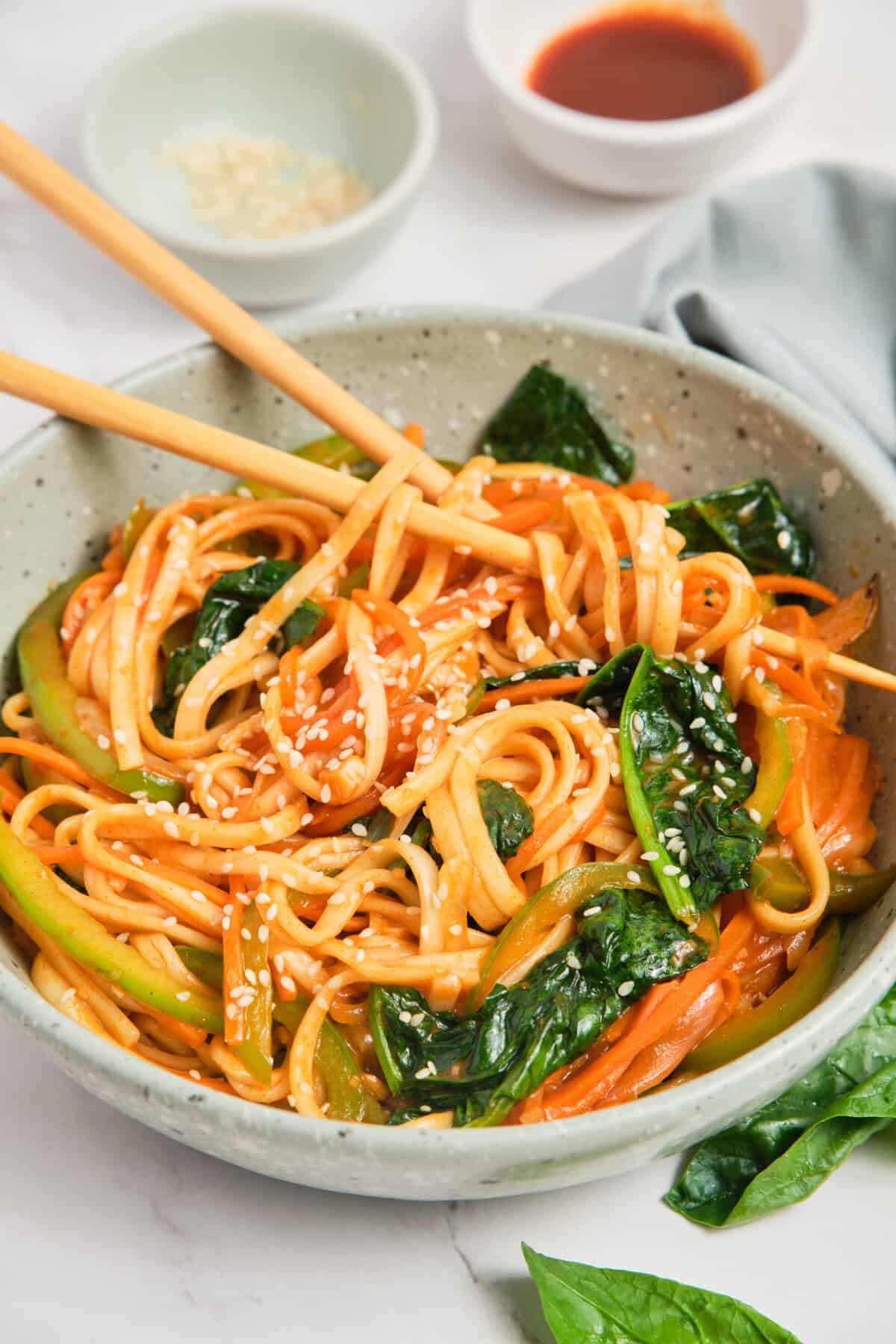
Asian noodle dishes are a big obsession of mine. Whether I’m at a Japanese, Korean, or Chinese restaurant, I naturally gravitate toward the noodle-based menu items, and no matter what I pick, I’m usually not disappointed. If I like the dish enough, I won’t stop thinking about it until I go on a shopping mission to find all the ingredients, then I try to make it at home.
If you’re anything like me, you’ll love my newest dinner obsession, which is this vibrant, sweet, and spicy Korean noodles dish. Tender dangmyeon, or glass noodles made with sweet potato starch, take center stage here. They’re coated in a spicy gochujang mixture with soy sauce and rice vinegar, with plenty of irresistible yet nutritious sautéed vegetables mixed in. This delicious meal has kept me up at night as I lay in bed excitedly thinking about the leftovers. You’re going to love it!
Spicy Korean noodles are wonderfully easy and quick to prepare, making them perfect for a weekday meal rotation. I love the flavor profile of spicy Korean noodles, but the gochujang stands out as my favorite ingredient—I’m a big fan of spice. The bright heat of this signature fermented Korean chili paste transforms the dish, leaving a pleasant lingering taste in my mouth every time.
Are These Korean Noodles Healthy?
This Korean noodles recipe is healthy in several ways. Korean sweet potato starch noodles (dangmyeon) are low in fat, and the bell peppers, gochujang, and carrots provide lots of vitamin A. The spinach provides a dose of iron, all the veggies lend some fiber content, and the garlic gives this noodle dish some heart-healthy properties. That being said, the dangmyeon noodles are mostly carbohydrates, and several of the ingredients are quite high in sodium, such as soy sauce and gochujang. If you’re limiting sodium in your diet, consider using coconut aminos instead of soy sauce.
This dish is suitable for vegans and is gluten-free, so it’s actually a very accessible noodle dish. I wouldn’t choose this recipe for any low-carb diets, however.
Small Ways To Make Big Flavor Changes
This dish has plenty of flavor already, but the beauty of noodle dishes resides in their flexibility. So, if you don’t like something in the recipe’s ingredients list, don’t let that stop you from trying it out with a simple swap! Here are some of my favorite swaps and additions for Korean noodles.
- Add mushrooms: Mushrooms add nutrition and flavor to this noodle dish, so if you love the fungi, use them in this recipe! I recommend sautéing them separately from the other veggies first, as they release a lot of water when they cook. Add the cooked mushrooms to the pan with the other sautéed veggies before you add the gochujang.
- Add green onions: I know there are regular onions in this recipe already, but green onions do something for the flavor that cooked white or yellow onions cannot do. Either add them to the pan at the end of the sauté, after the liquids have gone in, or add them to your plate as a final garnish.
- Substitute chopped bok choy for the spinach: Bok choy, or even baby bok choy, makes a great crunchy addition to this recipe. Bok choy has leafy greens at the tops of the stalks, so it’s an excellent swap for spinach, and the stalks themselves are delicious when cooked with soy sauce and other Asian-inspired flavors.
- Add more heat: The spice level of this recipe comes from the gochujang paste, but some folks like it hotter—myself included. Add some crushed red pepper flakes, Thai chili flakes, or your favorite hot sauce for more heat.
How Do I Store Leftovers?
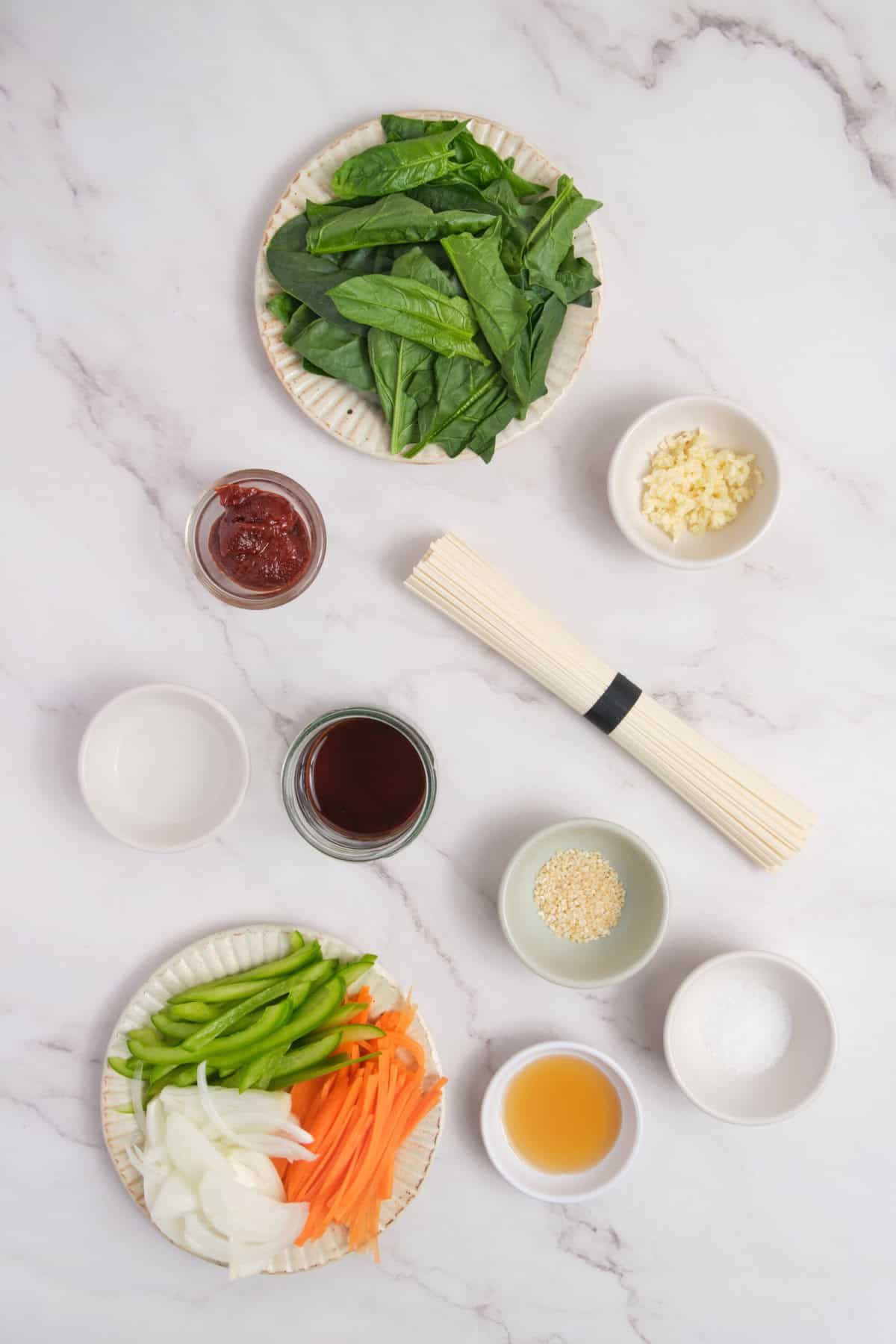
Once the noodles cool to room temperature, store them in an airtight container in your fridge for up to 4 days. Korean noodles can be enjoyed cold (which comes in handy if you don’t have access to a kitchen at work), or you can reheat them in the microwave or on the stove. I don’t recommend freezing this dish because the noodles and veggies will lose their texture after thawing.
Serving Suggestions
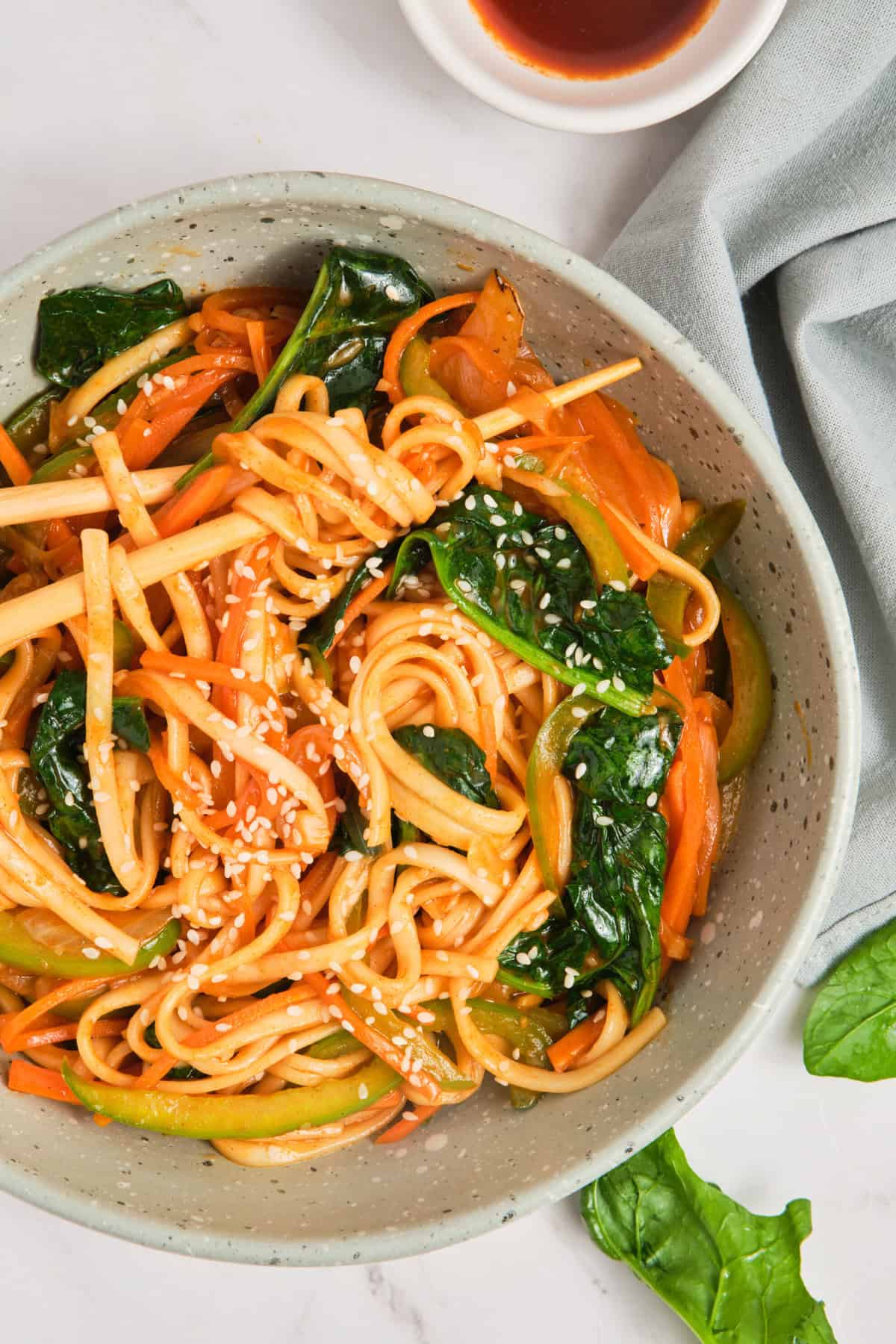
Spicy Korean noodles are a delicious and fulfilling meal alone, but that doesn’t mean we can’t add to it. These noodles can be a well-rounded vegan meal with the addition of some plant-based protein, and if you eat meat, there are even more protein options available to you. For vegans and vegetarians, try adding this Crispy Baked Tofu, Roasted Chickpeas, shelled and steamed edamame, or seitan. If you eat eggs, use this Poached Eggs recipe to add healthy vegetarian protein and fats to this dish.
Meat eaters can add some beef to this dish (I think beef prepared like Mongolian Beef would work well). Vietnamese Grilled Chicken would also be a wonderful addition!
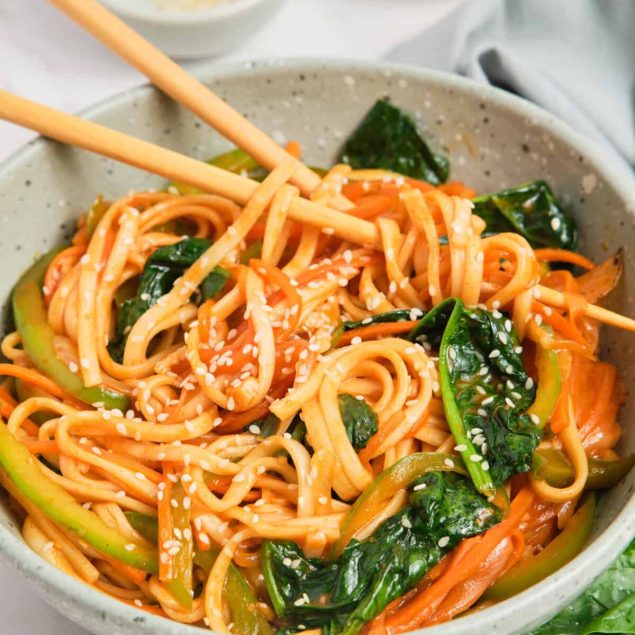
Ingredients
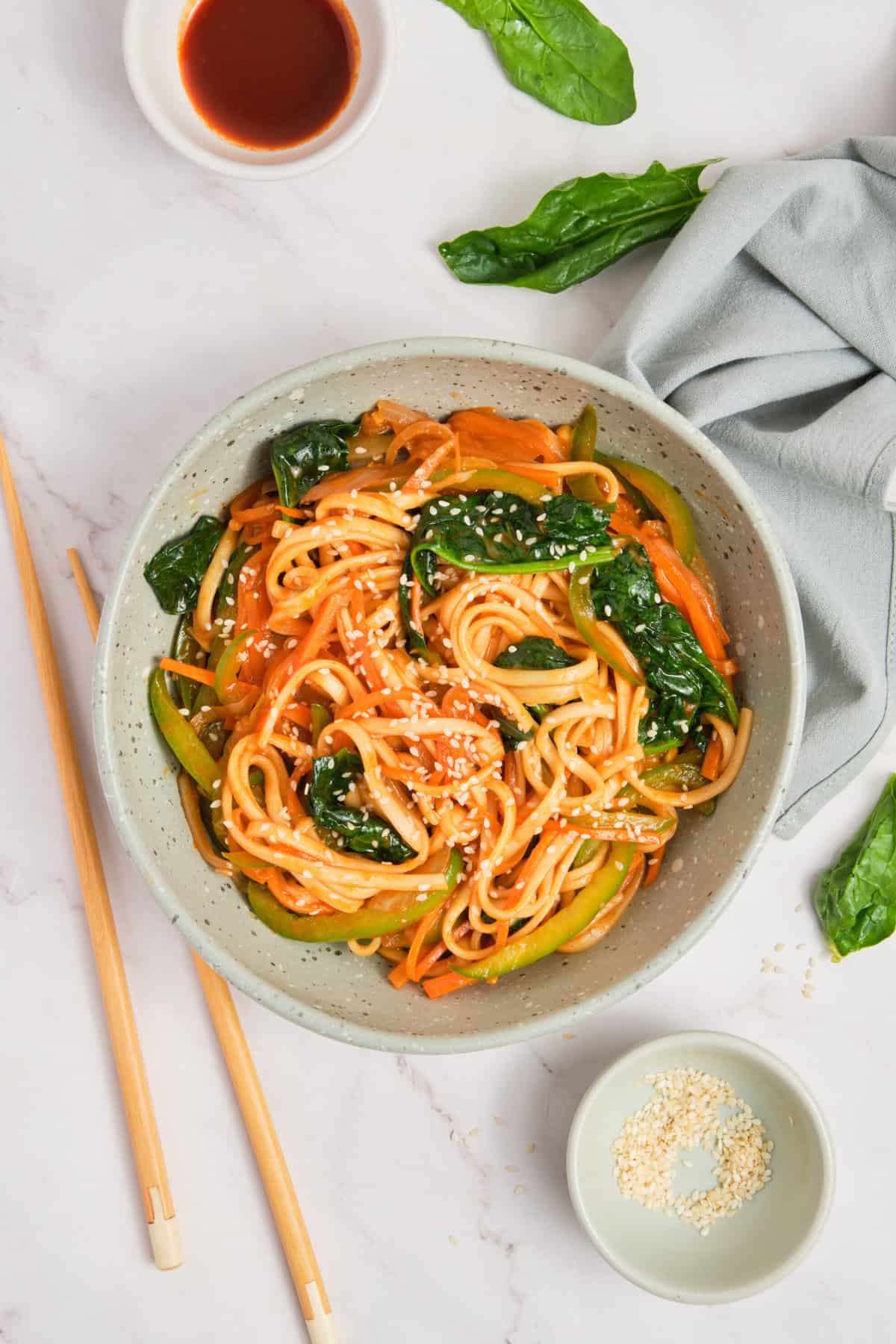
- 8 ounces Korean sweet potato starch noodles (dangmyeon)
- 1 tablespoon sesame oil
- 2 teaspoons minced garlic
- ½ cup thinly sliced onions
- ½ cup thinly sliced carrots
- ½ cup thinly sliced bell peppers
- ¼ cup low-sodium soy sauce
- 2 tablespoons gochujang (Korean chili paste)
- 1 tablespoon rice vinegar
- 1 teaspoon sugar
- ½ cup fresh spinach leaves
- 1 tablespoon toasted sesame seeds
Instructions
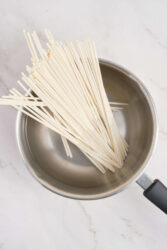
- Cook noodles according to package instructions until al dente. Drain and rinse under cold water, then set aside.
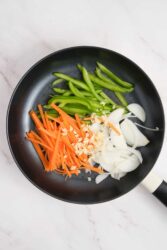
- In a large skillet, heat sesame oil over medium heat. Add garlic, onions, carrots, and bell peppers. Sauté until vegetables are just tender.
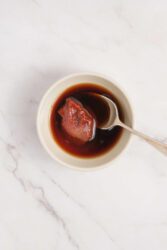
- Whisk together soy sauce, gochujang, rice vinegar, and sugar in a bowl. Pour over the sautéed vegetables.
- Add noodles and spinach to the skillet. Toss everything together and cook until the spinach is wilted and the noodles are heated through.
- Serve the noodles garnished with toasted sesame seeds.
Nutrition Info:
Nutrition information are estimates only and may vary based on the specific brands, ingredients, and portion sizes you use. This data is provided for informational purposes only.




Leave a Comment