

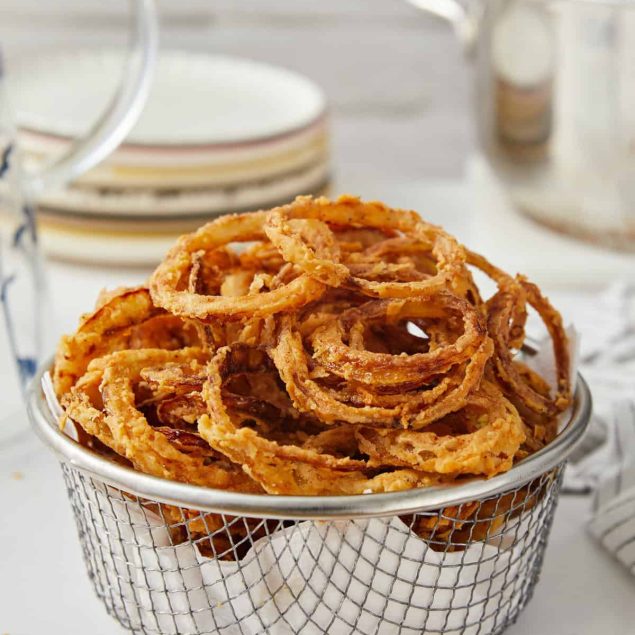
Crunchy, salty, and sweet—these French-Fried Onions make an amazing snack, topping, or side dish.
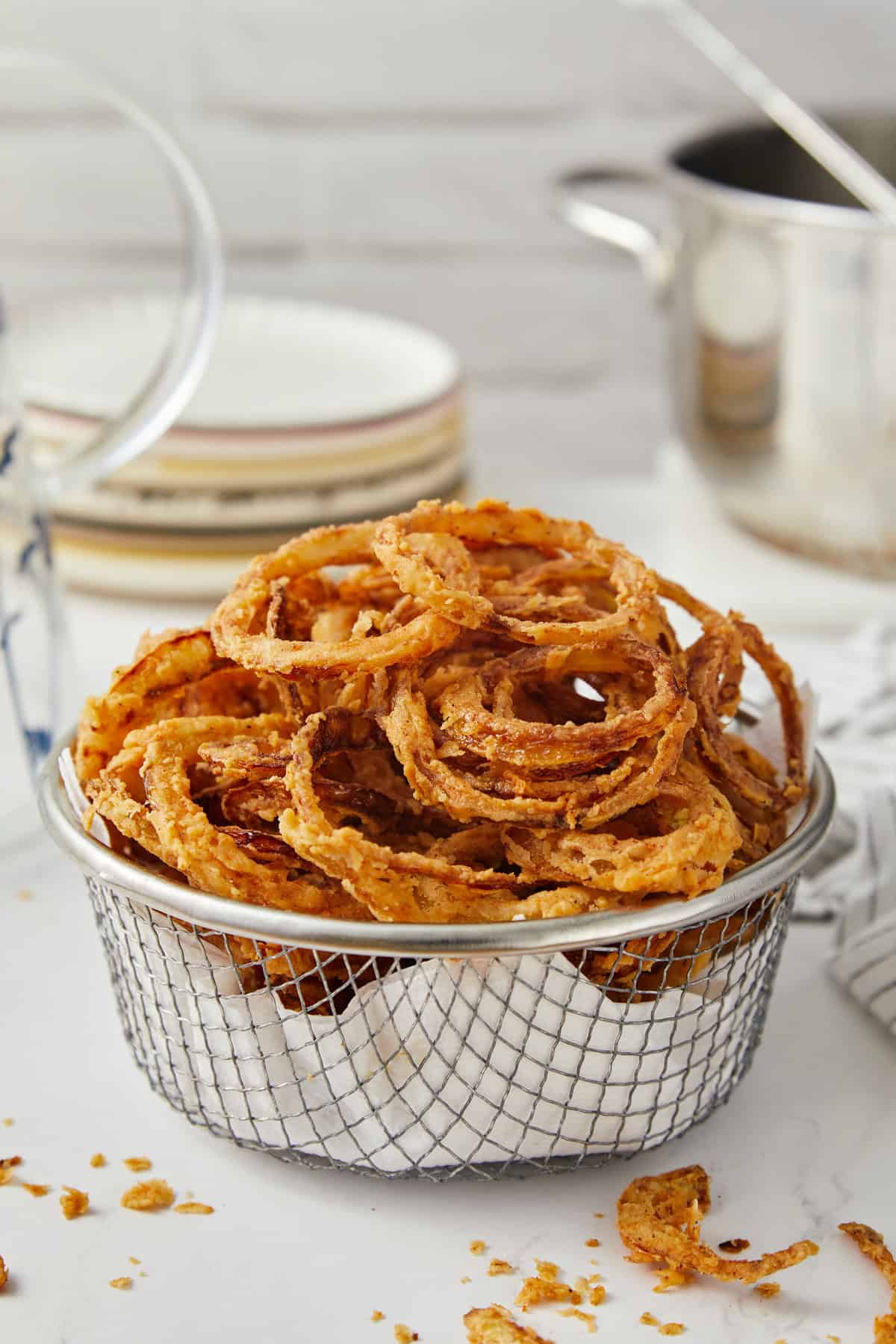
French-fried onions are often served at diners, barbecue joints, and upscale restaurants alike. What exactly are French-fried onions, and where did they originate?
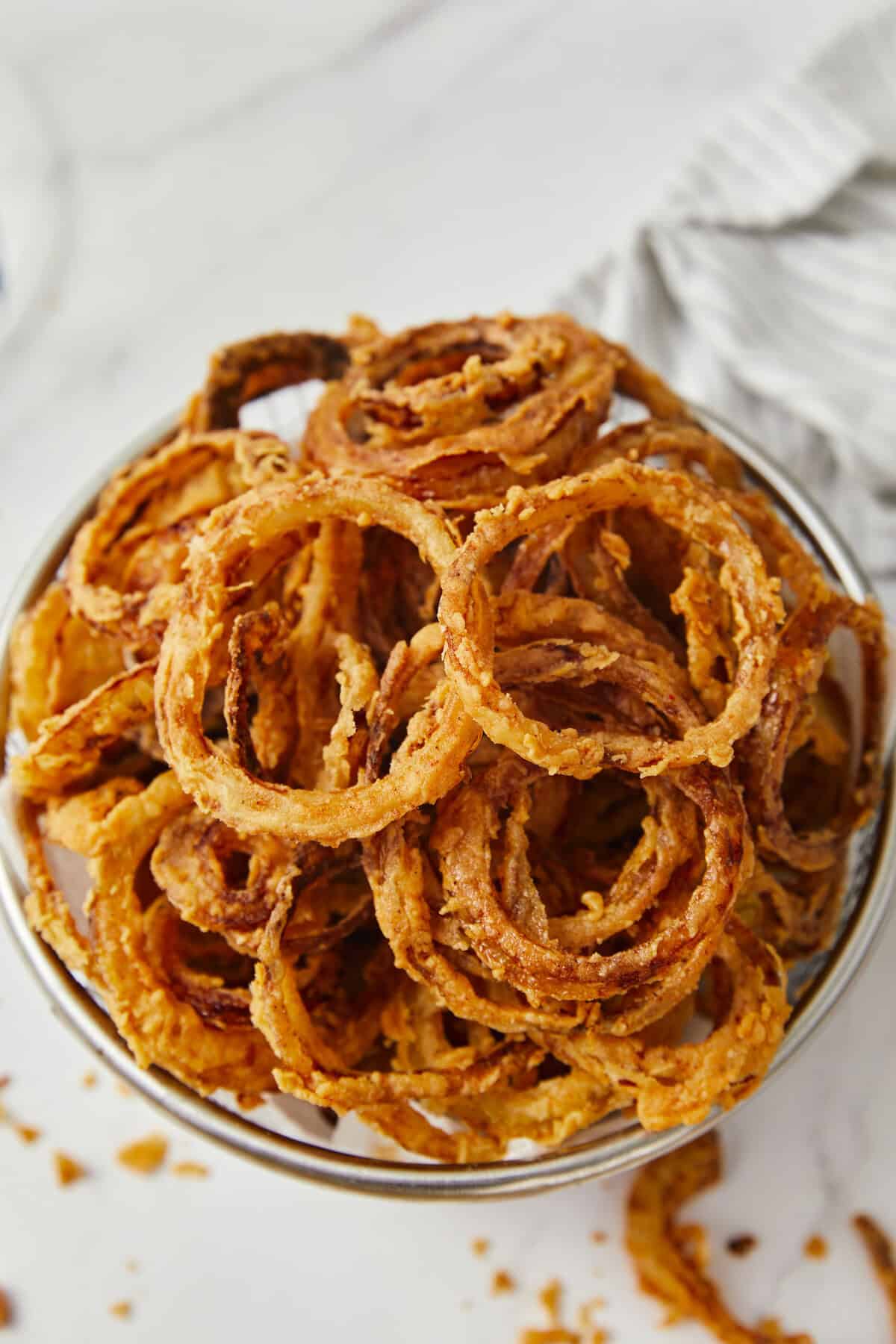
Essentially, French-fried onions consist of onion slices coated in batter or breadcrumbs and deep-fried until their exterior is rendered perfectly crispy and golden. The contrast between the crunchy layer and the soft, slightly sweet onion inside is part of their irresistible appeal.
The exact origins of all types of fried onions remain unclear. Although fried onions have been enjoyed in various cultural cuisines for centuries, the modern version of the onion ring is thought to have originated in the United States and is similar to the ones in our Air-Fryer Onion Rings recipe, using thicker-cut onion slices. French-fried onions are simply a thinner version.
French-fried onions can be enjoyed in a variety of ways and they’re known to complement many dishes. The most popular way Americans use French-fried onions might be the traditional green bean casserole at Thanksgiving, which is topped with crunchy fried onions. They are also commonly served as a side dish or topping with burgers, sandwiches, or steaks. Enjoying them on their own as a snack is also common, especially paired with dips like ranch dressing.
Are French-Fried Onions Healthy?
These onions are soaked in buttermilk and fried in oil. You can make small adjustments to suit your specific dietary preferences. For example, the flour can be replaced with gluten-free flour. You can also opt for avocado oil which has a very high smoke point and a bit more heart healthy than your average vegetable oil. As always, I believe in creating a well-balanced plate that includes dishes like this, paired with vegetables and other nutrient-dense sides.

The secret to the crispiest French-fried onions?
There are a couple of things to remember so that your French-fried onions turn out as crispy as possible. First, don’t overload the skillet when frying the onions. Each onion needs to be thoroughly fried in the oil, and overcrowding could cause uneven cooking. Second, after the onions are fried, it’s helpful to soak up some of the excess oil with paper towels. If you don’t, the oil accumulates on the French-fried onions and they’ll become soggy.
How to Make Ahead and Store
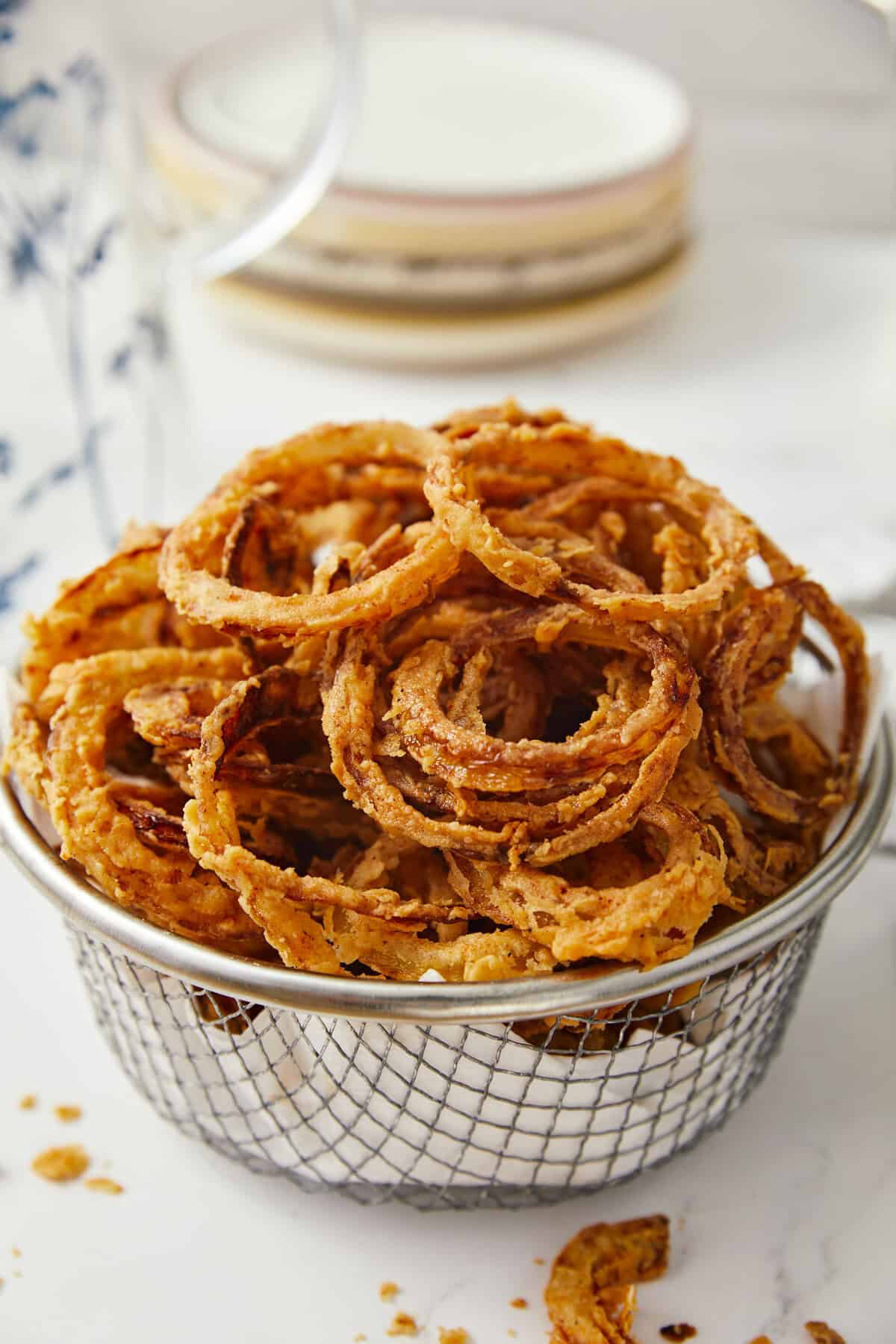
To keep your leftover French-fried onions fresh, ensure they have cooled down completely. Put them in an airtight container to keep them crispy. You can also add a piece of paper towel to soak up any moisture. Store the container in the fridge for up to 4 days. You can also freeze them in a freezer-safe container for up to 3 months.
Serving Suggestions
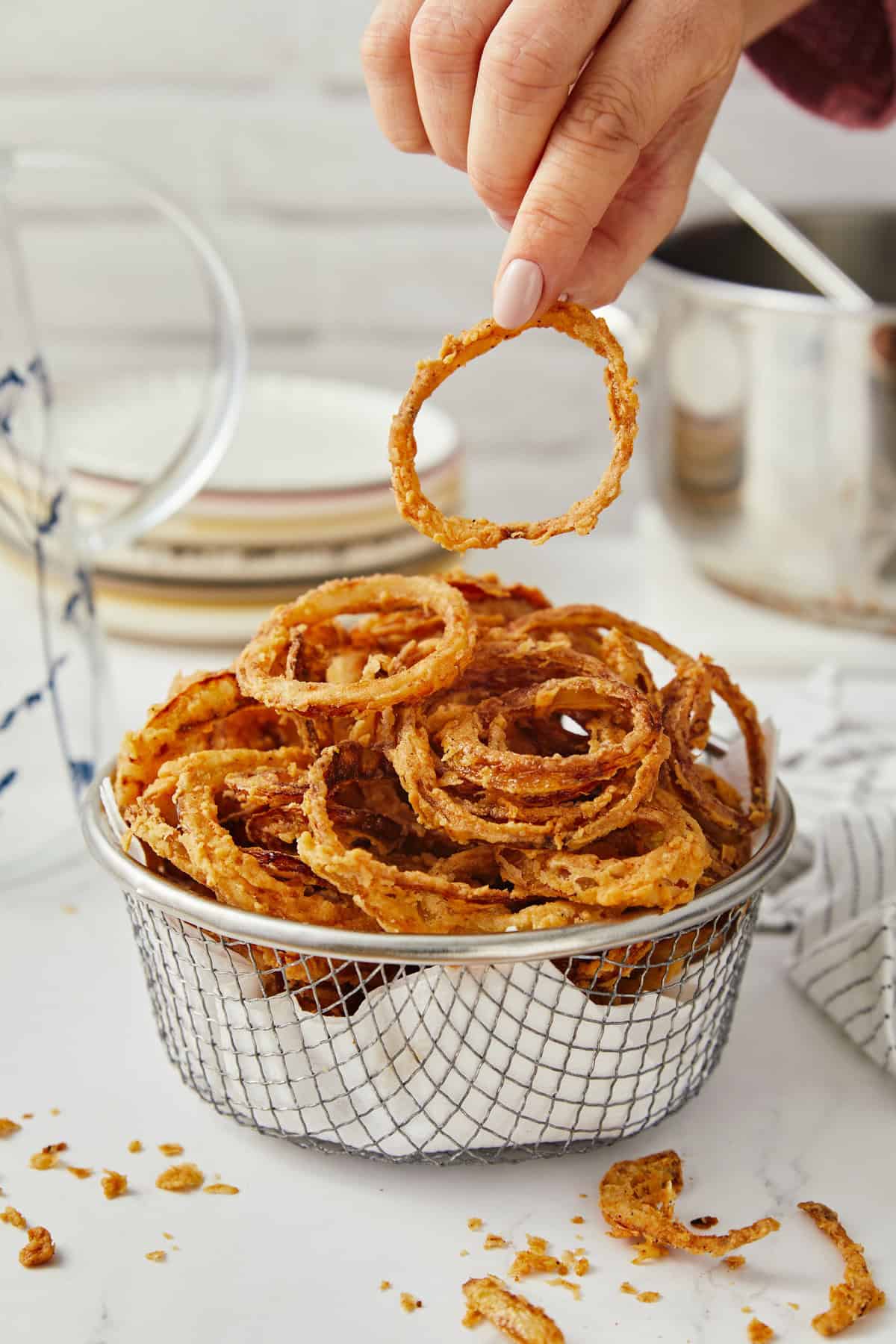
Now for the fun part—how to serve your French-fried onions. They make a wonderful snack with a side of Onion Ring Sauce or Spicy BBQ Sauce. For dinner, French-fried onions can top this Instant-Pot Steak and these Veggie Burgers, adding wonderful crunch and flavor. They also turn any potato dish into an impressive side. Try French-fried onions as a topping for scalloped potatoes, oven-roasted potatoes, or a classic Foil-Wrapped Baked Potato. These sweet and salty onions are incredibly versatile, I keep finding new places to use them.
Ingredients
- 2 large onions thinly sliced into rings
- 1 cup buttermilk
- 1 1/2 cups all-purpose flour
- 1 teaspoon garlic powder
- 1 teaspoon paprika
- 1/2 teaspoon salt
- 1/4 teaspoon black pepper
- Vegetable oil for frying
Instructions
- Soak the onion rings in buttermilk for 15 minutes to tenderize and add flavor.

- In a large bowl, whisk together flour, garlic powder, paprika, salt, and pepper.

- Heat oil in a deep-fryer or large pot to 375°F.
- Dredge the soaked onion rings in the flour mixture until well coated.

- Fry the onion rings in batches until golden brown, about 2-3 minutes, then transfer to a paper towel-lined plate to drain.

Nutrition Info:
Nutrition information are estimates only and may vary based on the specific brands, ingredients, and portion sizes you use. This data is provided for informational purposes only.



Leave a Comment