

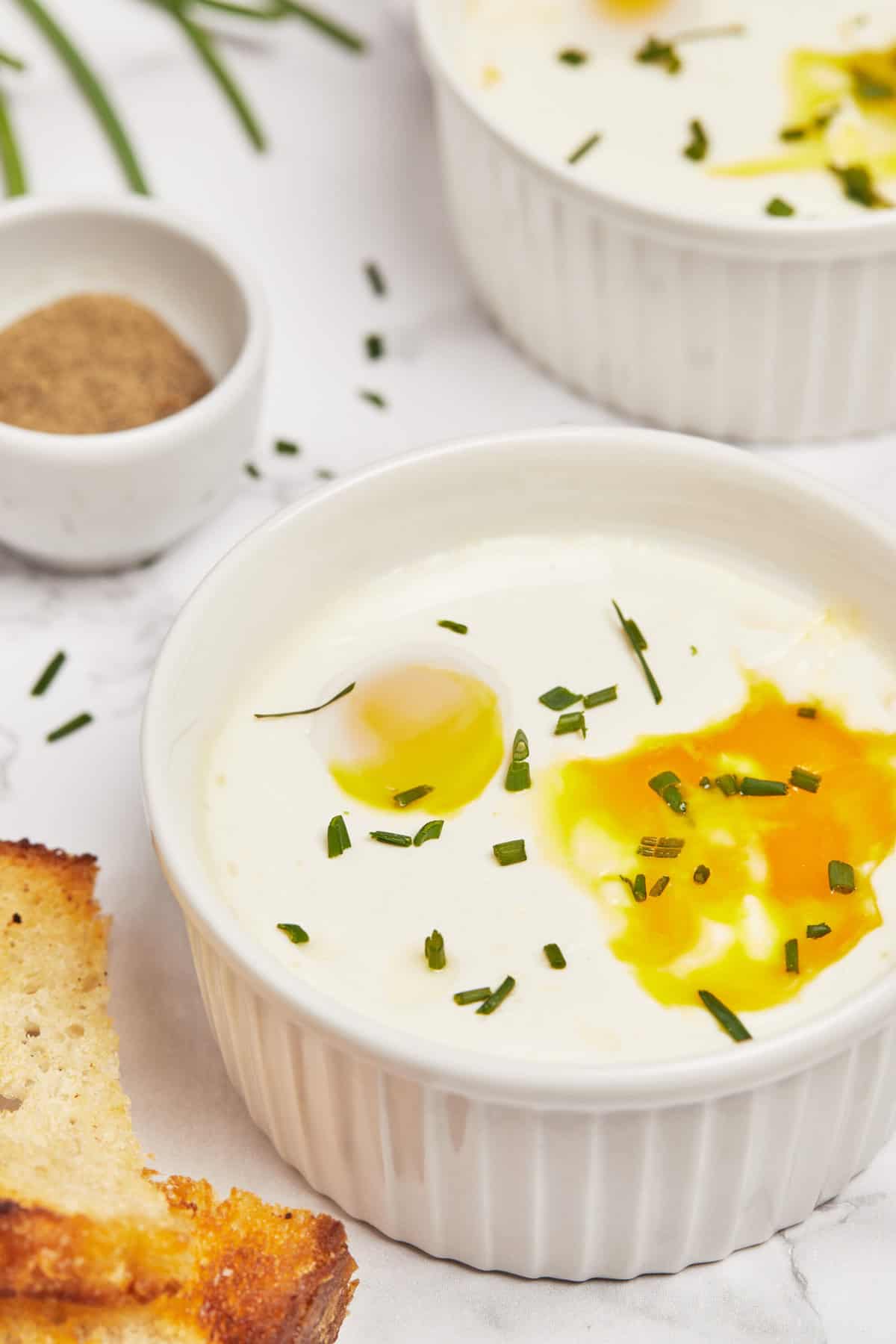
Eggs en Cocotte are so much more than a breakfast dish. With their silky yolks and creamy whites, they also make the perfect starter for your next dinner party.
I still remember the very moment I fell in love with French cuisine. That swoon-worthy experience of tasting something so incredibly delicious, it almost brought tears to my eyes. And, no. I’m not exaggerating.
We were in the southwest of France, in the Dordogne department, known for its exquisite black truffles. It was the start of our vacation, and we decided to kick things off in style by reserving a table at one of the area’s swankiest restaurants. After ordering a pre-dinner drink (apéritif, in French), I perused the menu, which to me read like poetry. It was the epitome of culinary sophistication, making choosing everything but easy. Ultimately, I settled on oeufs cocotte à la truffe, or eggs ‘en cocotte’ with truffle. ‘Cocotte’ refers to the small pots (usually a ramekin) in which the eggs are baked.
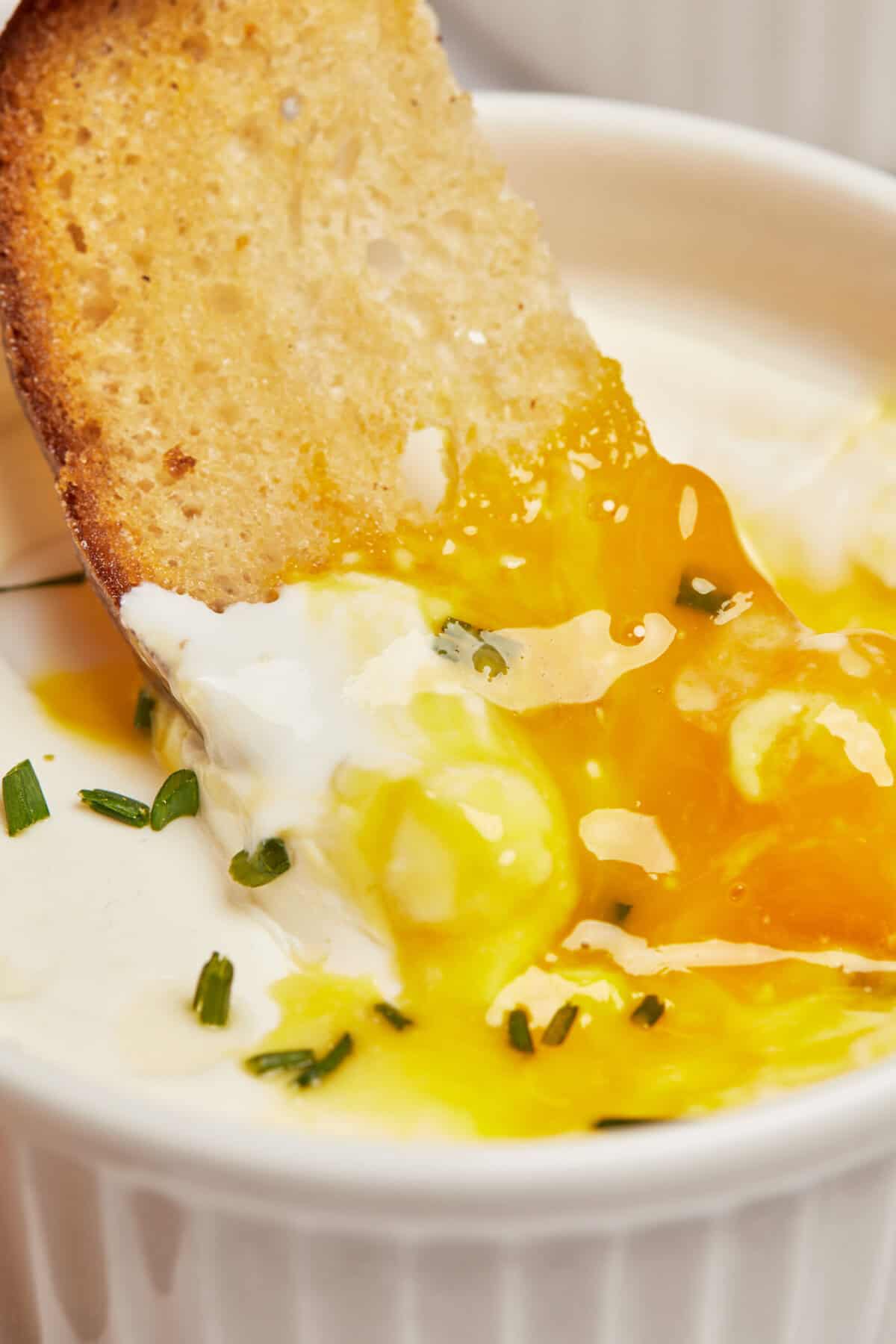
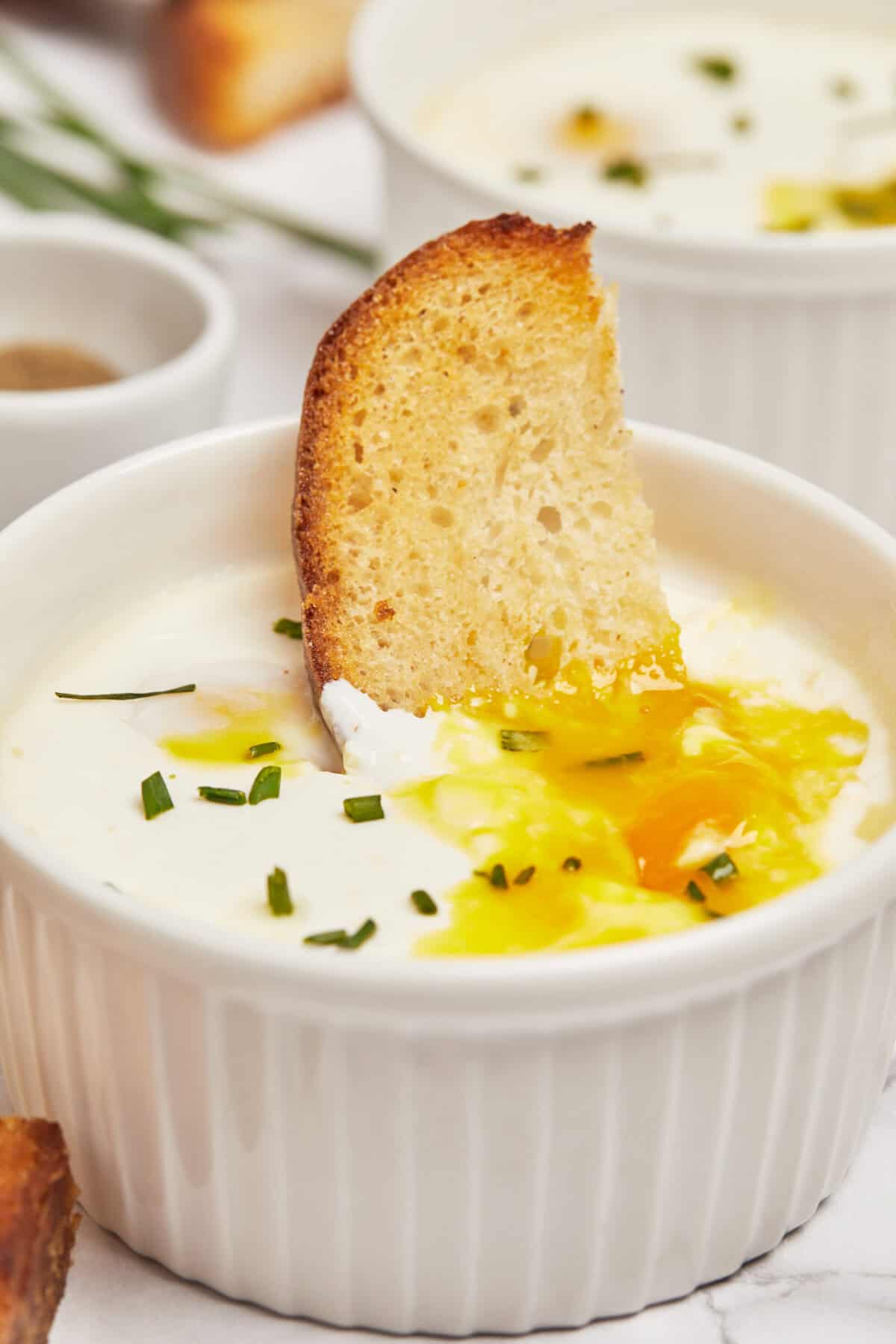
The tiny flecks of golden, melted butter on the creamy whites, that irresistible aroma and delicate crunch of the freshly grated black truffle, and dipping a warm piece of toast into the molten yolk—as cliché as it may sound, it was truly love at first bite.
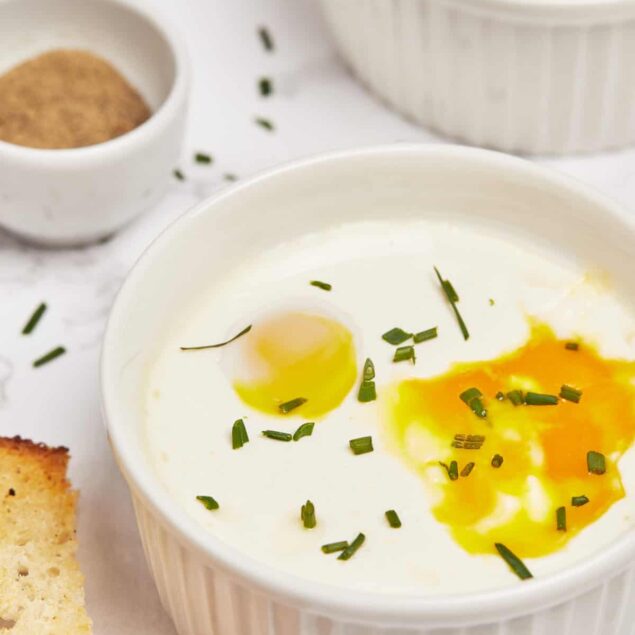
The great thing about eggs en cocotte is that it’s incredibly easy to make, proving that French cuisine isn’t as daunting as some may think. The eggs are simply cracked into the ramekin, seasoned, placed in a water bath, and baked until the yolks are to your liking. The water bath ensures that they’re cooked gently and evenly, resulting in silky yolks and perfectly set whites.
Eggs en cocotte can easily be customized with various ingredients, such as leftover vegetables, different types of cheese, and finely chopped herbs. This recipe is great for breakfast or brunch, but it’s also a fine starter for an elegant dinner party.
Are Eggs en Cocotte Healthy?
Eggs, the main ingredient, are low in calories and a source of nutrients like vitamin D, B12, choline, and iodine. They also contain protein and omega-3 fatty acids. Some studies suggest that although eggs contain cholesterol, consuming them in moderation does not adversely affect blood cholesterol levels.
Of course, it depends on how you prepare them. Adding sautéed mushrooms, cherry tomatoes, or other finely chopped vegetables is a healthier option than pairing them with bacon, heavy cream (as this recipe suggests), and a knob of salted butter—though, admittedly, those additions are worth the occasional indulgence.
Some Added Extras
This recipe is great because it offers versatility and the opportunity to use fresh, seasonal ingredients. One of my favorite ways to make eggs en cocotte is with sautéed porcini mushrooms, thyme, and a drizzle of truffle oil. I also love a Nordic-inspired version with delicate slices of smoked salmon, crème fraîche, and freshly chopped dill or chives. Adding buttery, sautéed leeks with crumbled goat cheese or Boursin will provide the perfect blend of subtle sweetness and zest. For a heartier approach, I go for diced ham, grated Comté cheese, and chopped parsley. In the mood for something bold? Try crispy bacon, blue cheese, and thinly sliced scallions. Oh, and if you’re lucky enough to source truffles, a few delicate shavings and a good knob of salted butter will make your eggs nothing short of a culinary masterpiece!
How To Make Ahead And Store
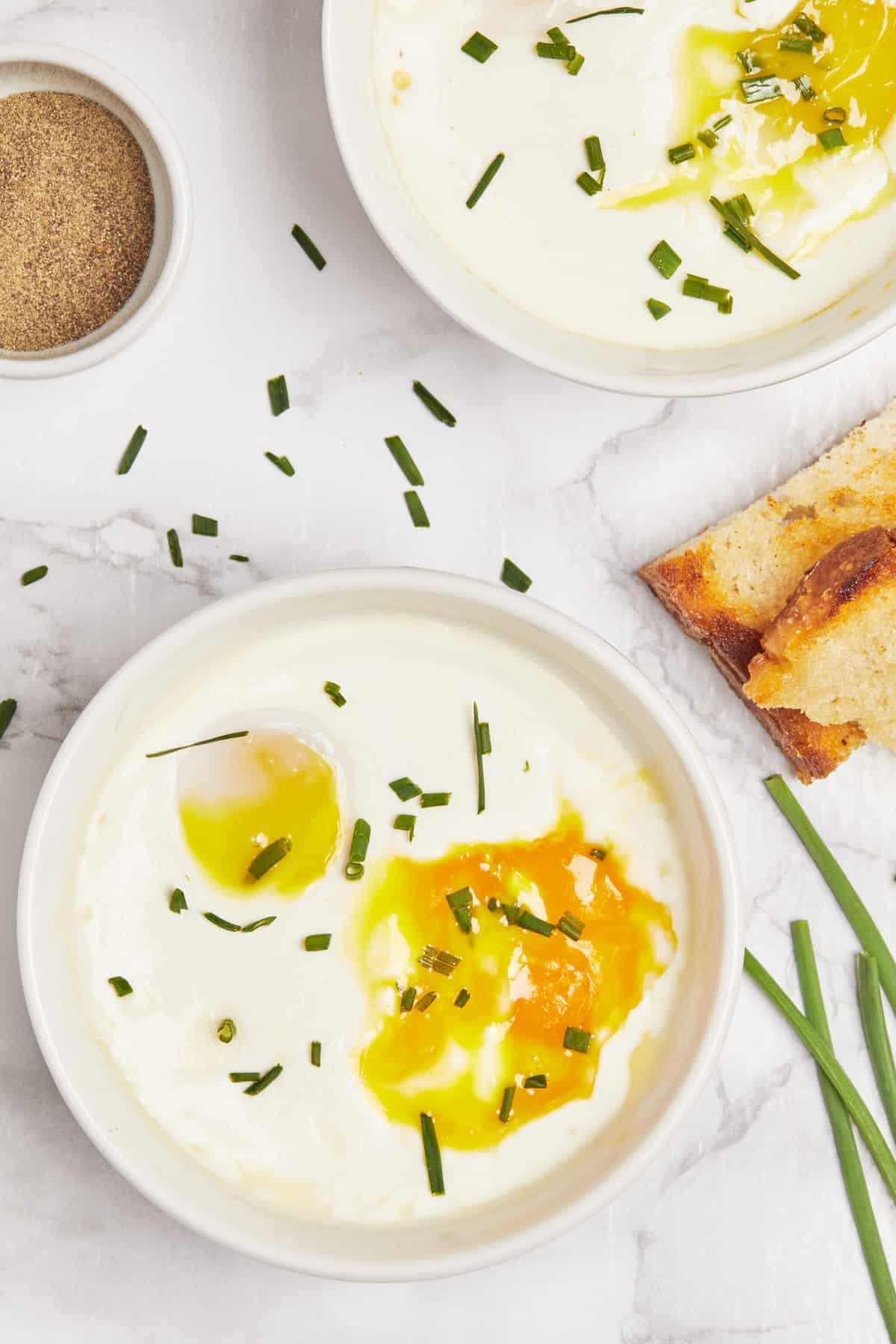
Eggs en cocotte cannot be made ahead and should be eaten straight away. If you try to reheat them, the eggs will be overcooked and lose their perfectly runny yolks. However, you can prepare your additional ingredients ahead of time, such as sautéing your veggies, grating the cheese and cooking the bacon. Then, when you’re ready to whip up this dish, all you have to do is bake the eggs.
Serving Suggestions
These soft, custardy eggs baked in ramekins and served with warm, buttery toast are the perfect starter for an elegant dinner party. For the main, roast a golden Poulet Rôti and serve it with Rosemary Roasted Potatoes and a side of Ratatouille. For dessert, try this Chocolate Lava Cake Recipe. And don’t forget to casually mention that, in French, it’s called moelleux au chocolat!
Ingredients
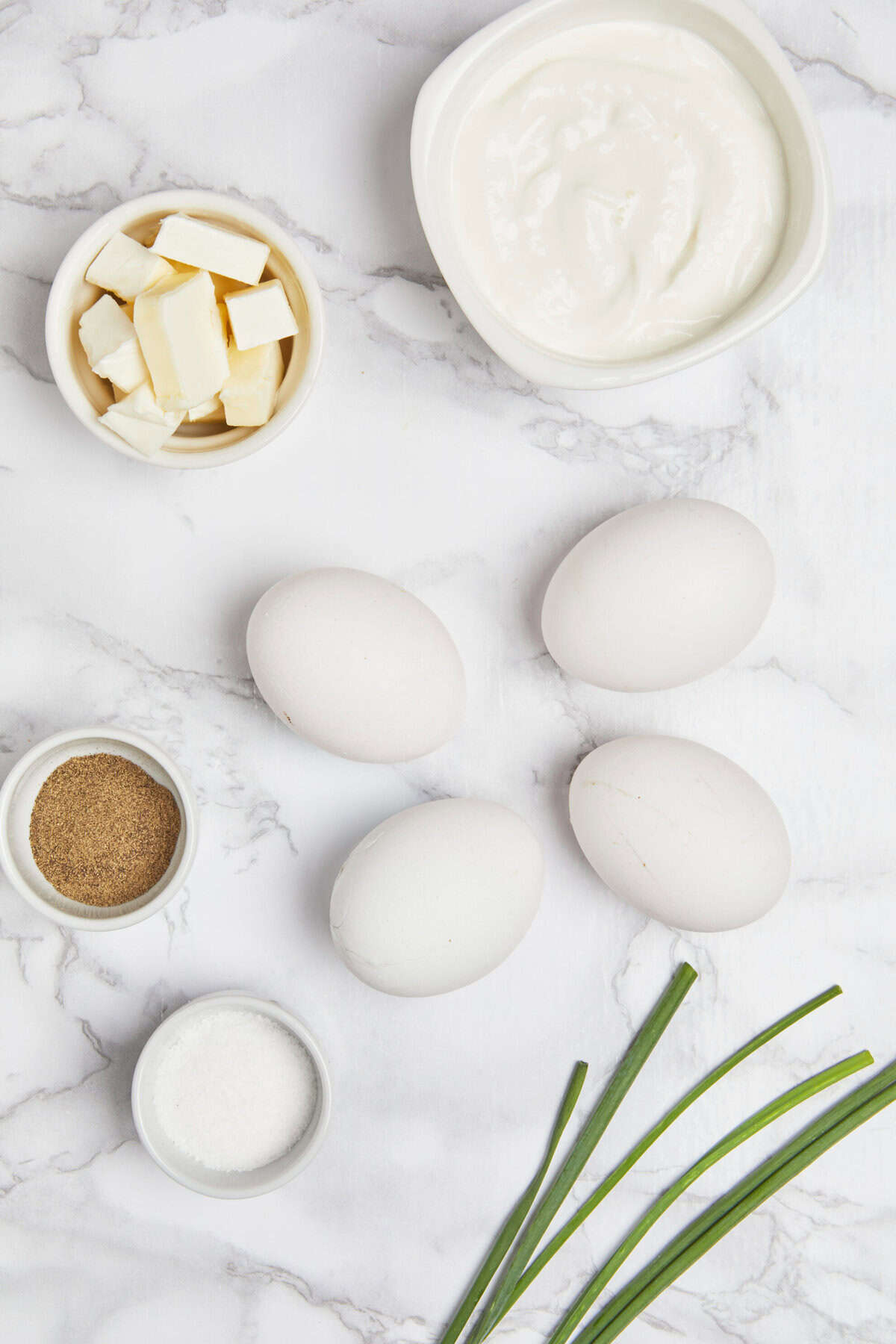
- 4 large eggs
- 4 tablespoons heavy cream
- Salt to taste
- Freshly ground black pepper to taste
- 2 teaspoons unsalted butter softened
- Fresh chives chopped, for garnish
Instructions
- Preheat your oven to 350°F and set a kettle of water to boil.
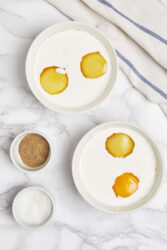
- Use the butter to grease two small ramekins and pour 2 tablespoons of heavy cream into each.

- Crack two eggs into each ramekin, being careful not to break the yolks. Season with salt and pepper.
- Place the ramekins in a deep baking dish. Pour the boiling water into the dish until it reaches halfway up the sides of the ramekins.
- Carefully transfer the baking dish to the oven and bake for 12 to 15 minutes, until the egg whites are set but the yolks remain runny.

- Remove from the oven, garnish with chopped chives, and serve immediately with crusty bread or toast.
Nutrition Info:
Nutrition information are estimates only and may vary based on the specific brands, ingredients, and portion sizes you use. This data is provided for informational purposes only.


Leave a Comment