

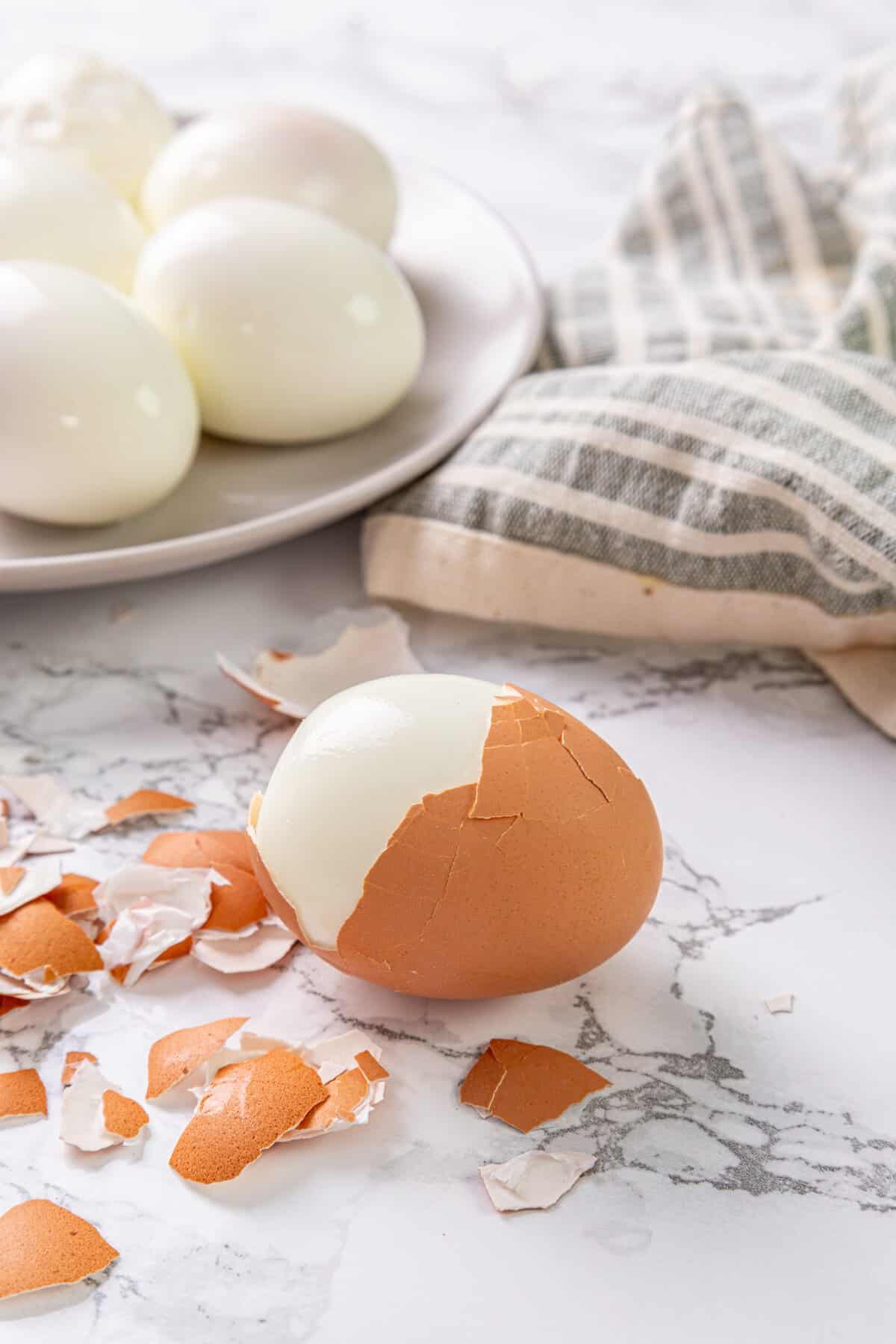
No more hard-boiled eggs that won’t peel! With a few simple steps, you’ll have eggs that part easily with their shells and taste delicious.
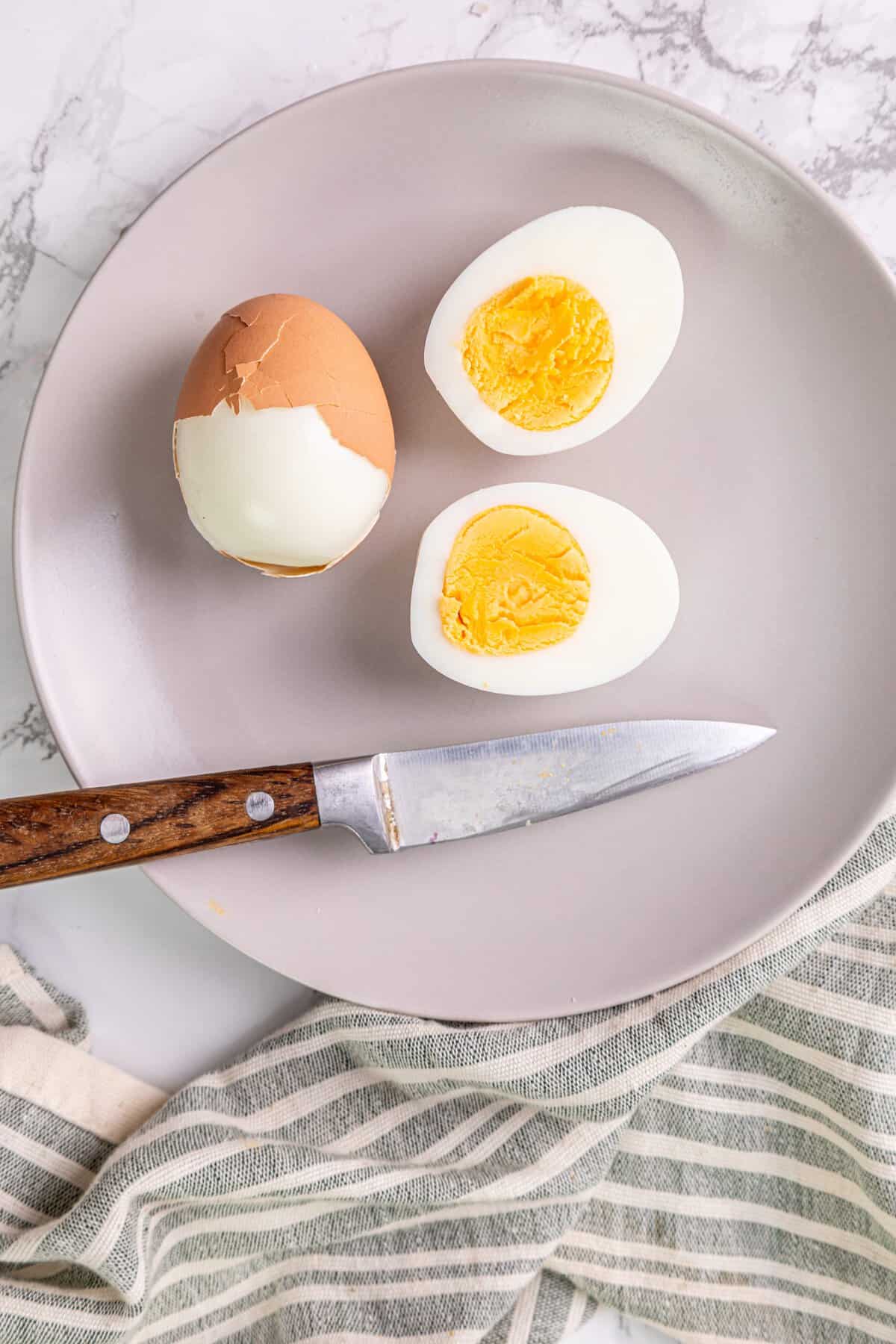
Hard-boiled eggs are a classic snack and protein source that fits seamlessly into almost any diet, from keto to Paleo, and Whole30 to vegetarian. Their mild flavor and creamy yolk make them a great addition to salads and sandwiches, or even just enjoyed by themselves with a splash of soy sauce and a sprinkle of green onions.
Growing up, I loved watching my grandmother prepare hard-boiled eggs with the care of a scientist. Her method, which I’ve perfected over the years, was foolproof, and the joy of peeling a perfectly smooth egg never gets old.
Using the method described in this hard-boiled egg recipe, your eggs will peel beautifully. However, to get the results you want, you need to go beyond boiling water, so keep reading!
Are Hard-Boiled Eggs Healthy?
Hard-boiled eggs are packed with protein, essential vitamins, and healthy fats, making them a great choice for any meal or snack. They’re a satisfying, low-calorie option that keeps you full longer. Plus, eggs contain choline, which supports brain health, and their yolks contain vitamin D.
Want to make this recipe even healthier? Opt for organic and pasture-raised eggs to boost the nutrient content and reduce environmental impact. Pair these eggs with fresh veggies or sourdough toast for a balanced snack or meal. And remember, moderation is key. While eggs are nutrient-dense, eating them alongside a variety of other foods ensures you’re getting a well-rounded diet.
The Secret to Easy-Peel Eggs: Their Age!
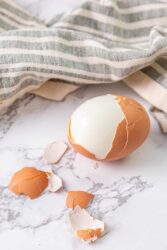
The secret to easy-peel hard-boiled eggs lies in the age of the egg. Older eggs peel more easily because their whites shrink slightly as they age, creating a larger air pocket between the egg and the shell. This pocket weakens the bond, making peeling a breeze.
If you’ve ever wrestled with a fresh egg only to end up with a shredded mess, you’re not alone. For the best results, buy your eggs a week or two in advance or look for cartons with closer expiration dates. The slight wait is worth it when you see how easily the shells slip away, leaving you with smooth, unblemished eggs.
How To Make Ahead And Store
Hard-boiled eggs are best stored in the refrigerator. Keep them unpeeled in a container for up to 1 week. Peeled eggs can be stored in a bowl of water (changed daily) or wrapped tightly in plastic wrap to prevent drying out. Freezing is not recommended, as the whites can become rubbery when thawed.
Serving Suggestions
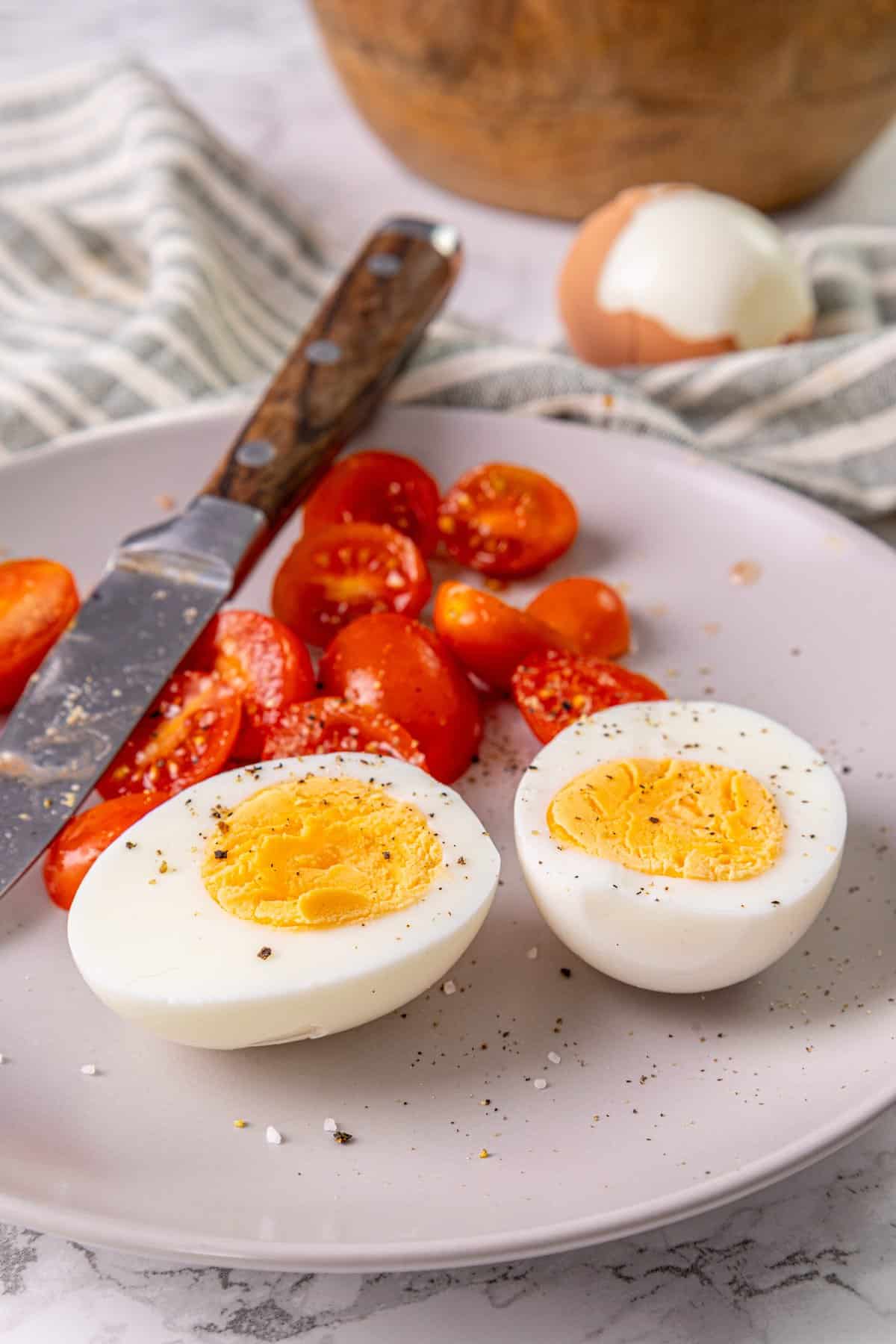
Hard-boiled eggs are great as a snack, but they make a great lunch, too. I like to slice a few and add them to my Balsamic-Grilled Vegetable Salad or this Cucumber And Tomato Salad. You also can’t forget the beloved Caesar Salad, which, in my opinion, has to have eggs on top! You can also enjoy hard-boiled eggs in your favorite potato salad recipes, such as this Amish Potato Salad or this Old-Fashioned Potato Salad.
Ingredients
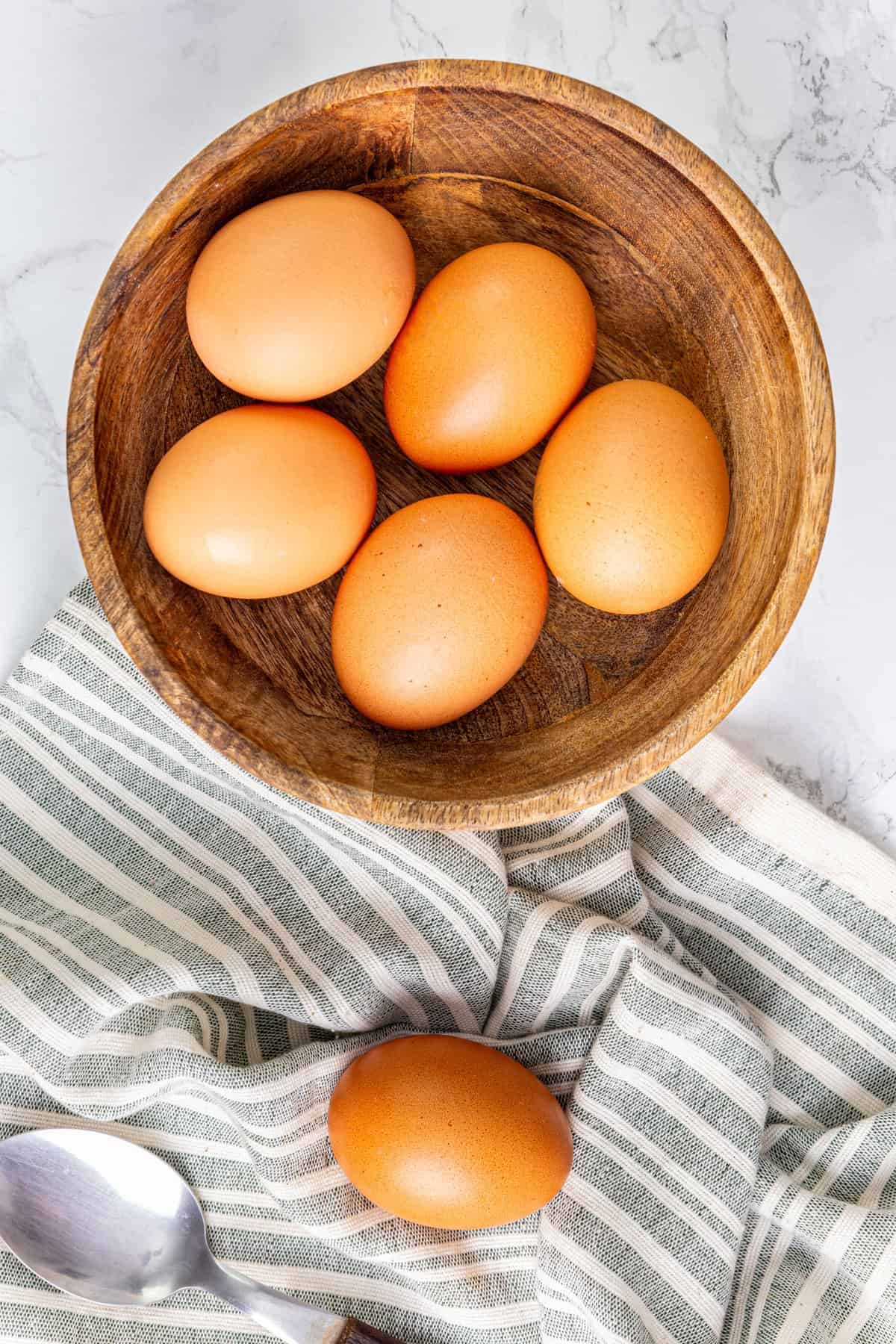
- 6 large eggs
- Ice for ice bath
- Cold water for ice bath
Instructions
- Start by bringing a medium-sized pot of water to a rolling boil. Make sure there is enough water to cover the eggs by at least an inch.
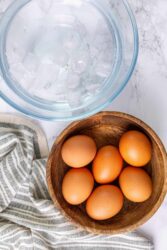
- While waiting for the water to boil, take the eggs out of the refrigerator to warm up to room temperature. Make an ice bath by combining lots of ice with cold water in a large bowl.
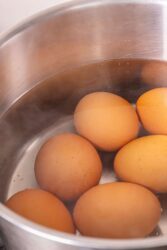
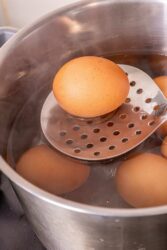
- Once the water is boiling, lower the heat to a simmer and gently place the eggs into the water using a skimmer or spoon, then increase the heat back to a boil.

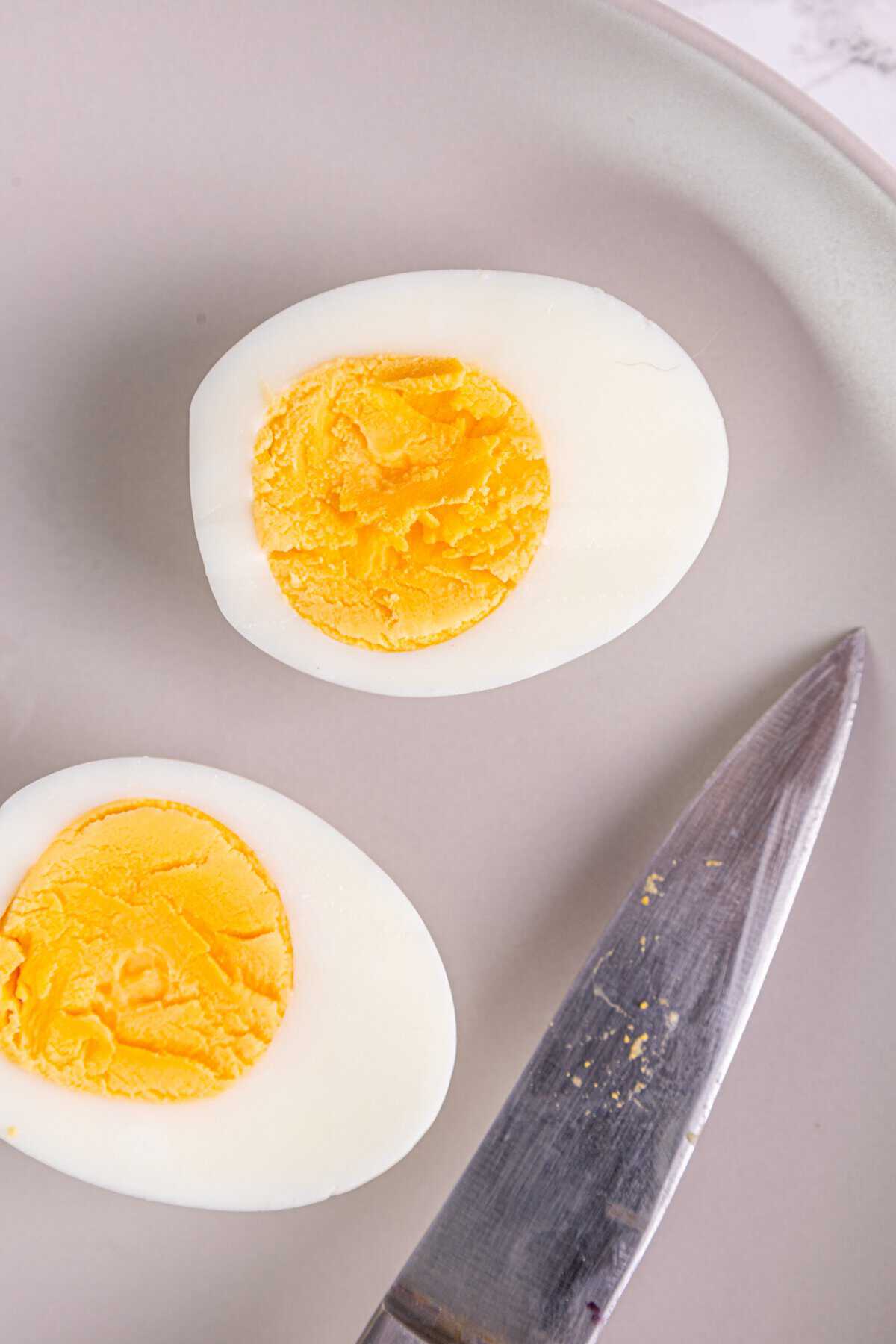
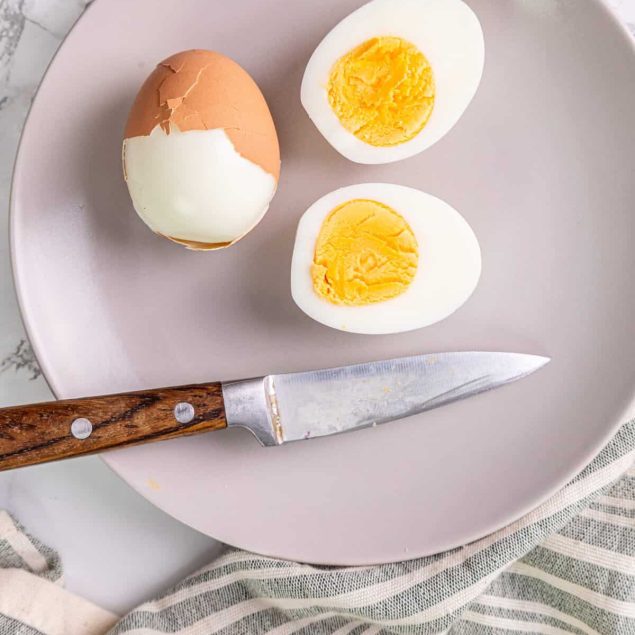
- For fully-set yolks, cook the eggs 12 to 14 minutes. Alternatively, keep these times in mind: 6 minutes for soft-boiled with a runny yolk, 8 minutes for jammy yolks, 10 minutes for slightly soft-centered yolks.
- Use the skimmer to immediately transfer the eggs into the ice bath to cool down quickly and stop the cooking process.
- Once fully cooled, gently roll the eggs on a countertop or tap them to create cracks, then start peeling from the bottom end where there is usually an air pocket.
Nutrition Info:
Nutrition information are estimates only and may vary based on the specific brands, ingredients, and portion sizes you use. This data is provided for informational purposes only.


Leave a Comment