

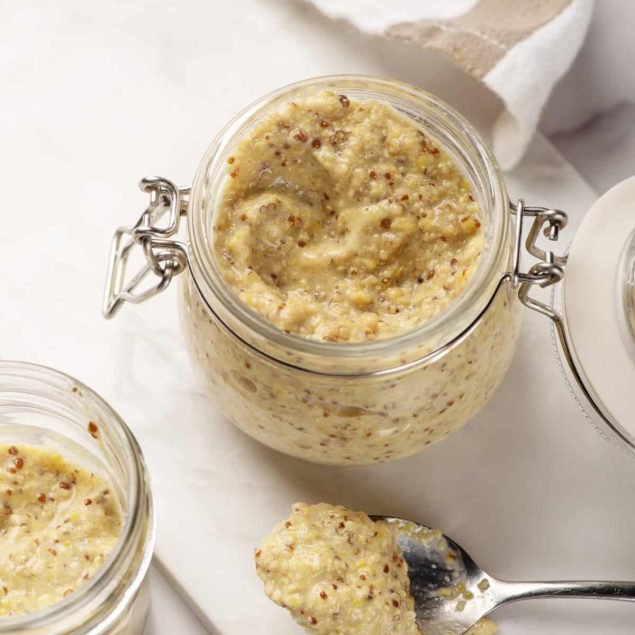
You won’t believe how easy it is to make this classic condiment at home!
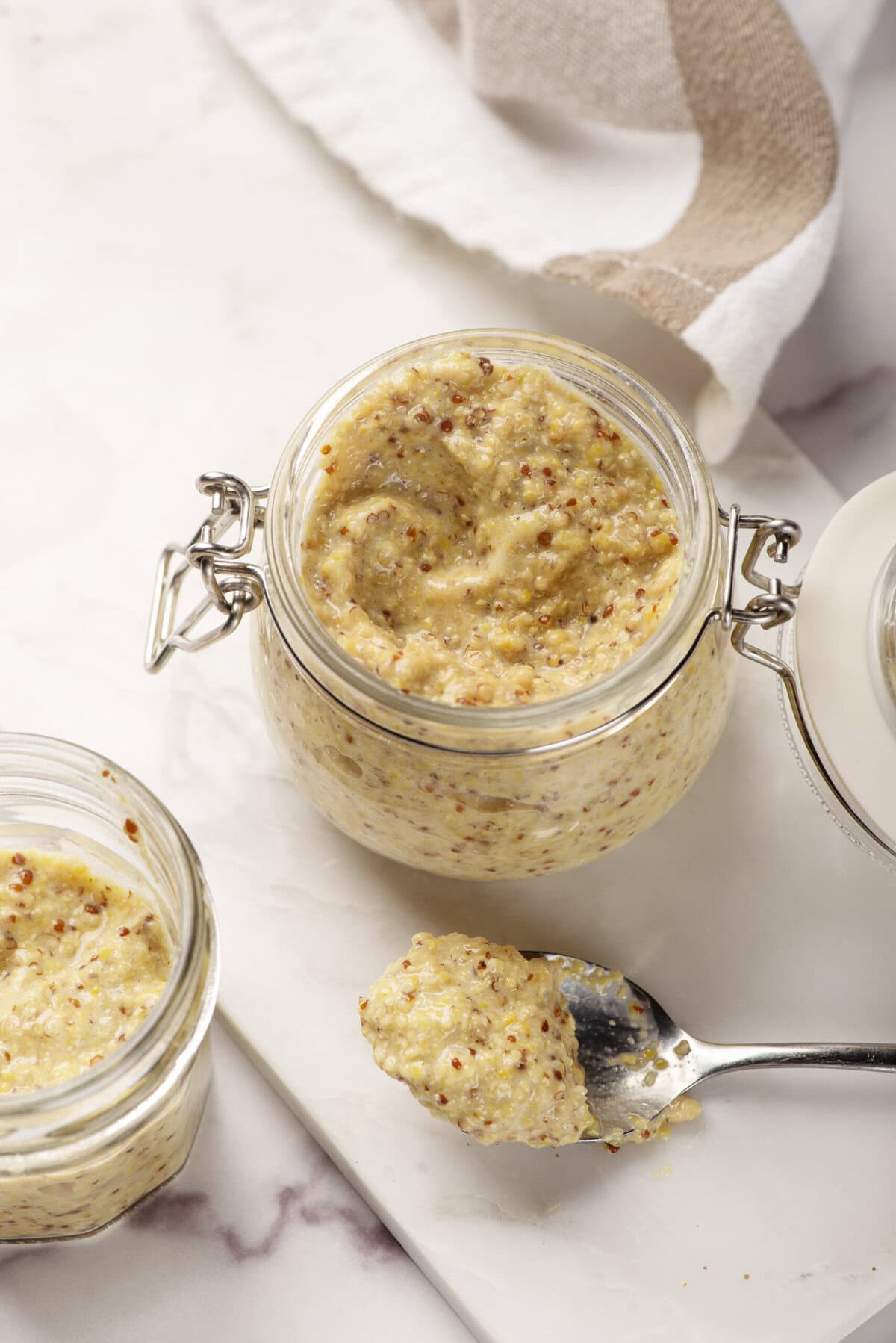
Oftentimes, we’re so used to buying certain ingredients in pre-packaged form at the grocery store, we don’t even realize it’s something we could easily make ourselves. This seems especially true for condiments. A homemade version typically tastes better, and this is certainly the case for this Dijon mustard recipe. So, if you’re ready to elevate your mustard game like never before, keep on reading.
Once upon a time, in the 14th century, there were no grocery stores and thus no readily available, pre-packaged condiments. Then, around 1336, the earliest version of Dijon mustard was used for the first time in the Burgundy region of France. Named for the city of Dijon, located in this region, the original recipe for this mustard consisted of mustard seeds and grape must. As it evolved over time, the grape must was replaced with ingredients like verjuice (the acidic, nonalcoholic juice of unripe grapes) and then vinegar, which gave Dijon mustard the signature tanginess we now know today.
Throughout all these centuries, the recipe for Dijon mustard has remained simple. All you’ll need to make your own version is yellow mustard seeds, brown or black mustard seeds, white wine vinegar, white wine, and salt. Some considerable time is needed, since you’ll have to let the seeds soak for 1–2 days, but otherwise, this recipe only takes 15 minutes to prep.
If you enjoy making this recipe and feel inspired to start making more of your own condiments, be sure to check out these recipes for homemade Mayonnaise, Homemade Hoisin Sauce, or Horseradish Sauce.
Is Dijon Mustard Healthy?
Making your own condiments at home is almost always a healthier alternative to buying store-bought condiments, which usually contain some kind of preservatives. This recipe uses a minimal amount of simple ingredients, which makes it a healthier alternative to pre-packaged products.
The Difference Between Yellow And Brown Mustard Seeds
Yellow and brown mustard seeds bring different flavors to the table, which is important to be aware of since they are the stars of this recipe. Yellow mustard seeds have a mild, tangy flavor, whereas brown mustard seeds are spicier and more pungent. The ratios in this recipe reflect these differences to give you the perfect mix of both flavors by using more yellow mustard seeds than brown ones.
If you really like spicy mustard, consider substituting some of the 1/3 cup of yellow mustard seeds with more brown mustard seeds, but tread carefully so your Dijon doesn’t end up too pungent.
FAQs & Tips
How Do I Store Leftovers?
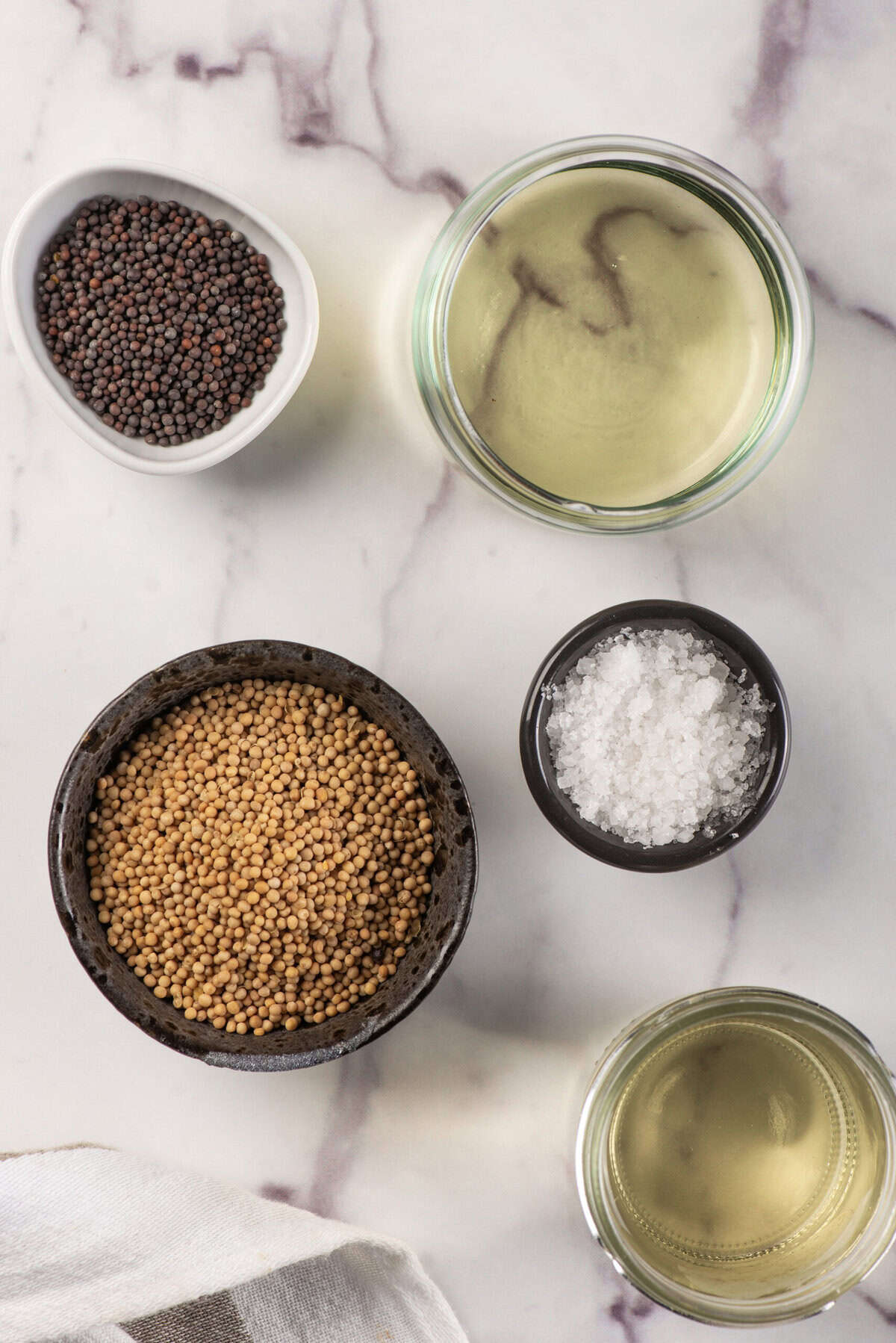
Once you’ve combined all the ingredients, let your Dijon mustard sit in the fridge for at least 1 day before consuming. You can then store it in an airtight container in the fridge, where it will keep for 4–6 months. It’ll taste even better with time, so be prepared to have some of the best sandwiches of your life!
Can I Prep This Ahead?
Since there is only 15 minutes of prep time for this recipe, there isn’t much you can do in advance. Just make sure you plan the time it takes to soak your mustard seeds to coincide with when you plan to combine all the ingredients.
Can I Make Dijon Mustard Sweeter?
If you’re craving a bit of sweetness in your mustard, add in a little sugar or honey. This might also help to balance the flavors if you end up with Dijon mustard that’s too spicy for your taste buds. Add the sugar or honey in tiny increments, tasting as you go, so as not to overdo it.
Serving Suggestions
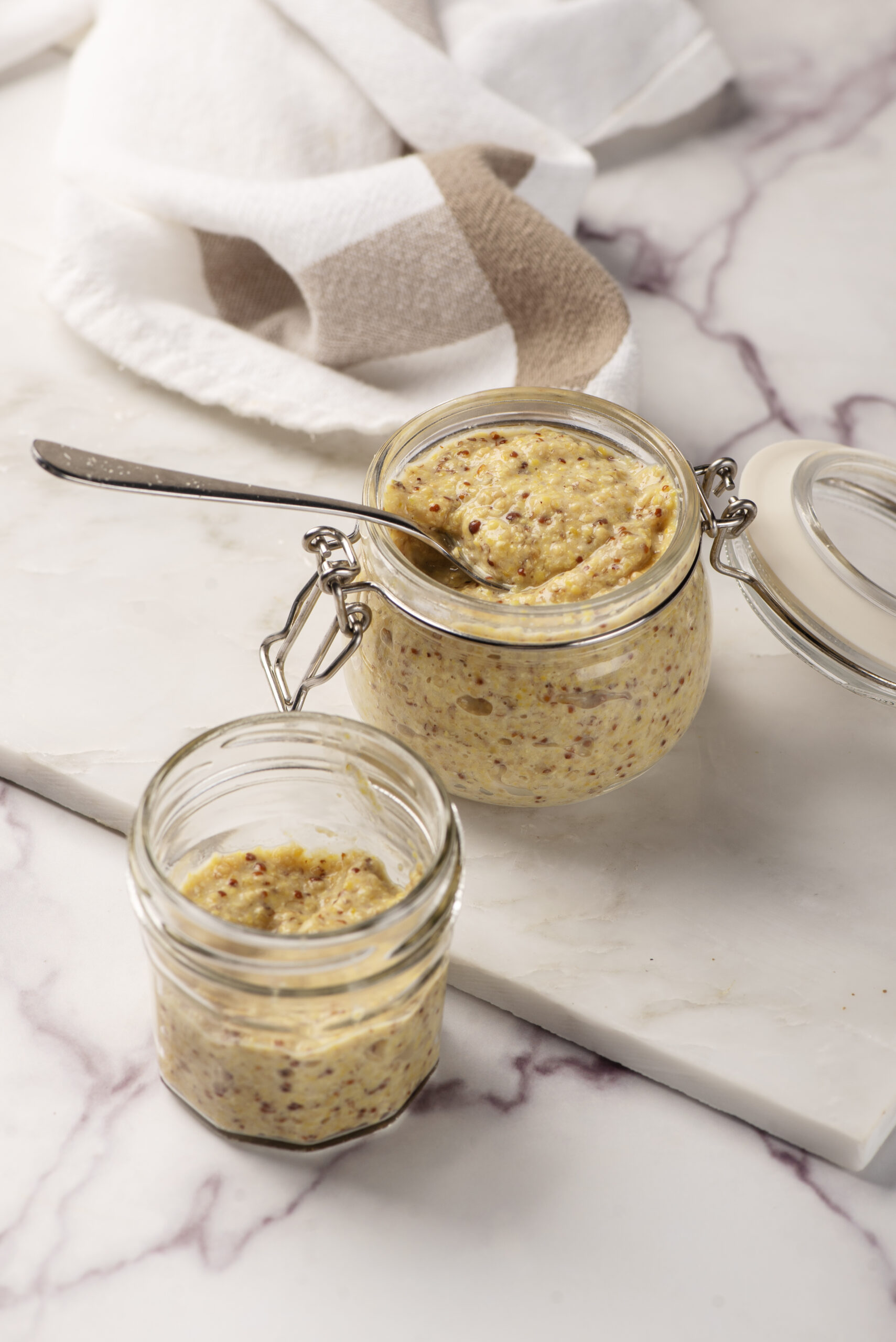
Dijon mustard is such a versatile condiment that can be used in so many different recipes, from sandwiches to salads. Give your veggies a lift with this Easy Blanched Asparagus Recipe With Maple-Dijon Vinaigrette, or this Thanksgiving Salad.
Another dish that Dijon mustard is great with is Chicken Salad, and nothing beats a classic chicken salad sandwich. But if you want to up the stakes, you’ve got to try this gluten-free Superfood Greek Yogurt Chicken Salad Sandwich With Honey Mustard. Your Dijon mustard will be the perfect pairing!
Ingredients
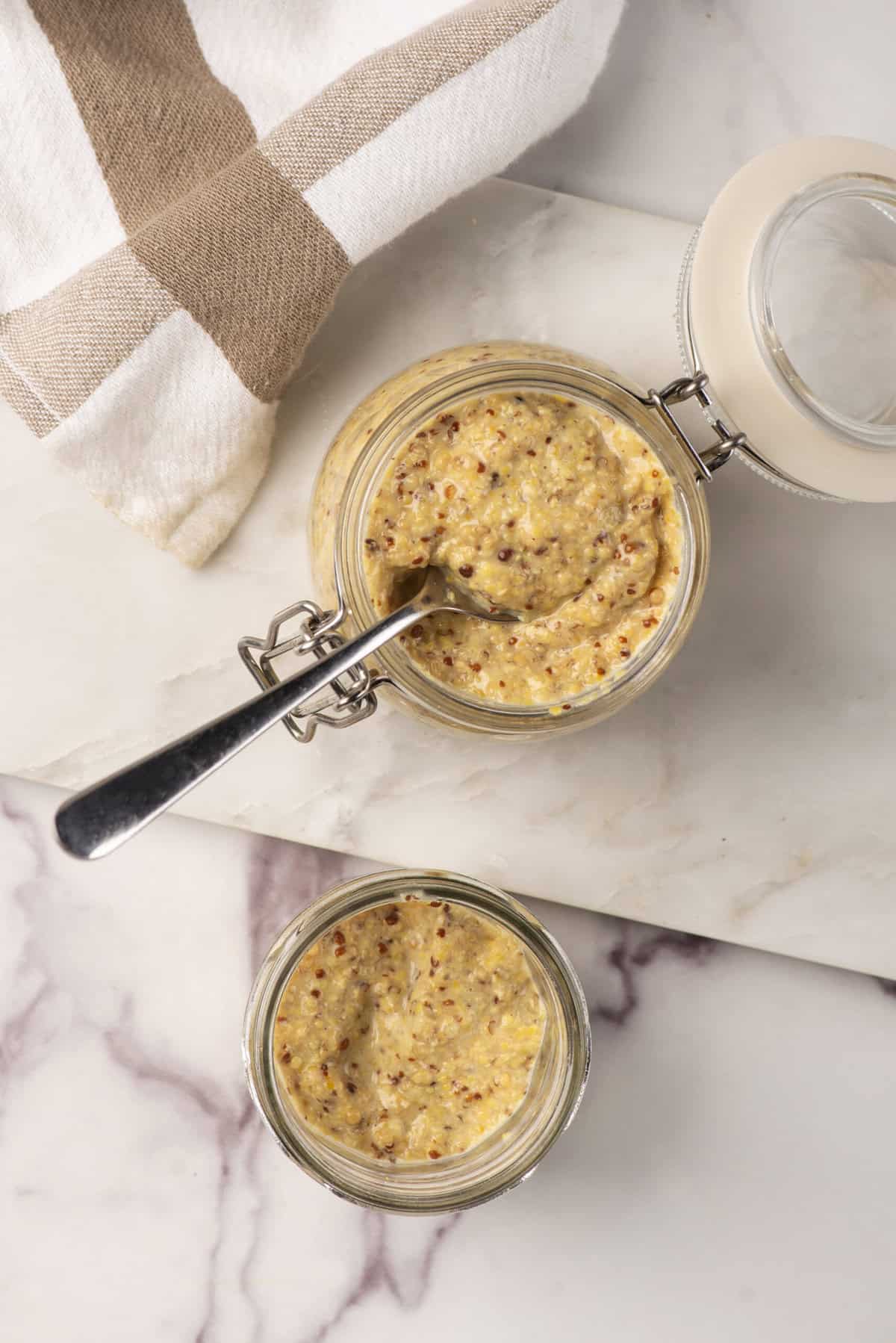
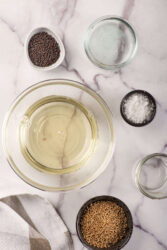
- 1/3 cup yellow mustard seeds
- 2 tablespoons brown mustard seeds
- 1/3 cup white wine vinegar
- 1/3 cup dry white wine
- 1/2 teaspoon salt
Instructions
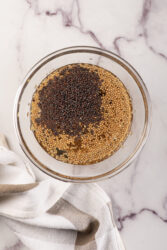
- In a non-metallic bowl, combine yellow and brown mustard seeds, white wine vinegar, dry white wine, and salt. Stir well.
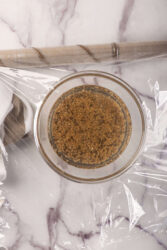
- Cover the bowl with plastic wrap and let the mixture sit at room temperature for 1 to 2 days to soften the seeds.
- Transfer the soaked mustard seeds and liquid to a blender or food processor. Blend until you reach your desired consistency, whether smooth or slightly grainy.
- Transfer the mustard to a clean jar with a tight-fitting lid. Refrigerate for at least 1 day before using to allow the flavors to meld.
Nutrition Info:
Nutrition information are estimates only and may vary based on the specific brands, ingredients, and portion sizes you use. This data is provided for informational purposes only.


Leave a Comment