

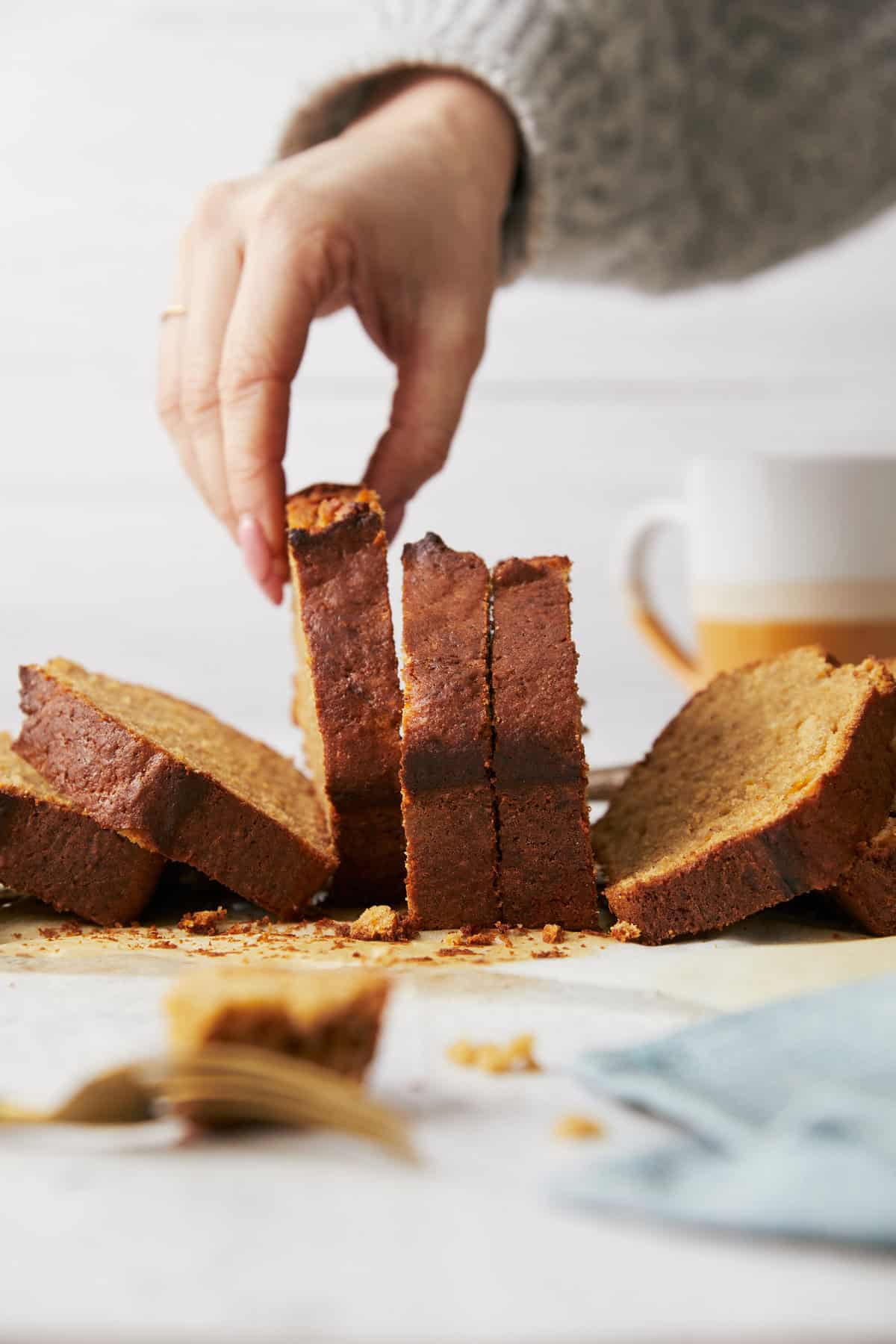
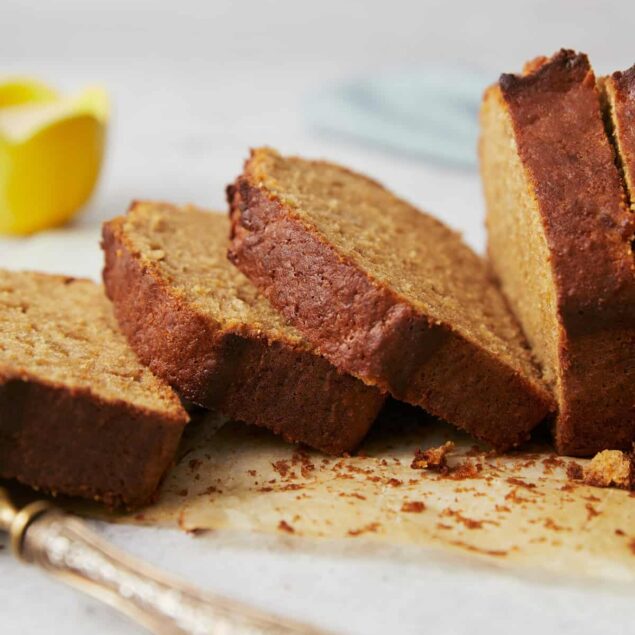
If you’re looking to forgo dairy, this recipe for Dairy-Free Banana Bread really takes the cake.
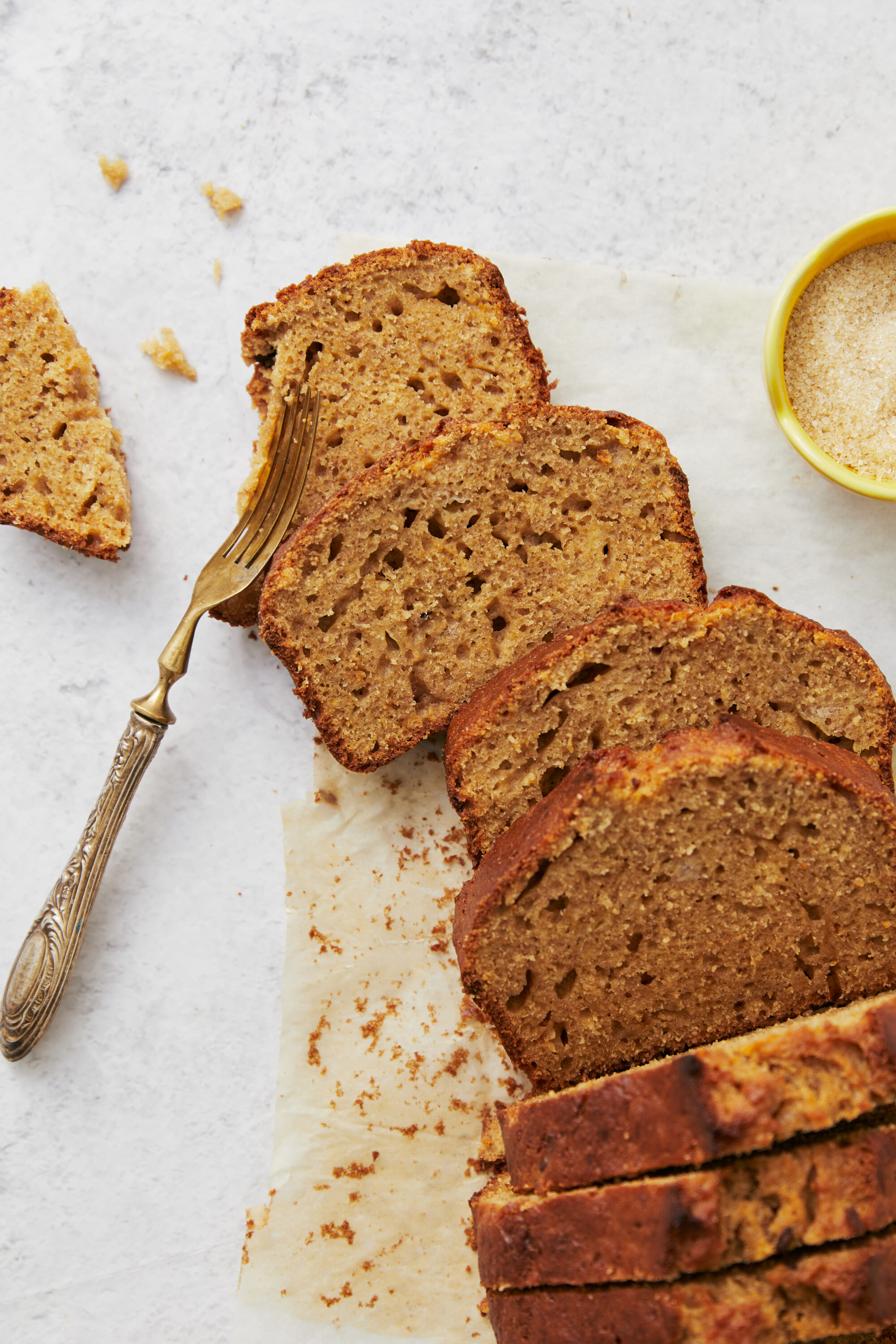
Although bananas have been eaten since ancient times, banana bread has only been on our plates since the Great Depression. Nearly a century later, it is still a palate pleaser with endless variations, some of which satisfy the vegan, vegetarian, and even gluten-free people in your life. This version is dedicated to those of you who do not—or cannot—eat dairy.
I started making dairy-free banana bread many years ago when one of my dear friends developed a dairy intolerance. I always thought butter was non-negotiable in banana bread. Well, as it turns out, a couple of ripe bananas, a little oil, and some love are all you need to pull off a sweet and completely satisfying loaf without any dairy in sight.
So no, you do not need the dairy to end up with a banana bread that is moist, fluffy, and crave-worthy. Spice it up with some cinnamon, or add a bit of deliciousness with chopped walnuts, pecans, or cranberries for a tasty breakfast, snack, or after-dinner treat. It is simple, flexible, and guaranteed to disappear from the table in no time.
Is This Dairy-Free Banana Bread Healthy?
The star of this recipe—banana—is also its healthiest ingredient. This superfruit provides a good source of vitamin C plus essential minerals like potassium. Bananas are also loaded with fiber, which helps keep you full and balances your blood sugar levels.
Since this recipe uses vegetable oil instead of butter, this banana bread is lower in saturated fat. It is naturally dairy-free, making it perfect for anyone who is lactose intolerant or following a dairy-free diet. I like to think of it as a nice balance between a wholesome homemade treat and something that feels a little indulgent.
What To Do With Those Overripe Bananas
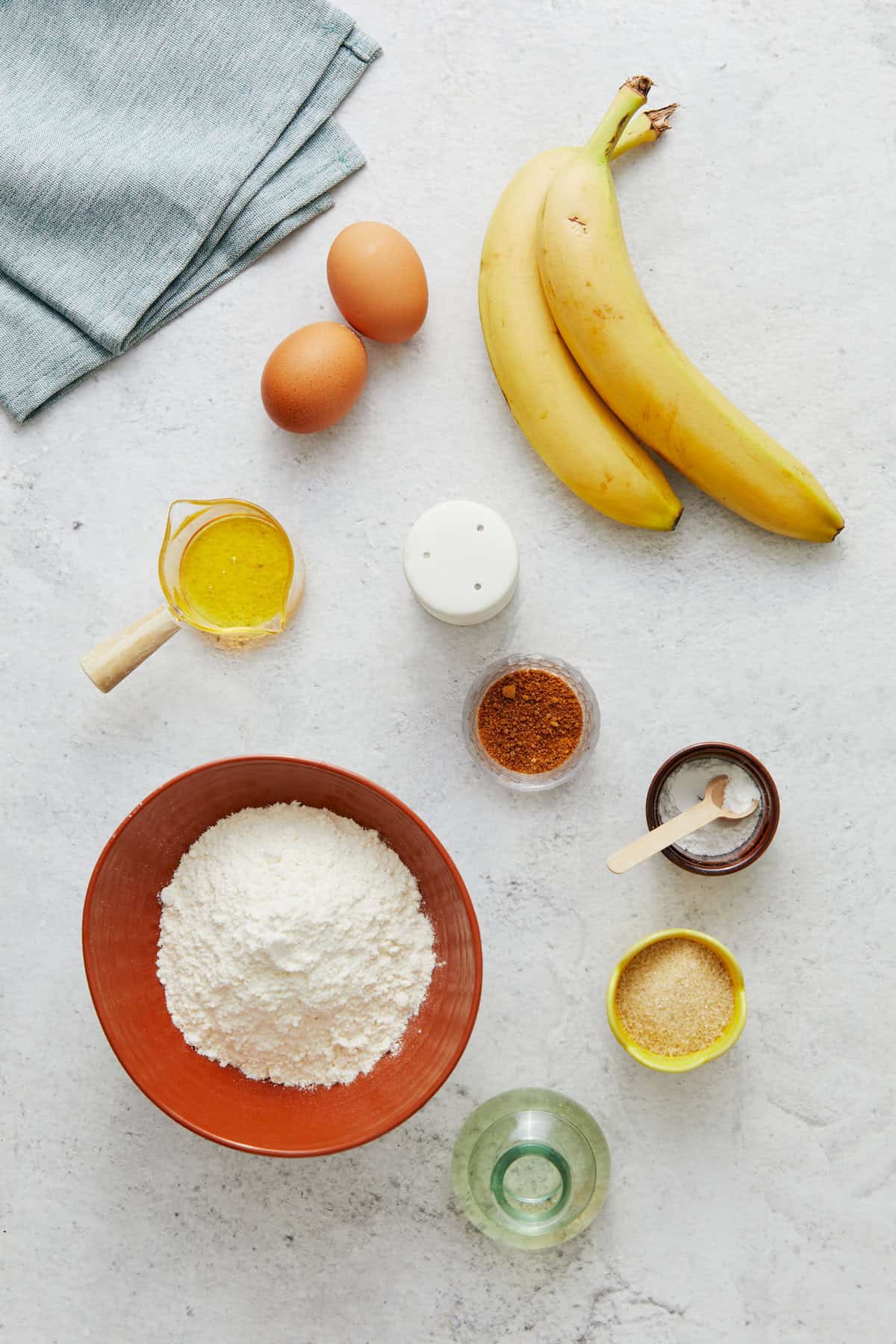
If you’re wondering what to do with those fragrant, overripe bananas sitting on your counter, look no further than banana bread. The darker and spottier they are, in fact, the sweeter and easier they are to mash. That’s because the starches in the banana break down and convert to sugar during the ripening process. This leaves you with a rich, deeply intense banana flavor that works perfectly baked into a bread.
How Do I Store Leftovers?
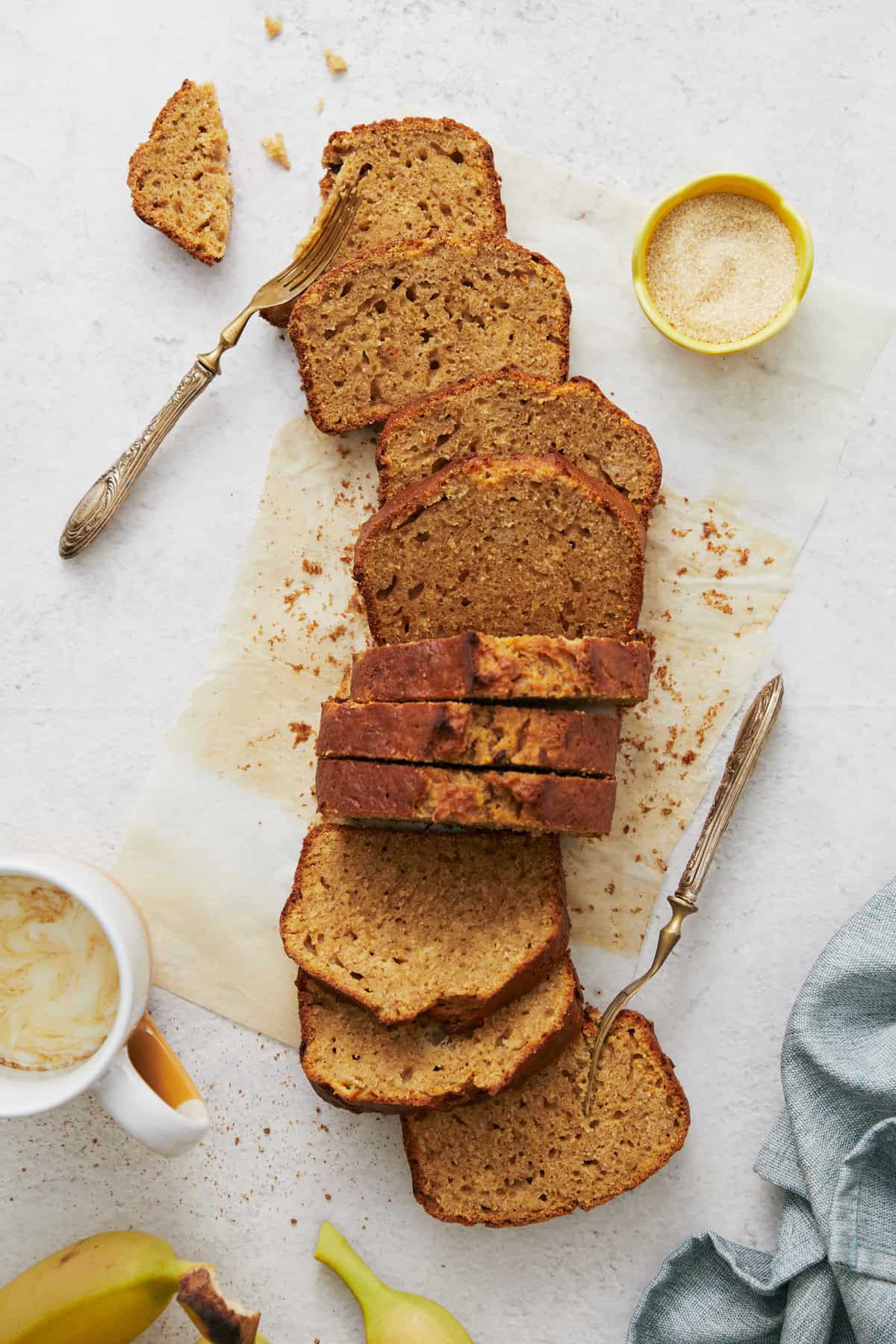
Wrap your leftover banana bread tightly in plastic wrap or foil. You can also store it in an airtight container. It will stay fresh on the counter for about 3 days or in the fridge for about a week. You can also freeze slices of banana bread (tightly wrapped and placed in a Ziploc bag) for up to 3 months.
Serving Suggestions
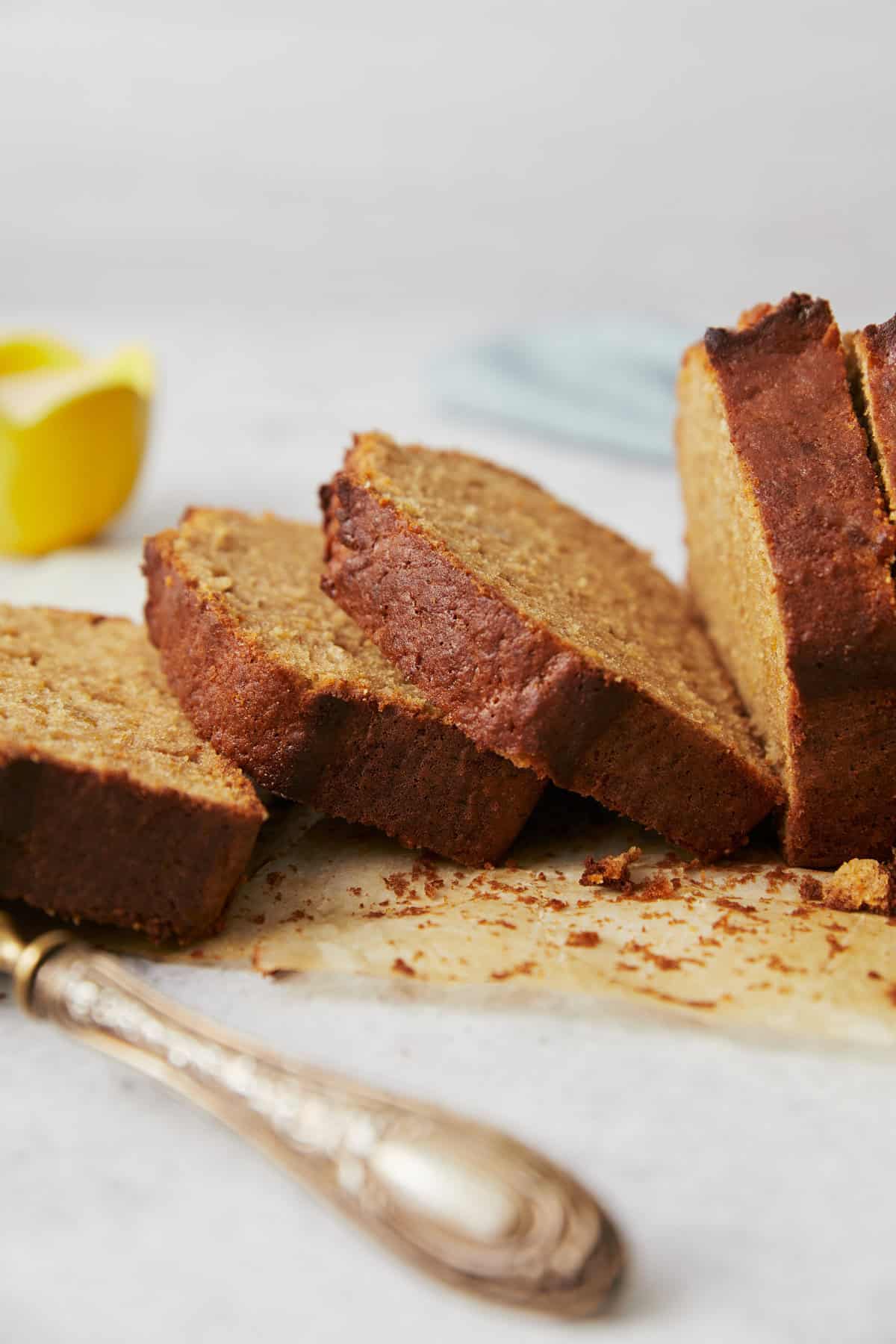
Top slices of warm dairy-free banana bread with cold scoops of dairy-free ice cream. You’ll find dozens of brands to choose from, or create your own from scratch! Check out this dairy-free Cookie Dough Banana Ice Cream or this Chunky Monkey Banana Ice Cream, which you can top with a swirl of Dairy-Free Caramel Sauce.
Ingredients
- 2 large overripe bananas about 1 cup when mashed
- 2 large eggs at room temperature
- 1/4 cup vegetable oil plus more for greasing the pan
- 1/4 cup light brown sugar
- 1/4 cup organic coconut sugar
- 2 teaspoons pure vanilla extract
- 2 cups all-purpose flour
- 1 teaspoon baking soda
- Pinch sea salt
Instructions
- Start by greasing a 9×5-inch loaf pan with a dab of oil and lining it with parchment paper.
- Preheat your oven to 325°F.
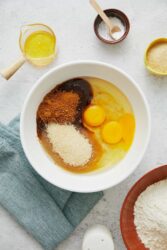
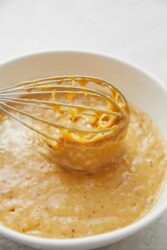
- In a large bowl, mash the bananas until smooth. Crack in the eggs, pour in the oil, and add both sugars and vanilla extract. Whisk it all together.
- In another bowl, whisk together the flour, baking soda, and a pinch of salt.
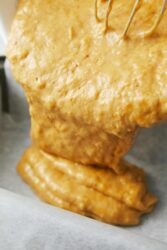
- Gently fold the dry ingredients into the wet mix with a spatula. Just a few folds will do; do not overmix.
- Pour the batter into your prepped pan and slide it onto the middle rack of your oven. Bake for about 50-60 minutes, or until a toothpick inserted in the center comes out clean.
- Let the bread cool in the pan for about 10 minutes, then transfer it to a wire rack to cool completely, otherwise it may not hold together when sliced.
Nutrition Info:
Nutrition information are estimates only and may vary based on the specific brands, ingredients, and portion sizes you use. This data is provided for informational purposes only.


Leave a Comment