

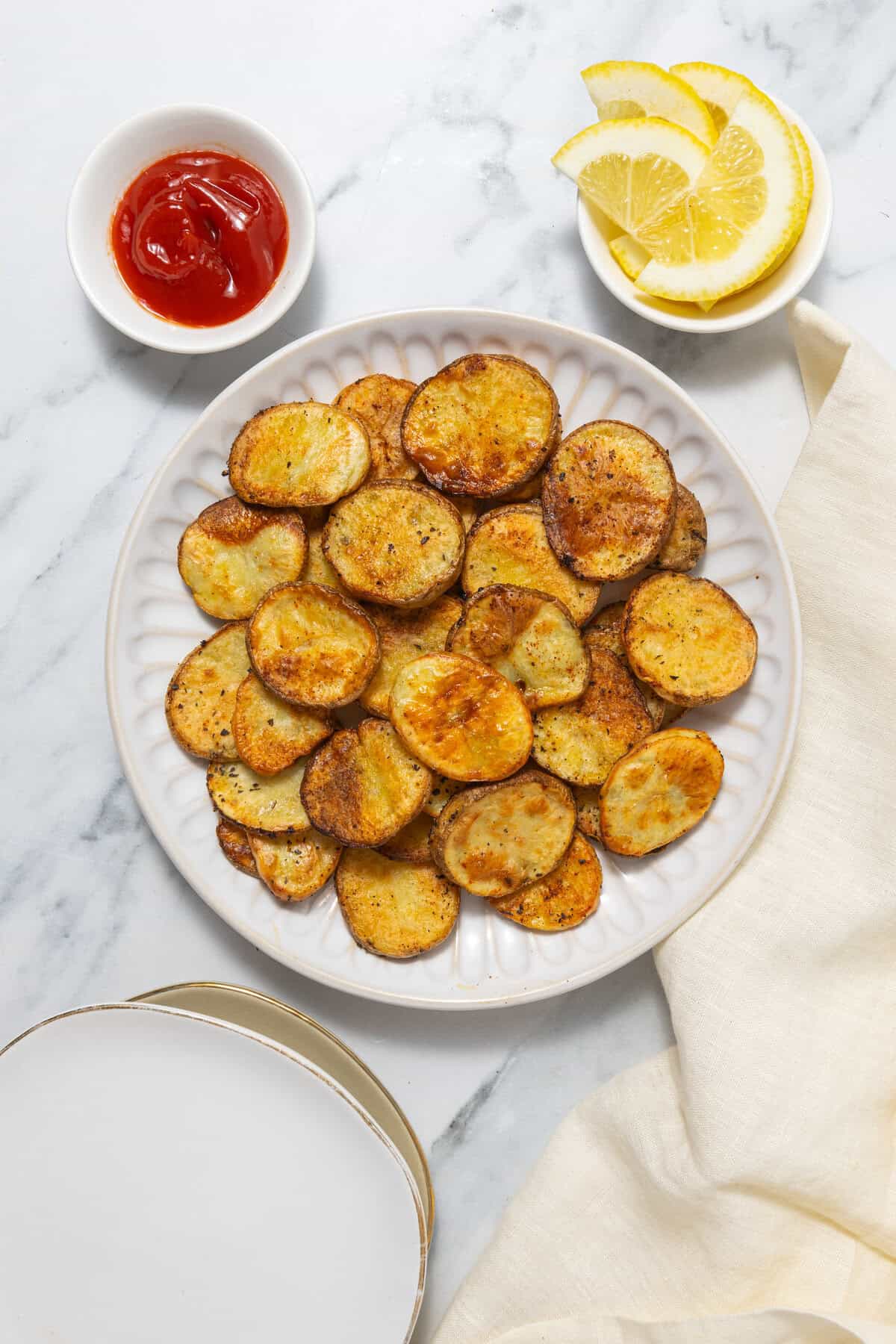
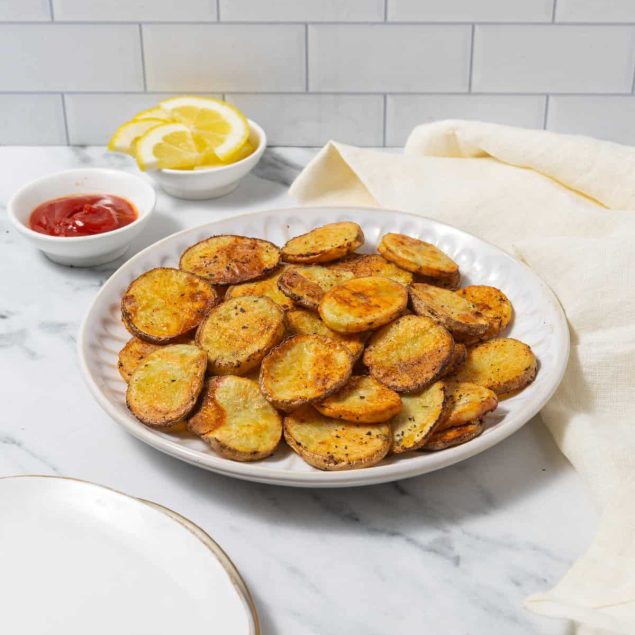
Fries come in all shapes and sizes, and Cottage Fries are some of the easiest to make at home!
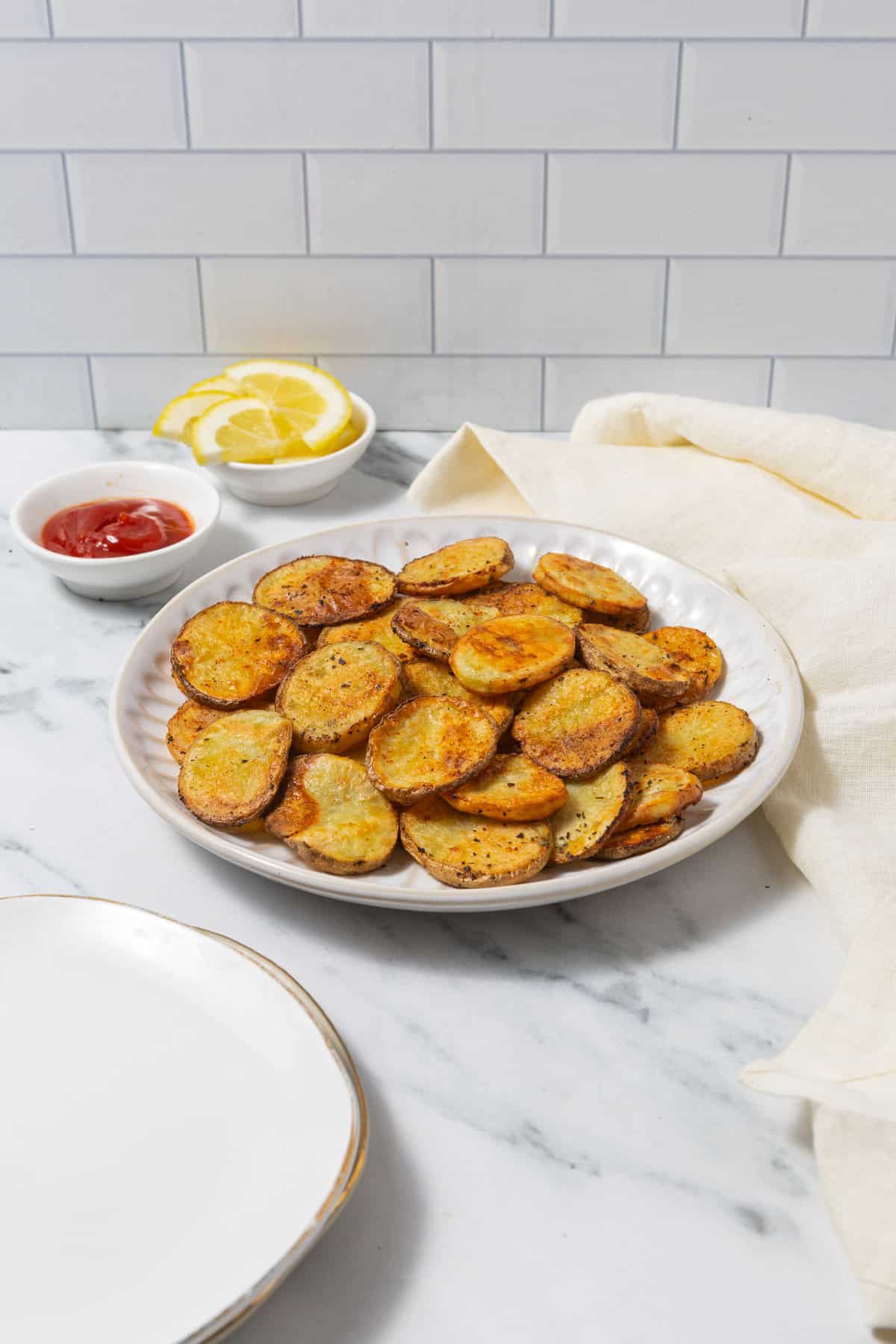
These cottage fries are similar to French fries in that they’re both snackable finger foods, but the two have some differences. First, our cottage fries are not fried in oil—they’re just drizzled with it, then baked. They’re also much easier to slice up into rounds, versus the traditional plank shape of a French fry. Today, you can find cottage fries on menus at diners and gastropubs everywhere.
Using paprika, garlic, thyme, salt, and pepper, these humble potato slices are honestly just as addictive as potato chips. Once you start eating them, it is hard to stop. And why would you want to? They bake up with a golden, crispy outside and a warm, fluffy inside, and come out bursting with savory flavor.
When I first tried making cottage fries, I really made them out of desperation because I wasn’t sure what to make for a side dish one night. I had some russet potatoes on hand and had heard of cottage fries, so I decided to give it a try. It’s now one of my favorite ways to serve potatoes. Everyone always seems pretty impressed with them, which is a win for me, because they’re so easy to make!
Are These Cottage Fries Healthy?
Potatoes provide us with vitamin C, fiber, and potassium, along with other nutrients. So, it’s safe to say they have a valuable place in most diets. However, potatoes are also quite carb-heavy, so if you’re keto or keep things low-carb, this wouldn’t be the snack or side for you.
Rather than being deep-fried, cottage fries are drizzled with a glug of heart-healthy olive oil and then baked. This makes them a healthier alternative to most traditional French fries. Cottage fries suit many other diets, including gluten-free, dairy-free, and vegan.
Russets Keep It Real
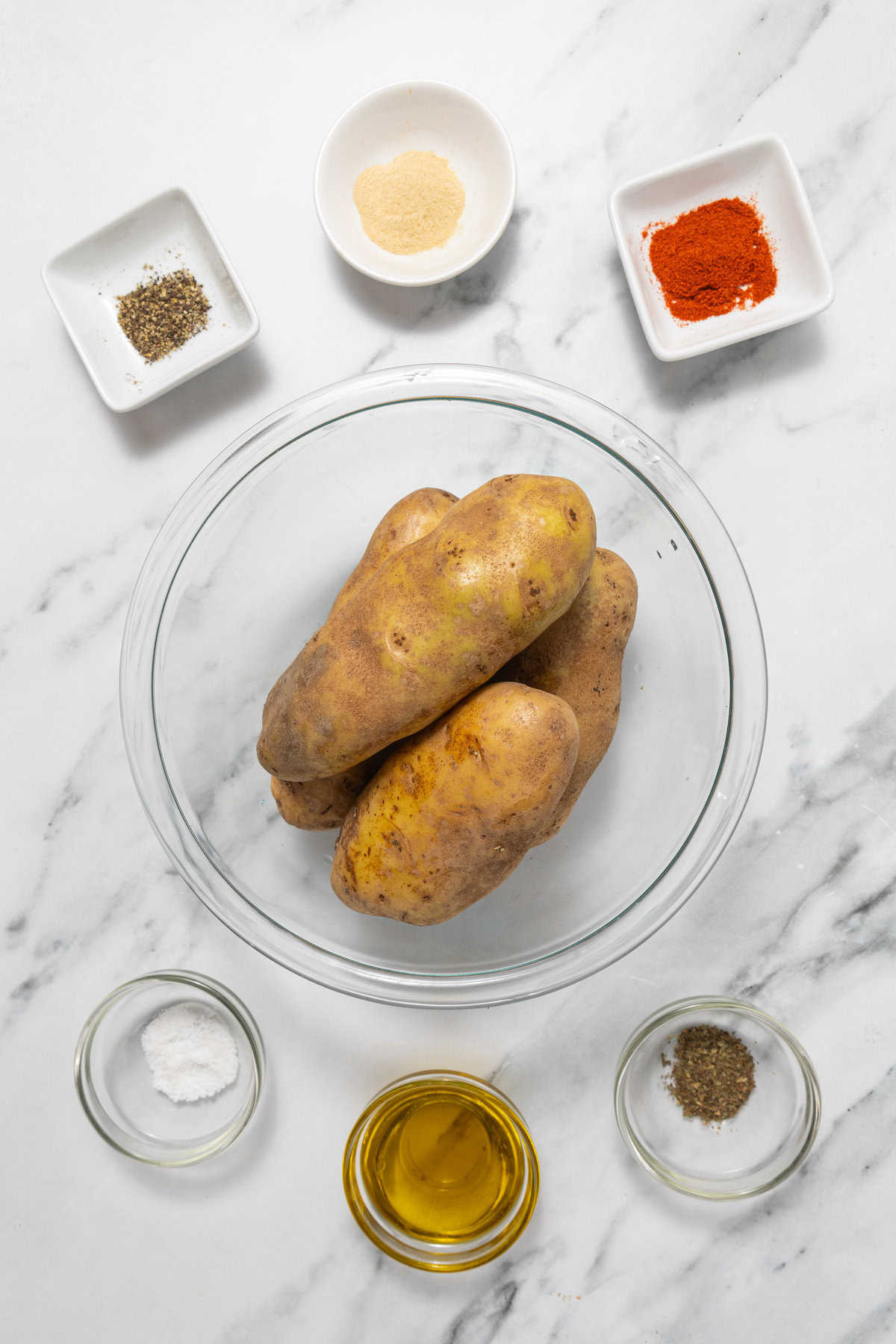
Russet potatoes, also known as Idaho potatoes in some grocery stores, are a large variety most commonly used for making French fries and baked potatoes. There’s a reason why this is the variety to get when making cottage fries, too.
Russets are large, dense, and very starchy. This high-starch content means when baked, roasted, or fried, the exterior gets nice and crisp while the inside gets light and fluffy. They are perfect for a recipe like cottage fries, since these are the exact qualities you’re looking for.
How Do I Store Leftovers?
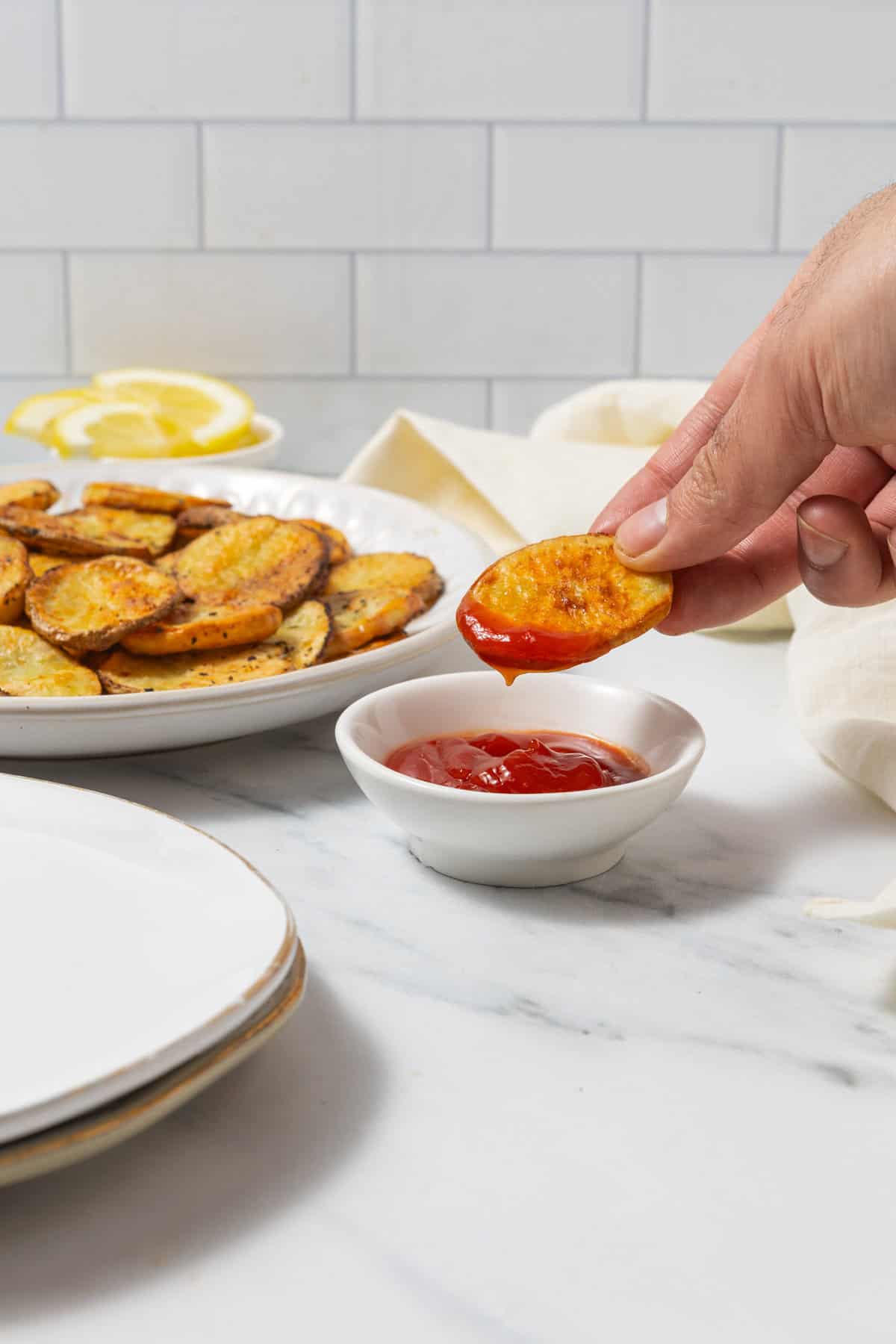
To save leftover cottage fries, place them in a storage bag or an airtight container and keep them in the fridge for up to 5 days. When you’re ready to reheat your fries, try to avoid microwaving them, as this will make them soggy. Instead, pop them into a 400-degree Fahrenheit oven until just warmed through.
Serving Suggestions
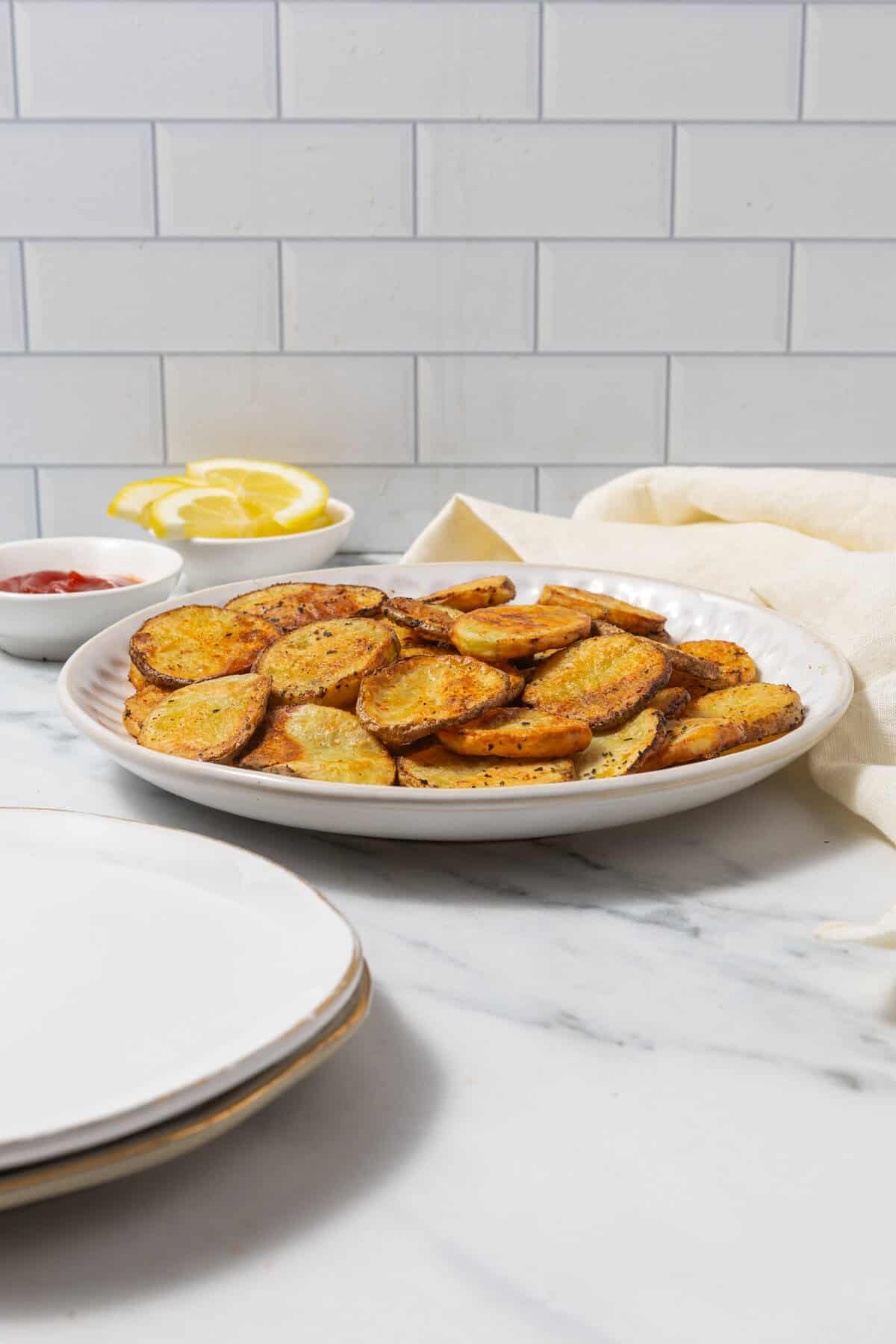
Cottage fries go so well with a juicy Sirloin Steak, some Breaded Chicken, or a Black Bean Burger. They also make a great meal all on their own. Just add a Classic Caprese Salad or Mediterranean Cucumber Salad, and you’ve got a wonderful, light meal. I even love cottage fries for breakfast. Serve them alongside a Pesto Egg White Omelette or some fluffy Spinach Scrambled Eggs. Keep cottage fries in mind for any meal, any time of the day.
Ingredients
- 4 medium, russet potatoes about 2 pounds total
- 3 tablespoons olive oil
- 1 teaspoon paprika
- 3/4 teaspoon kosher salt
- 1/2 teaspoon garlic powder
- 1/2 teaspoon dried thyme
- 1/4 teaspoon freshly ground black pepper
Instructions
- Preheat your oven to 425 degrees Fahrenheit and position a rack in the middle.
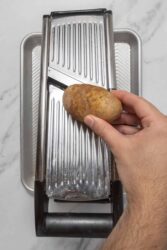
- Slice the russet potatoes crosswise into 1/2-inch-thick rounds and spread them on a large rimmed baking sheet.
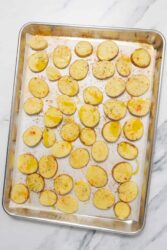
- Drizzle the potato rounds with olive oil and evenly sprinkle with paprika, kosher salt, garlic powder, dried thyme, and black pepper. Toss to coat and arrange in a single layer.
- Roast in the preheated oven until the bottoms of the potatoes are lightly browned, about 20 to 25 minutes.
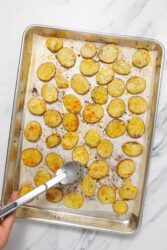
- Flip the potatoes and continue roasting until the other side is also lightly browned, approximately 10 to 20 minutes more.
- Remove from the oven and serve the crispy cottage fries while hot.
Nutrition Info:
Nutrition information are estimates only and may vary based on the specific brands, ingredients, and portion sizes you use. This data is provided for informational purposes only.


Leave a Comment