

This Coconut Curry is a warm and rich dish you can make any time!
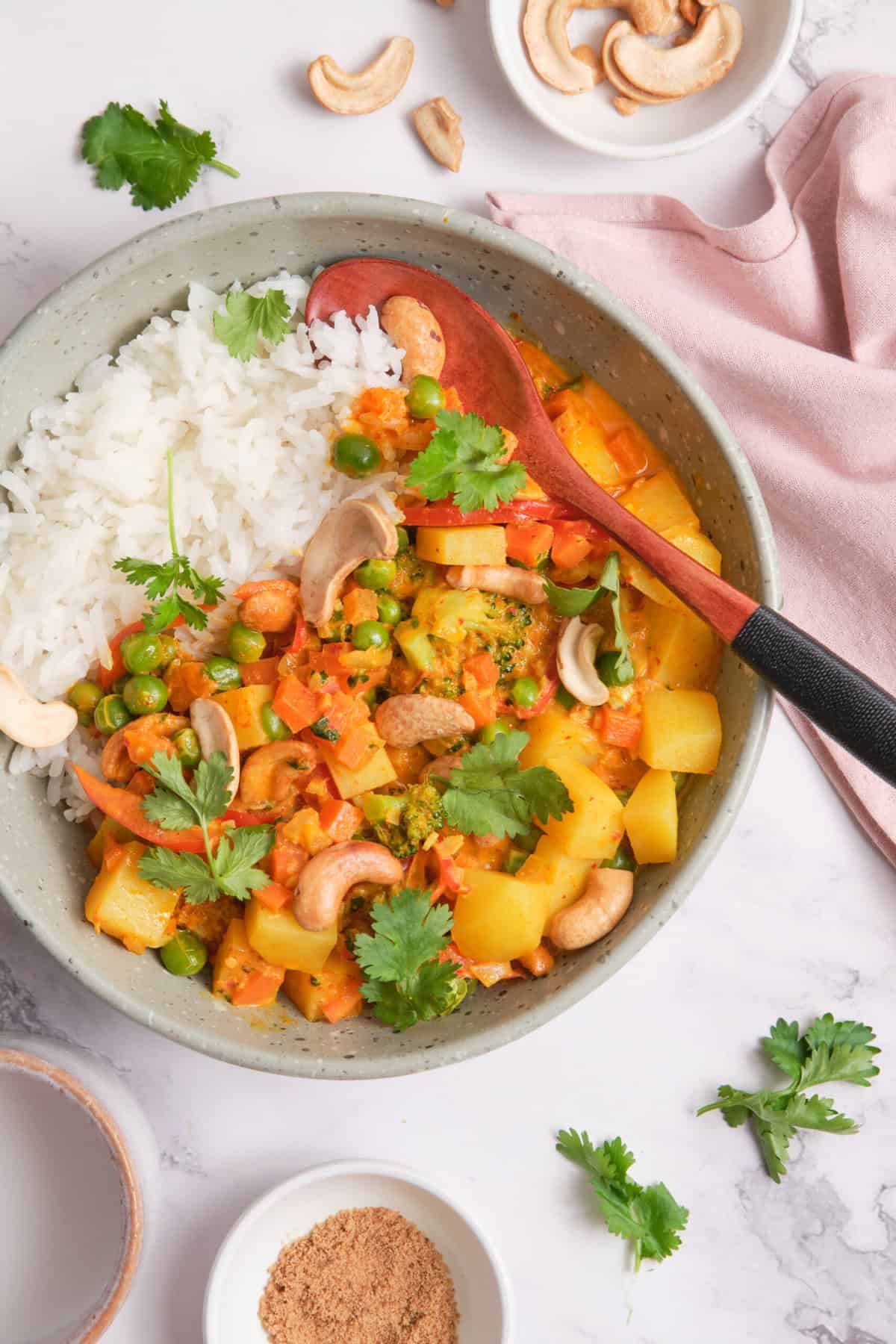
Growing up, I was an incredibly picky eater. I’m talking about a diet that consisted only of dry chicken nuggets and boxed mac and cheese. But when I moved away for college, I made a promise to myself that I would commit to trying new things, food included. Now, a decade later, I have a much more versatile palate. I mean, I am a food writer, after all! I’ve discovered a love of food from all genres, from seafood to Asian fusion cuisine. One of my favorite discoveries has been curry. In fact, I could eat coconut curry like once a week. And now that I’ve found a good recipe to make at home, I do!
Curry is a pretty diverse dish. Many different cultures have their own influence and take on it, and there is a wide variety of curries to try! From classics like vegetable curry to seasonal favorites like pumpkin curry, you’re bound to find a version to love. For me, it’s coconut curry over rice, inspired by the flavors of Southeast Asia.
Coconut curry is definitely creamy and savory, but it’s made with red curry paste, so proceed with caution if you’re not into spice! Red curry paste is made of delicious and colorful ingredients like coriander, lemongrass, and my personal favorite, red chilies. If you ask me, red chilies are what make the dish. They bring just enough heat, and help to color the curry paste a beautiful red-orange hue. Accompanied with aromatic spices, your mouth will be watering before you even take a bite.

What Is Curry?
Depending on the culture, curry can look and taste different. Thai curries tend to incorporate fresh herbs and chilies and often contain coconut milk to offset the heat, while Indian curries tend to use dry spices that are simmered for a long period and sometimes contain dairy products like milk or yogurt to tone down the heat.
A Thai-inspired coconut curry like this recipe is typically made up of curry paste, coconut milk, herbs, veggies, and spices, then served over a protein like chicken, seafood, or even tofu.

How to make ahead and store
If you’re planning to make your coconut curry ahead of time, or simply keep some leftovers for later, store the cooked curry in the fridge in an airtight container for up to 4 days, or freeze it in freezer bags (after it’s cooled initially) for up to 3 months. Let it thaw overnight before serving. Then simply reheat it on the stove for about 5 minutes, and serve it over rice, chicken, pork, or tofu!

Serving Suggestions
Coconut curry is typically served over rice, but you can try it with your choice of Saffron Rice, Cauliflower Rice, or even Quinoa. Coconut curry is also delicious over proteins like chicken, pork, and duck, or even served over veggies.
For more Thai-themed inspiration, take a look at these recipes for Thai Noodles, Thai Lettuce Wraps and Thai Cucumber Salad.


Ingredients
- 1 tablespoon coconut oil
- 1 medium onion finely chopped
- 1 medium red bell pepper sliced
- 3 cloves garlic minced
- 2 teaspoons fresh ginger grated
- 1 to 2 tablespoons red curry paste
- 1/4 teaspoon ground turmeric
- 1/2 teaspoon salt plus more to taste
- 1 can 13.5 ounces full-fat coconut milk
- 3/4 cup vegetable broth
- 1 medium carrot chopped
- 2 cups mixed vegetables broccoli, peas, diced potato, etc.
- 1 tablespoon brown sugar optional
- Fresh cilantro chopped for garnish
- 1/4 cup cashews
Instructions
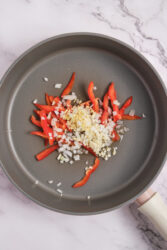
- Heat coconut oil in a large skillet over medium heat. Add onion, bell pepper, garlic, and ginger, cooking until onion is translucent, about 5 minutes.
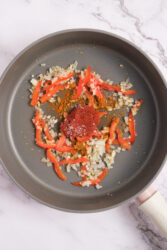
- Stir in curry paste, turmeric, and salt, cooking for another minute until fragrant.
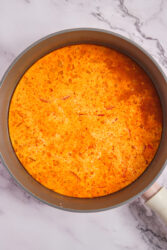
- Pour in coconut milk and vegetable broth. Bring to a simmer, then add carrots and other vegetables.
- Cover and cook for 15 minutes, or until vegetables are tender. Adjust seasoning by adding more salt or curry paste or adding optional brown sugar to balance the flavors.
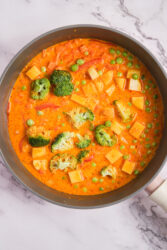
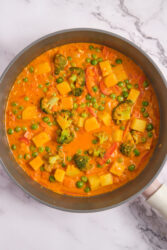
- Remove from heat and garnish with fresh cilantro and cashews. Serve hot over cooked rice.
Nutrition Info:
Nutrition information are estimates only and may vary based on the specific brands, ingredients, and portion sizes you use. This data is provided for informational purposes only.


Leave a Comment