

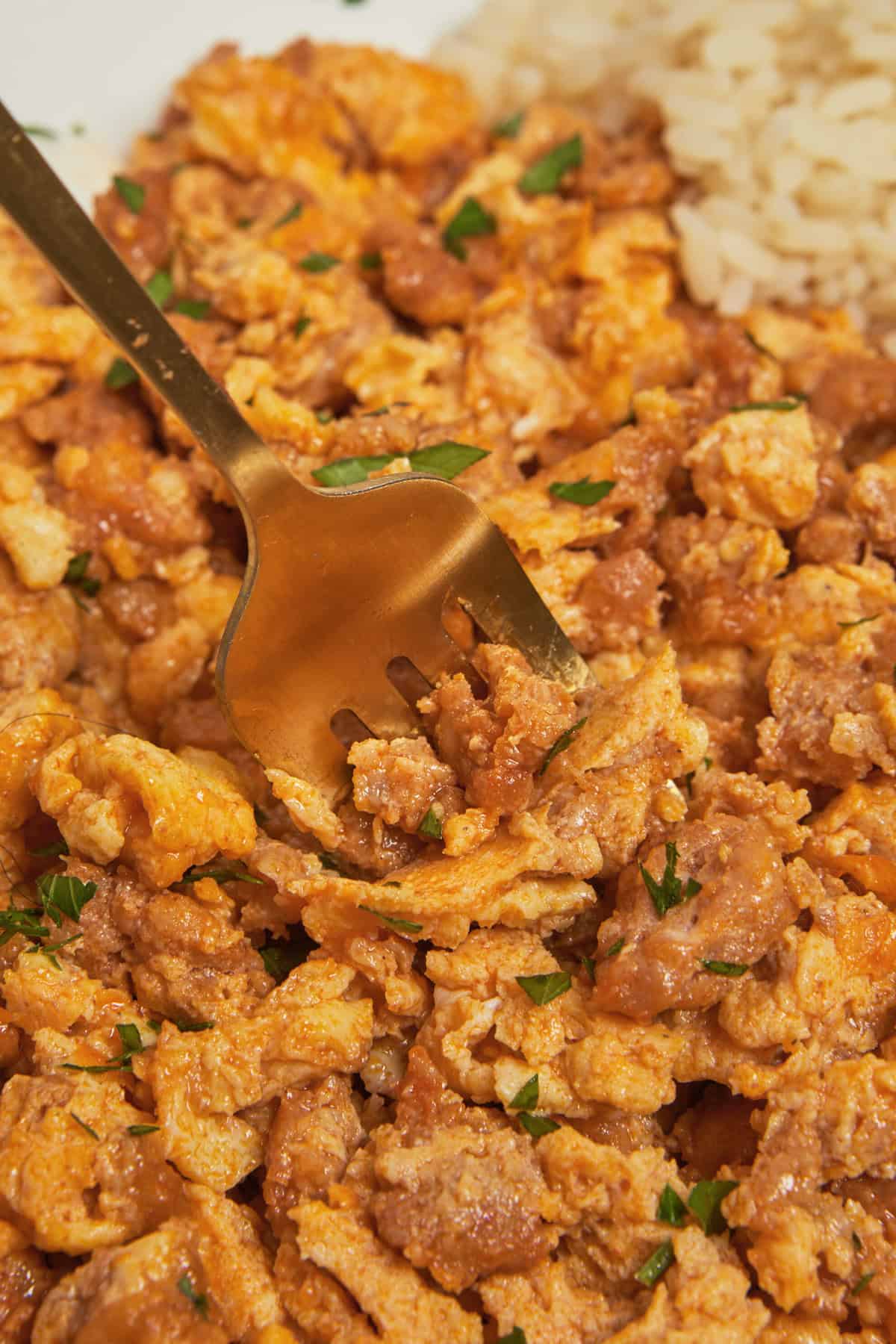
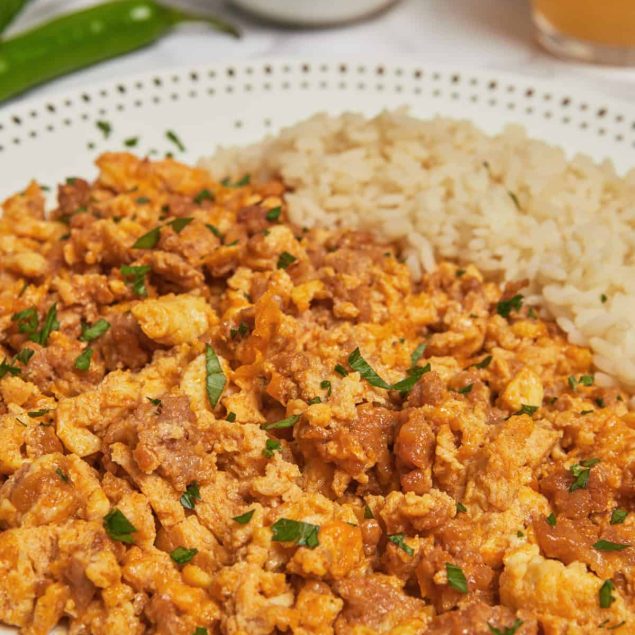
A spicy Mexican sausage steals the show for breakfast in this Chorizo And Eggs recipe.
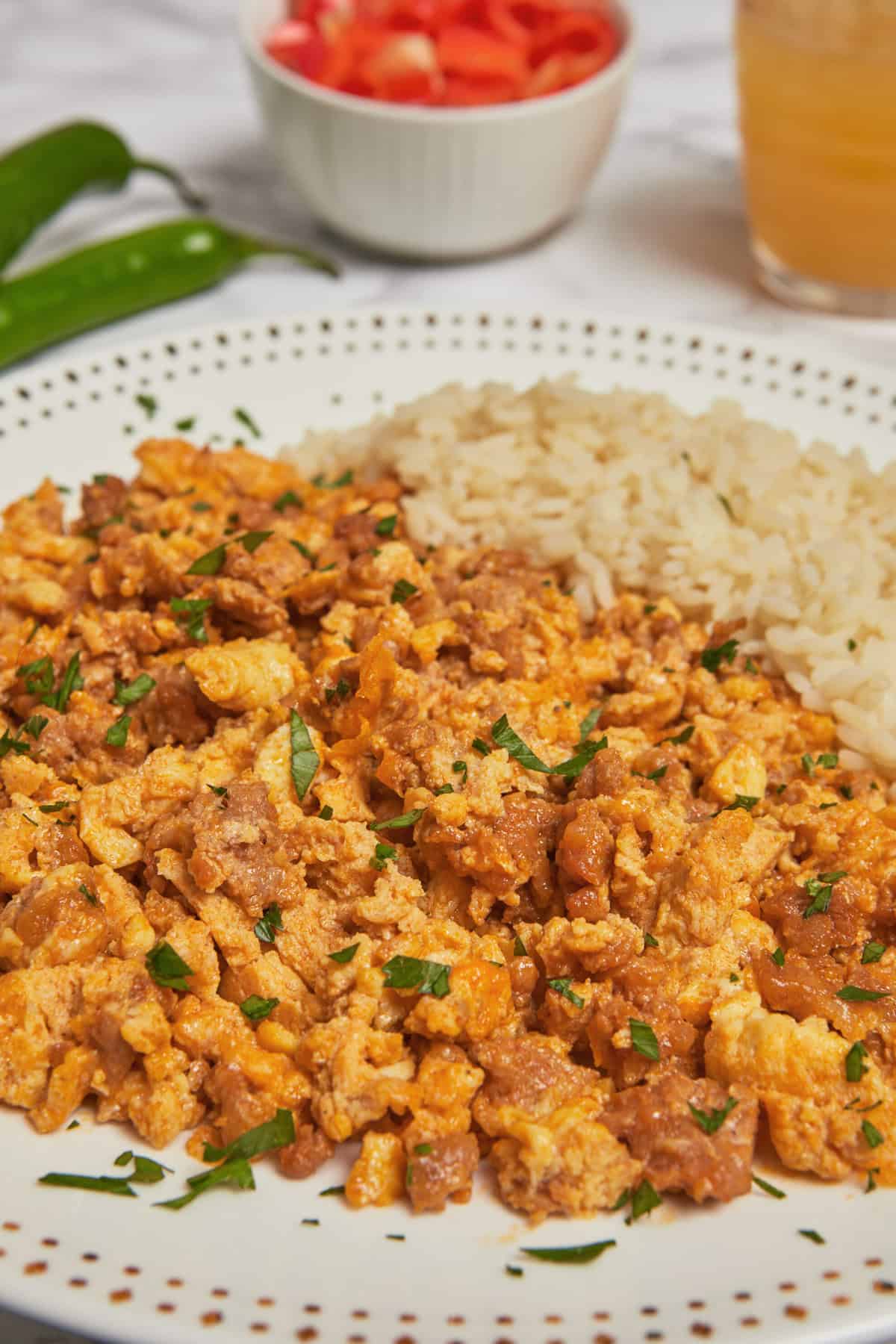
As a gal from the deep South, I thought I knew about all the spicy sausages. The Cajuns are very good at making spicy sausage (and I’m very good at eating it). Before I moved to Colorado, I had never heard of chorizo, so as it turns out, I knew very little about all the spicy sausages out there.
But when I found chorizo out here in the West, I clung to it with curiosity. Over time, I learned what foods it works with, its typical fat content, and how it cooks on a grill. Some brands are spicier than others, but it’s always well-salted, so as with any great seasoning sausage, you can flavor a whole pot of food with a small amount of chorizo. One of the first ways I put chorizo to the test is by cooking it with my beloved morning eggs. And wow, did it pass that test with flying (mostly red) colors!
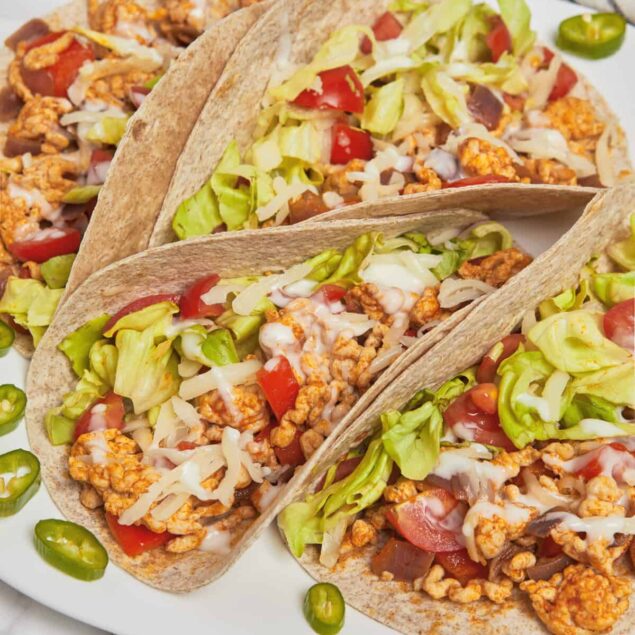
Chorizo and eggs are perfect partners. The salty, spicy paprika flavor of chorizo seasons the eggs well, so you won’t need to add much (if any) salt or pepper. The mixture loves a small amount of cheese but doesn’t require it. My favorite part about chorizo and eggs is that you can easily transfer this mixture into a warm corn tortilla for one of the best breakfast tacos you’ll ever eat! It’s so easy and flavorful, you won’t want to skip this recipe.
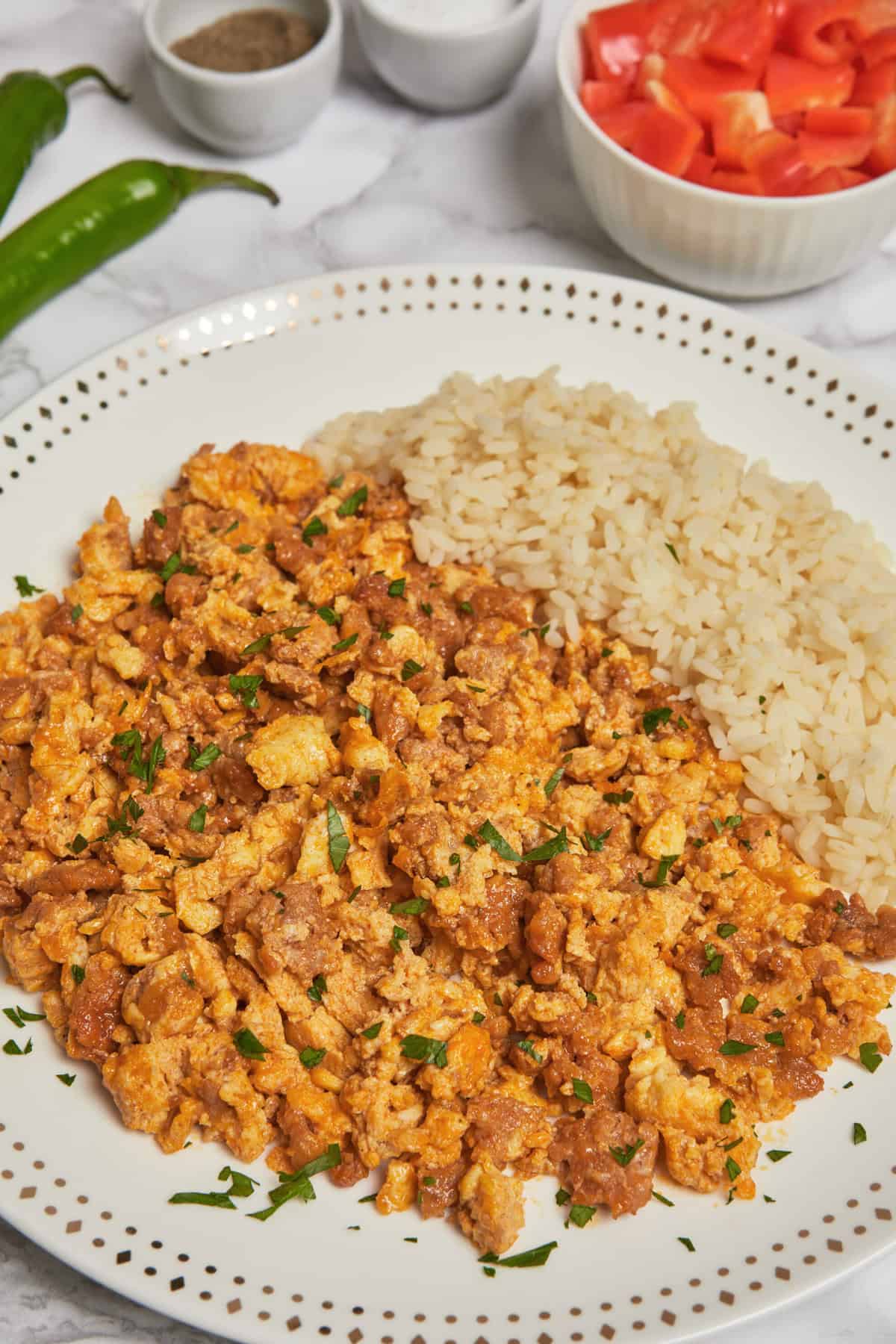
Are Chorizo And Eggs Healthy?
Chorizo and eggs are high in protein and fat, and low in carbs, so this combo is suitable if you’re aiming for a low-carb lifestyle. If you are trying to reduce your fat intake, chorizo and eggs may not be a good breakfast. In general, adding some vegetables, such as tomatoes, mushrooms, or spinach, would make this dish a bit more wholesome. Like many dishes, the healthiness is relative to your own dietary needs and goals.
What Is Chorizo?
Chorizo is a reddish-orange spicy pork sausage originally from the Iberian Peninsula, including regions of Spain and Portugal. It has spread geographically over the years and is now enjoyed in many different regions, including Europe and Latin America. That said, it may look and taste different depending on where you got it from.
For example, in Europe, chorizo is a fermented, cured, and smoked sausage and can be eaten cold and sliced, with no further cooking. Many Mexican varieties of chorizo are sold fresh, so they must be cooked before eating.
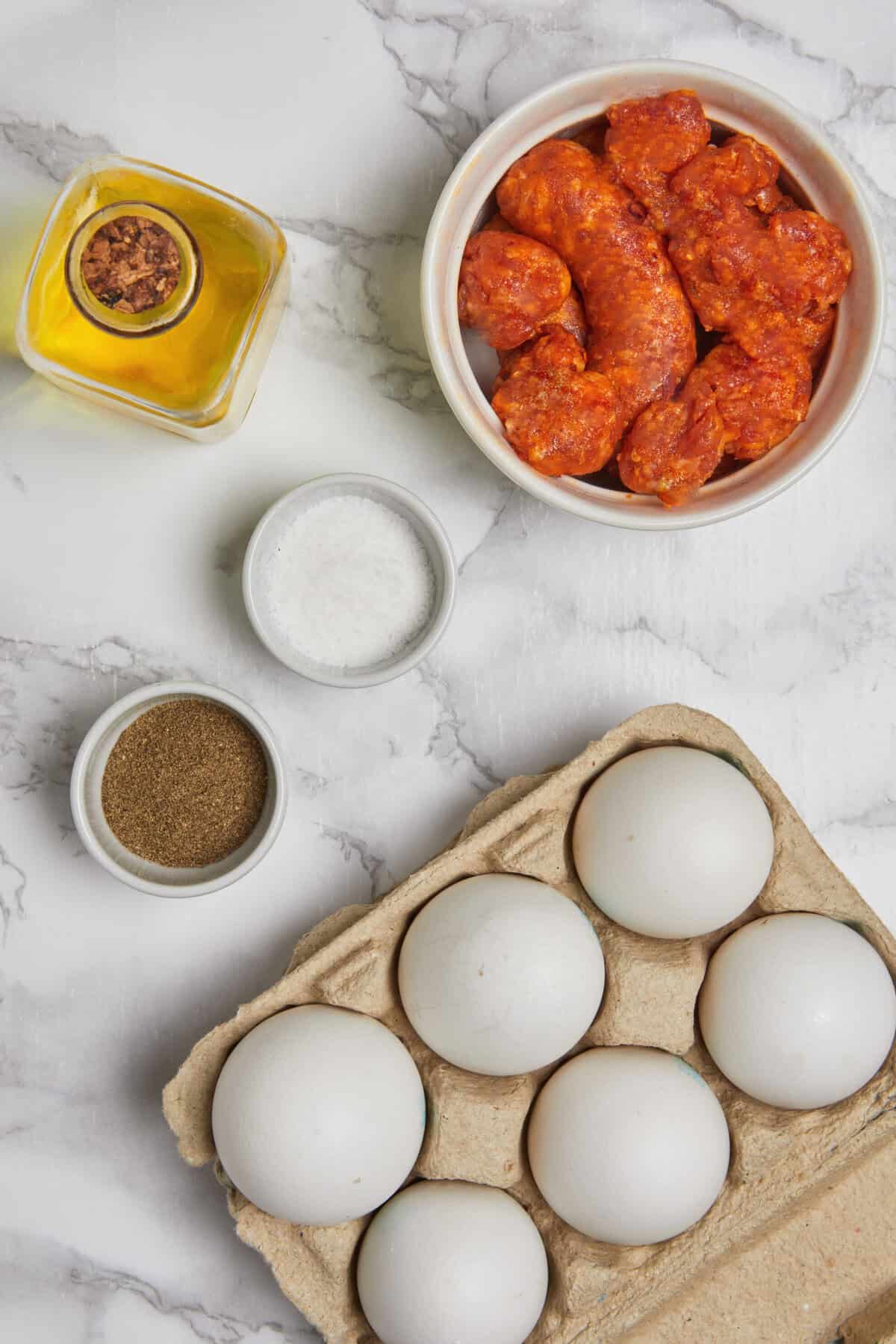
How Do I Store Leftovers?
Like most types of scrambled egg dishes, I find chorizo and eggs are best enjoyed fresh out of the frying pan. If you do end up with leftovers, allow them to cool, then place them in an airtight container. Stored in the fridge, your chorizo and eggs should last for up to 3 days. If stored in a freezer-safe container, you can keep your chorizo and eggs in the freezer for up to 2 months.
In my opinion, the best (or only) way to eat leftover chorizo and eggs is to pack the microwaved leftovers into a large flour tortilla with some pepper jack cheese to make a burrito. A flour tortilla and cheese can make leftover scrambled eggs tasty!
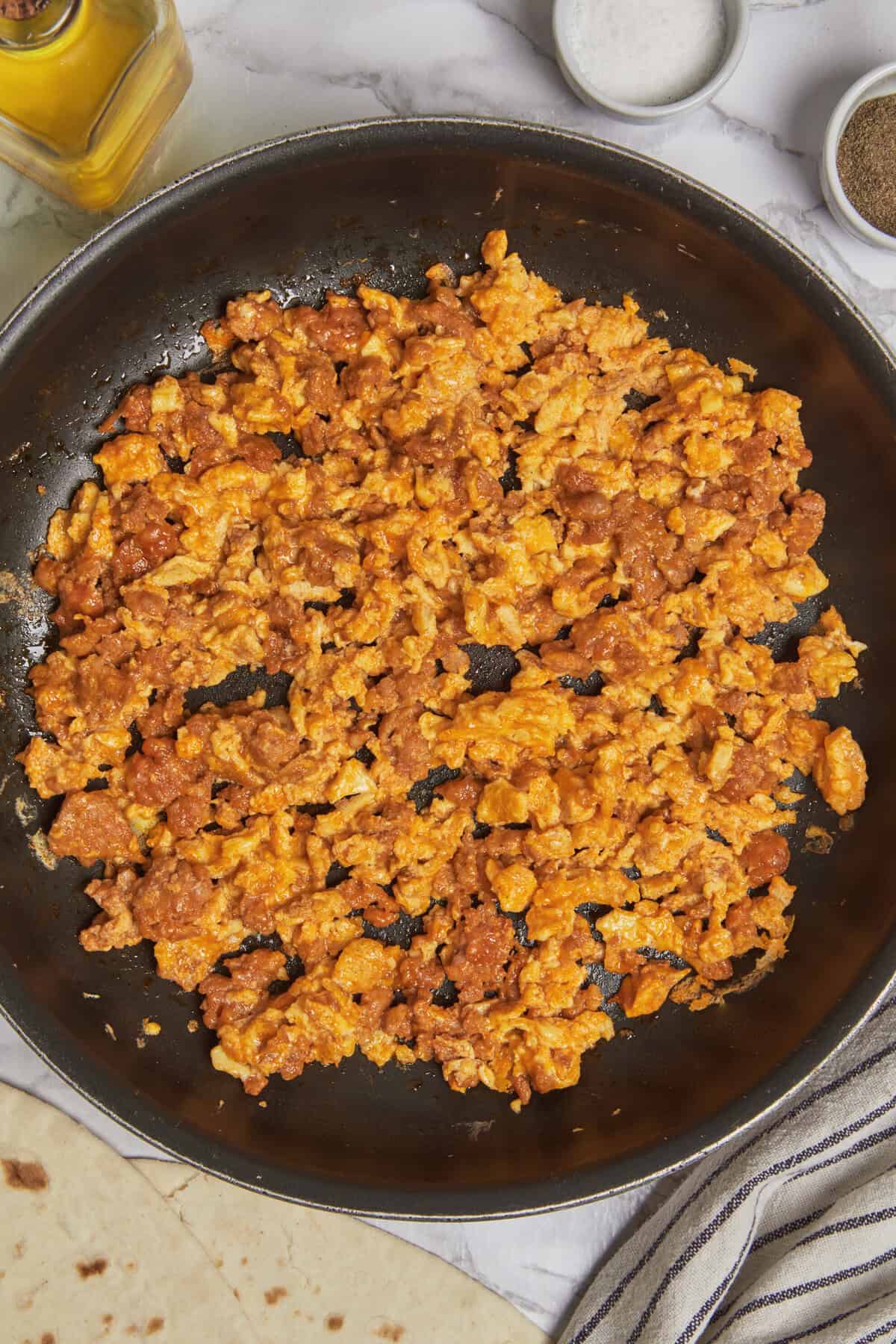
Serving Suggestions
I strongly encourage you to make a taco or burrito out of my chorizo and eggs! You can even make your own Gluten-Free Tortillas if you like. Onions, bell peppers, spinach, garlic, and cilantro are all excellent additions to this dish, too. You can add even more fiber by throwing in half a can of (drained) black beans. Your digestive system will thank you later!
If you aren’t making breakfast burritos or tacos, I think this dish will definitely benefit from some sides! My favorite sides for this dish include Mexican Potatoes, Cilantro-Lime Brown Rice, and Cheesy Roasted Cauliflower.
Ingredients
- 1 tablespoon olive oil
- ½ pound Mexican chorizo casing removed
- 6 large eggs
- Salt to taste
- Black pepper to taste
Instructions
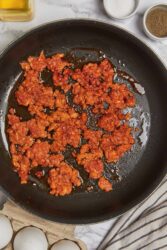
- Heat olive oil in a skillet over medium heat. Add chorizo and cook until it’s fully browned, breaking it into small pieces as it cooks.
- In a bowl, whisk the eggs with salt and black pepper.

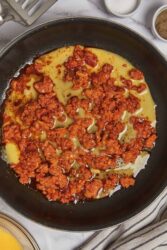
- Pour the eggs over the cooked chorizo in the skillet. Stir the mixture gently until the eggs are fully cooked and scrambled, about 3-4 minutes. Adjust seasoning with salt and pepper if needed.
Nutrition Info:
Nutrition information are estimates only and may vary based on the specific brands, ingredients, and portion sizes you use. This data is provided for informational purposes only.


Leave a Comment