

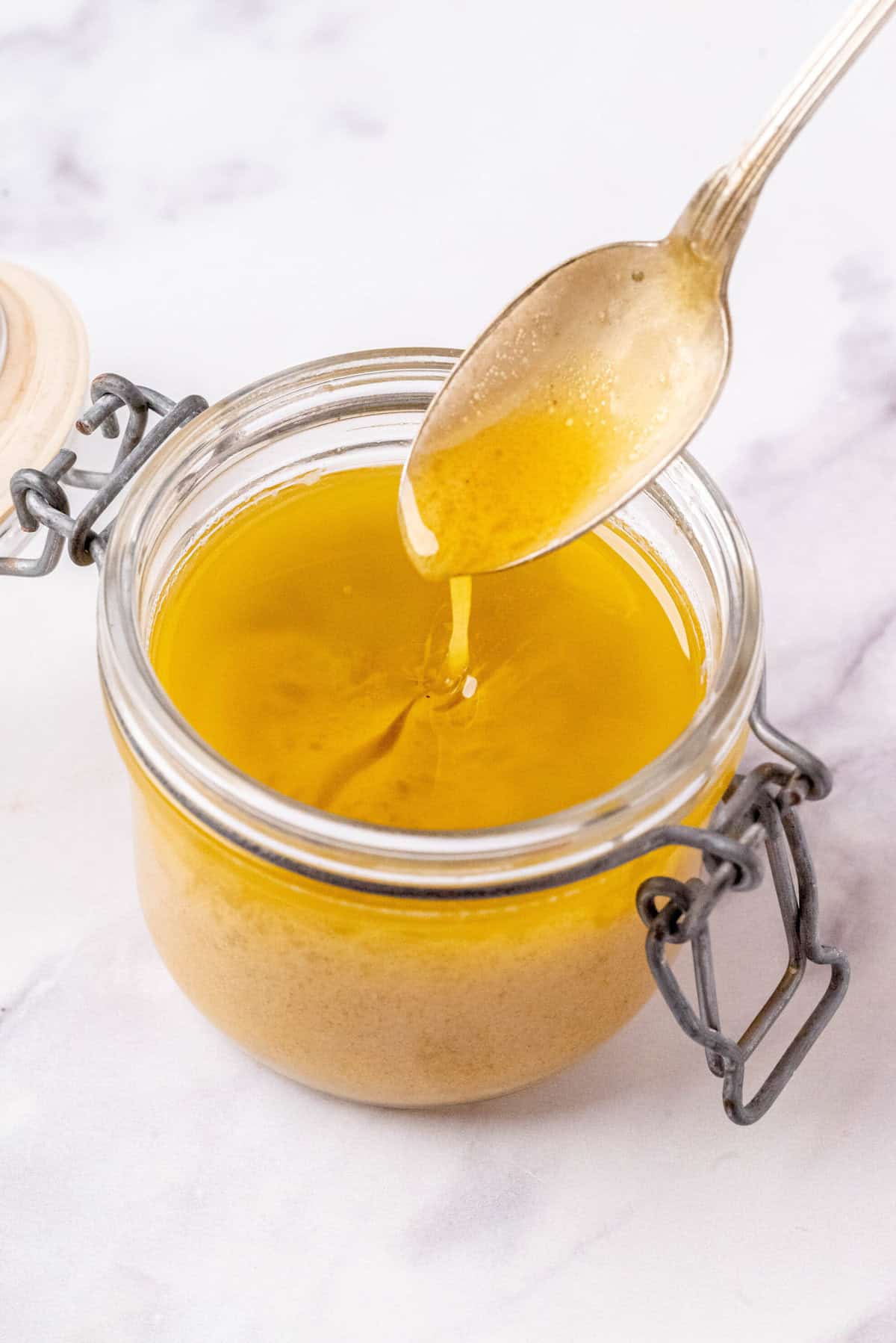
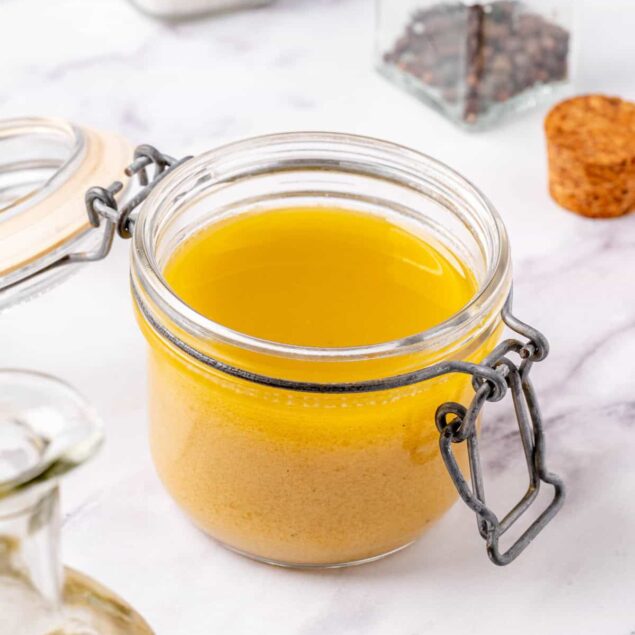
This bright and tangy Champagne Vinaigrette is perfect for salads, sandwiches, and more!
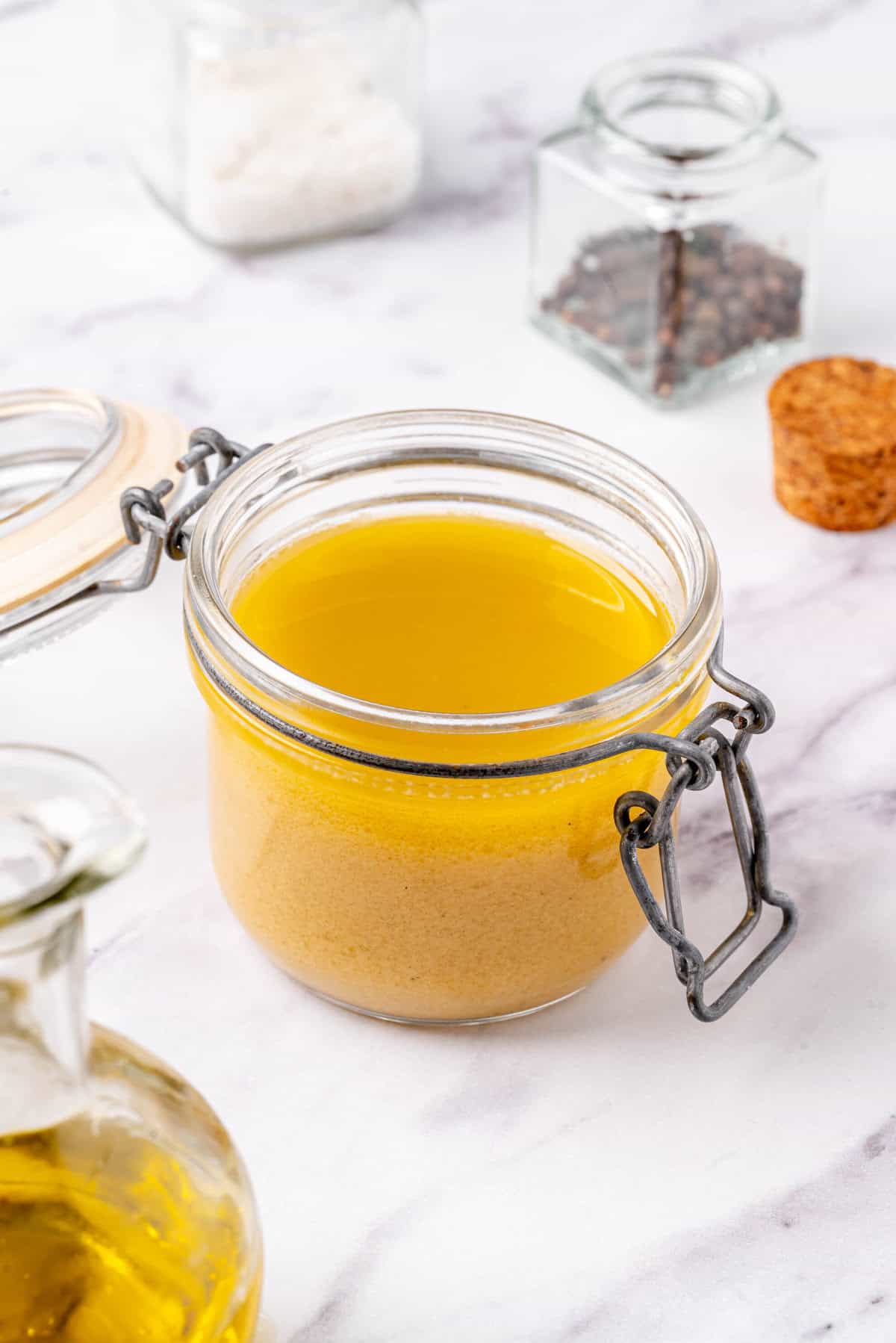
Balsamic, white wine, red wine… and champagne? While I’m sure you’ve heard of the common vinaigrettes, have you ever tried champagne vinaigrette? It’s not as common, but it’s incredibly tasty and versatile. Compared to blue cheese, Caesar, and Thousand Island salad dressings, vinaigrettes are a healthier substitute. You can drizzle champagne vinaigrette on almost anything, from salads and sandwiches to grilled proteins and pasta. Aside from drizzling, it’s a pretty unique marinade for different meats.
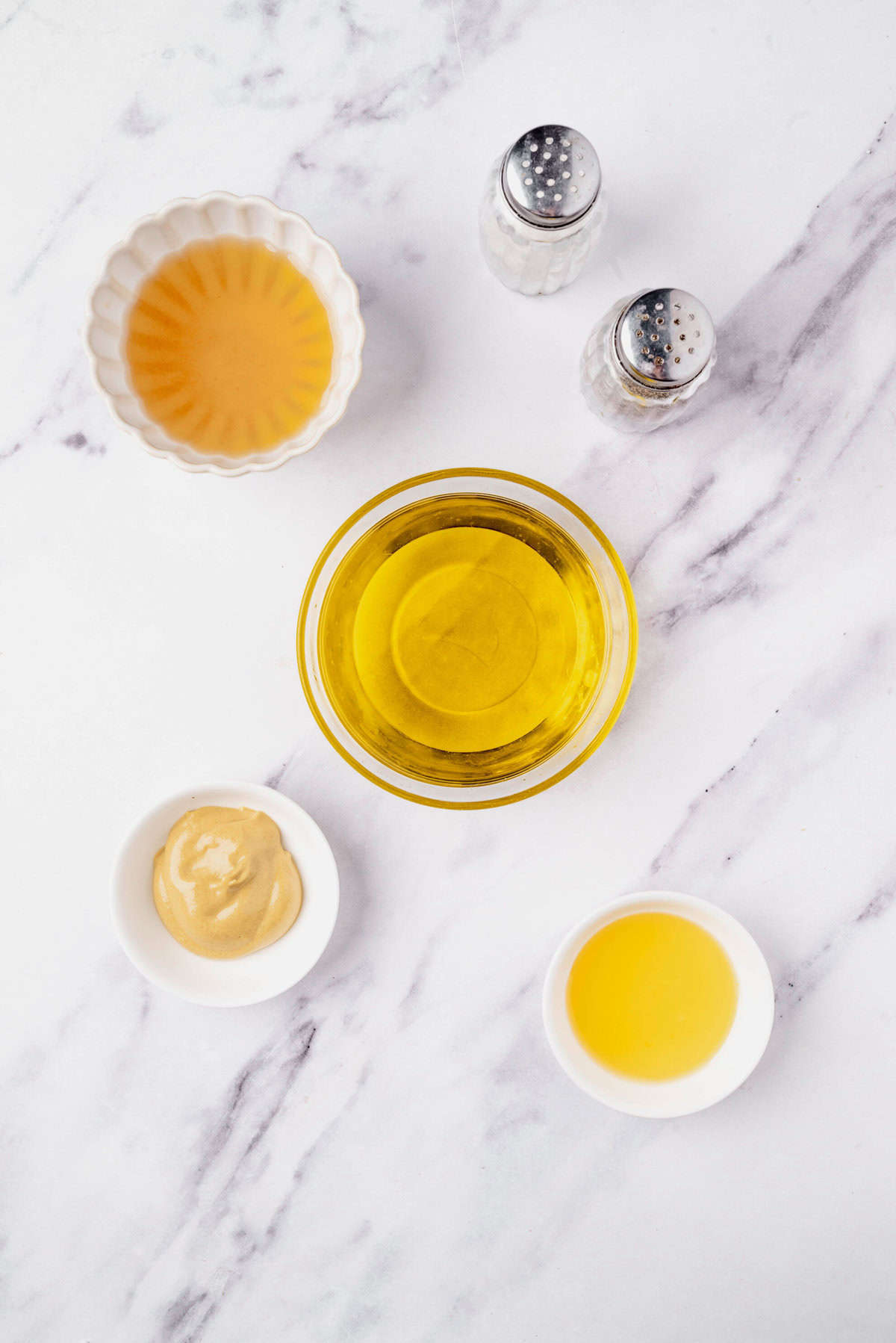
With a balanced tangy and sweet flavor, champagne vinaigrette can transform any dish. I think the best part is that you can truly make champagne vinaigrette your own concoction! This recipe calls for champagne vinegar, Dijon mustard, honey, salt, pepper, and olive oil. Sometimes, I like to use maple syrup instead of honey for a deeper, richer flavor. For an extra dash of spicy warmth, you can add half a teaspoon of cumin. You can also consider a flavored olive oil to add another level to the vinaigrette.
Is This Champagne Vinaigrette Healthy?
Overall, champagne vinaigrette is much healthier than store-bought dressings which tend to be full of preservatives, added sugars, and saturated fats. Plus, it’s gluten-free and vegetarian! Let’s dive into the ingredients. Champagne vinegar is low in calories and contains antioxidants. Store-bought Dijon mustard is high in sodium, but it’s also low in calories and fat compared to other condiments. While honey has sugar, it’s considered a natural sweetener and a good source of antioxidants like polyphenols and flavonoids. Extra-virgin olive oil is known for its heart-healthy fats.
What Exactly Is Champagne Vinegar?
Typically made with chardonnay and pinot noir, champagne vinegar offers a mild, less acidic flavor than standard white wine vinegar. It can also be made from the fermentation of champagne or other sparkling wines. Like other wine vinegars, it’s made by combining a base wine with bacteria and allowing it to sit and age, fermenting into acetic acid. Compared to red wine or balsamic vinegar, you’ll find that champagne vinegar is lighter and sweeter. Once you’re ready to transform champagne vinegar into a vinaigrette, you’ll want to mix it with a high-quality oil, like extra-virgin olive oil.
Can I Prep This Ahead?
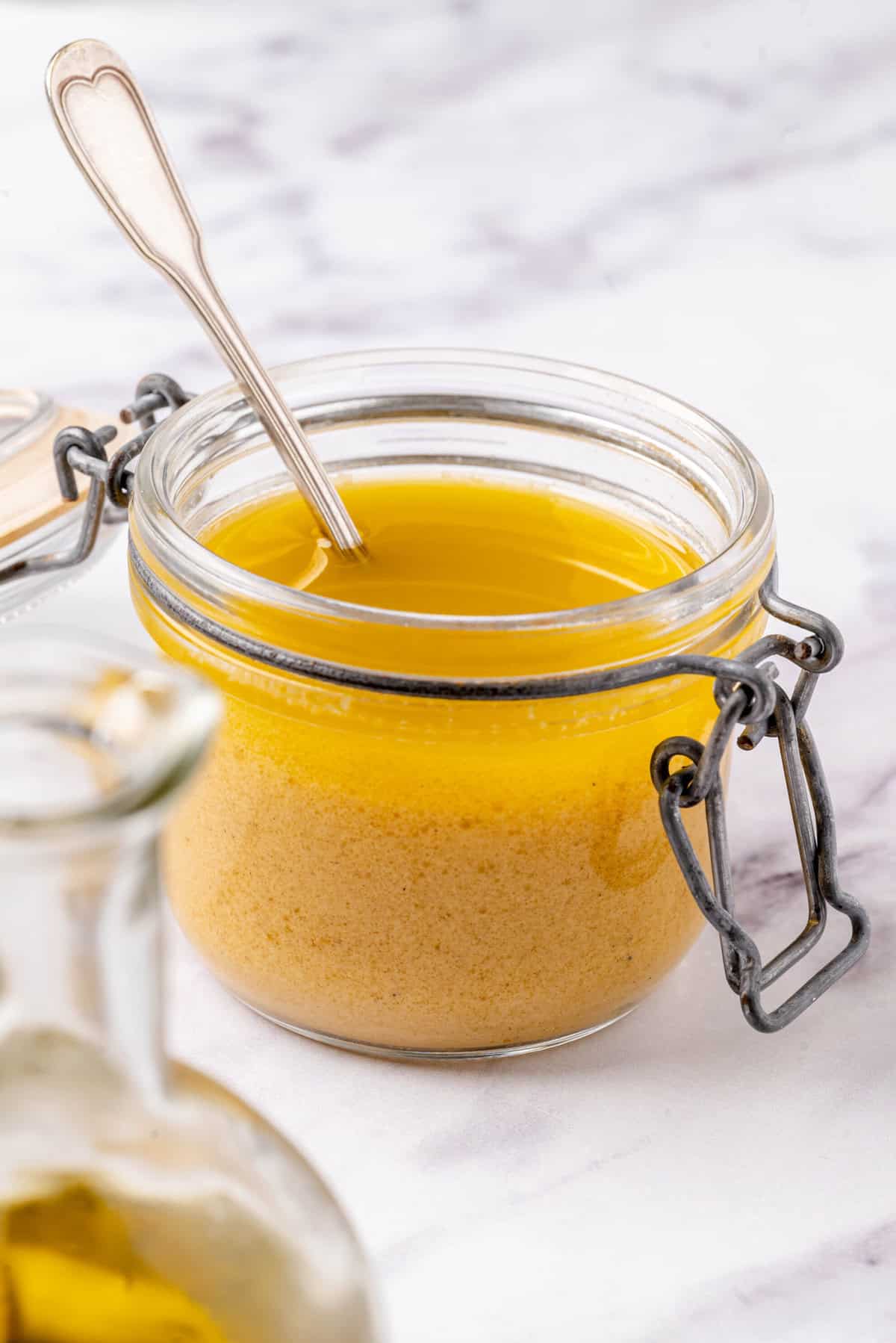
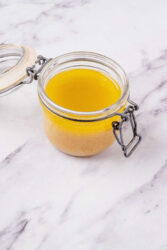
Absolutely! I actually recommend making this vinaigrette at the beginning of the week and storing it in an airtight jar in the fridge. It should last for up to 7 days. That way, you can use it all week for lunches and dinners. Keep in mind that it might separate in the fridge, so give the jar a good stir before serving to ensure the vinaigrette is smooth and well-mixed.
Serving Suggestions
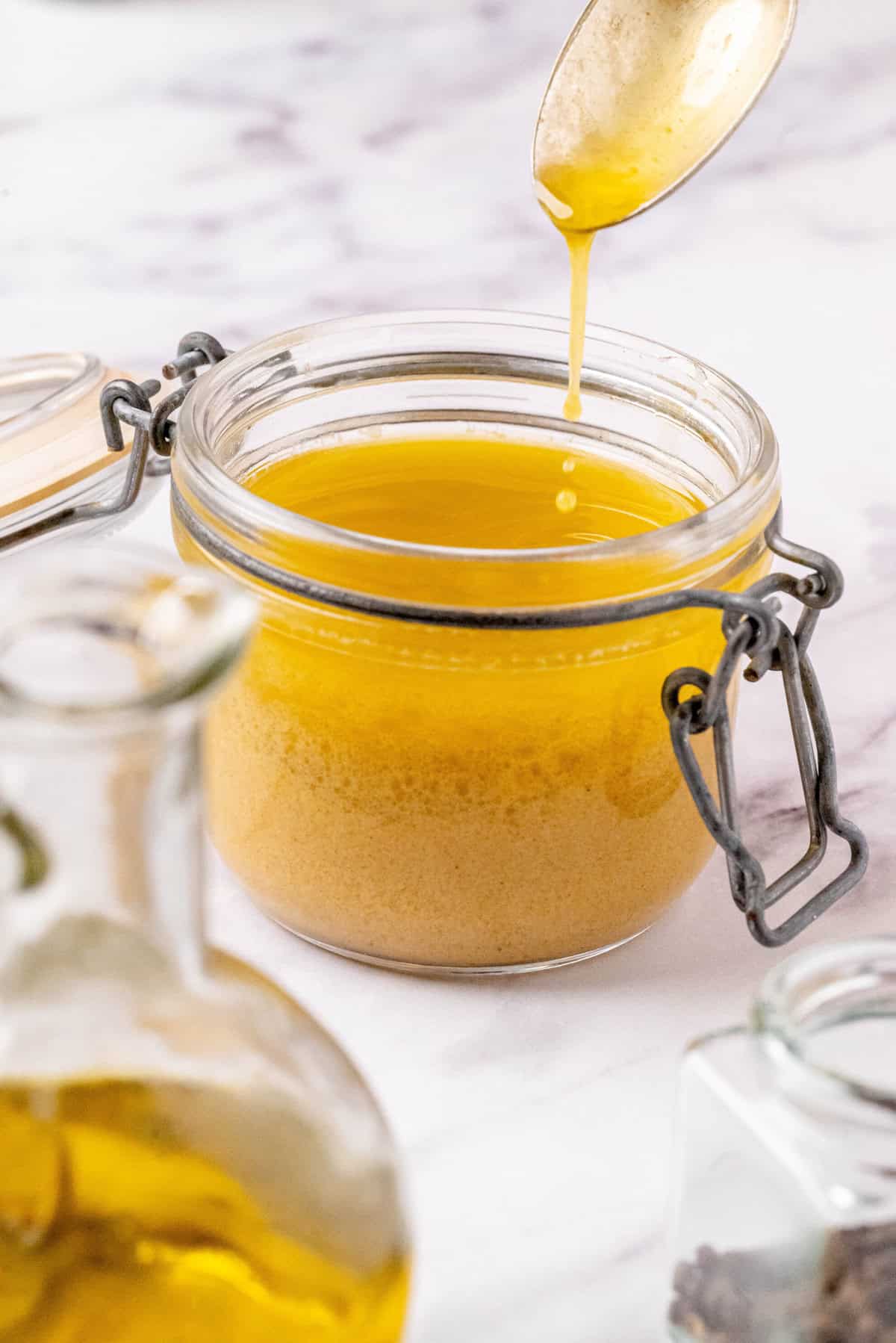
Champagne vinaigrette is so versatile that you’ll want to have it on hand for almost any dish! Of course, it pairs beautifully with salads like Butternut Squash Salad or Broccoli-Apple Salad, both of which offer a balance of sweet and tangy flavors. I also love using it as a dressing over a Pasta Salad. You can even brush it over cooked veggies like Grilled Squash or Roasted Sweet Potato Cubes. I also recommend dipping veggies or Garlic-Parmesan Fries into the vinaigrette as a perfect snack!
Ingredients
- 1/4 cup champagne vinegar
- 1 tablespoon Dijon mustard
- 1 tablespoon honey
- 1/2 teaspoon salt
- 1/4 teaspoon black pepper freshly ground
- 1/2 cup extra-virgin olive oil
Instructions
- In a medium bowl, whisk together champagne vinegar, Dijon mustard, honey, salt, and black pepper.
- Gradually whisk in the olive oil until the mixture is well blended and emulsified.
- Taste and adjust seasoning if necessary. Transfer to a jar with a tight-fitting lid and store in the refrigerator.
Nutrition Info:
Nutrition information are estimates only and may vary based on the specific brands, ingredients, and portion sizes you use. This data is provided for informational purposes only.


Leave a Comment